REVIEW · SPAIN
Tenerife: Mount Teide Summit Hiking Adventure with Cable Car
Mount Teide’s summit is reached by cable car and foot, not by a long slog from sea level. After the ride to La Rambleta, you follow Trail 10 toward the crater, where clear weather can reveal Tenerife’s caldera and neighboring islands. I like the official crater permit and the careful pace set by guides such as Miriam, Benjamin, Dario, and Nestor. I also like the useful commentary on geology, volcanic heat, plants, and island history.
The catch is altitude. The hike may take only about 45 minutes to the top, but steep, rocky sections and thin air can make it feel much harder. The cable car or summit trail can close in bad weather, and this booking is non-refundable once the permit is issued, so you need to accept some risk.
Key points to know before you book
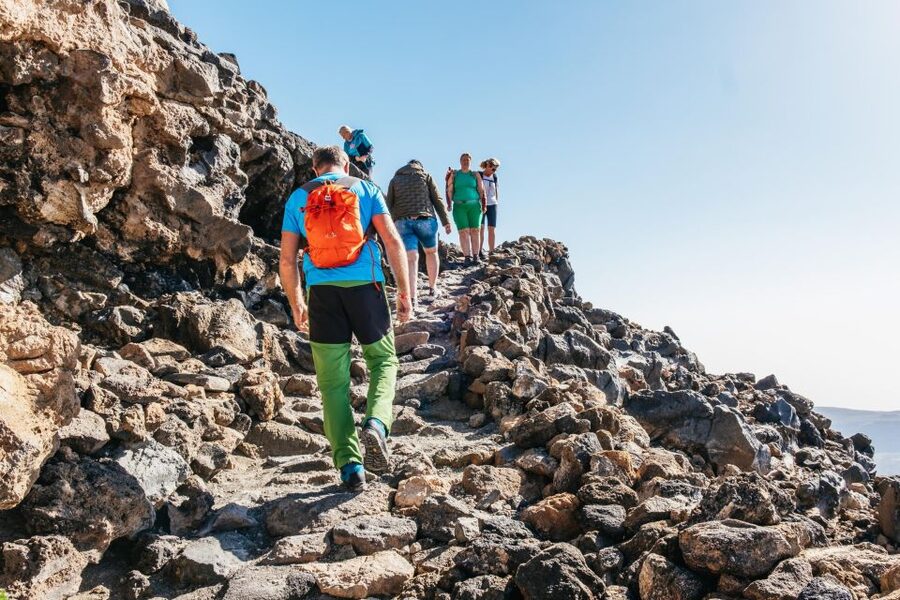
- The summit route begins at La Rambleta: You ride the cable car up before hiking Trail 10 toward Teide’s crater.
- The 3,718-meter altitude matters: Even fit hikers can become breathless quickly, especially on the steep final section.
- Your crater permit is included: Access to the summit is limited, so this saves you from arranging the special national park permission yourself.
- Guides make the difference: Miriam, Benjamin, Dario, Nestor, Maria, and other official guides are praised for setting a steady pace and explaining the volcano.
- Weather can change the plan: If the cable car or summit trail closes, an alternative national park route is offered with a partial refund.
- Bring proper mountain gear: Warm layers, sturdy hiking shoes, water, sunscreen, and an ID card are essential.
What the seven-hour Teide day looks like
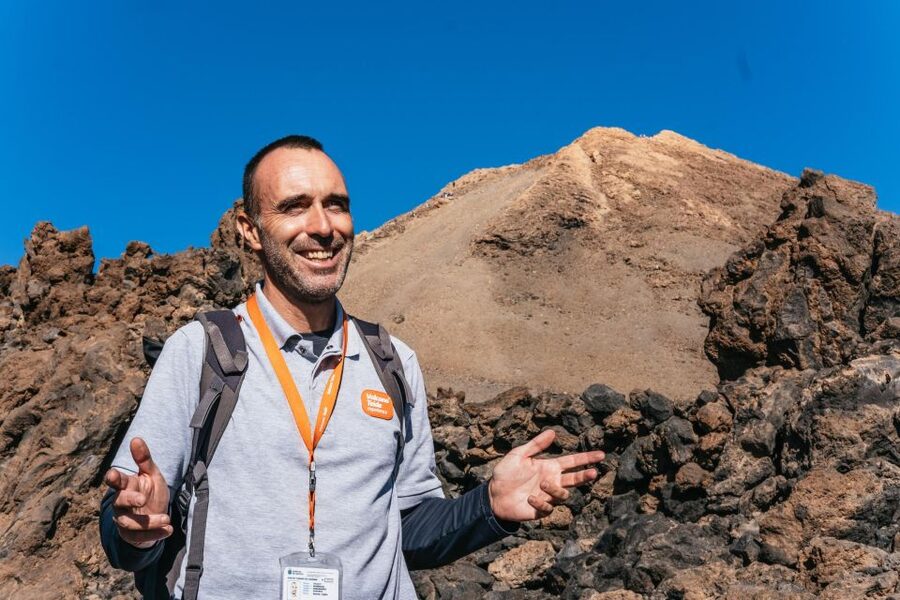
This is a full-day outing, with about three hours devoted to guided hiking and the remaining time used for pickup, the mountain drive, cable-car arrangements, and stops. The exact starting time depends on availability, and pickup is offered from selected hotels in north Tenerife when you choose that option.
The drive is part of the experience rather than dead time. Guides such as Maria and Dario have used the journey to point out viewpoints, explain Tenerife’s history, and identify notable features along the route. Some departures include short photo stops, and one itinerary account mentions a stop near the islands’ largest pine tree and a coffee break.
That said, the precise order and number of stops can vary. This is not a flexible sightseeing bus where you can linger wherever you wish. You are heading toward a timed cable-car ascent and a restricted summit trail, so the day needs to run to a schedule.
If you arrange your own transport, check the meeting instructions closely. Pickup information has caused some confusion for at least one booking, so I would confirm the exact hotel or meeting point before the day begins. The listed pickup area covers selected hotels in north Tenerife, including La Chiripa Garden, Parque San Antonio, Noelia Playa, Dania Park, Hotel Concordia, Titsa Cruce Meliá, Teidemar, Garoé, Botánico, and Kiosko Paragüitas.
More Mountain and Summit Hikes in Spain
- From Barcelona: Montserrat Monastery & Scenic Mountain Hike
★ 4.9 · 978 reviews - From South Tenerife: Mount Teide Hiking Day Trip & Cable Car
★ 4.8 · 482 reviews - Tenerife: Anaga Mountains & Enchanted Forest Hiking Tour
★ 5.0 · 303 reviews
Reaching La Rambleta by cable car
The cable car removes most of the vertical work, taking you to La Rambleta, the upper station. From there, the summit trail begins. A return cable-car ticket is included, so you do not need to plan a long descent on foot after the hike.
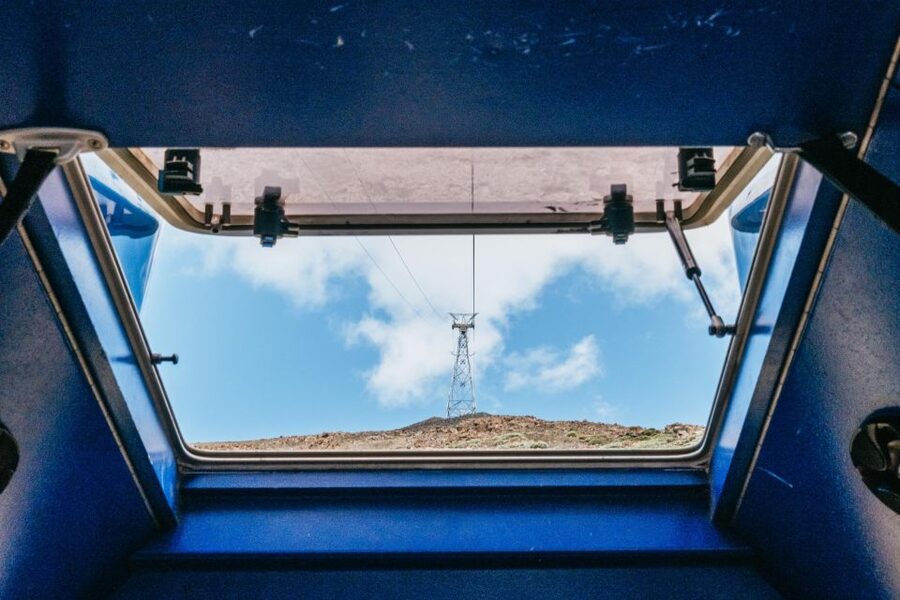
The cable-car ride is practical, but it is not necessarily relaxing. Wind can make the car sway, and the cabin may feel crowded. There are limited handholds in the center, so hold on and expect a brief ride that feels more like mountain transport than a scenic gondola picnic.
The change in altitude is the bigger issue. You move rapidly from the lower station to a high volcanic setting, leaving your body little time to adjust. Guides explain the plan before you leave the base station and usually set a slow pace once the group reaches La Rambleta. That approach matters. You should not treat the first few minutes as a race, even if the distance looks modest.
At the upper station, you may notice that every step takes more effort. Stop when you need to, breathe slowly, and tell the guide if you feel unwell. The guides are there to manage the group’s pace, not to push the fastest person to the top.
The rocky climb to Teide’s 3,718-meter summit
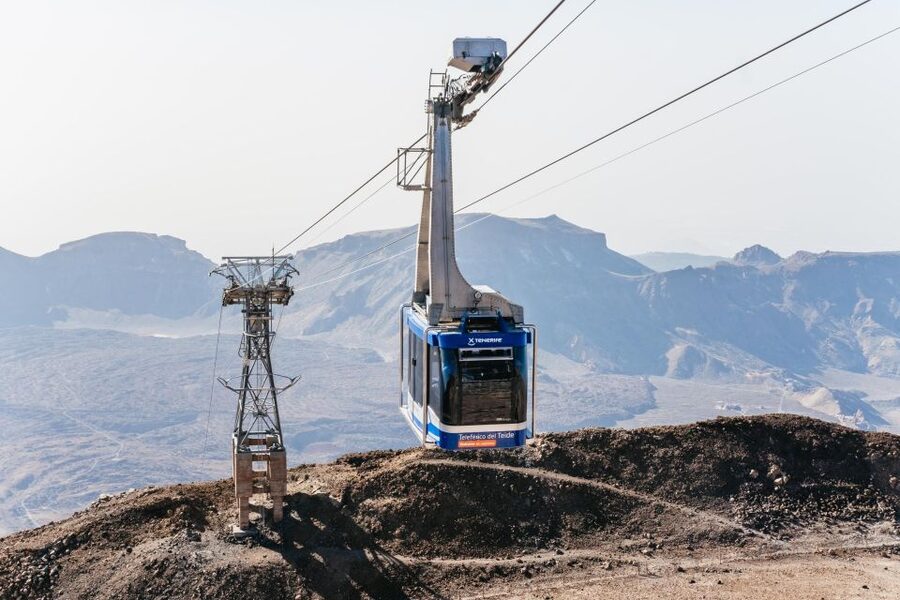
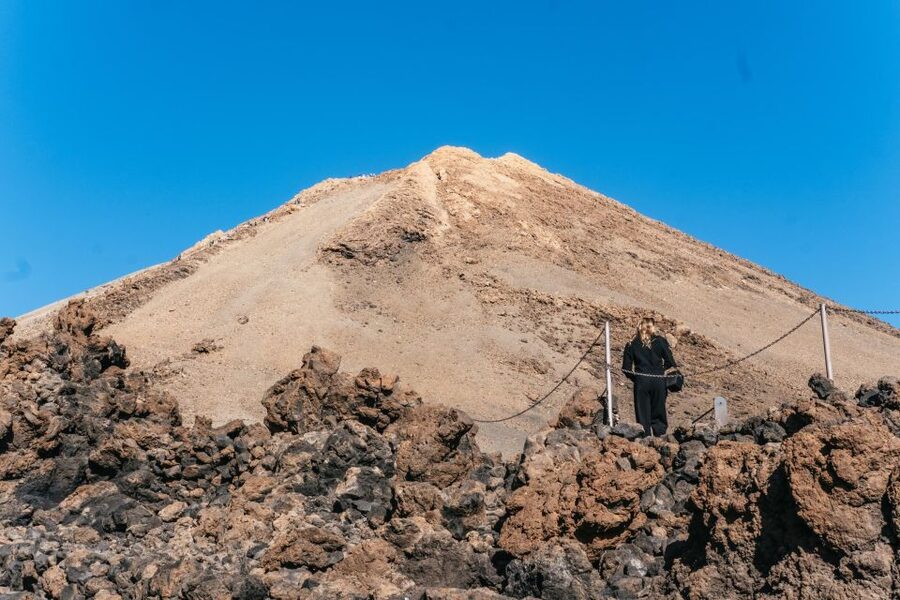
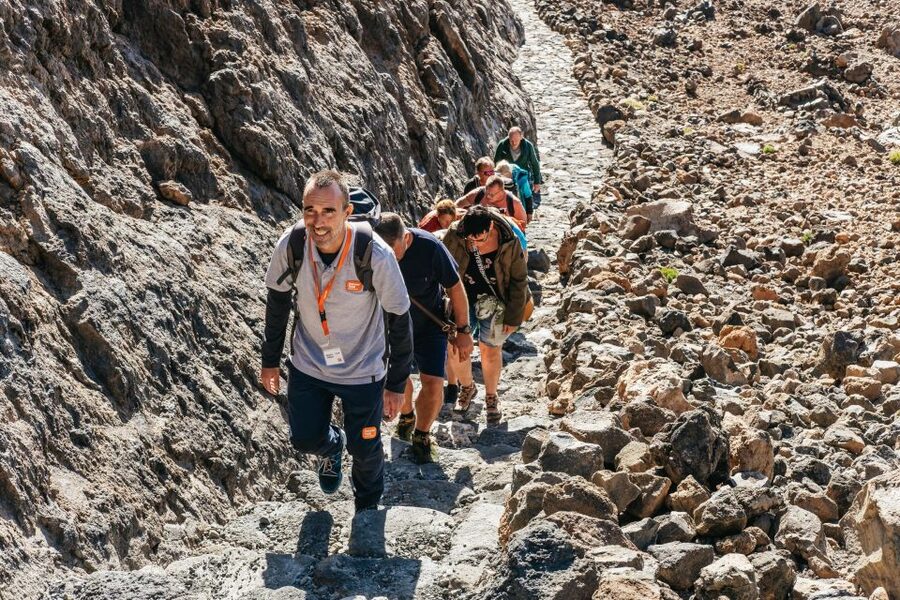
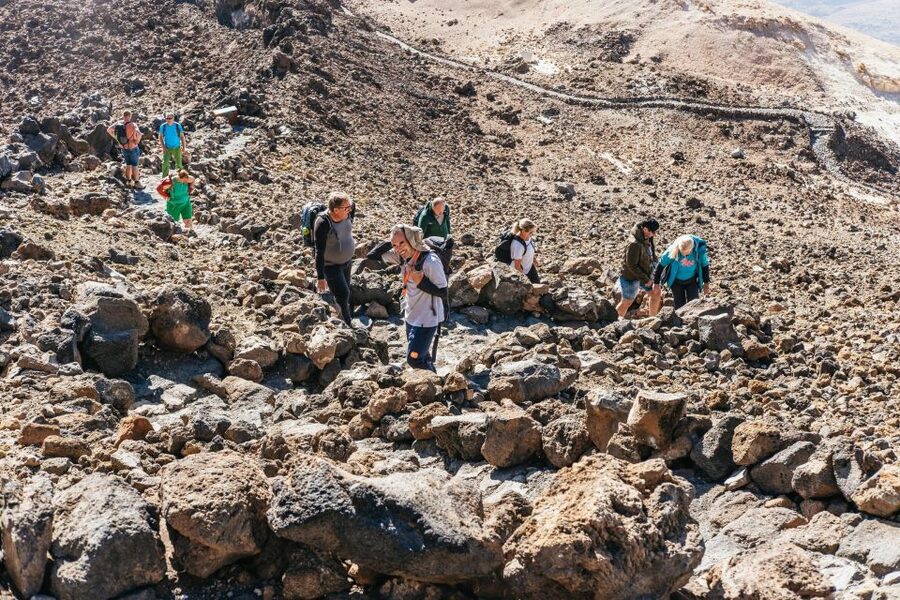
The summit route follows Trail 10 from La Rambleta. The final walk is often described as roughly 45 minutes for a reasonably fit person, but that estimate hides the real challenge. The path is rocky, steep in places, and exposed to cold wind. Stone steps without side rails can feel awkward, especially on the way back down.
The altitude is the main test. One person arriving from flat terrain found the climb particularly demanding, while another described the hike as moderate but still difficult for some members of the group. Even strong walkers may become short of breath quickly. Your guide should build in regular pauses, both for safety and to explain what you are seeing.
This is where the guided format earns its keep. Nestor, Benjamin, Miriam, and other guides are praised for stopping often, checking how people were coping, and using the pauses to discuss volcanic activity, geology, ecology, and the history of Teide National Park. You are not simply being marched uphill.
The volcanic details are especially good. You may see signs of past activity along the route, and some areas can feel warm as heat rises from below. The rock underfoot is uneven, so hiking shoes are far better than trainers with smooth soles. The trail is manageable for an active person who is comfortable on steep paths, but it is not suitable for people with mobility impairments.
The summit permit and the crater
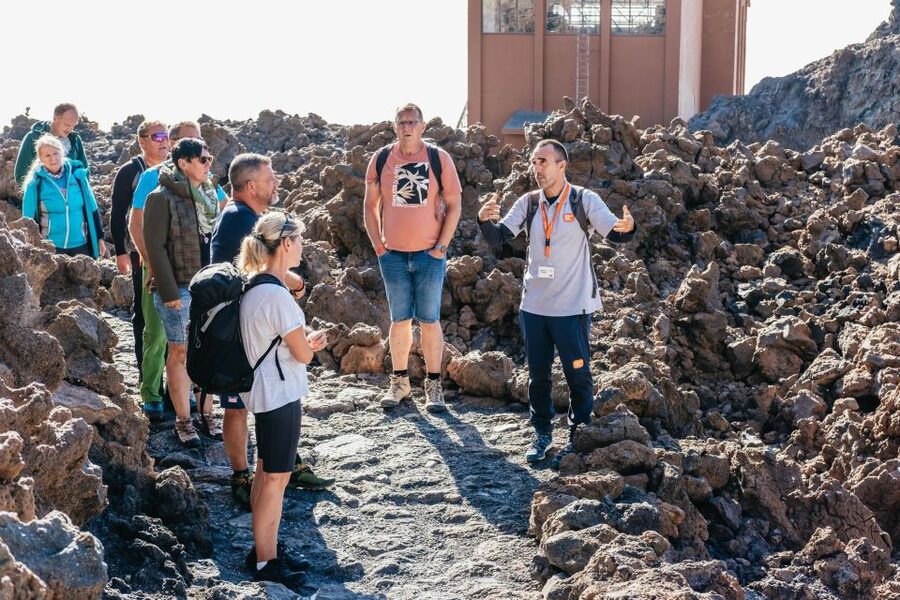
The special national park permit is one of the strongest reasons to choose this excursion. Trail access to Teide’s peak is limited, and the permit gives you the chance to enter the crater area when the route is open.
At the summit, the reward is more than a viewpoint. You are standing at 3,718 meters, Spain’s highest point, with the volcanic interior of Tenerife below and, in clear conditions, views toward neighboring islands. One particularly clear outing included views of El Hierro in the distance, along with the caldera and Pico Viejo.
Weather controls the quality of this moment. Clouds, wind, ice, and poor visibility can reduce the views or close the trail entirely. The summit path has been closed because of icy conditions, and high winds have also forced a change of plan. That is not a failure of the guide. Teide National Park staff control access, and safety comes first.
You should also understand that the permit does not guarantee summit access in every condition. If the cable car is working but Trail 10 is closed, the group rides to La Rambleta and follows an alternative route. If the cable car itself is not operating, the day becomes a national park visit with another trail. The stated partial refund is €50 per adult and €25 per child when the summit trail is closed, or €86 per adult and €43 per child when the cable car is not operating.
Same trailheads, a different kind of day:
- La Palma: Tajogaite Volcano Guided Trek
★ 4.8 · 1,810 reviews - From Valencia: Montanejos Guided Hike with Natural Pools
★ 4.5 · 1,741 reviews - From Seville: Caminito del Rey Hike Day Trip
★ 4.5 · 1,240 reviews - Lanzarote: Hike Across Timanfaya’s Volcanic Landscapes
★ 4.8 · 1,234 reviews
Guides who turn a steep walk into a better day
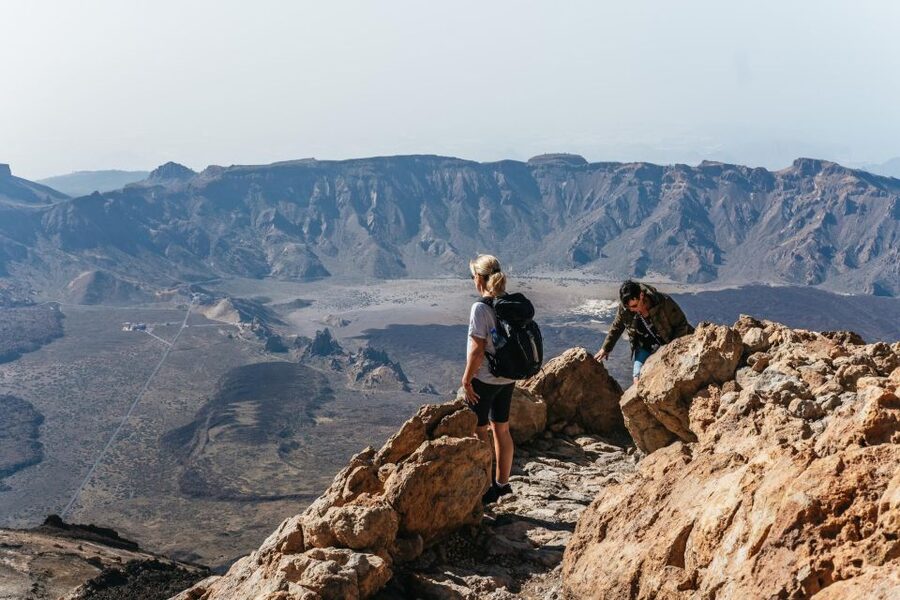
The guide is central to this experience. This is not simply a cable-car ticket with a mountain walk attached. Your guide explains the route, handles the summit access process, sets the pace, and adds meaning to the rocks and plants around you.
Miriam receives especially strong praise for combining geology, ecology, industry, history, and current scientific work with a lively sense of humor. Benjamin is described as patient, friendly, and informative, including when escorting a slower walker back down the steep trail. Dario has been praised for excellent English and useful explanations during both the drive and the hike.
Nestor is also noted for calmly explaining the plan at the lower station, speaking with officials at the upper station, and slowing the group during the climb. Guides named Maria, Andres, Julian, Victor, and Jose are also singled out for warmth, clear explanations, careful driving, or encouragement.
Names can change according to the departure, so you cannot book a particular guide from the information provided. Still, the pattern is clear: this tour works best when you use the guide’s knowledge and pacing rather than treating the hike as a race for a photograph.
How difficult is the hike?
I would rate the summit walk as moderate to strenuous, mainly because of altitude rather than distance. The route from the cable-car station is short compared with a full ascent from Montaña Blanca, but the air is thin and the path rises sharply.
The activity is not suitable for pregnant women or people with mobility impairments. Children aged 6 to 13 use the child ticket, but age alone does not make the summit walk easy. A child needs to be comfortable with a steep, rocky trail, cold conditions, and a slow uphill pace.
You should be able to walk on uneven ground without assistance and manage stairs or steep paths. If you have doubts about altitude or exertion, ask the provider before booking. Once the reservation is confirmed, changes and cancellations are not accepted because the national park permit is issued for the booking.
Wear warm clothing even if the coast feels hot. Bring a jacket, extra layers, sturdy hiking shoes, sunscreen, water, and comfortable clothes. Food and drinks are not included, so carry what you need for the seven-hour outing.
What happens if the weather changes?
Teide weather can make the day unpredictable. The cable car may stop operating, or the cable car may run while the summit route remains closed. The provider has an alternative rather than simply ending the day, which is a useful safeguard.
If the cable car is closed, you visit the national park and complete another trail. If Trail 10 is closed, you still ride to La Rambleta and walk an alternative route. You may not reach the crater, but you still get a guided national park outing and volcanic scenery.
This flexibility helps, but the refund rules are worth noting before you pay. The activity itself is listed as non-refundable, and you cannot cancel after confirmation because of the permit. Weather-related partial refunds apply only under the stated cable-car or summit-trail conditions.
In practical terms, book this only if you are comfortable with the possibility of a different route. If reaching the exact summit is the only reason you are going, the risk may bother you. If you value the national park, the guide, and the mountain setting as a whole, the alternative plan is more reassuring.
Is the $160 price good value?
At $160 per person, this is not the cheapest way to see Mount Teide. The value comes from having several difficult pieces arranged together: the official guide, cable-car ticket, special crater permit, and optional transport from north Tenerife.
Buying only a cable-car ride would cost less, but it would not provide the same preparation or guidance on the summit path. You would also need to deal with the restricted permit system yourself. The excursion is particularly useful if you want a structured day and do not want to drive the mountain roads.
The included transfer adds value for people staying near the listed north Tenerife hotels. The drive itself can include commentary and short stops, and the bus driver handles the narrow Canarian roads. If you already have a rental car and are comfortable organizing the permit and cable car independently, the package may feel expensive.
For many people, the price is justified by the permit. Summit access is limited, and having the official paperwork, cable-car reservation, and guide in one booking removes much of the uncertainty. Just remember that food and drink are extra, and weather can still prevent the final ascent.
Who should book this Teide summit hike?
I would choose this tour if you want the highest point in Spain but prefer a guided, organized approach. It suits an active couple, family, or group of friends, and a private option is available for people who want to ascend via Montaña Blanca on foot with their own party.
It is also a good fit if you are staying in north Tenerife and want pickup, or if volcanic geology interests you as much as the view. The guides add far more than directions. They explain why the rock looks the way it does, point out signs of heat and past eruptions, and connect Teide to Tenerife’s wider natural setting.
I would hesitate if you dislike fixed schedules, steep rocky paths, or uncertain weather plans. I would also avoid it if you need step-free access, are pregnant, or are not prepared for cold conditions at high altitude.
Final verdict: book it for the permit and the guide
Book this Mount Teide summit hike if standing at the crater matters to you and you want the permit, cable car, transport option, and guide arranged in one day. The best parts are the summit access, the island views, and the patient explanations from guides such as Miriam, Benjamin, Dario, and Nestor.
Go prepared for a real mountain walk, not a simple sightseeing stop. Wear boots, bring warm layers and water, and accept that wind or ice may replace the summit with an alternative trail. For the right visitor, the $160 cost buys convenience and access that are difficult to arrange casually. For someone seeking only a cable-car view, it is more than you need.
FAQ
How long does the Mount Teide summit activity last?
The full activity lasts about seven hours. The guided hike takes around three hours, with the remaining time used for transport, the cable-car journey, preparation, and stops.
How high is Mount Teide’s summit?
The summit reaches 3,718 meters, making it the highest peak in Spain.
Is the cable-car ticket included?
Yes. The activity includes a cable-car ticket. The cable car takes you to La Rambleta, where the summit hike begins.
Is a permit required for the crater?
Yes. A special national park permit is included to access the crater area. Access is limited, and the permit is issued for the confirmed booking.
What happens if the cable car is closed?
If weather prevents the cable car from operating, the activity continues with a visit to Teide National Park and an alternative trail. A partial refund of €86 per adult and €43 per child is stated for this situation.
What happens if the cable car runs but the summit trail is closed?
You ride the cable car to La Rambleta and follow an alternative trail. The stated partial refund is €50 per adult and €25 per child.
What should I bring?
Bring your passport or ID card, warm clothing, hiking shoes, sunscreen, water, and comfortable clothes. Food and drinks are not included.
Just added around Spain
- From Valencia: Montanejos Tour with Guided Hike★ 4.1 · 86 reviews
- Montanejos Hiking Tour & Thermal Pools from Valencia★ 4.5 · 111 reviews
- From Valencia: Cala del Moraig Hiking & Beach Trip★ 4.8 · 107 reviews
- Montserrat very early : Hiking, Abbey, very small group★ 5.0 · 127 reviews
- Trekking in the Volcanoes Natural Park in a small group★ 5.0 · 97 reviews
- PRIVATE TOUR Teide National Park: Hiking and Stargazing★ 5.0 · 38 reviews
- Semi-Private Montserrat Monastery & Hiking Experience★ 5.0 · 132 reviews
- Private Pre-Pyrenees Medieval Village Hike from Barcelona★ 5.0 · 39 reviews
Mountain & Summit Hikes, side by side.
Berber villages : Atlas Mountains Day Hike from Marrakech
Read our review →
Sunrise Mount Batur Guided Hike with Breakfast
Read our review →
Mount Batur Sunrise Guided Hike and Natural Hot Spring
Read our review →
Mount Etna: Summit Guided Hiking Tour up to 3,400 m
Read our review →
Bovilla Lake & Gamti Mountain Hiking Day Trip
Read our review →
Mount Etna: Trek to 3000m with cable car and 4×4
Read our review →