
REVIEW · PERU
Salkantay Trek to Machu Picchu in 4 days
The best thing about this four-day Salkantay Trek is the change in scenery. You start among high Andean peaks, pass the turquoise Humantay Lagoon, cross the snowy Salkantay Pass, then descend into warm cloud forest before reaching Machu Picchu. I especially like the included meals and luggage support, which let you focus on walking rather than hauling every shirt and snack uphill.
I also like the small group size, capped at 10, and the overnight in a glass-and-wood dome near Sahuayaco. The main caution is serious: day two is hard, and the highest point reaches 4,630 meters. The company advertises first-aid supplies and emergency oxygen, but one serious complaint says these were not available when needed, so you should confirm safety arrangements before departure.
Key points to know before booking
- The 4,630-meter Salkantay Pass is the physical crux: Expect about three hours of steady climbing from Soraypampa.
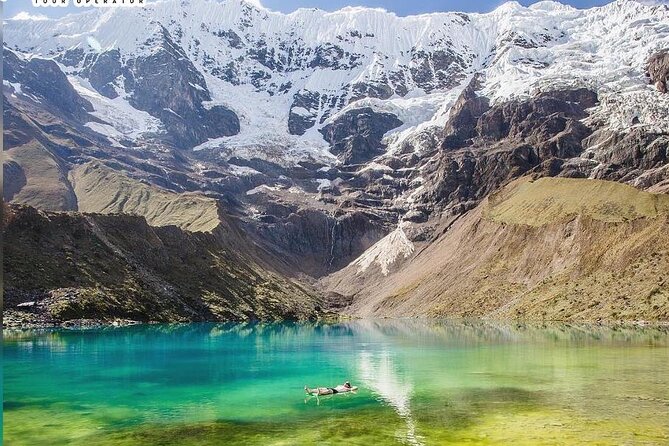
- Humantay Lagoon comes on day one: The side hike adds altitude stress before your first night at 3,600 meters or higher.
- Your main bag can weigh up to 7 kilograms: Horses carry kitchen gear, food, and that luggage allowance.
- The route changes dramatically: Snowy peaks give way to cloud forest, orchids, fruit farms, coffee, and the Urubamba River.
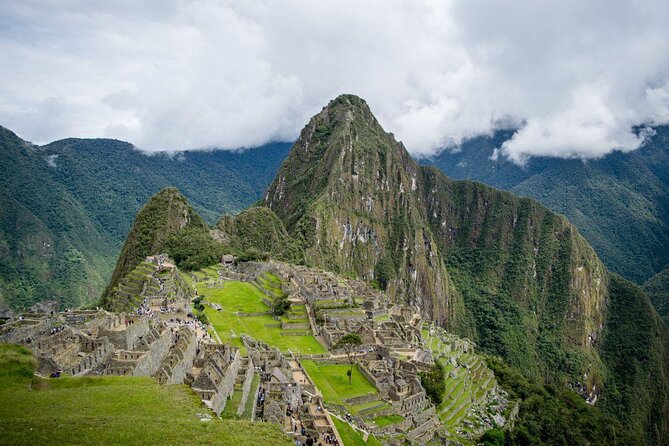
- Machu Picchu is reached early on day four: A guide leads a roughly two-hour visit before your return by bus and train.
- Safety questions deserve direct answers: Ask what first-aid and oxygen equipment will actually be carried and how altitude illness is handled.
Why this route earns its reputation
Salkantay offers a more varied approach to Machu Picchu than a route that stays in one ecological zone. The opening days feel stark and high, with cold air, broad views, and snow-covered mountains. Later, the trail becomes warmer and greener, with thick plant growth, orchids, coffee, bananas, avocados, oranges, and medicinal plants.
That range is the heart of the trip. You are not simply walking toward one famous ruin. You are moving through several distinct parts of southern Peru, each with its own weather, scenery, and demands.
The price is $590 per person. That is not a bare-bones trekking fee. It includes transport from Cusco, a guide, cook, kitchen assistant, horses and muleteers, meals, three nights of lodging, route and Machu Picchu admission, buses, the return train, and transport back to Cusco.
The value is strongest if you would otherwise need to arrange each piece yourself. The cost also covers food for four breakfasts, four lunches, and three dinners. Still, the package is only good value if the operator delivers the promised support. The safety concerns in the available feedback make it wise to ask clear questions before paying the balance or leaving Cusco.
More Machu Picchu and Inca Trail Treks in Cusco:
- Salkantay Trek Challenge – 3 Days / 2 Nights
★ 5.0 · 101 reviews - Choquequirao Trek 4 days and 3 nights
★ 5.0 · 81 reviews - Machu Picchu: 5-Day Salkantay Trek with Panoramic Train
★ 5.0 · 79 reviews
Day one: Cusco to Mollepata and Humantay Lagoon
The day begins at 5 a.m. with hotel pickup in Cusco, or from a hotel in the Sacred Valley if arranged. Bring your original passport. It is required at control points along the route, and forgetting it can create a needless problem before the hiking even starts.
A private vehicle takes you for about two hours toward Mollepata. This early ride gives you views of snowy peaks and colorful valleys before breakfast at a local restaurant. You spend about an hour there, which offers a useful chance to eat properly before the walking begins.
From Mollepata, the vehicle continues for about 30 minutes to Challacancha, at roughly 3,600 meters. This is where you meet the muleteer team and transfer equipment to the horses. You carry a daypack, water, and personal essentials, while the horses carry food, kitchen gear, and up to 7 kilograms of your luggage.
The first walk covers about 10 kilometers and takes roughly three hours. The route follows a stone-covered path beside an old water channel carrying cold, clean water to local residents. This is not yet the toughest section, but the altitude makes even a moderate climb feel slower than it might at home.
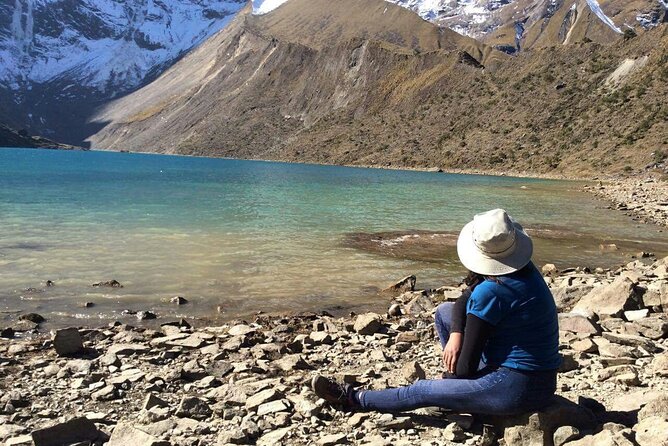
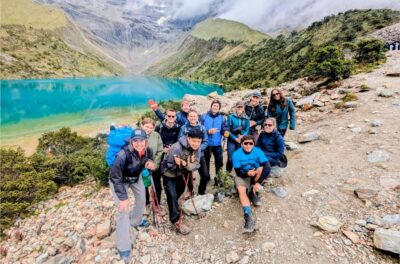
After lunch at Soraypampa, you rest before the afternoon hike to Humantay Lagoon. The climb takes about an hour and a half, with about 40 minutes at the lagoon itself. At approximately 4,200 meters, the site is beautiful, but the altitude is no small detail. Take your time, drink water, and do not treat this as a race for the best photograph.
You return to Soraypampa at around 5:30 p.m. Tea, coffee, popcorn, and cookies are served before dinner. If the sky is clear, the high camp offers a fine chance to see stars and constellations, far from city lights.
Your first night is listed as a cabin at Eco-Lodge Mamá Andrea, also described as Cabaña Andina. Confirm the exact lodging name and room setup before you go, since the wording used for this night is not as precise as the description of the dome on night two.
Day two: Salkantay Pass at 4,630 meters
The second day is the test. A wake-up call with coca tea comes at 5 a.m., followed by breakfast and a climb toward the highest point of the trek.
The pass is about 7 kilometers from camp. The first hour rises gradually through the Salkantay Valley toward Pampa Salkantay at around 4,200 meters. After a short rest, you continue for about two more hours through rocky high country.
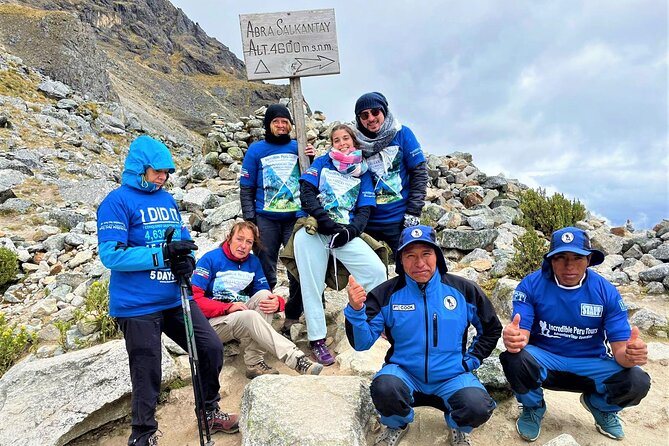
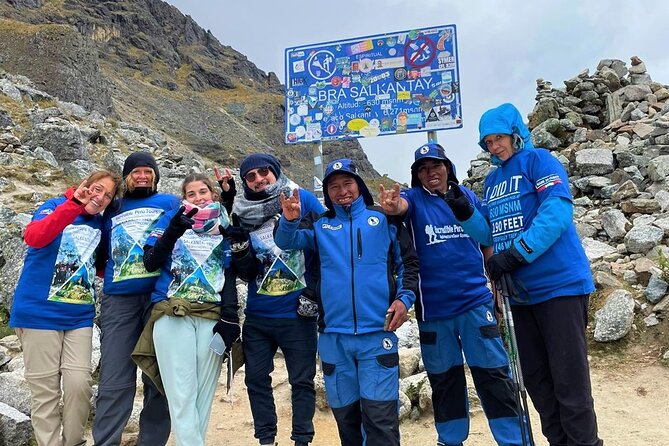
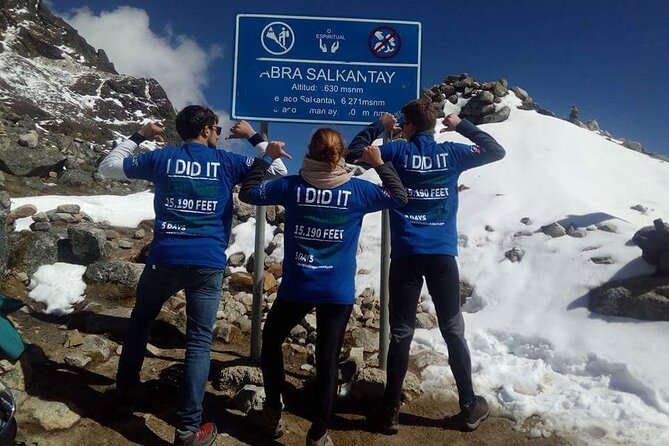
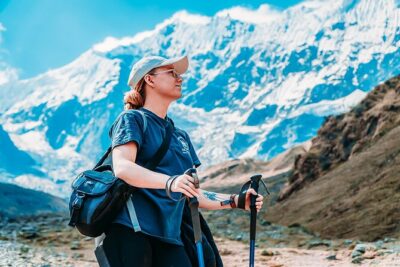
At the Salkantay Pass, you reach 4,630 meters, or 15,190 feet. From here, the views include Salkantay Mountain at 6,271 meters and Humantay Mountain at 5,400 meters. Salkantay is the second-highest mountain in the Cusco region, and its snow-covered summit gives this part of the route its grandest setting.
The pass is also where altitude symptoms can become serious. Headache, nausea, unusual fatigue, dizziness, and shortness of breath should not be brushed aside. Tell your guide early if you feel unwell. The itinerary says the guide carries a first-aid kit and emergency oxygen, but a complaint specifically questioned whether those supplies were present. Confirm this directly before departure.
After a rest at the pass, you descend toward Huayracmachay for lunch at about 1:30 p.m. The descent is welcome after the climb, though uneven rock can be tiring for knees and ankles.
The afternoon brings a marked change in climate. You enter the High Forest, or cloud forest, where the air becomes warmer and vegetation thickens. The trail continues toward Colpapampa, around 2,900 meters, arriving at roughly 4:30 p.m.
A vehicle then takes you for about an hour to Sahuayaco and the Eco Lodge Majestic Sky Domes. The listed arrival time varies slightly, but you should expect to reach the lodge around late afternoon or early evening.
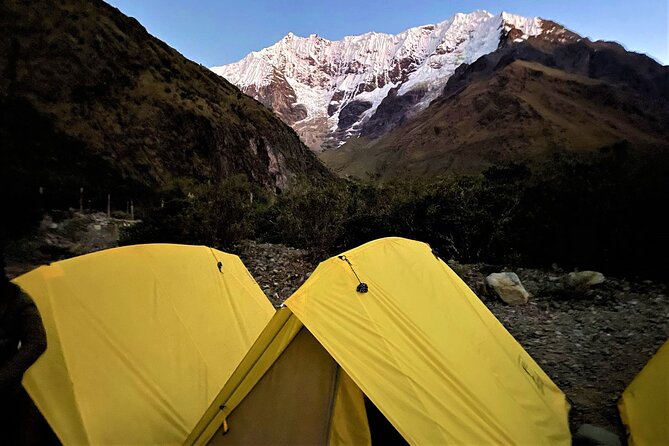
The dome is one of the more unusual parts of the trip. It combines a wood-and-glass structure with a more comfortable overnight setting than a standard tent. Tea, hot chocolate, coffee, popcorn, and cookies are served, followed by dinner.
This night works as a useful middle point. You have completed the hardest climb, but you are not yet at Machu Picchu. The setting also gives you time to recover before the warmer, lower sections of the route.
Day three: coffee farms and the railway to Aguas Calientes
The third morning starts more gently, with a 7 a.m. wake-up and breakfast at 8. You then walk around the Sahuayaco area and visit local plantations.
Bananas, avocados, oranges, medicinal plants, and coffee grow here. Coffee is the main agricultural industry, with production for export. A visit to a local coffee farm gives you a close look at one of the area’s main sources of income, followed by freshly roasted and ground coffee.
This section adds useful local context to the trek. You are not only passing through scenery. You are seeing the farms that support communities along the route. The schedule allows about five hours in the morning, with time to return to the lodge and rest before continuing.
Transport takes you from the lodge to the Central Hydroelectric Station. The vehicle ride matters because it removes a long road section and saves energy for the walk to Aguas Calientes.
From the hydroelectric station, the route takes about three hours. It begins with a short, roughly 15-minute climb, then levels out along the train tracks and the Urubamba River. This is not a high mountain trail, but it can still feel long after two demanding days.
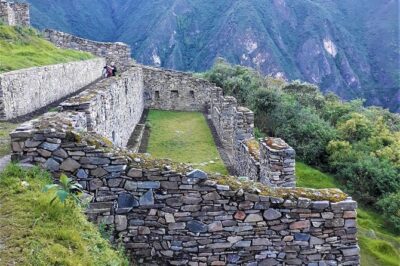
Along the way, you visit Intihuatana, an Inca-era sundial carved into a large natural rock. From this area, you can see the sacred mountains of Huayna Picchu and Machu Picchu. The trail then continues through cloud forest, with thick plant growth and many orchids.
You reach Aguas Calientes, also called Machu Picchu Pueblo, at about 5:30 p.m. The town sits at roughly 2,000 meters, much lower than the pass. A hotel room with a private bathroom is included, along with dinner at a tourist restaurant.
During dinner, your guide explains the next morning’s visit. This briefing is useful because Machu Picchu entry times, buses, walking routes, and mountain access can make the final day feel rushed if you do not understand the plan.
Go to bed early. The final morning begins at 5:30 a.m.
More Four-Day Trips around Cusco:
- Ancascocha Trek To Machu Picchu 4 Days And 3 Nights
★ 5.0 · 77 reviews - 4 Day Inca Trail Trek to Machu Picchu Multi day tour
★ 5.0 · 70 reviews - Salkantay Trek 4 Days to Machu Picchu by Glamping Sky Lodge Dome
★ 5.0 · 68 reviews - 4-Day Lares Trek to Machu Picchu from Cusco
★ 5.0 · 47 reviews
Day four: Machu Picchu, train, and late return to Cusco
After breakfast, you walk to the bus station in Aguas Calientes. The tourist bus takes about 30 minutes up the zigzag road to Machu Picchu.
Arrival is planned for about 6:30 a.m. The guided visit lasts roughly two hours. Your English-speaking guide explains the temples, agricultural terraces, canals, water sources, and other parts of the Inca citadel.
The early start is a good choice. It gives you the best chance of entering near the beginning of the day, though exact conditions depend on the assigned entry time and current site rules. After the guided portion, you have free time for photographs and independent exploration.
Huayna Picchu may be available, but it is not guaranteed. The tour says the entrance ticket is included if available, so do not book this trip assuming that mountain access is certain. Ask about availability before departure if climbing Huayna Picchu matters to you.
After Machu Picchu, you take the bus back down to Aguas Calientes. The return train is an Expedition service to Ollantaytambo. The schedule puts arrival there at about 7:40 p.m., followed by a tourist bus to Cusco.
You reach Cusco around 10 p.m., with hotel drop-off in the city or, if arranged, at a hotel in the Sacred Valley. This is a very long final day. Plan nothing important for the following morning.
Guides, meals, and group size
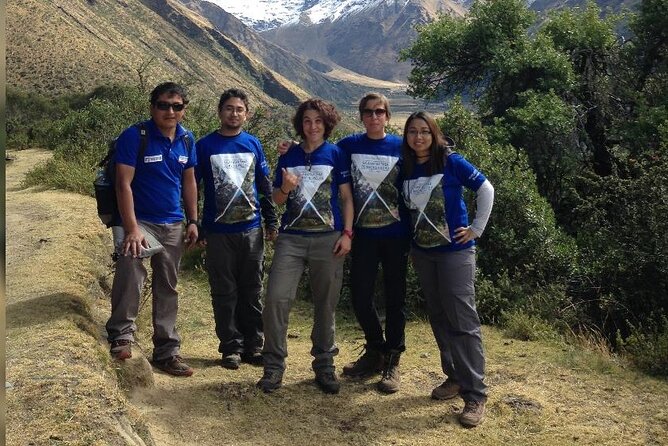
The trip uses an English-speaking professional guide, a cook, a kitchen assistant, muleteers, and horses. A group of up to 10 keeps the walking party small enough for questions and a more personal pace.
The strongest praise attached to this operation concerns the guides. Gilber is described as someone who could explain history and lesser-known facts in extended conversation. Rene is credited with making a demanding route manageable for the whole group. Herbert is described as caring about the group’s experience, though the company itself received serious criticism.
Those details matter because a guide can shape an altitude trek. A good guide notices pace, explains what you are seeing, and keeps the group together. You should still ask who is assigned to your departure, since guide names are not guaranteed.
Food is included throughout the trek, with vegetarian, vegan, and special diets available if requested. The cook prepares four breakfasts, four lunches, and three dinners. Coca tea, coffee, hot chocolate, popcorn, cookies, and regular meals are part of the support system.
The horses carry your main luggage allowance, but you still need a small backpack with water, rain protection, warm layers, sun protection, personal medicine, and anything you need during the day.
Who should book this trek?
You should consider it if you want a full mountain-to-jungle route and prefer a supported trek rather than carrying all your gear. It suits people with moderate fitness who can handle long walking days, early starts, steep climbs, and a late return to Cusco.
It is not a soft introduction to Peru’s mountains. The altitude begins high, day one includes Humantay Lagoon, and day two reaches 4,630 meters. If you have no experience at altitude, plan extra time in Cusco before the trek and speak with a medical professional about your own risks.
The route is also a good fit if you value variety. You get snow peaks, a high pass, cloud forest, local crops, coffee, a railway walk, and Machu Picchu in one trip.
You may prefer another option if you want relaxed pacing, private rooms every night, or a company with a spotless record on communication and safety. One complaint describes delayed responses, incorrect packing advice, and unexpected costs for transport to lower elevation after illness. That is not a minor concern.
Price, cancellation, and practical details
At $590, the package covers far more than the walking itself. Transport, meals, lodging, entry tickets, luggage support, bus tickets, train fare, and the return trip to Cusco are all included. Optional tips for the guide and cook are not required.
The tour normally confirms at booking, unless you book within one day of departure. The cancellation policy allows a full refund if you cancel at least three full days before the start time. Later cancellations and changes are not refunded or accepted, and poor weather may lead to a new date or full refund.
The experience is booked an average of 43 days ahead, so do not leave Machu Picchu arrangements until the last minute. Bring your original passport and confirm your pickup address, lodging names, Huayna Picchu availability, luggage weight limit, and emergency procedures.
Should you book the Salkantay Trek?
Book it if the changing scenery, small group, included support, and high mountain challenge appeal to you. The route itself is excellent, and the package gives you a practical way to connect Cusco, the Salkantay mountains, the cloud forest, and Machu Picchu without arranging every transfer yourself.
Before booking, contact Incredible Peru Tours with direct questions about the assigned guide, first-aid kit, emergency oxygen, altitude evacuation, and the exact first-night accommodation. If you receive clear answers and feel comfortable with the safety plan, $590 is a fair price for the amount included.
If the company cannot answer those questions promptly, choose another operator. Beautiful views do not make poor communication or uncertain emergency support acceptable on a high-altitude trek.
FAQ
What time does the Salkantay Trek begin?
Pickup begins at 5:00 a.m. from a hotel in Cusco. Pickup from hotels in the Sacred Valley is also offered.
How high does the trek go?
The highest point is the Salkantay Pass at 4,630 meters, or 15,190 feet.
How difficult is the trek?
The tour requires a moderate fitness level, but day two is the hardest section. It includes about three hours of climbing from Soraypampa to the pass.
What luggage can the horses carry?
The horses carry kitchen equipment, food, and up to 7 kilograms, or 15 pounds, of your luggage. You carry a smaller daypack and water.
Are meals and special diets included?
Yes. The package includes four breakfasts, four lunches, and three dinners. Vegetarian, vegan, and special diet meals can be prepared if requested.
What transportation is included after Machu Picchu?
The package includes the bus between Aguas Calientes and Machu Picchu, the Expedition tourist train from Aguas Calientes to Ollantaytambo, and tourist transport from Ollantaytambo back to Cusco.
Just added around Cusco
- Small Group: 4-Day Inca Trail Trek to Machu Picchu★ 5.0 · 33 reviews
- 5-Day: Salkantay Trek to Machupicchu and Humantay Lake★ 5.0 · 42 reviews
- Salkantay Trek Standard 5D/4N★ 5.0 · 48 reviews
- Classic Choquequirao Trek – 5 Days / 4 Nights★ 5.0 · 52 reviews
- Salkantay Trek To Machu Picchu 5 Days And 4 Nights★ 5.0 · 44 reviews
- 5 Day – Salkantay trek to Machu Picchu – Group Service★ 4.5 · 27 reviews
- Salkantay 5-Day Trek To Machu Picchu★ 5.0 · 39 reviews
- Salkantay Trek: 5 Days to Machu Picchu★ 5.0 · 33 reviews
Machu Picchu & Inca Trail Treks, side by side.
Machu Picchu: 5-Day Salkantay Trek with Panoramic Train
Read our review →
Ancascocha Trek To Machu Picchu 4 Days And 3 Nights
Read our review →
4 Day Inca Trail Trek to Machu Picchu Multi day tour
Read our review →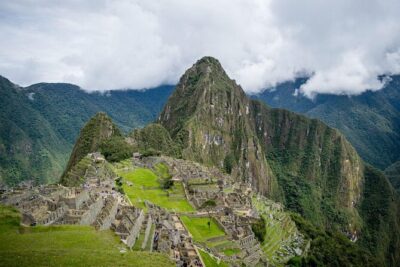
Salkantay Trek 4 Days to Machu Picchu by Glamping Sky Lodge Dome
Read our review →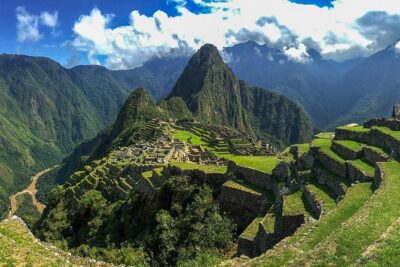
This walk also sits in