
REVIEW · PERU
Ancascocha Trek To Machu Picchu 4 Days And 3 Nights
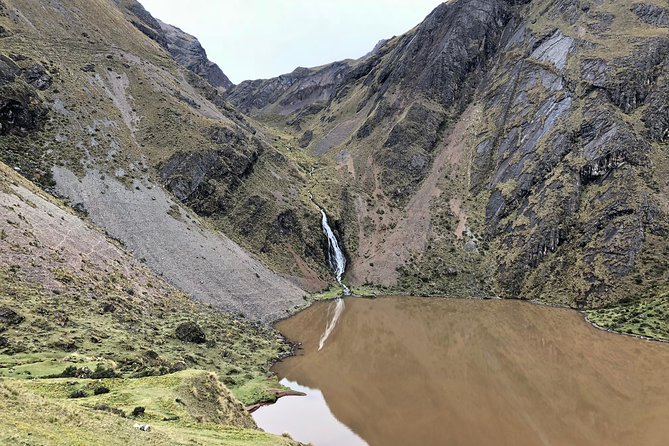
The Ancascocha route gives you a wilder way to reach Machu Picchu. Instead of following the busy Classic Inca Trail or the better-known Salkantay route, you hike through high valleys, past llamas and farmhouses, and over the 14,599-foot Kuychiccasa Pass. The scenery begins with a waterfall and ends at one of the world’s great archaeological sites.
I like the combination of quiet mountain walking and Inca ruins, especially Perolniyoc, which sits above the valley on a cliff-top. I also like that the price includes camping, meals, national park fees, hotel transfers, and a night in Aguas Calientes, so many large costs are handled upfront.
The catch is the altitude. This is a demanding hike, not a gentle sightseeing trip. You’ll reach more than 14,000 feet, spend nights camping, and face long uphill sections. The round-trip bus between Aguas Calientes and Machu Picchu is not included, and the exact guide and later-day schedule should be confirmed before you pay.
Key points to know before booking
- The trail reaches 14,599 feet: The pass is the physical high point of the trip, with steep climbing before an easier descent to camp.
- Perolniyoc combines nature and archaeology: You’ll see the cascade first, then hike to the Inca site above the valley.
- It avoids Peru’s busiest trekking routes: The Ancascocha trail offers a quieter mountain experience than the Classic Inca Trail.
- The package includes practical essentials: Camping, meals, park fees, a guide, transfers, and one night in Aguas Calientes are included.
- Machu Picchu comes with a guided visit: You won’t simply arrive at the ruins and wander alone.
- The group can be as large as 30 people: Small-group attention is a stated feature, but the maximum is not a tiny private party.
Why the Ancascocha trail feels different
The Ancascocha Trek to Machu Picchu is for people who want the journey to matter as much as the destination. Machu Picchu is the headline, of course, but much of the appeal comes before you reach the famous citadel.
The route begins near Soqma, at about 10,512 feet. From there, you walk through high Andean country, passing rural homes, llamas, waterfalls, old ruins, and snow-capped peaks. The trail does not offer the same famous stone stairways and tightly controlled route as the Classic Inca Trail. Instead, it gives you broader mountain views and a stronger sense of remote countryside.
I would choose this route if you want a quieter alternative and enjoy a serious physical challenge. If your main goal is the most iconic archaeological trail to Machu Picchu, the Classic Inca Trail may suit you better. Ancascocha is less about collecting famous trail viewpoints and more about earning the final arrival through open mountain country.
More Machu Picchu and Inca Trail Treks in Peru:
- Salkantay Trek Challenge – 3 Days / 2 Nights
★ 5.0 · 101 reviews - Choquequirao Trek 4 days and 3 nights
★ 5.0 · 81 reviews - Machu Picchu: 5-Day Salkantay Trek with Panoramic Train
★ 5.0 · 79 reviews
From Cusco to Soqma and the Perolniyoc cascade
Your day begins with hotel pickup in Cusco and a drive of about 1 hour and 45 minutes to Soqma. That transfer matters because it gets you away from the city and directly to the trailhead, but it also means an early start and a long first day.
The hike begins with roughly two hours of walking to a lookout for Perolniyoc cascade. The waterfall is one of the first major rewards of the route. You are not simply walking toward a distant mountain view. You get a clear natural stop early in the day, which helps break up the first stretch of hiking.
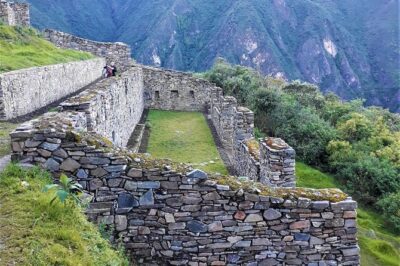
After the cascade, you walk another 45 minutes to the Perolniyoc Inca site. The ruins sit on a cliff above the valley, giving you both archaeology and a wide view of the surrounding countryside. Your guide explains the site’s past, then you have time to move around the ruins.
That combination is one of the best features of the trek. Perolniyoc is not treated as a quick photo stop. You get a waterfall, a high ruin site, and a chance to understand how the location relates to the valley below. Still, remember that the outing is already physically demanding before lunch. The walk may feel easy for a fit hiker, but the altitude makes every uphill section work harder.
The climb to Rayan and the first high-altitude views
From Perolniyoc, the trail climbs steeply for about an hour to Rayan, at approximately 12,139 feet. This is where lunch is served, and the meal is prepared by the trekking chef.
Food is more important than it may sound on a route like this. You are walking for hours at high altitude, so a proper lunch gives you time to stop, eat, and recover before the hardest climb of the day. The package includes breakfast, lunch, and dinner, with buffet-style meals listed for lunch and dinner.
The cooking receives especially strong praise in the available feedback, and the food is described as one of the pleasures of the trip. I would still bring personal snacks, since included meals do not necessarily cover every moment between camps and scheduled stops. Drinks and alcohol are not fully included, and alcohol is available to buy.
Rayan also marks a change in the feel of the trail. You are no longer simply approaching the mountains. You are moving into high country, where the air is thinner and the views open toward snow-covered peaks. If you have only recently arrived in Cusco, take the altitude seriously. A strong fitness level is required, and spending time acclimatizing before the trek is a sensible choice, even though the tour information does not set a required acclimatization schedule.
Kuychiccasa Pass at 14,599 feet
The afternoon brings the toughest section: about three hours of uphill hiking to Kuychiccasa Pass. This is the part that separates a challenging trek from a casual mountain walk.
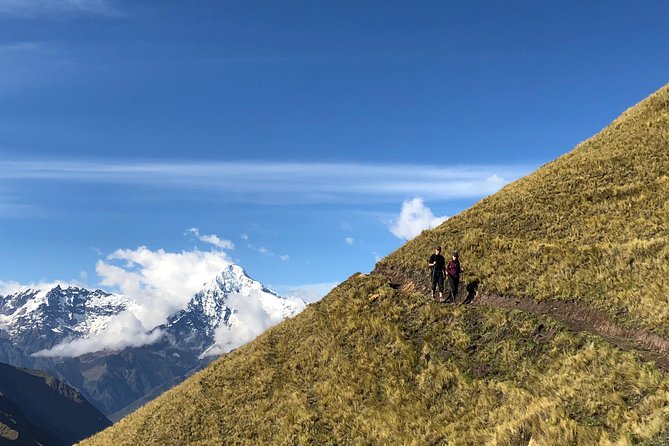
The route passes rustic homes belonging to local farmers. Llamas appear along the way, and the views reach toward the snow-capped Nevadas. These details give the hike a lived-in quality. You are not walking through an empty scenic park. You are moving through an Andean area where farming and mountain life continue.
The pass itself reaches 14,599 feet, or more than 4,400 meters. At that height, the scenery can be spectacular, but the climb can be slow. I would not plan this trip around speed. Walk steadily, follow your guide’s pace, and use the breaks to recover rather than treating them as wasted time.
At the top, the trail opens toward the Chancachuco Valley. This is a major scenic payoff, with the high peaks and valley spread out below. The guide’s role is useful here not only for route-finding but also for helping you understand what you are seeing.
The descent from the pass is easier, but it is not effortless. You walk about 45 minutes downhill to the Chancachuco Valley camp, which sits at roughly 14,147 feet. That camp is still extremely high, so do not assume the end of the climb means the end of the altitude challenge.
More Four-Day Trips around Peru:
- Pokhara: 4-Day Ghorepani, Poonhill & Ghandruk Mountain Trek
★ 5.0 · 132 reviews - 4 Day Wild Tasmania Tour / Wildlife, Nature, Hiking / Inc. Accom
★ 5.0 · 126 reviews - 4 Days Poon Hill Trek
★ 5.0 · 94 reviews - 4-Day Private Poon Hill Trekking Tour
★ 5.0 · 58 reviews
Camping at Chancachuco Valley
The campsite is prepared before you arrive, allowing you to change into warmer clothes and settle in without setting up camp after a long day. Two nights of camping are included in the package.
At this elevation, warmth and rest matter. Bring layers that you can add or remove, along with clothing for cold evenings. The information provided does not specify the exact tent arrangement, sleeping bag type, or personal equipment list, so ask the operator what camping gear is supplied and what you must bring yourself.
Camping is part of the reason this route feels remote, but it is also one of the trip’s practical drawbacks. You should be comfortable with basic camp conditions and limited privacy. The package includes meals and camping gear, but it does not turn a high-altitude trek into a hotel-based holiday.
The company’s preparation is a real benefit. Having the campsite ready and meals organized lets you focus on walking, scenery, and recovery. The support team can include guides, cooks, and horsemen or mule handlers, depending on the departure. Several named staff members, including guides called Lino and Eddy and support workers such as Oscar, Elsa, Eliquin, and Joel, appear in the company’s trek feedback, but you should not assume any particular person will lead your departure.
Reaching Machu Picchu and staying in Aguas Calientes
The route eventually brings you to Machu Picchu, where a guided visit to the ruins is included. This is important because the archaeological site is much more meaningful when you understand the purpose of its terraces, structures, and location.
Machu Picchu is a UNESCO World Heritage Site and one of the New7Wonders of the World. Those labels are familiar, but the physical setting still surprises you. After several days among remote valleys and high passes, arriving at the stone citadel gives the trek a strong finish.
One night at a bed-and-breakfast in Aguas Calientes is included. That gives you a proper base near Machu Picchu after the camping portion of the trip. It also means you do not need to leave the ruins and immediately return to a remote camp.
The round-trip bus from Aguas Calientes to Machu Picchu is not included. Budget for that separately, and confirm how the ticketing works for your departure. The package lists hotel pickup and drop-off, but transport arrangements around the ruins should be clear before you travel.
The supplied itinerary gives detailed timing for the opening trail section but does not spell out every hour of the remaining three days. Ask about the exact train, bus, entrance, and Machu Picchu visiting schedule before booking. That is especially important if you have a flight, train, or other fixed plan after the tour.
What the $730 price covers
At $730 per person, this is not a bargain-basement day trip, but it covers several expensive and useful items. You get hotel pickup and drop-off, a local guide, national park fees, two camping nights, meals, camping gear, and one night at a bed-and-breakfast in Aguas Calientes.
That bundle is valuable because permits, food, staff, transfers, and accommodation can add up quickly on a multi-day trek. It also reduces the need to arrange separate reservations for the camping section and the overnight stay near Machu Picchu.
The price does not cover everything. Excess luggage charges may apply, alcoholic drinks cost extra, and the bus between Aguas Calientes and Machu Picchu is excluded. The listing also says food and drinks are not included unless specified, so read that alongside the separate inclusion of breakfast, lunch, and dinner. Ask exactly which meals and drinks are provided each day.
The maximum group size is 30 people. That is smaller than some mass-market outings, but it is not the same as hiking with two or four companions. If personal attention is a priority, ask about the expected group size for your date and the guide-to-hiker ratio.
Who should book this trek
I would recommend this trek to a fit hiker who wants Machu Picchu by a less crowded route and enjoys long days in the mountains. You should be ready for steep climbs, high altitude, cold camping, and changing scenery from valley farms to snow-capped peaks.
It also suits people who value support. Meals, campsite preparation, park fees, transfers, and a guide are handled for you. That lets you carry less planning responsibility, though you still need to manage your personal clothing, water, snacks, luggage, and altitude needs.
I would hesitate to recommend it if you want a relaxed holiday, dislike camping, or have limited hiking experience at altitude. Children must be accompanied by an adult, and the operator requires a strong level of physical fitness. Service animals are allowed, but the high-altitude terrain and camping conditions still deserve careful consideration.
You can cancel for a full refund if you do so at least 24 hours before the local start time. Cancellations within 24 hours are not refunded, and late changes are not accepted.
Final verdict: a demanding route with real rewards
I like this trek because it gives you more than a quick approach to Machu Picchu. The Perolniyoc cascade, cliff-top Inca ruins, farming communities, llamas, snow-covered peaks, and Kuychiccasa Pass create a varied four-day experience.
The best parts are also the hardest parts. The 14,599-foot pass is a spectacular goal, but the three-hour uphill push to reach it will test you. The quiet trail is a major advantage over busier routes, but remote scenery comes with cold nights, high altitude, and fewer comforts.
Book it if you want a demanding, scenic alternative and are prepared for the physical work. Choose another option if you want the Classic Inca Trail’s famous stonework, a gentler schedule, or a trip with every transport detail included. Before paying, confirm the later-day itinerary, expected group size, assigned guide, camping equipment, and the bus arrangements at Machu Picchu.
FAQ
How long is the Ancascocha Trek to Machu Picchu?
The trek lasts approximately 4 days and 3 nights.
Where does the trek begin?
The hike begins in Soqma, located about 1 hour and 45 minutes by vehicle from Cusco. Soqma sits at approximately 10,512 feet.
What is the highest point on the route?
The highest point is Kuychiccasa Pass, at approximately 14,599 feet.
Is hotel pickup included?
Yes. Hotel pickup and drop-off are included.
How many nights are spent camping?
Two nights of camping are included.
Is a hotel night included?
Yes. One night at a bed-and-breakfast in Aguas Calientes is included.
Are meals included?
Breakfast, lunch, and dinner are included. Buffet-style lunch and dinner are listed, while additional food and drinks are not included unless specified.
Are national park fees included?
Yes. National park fees are included in the price.
Is the bus from Aguas Calientes to Machu Picchu included?
No. Round-trip bus tickets between Aguas Calientes and Machu Picchu are not included.
What level of fitness is required?
A strong physical fitness level is required. The route includes steep climbs, long hiking sections, camping, and high-altitude walking.
What is the maximum group size?
The activity can include a maximum of 30 people.
Can children join the trek?
Yes, but children must be accompanied by an adult.
Are service animals allowed?
Yes. Service animals are allowed.
Can I cancel for a full refund?
Yes, if you cancel at least 24 hours before the experience start time. Cancellations made within 24 hours are not refunded.
Just added around Peru
- Machu Picchu: 5-Day Salkantay Trek with Panoramic Train★ 5.0 · 79 reviews
- Choquequirao Trek 4 days and 3 nights★ 5.0 · 81 reviews
- Full-Day Trek to Humantay Lake from Cusco with Guide★ 4.5 · 66 reviews
- Humantay Lake Full Day Hike★ 5.0 · 75 reviews
- From Huaraz: Hike to the Lagoon 69★ 4.4 · 121 reviews
- Cusco: Rainbow Mountain Tour and Red Valley Hike (Optional)★ 4.7 · 149 reviews
- Salkantay Trek Challenge – 3 Days / 2 Nights★ 5.0 · 101 reviews
- Cusco: Full-Day Rainbow Mountain & Red Valley Trekking Tour★ 4.5 · 121 reviews
4-Day Experiences, side by side.
4-Day Ghorepani, Poonhill & Ghandruk Mountain Trek
Read our review →
4 Day Wild Tasmania Tour / Wildlife, Nature, Hiking / Inc. Accom
Read our review →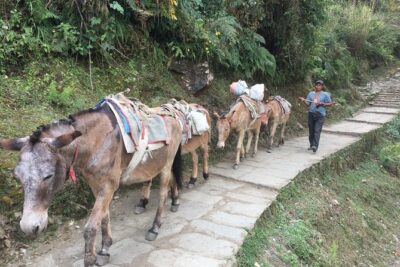
This walk also sits in