
REVIEW · USA
Denali Primitive Survival – 4hr Easy Hiking & Survival Workshop
Denali’s big lesson is simple: beautiful wilderness can turn serious fast. On this four-hour survival workshop, your guide takes you into the woods outside Denali National Park to practice skills that matter when a trail day goes wrong: finding food, choosing shelter, and making fire with very little gear.
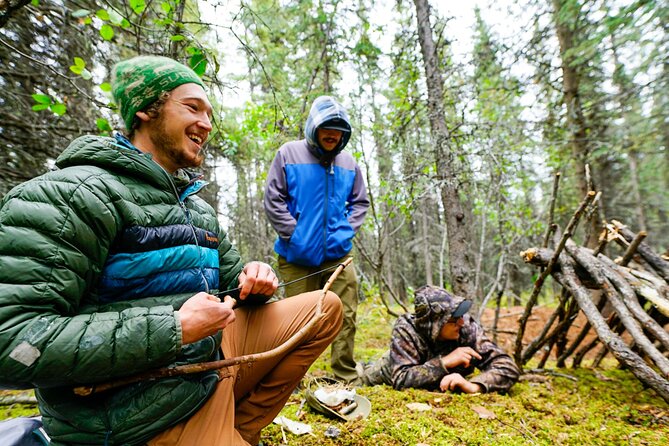
I like the hands-on focus, especially the chance to taste edible berries and learn which mushrooms to avoid. I also like that guide Jade, sometimes spelled Jay in tour details, works patiently with children and beginners, including bow-drill fire practice. The main drawback is time: four hours gives you a useful introduction, but not enough to finish every part of the shelter or master each skill.
Key points at a glance
- Fire from a shoelace: Learn how a simple shoelace can help you start a fire when normal gear is unavailable.
- Edible plants and berries: Your guide points out local food sources and lets you try some safe berries along the way.
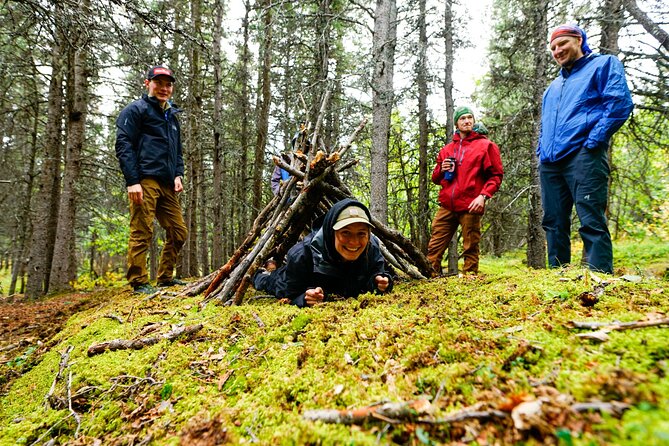
- Debris shelter practice: Work as a group to build a shelter designed to retain enough warmth for sleeping without a pad or sleeping bag.
- A short but active hike: Expect to walk roughly one or two miles, sometimes over uneven ground.
- Small-group instruction: The group is capped at 11 people, giving you a better chance to ask questions and take part.
- Useful gear supplied: Trekking poles, binoculars, and rain jackets are available, though you still need sturdy footwear and warm socks.
A different way to experience Denali
Many Denali outings keep you on a road, viewpoint, or marked trail. This one asks a more practical question: if you had to spend several nights outside, what would you do first?
That shift makes the workshop useful even if you never plan to sleep outdoors without equipment. You begin to notice the forest differently. A berry is no longer just a berry. A fallen branch becomes possible fuel or shelter material. The shape of the ground matters because a poor shelter site can leave you wet, cold, or exposed.
The setting is in the woods just outside Denali National Park, not a remote backcountry camp. That keeps the activity manageable within half a day, while still placing you in the kind of boreal forest that gives Denali its character. You get a taste of wilderness skills without giving up a full day of sightseeing.
The activity is offered in English, and the group can include up to 11 people. That is small enough for direct instruction but large enough that some tasks will be shared. If you prefer a private lesson, this is not described as a private tour.
More Workshops around the USA:
- BarCa Winery Cinqueterre Trekking & Wine Tasting & Pesto Class
★ 5.0 · 48 reviews - Skiathos: Dog Shelter Visit, Hike & Cooking Class with Lunch
★ 4.7 · 40 reviews - Santorini: Cooking Class and Easy Hike
★ 5.0 · 11 reviews
The pickup and walk into the forest
Your guide contacts you the day before to confirm the pickup time and details. Hotel pickup is offered, which saves you from sorting out a separate meeting point in the Denali area. Since the exact pickup time is finalized shortly before the activity, keep your schedule reasonably flexible that morning.
Once you meet the guide, you head toward the woods outside the park. The walking portion is not presented as a demanding mountain hike, but you should be able to cover about a mile or two. The ground may be uneven, and you will be stopping often to look at plants, berries, and useful natural materials.
Bring proper hiking boots. One participant specifically advised good boots, warm socks, and a rain jacket, even though rain jackets are supplied. That is sensible advice for Denali, where conditions can change and wet feet can ruin an otherwise good outing.
Trekking poles are available if you need extra support. They proved useful for one person with knee trouble, so ask for them rather than trying to push through discomfort. Binoculars are also supplied, although the main purpose of the activity is survival instruction rather than wildlife viewing.
Foraging for berries and learning what to avoid
The first teaching section comes during the walk. Your guide points out edible plants and berries, explaining what can be gathered and eaten. The chance to taste some safe berries gives this lesson a practical edge. You are not simply memorizing names from a distance.
The more important lesson may be what not to eat. The workshop includes instruction on dangerous mushrooms, an area where guessing is a poor strategy. You should treat the guide’s explanations as an introduction, not a license to forage alone after the tour. Plant identification takes practice, and local knowledge matters.
This part suits curious beginners because it connects ordinary scenery to basic survival choices. It also gives children something concrete to look for. An 11-year-old took part in one session and received help with the fire exercise, suggesting that older children can follow the instruction when accompanied by adults.
Do not expect a full meal from the foraging stop. Snacks are available, but lunch is not included. If you need a substantial meal, bring your own food and water. The tour lasts about four hours, and a few snacks may not be enough for everyone.
Choosing a shelter site in the Denali woods
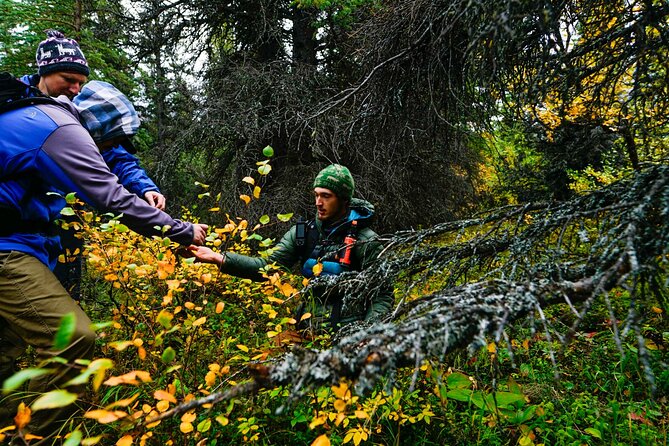
When the guide reaches a suitable place, the group stops moving and begins the main workshop. One of the first questions is where to place a shelter.
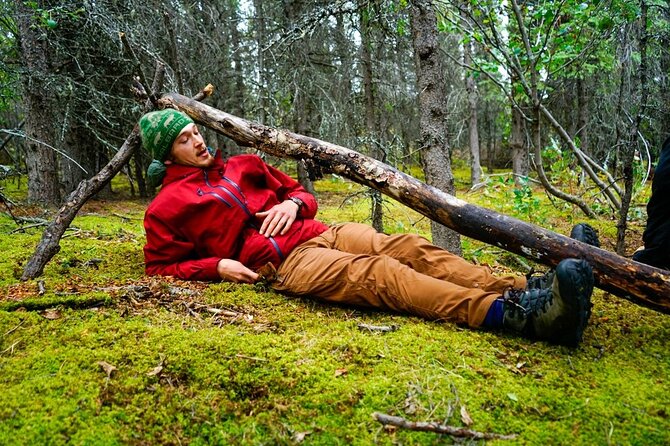
That choice is more important than it sounds. You learn to think about the ground, nearby materials, and the conditions that could affect warmth and dryness. The guide also explains what to do during the first five days of a survival situation, a useful framework because it puts immediate priorities ahead of dramatic but less helpful ideas.
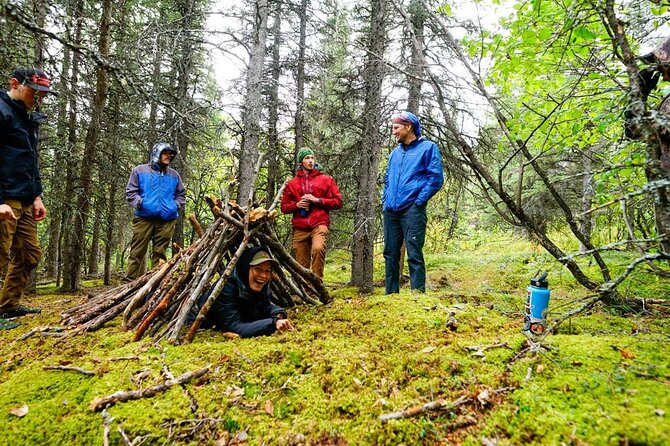
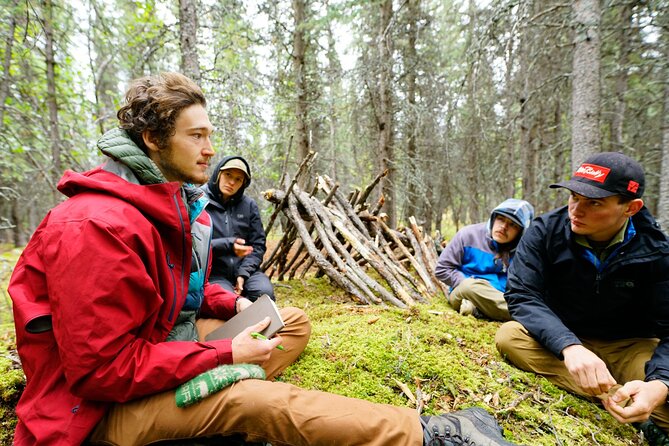
The group then works on a debris hut shelter. The aim is to create something warm enough for a person to sleep in without a sleeping pad or sleeping bag. You will use natural materials and teamwork rather than a ready-made tent.
The time limit matters here. Four hours is enough to learn the method and make meaningful progress, but it may not be enough to complete every layer of the shelter. If you enjoy building projects, you may wish the workshop spent the entire session on this task. Instead, the shelter is one part of a broader lesson covering food, fire, and basic decision-making.
That tradeoff is fair for a first introduction. You leave with a set of steps rather than a finished camp. If your goal is to construct a polished survival shelter from start to finish, look for a longer course. If you want to understand the process and take part in the first stages, this format works better.
More hikes and treks around the USA:
- Lower Antelope Canyon Hiking Tour
★ 5.0 · 6,216 reviews - Boston Freedom Trail Walking Tour with Costumed Guide
★ 4.5 · 2,531 reviews - Multnomah Falls and Columbia River Gorge Half-Day Hiking Tour
★ 5.0 · 2,108 reviews - San Francisco: Yosemite National Park & Giant Sequoias Hike
★ 4.5 · 1,777 reviews
Starting a fire with almost nothing
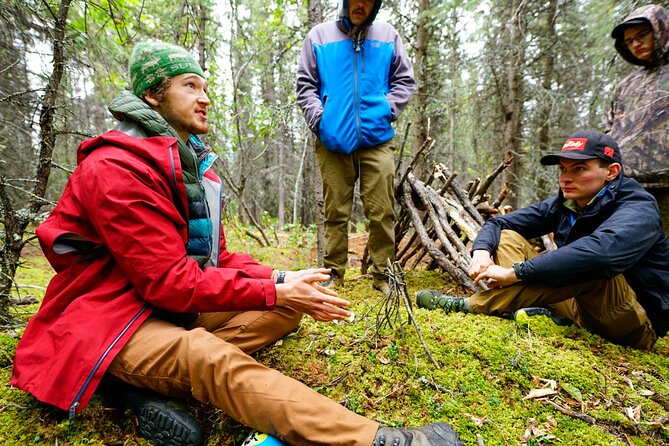
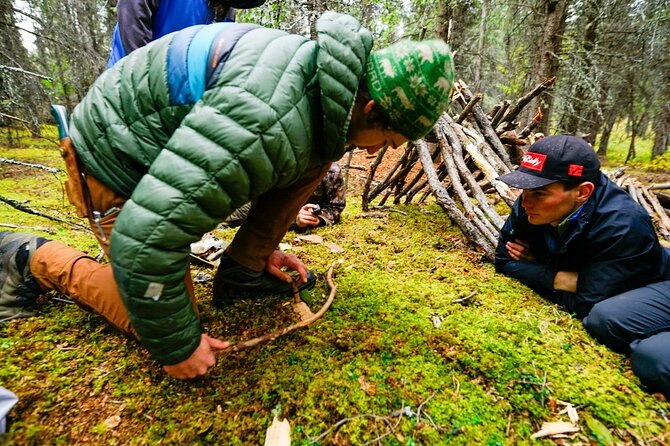
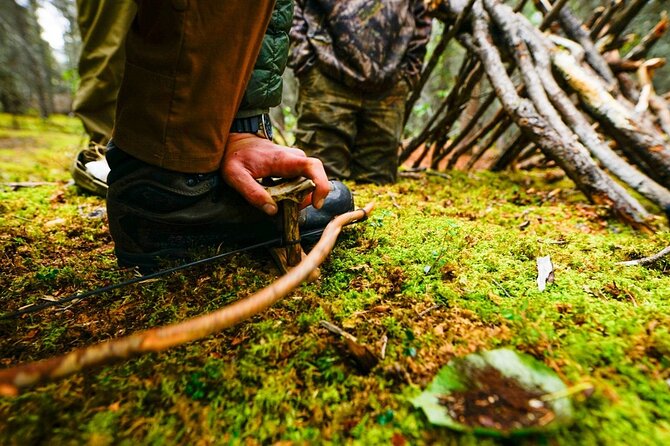
The fire lesson is one of the most memorable parts of the activity. Your guide demonstrates how a shoelace can be used as part of a fire-starting method, showing how survival depends on improvisation when normal equipment is missing.
You may also get the chance to try a bow drill. This takes patience and teamwork. It is not the same as flicking a lighter or striking a match, and the exercise can be especially engaging for children and first-time participants.
Jade is described as patient and willing to help beginners during bow-drill practice. That matters because fire-making can quickly become frustrating when the technique is unfamiliar. A calm guide can help you understand what your hands and body should be doing instead of simply taking over.
The lesson is not a guarantee that you will walk away as a fire expert. The value is in learning the conditions a fire needs, the materials that help, and the effort required to produce an ember. You also gain a better sense of why dry fuel, shelter, and preparation matter in cold weather.
What the four-hour schedule really gives you
This is an introductory workshop, not a full survival certification. You cover several core subjects in a short time:
- Finding and identifying edible plants and berries
- Recognizing mushrooms and other food sources to avoid
- Selecting a location for a shelter
- Building part of a debris hut
- Starting a fire with limited materials
- Thinking through the first five days of an emergency
That list is substantial for one half-day. The benefit is variety. You get a broad look at primitive survival rather than spending the whole session on only one technique.
The compromise is depth. You will not become skilled at every method after one outing. The shelter may remain unfinished, and fire-making may require several more attempts before it feels natural. I would approach the workshop as a practical first lesson and a way to sharpen your awareness, not as a replacement for serious backcountry training.
The pace also depends on the group. With as many as 11 people, some activities may involve watching before taking your own turn. A smaller group can move more quickly, while a larger group can create a better shared-building atmosphere. Families and friends may enjoy that teamwork, especially when younger participants are included.
Is $259 a fair price?
At $259 per person, this is not a cheap walk in the woods. The value comes from the instruction, hotel pickup, supplied rain jackets, trekking poles, and binoculars, along with access to a guide who organizes the activities and provides the setting.
You are also paying for a rare subject. The company presents this as Alaska’s first and only survival tour, and the workshop focuses on skills tied to Athabaskan traditions as well as pioneer and survivalist experience in the region. The activity gives you something different from a standard sightseeing trip, which can make the price easier to justify if you value hands-on learning.
Still, the cost may feel high if you mainly want a gentle nature walk. You could spend less on an ordinary hike, but you would not receive the same structured instruction in fire, shelter, and foraging. Consider how much you want to participate. If you plan to stand back and watch, the price is harder to defend. If you are ready to handle materials, ask questions, and try the techniques, the workshop offers more value.
Because the session is capped at 11 people, you are not paying for a giant group operation. That does not promise constant one-to-one attention, but it does keep the class from becoming a crowd.
Who should book this activity?
I would recommend it to adults and families who want more than views and photographs during a Denali stay. It is a good fit for curious beginners, hands-on learners, and anyone who likes understanding how people lived and traveled before modern equipment made outdoor life easier.
It can also work for families with older children. An 11-year-old participated in bow-drill practice with help from the guide. Parents should still judge their own child’s hiking ability and interest, since the activity involves walking and outdoor instruction rather than a passive attraction.
You should think twice if you cannot comfortably hike a mile or two. The tour is labeled easy, but easy does not mean flat, dry, or effortless. You should also reconsider it if you need a full meal during the outing, since lunch is not included.
The activity is a weaker choice for visitors seeking advanced survival training, a long wilderness expedition, or a fully completed shelter. Its strength is the introduction: a compact lesson that gives you several practical skills and a more alert way of looking at the forest.
Practical details before you go
Wear sturdy hiking boots and warm socks. Pack your own lunch if you want more than the available snacks, and bring water and any personal items you need for four hours outdoors.
Rain jackets, trekking poles, and binoculars are provided. You can still bring your own rain layer if you prefer a particular fit or want a backup. Dress for changing conditions and expect to spend time standing, walking, handling natural materials, and working around a shelter site.
Confirmation is provided when you book. Service animals are allowed, and most people can participate, provided they are capable of the hiking involved. The experience is conducted in English.
Free cancellation is available if you cancel at least 24 hours before the start time. Changes made within 24 hours are not accepted, and late cancellations are not refunded. Since the activity depends on good weather, poor conditions may lead to a different date or a full refund.
Should you book the Denali survival workshop?
Book it if you want a practical, unusual half-day near Denali and like the idea of learning by doing. The strongest reasons are the berry and plant identification, the fire-making practice, and the chance to help build a shelter rather than simply hear a lecture about survival.
Skip it if you want a completed survival course, a long hike, or a guaranteed full meal. For everyone else, $259 buys a focused introduction to the basic choices that can keep you safer outdoors. Pack good boots, accept that the shelter may not be finished, and arrive ready to work with your hands.
FAQ
How long does the Denali Primitive Survival workshop last?
The activity lasts approximately four hours.
Where does the workshop take place?
The guide takes you into the woods just outside Denali National Park.
Is hotel pickup available?
Yes. The guide contacts you the day before the activity to finalize the pickup time and details.
What survival skills will I learn?
You will learn about edible plants and berries, mushrooms to avoid, shelter-site selection, debris shelter construction, and fire-starting methods using very limited materials.
Do I need to bring lunch?
Lunch is not included. The guide has snacks available, but you should bring your own meal if you want a full lunch.
What equipment is provided?
Trekking poles, binoculars, and rain jackets are provided.
How difficult is the hiking?
The tour is described as easy, but you should be capable of hiking about one or two miles. People who cannot manage that distance may not be suited to the activity.
What happens if the weather is poor?
The activity requires good weather. If it is canceled because of poor conditions, you will be offered another date or a full refund.
Just added around the USA
- Private Grand Canyon Full Day Hike★ 5.0 · 53 reviews
- Private Grand Canyon Hike and Sightseeing Tour★ 5.0 · 132 reviews
- Angel Rocks Hike and Chena Hot-Springs Soak Guided Tour★ 4.5 · 13 reviews
- Snowshoe Hike to Castner Glacier Ice Cave★ 5.0 · 35 reviews
- Rocky Mountain Full Day Private Tour & Hike★ 5.0 · 8 reviews
- Rocky Mountain National Park Half Day Hike★ 5.0 · 14 reviews
- Rocky Mountain National Park – Private Hiking Tour★ 5.0 · 17 reviews
- Sunset Hiking Tour in the Rocky Mountains near Denver★ 5.0 · 39 reviews
Workshops, side by side.

BarCa Winery Cinqueterre Trekking & Wine Tasting & Pesto Class
Read our review →
Skiathos: Dog Shelter Visit, Hike & Cooking Class with Lunch
Read our review →

This walk also sits in