
REVIEW · PERU
From Arequipa: Sillar Route Trek
The best part of this four-hour outing is seeing how Arequipa’s pale volcanic stone becomes the city’s churches, mansions, and streets. At Añashuayco Quarry, you can watch the story of sillar take shape, then walk into the narrow Culebrillas Canyon to find old Wari petroglyphs.
I like the easy price and the mix of working quarry, canyon walk, and volcano views. I also like that guides such as Mike, Jose, Julia, Alexandra, and Roni have been praised for clear English, helpful local advice, and good explanations. The main drawback is pace: busy photo stops or city traffic can leave the quarry feeling rushed.
Key points to know before you go
- Sillar is more than a photo backdrop: You learn how Arequipa’s famous white volcanic building stone is cut and used.
- Añashuayco Quarry is still active: Stonemasons work the ignimbrite walls, and you may be invited to try cutting a block.
- Culebrillas is the strongest stop: The 20 to 25-minute walk passes through canyon walls that reach 15 to 20 meters.
- Ancient art comes at the end: Wari petroglyphs, made more than 1,000 years ago, appear inside the canyon.
- The afternoon departure has special light: The 2:00 PM outing can catch warm evening color on the rock.
- Bring cash and sensible gear: Entrance costs 18 soles total, and you should carry sunscreen, insect repellent, water, and closed shoes.
Why Arequipa’s white stone matters
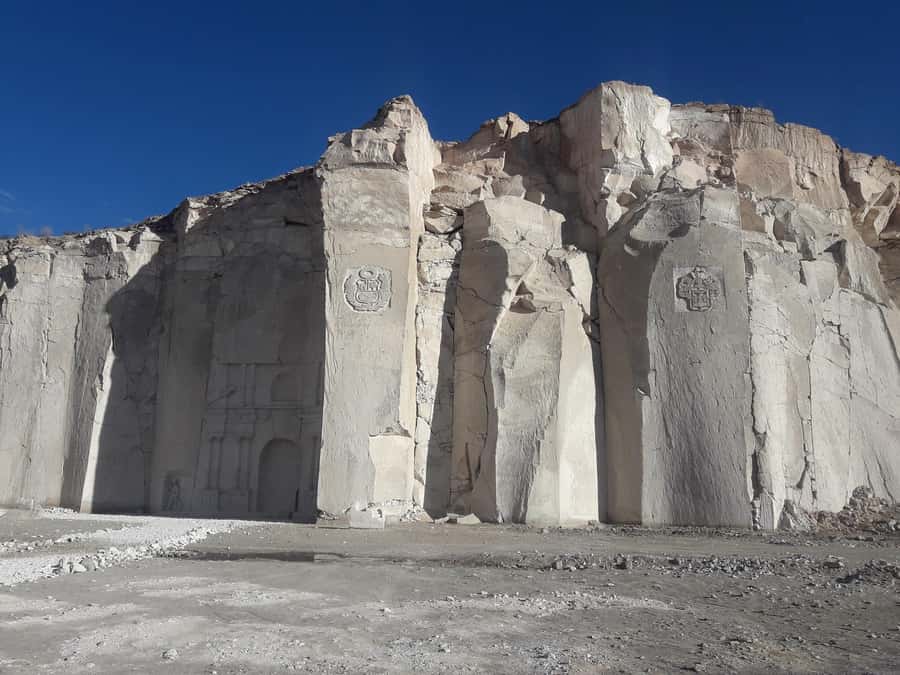
Arequipa is famous for its pale buildings, but it is easy to admire the city without knowing what gives it that distinctive look. The answer is sillar, a light volcanic stone formed from deposits of ignimbrite. Local builders have used it for churches, courtyards, arches, and façades for generations.
This tour takes you outside the city to see the source. That change in setting matters. Instead of looking only at finished colonial architecture, you see the rough walls where the stone is extracted and learn how large blocks become building pieces.
The experience is not a polished archaeological site. Añashuayco is a working quarry, and the stone walls are the result of extraction. That makes the visit feel more connected to present-day life, but it also means some of the stop can feel industrial rather than grand.
The tour costs $12 per person, which is low for transport, a guide, and three different stops. Add 18 soles for entrance fees, paid separately in cash. At that total, I see this as a strong half-day value, especially if you want to get outside central Arequipa without committing to a full-day trip.
More hikes and treks around Peru:
- From Cusco: 7 Lakes Ausangate Trek with Breakfast and Lunch
★ 4.8 · 360 reviews - From Arequipa: 2-Day Colca Canyon Trekking Tour
★ 4.8 · 243 reviews - Cusco: Rainbow Mountain Tour and Red Valley Hike (Optional)
★ 4.7 · 149 reviews
Meeting in central Arequipa at 9:15 AM
The morning departure begins at the main office on C. Álvarez Thomas 115, near the coordinates provided for the meeting point. Your name is checked there, followed by a few instructions before the vehicle leaves.
The stated departure is 9:15 AM. The trip returns to central Arequipa around 1:30 PM, near the main square area on Av. La Marina. The tour is advertised as four hours, though the detailed timing can stretch a little beyond that, so I would avoid booking another fixed activity immediately afterward.
There is also a 2:00 PM departure. I would choose the afternoon option if you prefer softer light and do not mind a later return. Several people have found the sunset color on the quarry and canyon especially attractive, although traffic back into Arequipa can be heavier later in the day.
Transport is included. You may ride in a van or a larger open-sided vehicle depending on the departure. One group had about 25 people, so this is not a private outing. The vehicle was described as comfortable and clean, but not necessarily air-conditioned. If you are sensitive to sun or heat, bring a hat and water.
The Volcanoes and Andenerias Viewpoint
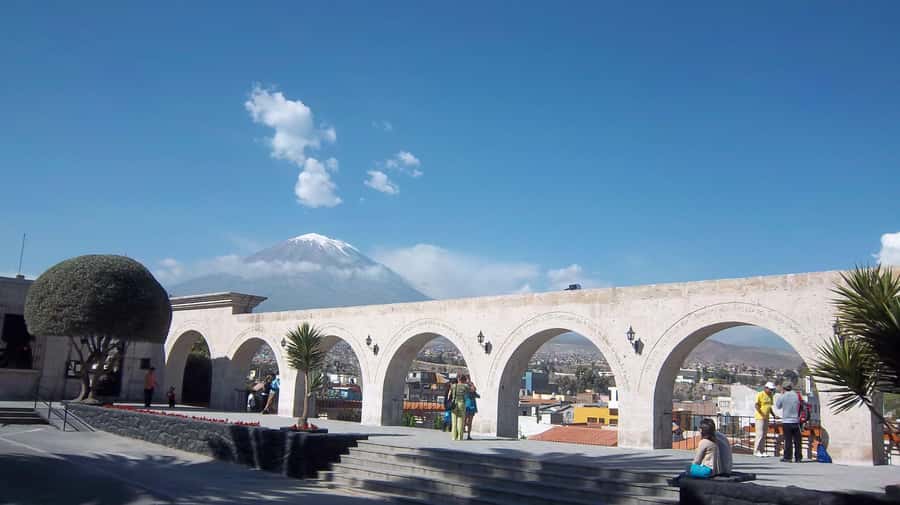
The route may begin with a viewpoint over the volcanoes and the Chilina Valley. This is a brief orientation stop, not a major sightseeing session. You get a broad view of the volcanic setting around Arequipa and a chance to take photographs before heading toward the quarry.
The exact viewpoint can vary by season. The plan may use another traditional lookout where the volcanoes are visible. This flexibility is practical, but it means the opening stop is not always identical.
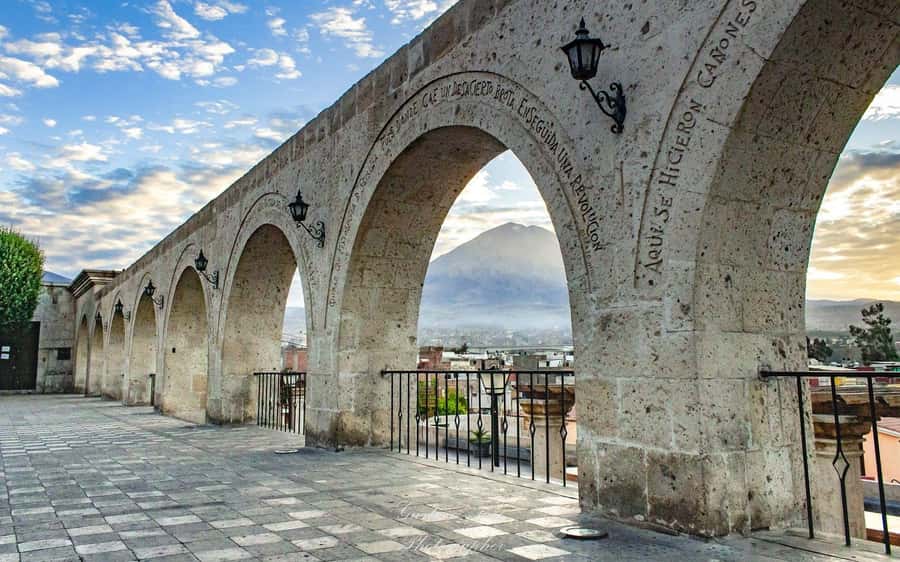
I find this stop useful because it places the quarry in context. Arequipa’s stone is tied to the volcanic terrain around the city, and the view helps explain why the region looks so dry, open, and dramatic. Still, if you have already visited the Yanahuara viewpoint, you may find this part familiar. One sensible criticism is that the lookout can take time away from the quarry, where some people want more room for photographs and explanations.
Expect roughly 25 minutes here, including the guide’s talk and free time. The volcanoes may be clear, but visibility depends on conditions.
Añashuayco Quarry and the making of sillar
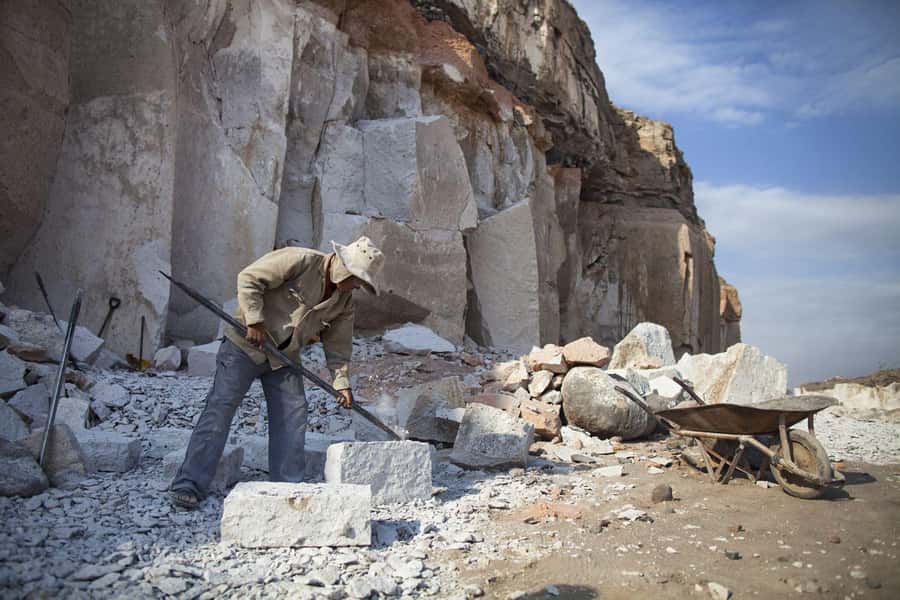
After about 45 minutes on the road, you reach Añashuayco Quarry. This is the central stop for anyone curious about the material behind Arequipa’s pale architecture.
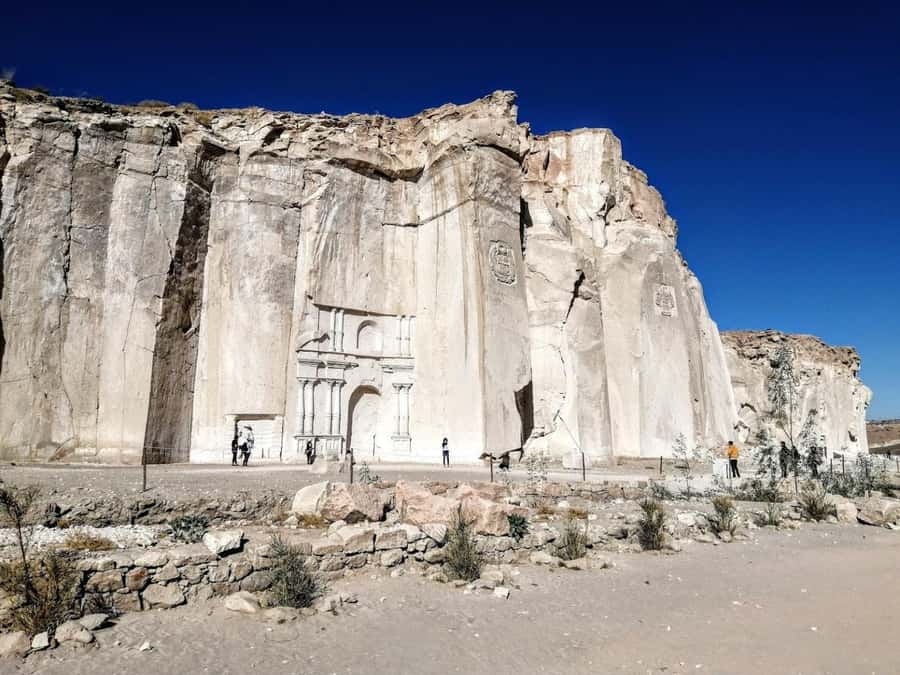
The quarry forms a broad canyon of tall ignimbrite walls. The cliffs were shaped by the removal of stone, and the exposed layers show the scale of the work. It is a striking place, though not in the same way as a natural canyon. You are looking at a working area changed by people over time.
Your guide explains where sillar comes from, how it is produced, and how it has been used in Arequipa. The strongest guides make the connection between the rough blocks under your feet and the carved façades you see in the city. English and Spanish are both offered, but bilingual explanations can take longer, especially in a larger group.
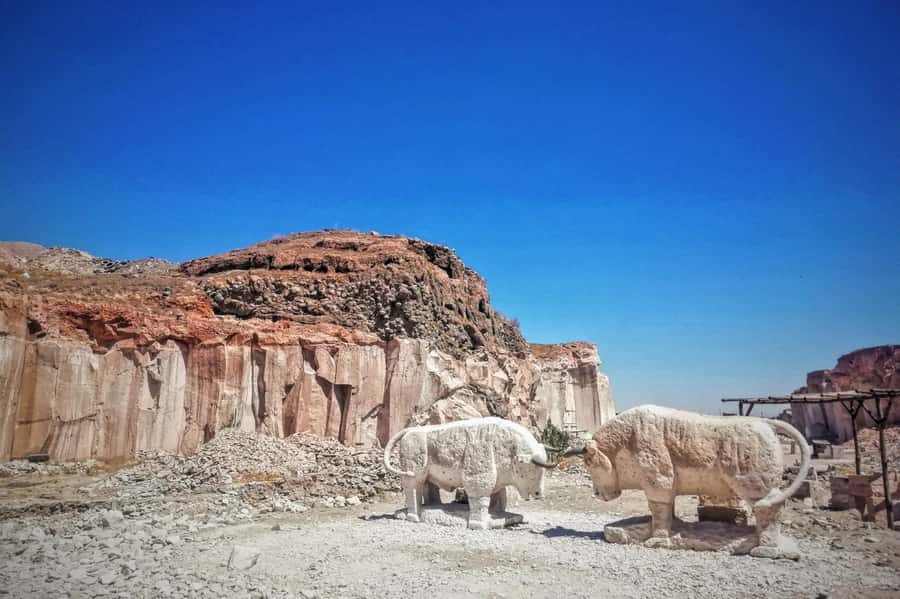
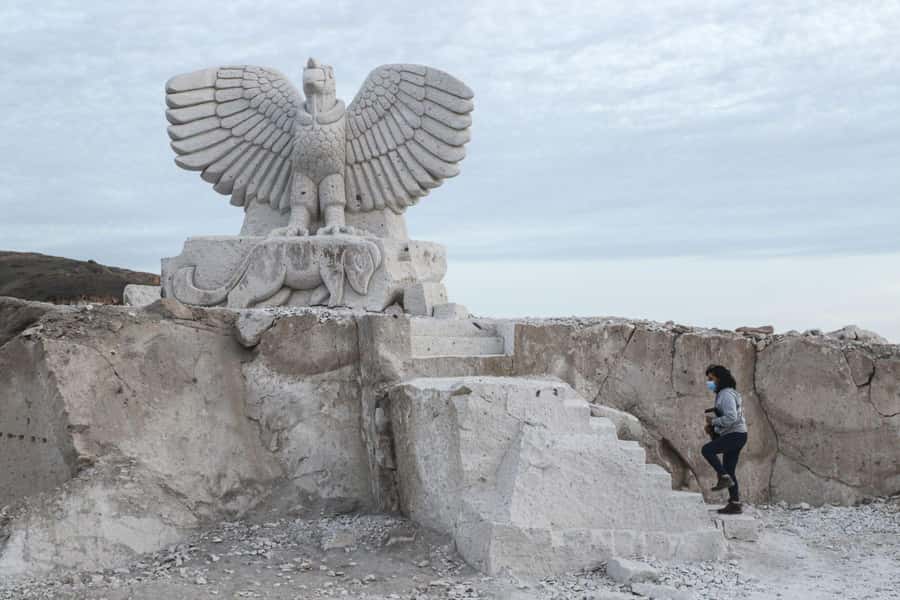
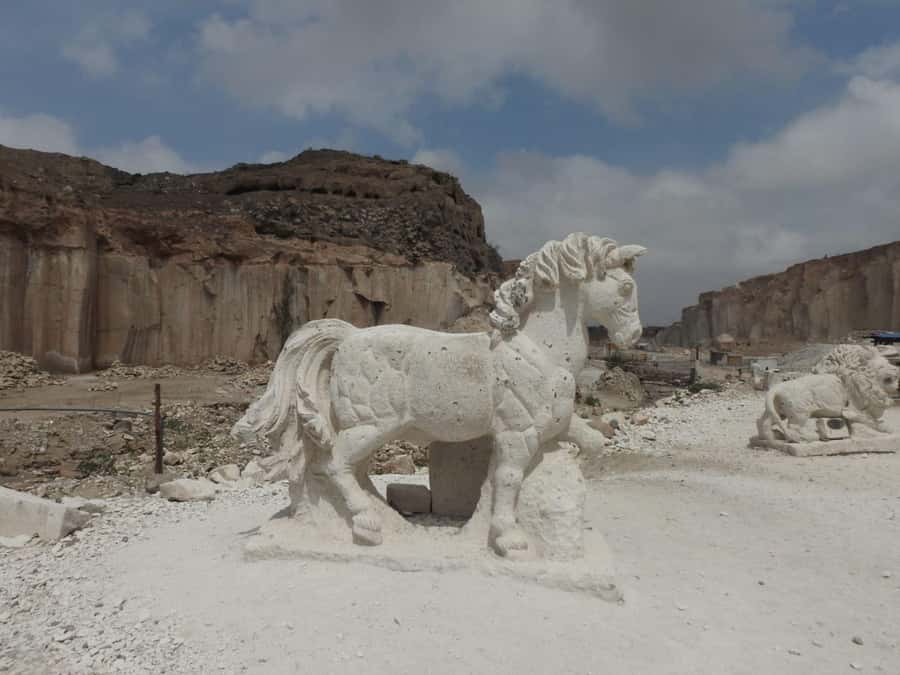
The quarry also has a large stone carving of the Church of the Company of Jesus. This is a modern craft display rather than an old church, and that distinction is worth keeping in mind. Some people enjoy posing with the stone animals and other carvings; others find this part too much like a photo stop.
There may be a chance to visit a stonemason and hear about the daily work. You can sometimes try cutting a block yourself. That small hands-on moment helps explain that sillar work is physical, careful labor, not simply decorative carving.
The planned visit lasts about 45 minutes. That can be enough for the basic explanation, the carving, and photographs. It can also feel short when several groups arrive together. If you want your own photographs, take them early rather than waiting until the end.
Same trailheads, a different kind of day:
- From Huaraz: Hike to the Lagoon 69
★ 4.4 · 121 reviews - Cusco: Full-Day Rainbow Mountain & Red Valley Trekking Tour
★ 4.5 · 121 reviews - Salkantay Trek Challenge – 3 Days / 2 Nights
★ 5.0 · 101 reviews - 2 Day 1 Night Trek / Colca Canyon
★ 4.5 · 92 reviews
Walking into Quebrada de Culebrillas
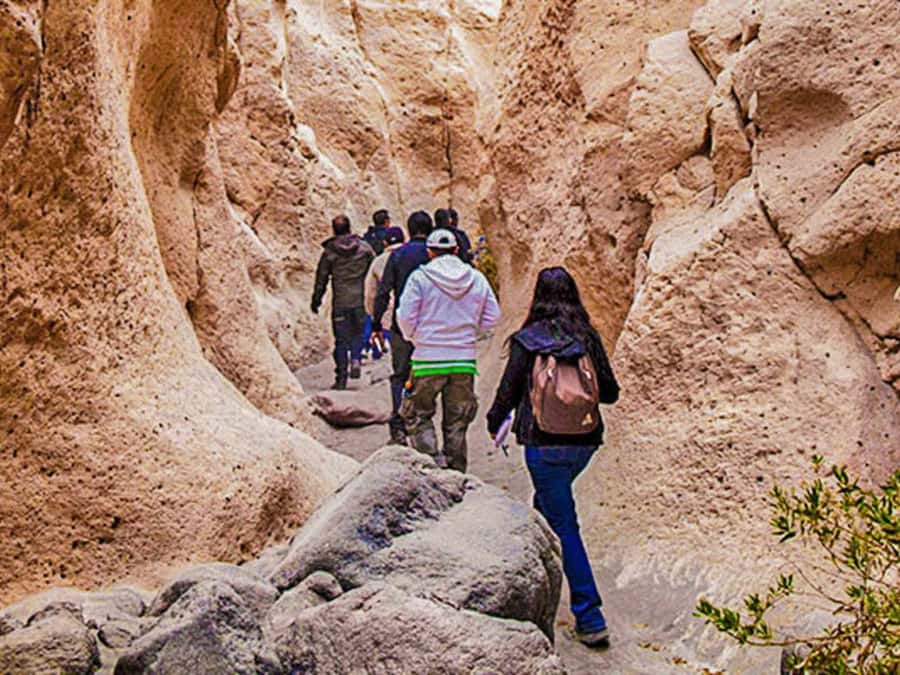
About 20 to 30 minutes after leaving Añashuayco, the vehicle reaches Quebrada de Culebrillas. For me, this is the most rewarding part of the outing because it changes the mood completely. You leave the quarry and walk into a narrow canyon formed by water.
The walk takes around 20 to 25 minutes. The walls begin at roughly 15 to 20 meters and grow taller as you go farther inside. The route is short, but the ground is uneven enough that closed shoes are important. This is not a demanding mountain hike, yet it is still a real walk rather than a quick step from the bus to a viewing platform.
The canyon gives you shade in places, but you should still use sunscreen and carry water. Insect repellent is also worth packing. One person specifically warned that participants with walking difficulties struggled in the narrow canyon, so I would not treat this as fully accessible.
The changing height of the walls makes the walk more interesting than the numbers suggest. You start in an open section, then feel the canyon close around you. The simple act of walking between the stone walls gives you a better sense of the region’s geology than a distant viewpoint can.
Culebrillas can become crowded when several tour groups arrive at once. A good guide may adjust the order of the stops to avoid the worst of the crowds. If your group starts here, you may have a quieter walk before the larger groups arrive.
Wari petroglyphs and apachetas
At the end of the canyon walk, look for petroglyphs associated with the Wari culture and dated to more than 1,000 years ago. They are not presented as a huge museum-style collection. You need to pay attention and listen to the guide to understand what you are seeing.
This is one reason not to rush the canyon. The stone drawings are easy to treat as decoration if you do not know their age or cultural setting. Your guide provides the useful context, while the canyon itself gives the markings a natural setting that a formal exhibit cannot copy.
On the way out, you will see apachetas, small piles of stones placed one on top of another. Here they are described as offerings of gratitude toward nature and as symbols of good luck. The custom adds a quiet spiritual note to the walk, though you should avoid adding stones yourself unless your guide says it is appropriate.
The combination of petroglyphs, water-shaped rock, and apachetas makes Culebrillas feel more layered than the quarry. The quarry explains present-day stone work. The canyon connects the area with much older human activity and local practice.
Guides, language, and the pace of the visit
The tour provides a live guide in English or Spanish. Guide quality matters here because the scenery alone does not explain the stone work, the volcano names, the Wari markings, or the apachetas.
Recent departures have included guides named Mike, Jose, Alexandra, Julia, Roni, and Alexa. Mike has been noted for clear English and useful restaurant suggestions. Jose has explained topics ranging from sillar and volcano names to Arequipa food and the meaning of stacked stones. Alexandra and Julia have also been praised for giving explanations in both English and Spanish.
That does not mean you will receive a particular guide, so I would judge the experience by the structure rather than one individual. The strongest approach is to tell the guide early which language you need. In a bilingual group, the talk may alternate between Spanish and English, and you may need to stay close to hear every explanation.
The schedule is generally firm. You receive a set period at the quarry, a short canyon walk, and time at the viewpoint. That keeps the tour efficient, but it limits the chance to linger. If photography is your main goal, a private visit would offer more freedom, though it would not match this price.
What to pack and what to pay
The extra entrance charge is 18 soles total. Bring Peruvian cash in small denominations. The tour does not include an ATM stop, and you may have difficulty paying if you arrive with only large bills.
I would pack:
- Closed walking shoes with a firm sole
- Sunscreen and a hat
- Insect repellent
- Water
- Small cash in soles
- A phone or camera with spare battery space
The day can be bright and dry, while the canyon walk still calls for practical footwear. Open sandals are a poor choice. You do not need serious hiking equipment, but you do need shoes that handle uneven ground.
The low price makes this a useful choice after arriving in Arequipa, especially if you have only a free morning or afternoon. You get transport beyond the city, a guide, and three contrasting stops without spending a full day on the road.
Who should book the Sillar Route Trek
I would recommend this tour if you want a short introduction to Arequipa’s volcanic setting, local stone work, and nearby archaeological details. It fits well into a first day in the city or a spare half-day between longer excursions.
It suits you best if you enjoy seeing how a place works, not just photographing finished monuments. The quarry is active, the canyon walk is manageable for most people who can walk on uneven ground, and the petroglyphs reward attention.
I would think twice if you dislike organized group transport or want long, quiet stretches at each stop. The stone carvings at Añashuayco can feel too staged, the viewpoint may repeat sights you have already seen, and traffic can affect the return. The canyon is the most natural and memorable section, but it can be crowded.
Choose the morning for an earlier return and a simpler schedule. Choose the 2:00 PM departure for warmer light and possible sunset color, while allowing more time for traffic.
FAQ
How long does the Sillar Route Trek take?
The activity lasts about four hours. The morning schedule begins at 9:15 AM and returns to central Arequipa at about 1:30 PM.
What is the price of the tour?
The listed price is $12 per person. Entrance fees are extra and cost 18 soles in total.
Where does the tour begin?
You meet at the main office on C. Álvarez Thomas 115 in Arequipa. Your name is checked there before departure.
Is there an afternoon departure?
Yes. A 2:00 PM departure is also available.
Which languages are offered?
The live guide service is available in English and Spanish.
What places does the tour visit?
The tour visits Añashuayco Quarry, Quebrada de Culebrillas, and a viewpoint for the volcanoes and Chilina Valley. The exact viewpoint may vary by season.
How much walking is involved?
The Culebrillas visit includes a walk of about 20 to 25 minutes through a canyon. The ground can be uneven, so closed shoes are recommended.
Are the entrance fees included?
No. You pay 18 soles separately for entrance fees. Cash in Peruvian soles is recommended.
Can I cancel the booking?
You can cancel up to 24 hours in advance for a full refund. You can also reserve now and pay later.
Should you book it?
Book this outing if you want an affordable half-day that explains why Arequipa is built from pale volcanic stone. The Culebrillas Canyon walk and Wari petroglyphs give the tour real substance, while the quarry shows the continuing work behind the city’s famous appearance.
Skip it if you want a private, slow-paced visit or have already seen similar viewpoints and staged stone carvings. For most visitors with a free half-day, though, the combination of transport, bilingual guiding, working quarry, canyon, and volcano views makes $12 plus the 18 soles entrance fee a fair deal.
Just added around Peru
- Ancascocha Trek To Machu Picchu 4 Days And 3 Nights★ 5.0 · 77 reviews
- Machu Picchu: 5-Day Salkantay Trek with Panoramic Train★ 5.0 · 79 reviews
- Choquequirao Trek 4 days and 3 nights★ 5.0 · 81 reviews
- Full-Day Trek to Humantay Lake from Cusco with Guide★ 4.5 · 66 reviews
- Humantay Lake Full Day Hike★ 5.0 · 75 reviews
- From Huaraz: Hike to the Lagoon 69★ 4.4 · 121 reviews
- Cusco: Rainbow Mountain Tour and Red Valley Hike (Optional)★ 4.7 · 149 reviews
- Salkantay Trek Challenge – 3 Days / 2 Nights★ 5.0 · 101 reviews
Peru Hiking Tours, side by side.
7 Lakes Ausangate Trek with Breakfast and Lunch
Read our review →

Rainbow Mountain Tour and Red Valley Hike (Optional)
Read our review →
Full-Day Rainbow Mountain & Red Valley Trekking Tour
Read our review →
This walk also sits in