
REVIEW · USA
Exit Glacier Ice Hiking Adventure from Seward
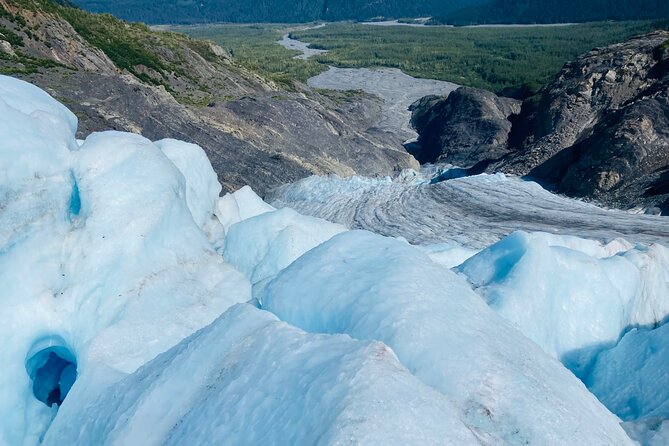
Walking on a real glacier is the main event here, but getting there takes work. You hike uphill for roughly two hours, cross uneven ground, then spend about two hours on Exit Glacier before retracing your route. The ice can be startlingly blue, and guides may lead you to moulins, waterfalls, crevasses, and safe viewpoints.
I like the excellent guide support, especially for first-time glacier hikers. I also like the practical setup: transport from Seward, all major glacier gear, a turkey wrap lunch, and a small group capped at 20 people. The drawback is clear: this is a strenuous full-day hike, not a gentle walk to a scenic overlook.
The biggest challenge is the long uphill approach and steep return. Good boots, steady fitness, and comfort on uneven ground matter more than prior glacier experience. If heights bother you, tell your guide early so easier routes can be considered.
Key points before you commit
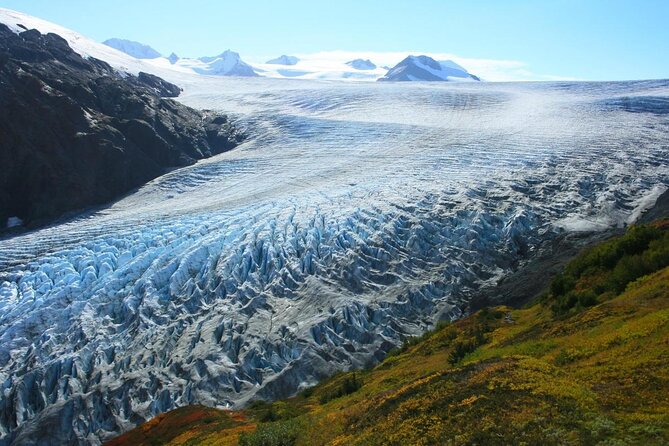
- The glacier comes after a hard approach: Plan on roughly two hours uphill before reaching the ice.
- Guides handle the technical gear: You receive crampons, a helmet, harness, trekking poles, and a small backpack, with instruction before glacier travel.
- Lunch is served with glacier views: The included meal is a turkey wrap, granola bar, and fruit.
- Seward pickup keeps the day simple: Round-trip transport to Kenai Fjords National Park is included.
- Guides add much more than safety: Al, Tate, Rebecca, Jack, Brandon, Adriana, Emily, and others have been praised for explaining plants, wildlife signs, glacier features, and local history.
- Late-season and early-season conditions can differ: Deep snow is possible in late May, while mosquitoes may appear during warmer periods.
Reaching Exit Glacier from Seward
The day begins at Kenai Backcountry Adventures on Seward Highway, or with pickup at your Seward hotel. Pickup may begin as early as 8:00 a.m., while the listed start time is 9:00 a.m. Your exact pickup time is confirmed after booking.
That transport is useful. You do not need to worry about finding the park, coordinating parking, or driving after a tiring hike. If you have your own vehicle, you can meet at the company office and follow the transport to the park.
The drive itself is not the attraction. It is the practical bridge between Seward and Kenai Fjords National Park. Once at the park, the real outing begins, with the approach trail taking up a large part of the day.
The tour lasts about eight hours in all. That sounds generous, but you need nearly every minute. The route includes the walk to the glacier, gear fitting and instruction, time on the ice, lunch, and the return hike.
More Glacier Hikes in the USA:
- Glacier Hike on Matanuska Glacier – Best Vacation Value
★ 5.0 · 463 reviews - Matanuska Glacier Hike Day Tour
★ 5.0 · 396 reviews - Full-Day Matanuska Glacier Hike And Tour
★ 5.0 · 216 reviews
The two-hour climb before the ice
This is where many people underestimate the outing. The glacier is not sitting beside the road waiting for you. You climb for around two hours over uneven ground, with steep sections and changing conditions.
Several people have described the route as strenuous, and that word deserves to be taken seriously. One account described about 2.5 hours of uphill hiking, followed by glacier travel and another 2.5 hours back down. Exact timing can vary, but the message is steady: expect a long day on your feet.
The approach has its own rewards. Guides may point out native plants, bear claw marks on trees, and features of the park that you would likely miss on your own. Al, who has an environmental science background, has been especially praised for explaining plants and the way ice and water shape the area. Adriana, Joe, Brandon, and others also add natural and historical context along the way.
I like that the guides do not treat the walk to the glacier as dead time. Scenic snack stops help break up the climb, and a good guide can adjust the pace. That said, a slower pace does not remove the physical demand. You still have to climb, then descend the same rough route after your legs have already worked hard.
Late May may bring deep snow over much of the trail. That can make footing harder and leave you feeling the outing for a few days. Conditions vary, but sturdy boots and waterproof layers are useful safeguards.
Learning to walk safely on the ice
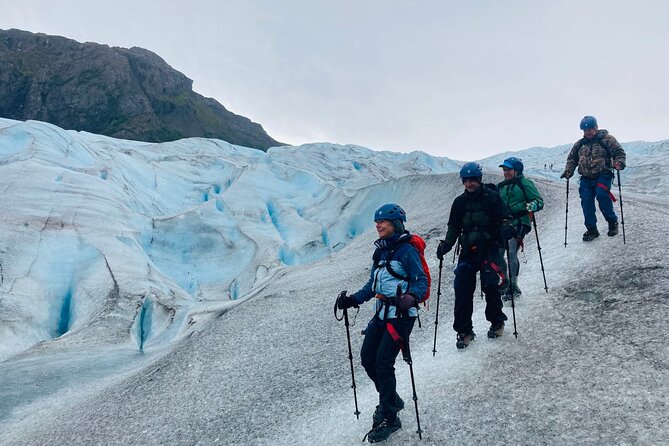
Once you reach Exit Glacier, the guides fit the group with the gear needed for glacier travel. The package includes crampons, helmets, harnesses, trekking poles, and a small backpack. You also receive instruction, so first-timers are welcome.
Crampons change the way you walk. You need to place your feet firmly so the points catch the ice instead of shuffling along. This may feel awkward at first, but the guide shows you how to adjust your stride and use the equipment.
The harness becomes important around steeper or exposed sections. Some routes may include a chance to look into a crevasse while secured, though you can opt out of anything that makes you uncomfortable. One participant chose not to peer down into a crevice, and that is a sensible choice if heights are a serious concern.
Guides have been praised for clear instructions and calm supervision. Names that come up often include Tate, Al, Rebecca, Jack, Brandon, Adriana, Emily, Dahlia, and Natalie. The individual guide on your date will vary, but the best part of this operation is the close attention to pace, footing, and comfort.
You are not simply handed equipment and sent onto the ice. The guide teaches you how to use it, watches how the group moves, and can look for easier paths when a steep section causes trouble. That support is especially valuable if this is your first time using crampons or wearing a harness outdoors.
Blue ice, crevasses, moulins, and waterfalls
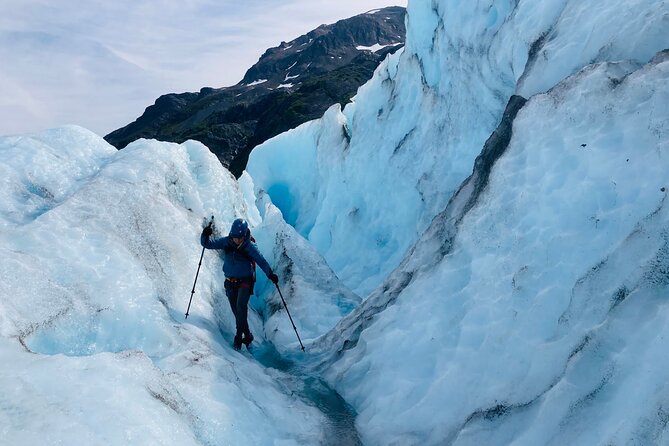
Exit Glacier is the reason to accept the hard approach. Once on the ice, you get a close view of a glacier as a moving body of ice, not just a white shape seen from a distance.
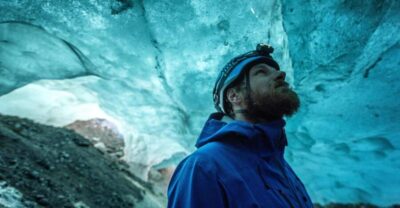
The ice can show intense blue tones, especially in compressed sections. You may see crevasses, water channels, moulins, and waterfalls. These features give the glacier scale and character, and the guide explains how to move around them safely.
The outing is not built around a quick photo stop. You spend roughly two hours on the glacier, depending on conditions, group pace, and the route available that day. That is long enough to practice walking with crampons, look closely at the ice, and take photographs without feeling rushed through the entire glacier portion.
The setting also carries a strong sense of change. Nearly 40 glaciers flow from the Harding Icefield, yet Exit Glacier is changing rapidly. Walking on it gives you a direct look at a place that does not stay fixed. Your guide can help connect the visible ice, meltwater, plants, and surrounding terrain to that larger story.
You should still keep expectations realistic. Weather, snow, and ice conditions control where the group can go. No glacier route can promise a particular crevasse, waterfall, or shade of blue. The value is in seeing the glacier up close under the conditions available that day.
More hikes and treks around the USA:
- Lower Antelope Canyon Hiking Tour
★ 5.0 · 6,216 reviews - Boston Freedom Trail Walking Tour with Costumed Guide
★ 4.5 · 2,531 reviews - Multnomah Falls and Columbia River Gorge Half-Day Hiking Tour
★ 5.0 · 2,108 reviews - San Francisco: Yosemite National Park & Giant Sequoias Hike
★ 4.5 · 1,777 reviews
Lunch beside the glacier
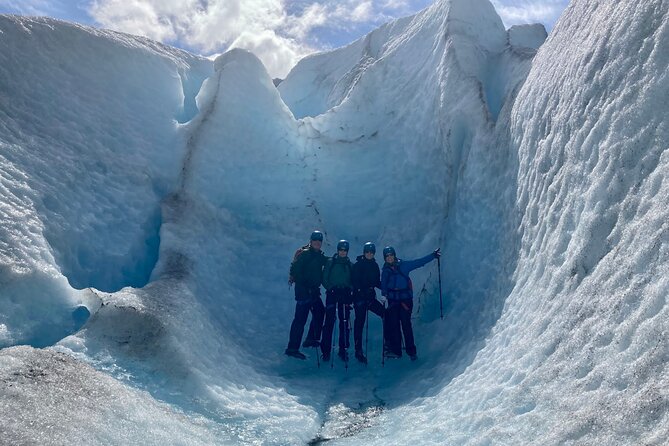
Lunch is simple and useful rather than elaborate: a turkey wrap, granola bar, and piece of fruit. After a long climb, that food matters. You can refuel before the return route instead of carrying the whole day on a light breakfast.
The meal is also part of the setting. Eating with glacier views gives you a natural pause between the uphill approach and the descent. Bring your own water unless the operator tells you otherwise, since water is not listed among the included items.
A small backpack is provided, which helps with carrying the supplied items and personal essentials. Keep your load modest. You will feel every extra item on the climb back down.
Rain gear is not included. Neither are gloves, sunglasses, sunscreen, or footwear. Pack those yourself, and treat waterproof clothing as more than an optional extra. Alaska weather can make a strenuous hike feel much harder when you are wet or cold.
What to wear for a full day on rough ground
Your footwear may be the most important personal choice. Wear sturdy, well-broken-in hiking boots or hiking shoes with good support. Waterproof snow or thermal footwear has also been recommended for colder conditions.
Avoid bringing brand-new boots. A blister halfway through the approach can turn a remarkable day into a miserable one. Lace-up boots are a sensible choice because they provide a more secure fit on uneven ground and work well with the provided equipment.
Pack:
- Waterproof jacket and trousers
- Warm layers
- Gloves
- Sunglasses
- Sunscreen
- Water
- Small personal snacks
- Camera or phone in a protective pouch
Mosquitoes may be present during warmer periods, so repellent or a head net can be useful. That is especially worth considering if you are visiting when the trail is snow-free.
Your clothing should handle both exertion and exposure. You may warm up during the climb, then cool down while resting on the glacier. Layers give you more control than one heavy coat.
The guide makes the difference
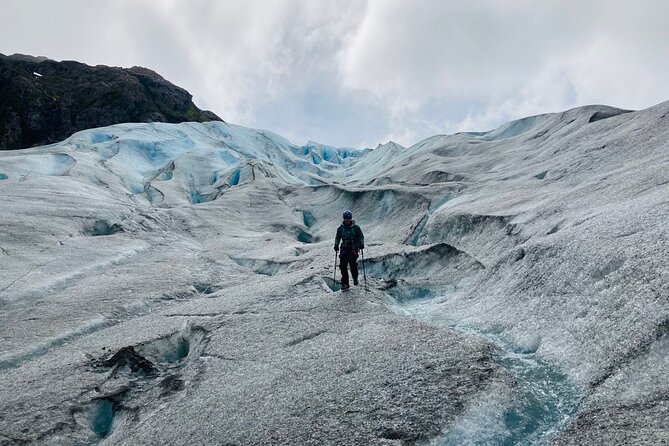
The gear is important, but the guide is the heart of the outing. A good guide sets a steady pace, explains what you are seeing, and keeps the group focused when the trail gets rough.
The strongest guide feedback centers on patience and safety. Tate has been praised for motivating first-time ice hikers and maintaining a comfortable pace. Rebecca and Jack have been noted for careful support on the trail and ice. Al has been praised for plant and environmental explanations, while Brandon has helped people who were uneasy with heights feel more confident.
You also get more than glacier facts. Guides have pointed out native plants, wildlife signs, bear marks, park history, and changes in the ice. That makes the outing feel like a guided backcountry walk with a glacier section, not just a technical activity.
The group limit is 20 people. That is not a tiny private tour, but it is small enough for guides to monitor the group more closely than on a large sightseeing excursion. The actual feel depends on how many guides are assigned and the mix of abilities on your date.
Minors must be accompanied by an adult, and participants should have a strong level of fitness. The company welcomes first-timers, but beginner-friendly does not mean easy.
Is $342.42 a fair price?
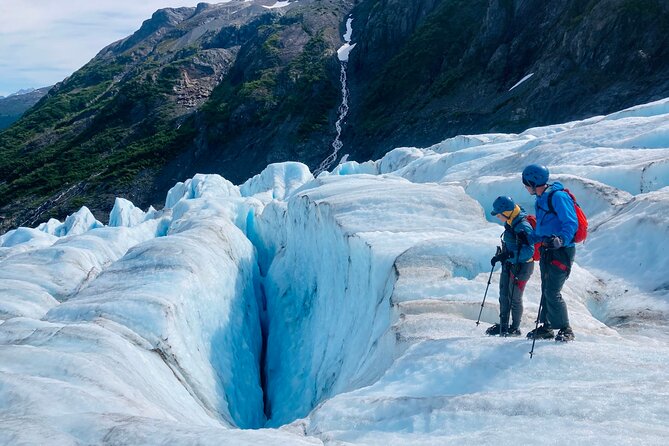
At $342.42 per person, this is an expensive day outdoors. The price makes more sense when you count what is included: professional glacier guides, technical gear, lunch, round-trip ground transport from Seward, and hotel pickup and drop-off.
You are also paying for access to an activity that requires training, route judgment, and safety planning. A normal park walk may show you the glacier from a distance, but it will not put crampons on your boots or guide you across the ice.
The value is strongest if you want to walk on Exit Glacier and do not already own glacier gear or have the skills to travel safely on ice. It is weaker if you only want a short scenic view, dislike long hikes, or would be satisfied with a roadside or visitor-center perspective.
Gratuities are not included. The cancellation policy allows a full refund if you cancel at least 24 hours before the start time. Changes or cancellations inside that window are not accepted for a refund.
Who should book this hike?
I would choose this for an active adult, an adventurous family with older children, or a fit couple looking for a major Seward outing. It can suit first-time glacier hikers because instruction and gear are included.
You should be comfortable with:
- Several hours of uphill and downhill walking
- Uneven, rocky ground
- Steep sections
- Crampon use
- A harness and possible exposure near crevasses
- Changing weather
- A long day with limited shortcuts
Families have completed it with teenagers, including ages 13 and 16, but the fitness requirement still applies. The tour is not a casual family attraction for everyone in a mixed-age group.
If you have a strong fear of heights, tell the guide at the start. Easier paths may be available in some places, but you should not assume every section can be avoided. If you have knee trouble or are not used to long hikes, the descent may be harder than the climb.
Should you book the Exit Glacier Ice Hiking Adventure?
Book it if your goal is to walk on a real glacier, learn how to travel on ice, and accept a demanding approach hike. The blue ice, crevasses, waterfalls, guide instruction, and changing views make this a substantial Alaska experience rather than a quick photo stop.
Skip it if you want an easy outing, have limited mobility, dislike steep ground, or do not want to prepare carefully with boots and rain gear. The tour earns its strong reputation through guide care and the rare chance to spend real time on Exit Glacier, but you must earn those views with a long day of hiking.
FAQ
How long does the Exit Glacier Ice Hiking Adventure last?
The experience lasts about eight hours, including transport, the approach hike, time on Exit Glacier, lunch, and the return trip.
Where does the tour begin?
It begins at Kenai Backcountry Adventures, 11724 Seward Highway, Suite A, in Seward. Pickup is also available from Seward hotels, with the exact pickup time confirmed after booking.
Is transportation from Seward included?
Yes. Courtesy round-trip ground transportation from Seward to Kenai Fjords National Park is included, along with hotel pickup and drop-off in Seward.
What equipment is provided?
The tour provides a small backpack, helmet, harness, crampons, and trekking poles. Guides also provide instruction on using the glacier equipment.
What food is included?
Lunch includes a turkey wrap, granola bar, and piece of fruit. Rain gear, gloves, sunglasses, sunscreen, and footwear are not included.
Can beginners join the glacier hike?
Yes. First-time glacier hikers are welcome, and the guides provide the needed gear and instruction. You still need a strong level of physical fitness and must be prepared for a strenuous hike on uneven ground.
Just added around the USA
- Private Family Hike in Yosemite★ 5.0 · 37 reviews
- Private Guided Hiking Tour in Yosemite★ 5.0 · 94 reviews
- Guided Yosemite Hiking Excursion★ 5.0 · 80 reviews
- Yosemite Valley Private Hiking Tour★ 5.0 · 83 reviews
- Sedona Archaeology Hiking Tour★ 5.0 · 73 reviews
- Sedona Creekside of Cathedral Rock Hike With a Private Guide★ 5.0 · 37 reviews
- Sedona Dark Sky Sunset & Night Hike With a Private Guide★ 5.0 · 86 reviews
- Sedona: Vortex Yoga Hiking Half-Day★ 4.8 · 52 reviews
Glacier Hikes, side by side.
Glacier Hike, Waterfalls and Black Sand Beach
Read our review →
Sólheimajökull: Blue Ice Glacier Hike near Vík (Easy)
Read our review →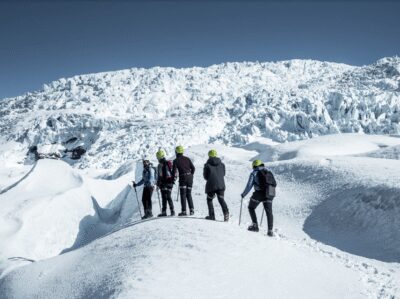
Skaftafell National Park: Falljokull Glacier Advanced Hike
Read our review →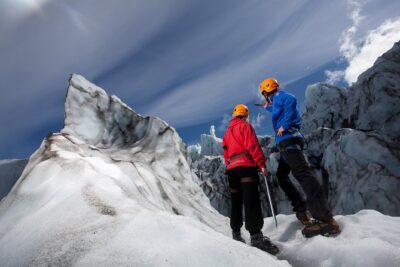
Jökulsárlón: Vatnajökull Glacier Guided Hiking Tour
Read our review →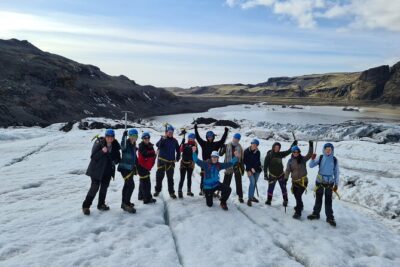
This walk also sits in