
REVIEW · GREECE
From Kalabaka: Authentic Meteora Hiking Tour – Local Agency
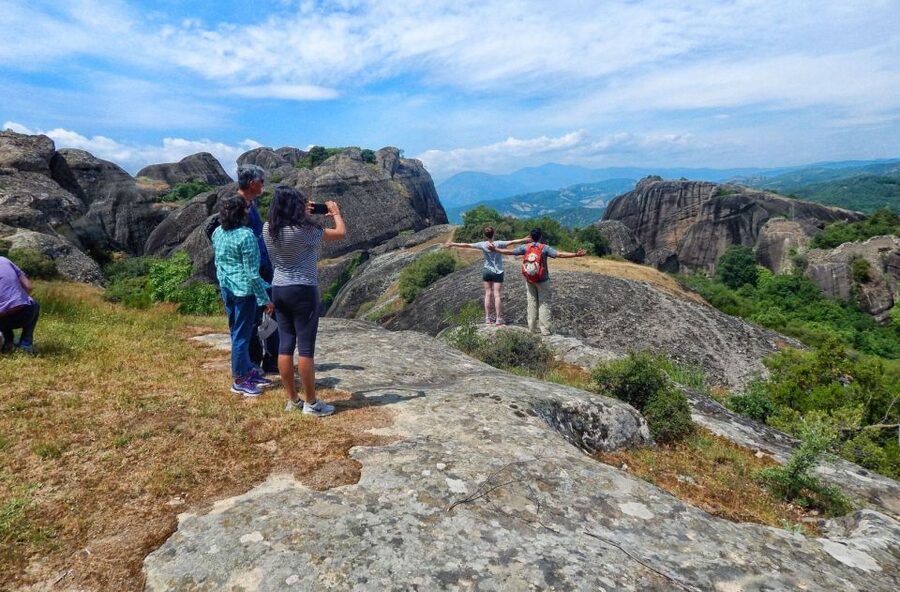
Meteora is best understood on foot, where the cliffs rise around you and old monk paths lead into places a road tour cannot reach. This easy eight-kilometer hike combines dramatic rocks, hermit sites, monastery ruins, and a visit to one working monastery.
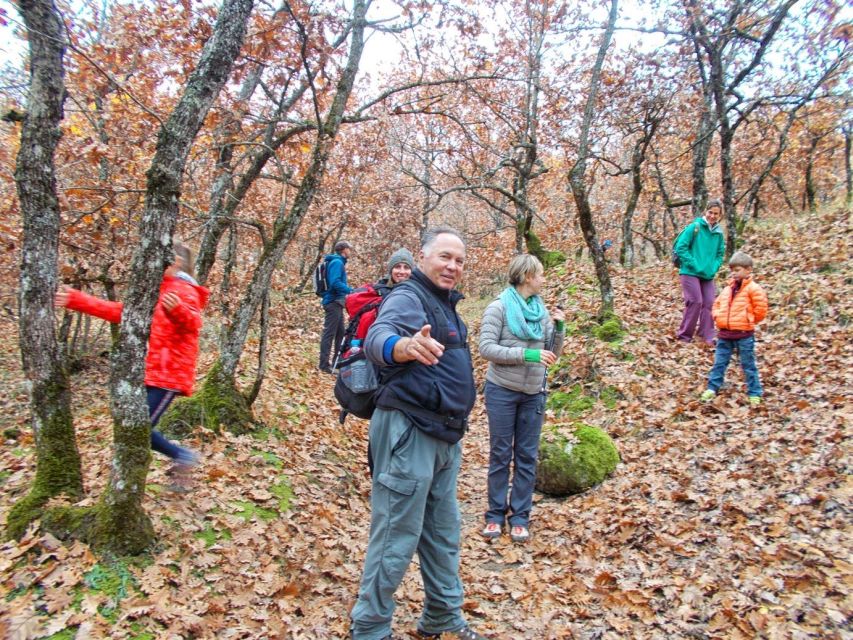
I like the personal scale of the trip, with no more than 12 people, and the way guides such as Giannis, Dimitris, Chrisa, and Nikos bring local stories into the walk. I also like the practical hotel pickup and the mostly shaded route, a welcome advantage in Greece’s summer heat.
The main caution is the weather. The hike runs in rain and other conditions, but bad weather can lead to a last-minute change or cancellation. You need closed, non-slip shoes, and the route is not suitable for people with mobility, back, heart, or pregnancy-related concerns.
Key points before you book
- Old monk paths: Walk routes linked to Meteora’s first religious communities rather than seeing the cliffs only from a vehicle.
- One monastery visit: Enter either Great Meteoron or Varlaam, with a separate €5 entrance fee.
- Small group of up to 12: The size allows time for questions, photo stops, and a more personal pace.
- Mostly shaded walking: Helpful in warm weather, though you still need water and suitable clothing.
- English and Greek guides: Guides including Giannis, Dimitris, Chrisa, and Dimitris have been praised for clear explanations and good route knowledge.
- Hotel pickup included: Transport from Kalabaka or Kastraki takes you to the trailhead in an air-conditioned VIP minibus.
Why Meteora makes sense on foot
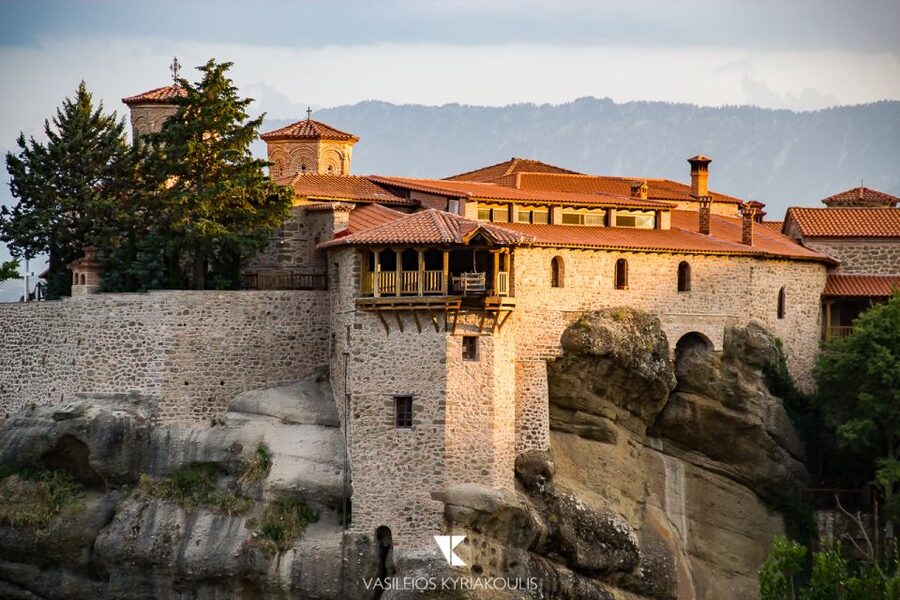
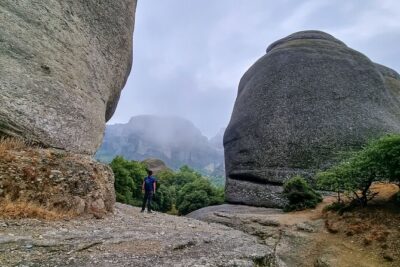
Meteora is not just a collection of monasteries perched on tall rocks. It is a place where geology and religious life are tied together. The cliffs created natural lookout points and hard-to-reach shelters, while monks used caves and narrow paths to build a life away from the towns below.
A road tour gives you the famous postcard views. This walk shows you how people once moved through the area. You follow paths used by early monks, pass traces of older religious sites, and see the monasteries from below and from angles that are easy to miss beside a road.
That difference matters. The rock formations feel larger when you approach them slowly, and the route gives you time to notice the contrast between bare stone, trees, caves, and the open views toward Kalabaka and the Meteora Valley. I like this kind of sightseeing because the walking is part of the story, not just the way to reach the next stop.
The route covers about eight kilometers over four hours. It is rated easy, but easy does not mean you can wear sandals or smooth-soled casual shoes. The ground can be uneven, so choose walking boots or sturdy sneakers with closed toes and good grip.
More hikes and treks around Greece:
- From Chania: Full-Day Samaria Gorge Trek Excursion & Guide
★ 4.6 · 3,191 reviews - From Rethymno: Samaria Gorge Full-Day Trek, Pickup & Guide
★ 4.5 · 1,610 reviews - From Chania/Rethymno: Samariá Gorge Guided Hike with Pickup
★ 4.5 · 1,010 reviews
Pickup from Kalabaka or Kastraki
The tour begins with pickup at your hotel in Kalabaka or Kastraki. You then ride in an air-conditioned VIP minibus to the start of the walk. This is a useful part of the arrangement because you do not need to find a trailhead, arrange a taxi, or work out where to leave a rental car.
The vehicle also helps on a short visit. A four-hour outing leaves little room for wrong turns, and the guide can place you on the most suitable section of the route for the day’s conditions. The driver is part of the experience too. Khristos, one of the drivers praised for his work, was noted for handling narrow roads carefully and making the ride feel safe.
The exact starting time depends on availability, so check it before booking. Hotel pickup is limited to Kalabaka and Kastraki, which means you should confirm that your accommodation is in one of those towns.
Following the first monks’ paths

The strongest part of the hike is the route itself. Instead of staying on the main roads around Meteora, you walk through quieter sections of nature and along paths associated with the earliest monks.
Your guide explains what you are seeing as you go. The value here is not just information about dates and names. A good guide helps you connect the caves, cliffs, ruins, and monasteries into one story. Chris, also known as Zorro when wearing a face mask, has been praised for covering local history, plants, mushrooms, and Greek mythology during the walk. That gives you a sense of how varied the conversation can be.
The path is described as easy, and one guide has been especially praised for taking a group through secret routes without making the walk feel difficult. Still, the word secret should not make you picture an adventure expedition. This is a guided nature walk, not a technical climb. You are not expected to scramble up sheer rock faces.
The route is also reported to be shaded for much of the way. That is a real plus in July and August, when exposed walking can become tiring. Shade does not remove the need for water, sunscreen, or a hat, but it makes the four-hour outing more comfortable.
Ruins, caves, and views below the cliffs
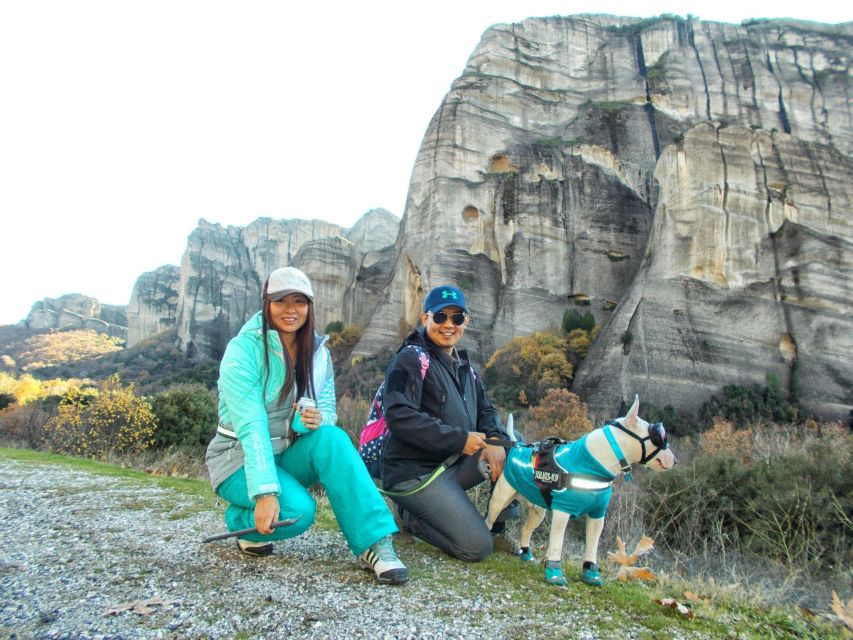
Meteora’s best-known monasteries draw the crowds, but the older ruins and small religious sites give the area its character. Along the route, you have the chance to see remnants of old monasteries and places connected with hermits who lived in caves or isolated shelters.
These stops are not presented as polished museum exhibits. You may see fragments, rough stonework, and sites that make sense only after the guide explains their purpose. That is exactly why a local hiking guide is useful. Without context, a cave can look like a hole in the cliff. With context, it becomes part of the area’s religious story.
The views are another reason to choose this outing. From the walking route, you look back toward Kalabaka and across the Meteora Valley. The perspective changes as you move, so the monasteries appear above you, across the rocks, or framed by trees rather than always viewed from the same roadside lookout.
Bring a phone or camera, but leave enough time to look up from the screen. The scenery is particularly strong at the points where the valley opens out, and the slower pace gives you more useful photo opportunities than a quick stop beside a bus.
Same trailheads, a different kind of day:
- From Chania: Samaria Gorge with Professional Hiking Guide
★ 4.6 · 720 reviews - Meteora Small Group Hiking tour with Transfer and Monastery Visit
★ 5.0 · 484 reviews - From Heraklion: Samaria Gorge & Agia Roumeli Hiking Day Trip
★ 4.4 · 422 reviews - Samaria Gorge Hiking from Chania with Professional Hiking Guide
★ 4.5 · 372 reviews
Visiting Great Meteoron or Varlaam
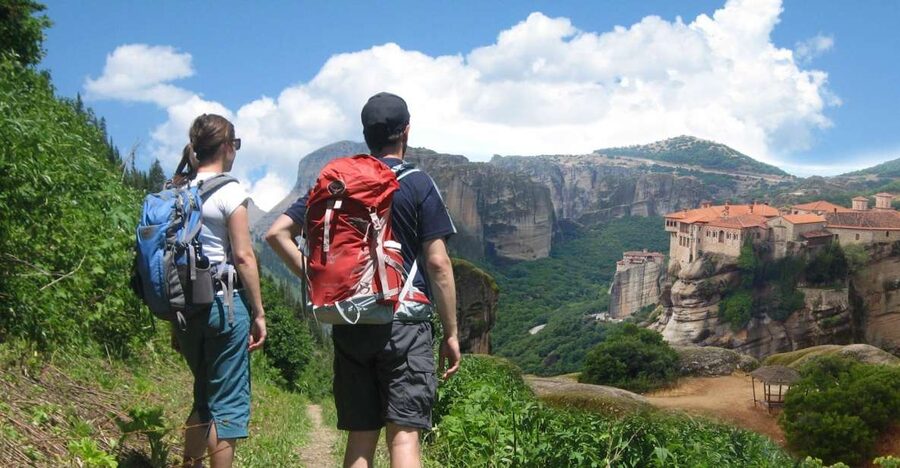
The tour includes a visit inside one monastery, either Great Meteoron or Varlaam. The €5 entrance fee is not included, so carry cash or be prepared to pay the fee separately.
Great Meteoron is the largest and most famous of the Meteora monasteries. Varlaam is another major monastery, set high among the cliffs. The exact monastery visited can depend on the day’s schedule and operating conditions, so do not assume you will enter both.
The monastery visit adds an important indoor and cultural part to a hike that otherwise focuses on nature and ruins. You get to see how the religious communities remain connected to the rock setting, rather than treating the monasteries as distant buildings for photos only.
Dress respectfully. The supplied information does not give a detailed clothing code, so your safest choice is modest clothing suitable for entering an active religious site. The route requires closed shoes, and those same shoes will serve you well on monastery steps and uneven ground.
You should also keep expectations practical. Four hours is enough for one monastery and a substantial walk, but not for a slow, detailed visit to every major site in Meteora. If your main goal is to see several monastery interiors, a dedicated minibus or monastery tour may suit you better.
Guides who shape the experience
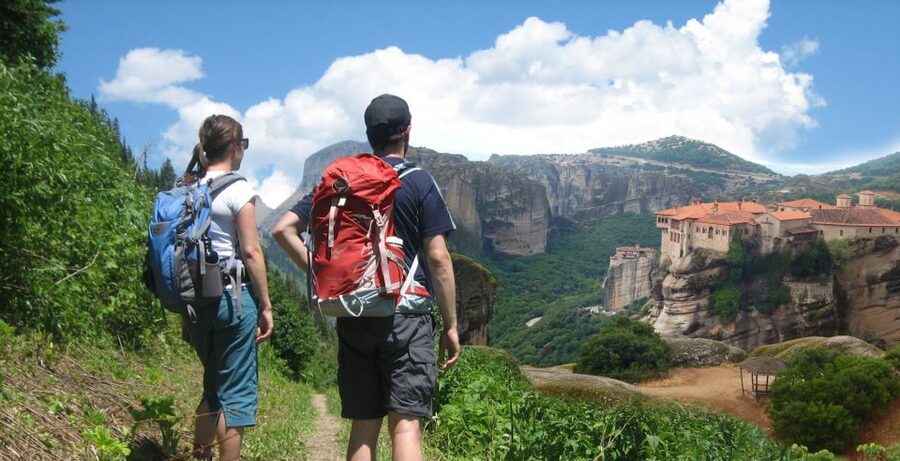
The guide can make a walking tour either informative or merely functional. Here, the strongest praise has gone to guides who explain the area while keeping the pace friendly.
Giannis, also called John, has been praised for making the hike feel enjoyable and for giving clear information. Dimitris has been recognized for explaining the paths and telling detailed stories about Meteora. Chrisa has been praised for leading groups through less familiar routes and explaining the area’s past.
The English is generally clear, but it may not suit every language preference. One Italian-speaking participant specifically wished for an Italian audio guide and noted that the English explanation was slow and easy to follow, but still not the same as hearing it in Italian. The live guide languages are English and Greek.
That is worth considering before you book. If you understand conversational English, the pace should help. If you need an Italian, Spanish, or other language guide, this tour does not promise one.
The small group limit of 12 is useful here. You can ask questions without holding up a large coach group, and the guide can give more attention to the pace and interests of the people on the walk. It also makes photo stops less awkward.
How difficult is the eight-kilometer route?
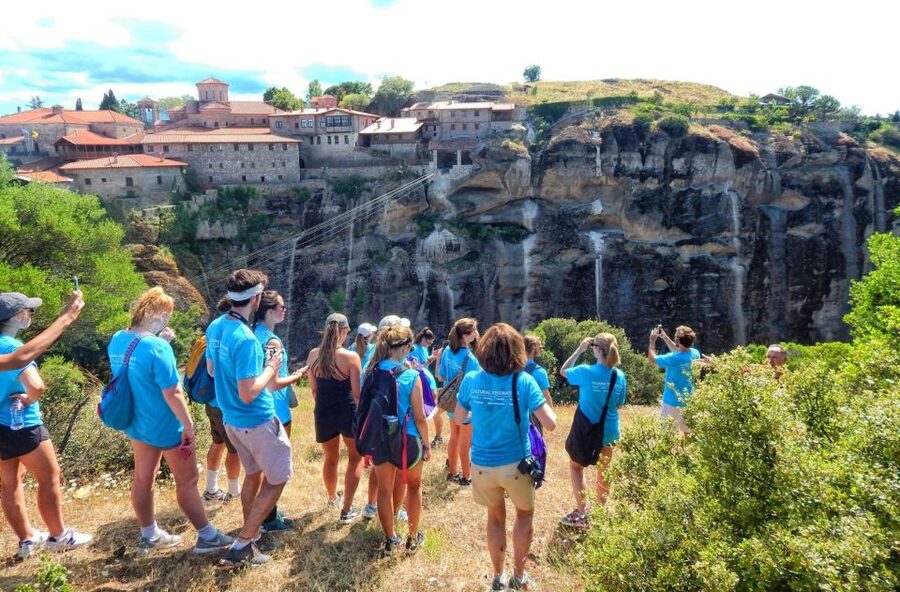
The official difficulty is easy, and the distance is about eight kilometers over four hours. That works out to a relaxed pace with time for explanations, stops, and the monastery visit rather than a fast march.
Even so, you should be comfortable walking for several hours. The route includes natural paths, and the surface may not be as smooth as a town sidewalk. Walking boots or sneakers with non-slip soles are recommended. Open-toed shoes are not allowed.
The tour is not suitable for wheelchair users or people with mobility impairments. It is also not recommended for pregnant women or people with back or heart problems. Children must be at least five years old.
The guide can help with pacing within the group, but this is not a private custom hike. If you have a medical concern, ask before booking rather than assuming the easy rating covers every need.
Weather can change the plan
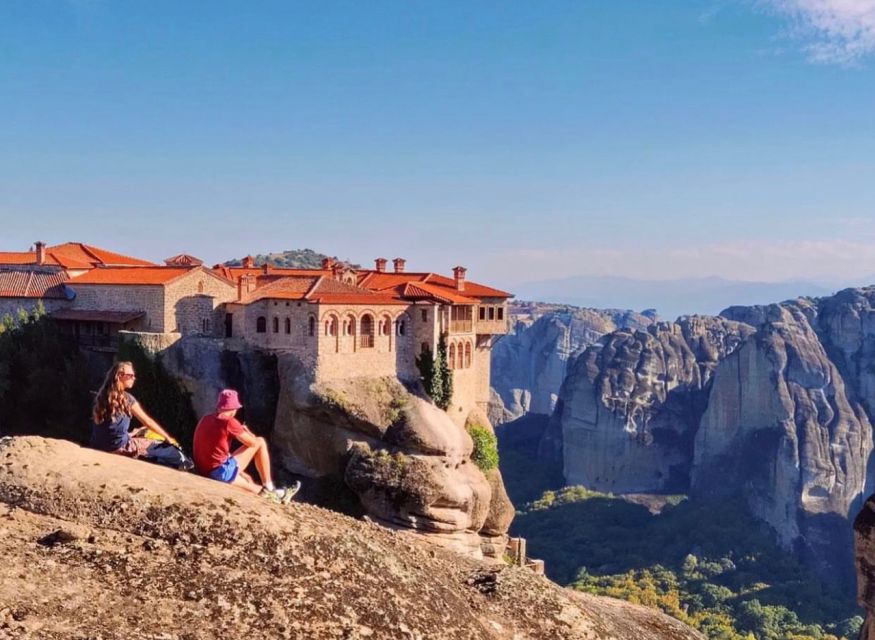
The tour operates in all weather, and you should dress for the forecast. That does not mean the hiking route will always go ahead in exactly the same form.
Rain has caused a last-minute cancellation in the past, with a minibus outing offered instead. On one such occasion, the rain stopped soon after the change, and the participant later used the guide’s map advice to walk independently to the hermits’ caves. That is a useful reminder to keep your afternoon flexible if the weather looks unsettled.
A weather change is frustrating if you booked specifically to hike. The good side is that the local team may offer another way to see Meteora rather than simply leaving you without a plan. Still, check the forecast, bring a light waterproof layer when needed, and avoid scheduling an important connection immediately after the tour.
Free cancellation up to 24 hours before the start gives you some protection if your plans change. You can also reserve now and pay later, which helps if you are building a wider Greece itinerary.
Is $35 a fair price?
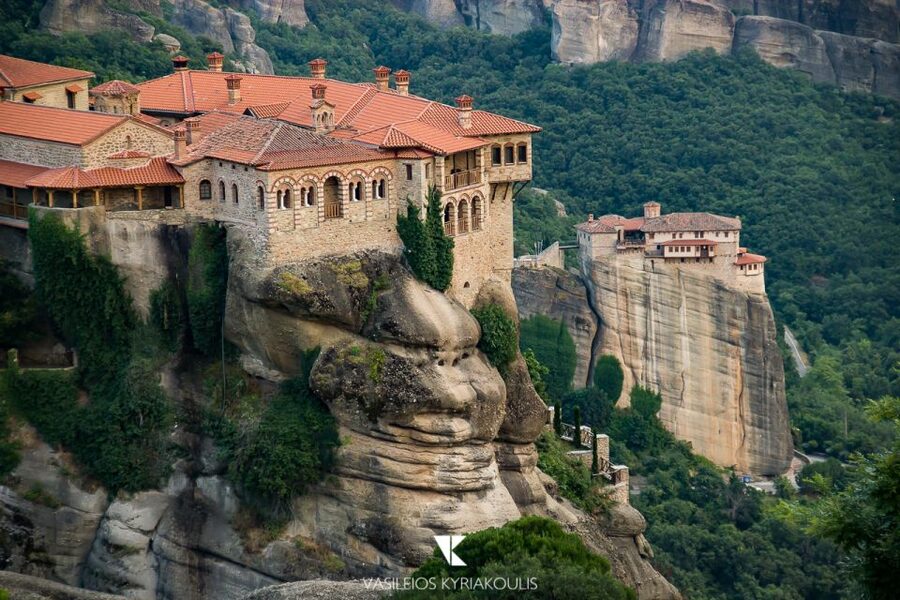
At $35 per person, the tour is good value if you want a guided walk rather than a simple transfer to the monasteries. The price includes hotel pickup and drop-off, the four-hour guided hike, transport to the trailhead, and entry to one monastery as an arranged stop. You pay the €5 monastery entrance fee separately.
The strongest value comes from the route planning and local explanation. You could walk in the area on your own, but you would not necessarily know which paths connect to the old monastic sites or how to read the ruins and caves. The minibus also removes the need to solve the transport problem.
The price is less compelling if you do not enjoy walking or if your main aim is to visit several monastery interiors. In that case, you are paying for a hiking experience you may not use fully. At four hours and a small-group limit, though, the cost is modest for a half-day activity in one of Greece’s major sights.
Who should book this Meteora hike?
I would choose this tour if you want to combine scenery, movement, and religious history in one half-day. It suits active couples, solo visitors, families with children over five, and anyone who finds a standard coach tour too passive.
It is especially useful if you are staying in Kalabaka or Kastraki and want a simple pickup arrangement. The English-speaking guide, small group, and easy pace make it approachable for many people who are not serious hikers.
You should choose something else if you need step-free access, have a condition that makes several hours of walking unsafe, or strongly prefer an Italian-language guide. You may also prefer a road-based tour if rain is likely and you have little flexibility.
Should you book it?
Book this Meteora hike if you want to feel the cliffs at ground level, follow old monk routes, see ruins and caves, and still enter one of the major monasteries. The combination is more satisfying than a series of quick roadside photo stops, and the $35 price includes the parts that are hardest to arrange alone.
Go with sturdy closed shoes, modest clothing, and a flexible attitude toward weather. If you can handle eight kilometers at an easy pace and accept that the monastery visit is limited to one site, this is a practical and memorable way to meet Meteora.
FAQ
How long is the Authentic Meteora Hiking Tour?
The tour lasts four hours and covers about eight kilometers.
What difficulty level is the hike?
The hike is rated easy, but you still need suitable walking shoes for natural paths and uneven surfaces.
Which monastery will I visit?
You will visit one monastery, either Great Meteoron or Varlaam. The €5 entrance fee is not included.
Is hotel pickup included?
Yes. Pickup and drop-off are included from hotels in Kalabaka or Kastraki.
What languages does the guide speak?
The live tour is offered in English and Greek.
Can I cancel the booking?
You can cancel up to 24 hours in advance for a full refund. The activity also allows you to reserve now and pay later.
Just added around Greece
- Vikos Gorge crossing hiking from Monodentri to Vikos village★ 5.0 · 15 reviews
- Karpathos Aperi Limniotis Cave Hike for stalagmites / stalactites★ 5.0 · 15 reviews
- Delphi: Ancient Footpath Delphi Hiking★ 5.0 · 18 reviews
- Hiking and Sightseeing Tour in Amorgos★ 5.0 · 9 reviews
- Wild swimming and Hiking in West Crete★ 5.0 · 9 reviews
- Hiking in Psiloritis Mountain (Ida Mt.) Crete★ 5.0 · 7 reviews
- Samaria Gorge Hike from Heraklion region★ 4.5 · 26 reviews
- Hiking at Samaria, the longest Gorge in Europe! From Chania★ 3.5 · 11 reviews
Greece Hiking Tours, side by side.
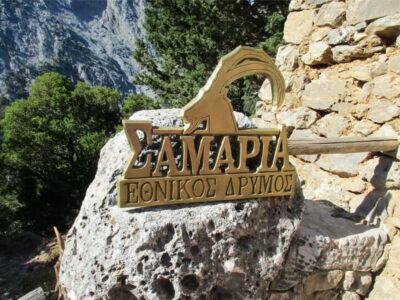
Full-Day Samaria Gorge Trek Excursion & Guide
Read our review →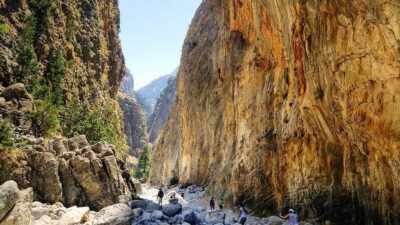
From Chania/Rethymno: Samariá Gorge Guided Hike with Pickup
Read our review →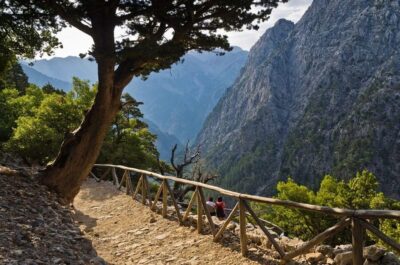
Meteora Small Group Hiking tour with Transfer and Monastery Visit
Read our review →
Samaria Gorge Hiking from Chania with Professional Hiking Guide
Read our review →
This walk also sits in