
REVIEW · USA
Alpine Classic Trek
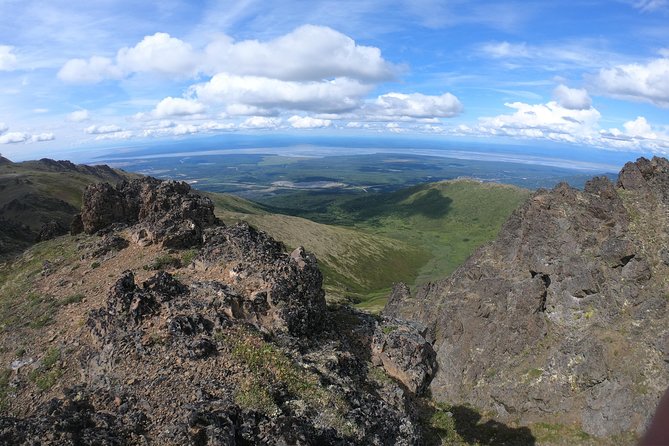
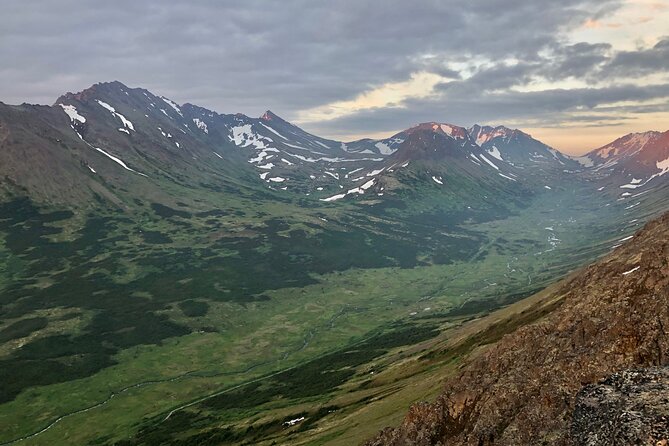
A tough climb earns you a big Alaskan payoff here: 360-degree views from a Chugach State Park ridgeline. On a clear day, you may see across the Anchorage Bowl, toward Knik Arm, and even Mt. Denali far to the north. I like the small group, capped at 12, and the way the route changes to fit the weather and the group. I also like having a naturalist guide who can point out moose, Dall sheep, mountain goats, birds, berries, and alpine plants instead of simply leading you uphill.
The catch is simple: this is not an easy nature walk. The first 45 minutes can be the hardest, with steep and uneven ground, and the full hike asks for serious stamina. If you dislike hills, have major joint trouble, or cannot handle a long workout, choose a gentler outing.
Key points at a glance
- Two possible ridgelines: You may hike Rendezvous or Mile High, selected for weather and group ability.
- A real uphill workout: Plan on about four hours of hiking, including steep sections and roughly the effort of climbing 150 flights of stairs.
- Small-group guiding: The maximum group size is 12, giving you a better chance to ask questions and set a sensible pace.
- Wildlife and alpine plants: Moose, bear, Dall sheep, mountain goats, bald eagles, marmots, berries, and small alpine flowers are all possible sightings.
- Useful gear and food included: Trekking poles, micro-spikes when needed, a granola bar, apple, and cheese stick are provided.
- Downtown starting point: You meet at the William A. Egan Civic & Convention Center and return there after the hike.
Why this Anchorage hike earns the climb
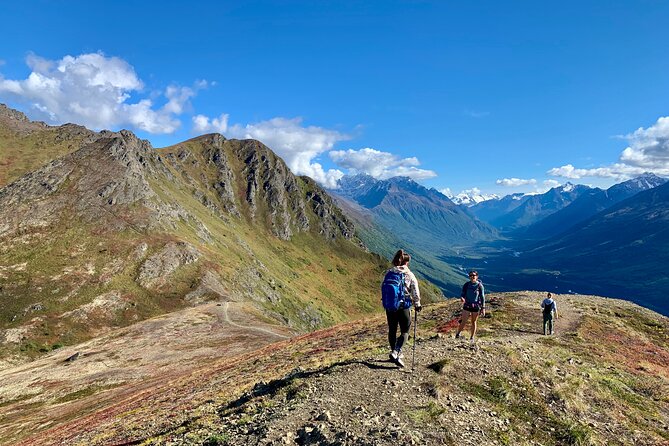
Many Anchorage outings give you a good view from a road or an overlook. This one makes you work for its panorama. You start with a climb, reach higher ground, and then walk along a ridgeline where the terrain can become fairly open and flat.
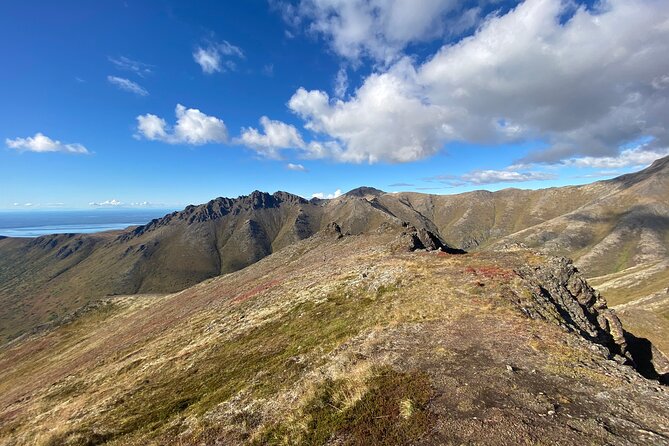
That change is what makes the trip satisfying. The uphill portion tests your legs, but the reward is not just a single viewpoint. From the ridge, you can look across the Anchorage Bowl and toward the surrounding Chugach peaks. Knik Arm may be visible, and on a very clear day, Mt. Denali can appear hundreds of miles away.
I especially like the sense of scale. From downtown Anchorage, the mountains can look like a backdrop. Up here, you get a better feel for how close the city sits to wild country. You are still near town, but the view gives you a distinctly Alaskan sense of distance and space.
The route is not fixed in the rigid way many sightseeing tours are. Your guide chooses between Rendezvous Mile High Ridgeline and another of the park’s strong ridgeline routes based on weather and the group’s ability on that day. That is good mountain judgment. It also means you should book this for the kind of experience, not for one guaranteed summit or one exact trail.
More hikes and treks around Anchorage:
- Glacier Hike on Matanuska Glacier – Best Vacation Value
★ 5.0 · 463 reviews - Matanuska Glacier Hike Day Tour
★ 5.0 · 396 reviews - Full-Day Matanuska Glacier Hike And Tour
★ 5.0 · 216 reviews
The climb through Chugach State Park
The tour takes about five hours in all. Roughly one hour is used for transportation, leaving about four hours for hiking. The outing begins and ends at the William A. Egan Civic & Convention Center at 555 W 5th Avenue in downtown Anchorage.
From there, you travel toward Chugach State Park and begin the trek chosen for the day. The exact details can shift, but the central pattern remains the same: climb through hilly terrain, reach the ridge, take in the views, and return by the same general route or a connected trail.
The early ascent deserves respect. One description of the hike puts the toughest section at the first 45 minutes, when the trail is mostly climbing. Another practical benchmark says you should be able to walk eight miles on flat pavement or five miles over uneven rolling ground in four hours, plus climb about 150 flights of stairs over the course of the hike.
Those numbers are useful because they describe effort better than the word moderate. You do not need to be an expert mountaineer, but you should have some hiking experience or be in good physical condition. The steep portions can put extra stress on your knees, ankles, hips, and lungs, even if you are comfortable walking around a city all day.
Once you reach the higher ground, the outing may feel easier. Parts of the ridge can be fairly level, so you get time to walk, look around, and listen to your guide without fighting uphill every minute. The total distance and pace still depend on the selected route and the group, so you should not treat the flatter sections as a promise of an easy day.
Rendezvous or Mile High: why the route can change
Rendezvous and Mile High are presented as two of the best ridgeline choices in Chugach State Park. Both offer alpine scenery and broad views of the Anchorage area, but your guide decides which one makes sense that day.
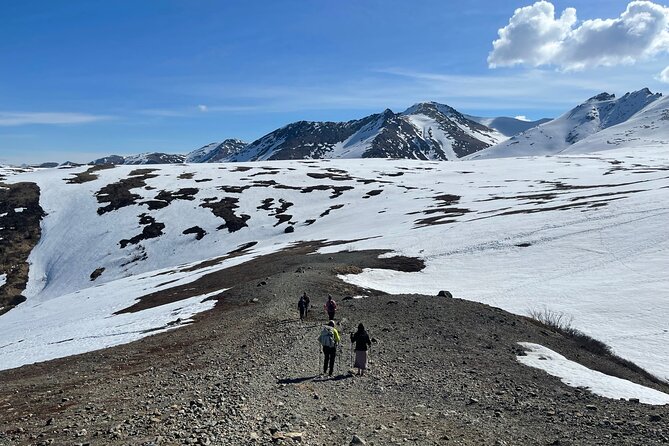
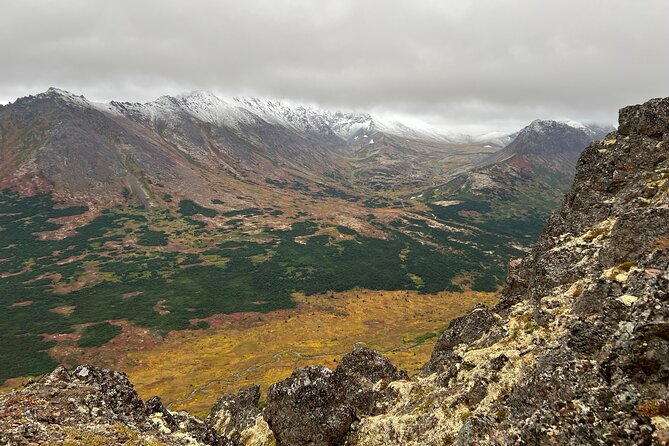
Weather is a major reason for this flexibility. Mountain conditions can change quickly, and wind, rain, snow, hail, or lingering spring snow can affect footing and comfort. One cold-season outing included snow on the ground and flurries. Another reached the top through wind, rain, snow, and hail.
That does not mean poor weather ruins the outing. It does mean you need the right clothing and the right attitude. The provider can cancel for poor weather and offer another date or a full refund, but conditions that are merely wet, cold, or windy may still be part of the hike.
Group ability also matters. A small group with mixed fitness levels needs a route that works for everyone. A guide may choose the more suitable ridgeline rather than force a particular route. I see that as a benefit, though anyone hoping for a specific peak should understand that the experience is route-flexible.
Wildlife, birds, berries, and the naturalist guide
The wildlife possibilities add more interest than simply reaching the top. You might see moose, bear, Dall sheep, mountain goats, arctic squirrels, or marmots. Birdlife can include bald eagles, thrushes, chickadees, and jays.
Of course, none of these sightings is guaranteed. The value is in learning how to pay attention. A naturalist guide can help you notice tracks, movement, small mammals, or plants that you might otherwise walk past while watching your feet.
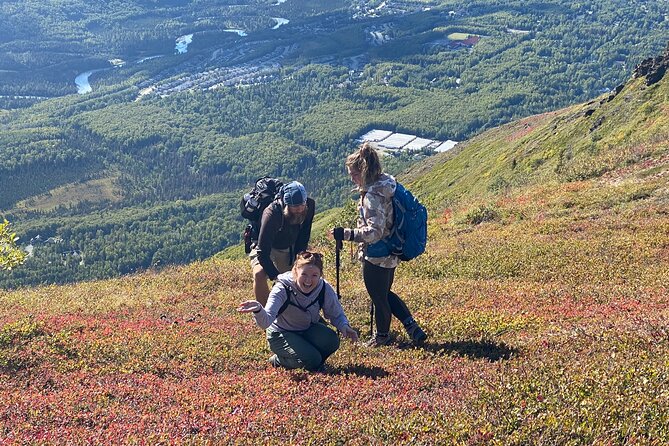
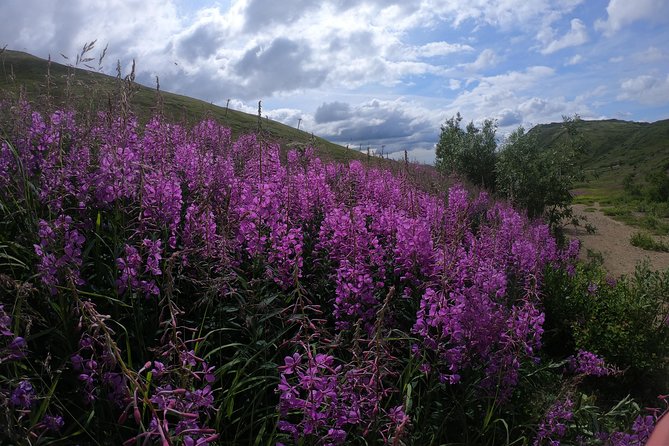
The plant life gets its own moment, too. The alpine zone can have berries and small plants spread across the ground. One outing included blueberry picking, and other hikes highlighted the alpine carpet of berries and small flowers. Your guide may explain what grows at higher elevations and how the plants fit into the area.
The guides are a major part of the experience. Stefan has led guests with a calm, professional approach, while Matt has been noted for patience and for sharing information about local places to eat and visit. Brit has been praised for explaining flowers and wildlife, helping with photos, and setting a comfortable pace. Greg has a strong feel for the trails and Alaska’s natural setting, and Caleb has shown care in managing a demanding day in rough weather.
Those names do not mean you can request a particular guide or that one will lead your outing. They do show the kind of guiding you can expect: trail information, local context, photo help, and attention to pacing rather than a race to the top.
Same trailheads, a different kind of day:
- Hike Matanuska Glacier w/Alaska Local Honey, Wine Tasting
★ 5.0 · 89 reviews - All Day Matanuska Glacier Hike from Anchorage
★ 5.0 · 66 reviews - Summer Valley and Forest Hike
★ 5.0 · 62 reviews - Anchorage: Full-Day Matanuska Glacier Hike and Tour
★ 4.7 · 48 reviews
What the small group means on a steep trail
With a maximum of 12 people, this is small enough to feel more personal than a bus-style excursion. You can ask questions about wildlife, plants, the surrounding peaks, or Anchorage without trying to get the guide’s attention across a large crowd.
A small group also helps with pace. The guide can keep an eye on how everyone is doing and make sensible choices if the trail or weather becomes more demanding. One of the best practical points about this trek is that you should be able to pace yourself when needed. A strong guide wants you to enjoy the climb, not prove something by rushing.
There is a tradeoff. The group still needs to move together, and the trip is not a private hike unless you arrange one separately. If one person is much slower or faster than the rest, the rhythm can change. For most hikers, though, the 12-person limit is a good balance between company and personal attention.
Gear, snacks, and what you should bring
Trekking poles are included. They are useful on both the uphill and downhill portions, especially on uneven ground or when the trail is wet. Micro-spikes are also provided if conditions require them.
You receive a granola bar, apple, and cheese stick. That is a practical snack for a half-day outing, but it is not a full meal. If you have dietary restrictions, tell the provider in advance so a different snack can be arranged.
Wear sturdy hiking boots. This advice matters most in spring, fall, or any period with snow, mud, rain, or loose ground. A past early-May outing still had snow and flurries, and hiking boots were specifically useful for protecting ankles.
Bring warm gloves during colder months. Weather can shift as you gain elevation, so layers are sensible. You should also be ready for sun, wind, or rain in the same outing. The exact clothing list is not specified, but the conditions described make ordinary city shoes and a light jacket a poor choice.
Is $179 a fair price?
At $179 per person, this is not a cheap walk in the park. You are paying for transportation from the downtown meeting point, about four hours of guided hiking, a small group, trekking poles, possible micro-spikes, and snacks.
The value depends on what you want from Anchorage. If you only need a short view stop, this costs more than necessary. If you want an active half-day with a guide who explains the area and helps you handle a demanding route, the price is easier to justify.
You also avoid having to choose a trail on your own or judge changing mountain conditions without local help. The guide selects between routes based on weather and ability, and the small group gives you a more focused outing than a large coach excursion.
I would call it good value for a fit hiker who wants mountain views and natural interpretation in one half-day. It is weaker value for anyone mainly seeking transportation to a viewpoint or an easy stroll.
Who should book this trek?
Book it if you enjoy a proper workout and want your Anchorage sightseeing to happen on foot. It suits solo hikers, couples, and families with older children or adults who can handle steep, uneven ground. The hike can also work well near the start of an Alaska trip, since it gives you a useful sense of your fitness before attempting harder routes later.
You should be comfortable walking for four hours, climbing steep sections, and managing uneven terrain. You do not need years of hiking experience, but you need a solid base of fitness. The provider specifically says the outing may not suit people with cardiac or respiratory illness, and it can be difficult for those with severe joint problems.
I would not book it as a casual activity between a late breakfast and an important appointment. The full time is about five hours, and mountain weather can affect the pace. If you have dinner plans, allow plenty of room after the scheduled return.
The outing is also not designed around hotel pickup. You must reach the downtown meeting point yourself or arrange your own transportation to the trailhead. The meeting point is near public transportation, and the tour returns there at the end.
Booking, cancellations, and weather
Confirmation is provided when you book, and the activity is offered in English. Service animals are allowed. A participation waiver must be signed before departure.
You can cancel at least 24 hours before the start time for a full refund. Changes or cancellations made inside that window are not accepted for a refund. If poor weather forces a cancellation, you can choose another date or receive a full refund. The same basic choice applies if the minimum number of participants is not met.
Because the outing is often booked well in advance, around 52 days on average, it is sensible to reserve early if your Anchorage dates are fixed. Still, keep the weather policy in mind and avoid placing this hike on the only day you have available if your trip schedule allows another option.
Should you book the Alpine Classic Trek?
Book this if the words steep climb followed by huge views sound appealing. You get a real Chugach State Park experience, not just a roadside photo stop, and the guide adds useful detail about plants, wildlife, and the area around Anchorage.
Skip it if you want a gentle walk, have serious heart, breathing, or joint concerns, or do not want to prepare for changing weather. For fit visitors who can handle the effort, the $179 price buys a well-supported half-day in the mountains, with food, poles, route judgment, and a very strong chance of seeing Anchorage from a far more rewarding angle.
FAQ
Where does the Alpine Classic Trek start and end?
It starts and ends at the William A. Egan Civic & Convention Center, 555 W 5th Avenue, Anchorage. The activity does not include hotel, bed-and-breakfast, or vacation-rental pickup.
How long does the experience last?
The full outing takes about five hours. Approximately one hour is transportation, and about four hours are spent hiking.
Which trail or ridgeline will I hike?
The guide chooses between Rendezvous and Mile High ridgelines based on weather and the group’s ability on the day of the hike.
How difficult is the hike?
You should have some hiking experience or be in good physical condition. You should be able to walk at least eight miles on flat pavement or five miles over uneven rolling terrain in four hours, and climb about 150 flights of stairs during the hike.
What equipment is included?
Trekking poles are included, along with micro-spikes when trail conditions require them.
What food is provided?
The standard snack is a granola bar, an apple, and a cheese stick. A different snack can be arranged if you have dietary restrictions.
What happens if the tour is canceled?
If poor weather or an insufficient minimum group causes cancellation, you can choose another date or experience, or receive a full refund. For your own cancellation, you must cancel at least 24 hours before the start time for a full refund.
Just added around Anchorage
- Winter Valley and Forest Hike★ 4.5 · 12 reviews
- Summer Valley and Forest Hike★ 5.0 · 62 reviews
- All Day Matanuska Glacier Hike from Anchorage★ 5.0 · 66 reviews
- Matanuska Glacier Winter Hike And Tour – Full Day★ 4.5 · 16 reviews
- Winter/Summer Matanuska Glacier Hiking Adventure★ 5.0 · 39 reviews
- Full day Hiking Adventure★ 5.0 · 8 reviews
- Matanuska Glacier Ice Fall Trek★ 4.5 · 10 reviews
- Matanuska Glacier Adventure Trek★ 5.0 · 12 reviews
Anchorage Hiking Tours, side by side.
Glacier Hike on Matanuska Glacier – Best Vacation Value
Read our review →
Hike Matanuska Glacier w/Alaska Local Honey, Wine Tasting
Read our review →
Winter/Summer Matanuska Glacier Hiking Adventure
Read our review →This walk also sits in