
REVIEW · THAILAND
Chiang Mai: Gibbons, Trekking & Mae Kampong Small Group Tour
The rare treat here is not a staged animal encounter. You head into the forest around Mae Kampong to look for free-roaming gibbons, helped by a local caretaker who knows their habits. If the animals stay hidden, you still have a fine day of forest walking, village life, local food, and mountain air.
I like the small-group feel and the way the tour supports local people, including a donation to the gibbon caretaker. I also like the plant walk, where you can smell, touch, and taste herbs and edible jungle plants rather than simply pass them without context. The catch is simple: gibbon sightings are never promised, and the 3 to 5 kilometer trail can be steep, rough, and tiring.
Key points to know before booking
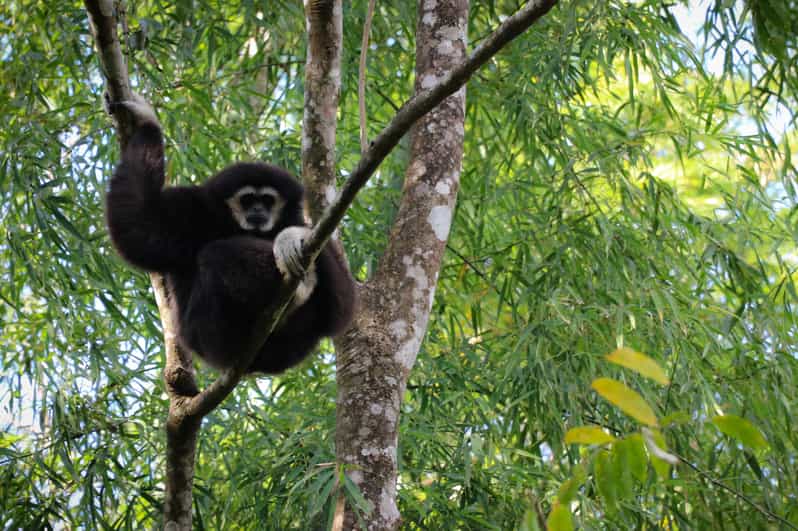
- Wild gibbons, not a zoo show: You may see them feeding or moving through the trees, but they are free to roam.
- Mae Kampong beyond the postcard view: The day combines village lanes, forest, waterfall, coffee, and lunch.
- A useful local guide team: Guides such as TK, Nee, Smile, and local caretakers add language, cultural, and forest knowledge.
- A real uphill walk: Expect uneven ground, climbs, and possible heat. Good shoes matter.
- Strong value at $77: Transport, guides, coffee, lunch, refreshments, and the caretaker donation are included.
- Rain is part of the setting: The tour runs in wet weather, when the waterfall is usually at its best.
Why the gibbons are the right reason to book
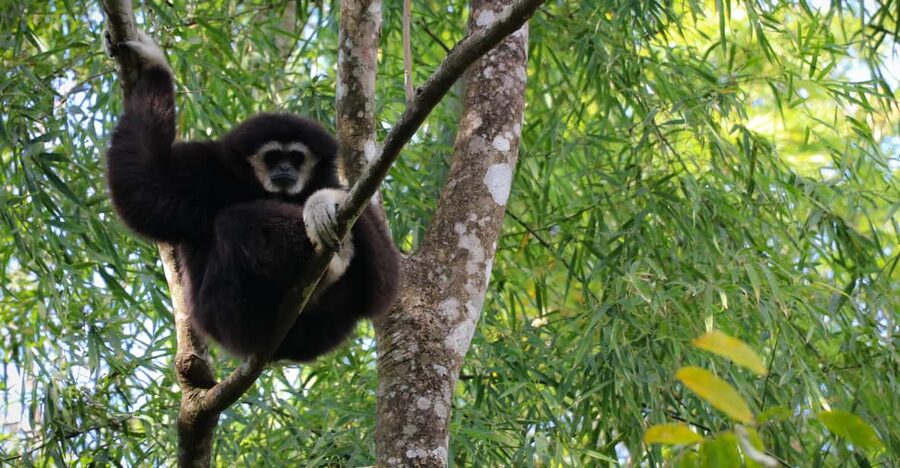
The gibbons are the emotional center of this outing, but they should not be the only reason you reserve it. These animals were released in the past through a rehabilitation project and now live in a secluded forest area. A caretaker helps protect them and provides food when natural supplies are scarce.
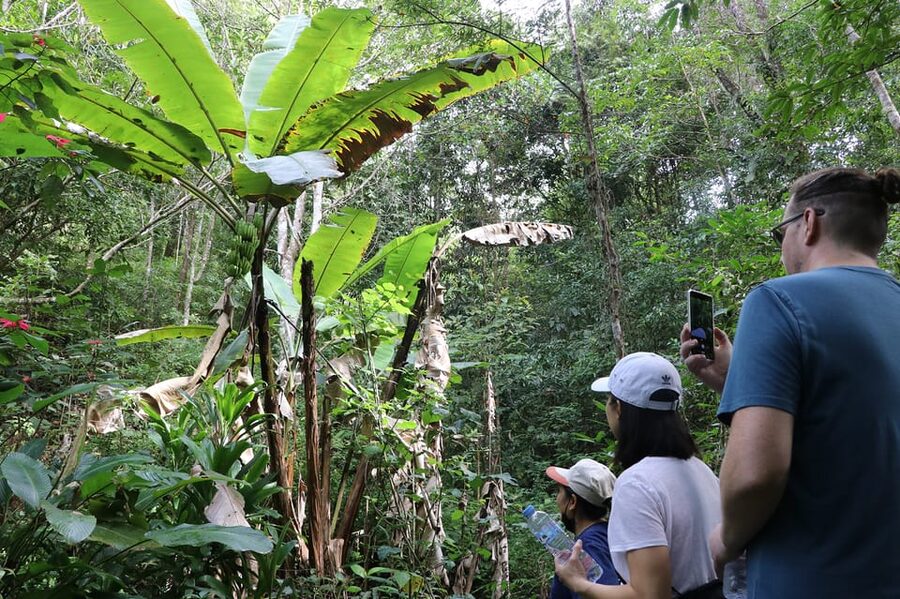
You normally head into the forest with the caretaker or local guide and wait quietly in the viewing area. Sometimes the gibbons appear within minutes. On other days, the search can take much longer, and the itinerary may be rearranged if the caretaker hears them elsewhere.
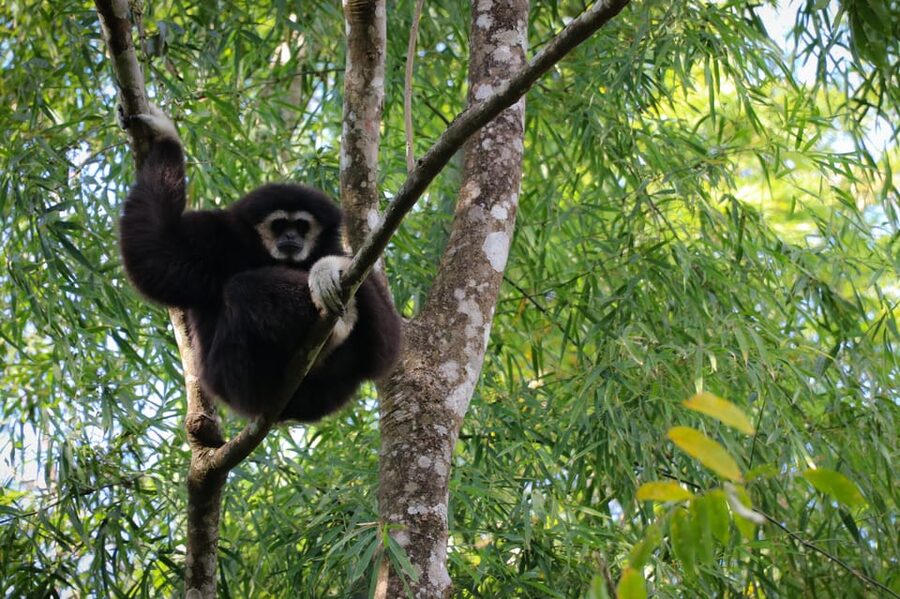
That uncertainty is important. You might see a pair shining through the trees, hear their calls, or get a close look while they feed. You might also spend your time on the forest trail and never see one. This is a fair trade for seeing animals in their own setting, but it is not the right trip if you need a guaranteed wildlife encounter.
The conservation angle also gives the $77 price more weight. Part of your payment goes to the caretaker, and the tour uses local guides and restaurants. You are not simply paying for a vehicle and a lookout. You are helping support the people who protect the animals and show you their home.
More Small-Group Hikes in Chiang Mai:
- Small Group Waterfall and Rainforest Hiking Adventure on Maui
★ 5.0 · 1,417 reviews - Glacier Hike and South Coast Small-Group Tour from Reykjavik
★ 5.0 · 827 reviews - Sólheimajökull Glacier Hike – Adventure in a Small Group
★ 5.0 · 799 reviews
The morning drive from Chiang Mai to Mae Kampong
Pickup is usually between 8:00 and 8:30 in the morning from your Chiang Mai accommodation. The drive east takes about an hour in an air-conditioned van or SUV, followed by winding mountain roads during the final section.
That last stretch can bother anyone prone to motion sickness, so bring tablets if you need them. The vehicle is a real advantage here. You get cool air during the drive, and several people have praised the drivers for being careful, friendly, and helpful.
Solo participants may be asked to meet the group at Burger King Thapae at about 8:00. This is worth checking before you book, since hotel pickup is not necessarily arranged in the same way for everyone.
The schedule is flexible. If the caretaker reports gibbons nearby, the animal search may happen early. If not, you may visit Mae Kampong, walk the forest, and return to the gibbon area later. Do not treat the printed order as fixed. The change is made for a good reason: wild animals do not follow a tour timetable.
Mae Kampong gives the day a human side
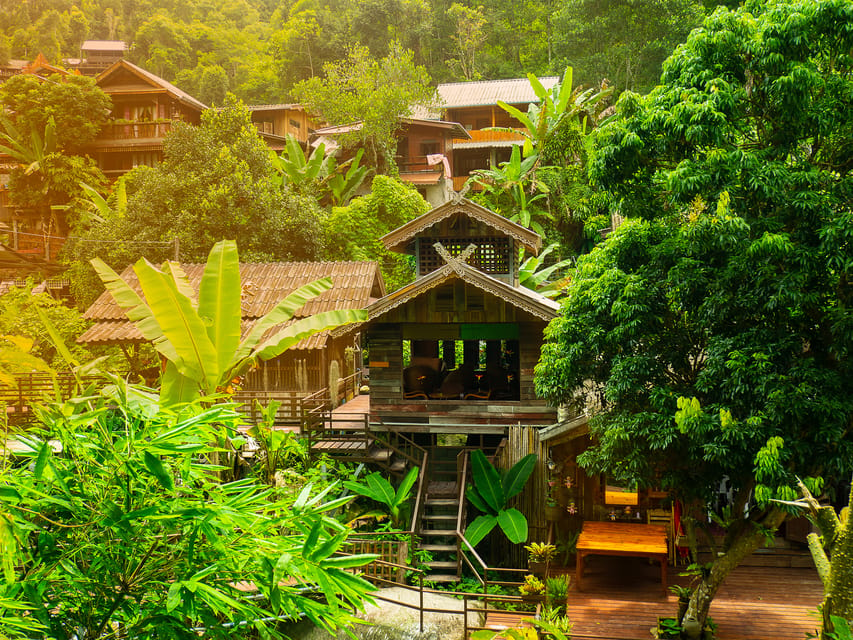
Mae Kampong is a mountain village with narrow lanes, traditional buildings, forest around its edges, and a slower pace than central Chiang Mai. The village visit helps balance the wildlife search. You are not spending the whole morning staring into trees and wondering if anything will happen.
A local guide joins the walk and explains the people, customs, plants, and forest around the village. Guides such as TK have also helped bridge the language gap between visitors, residents, and the gibbon caretaker. TK is especially praised for clear English, humor, and her ability to explain both everyday Thai culture and local life.
One useful feature of this tour is that it does not reduce Mae Kampong to a quick photo stop. You have time to wander, look at the architecture, and understand how the village connects with the surrounding forest. Still, the exact balance can shift. Some departures spend more time on forest trails than in the village itself, so book this for a mix of village and nature, not a full cultural walking tour.
The waterfall and coffee break
Mae Kampong waterfall is one of the easier pleasures of the day. It gives you a scenic pause before the longer forest walk and adds the sound of running water to the mountain setting.
Afterward, you stop at a local cafe for a complimentary coffee, tea, or smoothie. The cafe has views down over the village, so this is more than a quick drink included to tick a box. It is your chance to cool down, take photographs, and rest your legs before heading back onto the trail.
The views and drinks vary by choice, but the included stop is especially welcome after the drive and early walking. You can also buy extra snacks if you want them, since additional food is not included.
Rain does not cancel this activity. In fact, the waterfall usually has more force during the wet season, and the forest takes on a fresh, colorful appearance. Bring a rain jacket, and expect slippery conditions. The tour operates in all weather, so poor footwear can turn a pleasant walk into hard work.
More hikes and treks around Chiang Mai:
- 3-in-1: Doi Inthanon Tour, Elephant Sanctuary, and Trekking Trail
★ 5.0 · 1,087 reviews - Chiang Mai: Doi Inthanon Trip with Pha Dok Siew Guided Trek
★ 4.6 · 910 reviews - Chiang Mai: 2-Day Jungle Trek with Elephant Farm & Raft Ride
★ 4.7 · 881 reviews - Chiang Mai: Doi Inthanon Park with Kew Mae Pan Hike Day Trip
★ 4.7 · 841 reviews
The 3 kilometer forest trail is the heart of the outing
The secluded forest path is where this tour earns its name. The main walk is described as about 3 kilometers, while the total walking distance may range from 3 to 5 kilometers depending on the gibbon search and route. It is not a technical climb, but steep and uneven sections make it more demanding than a casual village stroll.
You should wear trainers or walking shoes with a firm grip. Comfortable clothes are sensible, and a rain jacket is useful in any season. The heat can make uphill sections feel tougher than the distance suggests.
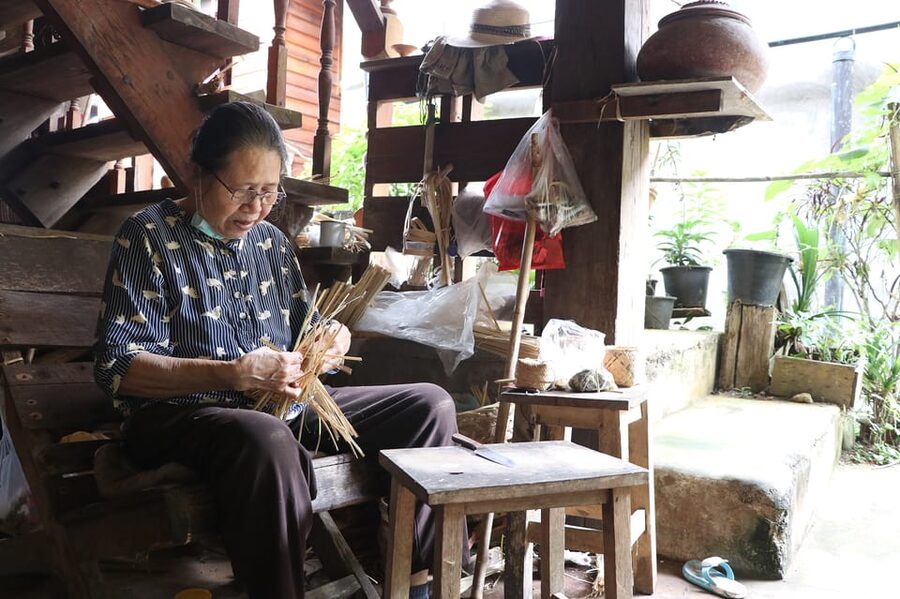
The local guide turns the walk into a practical lesson in the forest. You may stop to smell leaves, touch bark, and taste edible plants. You learn how local people use herbs, fruits, and jungle plants in food and traditional medicine. Some guides add small hands-on touches, such as making simple hats or baskets from leaves and bamboo.
That detail matters. A standard nature walk points at trees and gives you names. This one helps you understand what the forest provides. You begin to see the plants as part of cooking, health, and daily life rather than as anonymous greenery.
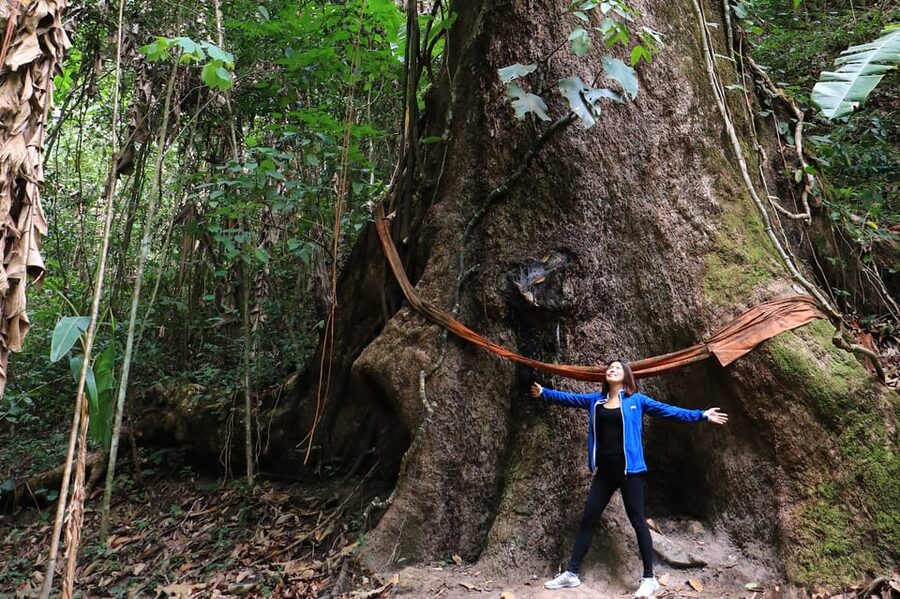
The oldest tree is another memorable stop. It is said to be about 900 years old, making it one of the oldest trees in Chiang Mai. The age is an estimate rather than a scientific feature of the tour, but the tree gives the walk a clear focal point and a sense of time far beyond a normal sightseeing stop.
Do not let the word hidden or secret in the tour description fool you into expecting an untouched wilderness expedition. The path is local and less visited, but it remains a guided excursion. The real appeal is the interpretation, the quiet, and the chance to move through the forest with someone who understands its useful plants.
Lunch rewards the uphill effort
Lunch comes at a local restaurant in or near the village after the forest portion. The meal includes an assortment of local dishes and familiar Thai choices, with plenty of vegetarian and vegan options.
This is a practical strength of the tour. Group meals can be restrictive, but the range of choices makes it easier for mixed groups to eat comfortably. One suggested dish is ginger and cinnamon pork, while local curry is another option mentioned by the guides. Exact dishes may vary, so think of the meal as a selection rather than a fixed menu.
The timing also works well. You finish the harder walking before sitting down to eat, and the meal becomes a proper break rather than something squeezed between stops. The combination of food, views, and local hospitality gives the afternoon a more personal feel than a standard packed lunch.
One small point for solo participants or very social visitors: the main guide may not always eat at the same table as the group. That is not a problem, but anyone hoping for a long shared meal with the guide should keep expectations modest.
What the guide team adds
The main English-speaking guide makes a large difference on this outing. Several guides appear on different departures, with TK and Nee receiving especially warm praise for their clear English, humor, patience, and care with questions.
Nee has been praised for explaining plants and forest life in careful detail. TK has been singled out for explaining Thai customs, her own connection to the area, and the gibbons with real energy. Other guides, including Golf or Gof, Smile, and local guides such as Mr Boon, add regional knowledge and help keep the day moving.
You may have several people involved: a main guide, driver, local forest guide, and gibbon caretaker. That is not unnecessary duplication. Each person has a different role. The main guide translates and explains, the local guide reads the forest, the caretaker knows the animals, and the driver handles the mountain roads.
The quality of the day depends partly on who leads your departure, but the structure gives you more than one source of information. If you have questions about plants, food, village life, or gibbons, ask them. This is the kind of tour that improves when you stay curious.
Is $77 good value?
At $77 per person, this is not the cheapest way to leave Chiang Mai for a few hours. It is good value if you want several services combined and care about a smaller, locally connected experience.
Your price includes hotel pickup and drop-off, air-conditioned transport, an English-speaking guide, a local village guide, lunch, refreshments, coffee, the waterfall visit, the forest walk, and a donation to the gibbon caretaker. Buying transport, a private local guide, meals, and a wildlife search separately would quickly add up.
The value is strongest for first-time visitors who want a complete day without planning every transfer. It is also useful for couples and small groups who want nature, food, culture, and wildlife in one outing.
The price is less attractive if you only want to hike. You could find simpler walks for less money, and the gibbon sighting is not guaranteed. You are paying for the combination of access, local interpretation, transport, and the chance to support the people caring for the animals.
Who should take this tour?
You are a good match if you enjoy walking but do not need a full-day endurance trek. You should be comfortable on uneven ground and able to manage steep sections without assistance. The total distance is moderate, but the terrain can be challenging.
Families can manage the day if children are used to walking. One eight-year-old completed the outing, and a guide adjusted the program when one child felt unwell. Still, the trail is not suitable for people with mobility impairments.
This trip suits you if you care about ethical wildlife viewing. You observe gibbons in the forest rather than feeding or handling them, and part of the fee supports their care. It also suits anyone who likes learning through food and plants.
You may want to skip it if you need guaranteed wildlife, dislike winding roads, or want a gentle, flat day. You should also avoid packing a tight evening plan. The tour can run about an hour late when the group takes its time or when gibbons are located after the original schedule.
Book it or choose something else?
Book this tour if you want a thoughtful day in the mountains, with a real chance to see gibbons and plenty to enjoy if they stay out of sight. The strongest parts are the local forest guide, the plant knowledge, the caretaker connection, the good lunch choices, and the mix of Mae Kampong village with a less-used trail.
Go elsewhere if your top priority is a guaranteed animal encounter or an easy walk. For everyone else, the uncertainty is part of the deal. You may end up waiting in the trees, then suddenly hearing gibbons and seeing them move through the canopy. That moment is worth hoping for, but the day remains worthwhile because the forest, village, food, and people carry the experience even when the animals do not appear.
FAQ
Are gibbon sightings guaranteed?
No. The gibbons are wild and free to move through the forest, so sightings are not guaranteed. The caretaker may change the order of the day if the animals are heard or located elsewhere.
How long is the trek?
The forest trail is about 3 kilometers, but the total walking distance may be between 3 and 5 kilometers depending on the route and time spent looking for gibbons.
Is the trail difficult?
The trail is steep and uneven in places. Comfortable shoes with good grip are recommended, and the activity is not suitable for people with mobility impairments.
Does the tour run during the rainy season?
Yes. The tour takes place in any weather. A rain jacket is recommended, and the waterfall may be especially impressive during the rainy season.
What is included in the $77 price?
The price includes hotel pickup and drop-off, air-conditioned transport, an English-speaking guide, a local village guide, lunch, refreshments, coffee, the forest walk, Mae Kampong waterfall, and a donation to the gibbon caretaker.
Are vegetarian and vegan meals available?
Yes. The lunch includes plenty of vegetarian and vegan choices, along with local and more familiar Thai dishes.
Where does the tour begin and end?
Pickup and drop-off are provided at Chiang Mai accommodation in most cases. Solo participants may be asked to meet at Burger King Thapae at about 8:00 in the morning.
What should I bring?
Bring comfortable clothes and shoes. A rain jacket is useful, and motion sickness tablets are worth carrying if winding mountain roads affect you.
Just added around Chiang Mai
- Chiang Mai Untouched Elephant: Nature Walk & Waterfall Trek★ 4.7 · 77 reviews
- Chiang Mai: 2-Days Jungle Trek, Waterfalls and Karen Village★ 4.8 · 103 reviews
- Chiang Mai: Whitewater Rafting and Waterfall Trekking Tour★ 4.9 · 58 reviews
- Chiang Mai ATV & White Water Rafting & Trekking to Waterfall★ 4.7 · 84 reviews
- Chiang Mai: Hike on Monk’s Trail and Doi Suthep Private Tour★ 4.8 · 22 reviews
- Chiang Mai: 7-Hour Doi Suthep National Park Summit Hiking★ 4.6 · 191 reviews
- Chiang mai Hike & Downhill Bike Adventure –Suthep National Park★ 4.5 · 204 reviews
- From Chiang Mai: Doi Saket Hiking Tour with Lunch★ 5.0 · 211 reviews
Small-Group Hikes, side by side.
Small Group Waterfall and Rainforest Hiking Adventure on Maui
Read our review →
Glacier Hike and South Coast Small-Group Tour from Reykjavik
Read our review →
Sólheimajökull Glacier Hike – Adventure in a Small Group
Read our review →
Guided Hike through Peek-a-Boo Slot Canyon (Small Group)
Read our review →

Skaftafell Glacier Hike 3-Hour Small Group Tour
Read our review →
Rio: Tijuca Forest Small Group Hike to Caves and Waterfalls
Read our review →
This walk also sits in