

REVIEW · USA
Entire Freedom Trail Walking Tour: Includes Bunker Hill and USS Constitution
Boston’s Freedom Trail is more than a red line through downtown. It is a chain of places where arguments became protests, protests became violence, and violence became revolution. This tour follows the entire 2.8-mile route, then continues across the water to Bunker Hill and USS Constitution, giving you the full story in one morning.
I like the way guide Mark connects cause and effect, instead of treating each stop as a separate fact. I also like the small group limit of 16 and the gentle pace, which lets you stop for questions and photographs. The catch is simple: four hours on foot is a real commitment, and admission to building interiors is not included.
- The complete Freedom Trail route: See the major sites from the Massachusetts State House to Charlestown.
- A guide who adds context: Mark brings in lesser-known figures, women’s contributions, and overlooked locations.
- A manageable but lengthy walk: The route is about 2.8 miles, with roughly 10,000 steps for some people.
- Two strong finale stops: Learn about the Battle of Bunker Hill and visit the USS Constitution.
- A small, personal group: The tour has a maximum of 16 people.
- Good value for serious history fans: The $79 price covers four hours of guiding, but not interior admissions.
Boston’s revolution in one long walk
The best reason to book this tour is that it tells a connected story. You begin with colonial government, religious tension, and public protest. By the time you reach the Old North Church, Paul Revere’s house, and Charlestown, you understand how Boston moved from angry disagreement to open war.
That connection matters. It is easy to see the Freedom Trail as a parade of old buildings: church, cemetery, meeting house, church again. A good guide turns those places into chapters. Mark’s approach focuses on the people, decisions, and disputes that linked them.
The tour starts at 10 a.m. near Park Street, beside Boston Common, and ends at the USS Constitution in the Charlestown Navy Yard. You do not return to the starting point, so plan the rest of your day from Charlestown rather than downtown.
The group can include up to 16 people. That is small enough for questions and useful in a busy city, while still large enough to feel like a proper walking tour. The tour is offered in English, and you receive a mobile ticket when booking.
From the State House to the first public arguments
At the Massachusetts State House, you see the current seat of state government, designed by Charles Bulfinch. The guide also places it beside Boston’s earlier government buildings, helping you understand how authority shifted over time.
The stop lasts about 10 minutes. You see the exterior, but admission inside is not included. That pattern continues throughout the morning, so think of this as a guided outdoor tour with selected interior visits available only if you pay separately.
Park Street Church comes next. In its day, it was the tallest building in the country, and it became tied to the abolition movement. The nickname Brimstone Corner gives Mark an opportunity to explain both the fiery preaching associated with the church and the surprising material once stored below it.
You spend only about five minutes here. It is a short stop, but it adds an important reminder: Boston’s public arguments did not end with independence. The city remained a center for debates over slavery, religion, and civil rights.
More hikes and treks around the USA:
- Lower Antelope Canyon Hiking Tour
★ 5.0 · 6,216 reviews - Boston Freedom Trail Walking Tour with Costumed Guide
★ 4.5 · 2,531 reviews - Multnomah Falls and Columbia River Gorge Half-Day Hiking Tour
★ 5.0 · 2,108 reviews
Granary Burying Ground and the people behind the slogans
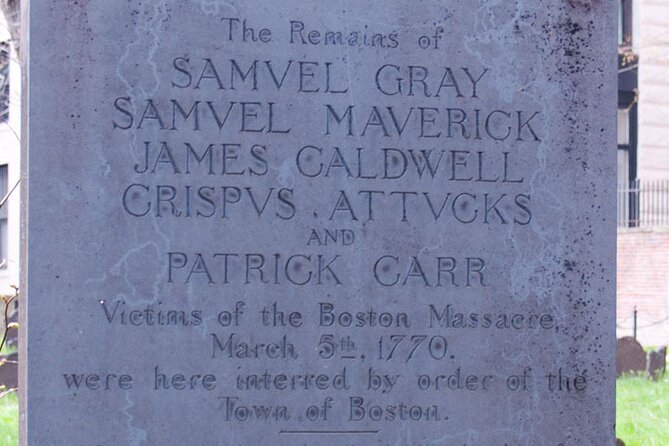
Granary Burying Ground is one of the tour’s most useful stops because it puts names and bodies behind the familiar revolutionary story. Samuel Adams, Paul Revere, John Hancock, and the victims of the Boston Massacre are buried here.
You get an introduction to the people and the roles they played. That approach helps correct the usual schoolbook version of events, where a few famous men seem to carry the entire Revolution on their shoulders.
The cemetery is free to enter, and the visit takes about 10 minutes. Wear shoes that feel good on uneven walking surfaces, and keep your camera ready. This is one of the places where the tour’s storytelling has room to breathe, even though the schedule keeps moving.
King’s Chapel follows. The 1749 Anglican church represents an earlier quarrel between Boston’s Puritans and the Crown. In the 1680s, the king took land for an unwanted church, turning religion and royal power into one very local dispute.
That is a useful lesson for the rest of the morning. The Revolution did not appear from nowhere in 1775. Resentments over power, land, religion, taxation, and representation had been building for decades.
Old City Hall and the meeting houses that changed Boston
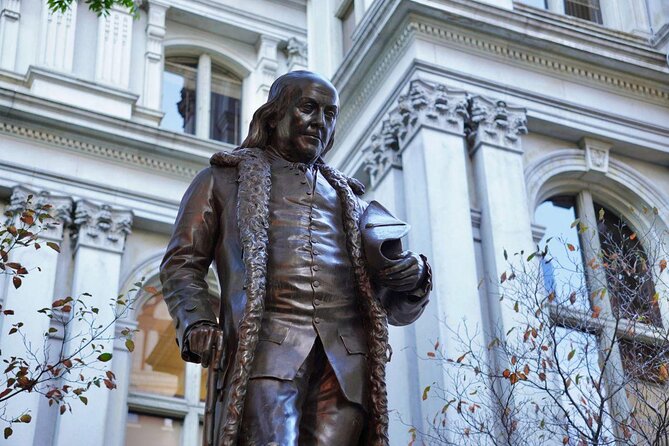
At Old City Hall, the focus shifts to Benjamin Franklin and a marker connected to the oldest continuously operating school in the colony. This is a brief stop, but it gives the walk some civic texture beyond battles and famous patriots.
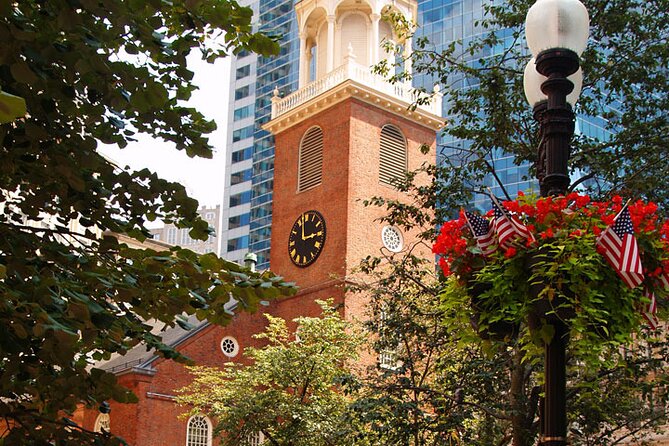
The Old South Meeting House is more central to the revolutionary plot. Colonial meeting houses were places where people gathered to hear preachers, politicians, and one another. Samuel Adams used this Puritan meeting house to launch the action that led to the Boston Tea Party.
The interior admission is not part of the $79 tour. That is worth knowing if you want to explore the building beyond the guided visit. The tour gives you the setting and story, but you pay separately for any included attraction entrance.
Next comes the Old State House, once the center of British authority in Massachusetts. Here you hear about the 1761 court battle that exposed the Crown’s disregard for colonial rights. The same area later became the site of the 1770 Boston Massacre.
Mark presents the event with needed care. The usual patriotic version says innocent citizens were gunned down in cold blood. The actual confrontation was more complicated, with a tense crowd, frightened soldiers, and shots that killed civilians. This is one of the tour’s strengths: it does not need to flatten a difficult event into a simple slogan.
Faneuil Hall and the voices that filled it
Faneuil Hall is a natural place to pause and consider public speech. Samuel Adams argued here for no taxation without representation, but the hall also hosted Frederick Douglass, the escaped slave and abolitionist.
That wider frame is valuable. The Freedom Trail is not only the story of white colonial resistance to Britain. It also leads into later struggles over slavery, abolition, and who had the right to speak in public life.
The visit is about 10 minutes, and the area is free to visit. It is also a practical place to note for food or a short break, though the tour schedule is not built around a long meal stop. Bring water and a snack if you need one.
Same trailheads, a different kind of day:
- San Francisco: Yosemite National Park & Giant Sequoias Hike
★ 4.5 · 1,777 reviews - Valley of Fire Guided Hike from Las Vegas
★ 5.0 · 1,611 reviews - Los Angeles: The Original 2.5-Hour Hollywood Sign Hike
★ 5.0 · 1,468 reviews - Small Group Waterfall and Rainforest Hiking Adventure on Maui
★ 5.0 · 1,417 reviews
The Blackstone Block and Boston’s lesser-known details
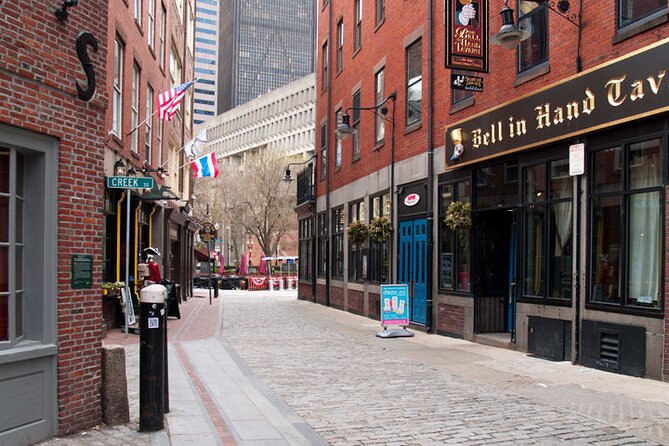
The Blackstone Block gives Mark space to point out details that are easy to miss when you follow only the painted trail. You see the former office of the Massachusetts Spy, the home of Ebenezer Hancock, and a tavern once described as the headquarters of the Revolution.
Ebenezer Hancock was John Hancock’s brother, and his home was used to store money sent by France to support the Revolution. That detail makes foreign aid feel less abstract. Money, storage, shipping, and trusted homes were part of the machinery of war.
This section is especially useful if you have already read the standard Boston history. Mark adds people and places that do not always appear in basic tours. He also brings in the contributions of women, an aspect one family described as especially welcome.
Paul Revere, the Old North Church, and the warning ride

The Paul Revere House is one of Boston’s oldest surviving homes. Revere bought the 1680 post-medieval house in 1770 and raised a large family there, fathering 16 children with two wives.
The stop is brief, about five minutes, and interior admission is separate. The important point is to see Revere as a working resident of Boston, not just a rider in a famous poem. His home helps place him in the ordinary city before he became a symbol.
At Old North Church, the story moves toward war. Signals from the church warned Patriots across the water in Charlestown that British regulars were moving toward Cambridge on their way to Lexington and Concord.
The church is one of the points where geography becomes part of the story. You can understand why the harbor, river, narrow streets, and nearby heights mattered. The guide uses the locations to explain movement, warning, and military planning rather than leaving you with a list of dates.
Interior admission is not included. If you want to spend more time inside the historic sites, budget extra money and extra time outside the four-hour schedule.
Copp’s Hill and the view toward Breed’s Hill
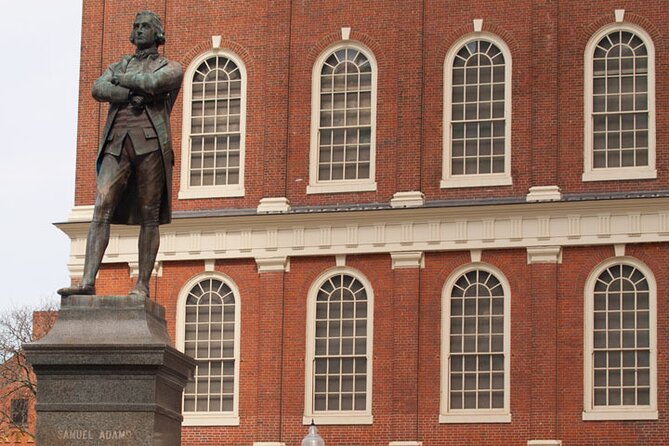
Copp’s Hill Burying Ground gives you a short but important stop before crossing to Charlestown. The cemetery helps explain the geography of the Battle of Bunker Hill, and the guide points out a grave marker with its own story.
The next stop is the Bunker Hill Monument. The battle was fought on Breed’s Hill, despite the name most people use. That correction alone is useful, since it shows how historical labels can survive even when they are not geographically exact.
The British won the battle, but their losses were about three times those of the Patriots. That result made the battle a costly warning. The colonial forces could be defeated, but they could not be dismissed as a harmless mob.
The monument stop lasts about 10 minutes and is free. The tour does not promise a long climb or a full interior visit, so treat this as a guided look at the site and its meaning rather than a separate monument admission experience.
USS Constitution makes a fitting final stop
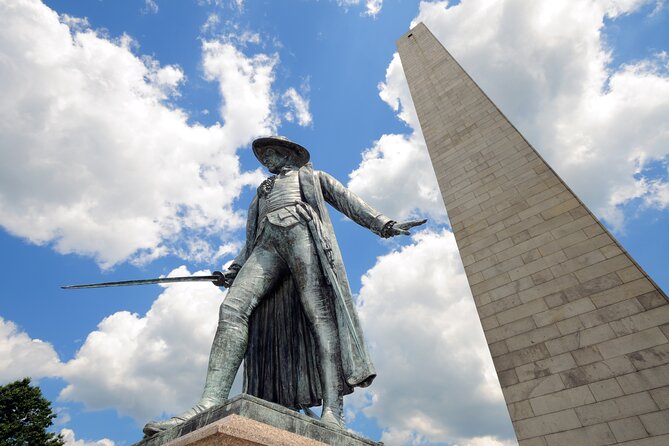
The tour ends at USS Constitution, the oldest commissioned warship in the world. Known as Old Ironsides, the ship served the United States Navy in American and foreign waters.
Ending here gives the morning a clear final chapter. You have followed the city’s political disputes, seen the burial places of its leading figures, traced the move toward armed conflict, and then reached a surviving naval symbol of the new nation.
Admission to the ship or museum interiors is not included. The tour ends at the USS Constitution Museum building in the Charlestown Navy Yard, so you can decide afterward if you want to continue exploring.
This final location also makes the tour practical for people who want to spend the afternoon in Charlestown. Just remember that you finish several miles from Park Street.
What $79 buys you
At $79 per person, this is not the cheapest way to follow the Freedom Trail. You can walk the red line on your own for free, and many historic buildings charge separately only if you enter.
The value comes from the four-hour explanation. You are paying for a guide who knows how the stops connect, keeps the group moving through a busy city, answers questions, and adds locations beyond the official route. Mark also provides maps and his own supporting material, according to the way the tour is presented.
I would consider the price fair if you want the full story in one morning and do not want to research each building before arriving. It is less appealing if you prefer to move at your own speed, spend an hour inside every museum, or stop often for food and shopping.
The included guide gratuity is a small but welcome detail. Mark does not expect or accept tips, so the listed price is easier to understand when comparing this tour with others.
Who will enjoy the four-hour pace
This is a strong choice for adults, couples, solo visitors, and families with teenagers who like history. The guide’s humor and storytelling help keep the morning from feeling like a lecture, while the content goes beyond the usual Paul Revere and Boston Tea Party highlights.
Children under 12 may find it long unless they already enjoy history. Four hours is a lot of listening, even with regular stops. Older children and teenagers who are curious about the Revolution should get more from the connected narrative.
The walk is mostly flat, but you should still expect plenty of steps. One estimate puts the route near 10,000 steps, while the official distance is about 2.8 miles. Comfortable shoes are essential, and water is sensible. Mark has provided extra water on some tours, but you should not rely on that.
The tour requires moderate physical fitness. It is near public transportation, and service animals are allowed. Since it depends on good weather, poor conditions can lead to a new date or a full refund.
You can cancel for a full refund up to 24 hours before the start time. Changes or cancellations within 24 hours are not accepted for a refund.
Should you book it?
Book this tour if you want one clear, well-connected account of Boston’s Revolution, from the State House to Old Ironsides. It is especially useful on a first visit, when the city’s many historic buildings can otherwise blur together.
Skip it if you want a short orientation, extensive indoor visits, or complete freedom to linger. The tour is long, and the separate admission fees can add up if you plan to enter several sites.
For most history-minded visitors, the strongest reasons to book are Mark’s detailed storytelling, the small group, and the fact that Bunker Hill and USS Constitution are included in the same walk. Put on good shoes, bring water, and treat the morning as a serious history lesson with a lot of city between the chapters.
FAQ
How long is the Entire Freedom Trail Walking Tour?
The tour lasts approximately four hours and covers about 2.8 miles, or 4 kilometers, from Boston Common to the USS Constitution in Charlestown.
What time does the tour start?
The tour starts at 10 a.m. at Beacon Street and Park Street in Boston.
Where does the tour end?
The tour ends at the USS Constitution Museum building in the Charlestown Navy Yard, near USS Constitution.
Is admission to historic buildings included?
No. Admission to interiors is not included. Some stops are free to visit, but separate admission may be required for certain buildings.
Does the tour include Bunker Hill and USS Constitution?
Yes. The route includes the Bunker Hill Monument and ends at USS Constitution, also known as Old Ironsides.
How large is the tour group?
The maximum group size is 16 people.
Is the tour suitable for children?
It can work well for families with teenagers. The tour is detailed and lasts four hours, so younger children may need a strong interest in history to stay engaged.
What happens if the weather is poor?
The experience requires good weather. If it is canceled because of poor conditions, you will be offered another date or a full refund. You can also cancel up to 24 hours before the start time for a full refund.
Just added around the USA
- Private Family Hike in Yosemite★ 5.0 · 37 reviews
- Private Guided Hiking Tour in Yosemite★ 5.0 · 94 reviews
- Guided Yosemite Hiking Excursion★ 5.0 · 80 reviews
- Yosemite Valley Private Hiking Tour★ 5.0 · 83 reviews
- Sedona: Vortex Yoga Hiking Half-Day★ 4.8 · 52 reviews
- Sedona Archaeology Hiking Tour★ 5.0 · 73 reviews
- Sedona Creekside of Cathedral Rock Hike With a Private Guide★ 5.0 · 37 reviews
- Sedona Dark Sky Sunset & Night Hike With a Private Guide★ 5.0 · 86 reviews
USA Hiking Tours, side by side.


Multnomah Falls and Columbia River Gorge Half-Day Hiking Tour
Read our review →

Small Group Waterfall and Rainforest Hiking Adventure on Maui
Read our review →

Kauai Adventure: Kayak & Hike to Secret Falls with Expert Guide
Read our review →
Peekaboo Slot Canyon UTV and Hiking Adventure
Read our review →This walk also sits in