
REVIEW · SPAIN
La Palma: Tajogaite Volcano Guided Trek
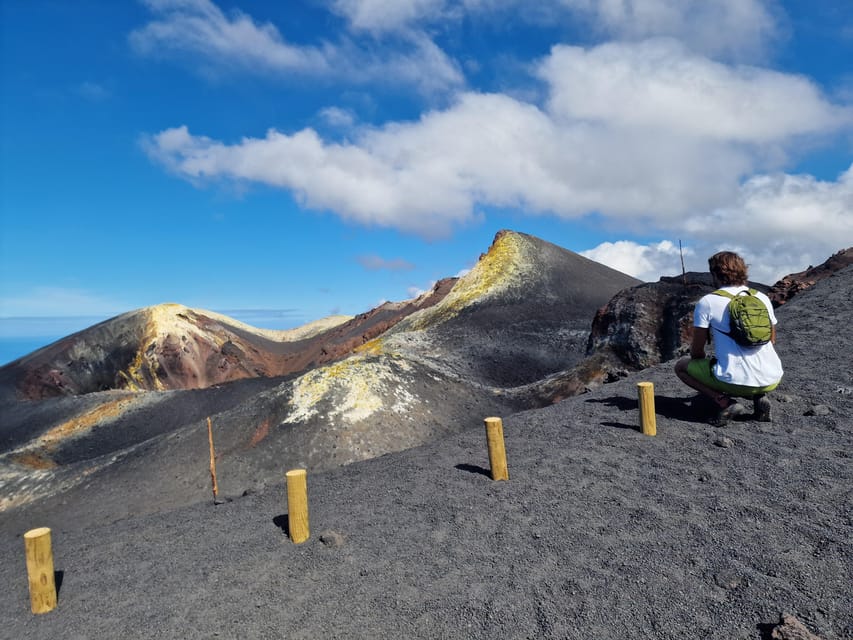
Tajogaite is not an ancient ruin or a dormant cone viewed from far away. It is the youngest volcanic ground in La Palma, formed during the 2021 eruption, and you walk along its ash-covered slopes with the new craters close by. I like the route for its clear view of how lava changed the island, and for guides such as Bebe, Juan, Amanda, Steven, and Gianluca, who explain the science in an easy, lively way.
I also like the short van transfer from El Paso, which saves your legs for the volcanic route, and the chance to walk in an area that is restricted without a guide. The main drawback is simple: this is an 8-kilometer walk with 300 meters of ascent and descent, and cloud, rain, or wind can limit the views.
Key points about the Tajogaite trek
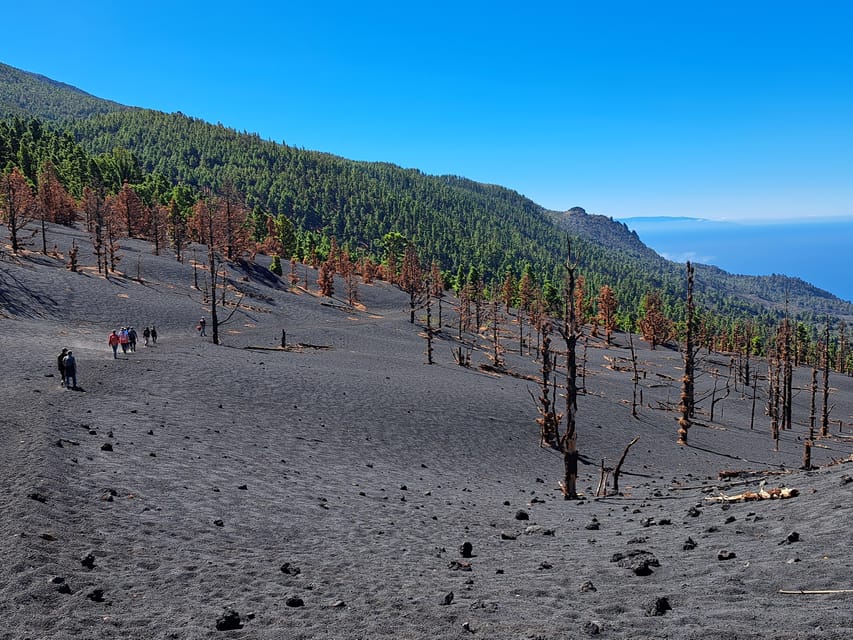
- Fresh volcanic ground: Walk across ash and lava formed during the 2021 eruption.
- An 8-kilometer route: Expect a moderate hike with about 300 meters up and 300 meters down.
- A close view of the new craters: You reach the upper area and walk around the rear edge, but you do not climb into the crater.
- Strong local guiding: Bebe, Juan, Amanda, Steven, Gianluca, and other guides explain geology, island history, and the human cost of the eruption.
- Simple transport: A 15-minute van ride takes you from the meeting point to the trailhead and back.
- Good value at $45: The price includes the guide and round-trip transport, but not hotel pickup.
Why Tajogaite is such a special walk
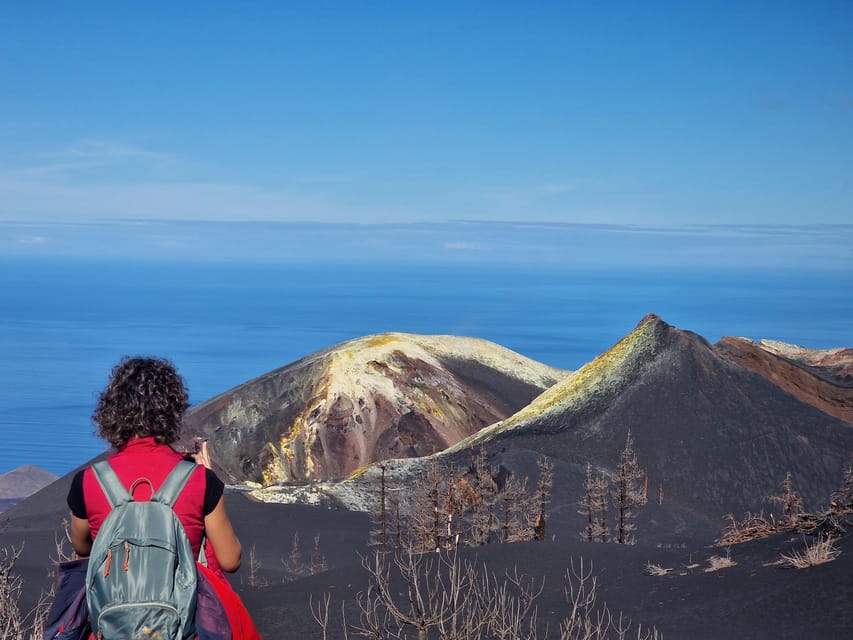
La Palma has many volcanic viewpoints, but Tajogaite gives you something different: a chance to walk across ground that did not exist before 2021. The eruption lasted 85 days and produced a new volcanic area, destroyed more than 3,000 buildings, damaged forests, and sent lava toward the coast.
That time scale helps you understand the place. This is not a volcanic site shaped over thousands of years. The changes happened within living memory, and the black ash, rough lava, and young cones still look raw. In places, the setting can feel almost like Mars, with dark volcanic soil set against La Palma’s older pine-covered slopes.
I value the trek because it connects geology to real lives. You learn how lava moved, why it followed certain paths, and how the eruption affected nearby communities. A good guide also explains the island’s volcanic formation, different kinds of rock, and the way eruptions build new land.
The experience has earned a 4.8 rating from 1,810 reviews, and the praise is easy to understand. The strongest feature is not a single viewpoint. It is the combination of access, clear explanations, and a guide who keeps the group together on difficult or uneven ground.
More Volcano Hikes in Spain
- The Volcano Heart Tour: Hiking, Tasting and Sunset Experience
★ 5.0 · 1,120 reviews - Lanzarote: Guided Volcano Hike with Transfers
★ 4.9 · 861 reviews - Volcano Trekking Tour (Timanfaya eruptions)
★ 5.0 · 339 reviews
The 15-minute van ride from El Paso
The tour begins at one of the stated meeting points, commonly around C. Antonio Pino Pérez in El Paso, though your exact location can depend on the option you book. From there, the group travels by van for about 15 minutes toward the start of the walk.
That transfer matters. You do not need to arrange your own ride to the trailhead, and you avoid using energy on a long approach road. One part of the route begins near Tacande, an older volcano recorded in 1480 and known as the Burnt Mountain.
The drive also gives you a quick change of scene. El Paso is a useful base for this part of La Palma, and the central meeting point makes the excursion easier to fit into a day of sightseeing. Hotel pickup is not included, so you need to reach the meeting point yourself.
Arrive ready to walk. The van is transport, not a sightseeing stop, and the main event begins once you reach the volcanic route.
Starting near Tacande, La Palma’s older volcano
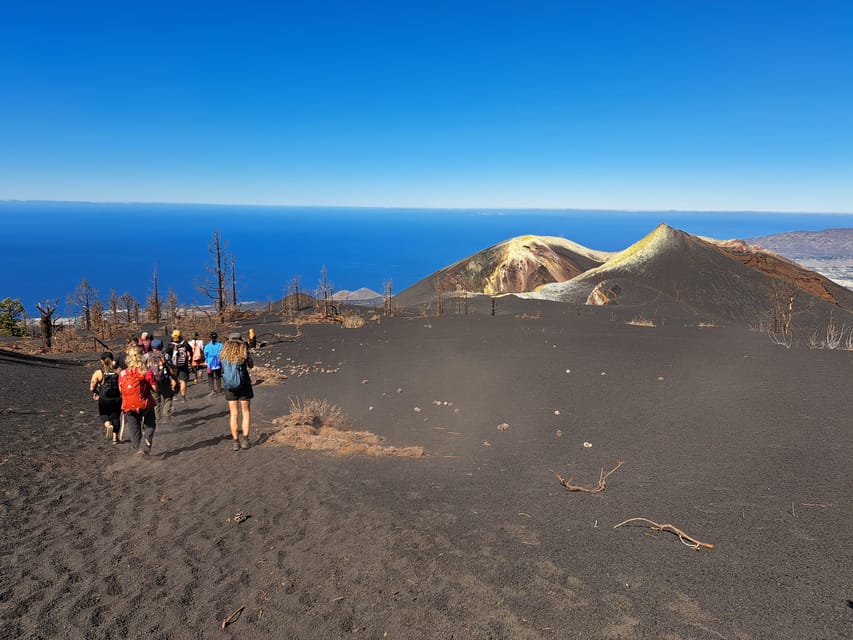
Beginning near Tacande gives the trek a useful point of comparison. The route starts beside an older volcanic feature before moving toward Cumbre Vieja and Tajogaite, the new volcano created in 2021.
This progression helps you read La Palma’s geology. You begin with an established volcanic mountain and finish among fresh ash and lava. The island is built from successive eruptions, and the walk shows that process in a direct way instead of treating it as an abstract lesson.
Your guide may stop to point out changes in rock color, ash texture, vegetation, and the shape of the ground. Guides have also used quick drawings in the ash to explain how the eruption worked. That kind of demonstration is especially useful if you do not usually follow technical geology.
The route is described as moderate rather than strenuous, but do not mistake that for a flat stroll. You will walk about 8 kilometers and manage roughly 300 meters of ascent and 300 meters of descent. Loose ash can make parts of the route feel less stable than an ordinary paved trail.
Walking across ash and new lava
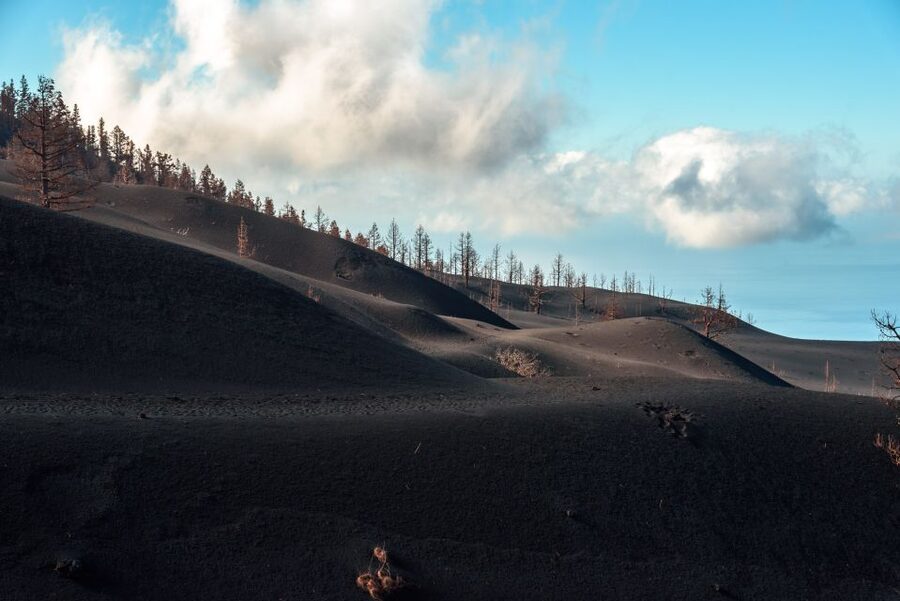
The central part of the trek takes you through volcanic ground formed during the eruption. You walk over ash, see lava flows, and look across terrain that was created in a matter of weeks.
This is where sturdy footwear matters most. Comfortable walking shoes are required, and good soles will make the ash and uneven ground easier to handle. Sandals or smooth-soled shoes would be a poor choice, even though the walk is not considered technically difficult.
The route gives you more than a single photograph of a cone. As you move, you see how the molten rock carved channels and spread across older ground. Forests and buildings were caught in its path, and the new lava created a peninsula. From the trail, those changes become easier to grasp because you see the flow routes from above and beside them.
Your guide provides the missing context. Without explanation, black slopes and broken lava can blend together. With a guide, you learn which features relate to the crater, which formed from moving lava, and how the eruption changed the surrounding area.
Same trailheads, a different kind of day:
- From Valencia: Montanejos Guided Hike with Natural Pools
★ 4.5 · 1,741 reviews - From Seville: Caminito del Rey Hike Day Trip
★ 4.5 · 1,240 reviews - Lanzarote: Hike Across Timanfaya’s Volcanic Landscapes
★ 4.8 · 1,234 reviews - From Barcelona: Montserrat Monastery, Easy Hike, Cable Car
★ 4.9 · 1,021 reviews
Reaching the upper route without entering the crater
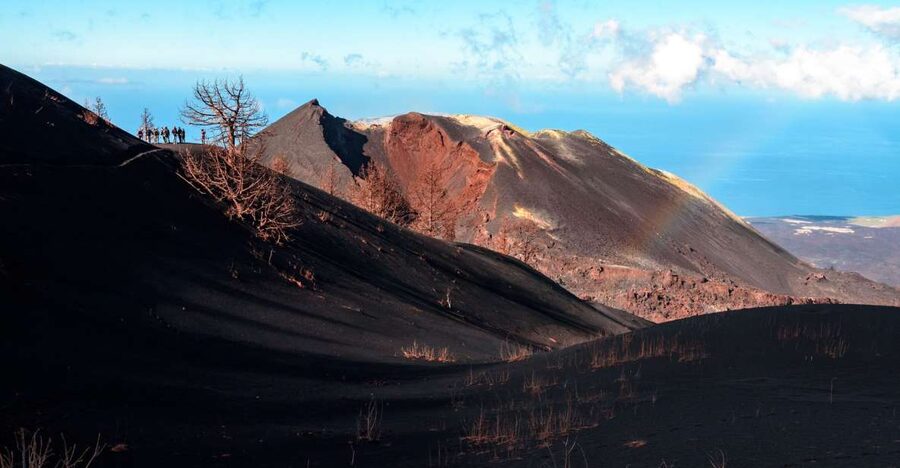
The trek goes up toward the new Cumbre Vieja volcano and reaches the top area, but you do not climb into the crater. Instead, the route follows the back edge for about 8 kilometers, giving you views toward the craters and lava flows.
That distinction is important. This is a guided walk around the volcanic site, not a technical ascent into an active crater. The close view can still feel remarkable, especially because Tajogaite is so young and access is limited to guided visits for safety reasons.
The exact appearance depends heavily on weather. On a clear day, you can expect broad views of the volcanic area and, from parts of the route, the caldera. In cloud, the main reward becomes the ground beneath your feet and the guide’s explanation. Recent groups have completed the walk in poor weather, including rain, and still found it worthwhile, but visibility may be limited.
Bring a jacket even if El Paso feels warm. Weather changes quickly at higher elevations, and wind, cloud, and rain can arrive without much warning. A hat, sunscreen, and water are also listed as essentials.
Guides who make the science easy to follow
The guide can shape the experience more than the route does. The company uses different guides, including Bebe, Juan, Amanda, Steven, Gianluca, Mario, Angel, Rebecca, and Sule. English and Spanish tours are available daily, while German departures run on selected days and at selected times.
Bebe is praised for adjusting the pace, taking care of different abilities, and making the science fun. Juan is known for explaining both the eruption and the wider formation of La Palma, while Amanda has been described as engaging and clear. Steven combines geology and history with a good sense of humor, and Gianluca brings broad knowledge of the island and keeps an eye on the group.
Those differences matter if you enjoy asking questions. Guides have answered questions about volcanic rocks, earlier eruptions, island formation, local communities, and the human effects of the 2021 event. Some also offer useful ideas for the rest of your time on La Palma.
The route may be educational, but it should not feel like a classroom walk. Explanations are usually broken up with photo stops and pauses to look around. That rhythm suits the setting. You need time to take in the views, not just listen while walking.
What the eruption means on the ground
The 2021 eruption is not presented as a distant natural event. Lava destroyed more than 3,000 buildings and affected people living nearby. Forests were lost, roads and properties were cut off, and new volcanic ground reached toward the coast.
A guide can show you where the lava traveled and explain how the eruption changed the area. Local perspective adds weight to the walk, since the route is not just about dramatic rocks. It is also about homes, farmland, and communities dealing with sudden change.
I appreciate that balance. The volcanic scenery is striking, but the story is not treated as a simple spectacle. You get the excitement of seeing a new volcano while also learning why the eruption remains a serious part of La Palma’s recent past.
The route’s restricted access adds to the sense of place. You are not simply stopping at a roadside viewpoint with a crowd of people. The group walks through a controlled area where a guide can explain what you are seeing and help you move safely across the ash.
How hard is the 8-kilometer route?
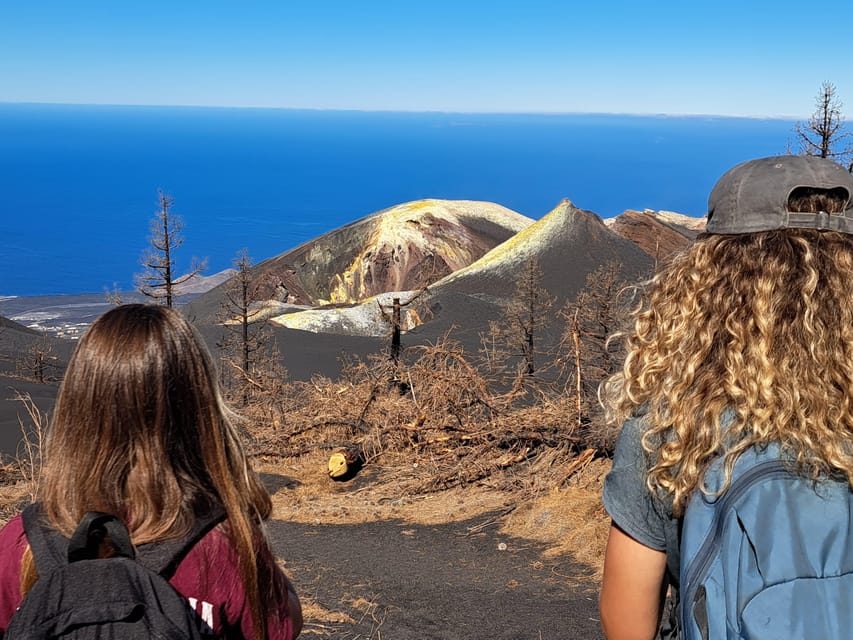
For a reasonably fit person, the walk should be manageable. Several hours on volcanic ground, however, is different from a short walk on a smooth path. The route includes both uphill and downhill sections, with a total difference of about 300 meters in each direction.
You should be comfortable walking for four hours, including stops. The tour is not suitable for wheelchair users or people with mobility impairments. It is also not suitable for people with pre-existing medical conditions, so consider your own limits before booking.
Children can manage it if they are used to walking. An 8-year-old has completed the route, but that does not mean every child will find it easy. The ash, elevation changes, and length call for sensible footwear, water, and a patient pace.
The guide generally keeps the group together and adjusts the speed when possible. That is good for safety, but it can affect the overall pace if someone in the group is much slower. If you prefer a fast hike with few pauses, this may not be your ideal outing.
What the $45 price includes
At $45 per person, the trek offers good value if you want both access and explanation. The fee covers the live guide and round-trip transport from the meeting point. You are paying for a guided route into a restricted volcanic area, not just a ride to a lookout.
The price does not include hotel pickup and drop-off, food, or personal equipment. You need to get to the meeting point, bring water, and dress for changing conditions.
The four-hour length also helps the value. About 15 minutes each way is spent in the van, leaving roughly 3 hours and 45 minutes for the guided visit. That is enough time to walk at a steady pace, stop for photos, and hear the story without rushing from one viewpoint to another.
Free cancellation up to 24 hours before the start and a reserve-now, pay-later option make the booking less rigid. Check the available start times and the language before committing, especially if you need German.
What to bring for changing mountain weather
Keep your packing simple but practical:
- Comfortable shoes with a good grip
- A warm layer and a jacket
- Hat and sunscreen
- Water
- A charged smartphone
The jacket is not optional in my view. Several walks have faced cloud, rain, or cooler conditions even when the day began well. Sunscreen still matters because breaks on open volcanic ground can leave you exposed.
A smartphone is useful for photos and should be charged before you arrive. There is no mention of food being provided, so plan around the four-hour duration and carry anything you personally need.
Pets are not allowed. The walk is also not suitable for wheelchair users or people with mobility impairments.
Is Tajogaite worth fitting into your La Palma plans?
I would book this trek if you want to understand La Palma through its active geology and recent human story. It is especially good early in your stay because guides often share useful information about the island, helping you plan other outings.
You should book it if you enjoy moderate walks, unusual scenery, and explanations that connect science with local life. The close view of the new craters, the ash underfoot, and the fresh lava routes make this far more memorable than a standard scenic drive.
Think twice if you need guaranteed clear views, dislike uneven ground, or want a short and effortless stop. Weather can hide the wider scenery, and the 8-kilometer route requires a reasonable level of fitness.
For most visitors who can handle the distance, the $45 cost is fair. The combination of transport, controlled access, local guiding, and a volcano formed within living memory makes Tajogaite one of La Palma’s most distinctive half-day experiences.
FAQ
How long does the Tajogaite volcano tour last?
The experience lasts about four hours, including the van transfers. The guided visit itself is scheduled for about 3 hours and 45 minutes.
How far do you walk?
The route is about 8 kilometers. It includes approximately 300 meters of ascent and 300 meters of descent.
Do you climb into the crater?
No. You hike to the upper area and walk around the rear edge of the volcano, but you do not climb into the crater.
Is transportation included?
Yes. Round-trip transportation from the meeting point is included. Each van journey takes about 15 minutes. Hotel pickup and drop-off are not included.
What languages are available?
English and Spanish tours are available daily. German tours are offered on some days and at some times, depending on availability.
What should I bring?
Bring comfortable shoes, warm clothing, a jacket, a hat, sunscreen, water, and a charged smartphone.
Is the tour suitable for people with mobility impairments?
No. The walk is not suitable for people with mobility impairments or wheelchair users. It is also not suitable for people with pre-existing medical conditions.
Just added around Spain
- From Valencia: Montanejos Tour with Guided Hike★ 4.1 · 86 reviews
- Montanejos Hiking Tour & Thermal Pools from Valencia★ 4.5 · 111 reviews
- From Valencia: Cala del Moraig Hiking & Beach Trip★ 4.8 · 107 reviews
- Trekking in the Volcanoes Natural Park in a small group★ 5.0 · 97 reviews
- Montserrat very early : Hiking, Abbey, very small group★ 5.0 · 127 reviews
- PRIVATE TOUR Teide National Park: Hiking and Stargazing★ 5.0 · 38 reviews
- Semi-Private Montserrat Monastery & Hiking Experience★ 5.0 · 132 reviews
- Private Pre-Pyrenees Medieval Village Hike from Barcelona★ 5.0 · 39 reviews
Volcano Hikes, side by side.
Sunrise Mount Batur Guided Hike with Breakfast
Read our review →
Mount Batur Sunrise Guided Hike and Natural Hot Spring
Read our review →
Mount Etna: Summit Guided Hiking Tour up to 3,400 m
Read our review →
Mount Etna: Trek to 3000m with cable car and 4×4
Read our review →
Mount Batur Sunrise Trek With Guide and Breakfast
Read our review →
Mount Batur Sunrise Hike and Natural Hot Spring Option
Read our review →
Mount Etna: Summit Crater Trek with Cable Car
Read our review →This walk also sits in