REVIEW · MOROCCO
Mt Toubkal Ascent Express Trek 2 Days 1 Nights
Mount Toubkal rises to 4,167 meters, making this a real high-altitude trek, not a gentle day hike from Marrakech. In two days, you walk from Imlil through the Aït Mizane Valley, sleep in a mountain refuge, and aim for the summit at sunrise before descending all the way back to Imlil.
I like the careful pacing and the strong local guide support, especially from guides such as Mohamed, Omar, Mustafa, and Yassine. I also like the value: at $147 per person, transport, meals, tea, refuge lodging, and guiding are included. The catch is the schedule. The second day can mean 10 to 12 hours on your feet, and winter snow, cold, altitude, or poor weather may stop you reaching the top.
Key points before you book
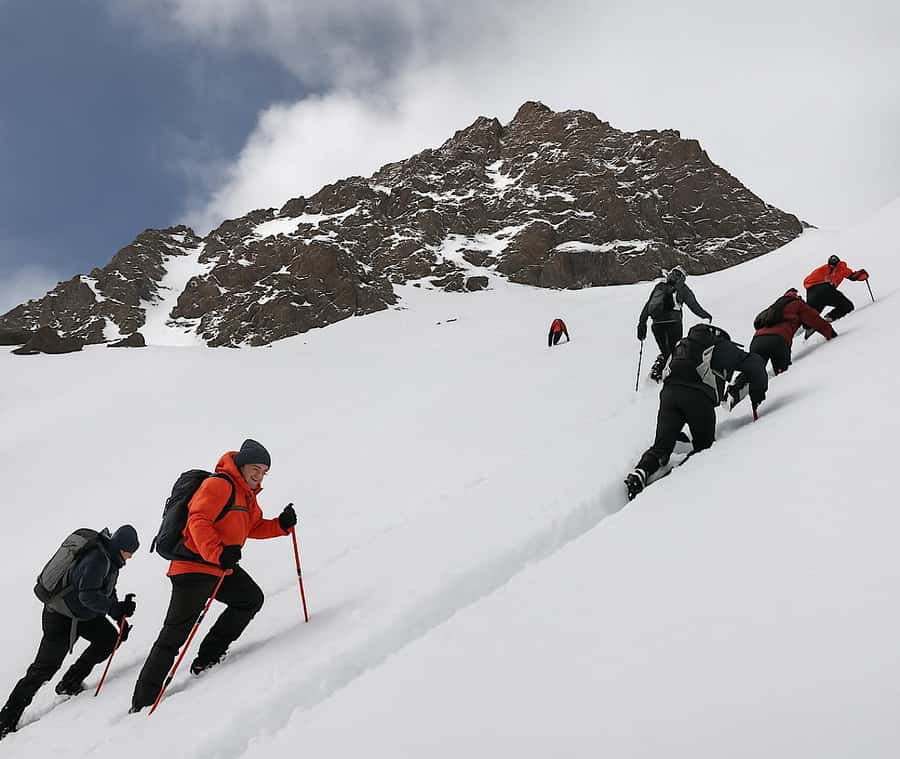
- Sunrise summit attempt: You leave the refuge early, often around 4 a.m., to reach the summit as the Atlas peaks catch the first light.
- A serious two-day schedule: The first day climbs from 1,740 meters to 3,207 meters. The next day includes the summit and the full descent to Imlil.
- Strong guide care: Local guides check your pace and condition, and have helped people descend safely when altitude sickness, pain, or weather became a problem.
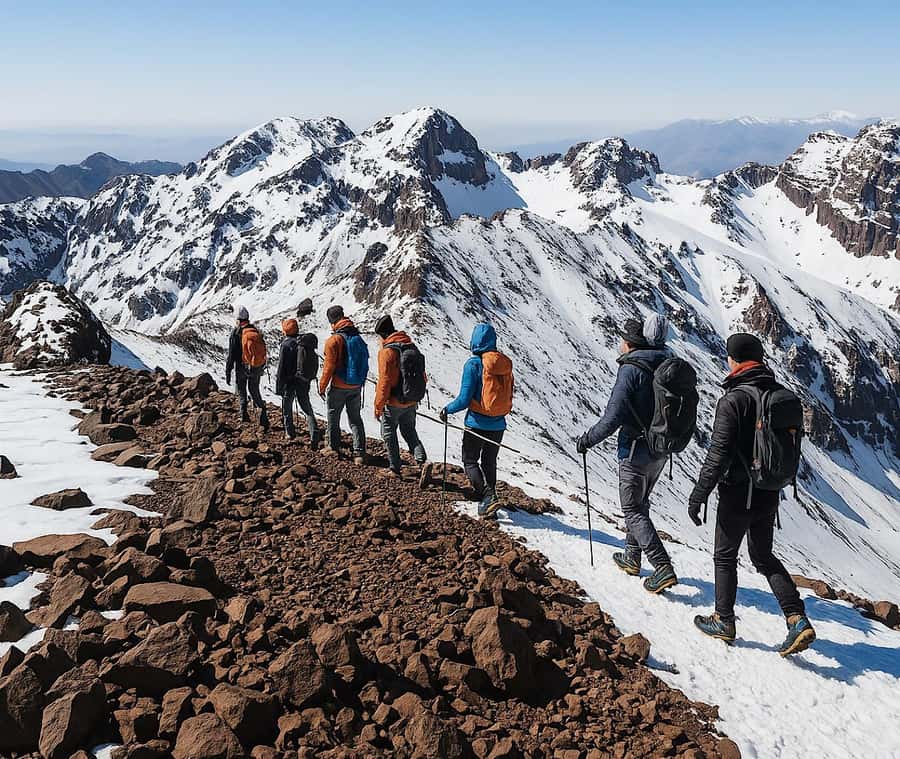
- Winter means real mountain conditions: From November through April, snow slopes may require crampons and an ice axe for security.
- Basic refuge comfort: Shared rooms, bunk beds, limited sleep, and simple facilities are part of the deal.
- Good value with extra costs: Meals and transport are included, but equipment rental, snacks, drinks, porters, and a mule cost extra.
From Marrakech to the high Atlas foothills
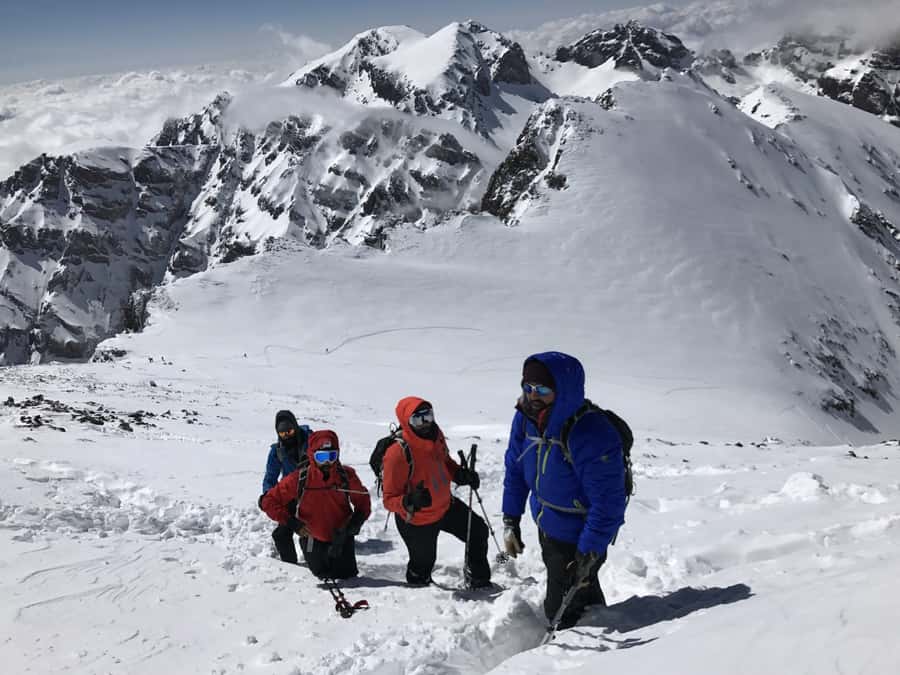
Your day starts with pickup from your hotel or riad in Marrakech. The provider normally confirms the exact meeting point by email or message, and this detail matters because pickup arrangements have occasionally been less smooth than the mountain portion. A central meeting point can make things easier.
The drive takes you toward Imlil Valley, the usual starting point for Toubkal treks. Imlil sits at about 1,740 meters, so you begin gaining height soon after leaving the city. The transfer is included in the price, along with the return journey from Imlil to Marrakech.
At Imlil, you meet the mountain team and sort out any equipment you need. You can rent sleeping bags, crampons, ice axes, warm clothing, hiking poles, and headlamps locally, although the exact rental selection and cost should be checked before setting off. You can also leave unnecessary luggage in Imlil, which is a smart move. Carry only what you need for the mountain.
There may be some waiting while groups are divided and equipment is arranged. This can feel untidy at first, but it is also your chance to use the toilet, buy snacks and water, and adjust your pack before the long walk.
More Mountain and Summit Hikes in Morocco
- Berber villages : Atlas Mountains Day Hike from Marrakech
★ 5.0 · 14,007 reviews - From Marrakech: Atlas Mountains Full-Day Hiking Trip w Lunch
★ 4.8 · 7,417 reviews - Marrakech: Atlas Mountains & Valleys Waterfall Hike w/ Lunch
★ 4.8 · 1,236 reviews
Walking through Aït Mizane Valley to Sidi Chamharouch
The trail follows the Aït Mizane Valley toward Aremd, then continues to the shrine of Sidi Chamharouch and its nearby waterfall. This part gives you a gradual introduction to the route, with time to settle into the group pace.
The path is not technical climbing. You do not need ropes or climbing experience, but you should expect a steep mountain walk with loose rock, uneven ground, and some easy scrambling. Good hiking shoes are essential. Comfortable casual shoes will not give you enough grip or support for the full route.
Sidi Chamharouch is an important stop because it breaks up the climb and gives you a chance to eat, drink, and catch your breath. Small stops along the route may sell water and snacks, but prices and supplies can vary. I would carry extra high-calorie food from Marrakech or Imlil, especially if you have a large appetite.
The guides usually set a steady pace rather than rushing the first climb. That is important. Several people have found the early walking manageable, only to feel the altitude later. A slow start helps you save strength for the refuge and the summit morning.
The climb to the 3,207-meter refuge
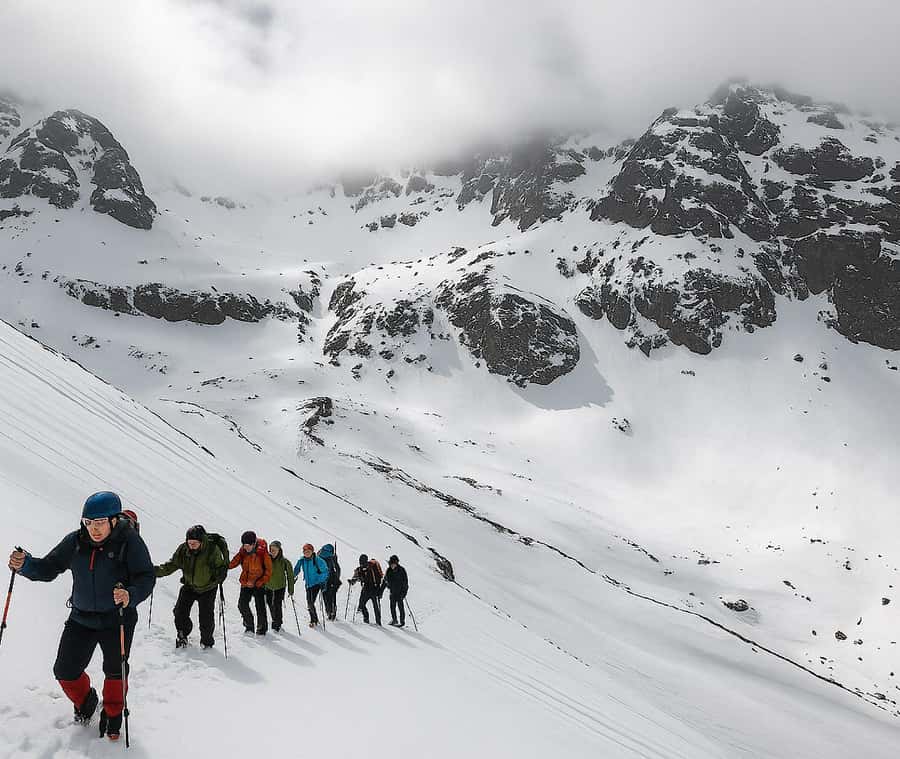
After Sidi Chamharouch, the trail becomes steeper as it heads toward the Toubkal Refuge at 3,207 meters. The first day involves around five to six hours of walking, depending on the group pace, breaks, weather, and trail conditions.
This is where the trip becomes more than a scenic walk. You have climbed roughly 1,467 meters from Imlil in a single day, and the change in altitude can affect you even if you are fit. Headaches, nausea, tiredness, and shortness of breath can happen. Tell your guide early if you feel unwell. Do not try to hide symptoms simply to keep up.
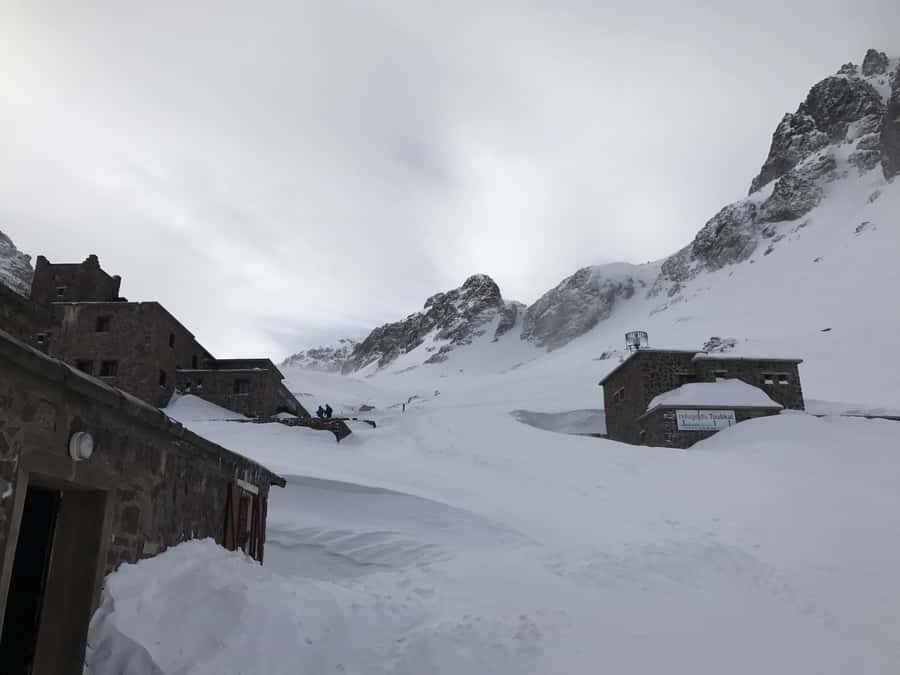
The refuge offers a warm place to eat and sleep, but do not picture a private mountain lodge. Rooms are shared, bunk beds are basic, and the facilities are simple. Lights may be turned off, so a headlamp is useful. Sleep can be poor because of the early start, shared rooms, hard bunks, cold conditions, and altitude.
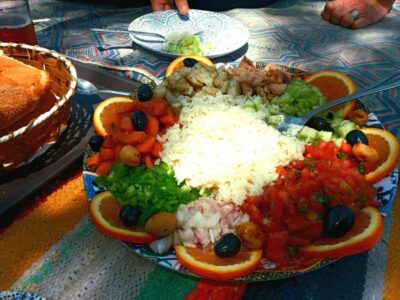
Meals are included and usually consist of filling Berber-style food, with vegetarian options available. The food has earned plenty of praise, but portions and supplies can be affected by snow and mule access. Some people have found the refuge meal too small, while others have found the food plentiful and fresh. Bring snacks if you know you eat a lot.
Tea and coffee are included. Soft drinks are not. Water and snacks may be available along the route or at the refuge, but bring cash in Moroccan dirhams for these purchases and for equipment rental. You should also carry your passport, since there is a checkpoint on the way.
The 4 a.m. push toward Toubkal’s summit
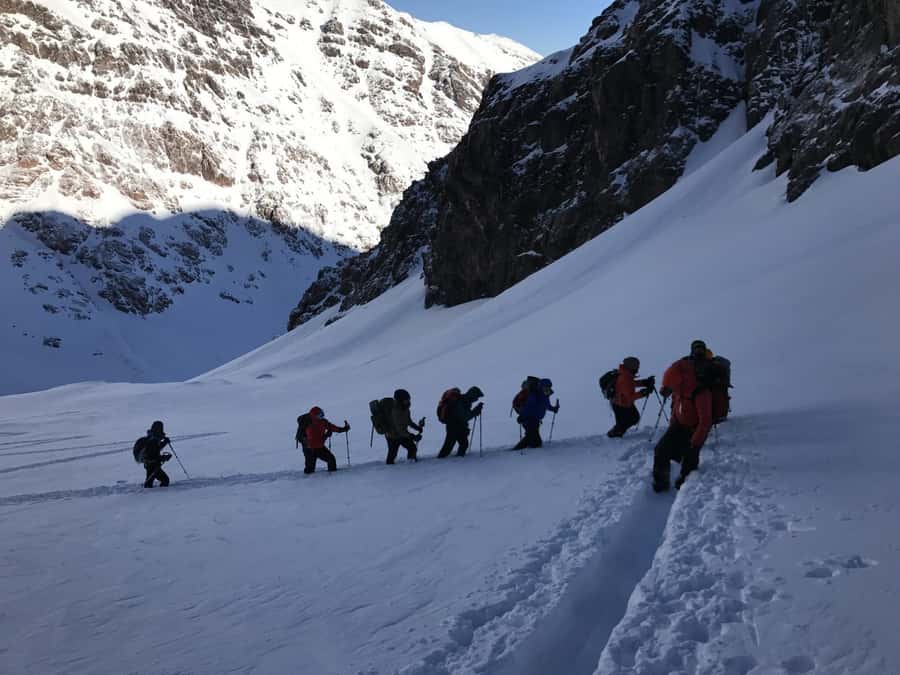
The second day is the heart of the trip. After an early breakfast, you leave the refuge in darkness, often around 4 a.m., using a headlamp to follow the trail. The timing is designed to get you to the summit near sunrise.
The route from the refuge to the summit crosses streams and rocky ground, then climbs toward a high plateau. In snow season, the route may include snow slopes and icy sections. From November through April, crampons and an ice axe may be needed for security. This is why the tour is described as a non-technical trek rather than a climb, but winter equipment still matters.
The summit section is physically demanding. You gain nearly 1,000 meters from the refuge to the top, then must descend that same ground before completing the long walk to Imlil. The altitude makes every steep section harder, and cold wind can drain your energy quickly.
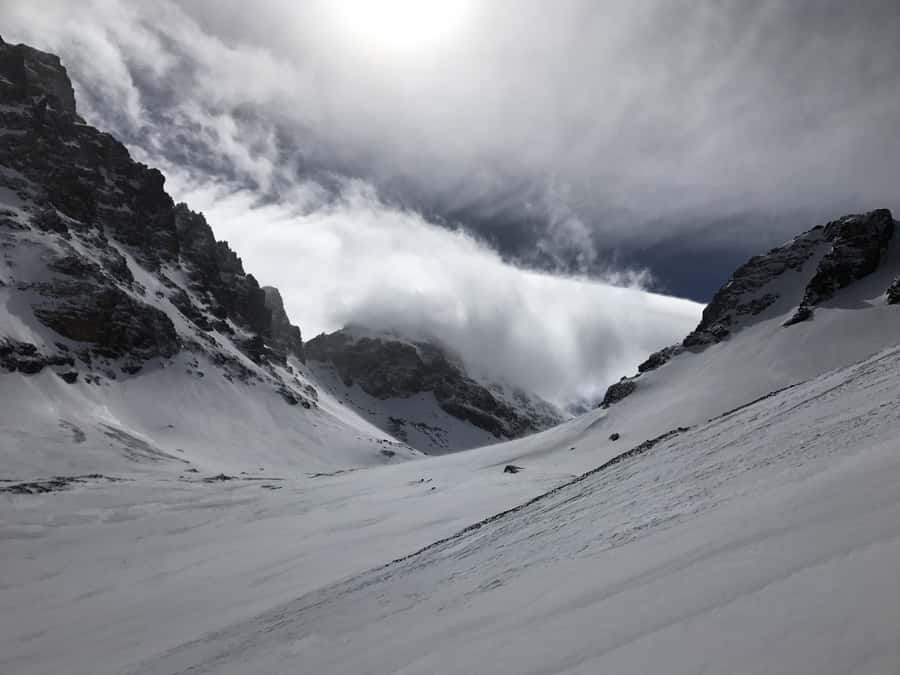
At the top, you can look toward the High Atlas and the plain of Marrakech to the north. To the south, the view reaches toward the Anti-Atlas and the Sahara. Sunrise adds a special reward, but weather controls the result. Clouds, snow, wind, and poor visibility can make a summit attempt unsafe.
The guides have turned groups around when conditions were dangerous. That is the right decision, even if you are disappointed. Some departures have reached the refuge but not the summit during blizzards or heavy snow. In other cases, guides have substituted a different mountain or helped people enjoy the route without taking unnecessary risks.
Same trailheads, a different kind of day:
- From Marrakech: Ouzoud Waterfalls Guided Hike and Boat Trip
★ 4.7 · 33,630 reviews - Marrakech: Ourika Valley Trip with Waterfall Hike
★ 4.6 · 6,792 reviews - Marrakech: Ourika Valley Trip with Waterfall Hike & Lunch
★ 4.9 · 5,303 reviews - Marrakech: ourika valley lunch & guided hike to waterfalls
★ 4.9 · 3,737 reviews
The long descent back to Imlil
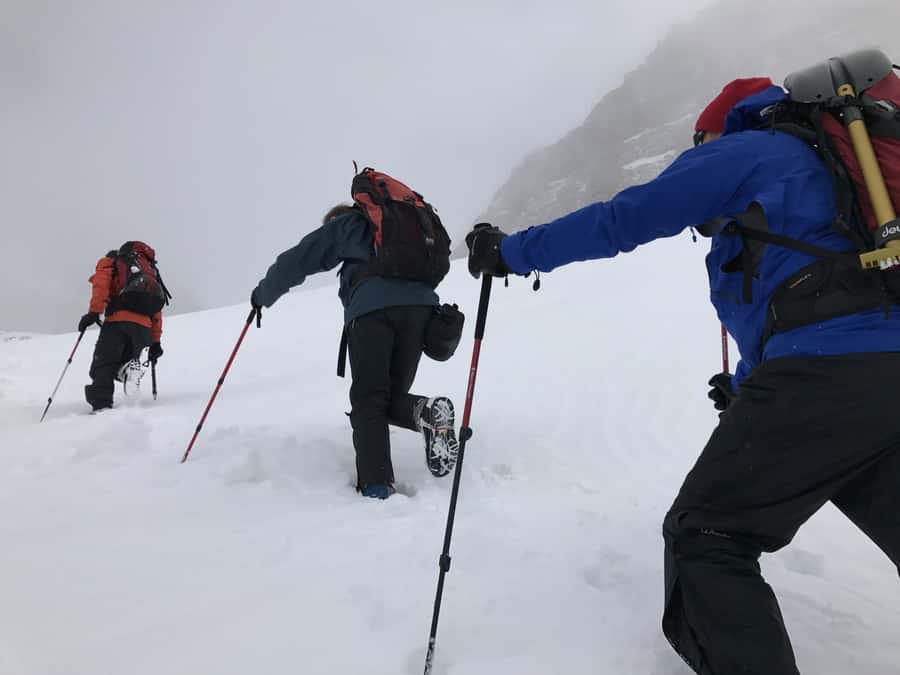
Reaching the summit is only halfway through the second day. You return to the refuge, then continue down toward Imlil. The full day can last 10 to 12 hours, and many people find the descent harder than expected.
Downhill walking puts pressure on tired knees and legs. Loose rock also requires care, especially after several hours of effort. Use walking poles if you have them, and do not race downhill to catch up. Your guide should keep the group together while allowing breaks for different fitness levels.
The support team is one of the strongest parts of this trip. Guides have stayed with people suffering from altitude sickness, accompanied unwell hikers back down, carried heavy packs, and arranged mule transport when someone could no longer continue comfortably. That does not remove the need for your own preparation, but it gives you a safety net in a demanding setting.
A mule costs 20 euros if you choose to use one, and porters are not included. If you bring a large bag, you may want to budget for this rather than carrying everything yourself. Keep valuables and essential items in your own daypack, since bags handled by mules can be misplaced.
Once you reach Imlil, transport takes you back to Marrakech. The return transfer is included, but confirm the drop-off plan in advance. A few people have found the return driver tried to leave them at a central stop rather than near their original pickup point.
What $147 really covers
The price is unusually low for a two-day high-altitude trek. For $147 per person, you receive Marrakech pickup and drop-off, transport to and from Imlil, a local guide, accommodation at the refuge, meals, and tea or coffee.
Arranging a guide, refuge place, transport, and meals independently may cost more and take extra work. An organized trip also gives you a group, which can be helpful when the weather changes or someone needs assistance.
The headline price is not the final cost for every person. Plan for:
- Sleeping bag rental
- Crampons and ice axe rental in winter
- Warm clothing rental
- Hiking poles or headlamp rental
- Water and snacks
- Soft drinks
- Porter services
- Mule hire, listed at 20 euros
A small group is advertised, with up to 14 participants. Actual groups can vary, and several guides may accompany a larger group. A smaller group can move more easily, while a larger one may create delays at the start and on narrow sections of trail.
The best season for this express trek
The route changes sharply with the season. In warmer months, the walk is mainly a steep, rocky trek. From November to April, snow and ice can appear above the refuge, and crampons may be necessary.
Winter offers a dramatic mountain setting, but it also brings the greatest risk of a failed summit attempt. Heavy snow and blizzards have prevented people from reaching the top, even when the guides handled the situation well. You should book this trip in winter only if you accept that the summit is an aim, not a guarantee.
Spring, summer, and autumn may provide easier walking conditions, though the route remains strenuous because of the height and the rapid ascent from Marrakech. No season removes the need for warm layers, rain gear, sturdy footwear, water, and food.
Who should book, and who should think twice
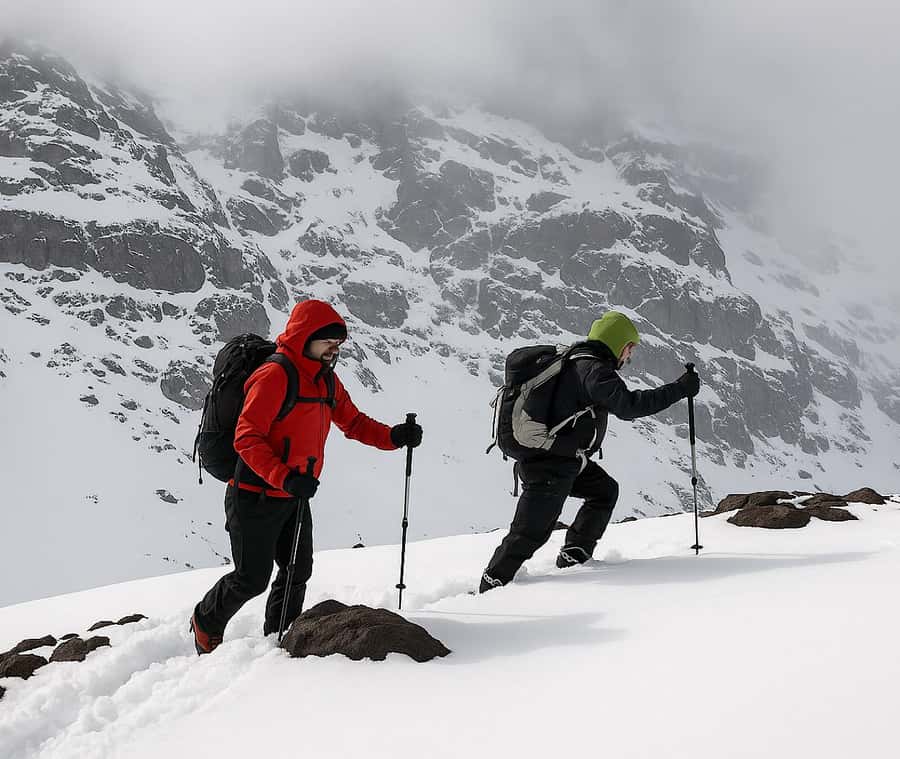
This trek suits you if you already walk regularly, can handle long uphill days, and want a first 4,000-meter summit without technical climbing. You do not need mountaineering experience, but you do need fitness, determination, and the ability to manage a very long second day.
It is not suitable for people with mobility impairments or for pregnant women. It is also a poor choice if you want a relaxed mountain holiday, a private room, or a flexible schedule.
You should be honest about your fitness. One person may find the walking easy, while another may find it the hardest physical challenge they have attempted. The guides can slow the pace and help with problems, but they cannot make altitude, snow, or a 12-hour day disappear.
Practical packing advice for Toubkal
Bring hiking shoes with solid grip, warm layers, gloves, a hat, sunglasses, rain gear, and a towel. A sleeping bag is listed as something to bring, but you can rent one in Imlil.
A headlamp is particularly useful for the pre-dawn summit walk and for moving around the refuge when the lights are off. Pack high-energy snacks, water, sunscreen, and a camera. Keep your passport and cash somewhere secure.
Do not rely on the included meals alone if you eat large portions. The food is often praised, and vegetarian meals are available, but a cold-weather trek can leave you hungry. A few extra snacks can make the summit morning much easier.
Should you book the Mount Toubkal Express Trek?
Book it if you want a low-cost, tightly scheduled route to North Africa’s highest summit and you are ready for a hard physical test. The excellent guide support, included transport and meals, Berber hospitality, and sunrise goal make this one of the better-value ways to experience Toubkal from Marrakech.
Do not book it expecting a guaranteed summit, soft beds, or a gentle introduction to hiking. The two-day format saves time and money, but it gives your body little time to adjust to altitude. If you are fit, prepared, and willing to turn back when conditions demand it, this trek can deliver a powerful mountain experience. Plan for the cold, carry snacks and cash, and leave yourself a quiet day after returning to Marrakech.
FAQ
How high is Mount Toubkal?
Mount Toubkal is 4,167 meters high and is the highest peak in North Africa.
How long is the walking each day?
The first day involves about five to six hours of walking from Imlil to the refuge. The second day can take 10 to 12 hours, including the summit attempt and descent to Imlil.
Is Mount Toubkal a technical climb?
The route is a non-technical trek, not a technical climb. It does include steep paths, loose rock, easy scrambling, and snow slopes. From November through April, you may need crampons and an ice axe for security.
Is accommodation included?
Yes. One night at a mountain refuge is included. The accommodation is shared and basic, with bunk beds and simple facilities.
Are meals included?
Yes. Meals listed in the itinerary, along with tea and coffee, are included. Soft drinks are not included. Vegetarian food is available.
Can I rent mountain equipment?
Yes. Sleeping bags, crampons, ice axes, warm clothes, walking poles, and other equipment can be rented in Imlil. Rental costs are not included in the tour price.
What happens if bad weather prevents the summit?
The guides may stop the ascent if the weather is unsafe. You may reach the refuge without summiting, or the guide may arrange a different mountain experience. The route back to Imlil still continues with guide support.
More Two-Day Trips in Morocco
- From Marrakesh: 2-Day Mount Toubkal Trek
★ 4.7 · 591 reviews - 2 day mount toubkal trek ( private trek )
★ 5.0 · 38 reviews - Mount Toubkal Trek in 2D/1N Private From Marrakesh
★ 5.0 · 27 reviews - From Antigua: Adventure, 2-Day Hiking to Acatenango Volcano
★ 4.4 · 1,189 reviews
More Atlas Mountains Treks in Morocco
- From Marrakesh: Atlas Mountains Talamrout Summit Day Hike
★ 4.9 · 835 reviews - Marrakesh: 2-Day Mt. Toubkal Trek with 1-Night Stay & Meals
★ 4.7 · 795 reviews - Marrakech: 2-Day Atlas Mountains Trek with Village Stay
★ 4.8 · 717 reviews - Marrakech: Tedli Summit Atlas Mountains Day Hike & Lunch
★ 4.9 · 668 reviews
Just added around Morocco
- Mount Toubkal Trek in 2D/1N Private From Marrakesh★ 5.0 · 27 reviews
- 2 day mount toubkal trek ( private trek )★ 5.0 · 38 reviews
- Atlas Valleys & Mount Toubkal Private 3 Days Trek From Marrakech★ 5.0 · 31 reviews
- From Marrakech: Private Tour to Oasis and Trekking in the Desert of Erg Chigaga★ 5.0 · 115 reviews
- From Marrakech: Ouzoud Waterfalls Guided Hike and Boat Trip★ 4.9 · 161 reviews
- From Marrakech: Atlas Mountains Summit Trek★ 4.9 · 228 reviews
- From Marrakesh: 2-Day Mount Toubkal Trek★ 4.7 · 591 reviews
- From Marrakech: 3-Day Mount Toubkal Climbing Trek★ 4.7 · 597 reviews
Atlas Mountains Treks, side by side.
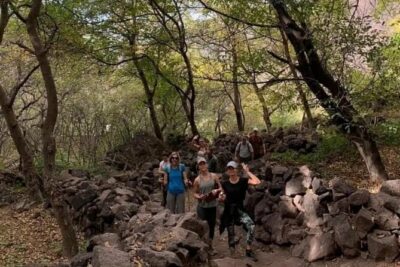
Berber villages : Atlas Mountains Day Hike from Marrakech
Read our review →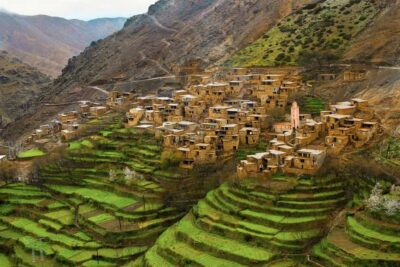
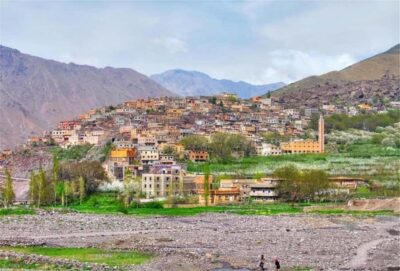
Atlas Mountains & Valleys Waterfall Hike w/ Lunch
Read our review →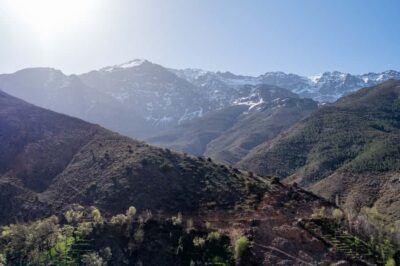
2-Day Mt. Toubkal Trek with 1-Night Stay & Meals
Read our review →