
REVIEW · GREECE
Naxos: Countryside hike among villages & Byzantine churches
The most rewarding part of this Naxos hike is the way it links five countryside villages by old footpaths rather than roads. You move through olive, fig, and citrus groves, visit Panagia Drosiani, one of the Balkans’ oldest churches, and finish with Kitron, Naxos’ citrus liqueur. I especially like the mix of nature and local life, plus the old olive press and folklore museum, which give the walk a real sense of place.
I also like the small group size, limited to 12 people, and the relaxed pace with breaks. Guides such as Nick and David bring useful stories about Naxos, and Nick has been praised for making the outing feel more like a walk with friends than a formal excursion. The main consideration is fitness: this is a genuine countryside hike of about 5.5 miles according to one detailed account, with dirt tracks and stone paths, so it is not suited to anyone with low fitness, mobility problems, or a dislike of walking for several hours.
Key points to know before booking
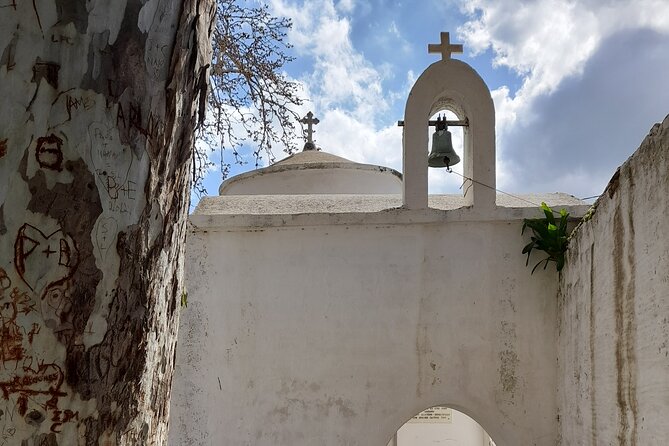
- Panagia Drosiani dates from the 6th century AD, making it one of Naxos’ most important early Christian sites.
- The route connects five villages, including Halki, Moni, Kaloxylos, and Akadimoi, using old paths through the Tragea Valley.
- The old olive press and folklore museum offer a useful look at how people worked and lived on Naxos in earlier generations.
- Kitron tasting comes at the end, at a local distillery producing the island’s distinctive citrus liqueur.
- The $94 price includes the guide, snacks, museum and distillery entries, equipment, insurance, and taxes, but lunch and transport are optional.
- You should bring at least 1.5 liters of water, sturdy hiking shoes, sun protection, and a daypack.
Why this Naxos hike is different from a beach day
Naxos is famous for its beaches, but the island’s interior tells a different story. The Tragea Valley is a patchwork of olive groves, trees, small villages, stone lanes, and Byzantine churches. This tour gives you time to see that quieter side on foot.
I like the fact that the route is not built around one grand sight. Instead, the pleasure comes from the connections between places. You walk from village to village, pause beneath trees, look into old buildings, and hear how agriculture, religion, and family life shaped the island.
The day begins and ends in Halki, also spelled Chalkio in some directions. Meet your guide outside Panagia Protothronos, located on the main road through the village. Halki is a good starting point because its neoclassical buildings give you an immediate sense that this is more than a beach resort.
The route then heads into the countryside. You may be walking on dirt trails, stone-paved paths, and quieter village tracks. The surfaces are part of the appeal, but they also mean you should not treat this as a simple town stroll.
More hikes and treks around Greece:
- From Chania: Full-Day Samaria Gorge Trek Excursion & Guide
★ 4.6 · 3,191 reviews - From Rethymno: Samaria Gorge Full-Day Trek, Pickup & Guide
★ 4.5 · 1,610 reviews - From Chania/Rethymno: Samariá Gorge Guided Hike with Pickup
★ 4.5 · 1,010 reviews
Through the olive groves of the Tragea Valley
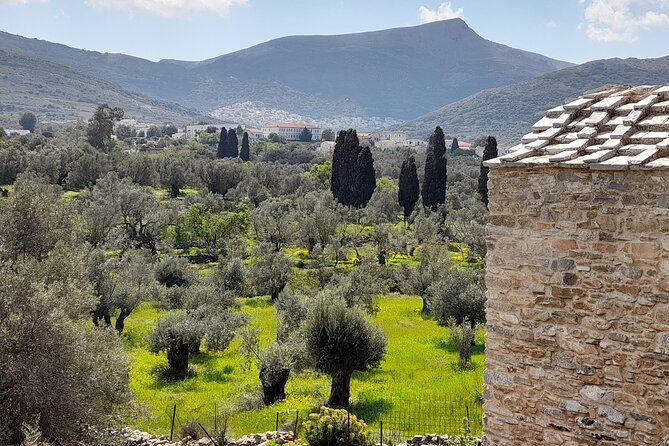
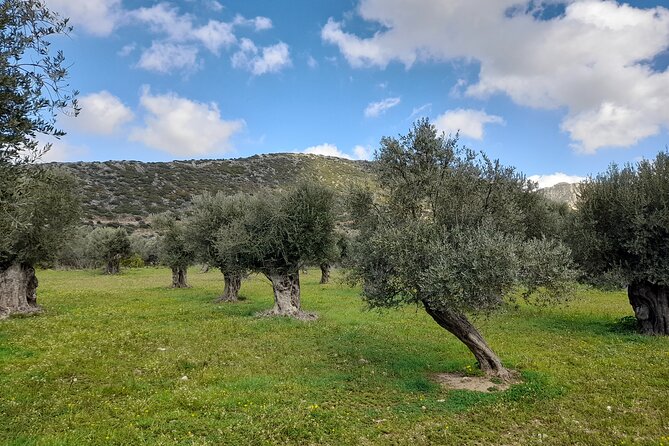
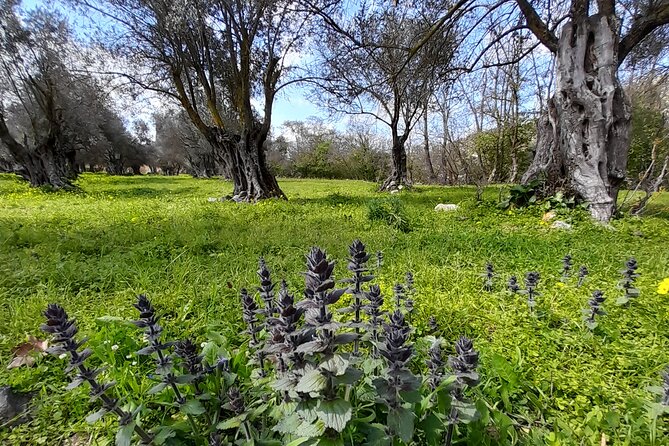
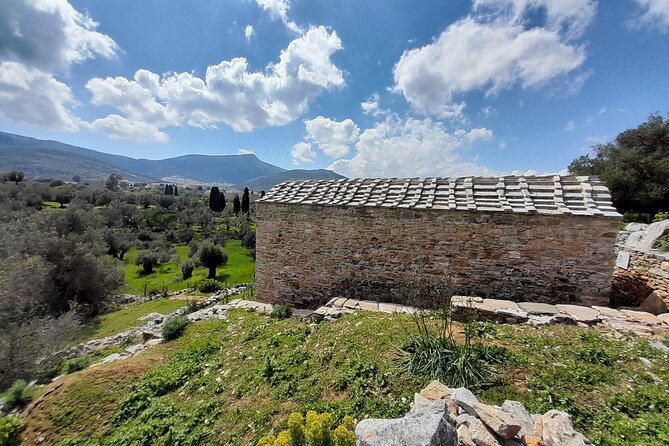
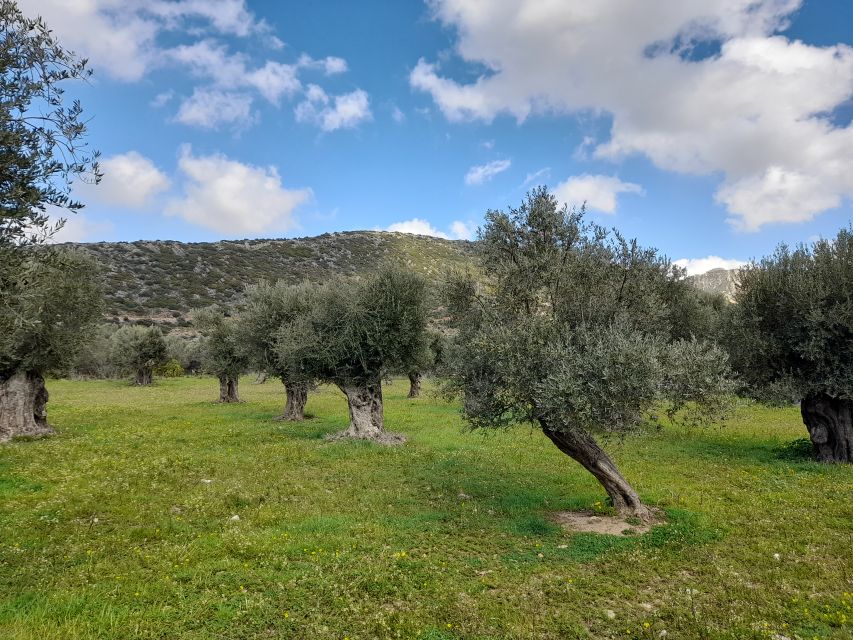
The early portion takes you away from Halki and into the Tragea Valley. Olive trees are the main visual theme, joined by figs, citrus trees, oaks, and plane trees. A ravine and patches of woodland add shade and variety.
This is the kind of walking that rewards a slower pace. You can notice wild herbs beside the path, old stonework, and the way farm plots sit around the villages. One person who switched to this hike after a kayaking trip was canceled described it as roughly 5.5 miles, so plan for a full half-day rather than a short scenic walk.
The guide matters here. Without local explanation, an olive grove can look like just another pretty patch of countryside. With someone like Nick or David, the walk becomes a chance to understand Naxos’ rural life, local customs, and religious buildings. The supplied guide information lists English, Greek, and Russian, so check that your preferred language is available when booking.
You should expect pauses along the way. The route is not presented as a race, and breaks under the shade of trees are part of the schedule. Still, the total duration varies from 4.5 to 6 hours, so allow room in your day for a slow, unhurried outing.
Panagia Drosiani and Naxos’ early churches
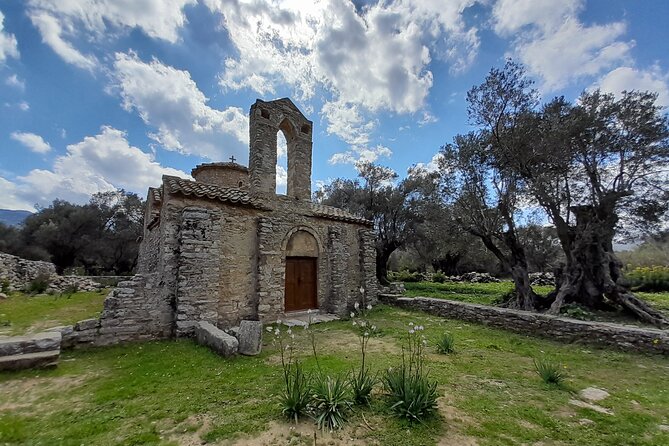
The most important historical stop is Panagia Drosiani. Dating from the 6th century AD, it is considered one of the oldest churches in the Balkans and one of Naxos’ key Christian monuments.
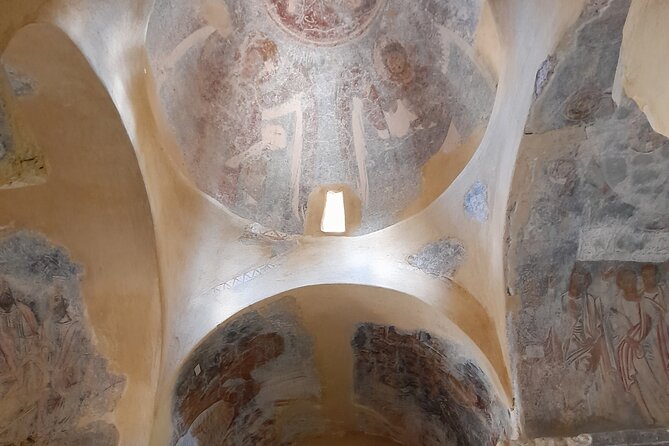
The church is valuable not only because of its age. The Tragea Valley contains Byzantine churches from different periods and with different designs, some decorated with notable frescoes. This gives the walk a strong historical thread without turning it into a standard museum visit.
I would not book this outing expecting a long guided lecture at every church. The experience is a moving route through the countryside, with churches appearing as part of that route. Their setting among groves and village paths is a major part of what makes them memorable.
Wear clothing that works for both walking and church visits. Comfortable clothes are listed as essential, and a daypack is useful for water, sunscreen, and a snack. The church stops also provide a welcome change from open paths and sunny fields.
Moni, Kaloxylos, and Akadimoi by old footpaths
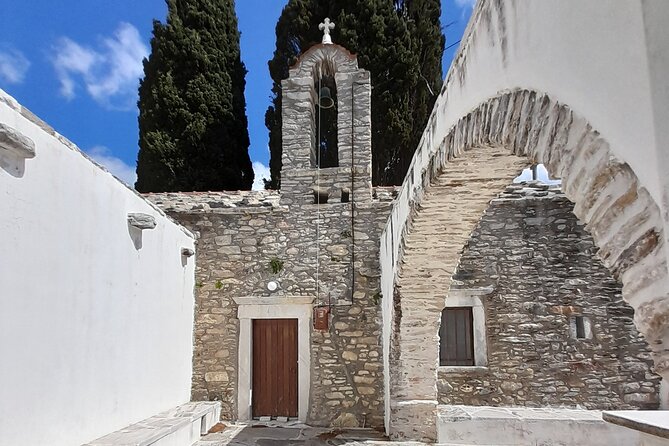
Around the midpoint, you reach Moni. This is a natural place for a short rest beneath the trees before continuing toward Kaloxylos and Akadimoi.
Each village has its own character, but the value is in seeing them as part of a connected rural area rather than as isolated photo stops. The old paths show how people once moved between homes, farms, churches, and workshops before modern roads became the main links.
Kaloxylos is especially important for the cultural stops later in the day. Its small scale helps keep the experience personal. You are not rushing through a large attraction with a crowd. Instead, you spend time in places tied to everyday island life.
The route can be especially appealing if you enjoy small details: a traditional building, a shaded lane, an old tree, or a view across the valley. It is less suitable if your priority is dramatic mountain scenery or a fast, physically demanding trek.
Same trailheads, a different kind of day:
- From Chania: Samaria Gorge with Professional Hiking Guide
★ 4.6 · 720 reviews - Meteora Small Group Hiking tour with Transfer and Monastery Visit
★ 5.0 · 484 reviews - From Heraklion: Samaria Gorge & Agia Roumeli Hiking Day Trip
★ 4.4 · 422 reviews - Samaria Gorge Hiking from Chania with Professional Hiking Guide
★ 4.5 · 372 reviews
Inside the old olive press
At the old olive press factory, you see how olive oil was made about a hundred years ago. This is one of the strongest stops for understanding Naxos as a working island.
Olive oil is not simply a tasting product here. It is connected to land, labor, tools, and the seasonal rhythm of village life. The old machinery and atmosphere help explain the importance of olive growing in the valley.
A tasting is also part of the experience, and it has been singled out as one of the day’s best food moments. You should not assume this is a full meal, however. The tour includes a snack, while the more substantial traditional lunch is optional and takes place later.
This stop is a good example of the tour’s overall approach. Instead of only looking at scenery, you get a practical glimpse into how local food was produced. If you enjoy food culture and old working buildings, this adds real value to the $94 cost.
The folklore museum in Kaloxylos
The folklore museum offers another look at village life, this time through objects and collections from an earlier age. It is a chance to step inside the social world behind the stone paths and olive trees.
The museum is not described as a large institution, so expect an intimate local collection rather than a major national museum. That is part of its appeal. You can connect the objects inside with the villages you have just walked through.
One account also describes watching a local weaver at work during the day. That kind of encounter may not be guaranteed, but it shows the sort of living craft and human detail that can make this route more than a sequence of historic buildings.
The museum, olive press, and churches work well together. One explains belief, one explains work, and one preserves household and community life. I like that balance. You get a clearer picture of Naxos than you would from scenery alone.
Kitron, Naxos’ citrus liqueur
Near the end of the walk, you visit a local distillery producing Kitron. This citrus-based liqueur is closely linked with Naxos, and the tasting gives the day a fitting local finish.
The distillery visit is included in the price, as is the entrance to the folklore museum and olive press. You are not paying separately at each stop, which makes the $94 easier to assess.
Kitron is also a social ending. After several hours on foot, a small toast and a chance to talk with the group can feel well timed. If you do not drink alcohol, the attraction is still the production story and the local connection, though the tour description centers on tasting.
The distillery is not a substitute for lunch. The optional meal comes afterward at a traditional taverna, under the shade of a climbing grapevine. If you choose that add-on, you finish with a fuller food experience. If you skip it, make sure your plans include enough food for a long morning and afternoon.
Is the $94 price good value?
At $94 per person, this is not the cheapest way to spend a half-day on Naxos. The value depends on how much you want from the day.
The price includes an English-speaking guide, snacks, entrance fees for the distillery, folklore museum, and olive press, first aid kits, other necessary equipment, liability insurance, and taxes. That is a substantial package for a small-group activity lasting 4.5 to 6 hours.
Transport is optional and can be added during booking. This matters because the meeting point is in Halki, not necessarily near your accommodation. If you are staying elsewhere on Naxos and do not have an easy way to reach the village, paying for pickup may be worth it for convenience.
The traditional meal is also optional. Ask yourself if you want a simple hike with tastings or a longer food-and-walking day. The meal adds to the experience, but it also raises the total cost.
I see the tour as good value for someone who wants context, a local guide, and several included visits. It is less compelling if you only want an inexpensive walk and are comfortable finding rural paths on your own.
Group size, pace, and physical demands
The group is limited to 12 participants. That is small enough for questions and conversation without making the day feel like a large coach excursion.
The route is described as suitable for people who can manage a moderate day of walking, but not for those with a low level of fitness. People with mobility impairments, children under 12, and people over 70 are specifically excluded. Those limits should be taken seriously.
You do not need to be an athlete, but you do need to be comfortable walking for several hours over dirt and stone paths. Bring proper hiking shoes rather than thin sandals. Carry at least 1.5 liters of water in your own reusable bottle, since the operator is working to avoid single-use plastic bottles.
Sunglasses, sunscreen, comfortable clothes, and a daypack are also listed. The guide carries first aid supplies and other necessary equipment, but that does not remove the need for sensible personal preparation.
Timing, transport, and practical details
The start time changes by date, so check availability before booking. If you arrange pickup, wait outside your hotel or accommodation five minutes before the scheduled time. The exact pickup time is sent the day before.
If you meet the guide directly, go to the area outside Panagia Protothronos on Halki’s main road. More detailed meeting instructions are also sent the day before, so check your email rather than relying only on a map pin.
The tour allows cancellation up to 24 hours before departure for a full refund, and you can reserve now and pay later. Those terms help if your Naxos schedule depends on ferry connections or changing weather, but you should still confirm the exact start time and transport choice before finalizing plans.
Who should book this Naxos countryside hike?
I would choose this for someone who wants to understand the island beyond the coast. It suits people who enjoy village walks, old churches, food production, local museums, and a guide who can explain what they are seeing.
It is also a strong choice if your plans change. One participant booked it after a kayaking outing was canceled because of unstable coastal conditions and found the replacement day became a favorite part of the trip. The route offers a useful alternative when the sea is not cooperating.
I would not choose it for a relaxed sightseeing day with very little walking. I would also avoid it if you have mobility limits, low fitness, or need a fully accessible route. The distance, uneven surfaces, and long duration are central to the experience.
Should you book it?
Book this tour if you want a grounded look at Naxos, with nature, churches, village life, food production, and a small group in one day. The strongest reasons are the 6th-century Panagia Drosiani, the old olive press, the Kitron distillery, and the chance to walk between villages instead of simply driving past them.
Before booking, decide if you need transport and if you want the optional taverna meal. Bring good shoes and plenty of water. If you can handle several hours on rural paths, this is one of the better ways to connect the island’s countryside with its culture.
FAQ
How long does the Naxos countryside hike last?
The activity lasts about 4.5 to 6 hours. The exact duration can vary, so allow a full half-day.
Where does the hike start?
Meet outside Panagia Protothronos on the main road in Halki, also spelled Chalkio in some tour information. Detailed meeting instructions are sent by email the day before.
Is hotel pickup available?
Yes. Local transportation is optional and can be added during booking. If you choose pickup, wait outside your accommodation five minutes before the scheduled time. The exact pickup time is sent the day before.
What is included in the $94 price?
The price includes an English-speaking Trekking Hellas guide, a snack, entry to the local distillery, folklore museum, and olive press factory, first aid kits, necessary equipment, liability insurance, and taxes.
Is lunch included?
No. A traditional meal at a local taverna is optional and can be added. The included food is a snack.
What languages are available?
The listed guide languages are English, Greek, and Russian.
How large is the group?
The tour is limited to 12 participants.
What should I bring?
Bring sunglasses, hiking shoes, sunscreen, comfortable clothes, a daypack, and your own water bottle. At least 1.5 liters of water per person is recommended.
Just added around Greece
- Vikos Gorge crossing hiking from Monodentri to Vikos village★ 5.0 · 15 reviews
- Karpathos Aperi Limniotis Cave Hike for stalagmites / stalactites★ 5.0 · 15 reviews
- Delphi: Ancient Footpath Delphi Hiking★ 5.0 · 18 reviews
- Hiking and Sightseeing Tour in Amorgos★ 5.0 · 9 reviews
- Wild swimming and Hiking in West Crete★ 5.0 · 9 reviews
- Hiking in Psiloritis Mountain (Ida Mt.) Crete★ 5.0 · 7 reviews
- Samaria Gorge Hike from Heraklion region★ 4.5 · 26 reviews
- Hiking at Samaria, the longest Gorge in Europe! From Chania★ 3.5 · 11 reviews
Greece Hiking Tours, side by side.
Full-Day Samaria Gorge Trek Excursion & Guide
Read our review →
From Chania/Rethymno: Samariá Gorge Guided Hike with Pickup
Read our review →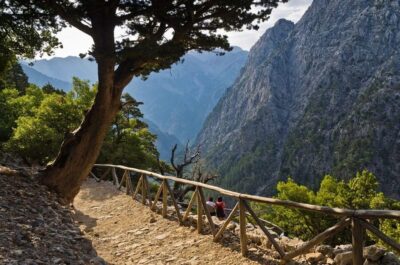
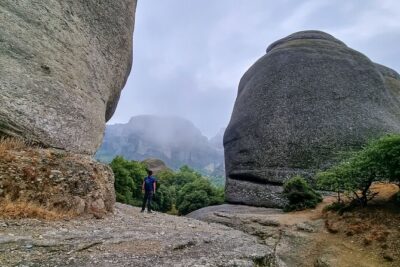
Meteora Small Group Hiking tour with Transfer and Monastery Visit
Read our review →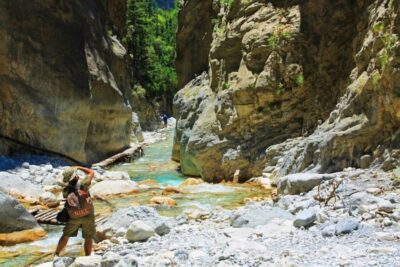
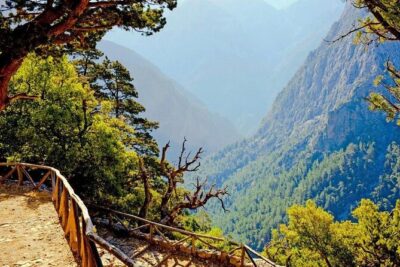
Samaria Gorge Hiking from Chania with Professional Hiking Guide
Read our review →
This walk also sits in