
REVIEW · ICELAND
Reykjavík: Volcano Eruption Site and Reykjanes Hiking Tour
The real draw here is walking across newly formed lava fields near Geldingadalur Valley. You are not simply looking at Iceland from a coach window. You spend much of the day on foot, seeing solidified lava, volcanic craters, steam, and black sand in a raw setting shaped by eruptions.
I like the mix of serious hiking and short scenic stops. Lake Kleifarvatn and Gunnuhver give you two very different views of volcanic Iceland, while the guides, including Omar, Ottar, James, and HBO, bring geology and local stories to life. The main drawback is the hike: it can take around two hours each way and becomes demanding in wind, rain, ice, or poor visibility.
Key points to know before booking
- The volcano hike takes about four hours in total, with the route adjusted to weather, safety, and ground conditions.
- Fresh lava fields are the main attraction, but an active eruption or flowing lava is never guaranteed.
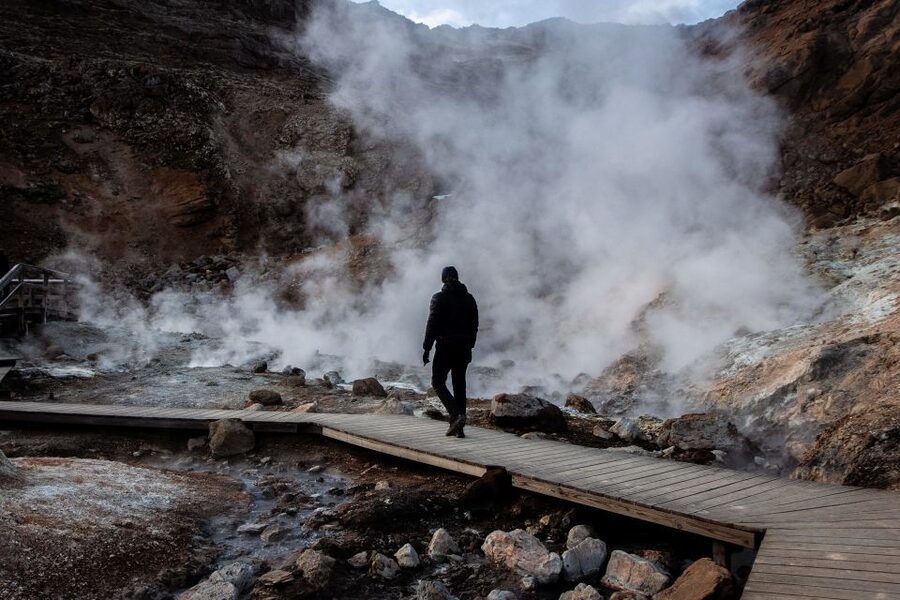
- Gunnuhver offers bubbling mud pots and hissing steam vents with a strong geothermal smell.
- The tour combines hiking with major Reykjanes sights, including Lake Kleifarvatn, Reykjanes Lighthouse, and the Bridge Between Continents.
- Bring proper outdoor clothing, hiking shoes, water, and lunch, since food and drinks are not included.
- The $126 price is fair for a nine-hour guided day, especially if you want transport, local interpretation, and a safer approach to a changing volcanic area.
Why the Reykjanes volcano hike is the main event
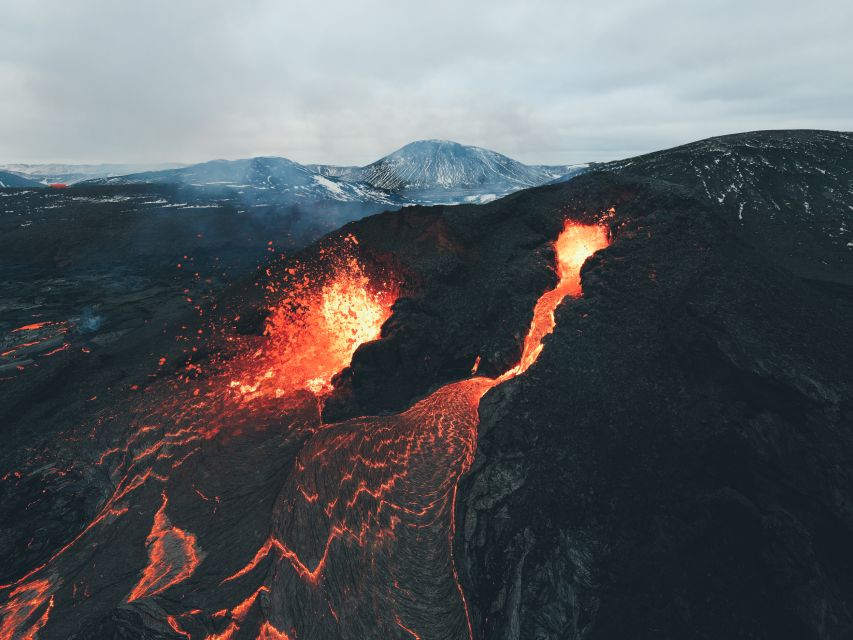
The Reykjanes Peninsula has spent years showing Iceland at its most active. Volcanic activity in the area has produced new craters, broad lava fields, and routes that change with weather and safety conditions.
This tour takes you toward the eruption areas near Meradalir and Fagradalsfjall, with the route sometimes extending toward Litli-Hrutur. The precise viewing point can change on the day. That is important. You are not buying a fixed walk to one guaranteed crater. You are joining a guided outing in a volcanic area where access, wind, smoke, ice, and ground conditions matter.
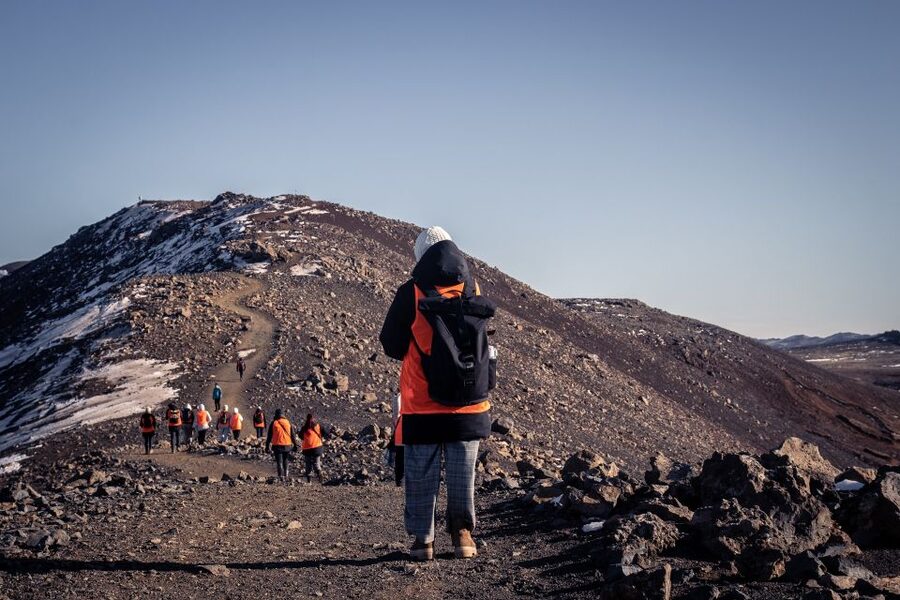
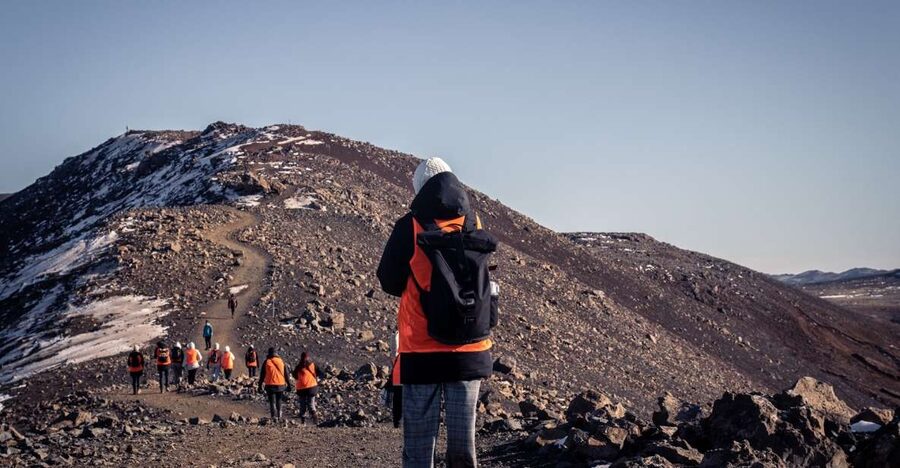
Expect roughly two hours of walking each way. The route is described as moderate to hard, and that is the safer way to think about it. Some people find the trail manageable, while others find the distance, wind, or slippery ground tiring. Reports from winter outings describe icy paths, and one older couple found strong wind and ice especially challenging.
I would not book this as a casual stroll. You need to walk a reasonable distance without help, keep moving outdoors for several hours, and cope with changing weather. Children under 12 and people with mobility impairments should not book this activity.
The reward is the sense of scale. You can see the difference between old lava covered with moss and newer black rock that looks harsh and unfinished. In places, the ground may still show signs of heat or small geothermal activity, though the exact conditions vary.
At the time of the supplied update, new lava flow at Litli-Hrutur had stopped, but the area was still smoldering. That is a useful reminder: recent eruption site does not always mean red-hot lava or an active crater. The volcanic terrain itself remains the attraction.
More Volcano Hikes in Iceland
- Reykjavík: Guided Afternoon Hiking Tour to New Volcano Site
★ 4.4 · 934 reviews - From Reykjavík: Fagradalsfjall Volcano Hike with Geologist
★ 4.8 · 780 reviews - Iceland Hiking Tour to Fagradalsfjall Volcano with Local Guide
★ 5.0 · 573 reviews
Lake Kleifarvatn and the black beach
The first major stop is Lake Kleifarvatn, one of the Reykjanes Peninsula’s most striking bodies of water. The shoreline has black sand, and the surrounding mountains give the lake a stark, almost otherworldly appearance.
You get about ten minutes for a photo stop. That is enough to take in the view and stretch your legs, but not enough for a long walk around the shore. If you prefer slow photography or quiet time beside the water, this stop may feel brief.
The lake is also associated with underwater hot springs, which add to the area’s volcanic character. You do not come here for a full geology lesson in the water itself. Instead, the stop gives you an early look at how geothermal forces shape the peninsula before the main hike begins.
Seltún brings the heat closer
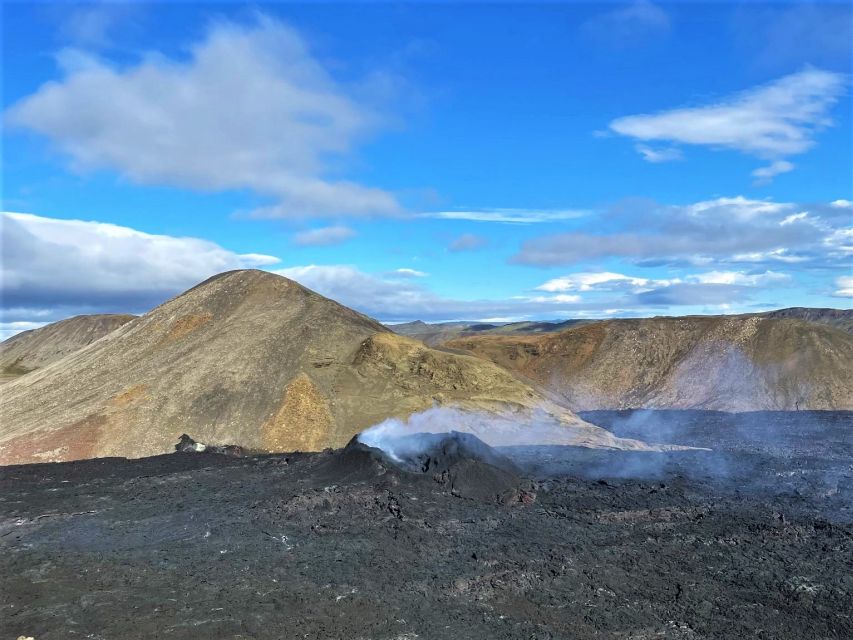
The short stop at Seltún Geothermal Area gives you bubbling ground, colored earth, and visible geothermal activity. You have around 15 minutes to walk and take pictures.
This is a useful contrast with Lake Kleifarvatn. At the lake, volcanic activity is expressed through mountains, water, and black sand. At Seltún, it is right under your feet, with steam and hot ground making the earth feel active rather than finished.
Stay on the marked route and follow the guide’s instructions. Geothermal areas are not places to wander freely. The stop is short, so use it for a quick walk and a few photographs rather than expecting an extended visit.
Walking toward Meradalir and Fagradalsfjall
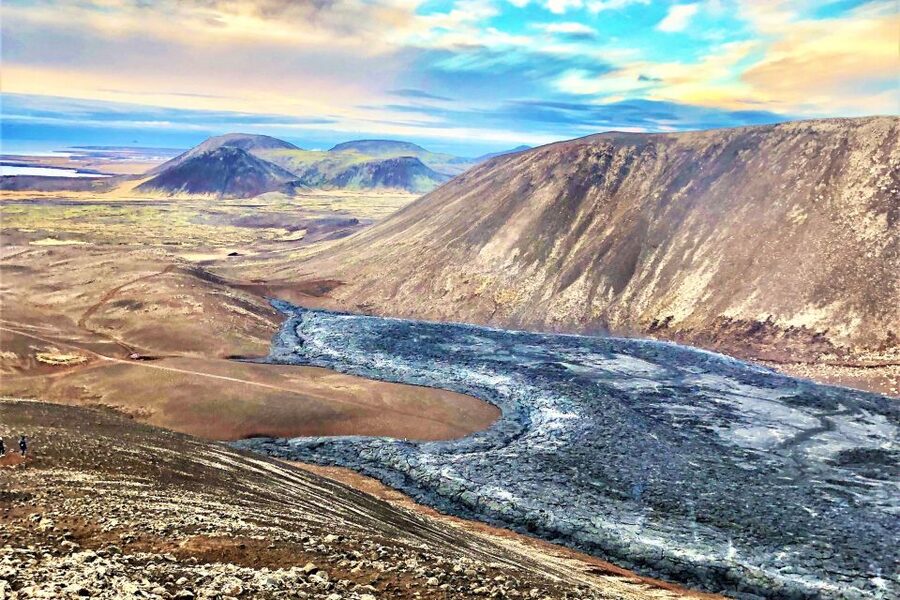
The main hike takes up about three and a half hours in the day’s formal schedule, with approximately two hours each way given for the route toward the eruption area. Your guide sets the pace and may shorten or change the route if conditions are poor.
Several guides have been praised for keeping groups together. One guide, Collin, turned the hike toward a safer valley and recent lava fields when high winds made the planned route unsuitable. That is exactly the kind of judgment you want here. Reaching the furthest possible point is less important than returning safely with a worthwhile view.
The walk may take you over rough roads, uneven ground, or snow and ice. In winter, some guides have supplied traction equipment for shoes. Do not count on every item being available, though. Bring hiking shoes with a firm sole, and pack rain gear even if Reykjavík looks calm when you leave.
Your packed lunch fits naturally into this section of the day. There are no included meals, and the long walk makes food and water essential. Eat before you are exhausted, since the return walk still lies ahead.
The most memorable part is often not a single crater. It is the changing surface underfoot: old moss-covered lava, black broken rock, solidified flows, and volcanic formations that look unlike ordinary Icelandic scenery. Guides explain the eruptions, the geology, and how people living in the area have been affected by the activity.
The route can be beautiful in poor weather, but visibility is not guaranteed. Clouds and mist have hidden the best views for some groups. That possibility should not put you off, but it should shape your expectations. You are booking an outdoor geology experience, not a guaranteed clear panorama.
More Volcano Hikes in Reykjavik
- Reykjavik: Thrihnukagigur Volcano Guided Hiking Day Trip
★ 4.9 · 564 reviews - Inside the Volcano: Small-Group Tour and Lava Field Hike
★ 5.0 · 168 reviews
What the lava fields are really like
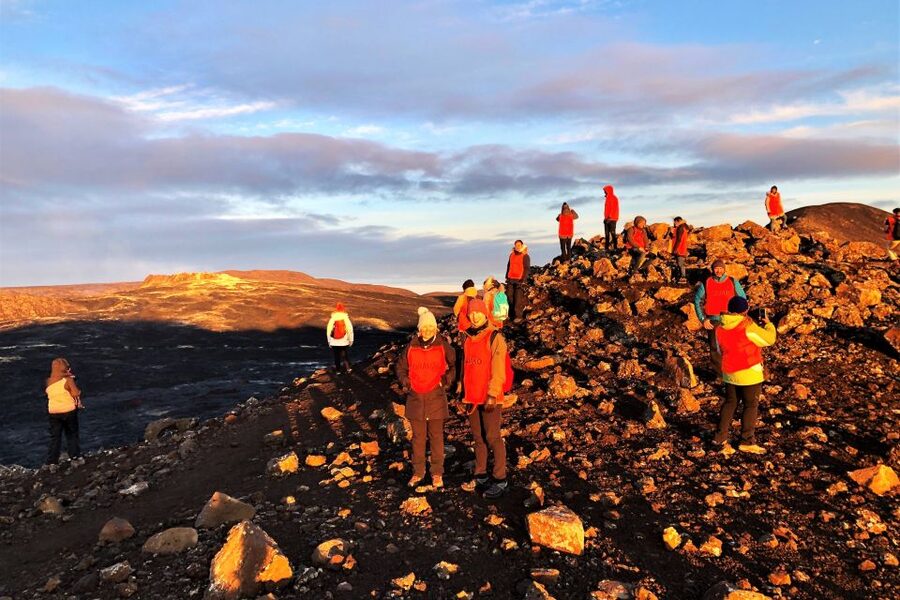
Lava fields are easy to underestimate in photographs. A picture may show a broad black surface, but walking through it reveals folds, sharp edges, holes, ridges, and different textures created as molten rock cooled.
The newest lava is not necessarily safe to touch or cross. The guide decides where the group can go. Some outings have encountered lava that was still warm, while other visits have focused on hardened flows and smoldering ground.
Do not expect to stand beside flowing lava simply because an eruption happened recently. Volcanic activity can stop, pause, or move beyond the safe viewing area. What you can count on is the chance to see an active volcanic zone and learn how quickly Iceland’s terrain can change.
This is also where a guided trip earns its price. A self-drive visit might get you near the peninsula, but it would not give you the same help with route choices, group safety, or explanations of what you are seeing. The value is strongest for you if volcanic geology is a central reason for visiting Iceland.
Gunnuhver Hot Springs and the smell of Iceland
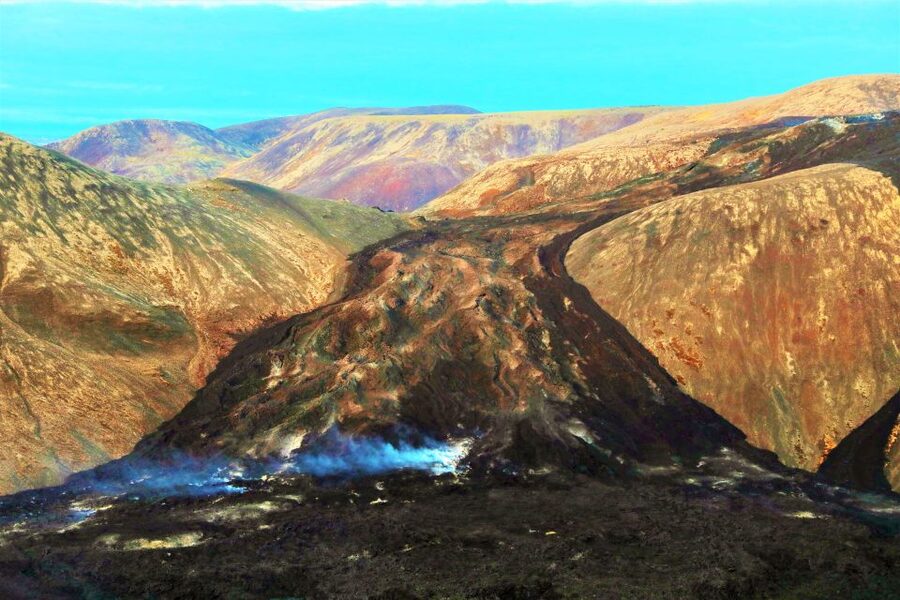
After the hike, the tour continues through ancient lava fields toward Gunnuhver Hot Springs. These fields are often covered with soft green moss, a delicate surface that gives the dark Reykjanes terrain a softer look from a distance.
At Gunnuhver, you see boiling mud pots and steam vents. The ground hisses, bubbles, and releases the unmistakable sulfur smell of geothermal Iceland. You have about ten minutes here, so keep your camera ready and stay aware of the wind direction.
This is a small stop, but it works well after the long hike. You can see geothermal activity without another strenuous walk. It also helps you understand that Reykjanes is not just a place of past eruptions. Heat remains close to the surface across the peninsula.
Reykjanes Lighthouse and the Atlantic edge
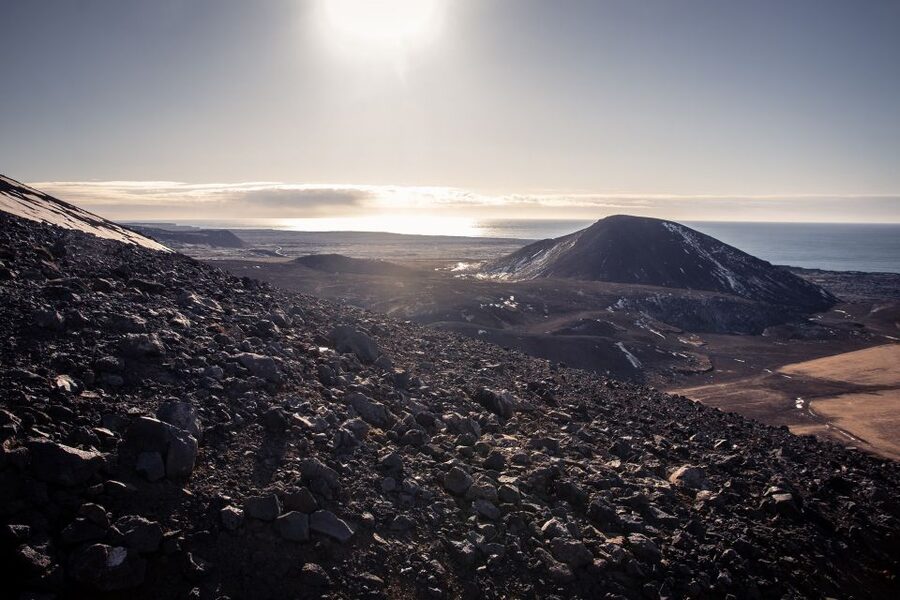
The tour then reaches Reykjanes Lighthouse, identified as the oldest lighthouse in Iceland. You have around 20 minutes to look across the coast and take photographs.
The setting is exposed and thoroughly Atlantic. Sea stacks and cliffs at Valhnúkamöl Boulder Ridge show the steady force of waves against volcanic rock. The ocean air can feel refreshing after the enclosed warmth of the bus, but it can also make the stop cold and windy.
This is not a museum visit or a long coastal walk. Think of it as a scenic pause with room to breathe, photograph the lighthouse, and look at the rugged shore. The stop adds variety to a day otherwise focused on volcanoes and geothermal ground.
Crossing the Bridge Between Continents
The final main stop is the Bridge Between Continents, a short footbridge crossing a visible rift between the Eurasian and North American tectonic plates.
You can walk from one side to the other and take the classic photograph in the middle. The bridge itself is modest, so do not expect a large attraction with many facilities. Its value is the simple idea made physical: you can take a few steps from one tectonic plate to another.
After the volcanic hike, the bridge works as a quick, memorable ending. You have seen the results of tectonic forces in lava, steam, mountains, and cliffs. Here, the movement of the Earth is explained through a small human structure.
The nine-hour day and transport
The tour lasts about nine hours, including driving, stops, and the hike. The first coach journey is listed at around 40 minutes, and the return to Reykjavík takes about 70 minutes. Road conditions and pickup arrangements can affect the timing.
Pickup is available from selected hotels, official bus stops, and the cruise port. Central Reykjavík has restricted bus access in some areas, so you may be sent to a nearby official stop rather than collected directly outside your accommodation. At bus stop number 12, look for a BusTravel Iceland bus and a guide wearing a BusTravel Iceland jacket or vest.
The coach includes WiFi, and guides also serve as drivers. That matters on a long day with several stops. The transport is generally comfortable, though one report describes parts of the ride as bumpy. You should also be ready for a busy schedule rather than a leisurely private outing.
The listed return options cover many central Reykjavík stops, including Hallgrímskirkja, Harpa, City Hall, the Reykjavík Maritime Museum, BSÍ Bus Terminal, Perlan, and several official bus stops. Confirm your pickup point after booking, especially if you arrive by cruise ship.
Guides make a real difference
The strongest part of this tour, apart from the volcanic scenery, is the guide-led interpretation. Names appearing in the supplied feedback include Omar, Ottar, James, HBO, Collin, Alain, Olaf, Roman, Emily, Elias, and Hler. You will not necessarily get a particular guide, but the standard style is clear: expect an English-speaking guide who explains geology, local history, Icelandic stories, and the practical safety rules for the day.
Ottar is described as upbeat and funny, while Omar is praised for answering questions and mixing humor with detailed explanations. HBO has been singled out for his pride in Iceland and his ability to keep people interested during the drive. James is noted for paying close attention to safety around volcanic ground.
There is one practical point to keep in mind. A guide’s voice may be harder to hear from the back of the bus, especially when the group is large or the road is noisy. Sit near the front if hearing every explanation matters to you.
Is $126 good value?
At $126 per person, this is a reasonably priced full-day outing rather than a cheap short excursion. You get transport from Reykjavík, a guide, WiFi, the major Reykjanes stops, and a guided approach to an area where conditions can change.
The value is best if you do not have a rental car or do not want to handle Icelandic roads and volcanic access rules yourself. It is also strong if you want several sights in one day rather than spending the whole day at the eruption area.
The price includes no food or drinks, so add the cost of a packed lunch and water. You also need suitable hiking shoes and rain gear. A headlamp may be supplied if required, but you should not treat that as a substitute for proper clothing or footwear.
Who should book this Reykjanes tour?
Book it if you enjoy walking, volcanic geology, changing weather, and a full day outdoors. It suits people who want more than Reykjavík sightseeing and who would value a guide’s judgment near recent lava fields.
It is less suitable if you want a relaxed coach tour with only short walks. It is also a poor fit if you dislike wind, mud, ice, sulfur smells, or uncertain views. The hike can be done by people of reasonable fitness, but you must be comfortable walking for several hours.
The tour offers free cancellation up to 24 hours before departure and a reserve-now, pay-later option. Those terms are useful when Iceland’s weather may affect your plans, though you should still check the latest operating conditions before setting out.
Should you book it?
I would book this tour if the Reykjanes eruptions are high on your Iceland wish list and you want a guide rather than a self-drive day. The volcano hike is the heart of the experience, while the lake, geothermal fields, lighthouse, coast, and tectonic bridge give the day much more range.
Go with the right expectations: lava may be solid, the weather may hide the views, and the route may change for safety. Bring lunch, water, hiking shoes, and waterproof layers. If you can handle the walk, this is one of the better ways to see the active side of Iceland without trying to manage the peninsula alone.
FAQ
How long does the Reykjanes volcano tour take?
The tour lasts approximately nine hours, including transport, sightseeing stops, and the volcano hike.
How long is the volcano hike?
The walk toward the volcanic area takes around two hours each way. The route and viewing point may change according to weather and safety conditions.
Is the hike easy?
No. It is described as moderate to hard and is not an easy walk. You should be able to walk a reasonable distance comfortably and handle changing outdoor conditions.
Is flowing lava guaranteed?
No. New lava flow at Litli-Hrutur had stopped at the time of the supplied update, although the area was still smoldering. Volcanic conditions can change.
What should I bring?
Bring comfortable shoes, proper hiking shoes, water, rain gear, and a packed lunch. Jeans are not recommended for the weather and terrain.
Are food and drinks included?
No. You need to bring your own food and drinks.
Is the tour suitable for children?
The tour is not suitable for children under 12 years old.
Is hotel pickup available?
Pickup is available from selected hotels, official bus stops in central Reykjavík, and the cruise port. Central city regulations may require some passengers to use a designated bus stop nearby.
What language is the tour conducted in?
The live tour guide speaks English.
What happens if the weather is unsafe?
The route can vary depending on conditions. The guide chooses the safest available viewing point and may use an alternative route or volcanic area when wind, ice, or other conditions make the planned walk unsuitable.
Just added around Reykjavik
- Private Jökulsárlón Glacier Lagoon 2 Day Tour & Glacier Hike★ 5.0 · 159 reviews
- Private South Coast and Glacier Hike – With photos★ 5.0 · 49 reviews
- Inside the Volcano: Small-Group Tour and Lava Field Hike★ 5.0 · 168 reviews
- 2-Day South Coast Waterfalls, Jokulsarlon Glacier Lagoon and Hike from Reykjavik★ 5.0 · 177 reviews
- 2-Day Ice Cave & South Coast: Glacier Hike and Glacier Lagoon★ 4.5 · 203 reviews
- Skaftafell: Small-Group Vatnajökull Glacier Hike (Moderate)★ 4.8 · 327 reviews
- Reykjavik: South Coast, Waterfalls & Glacier Hike Small-Group★ 4.5 · 322 reviews
- Reykjavík: Sólheimajökull Glacier Hike & Ice Climbing Intro★ 4.8 · 380 reviews
Volcano Hikes, side by side.
Sunrise Mount Batur Guided Hike with Breakfast
Read our review →
Mount Batur Sunrise Guided Hike and Natural Hot Spring
Read our review →
Mount Etna: Summit Guided Hiking Tour up to 3,400 m
Read our review →
Mount Etna: Trek to 3000m with cable car and 4×4
Read our review →
Mount Batur Sunrise Trek With Guide and Breakfast
Read our review →
Mount Batur Sunrise Hike and Natural Hot Spring Option
Read our review →
Mount Etna: Summit Crater Trek with Cable Car
Read our review →