
REVIEW · INDONESIA
Sidemen Trekking: A Walk from a Different Perspective
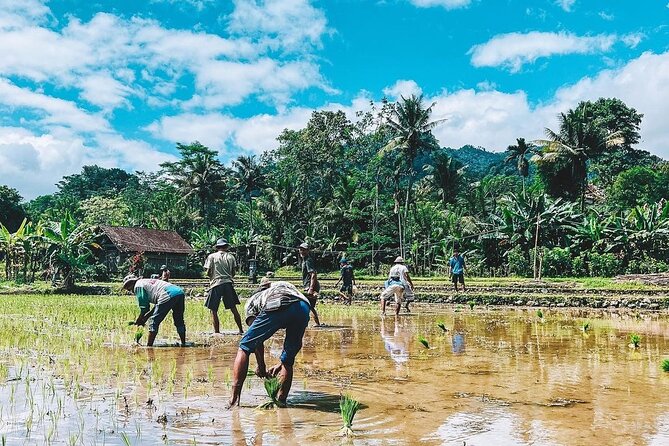
Sidemen’s best scenery is not viewed from a roadside lookout. It is found on narrow paths between rice paddies, where farmers work, water channels run beside the trail, and Mount Agung appears beyond the fields. This two-hour walk takes you through that working countryside rather than simply stopping for a photograph.
I like the close look at Balinese farming, especially the traditional Subak irrigation system and the chance to see planting, plowing, and harvesting. I also like the local guides, including Adidas, Daria, Adi, and Komang, who add humor, explain village life, and often help with photographs. The main consideration is the footing: paths can be narrow, slippery, and uneven, so this is not a casual stroll in sandals.
Key things to know before walking
- The route is one way: You start near Pasar Sidemen and finish at Warung Ume Anyar in Ogang Village, so arrange your ride home in advance.
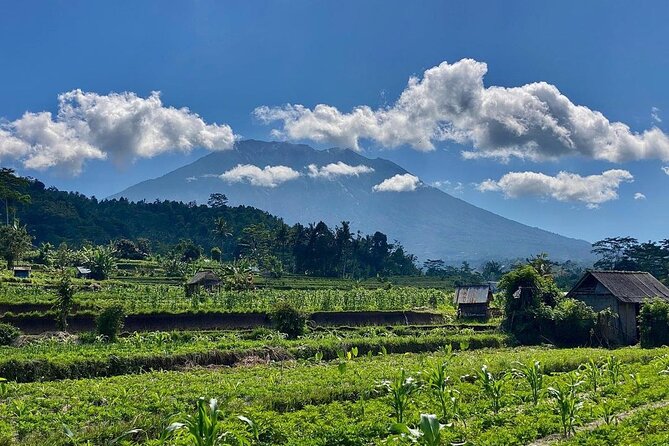
- Mount Agung views are possible: Clear weather can bring wide views across the rice terraces toward Bali’s famous volcano.
- This is working countryside: You may see farmers plowing, planting, tending crops, or harvesting rather than staged cultural displays.
- The paths are narrow: Good hiking or sports shoes are essential, and sandals or flip-flops are not allowed.
- The market is an early-morning extra: Pasar Sidemen operates from 5:00 AM to 10:00 AM, so book a morning start if you want time there.
- The price is unusually low: At $13 per person, the guided access and local explanations make this strong value for a short Bali activity.
Why this Sidemen walk feels different from a standard rice-field stop
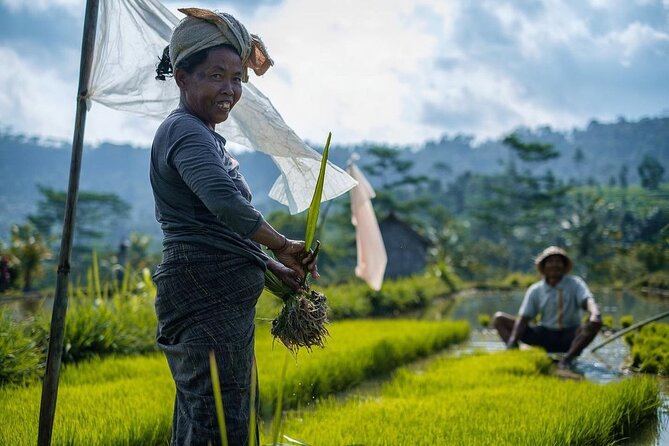
Sidemen offers a quieter side of Bali, but the appeal is not simply that it has fewer crowds. The real pleasure is seeing how the village works. Rice terraces here are not just scenic backdrops. They are active fields connected by irrigation channels, footpaths, small bridges, temples, and homes.
Your guide leads you away from the main road and onto routes that would be difficult to find alone. The walk passes through several types of countryside, so you are not looking at the same rice view for two hours. You move through a market, village lanes, plantations, paddies, and a local irrigation area.
I especially like the way the experience joins scenery with useful context. A guide from the area can point out crops, explain how water reaches the fields, and describe the rhythm of farm work. That gives meaning to what you see. A rice terrace becomes a living system rather than a pretty green staircase.
The tour has earned a 4.9 rating from 324 bookings, and the praise is consistent in the areas that matter most: the guides, the scenery, the local farming knowledge, and the feeling of seeing a less polished side of Bali.
More hikes and treks around Indonesia:
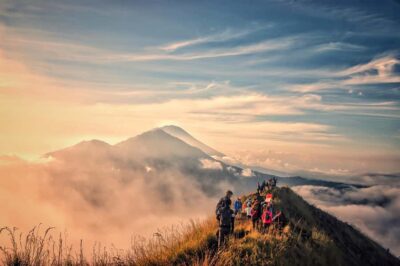
- Bali: Sunrise Mount Batur Guided Hike with Breakfast
★ 4.8 · 9,660 reviews - Bali: Mount Batur Sunrise Guided Hike and Natural Hot Spring
★ 4.8 · 9,284 reviews - Bali: Mount Batur Sunrise Trek With Guide and Breakfast
★ 4.8 · 3,461 reviews
Starting at Pasar Sidemen and Upa Boga
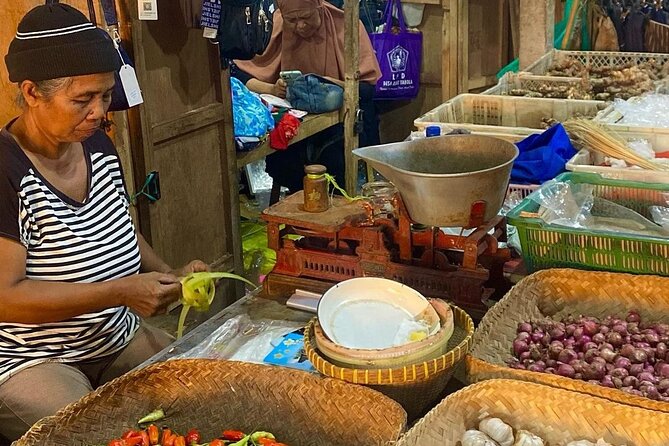
The meeting point is on the main street at Pasar Sidemen, the traditional market. Look for the shop marked Upa Boga. Your guide comes to meet you there, which makes the start simple, though you should allow a few minutes to find the shop if you are arriving by local transport.
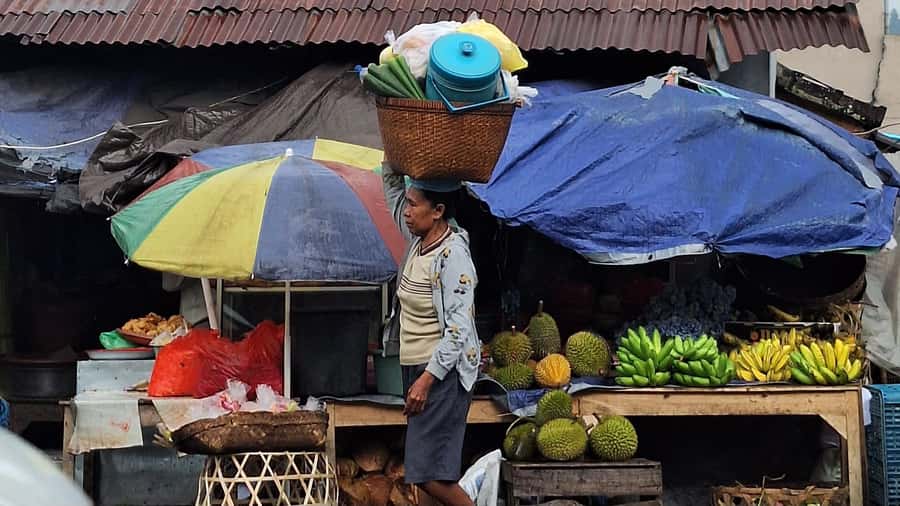
The market itself is worth seeing if your timing allows. It opens from 5:00 AM to 10:00 AM and offers a glimpse of ordinary village shopping rather than a market arranged for sightseeing. The planned market visit lasts about 10 minutes, so do not expect a long food tour. Think of it as a quick introduction to the place before the walking begins.
A morning booking is the best choice if the market matters to you. Later starts can still be enjoyable, but you may miss it entirely. The activity information recommends arranging transport through your hotel if you are staying in Sidemen. Grab is not recommended because some hotels do not allow Grab drivers to collect passengers, although drop-off is permitted.
Walking from the market toward the rice fields
After the market, the route moves toward the paddies. The walk is not a flat road march. You go up and down village streets, then leave the road for smaller paths through fields and plantations.
This changing surface is part of the appeal, but it also sets the physical tone. You need reasonable balance and a moderate level of fitness. One section can place you on narrow raised walls between fields, where a careful pace matters more than speed. Rain can make these paths slippery.
The guides are a major part of the experience here. Adidas, who grew up in the area, has explained local crops, plants, and farming methods to visitors. Daria is praised for a calm manner and thoughtful help. Adi, Komang, Gede, and other local guides are also noted for clear English, humor, and attention to the group.
Guide names can vary, but the important point is local knowledge. You are not simply following someone with a flag. The guide helps you understand what you are seeing and keeps the group together on the trickier sections.
Subak irrigation and the route toward Mount Agung

The route follows water coming from the hills and passing through the fields. This is your chance to learn about Subak, Bali’s traditional irrigation system, including the Subak of Ogang.
You do not need a technical lecture to appreciate it. Watch how channels guide water through the paddies and how the fields are arranged around that supply. The system helps explain why farming, village life, and religious practice are so closely linked in Bali.
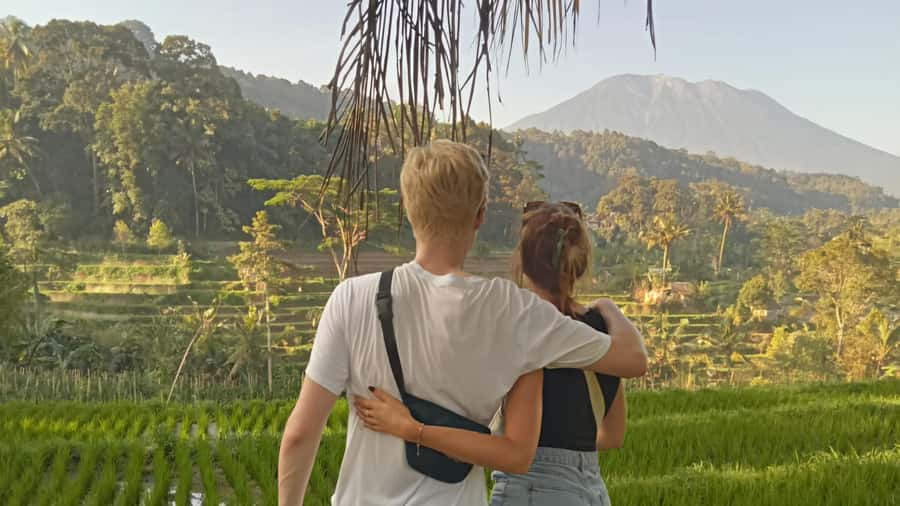
As you walk toward the direction of Mount Agung, the views open in places. On a clear day, the volcano can appear beyond the valley and terraces. It is not guaranteed, since cloud and weather can block the mountain, but the possibility adds something special to the route.
The rice fields also change with the season. You might see plowing, cultivation, new seedlings, or mature crops ready for harvest. That variety is one reason I prefer this walk to a quick photo stop at a single terrace. You see different stages of the farming cycle in one outing.
Same trailheads, a different kind of day:
- Mount Batur Sunrise Hike and Natural Hot Spring Option
★ 5.0 · 1,927 reviews - From Ubud: Mount Batur Hiking With Hotspring
★ 4.8 · 1,850 reviews - Mount Batur Sunrise Hike with Breakfast
★ 5.0 · 1,757 reviews - Mount Batur Sunrise Trekking
★ 5.0 · 947 reviews
Crossing Jembatan Kuning Tukad Yeh Unda
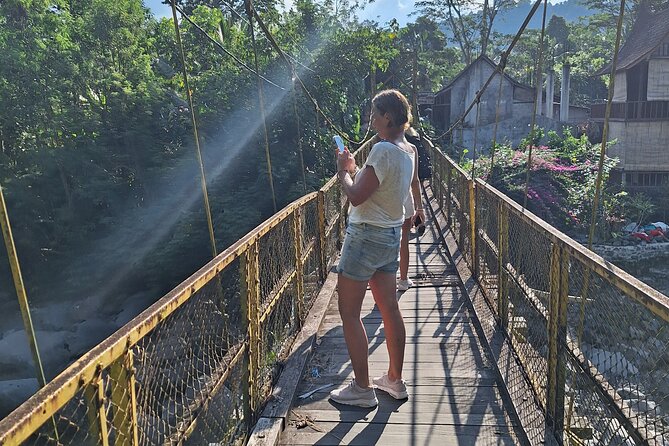
One of the memorable points on the route is Jembatan Kuning Tukad Yeh Unda, the yellow bridge. It is a wooden bridge used by people and motorbikes, and it can feel slightly shaky underfoot.
The bridge is not a major engineering attraction, but it is a good example of how the route stays tied to local life. You are crossing a working village connection, not entering a purpose-built tourist site. It also makes a natural photo stop.
Take care here, especially if the bridge is wet or busy. Your guide will direct the group, and the route is designed for a small group of no more than 10 people. That size helps on narrow paths and makes it easier to pause without blocking a large procession.
Dukuh Village, temples, and everyday Bali
From the bridge, the walk continues through Dukuh Village. This section brings you closer to homes, lanes, and the daily routines of local people.
You also pass a temple used by villagers for prayer. The tour does not present the temple as a grand monument. Its value is that you see it in its proper setting, connected to the people and fields around it. Follow your guide’s instructions and treat the area as a place of worship rather than a photo prop.
This part of the walk can be especially useful if you have already visited Bali’s major temples. You get a smaller-scale view of religious life, where a neighborhood temple sits within the same world as farmers, irrigation channels, and village roads.
The guides also talk about local plants and village life. Some know the area from family farming, which gives their explanations a personal quality. The tone tends to be relaxed and funny, but the information remains practical. You learn about crops, local customs, and the work that supports the community.
Babakan Dukuh Rice Terrace and the best views

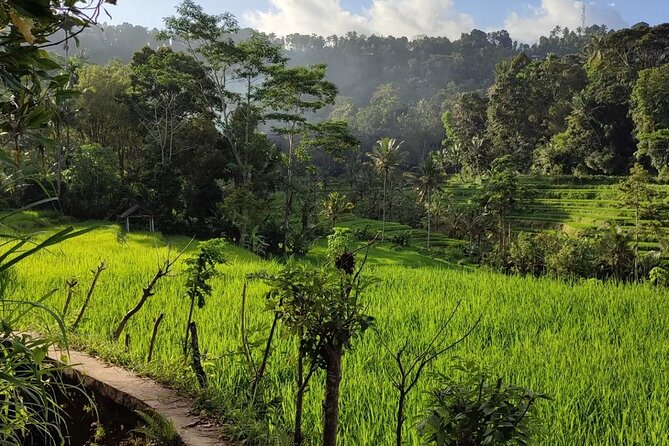
The final major section is Babakan Dukuh Rice Terrace. Here the route returns to the paddies and opens into some of the most scenic parts of the walk.
Expect narrow trails and field edges rather than a broad paved path. That is what takes you into the terraces, but it also means you should watch each step. High grass may brush your legs, and insects are possible. Long trousers can be useful, and sunscreen, a hat, and sunglasses are sensible in strong sun.
The guides stop at good viewpoints and can take photographs for you. This is a small but welcome service, especially for couples or families who want a picture together without handing a phone to a stranger. The pace is generally gentle, with time to look around and ask questions.
If rain arrives, the walk can still continue, but conditions become more slippery. Bring a rain jacket. One wet-weather experience remained enjoyable because the scenery and guide kept the pace manageable, but you should be comfortable with getting damp and walking carefully.
Finishing at Warung Ume Anyar in Ogang Village
The route ends at Warung Ume Anyar in Ogang Village, not back at the market. This is the most important logistical detail to plan around.
Arrange a driver before you start. The recommended collection time is about two to two and a half hours after the walk begins. If you need to return on foot, the start point is about 3 kilometers away along the main road, or roughly 30 to 40 minutes of walking.
The end point gives the activity a natural shape. You cross through different parts of Sidemen instead of turning around and repeating the same path. It also means you should not arrive without thinking about the next part of your day. A prearranged pickup keeps the finish easy.
Hotel pickup and drop-off are not included. You receive a guide and bottled water, but transport remains your responsibility.
Is $13 good value for two hours?
Yes, particularly if you value explanation as much as scenery. At $13 per person, you are paying a modest amount for a local guide, route-finding through paths that are not obvious on your own, and a close look at farming and village life.
The price is not buying a full-day excursion, a meal, or private transportation. If you want a long mountain hike, a larger cultural program, or hotel pickup, you will need something else. This works best as a focused morning or afternoon activity that fits around your Sidemen stay.
Small groups add to the value. With a maximum of 10 people, the guide can answer questions and help people over slippery sections. Private walks may also be available in some cases, as families have arranged them, but the supplied details do not promise a private tour for every booking.
The included bottled water is useful, though you should bring extra water if you normally drink a lot while walking in warm weather.
Who should book this walk?
I would choose this for anyone staying in Sidemen who wants more than a viewpoint and does not want a demanding mountain climb. It suits couples, solo visitors, and families with older children who can manage narrow paths and uneven ground.
The activity is not suitable for children under 5, pregnant women, people with heart problems, people over 60, or people with a low level of fitness. One family completed it with a 6-year-old, but the formal guidance is more cautious, so parents should judge their own child’s balance and stamina carefully.
You should also enjoy walking on natural surfaces. This is not the right choice if you want a smooth, paved route or have trouble with balance. The formal advice says not to wear sandals or flip-flops. Choose hiking shoes or sturdy sports shoes with good grip.
Practical timing, weather, and what to bring
Morning is the strongest choice if you want the traditional market. It also gives you the best chance of enjoying the walk before the heat builds, though the exact starting time depends on availability.
Bring:
- Sunglasses and a hat
- Sunscreen
- Hiking shoes or sports shoes
- A rain jacket during wet weather
- Long trousers if you prefer extra protection from grass and insects
The walk lasts about two hours, but allow extra time for meeting your guide, photographs, and arranging transport. The route can take two and a half hours in practice if the group moves slowly or stops often, so tell your driver not to arrive too early.
Free cancellation is available up to 24 hours before the activity for a full refund, and you can reserve now and pay later. Those options are useful in Bali, where weather and transport plans can change, but they do not remove the need to plan your return from Ogang Village.
Should you book Sidemen Trekking?
Book it if you want to see Bali through farming paths, village lanes, irrigation channels, and local explanations. The strongest reasons are the one-way route, the chance to see real field work, the views toward Mount Agung, and the friendly local guides who make the walk easy to understand.
Skip it if you need a flat trail, hotel transport, or a polished attraction with fixed surfaces. For everyone else, $13 is hard to fault. Wear proper shoes, arrange your pickup, choose a morning slot for the market, and expect a simple, scenic walk that shows you how Sidemen lives beyond its postcard views.
FAQ
Where does the Sidemen trek start?
It starts at Pasar Sidemen, the Sidemen Traditional Market, on the main street. Look for the shop with the sign Upa Boga, where your guide will meet you.
Where does the trek finish?
The walk finishes at Warung Ume Anyar Restaurant in Ogang Village.
How long does the trek take?
The stated duration is two hours. You should allow extra time for photographs and your transfer after the walk.
Is hotel pickup included?
No. Hotel pickup and drop-off are not included. Arrange transport to the meeting point and a pickup from the finish point yourself.
Can I visit the traditional market during the activity?
Yes, the route includes a brief market visit of about 10 minutes. Pasar Sidemen is open from 5:00 AM to 10:00 AM, so choose a morning session if you want to see it.
What shoes should I wear?
Wear hiking shoes or sports shoes. Sandals and flip-flops are not allowed because parts of the route are narrow, uneven, and slippery.
Is the trek suitable for children?
It is not suitable for children under 5 years. The activity is also listed as unsuitable for pregnant women, people with heart problems, people over 60, and people with a low level of fitness.
Does the walk return to the starting point?
No. The route is designed as a one-way walk. You can walk back to the start along the main road, but it is about 3 kilometers and takes around 30 to 40 minutes.
Just added around Indonesia
- Mount Batur Sunrise Trekking – All Inclusive★ 5.0 · 153 reviews
- Private Mount Batur Sunrise Trekking★ 5.0 · 132 reviews
- Mount Batur Sunrise Trekking★ 5.0 · 947 reviews
- 2 Days 1 Night Ethical Jungle Trekking★ 5.0 · 153 reviews
- 3D/2N Rinjani trekking summit,lake and hot springs.★ 5.0 · 85 reviews
- Rinjani trekking 2D 1N RIM★ 5.0 · 94 reviews
- Rinjani Trekking 3D2N Summit★ 4.5 · 85 reviews
- Mount Batur Volcano – Sunrise Trekking with White Water Rafting★ 5.0 · 52 reviews
Indonesia Hiking Tours, side by side.
Sunrise Mount Batur Guided Hike with Breakfast
Read our review →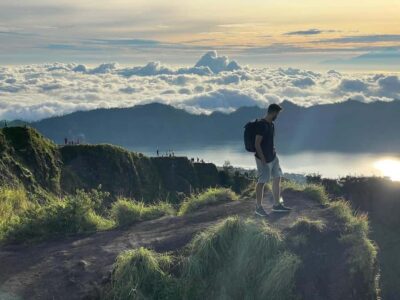
Mount Batur Sunrise Guided Hike and Natural Hot Spring
Read our review →
Mount Batur Sunrise Trek With Guide and Breakfast
Read our review →
Mount Batur Sunrise Hike and Natural Hot Spring Option
Read our review →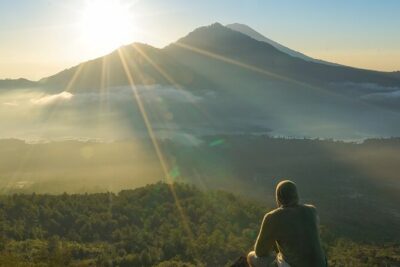

Mount Batur Sunrise Trekking Private All Inclusive
Read our review →This walk also sits in