
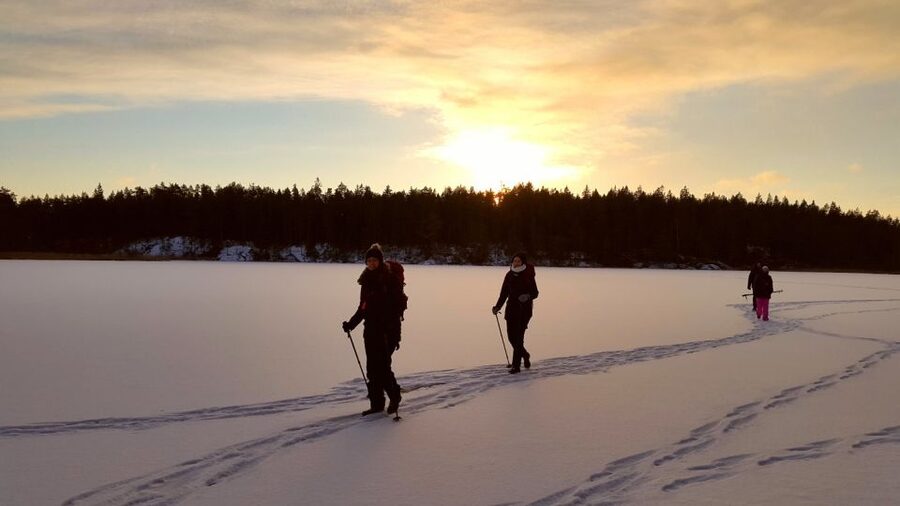
REVIEW · SWEDEN
Stockholm: Winter Snowshoe Full-Day Hike
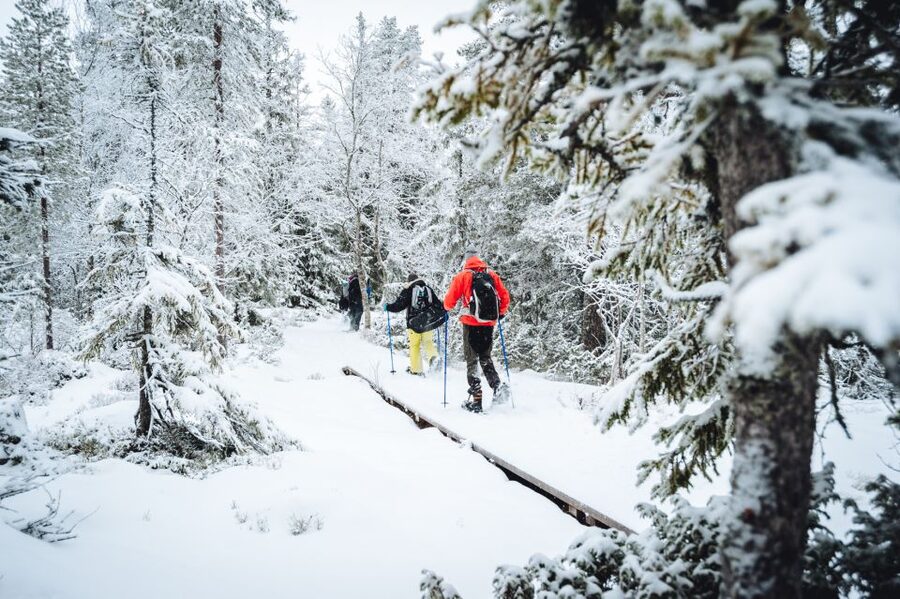
Stockholm’s winter wilderness begins surprisingly close to the city. After a short minivan ride, you’ll trade streets for snow-covered forest, deer tracks, and frozen lakes, then spend much of the day moving through the quiet outdoors. The guide teaches you how to walk on snow and ice before leading the group into the woods.
I like two things right away: the small group of no more than eight, which makes it easier to ask questions, and the campfire lunch, which gives the long hike a warm, social center. Guides such as Tigo, Eric, and George are praised for explaining Swedish nature and culture clearly. The main catch is the weather. Thin snow can turn this into a regular hike with ice grips, and you must bring your own boots and winter clothing.
Key points to know
- Snow conditions decide the equipment: Use snowshoes when the snow is deep enough, or ice grips under your shoes when it is not.
- The group stays small: A maximum of eight people makes the day more personal and keeps the walking pace easier to manage.
- Frozen lakes are part of the route: You receive safety instructions before walking on snow and ice.
- Lunch is cooked by a campfire: Organically produced restaurant food is included, along with time to warm up and learn fire skills.
- Nature lessons are built into the hike: Expect explanations about Swedish wildlife, ecosystems, deer tracks, and local outdoor customs.
- You need serious winter clothing: Hat, gloves, warm socks, waterproof outerwear, and suitable boots are not provided.
From Stockholm streets to a frozen forest
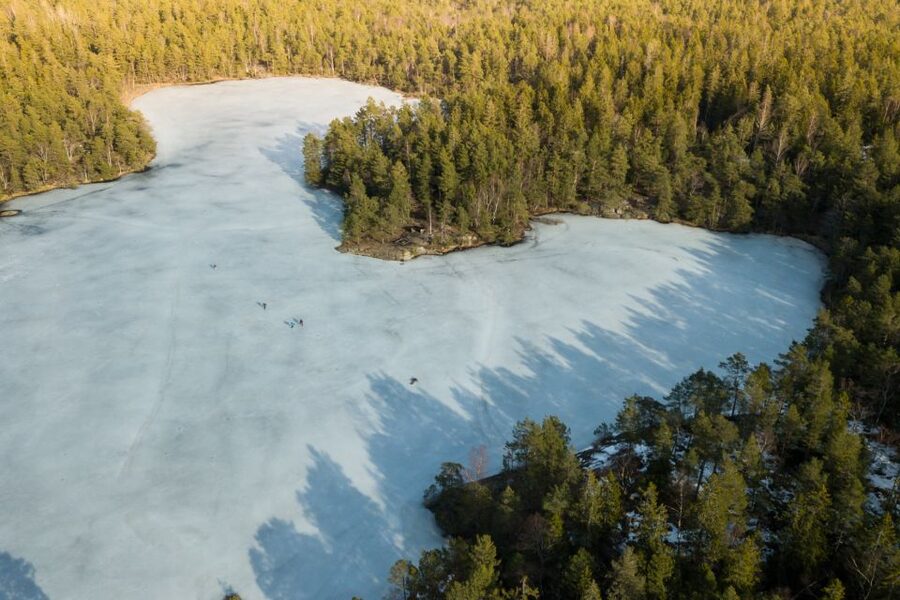
The tour begins at a meeting point within easy reach of central Stockholm. It is about a 10-minute walk from both Skanstull metro station on the green line and Mariatorget metro station on the red line. Stockholm Södra commuter rail station is about an eight-minute walk away.
That location is practical if you are staying in the city, though it is not a door-to-door pickup from every hotel. The included pickup and return transfer applies to the tour meeting point, so allow time to walk there with your winter gear. One useful point from the tour details is that some people would prefer hotel pickup, especially if they are staying farther from the center. For most visitors, the nearby metro and commuter rail stations make the arrangement workable.
From the meeting point, you ride by minivan to the best snow-covered area available that day. This matters because winter conditions around Stockholm can change quickly. The guide is not locked into one fixed patch of forest if another area has better snow or safer walking conditions.
The advertised duration is seven hours, while the experience is also described as an eight-hour winter adventure. In practical terms, plan for most of a day, including transport, instruction, hiking, lunch, and the return ride. Check the available start time when booking and avoid placing another major activity immediately afterward.
More Guided Day Hikes in the world:
- From Marrakech: Ouzoud Waterfalls Guided Hike and Boat Trip
★ 4.7 · 33,630 reviews - Berber villages : Atlas Mountains Day Hike from Marrakech
★ 5.0 · 14,007 reviews - Bali: Sunrise Mount Batur Guided Hike with Breakfast
★ 4.8 · 9,660 reviews
Learning to walk on snow and ice
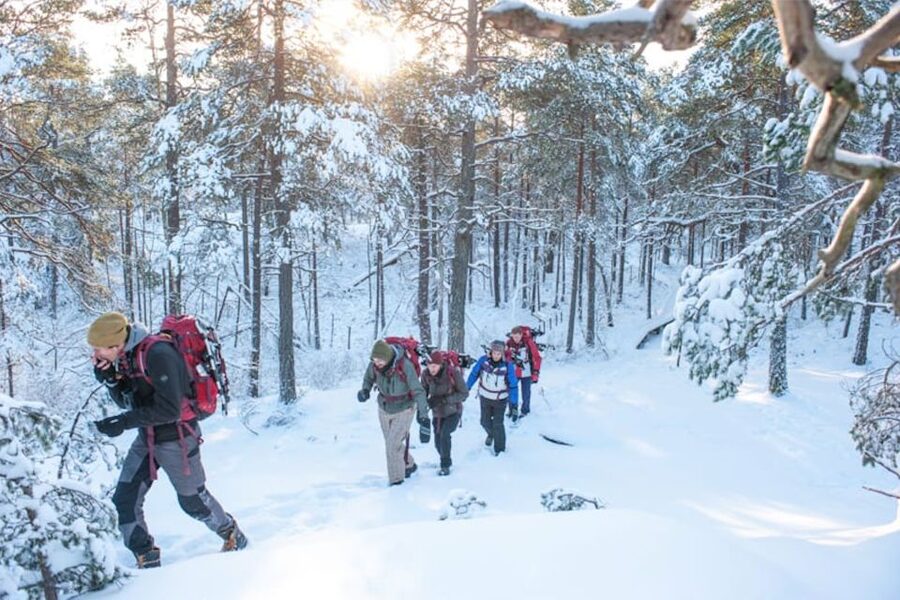
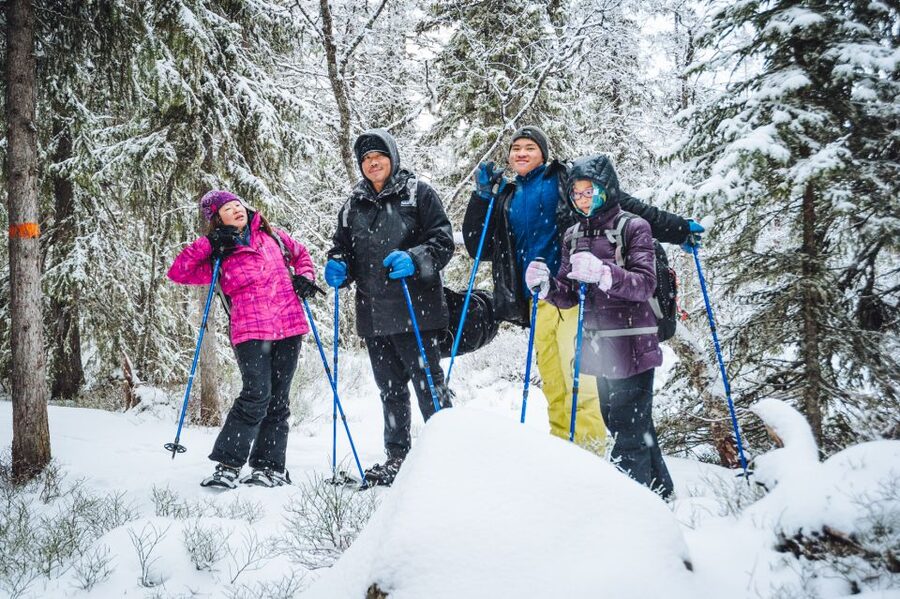
At the trailhead, your guide gives a safety briefing and shows you how to use the equipment. Snowshoes spread your weight across a wider area, making it possible to walk over soft snow without sinking as deeply. They take a little practice, especially when turning or walking on uneven ground, but the guide is there to set the pace.
If snow is too thin for snowshoes, the tour changes to a winter hike with ice grips fitted under your shoes. That is not a minor detail. If your main goal is to try snowshoeing, you should understand that the activity depends on the weather. A low-snow day can still offer a fine outing, but it will not provide the same novelty or deep-snow feel.
The equipment supplied is described as high quality safety gear, plus dry bags for personal items. Bring only what you need for the day, and keep phones, cameras, and spare layers inside the dry bags when conditions are wet. The dry bags are especially useful when snow is melting or when you set items down near the fire.
You are asked to take full responsibility for accidents during the trip. That makes the briefing worth paying attention to. Follow instructions carefully on frozen surfaces, stay with the group, and tell the guide if you are cold, tired, or unsure about your footing.
A quiet walk through Swedish woodland
The heart of the day is the walk itself. You move through a snow-filled forest, learning how Swedish ecosystems work as you go. The guide points out signs of wildlife, including deer tracks in the snow, and answers questions about animals, plants, and the changing winter conditions.
I like this kind of guided outing because the scenery is only half the point. A snowy forest can look beautiful, but a guide helps you notice the evidence of life around you. Tracks, tree cover, frozen ground, and the way animals use the woods give the walk more meaning than a simple photo stop.
The small group size helps here. With no more than eight participants, you have a better chance to hear the guide without standing in a large crowd. Guides named Tigo, Eric, and George have each been singled out for friendly explanations and for keeping people included, even when English ability varies within the group.
The walking pace and difficulty are not specified in the available details, so you should not treat this as a guaranteed easy stroll. Snowshoeing takes more effort than normal walking, and winter ground can be slippery. You should be comfortable spending several hours outdoors and walking over uneven surfaces.
The tour is also a social experience. You meet people from different countries, share the trail, and gather around the fire together. That can be a plus if you are traveling alone or want a day that feels more personal than a large sightseeing bus trip.
Crossing frozen lakes with care
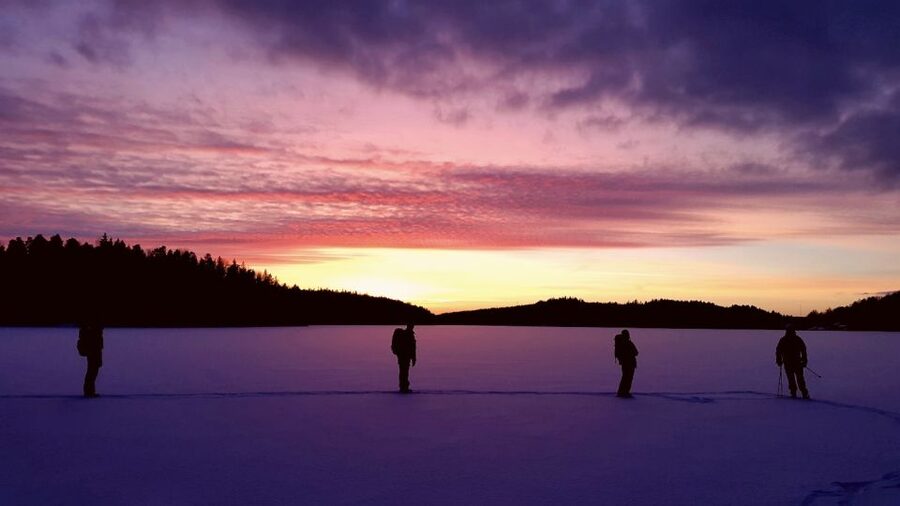
Walking across a frozen lake is one of the most memorable parts of the route, but it is also the point where safety matters most. The guide gives instructions about walking on snow and ice before you head out, and you should remain with the group rather than wandering ahead for a better photograph.
A frozen lake offers a wide, open contrast to the enclosed forest. Snow-covered trees frame the route in one section, then the view opens out across white ice and winter sky. Conditions can change from one day to the next, so the exact appearance of the lake, and even whether a particular crossing is possible, depends on safety and weather.
The tour description emphasizes frozen lakes, but no promise is made about a particular lake or exact route. That flexibility is sensible. The guide chooses the safest and most attractive area available at the time, rather than forcing a set itinerary in poor conditions.
Bring gloves that allow you to handle equipment and a phone without exposing your hands for long. You also need a warm outer layer that can handle wind and damp snow. The recommended clothing includes a warm sweater, waterproof shell jacket, hat, gloves, scarf, ski pants or thermal leggings with trousers, and an extra pair of socks.
More Snowshoe Hikes in the world:
- From Tromsø: Snowshoeing Hike with Picnic Lunch and Photos
★ 4.9 · 840 reviews - Rovaniemi: Hiking and Snowshoeing Adventure in Lapland
★ 4.4 · 753 reviews - From Tromsø: Guided Husky Snowshoe Hike and Husky Camp Visit
★ 4.9 · 715 reviews - From Tromsø: Snowshoe Hike in the Arctic
★ 4.9 · 467 reviews
A campfire lunch in the middle of the day
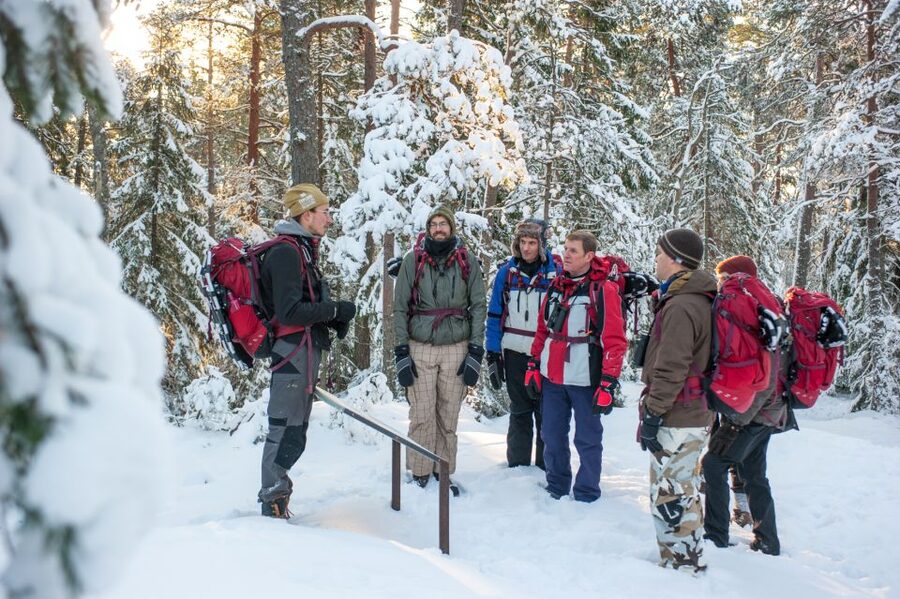
After walking, the group stops for lunch beside a campfire. Organically produced restaurant food is included, and the fire provides a much-needed break from the cold. This is more than a meal stop. It gives the day a natural pause, allowing you to warm your hands, eat slowly, and talk with the guide and other participants.
You may also learn how to make the fire. That practical detail adds something to the experience, especially if you have little experience with outdoor cooking or winter camping. It turns lunch into a small lesson in how people use the outdoors in cold conditions.
The exact menu is not provided, so do not book this expecting a particular dish or dietary arrangement unless you confirm it in advance. The food is described as organically produced restaurant food, but the supplied information does not specify vegetarian, vegan, allergy, or other special options.
The fire can be one of the best parts of a winter day, but it does not replace proper clothing. You can still get cold while waiting for food or sitting in damp socks. Pack that extra pair of socks, as advised, and keep spare layers dry in the supplied bag.
Returning to the trail after lunch
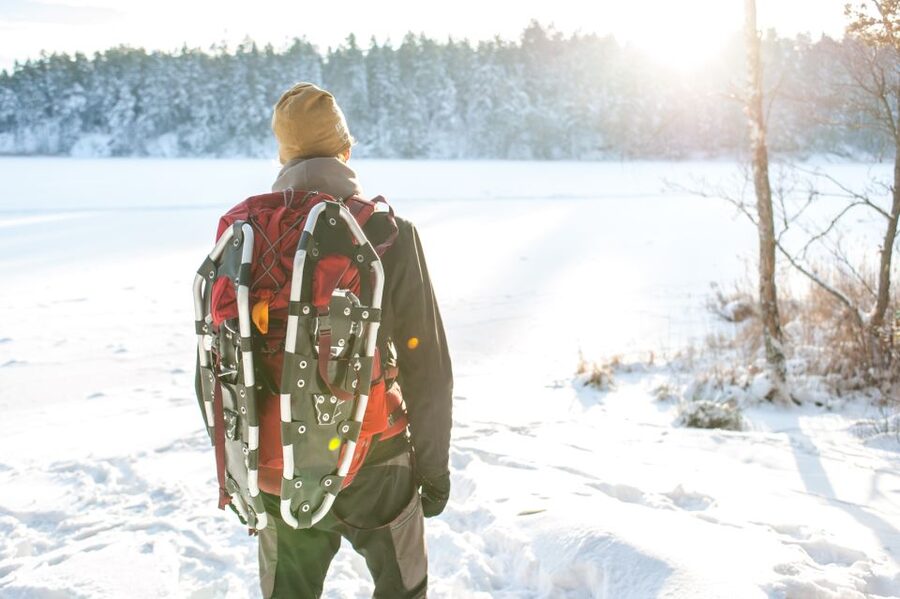
Once you have eaten and warmed up, the hike continues through more forest and winter scenery. The second walking section gives you time to settle into the equipment and enjoy the surroundings without rushing from one attraction to another.
This is where the tour feels different from a short city excursion. You spend enough time outside to notice the day changing, from the first careful steps in snowshoes to the quieter rhythm that develops later. If the weather is gray or wet, the scenery may feel less dramatic, but the guide’s explanations and the fire still give the outing purpose.
One family took part with a nine-year-old child, who reportedly enjoyed the day. That suggests the experience can work for older children who are comfortable outdoors, but the details do not establish a minimum age or promise an easy route. Parents should consider the full day, cold temperatures, snow equipment, and the need to stay with the group.
If the snow disappears, the experience can still be worthwhile. A regular forest hike with ice grips may offer beautiful views and a chance to learn new skills, but you should book with flexible expectations. The title promises snowshoes, yet the weather controls that part of the day.
What the $176 price includes
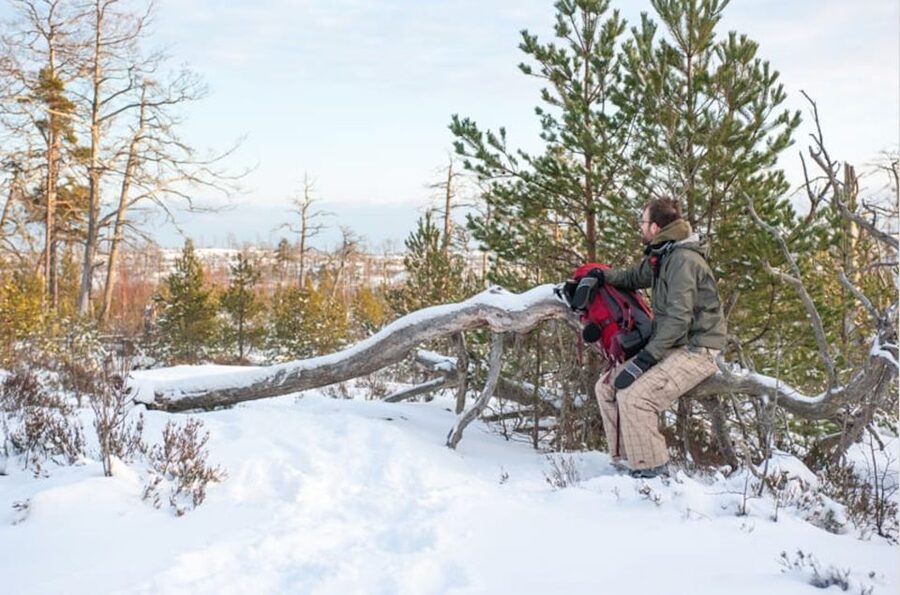
At $176 per person, this is not a cheap way to spend a morning in Stockholm. The price makes more sense when you count what is included: return transport from the meeting point, a guide, safety equipment, dry bags, and lunch.
You are also paying for access to a winter setting that is difficult to reach and judge on your own. The guide selects a suitable area, checks the conditions, teaches you how to move across snow and ice, and handles the route planning. For a visitor who lacks snowshoes or winter hiking experience, that support has real value.
The price does not include hiking boots or clothing. This is the main extra cost to consider. You need waterproof footwear, warm layers, a hat, gloves, and spare socks. If you are already equipped for a Swedish winter, the tour offers better value. If you need to buy or rent everything, the total cost rises.
The food and small group also help justify the price. You are not simply being dropped at a trailhead for an independent walk. The day includes teaching, transport, a shared campfire, and time with a guide who can answer questions about nature and Swedish culture.
Who should book this winter hike?
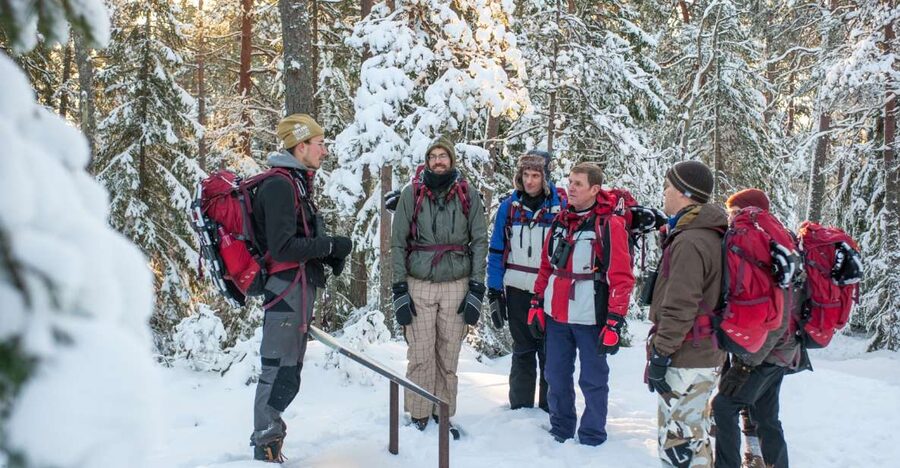
I would choose this tour if you want a full outdoor day near Stockholm rather than another indoor attraction. It suits visitors who enjoy walking, do not mind changing weather, and like learning about local nature while doing something active.
It is a good choice for solo visitors who want company, couples looking for a quiet day outside the city, and families with older children who can manage a long outing. The group limit of eight is especially useful if you prefer conversation and questions over a large organized tour.
You should think twice if you want guaranteed deep snow, a fixed route, or a short and gentle activity. Snow conditions may replace snowshoes with ice grips, and the duration means you will spend much of the day outdoors. Anyone uncomfortable with frozen surfaces, cold weather, or extended walking may prefer a shorter city-based experience.
The English and Swedish guide service makes the tour suitable for international visitors. Guides such as Tigo, Eric, and George have been praised for being friendly, attentive, and good at explaining nature and culture. Still, guide assignments can vary, so do not book based on one particular guide unless the operator confirms who will lead your date.
Practical details before you reserve
Cancellation is free up to 24 hours before the activity for a full refund, and you can reserve now and pay later. Those terms are useful for a winter activity because snow and weather are hard to predict.
The tour ends back at the original meeting point. Pickup and drop-off are included in that arrangement, but the supplied information does not promise pickup at individual hotels. Plan your route to the meeting point before the morning of the hike.
Pack lightly but carefully. Your best checklist is:
- Warm sweater and waterproof shell jacket
- Hat, gloves, and scarf
- Ski pants or thermal leggings with trousers
- Waterproof hiking boots
- Extra warm socks
- Phone or camera protected inside a dry bag
Do not rely on the tour supplying clothing. It provides safety equipment and dry bags, but your comfort depends on what you wear.
Should you book it?
Book this tour if you want a real winter day outdoors, not just a quick snow photo near Stockholm. The combination of forest walking, frozen lakes, ecology lessons, a campfire lunch, and a small group gives the outing substance.
The decision comes down to your weather expectations. If you need snowshoes at all costs, the thin-snow alternative may disappoint. If you are happy with a well-guided winter hike either way, the experience offers strong value for a full day and gives you a practical look at Sweden beyond the city center.
FAQ
How long does the Stockholm snowshoe hike last?
The activity is listed as seven hours, while the description also calls it an eight-hour adventure. Plan for most of a full day, including transport, instruction, hiking, lunch, and the return trip.
Where does the activity start?
The meeting point is about a 10-minute walk from Skanstull metro station and Mariatorget metro station. It is also about an eight-minute walk from Stockholm Södra commuter rail station.
What happens if there is not enough snow?
If snow levels are too low for snowshoes, the group uses ice grips under its shoes instead. The outing continues as a winter hike rather than a snowshoe hike.
Is lunch included?
Yes. The tour includes organically produced restaurant food served during a warming campfire stop.
What should I bring?
Bring a warm sweater, waterproof shell jacket, hat, gloves, scarf, ski pants or thermal leggings with trousers, hiking boots, and an extra pair of socks. Clothing and boots are not included.
How large is the group?
The tour is limited to eight participants. Guides lead the activity in English or Swedish.
More Full-Day Trips around the world
- From Marrakech: Atlas Mountains Full-Day Hiking Trip w Lunch
★ 4.8 · 7,417 reviews - From Chania: Full-Day Samaria Gorge Trek Excursion & Guide
★ 4.6 · 3,191 reviews - From Rethymno: Samaria Gorge Full-Day Trek, Pickup & Guide
★ 4.5 · 1,610 reviews - From Sofia: The Seven Rila Lakes Full-Day Hiking Tour
★ 4.7 · 923 reviews
Just added around the world
- Rovaniemi: Korouoma Frozen Waterfalls Hike & Hot BBQ Lunch★ 4.9 · 90 reviews
- Hidden Waterfalls Hiking Adventure★ 5.0 · 148 reviews
- Hike to Frozen Waterfalls of Korouoma Including BBQ Lunch from Rovaniemi★ 5.0 · 84 reviews
- Private Family Hike in Yosemite★ 5.0 · 37 reviews
- Private Guided Hiking Tour in Yosemite★ 5.0 · 94 reviews
- Guided Yosemite Hiking Excursion★ 5.0 · 80 reviews
- Yosemite Valley Private Hiking Tour★ 5.0 · 83 reviews
- Chiang Mai: 2-Days Jungle Trek, Waterfalls and Karen Village★ 4.8 · 103 reviews
Snowshoe Hikes, side by side.
From Tromsø: Snowshoeing Hike with Picnic Lunch and Photos
Read our review →
From Tromsø: Guided Husky Snowshoe Hike and Husky Camp Visit
Read our review →
From Tromsø: Evening Fjellheisen Snowshoe Hike and Cable Car
Read our review →
This walk also sits in