
REVIEW · SPAIN
Alicante: Via Ferrata del Ponoig Guided Trek and Climb
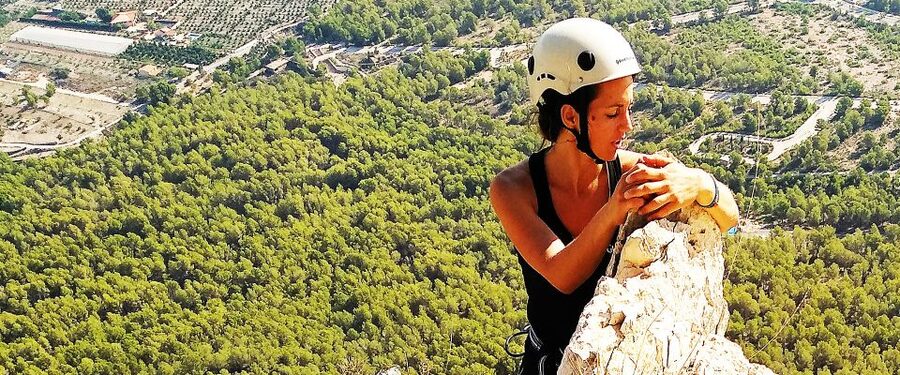
Via Ferrata del Ponoig puts you on a near-vertical rock face above the Guadalest Valley, with the Mediterranean opening out below. You climb by pulling and stepping on fixed metal staples while staying clipped to a steel safety cable. It is a real mountain outing, not a gentle walk with a view.
I like the short practice session before the climb and the fact that safety equipment, photos, and a guide are included. I also like the small group limit of 10, since a guide can keep a closer eye on your pace. The main consideration is simple: this K4 route demands strength, balance, and a clear head around heights.
Key points to know before you book
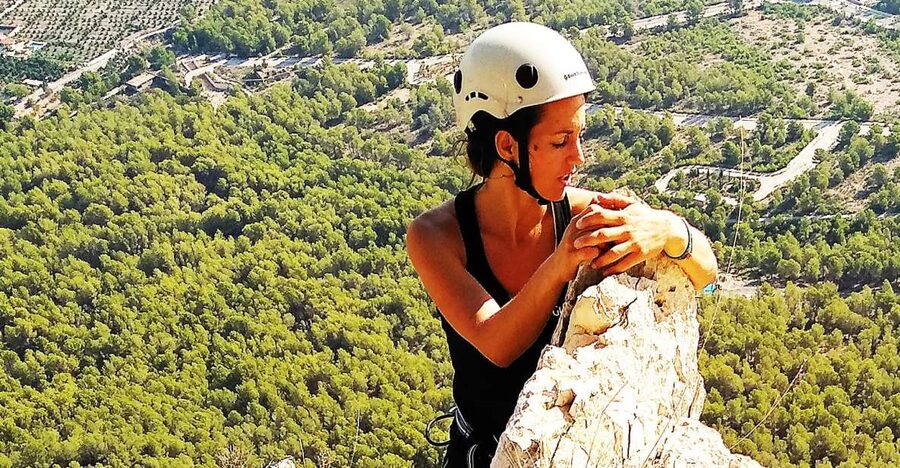
- The climb is nearly vertical: You use thick metal staples and a security cable to move straight up the rock.
- The route is graded K4: Expect a serious physical challenge rather than an easy introduction to via ferrata.
- You practice first: Your guide teaches basic wall-climbing technique before the main ascent.
- The views are wide open: Look across the Guadalest Valley, the Sierras de Aixortá and Bernia, and the Mediterranean coast.
- The package is nicely equipped: A guide, harness, helmet, Ferrata kit, and photos are included for $65.
- Bring your own essentials: Hiking shoes, water, sun cream, and clothing suited to the weather are your responsibility.
What the Ponoig route feels like
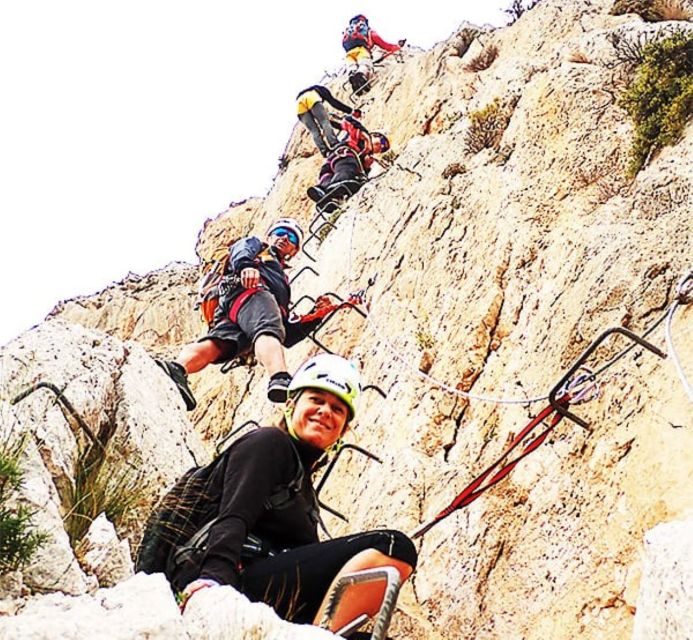
A via ferrata sits between hiking and rock climbing. The route has fixed metal aids, including staples set into the stone, plus a steel cable that lets you remain attached as you move. You do not need to find your own handholds all the way up, but you still have to lift your body, place your feet carefully, and manage your fear of exposure.
Ponoig is graded K4, which gives you the most useful warning in the whole description. This is not a flat trail followed by a short scramble. The climb includes steep, aerial sections and a nearly vertical ascent. You should be comfortable with significant physical effort before booking.
I like this kind of route because the equipment removes some technical guesswork without removing the adventure. You are not simply walking behind a guide to a viewpoint. You are working your way up the rock and earning the view one metal staple at a time.
The fixed cable provides reassurance, but it does not make the route effortless. Your arms and legs still do the work. If you have vertigo, the height may be the deciding factor, and the experience is not suitable for people with mobility impairments, pregnant women, or anyone under 18.
More Guided Tours in Spain:
- La Palma: Tajogaite Volcano Guided Trek
★ 4.8 · 1,810 reviews - From Valencia: Montanejos Guided Hike with Natural Pools
★ 4.5 · 1,741 reviews - Lanzarote: Guided Volcano Hike with Transfers
★ 4.9 · 861 reviews
Meeting at Parking Vía Ferrata Ponoig
The outing begins at Parking Vía Ferrata Ponoig. You are responsible for getting to this meeting point, so check your route carefully before the day of the climb. Your guide will be holding a visible sign, which should make the final meeting easier once you reach the parking area.
The start is practical rather than polished. You meet at the base, put on your equipment, and get ready for the rock. Do not expect a visitor center, a café, or a long introduction. Bring water and any food you may need, since food and drinks are not included.
The $65 price makes sense if you value convenience and instruction. It covers the climbing guide, safety equipment, and photos, so you are not paying separately for a harness, helmet, or Ferrata kit. Shoes are not included, and that matters more than it may sound. Wear proper hiking shoes with a secure grip, rather than casual sneakers.
You should also carry sun cream and clothing suited to the forecast. The route is exposed, and the provided information specifically advises weather-appropriate clothing. A small rucksack is useful for water and essentials. One past participant specifically recommended plenty of water, sun cream, and a few sweets such as Haribo for quick energy.
The safety briefing and climbing practice
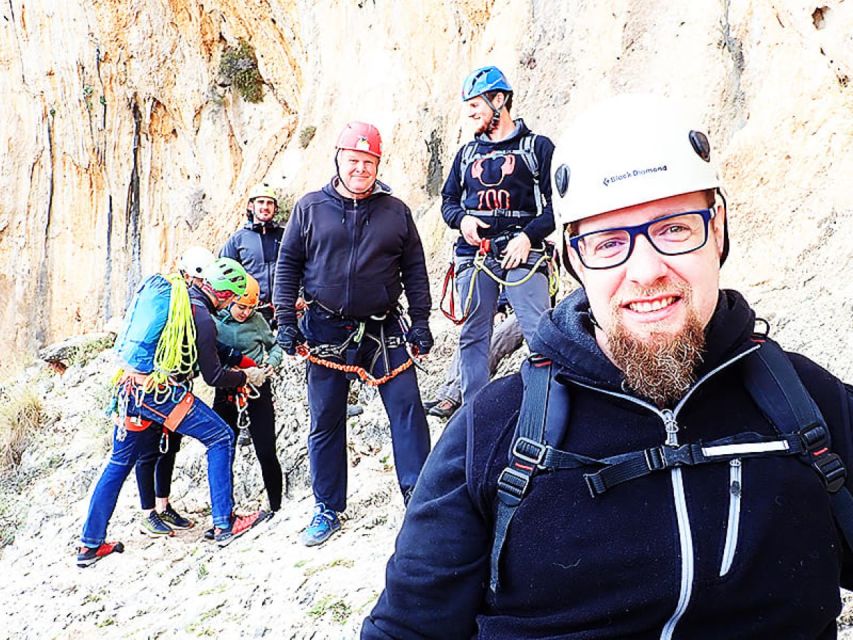
Before you head upward, the guide fits your harness, helmet, and Ferrata kit. You then learn the basics of wall climbing on a rock wall or practice section. This is a valuable part of the outing, especially if you have not used a via ferrata system before.
The guide can show you how to work with the safety cable, where to place your feet, and how to move the attachment points as the route rises. This is not a substitute for fitness, but it gives you a safer starting point and helps you understand the rhythm of the climb.
I especially like that the practice comes before the main route. A short lesson lets you discover how the equipment feels while your feet are still on manageable ground. You can ask questions, settle your nerves, and learn how to conserve energy.
The guide leads in Spanish or English. Several guide names have appeared in the experience, including Osmar and Frank. Osmar has been praised for patient explanations and clear instructions, while Frank was noted for adjusting his English well and keeping the group comfortable. The assigned guide can vary, but the important point is that language support is available in both Spanish and English.
Climbing the metal staples on a K4 route
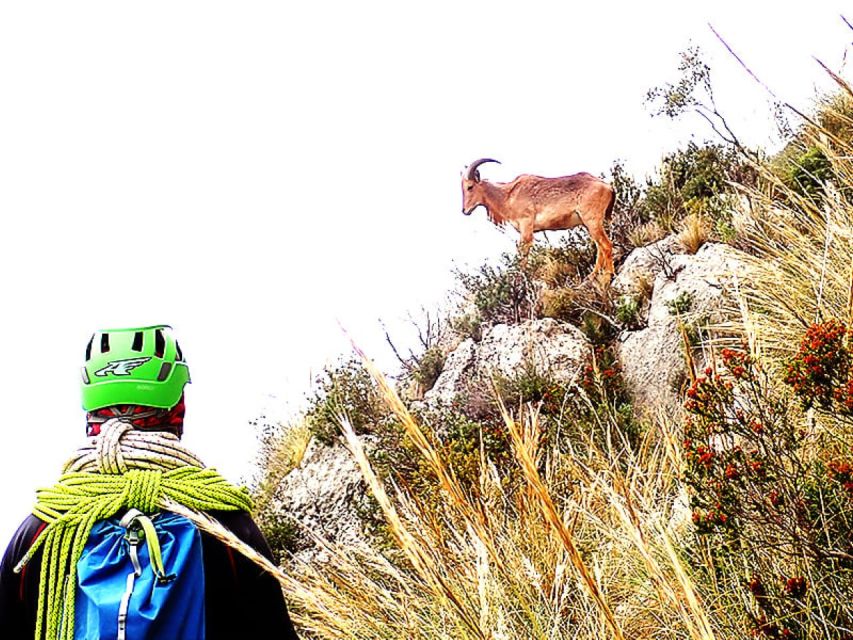
Once you begin, the character of the experience changes quickly. The route heads up the rock using thick metal staples fixed into the cliff. Your hands grip the metal, your boots find the next foothold, and the cable keeps you attached as you move.
The climb requires attention. You need to watch the next staple, manage your attachment system, and keep your body balanced against the rock. The route may feel straightforward in one section and much more demanding in the next. I would not choose it as a first mountain activity if you are unsure about heights or regular physical exertion.
The K4 grading also means you should expect a sustained challenge rather than one dramatic moment followed by an easy path. The information describes steep, aerial, spectacular steps, so exposure is part of the experience. You may feel your heart working hard from both the climb and the height.
The guide’s role matters here. You are not left to work out the route alone. The guide accompanies the group, provides instruction, and helps keep everyone moving at a sensible pace. The small group size, limited to 10 people, should make that support more useful than it would be on a large outing.
Still, a guide cannot remove every difficulty. You must be ready to climb under your own power. If you need frequent assistance with walking or cannot comfortably handle a near-vertical section, this is the wrong activity.
More hikes and treks around Spain:
- From Seville: Caminito del Rey Hike Day Trip
★ 4.5 · 1,240 reviews - Lanzarote: Hike Across Timanfaya’s Volcanic Landscapes
★ 4.8 · 1,234 reviews - The Volcano Heart Tour: Hiking, Tasting and Sunset Experience
★ 5.0 · 1,120 reviews - From Barcelona: Montserrat Monastery, Easy Hike, Cable Car
★ 4.9 · 1,021 reviews
The views above Guadalest Valley
The reward comes as the rock opens into broad views. You look across the Guadalest Valley toward the Sierras de Aixortá and Bernia, with the Mediterranean coast visible from above. The viewpoint changes as you climb, so the scenery is not reserved for one final lookout.
That is one of the strongest reasons to choose Ponoig. The setting gives the physical work a clear purpose. You are not climbing an indoor wall with a painted backdrop. The metal staples are fixed into a natural cliff, and the valley and coast form the backdrop at every exposed section.
The view from the top has been singled out as a highlight, but you should not treat the climb as only a way to reach a summit. Much of the pleasure comes from looking sideways while securely attached, seeing the valley drop away, and noticing how your position changes with every few metres.
Use care with cameras and phones. Photos are included, which is a helpful touch because you may prefer to keep both hands focused on the climb. The included photos also give you a record of the route without asking you to handle a camera at an awkward moment.
How the five-hour schedule works
The total experience lasts about five hours. The guided activity at Ponoig is described as roughly four hours, with the remaining time covering preparation and the natural pace of a group climb. Exact starting times depend on availability.
The schedule is long enough to feel like a proper mountain day, but short enough to fit into a wider Alicante-area plan. You should not plan a rushed meal or another timed attraction immediately afterward. A K4 climb can take energy, and group pace can vary.
The activity begins and ends at Parking Vía Ferrata Ponoig. There is no stated transport from Alicante, so plan your own way to the parking area. That is an important practical point when comparing this experience with activities that include hotel pickup.
The small group format is a good middle ground. You get the social feel of a shared outing without being placed in a very large crowd. If you want a private climb, that is not promised here. If you prefer a guide-led group with a cap of 10, the format should suit you.
Who should book this climb
I would recommend Ponoig to an active adult who wants a real challenge and enjoys the combination of mountain scenery and simple climbing technique. It suits someone who has tried climbing, scrambling, or another demanding outdoor activity, but the guide-led practice also gives a determined beginner a place to start.
The phrase beginner-friendly needs care here. The guide can teach the basics, and past participants have praised the patient explanations and supportive pacing. But a K4 grade and nearly vertical climb still make this more demanding than a soft introduction.
You should be able to walk and climb for several hours, use your arms and legs repeatedly, and stay calm around exposure. You also need to be comfortable wearing a harness and moving along a cable system.
I would skip it if you have vertigo, limited mobility, are pregnant, or are under 18. The activity information specifically excludes these groups. Do not book it hoping the guide will turn a near-vertical climb into an easy walk. The support is there to help you climb safely, not to change the nature of the route.
What to bring for a better day
Your footwear is the most important item not supplied. Bring hiking shoes with a good grip. The equipment provided includes a harness, helmet, and Ferrata kit, but shoes remain your responsibility.
Pack plenty of water. Five hours in the open air, with a strenuous ascent, can make hydration more important than you expect. Sun cream is also worth carrying, especially because the route offers exposed views and the experience information specifically recommends it.
Wear clothing that fits the weather and allows free movement. Avoid anything that could catch on equipment or restrict your legs. A small rucksack can hold water, sun cream, and a snack. One useful tip from a previous booking is to bring a little quick energy, such as sweets.
You do not need to bring a climbing kit, since safety gear is included. Food and drinks are not included, so plan around that. The guide may take photos, but you should not count on your phone as your main way to document the climb.
Is $65 good value?
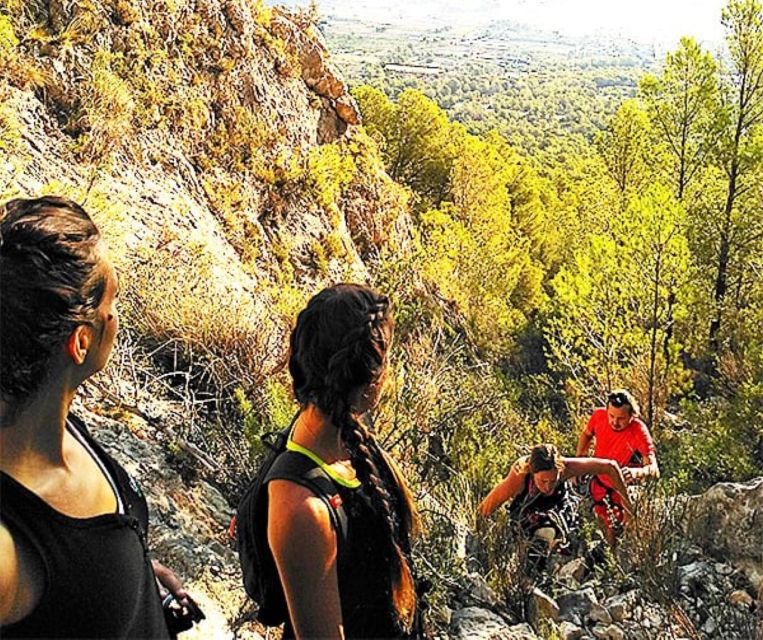
At $65 per person, this is a fair price for a five-hour guided outdoor activity. The cost includes the guide, required safety equipment, and photos. Buying or renting that equipment independently would add cost and would not provide the route knowledge or safety briefing.
The real value is the combination of access and support. A fixed cable and metal staples make the route possible, but a guide helps you understand how to use them and how to handle the climb as part of a group. The English and Spanish options also make the experience easier for international visitors.
The price does not cover shoes, drinks, food, or transport to Parking Vía Ferrata Ponoig. Those extra needs are manageable, but add them to your day’s budget. If you already have hiking shoes and your own transport, the package becomes better value.
Free cancellation up to 24 hours before the activity and the option to reserve now and pay later add useful flexibility. They do not change the physical demands of the route, but they can help if your Alicante plans are still shifting.
Should you book Via Ferrata del Ponoig?
Book this experience if you want a guided climb with serious height, strong valley views, and a proper sense of effort. The included equipment, practice session, small group, and bilingual guiding make the $65 price attractive.
Do not book it for a relaxed scenic walk, a family outing, or a casual first taste of outdoor activity. The K4 grade and near-vertical sections are the key facts. If you can handle the physical work and do not struggle with heights, Ponoig offers a memorable way to see the Mediterranean coast and Guadalest Valley from above.
FAQ
Where does the Via Ferrata del Ponoig activity begin?
You meet your guide at Parking Vía Ferrata Ponoig. The guide will be holding a visible sign.
How long does the experience last?
The full activity lasts about five hours. The guided tour and safety activity at Ponoig are listed as taking about four hours.
What difficulty level is the route?
Via Ferrata del Ponoig is categorized as K4. The route includes steep, aerial sections and a nearly vertical climb.
Is safety equipment included?
Yes. The activity includes a climbing guide, harness, helmet, and Ferrata kit.
Are climbing shoes included?
No. You need to bring your own hiking shoes.
What should I bring?
Bring hiking shoes, water, and clothing suitable for the weather. Sun cream and a small snack are also sensible additions for a strenuous five-hour outing.
Is the activity available in English?
Yes. Live guiding is available in Spanish and English.
Are children allowed to join?
No. The activity is not suitable for children under 18.
Can I cancel and get a refund?
You can cancel up to 24 hours before the activity for a full refund. You can also reserve now and pay later.
Just added around Spain
- Ajuy and Las Peñitas : Hike to Legends and Wild West Coast★ 4.5 · 12 reviews
- Hike Gaztelugatxe, Fishing Port Bermeo & Pintxo Lunch from Bilbao★ 5.0 · 46 reviews
- Montserrat Nature Walk, Monastery and Museum from Barcelona★ 5.0 · 58 reviews
- Montserrat Land of Shrines – One Day Small Group Hiking Tour from Barcelona★ 5.0 · 38 reviews
- Historical Montserrat Half-Day Hiking Tour from Barcelona★ 5.0 · 26 reviews
- Pyrenees Hiking from Barcelona★ 5.0 · 20 reviews
- Hike to Secret Waterfalls of the Pyrenees Mountains, From Barcelona & Girona★ 5.0 · 14 reviews
- Hiking with the best views of Barcelona★ 5.0 · 16 reviews
Spain Hiking Tours, side by side.
The Volcano Heart Tour: Hiking, Tasting and Sunset Experience
Read our review →
This walk also sits in