
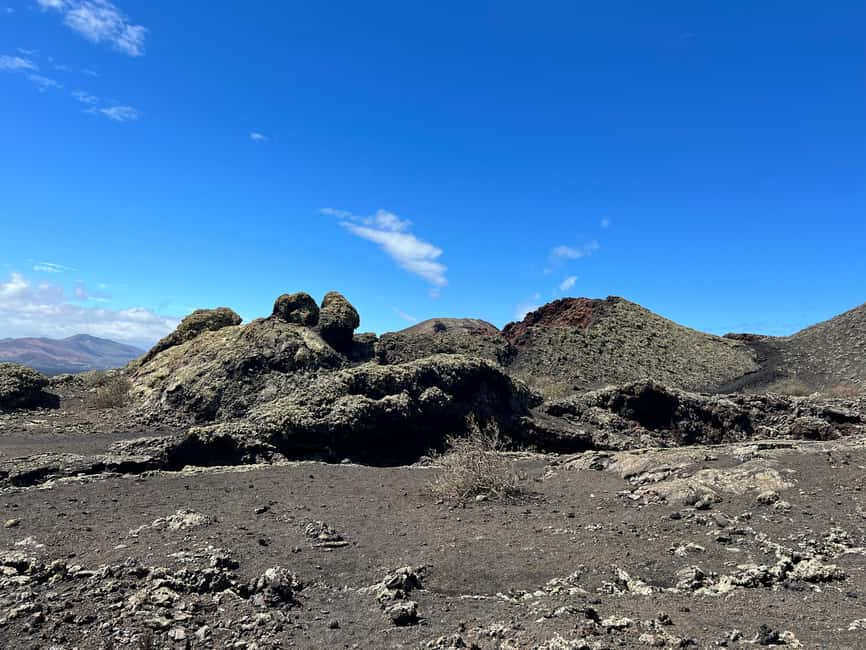
REVIEW · SPAIN
Lanzarote: Guided Hike discover volcano history and culture
Lanzarote’s volcanoes are more than black rock and dramatic craters. With guide Andy, also called Andreas, you learn how eruptions shaped the island, how plants survive in volcanic soil, and how local stories and traditions grew around this stark terrain. The walk is often described as easy, with a good rhythm of walking and stops.
I like the small group of eight, which gives the guide room to adjust the pace and answer questions. I also like the mix of geology and culture, from native plants and volcanic formations to Lanzarote’s first inhabitants and César Manrique. The main drawback is practical: transport is not included, and the roadside meeting point is described only as a parking area with a few palm trees.
Key points at a glance
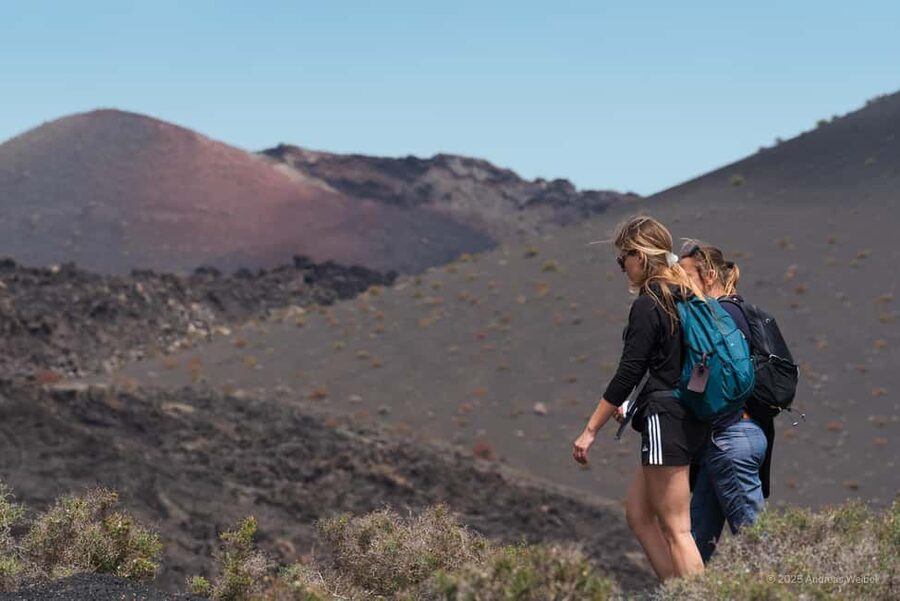
- Andy or Andreas leads the walk: He guides in Spanish, English, French, or German and is praised for clear, warm explanations.
- A 210-minute volcanic walk: You get enough time for steady walking, photo stops, and talks without rushing from one sight to the next.
- Small groups limit the head count to eight: That matters when you want to hear the guide or need a slower pace.
- Geology meets island culture: The route covers volcano formation, plants, legends, traditions, early inhabitants, and César Manrique.
- Bring 1.5 liters of water: Hat, sunscreen, comfortable clothing, and sturdy walking shoes are basic requirements.
- The price is $56 per person: That is fair for a nearly three-and-a-half-hour guided experience, provided you value interpretation rather than transport or entrance tickets.
Walking into Lanzarote’s volcanic story
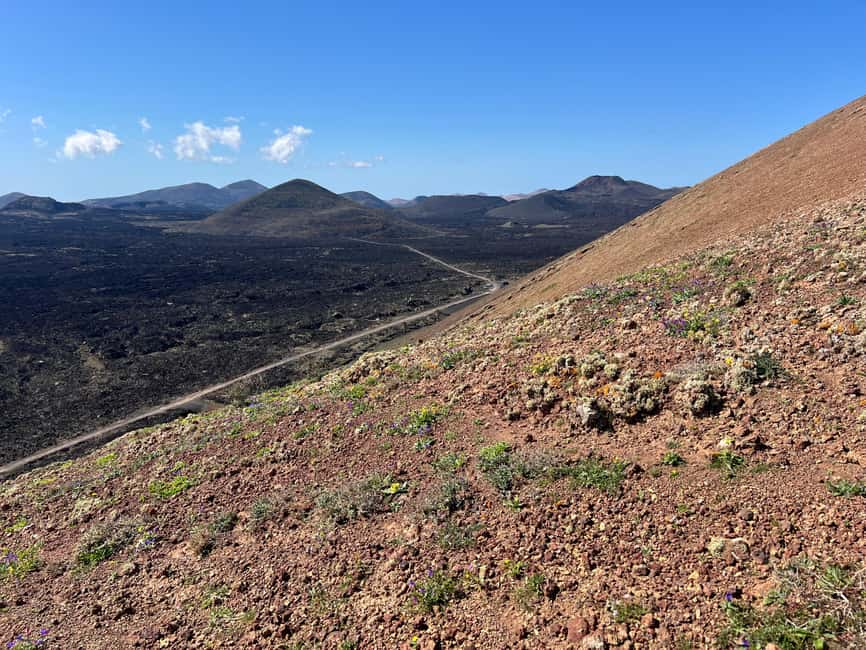
The first thing to understand about this hike is that the scenery is only half the experience. Lanzarote’s volcanic ground can look stark and silent, but the guide gives it a timeline: eruptions, cooling lava, changing relief, plant colonization, human settlement, and modern efforts to protect the island.
I like this approach because volcanic scenery can blur together when you explore it alone. A crater is impressive, but it becomes more interesting when you understand how it formed and why nearby plants can survive where the soil looks almost bare.
The walk also reaches beyond natural science. You hear about the island’s first inhabitants, local legends, living traditions, and César Manrique, the artist whose ideas helped shape Lanzarote’s modern identity. That combination gives the outing more depth than a simple photo walk among lava fields.
The exact volcanic site is not specified in the activity details, so you should not book this expecting a particular named crater or national park. Think of it as a guided look at Lanzarote’s volcanic world, with the final route and starting area confirmed through the meeting instructions.
More Guided Day Hikes in Spain
- From Valencia: Montanejos Guided Hike with Natural Pools
★ 4.5 · 1,741 reviews - Caminito del Rey: Guided Hiking Tour with Entrance Tickets
★ 4.5 · 711 reviews - La Palma: Tajogaite Volcano Guided Hike
★ 4.8 · 275 reviews
A gentle pace with room to stop
The hike lasts 210 minutes, or three and a half hours. That is long enough for the guide to explain the setting properly, yet short enough to fit into a day of sightseeing.
The walking itself has been described as easy by several people who took part. The rhythm appears to alternate between walking and stopping for explanations, photographs, and closer looks at the surroundings. That is useful in volcanic terrain, where the best experience often comes from pausing to examine a surface, plant, or rock formation rather than simply covering ground.
The guide can adapt the pace. One account specifically notes that Andy adjusted to a child who was walking more slowly at the start. That does not make the hike suitable for everyone, but it suggests a considerate style rather than a fixed, fast march.
You still need a reasonable level of fitness. The activity is not suitable for people with mobility impairments, heart problems, respiratory issues, back problems, visual impairments, or a low level of fitness. Wheelchair users cannot take part, and the activity does not allow climbing. If you are unsure, ask about the route before booking rather than relying only on the word easy.
What the volcano explanations add
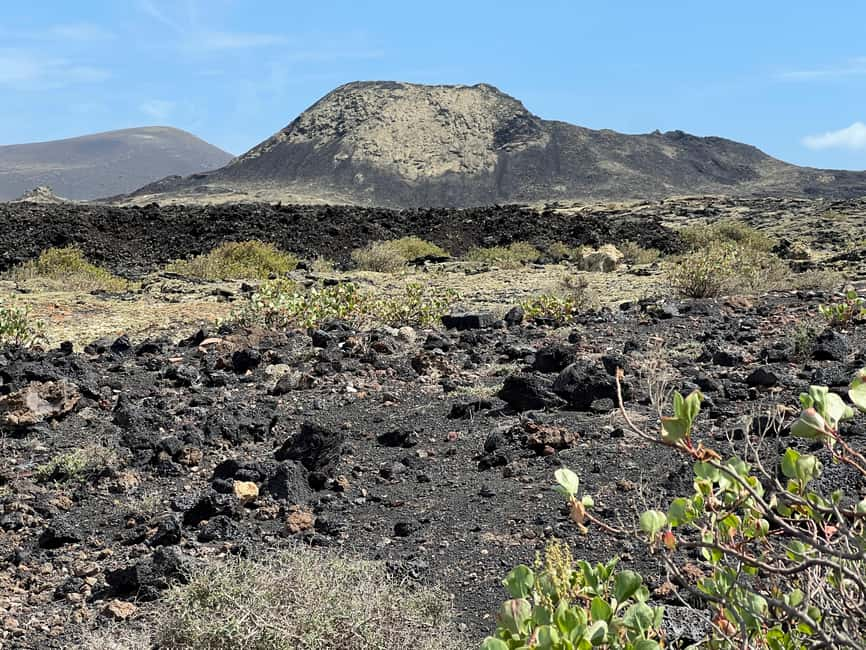
A good guide turns geology into something you can picture. Here, the focus is on how volcanoes form, how eruptions create different features, and how natural forces shape the island over time.
You can expect explanations of craters, lava flows, volcanic soils, and the way Lanzarote’s relief developed. The activity does not promise laboratory-style detail, and that is probably a good fit for most holidaymakers. The explanations are intended to make the scenery easier to read, not to turn your morning into a university field course.
I particularly like the planned balance between information and movement. Several people found Andy’s explanations detailed but not excessive, and one person described the amount of information as just right. That is important on a warm island walk. You want enough context to remember what you saw, but not a nonstop lecture that leaves you watching the clock.
The volcanic ground can also make the walk feel unusual even when the pace is relaxed. Dark rock, broken lava, open craters, and changing textures give the route its character. Wear shoes made for walking rather than casual sandals. High heels, bare feet, and unsuitable footwear are specifically ruled out.
Plants that survive in volcanic soil
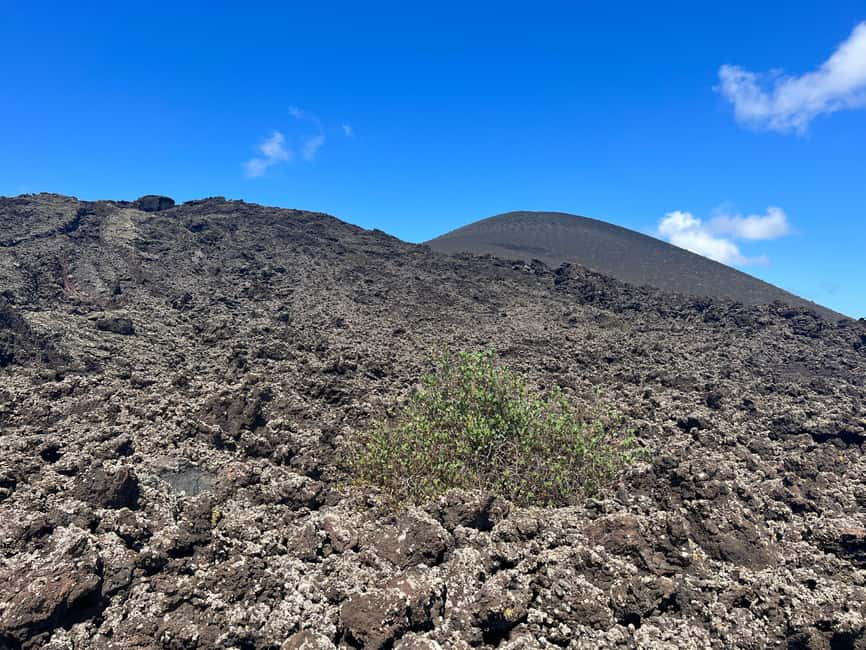
Lanzarote’s plant life can be easy to miss if you expect thick greenery. The guide points out plants adapted to the island’s volcanic soil and explains their role in the local ecosystem.
You learn about iconic species, how they cope with dry conditions, and traditional uses connected to island life. This is one of the best reasons to choose a guided walk instead of simply visiting a scenic viewpoint. Small plants that look insignificant at first can become memorable once you know how they survive and why people valued them.
The activity also includes discussion of fauna, although the information does not promise specific animal sightings. Keep your expectations focused on interpretation rather than wildlife encounters. The guide can help you understand the natural setting whether or not you see animals along the route.
August can be hot, and Lanzarote offers limited shade in many open volcanic areas. The practical response is simple: wear a hat, apply sunscreen, and carry at least 1.5 liters of water. Comfortable clothing suitable for hiking is required. Do not count on finding refreshments during the walk.
More Volcano Hikes in Spain
- La Palma: Tajogaite Volcano Guided Trek
★ 4.8 · 1,810 reviews - The Volcano Heart Tour: Hiking, Tasting and Sunset Experience
★ 5.0 · 1,120 reviews - Lanzarote: Guided Volcano Hike with Transfers
★ 4.9 · 861 reviews - Volcano Trekking Tour (Timanfaya eruptions)
★ 5.0 · 339 reviews
From early inhabitants to César Manrique
The cultural part of the hike keeps the volcanoes from feeling like an isolated natural exhibit. Along the way, the guide discusses the island’s first inhabitants, legends, traditions, and heritage.
This matters because Lanzarote’s volcanic ground has always been part of daily life, not just scenery for photographs. The terrain affected settlement, farming, movement, and local customs. A guide who connects geology with people helps you see the island as a place shaped by both eruption and human adaptation.
César Manrique is another useful thread. The artist’s name appears throughout Lanzarote’s cultural story, and learning about his role adds context to the island’s visual character and approach to development. The tour does not replace a dedicated visit to Manrique-related sites, but it gives you a starting point for understanding why his work matters here.
I would choose this walk if you want more than a list of geological facts. The strongest part is the connection between land, people, plants, and memory. It feels especially useful early in a Lanzarote holiday, since later visits to other volcanic or cultural sites will make more sense.
Andy’s guiding style
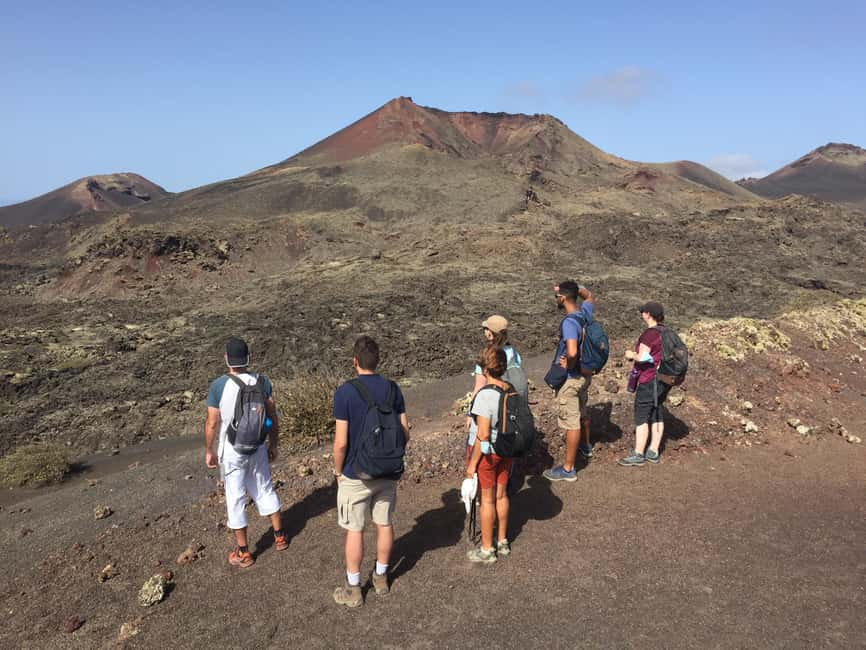
Andy is the guide most often identified in the supplied information, and some references use Andreas. He leads in Spanish, English, French, and German, so check your preferred language when you book.
His strengths are clear. He explains the volcanic setting in an engaging way, keeps the walk moving, and pays attention to individuals in the group. One person described him as especially friendly and attentive to everyone in a group of eight. Another appreciated that he adapted the pace for a younger member of the party.
You should expect a personal guiding style rather than a large-group script. The head count is limited to eight, which makes it easier to ask about plants, geology, history, or local traditions as they come up. It also gives the guide a better chance to notice if someone is struggling in the heat.
A small extra touch was mentioned by one person: a video was provided as a keepsake. Do not treat that as a guaranteed feature unless the provider confirms it, but it suggests that Andy sometimes adds a personal memory to the outing.
The meeting point and transport details
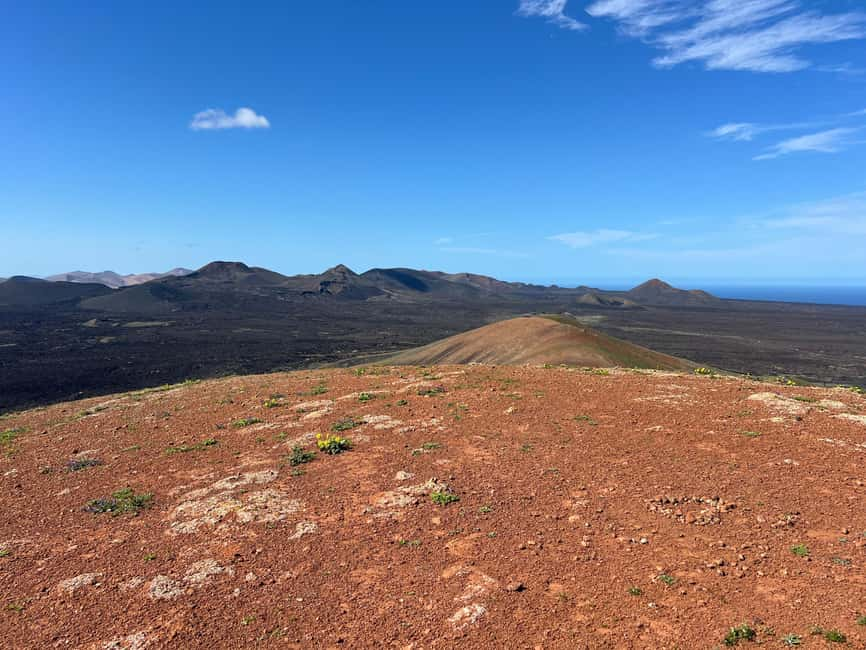
You arrange your own way to the start. Transportation is not included, and the meeting point is described as a parking area beside the road with a few palm trees.
That wording is not especially precise. I would confirm the exact map location, arrival instructions, and parking arrangements before the day of the walk. Do not assume a hotel pickup, transfer, or a clearly marked visitor center.
This is the main logistical weakness of the experience. The guided portion is well defined, but the start point may require more planning than a tour that collects you from your accommodation. Build in extra time, especially if you are unfamiliar with the local roads.
The lack of transport can also be a benefit if you already have a rental car or are staying nearby. You pay for the guide and the interpretation, not for a coach transfer that you may not need.
Is $56 a fair price?
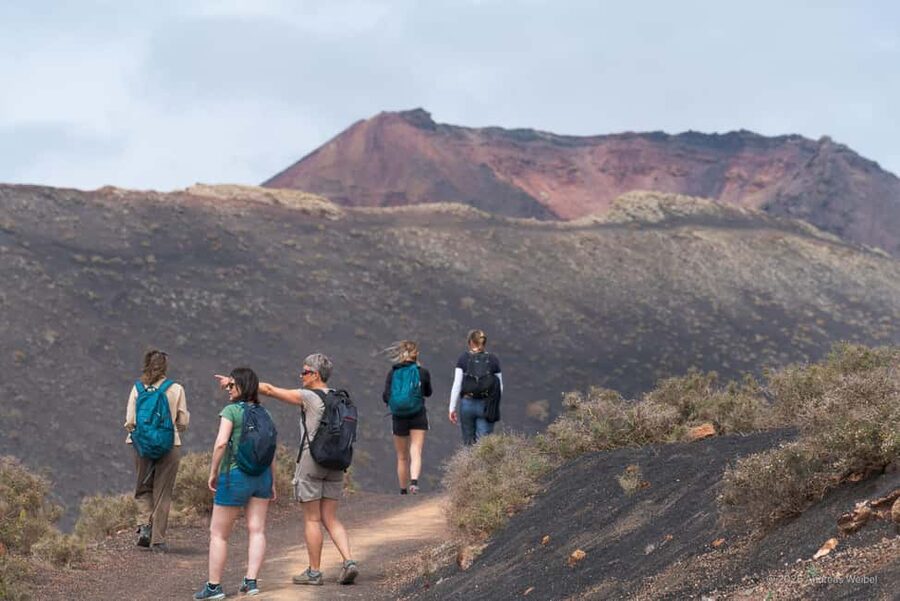
At $56 per person, the value depends on what you want from a volcano walk. You are paying for 210 minutes with a local guide, a small group capped at eight, and explanations covering geology, flora, fauna, history, traditions, legends, and César Manrique.
That is a reasonable price if you would otherwise walk through the area without understanding what you are seeing. The guide adds context that signs and viewpoints often cannot provide. The small group also gives this outing a more personal feel than a large coach excursion.
The price does not include transportation, so add the cost and effort of reaching the start. There is no indication that food, drinks, equipment, or entrance fees are included. Bring your own water and sun protection, and clarify any question about site fees before booking.
I would call it good value for curious visitors who want interpretation and conversation. It is less attractive if you only want a short, self-guided stroll or if transport is essential to your plans.
Who should book this walk?
This experience fits you well if you:
- Want to understand how Lanzarote’s volcanoes formed
- Prefer a calm hike with regular stops
- Enjoy combining nature with local history and culture
- Like asking questions in a small group
- Can walk on volcanic ground and manage three and a half hours outdoors
- Speak Spanish, English, French, or German
- Have your own transport to the starting point
Families may appreciate the flexible pace, but the activity is not designed for every child or every adult. The route still requires walking ability, and the heat and uneven volcanic surfaces can be tiring.
You should choose another activity if you need wheelchair access, cannot manage outdoor walking, have serious heart or respiratory concerns, or need a fully organized pickup. This is a walking experience first, not a sightseeing transfer.
Practical preparation for the morning
Wear comfortable hiking shoes and light clothing suitable for sun and wind. Pack 1.5 liters of water, a hat, and sunscreen. These are not optional extras in an exposed volcanic setting.
Leave high heels, strollers, handcarts, coolers, drones, fireworks, and climbing equipment at home. Baby carriages, electric wheelchairs, and crutches are also not permitted. The restrictions point to a route that is not designed for wheels or bulky gear.
A small backpack is the sensible choice. Keep your hands free for balance and photography, and avoid bringing anything you do not want to carry for three and a half hours.
The activity offers free cancellation up to 24 hours before the start, and you can reserve now and pay later. That flexibility is useful if your plans depend on weather or transport, but you should still check the exact start time and meeting instructions when booking.
Should you book the Lanzarote volcano hike?
Book it if you want the volcanic scenery explained by a personable local guide rather than viewed in silence. The strongest reasons are Andy’s clear, considerate style, the small group, the easy-going pace, and the unusual blend of geology, native plants, legends, island traditions, and César Manrique.
Skip it if you need hotel transport, accessible surfaces, or a very short walk. Also think twice if you have a low fitness level or health condition listed in the restrictions.
For most reasonably fit walkers who can reach the roadside meeting point, $56 buys a useful introduction to Lanzarote’s natural and cultural character. Bring water, protect yourself from the sun, confirm the location, and you will be set up for a thoughtful half-day outdoors.
FAQ
How long does the Lanzarote guided hike last?
The hike lasts 210 minutes, or three and a half hours.
How much does the experience cost?
The price is $56 per person.
What languages does the guide speak?
The tour is available in Spanish, English, French, and German.
Who guides the hike?
The guide is identified as Andy, and some information also refers to him as Andreas.
How large is the group?
The activity is limited to eight participants.
Is transportation to the meeting point included?
No. You must arrange your own transportation to the starting point.
What is the meeting point like?
It is a roadside parking area with a few palm trees. Confirm the exact location and arrival details before setting out.
What should I bring?
Bring comfortable walking shoes, suitable hiking clothes, at least 1.5 liters of water, a hat, and sunscreen.
Is the hike suitable for people with limited mobility or health concerns?
No. It is not suitable for wheelchair users or people with mobility impairments, heart problems, respiratory issues, back problems, visual impairments, or a low level of fitness.
More History Tours around Spain
- Historical Montserrat Half-Day Hiking Tour from Barcelona
★ 5.0 · 26 reviews - Hiking the Historic Nakasendo Trail [1 Day Tour from Nagoya]
★ 5.0 · 104 reviews - Hathipaown Heritage Walk – A guided walk to Mini Everest
★ 5.0 · 58 reviews - Glendalough Night Hike and History Tour
★ 5.0 · 55 reviews
Just added around Spain
- Ajuy and Las Peñitas : Hike to Legends and Wild West Coast★ 4.5 · 12 reviews
- Hike Gaztelugatxe, Fishing Port Bermeo & Pintxo Lunch from Bilbao★ 5.0 · 46 reviews
- Montserrat Nature Walk, Monastery and Museum from Barcelona★ 5.0 · 58 reviews
- Montserrat Land of Shrines – One Day Small Group Hiking Tour from Barcelona★ 5.0 · 38 reviews
- Historical Montserrat Half-Day Hiking Tour from Barcelona★ 5.0 · 26 reviews
- Pyrenees Hiking from Barcelona★ 5.0 · 20 reviews
- Hike to Secret Waterfalls of the Pyrenees Mountains, From Barcelona & Girona★ 5.0 · 14 reviews
- Hiking with the best views of Barcelona★ 5.0 · 16 reviews
Volcano Hikes, side by side.
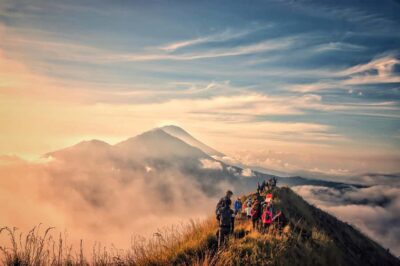
Sunrise Mount Batur Guided Hike with Breakfast
Read our review →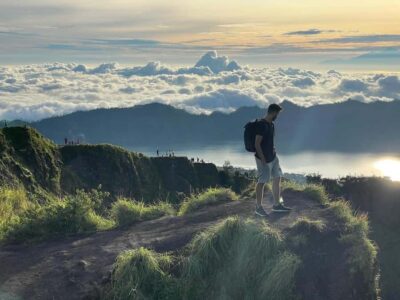
Mount Batur Sunrise Guided Hike and Natural Hot Spring
Read our review →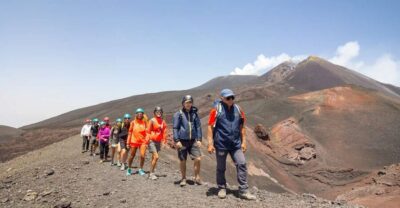
Mount Etna: Summit Guided Hiking Tour up to 3,400 m
Read our review →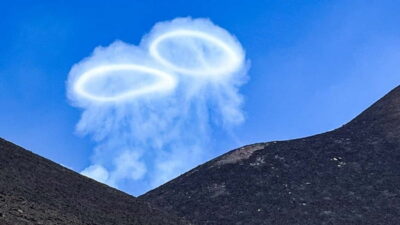
Mount Etna: Trek to 3000m with cable car and 4×4
Read our review →
Mount Batur Sunrise Trek With Guide and Breakfast
Read our review →
Mount Batur Sunrise Hike and Natural Hot Spring Option
Read our review →
Mount Etna: Summit Crater Trek with Cable Car
Read our review →