
REVIEW · ITALY
Mount Etna: Central Crater Guided Hike for Advanced Hikers
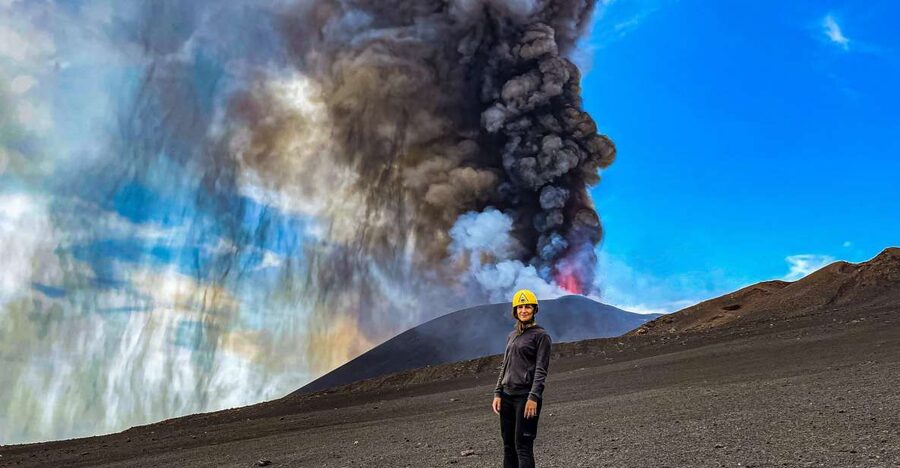
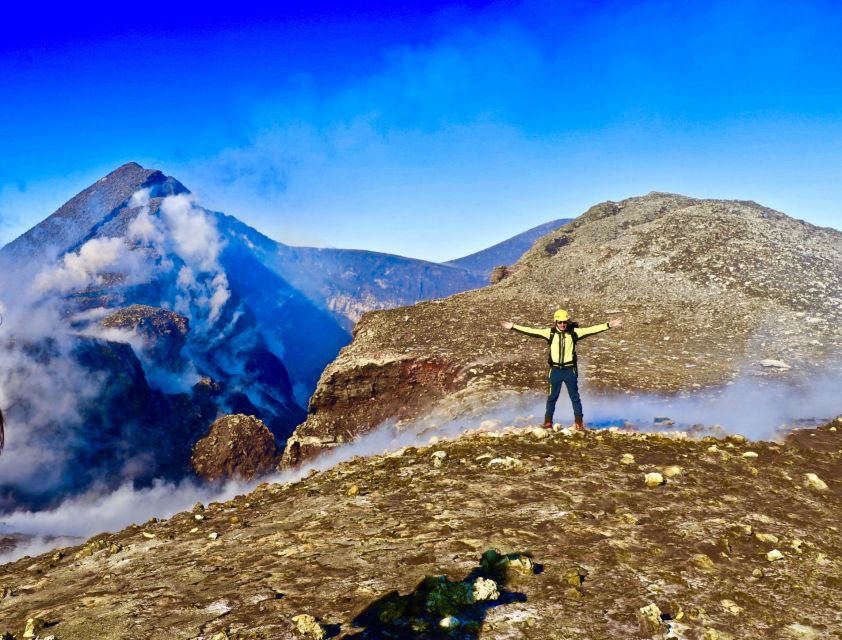
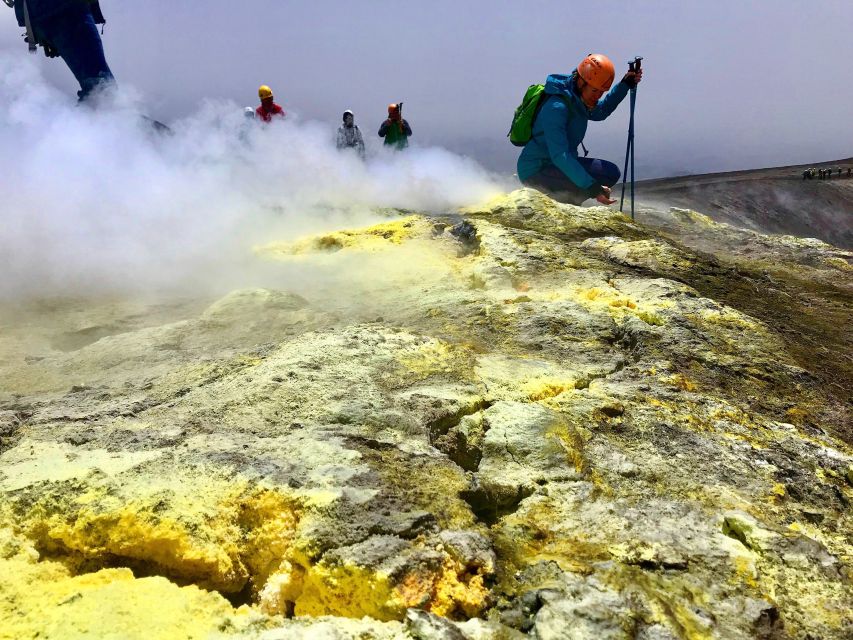
Mount Etna’s summit is not a gentle scenic walk. This is a serious high-altitude trek to the 3,315-meter Central Crater, across loose volcanic slag, ash, and old lava terrain. At the top, you may see gas vents, fumaroles, bright mineral deposits, and several active summit craters.
I like the small group size, limited to 10 people, and the chance to walk Etna’s quieter north side rather than simply stopping at a roadside viewpoint. I also like the scientific side of the trip. Guides such as Edo, Vincenzo, and Daniele have been praised for explaining how quickly Etna can change and for keeping the group together.
The main catch is the long downhill section. You climb about 490 meters, but descend roughly 1,500 meters, and that can be much harder on your knees than the ascent. This is for fit, experienced hikers, not for a casual volcano outing.
Key points to know before you book
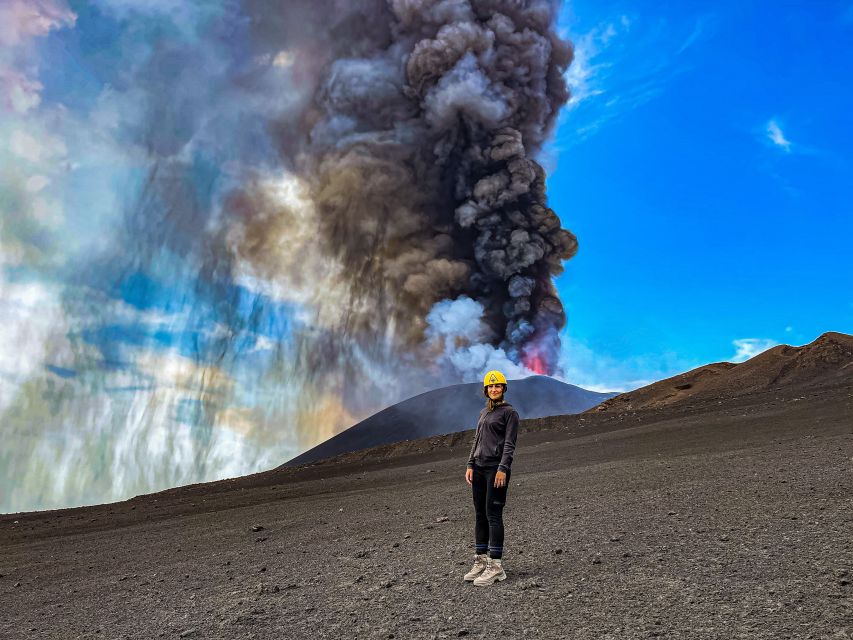
- You reach Etna’s true high summit area: The route reaches the Central Crater at about 3,315 meters, subject to volcanic and weather restrictions.
- The north side feels wilder: You travel from Linguaglossa through Piano Provenzana and walk across a striking field of black slag and volcanic bombs.
- The downhill is the real test: The route covers about 12 kilometers, with approximately 5 kilometers uphill and 7 kilometers downhill.
- A 4×4 gets you to 2,825 meters: You save much of the lower climb, but the off-road transfer costs extra and is paid locally.
- The guide adds real value: Expect explanations about crater formation, fumaroles, volcanic gases, and Etna’s constant changes.
- Weather can change the plan: Strong wind, poor visibility, gas emissions, or volcanic activity may alter or cancel the route.
Starting at Mareneve, not Etna Nord
Your day begins at Chiosco Bar Mareneve di Ferraro Giuseppa, near the chairlift used by skiers in winter. This detail matters because there is another bar called Chiosco Bar Etna Nord. Go to Mareneve, the second house among the four buildings in the parking area.
Parking costs €3 for the day, paid before or after the hike. Hotel pickup is not included, so you need to arrange your own way to the meeting point. The start is at about 1,800 meters, already high enough for cool air and quick weather changes.
The guide checks the group and equipment before the uphill section. Trekking poles, helmets, backpacks, warm jackets, and trekking shoes with extra socks are included. Still, I would bring your own sturdy hiking shoes if you have them, plus waterproof footwear or rain protection. You should not count on the included gear as a substitute for proper preparation.
The group must reach a minimum of eight participants. If that number is not met, the excursion may be cancelled. The maximum group size is 10, which keeps the guide close enough to adjust the pace and watch for fatigue.
More Guided Day Hikes in Italy
- Mount Etna: Summit Guided Hiking Tour up to 3,400 m
★ 4.8 · 4,792 reviews - From Sorrento: Path of the Gods Guided Hike with Transfers
★ 4.8 · 530 reviews - Guided Day Hike on the Path of the Gods with Sorrento Transfer
★ 5.0 · 265 reviews
The 30-minute ride to Etna’s upper north side
From the meeting point, you take a special 4×4 vehicle along an eight-kilometer panoramic road. The road climbs to about 2,825 meters and takes roughly 30 minutes.
This transfer is not just a convenience. It puts you quickly into the high volcanic zone, where the scenery changes from developed ski-area terrain to broad black slopes and broken lava ground. You also avoid walking the entire elevation gain from 1,800 meters, which makes the summit attempt possible within a half-day schedule.
The ride is an extra cost. The supplied price information lists €50 per person for the one-way off-road transport to the hiking start. A further descent from around 2,800 meters to 1,800 meters is listed at €20 per person, paid locally. One account of the outing describes the return transport as costing €50 as well, so ask the guide to confirm the exact price and direction before you set off.
This is an important value point. The advertised activity price is $130.28 per person, but the actual day costs more once you add transport, parking, and lunch. You are paying mainly for the guide service and the organized high-altitude route.
Five kilometers across black volcanic ground
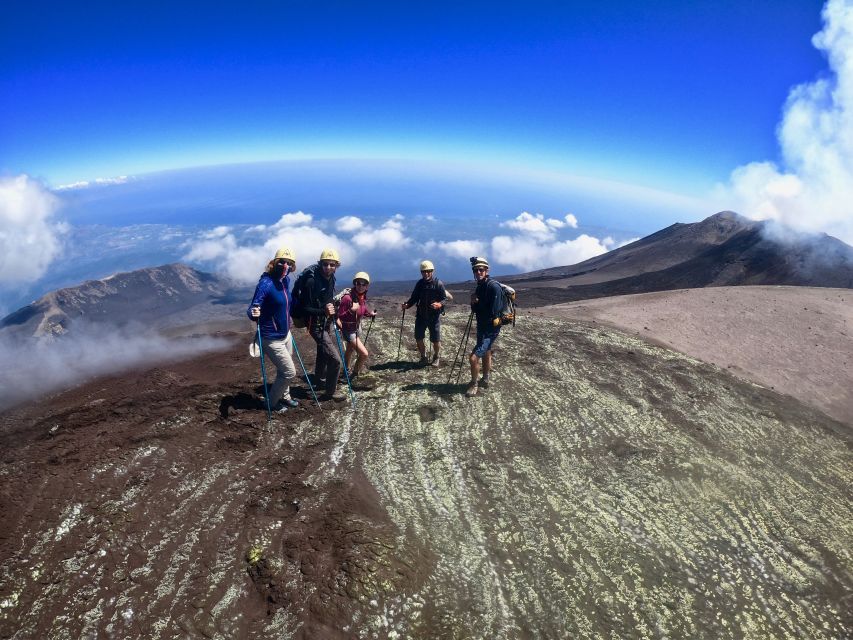
The hike begins at about 2,825 meters. From here, the route climbs around five kilometers toward the Central Crater.
The surface is rough and changeable. You walk over volcanic slag, ash, and large volcanic bombs. Loose ground makes every step less efficient than it would be on a normal mountain path. Trekking poles are useful here, especially on the descent, and the supplied helmets add sensible protection around rocky volcanic terrain.
The altitude is the other challenge. Even people with decent everyday fitness may breathe hard. One participant with average to low fitness found the route demanding but manageable, while stronger hikers described the uphill portion as fairly straightforward. That is a useful distinction: you do not need to be a competitive mountaineer, but you do need steady walking stamina and comfort on steep, loose ground.
The group usually moves at a controlled pace. Vincenzo has been singled out for keeping everyone together and adjusting his speed so that an older participant could stay with the group. That kind of attention matters more here than a fast summit time.
Do not treat the 5-kilometer climb as the whole effort. The route continues after the summit, and the return involves a much larger loss of elevation.
Reaching the Central Crater at 3,315 meters
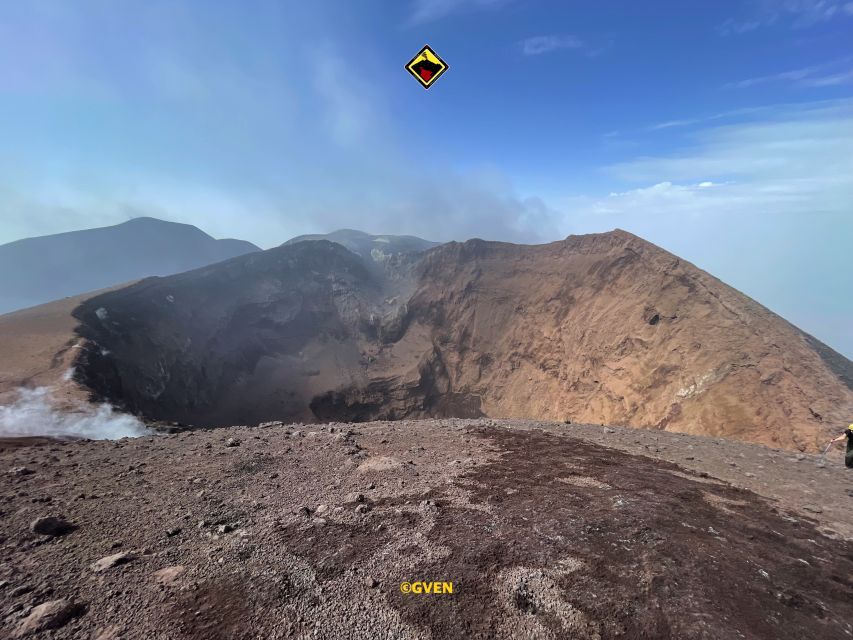
The high point is the edge of Etna’s Central Crater, around 3,315 meters above sea level. You are not simply looking at a distant cone. You are standing beside the main summit crater, subject to the limits set by current volcanic safety rules.
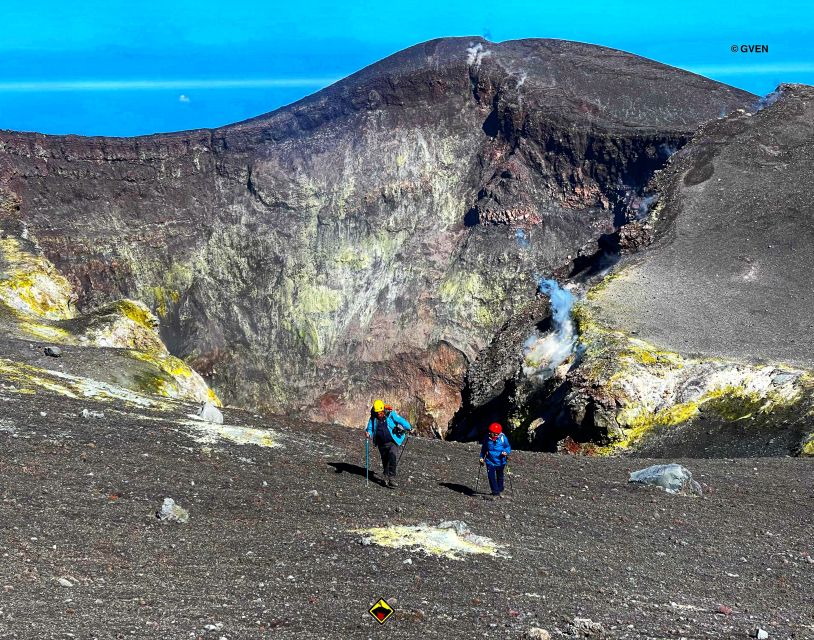
This is where the guide’s role becomes especially important. You learn about the formation of Etna’s craters, the speed at which new volcanic features can appear, and the difference between low-temperature and high-temperature fumaroles. Gas emissions can be visible around the summit, and mineral deposits may show bright colors against the otherwise dark ash and rock.
Etna remains active, so the mountain is not a fixed museum piece. The guide watches conditions and may move the group away from an area if emissions or activity increase. One outing included stronger explosions near the summit, and the guide moved the group down quickly but safely. That possibility is part of the nature of the mountain, not a flaw in the tour.
You may also get a wide view across Sicily if clouds, wind, and volcanic gas allow it. The summit is often cold and very windy, even when lower elevations feel warm and sunny. Pack a windbreaker, gloves, hat, sunglasses, and layers. Long trousers are a better choice than shorts or thin clothing.
The crater edge can cause vertigo. If you are afraid of heights, have balance problems, or dislike exposed volcanic slopes, this is not the right outing.
More Mountain and Summit Hikes in Italy
- Mount Etna: Trek to 3000m with cable car and 4×4
★ 4.6 · 3,823 reviews - Mount Etna: Summit Crater Trek with Cable Car
★ 4.8 · 1,875 reviews - Catania: Mount Etna Trekking Tour Beyond the Tourist Trails
★ 4.9 · 1,596 reviews - Mount Etna: Guided Trek 3,000 Meters to the Summit
★ 4.8 · 1,407 reviews
Piano delle Concazze and the summit pause
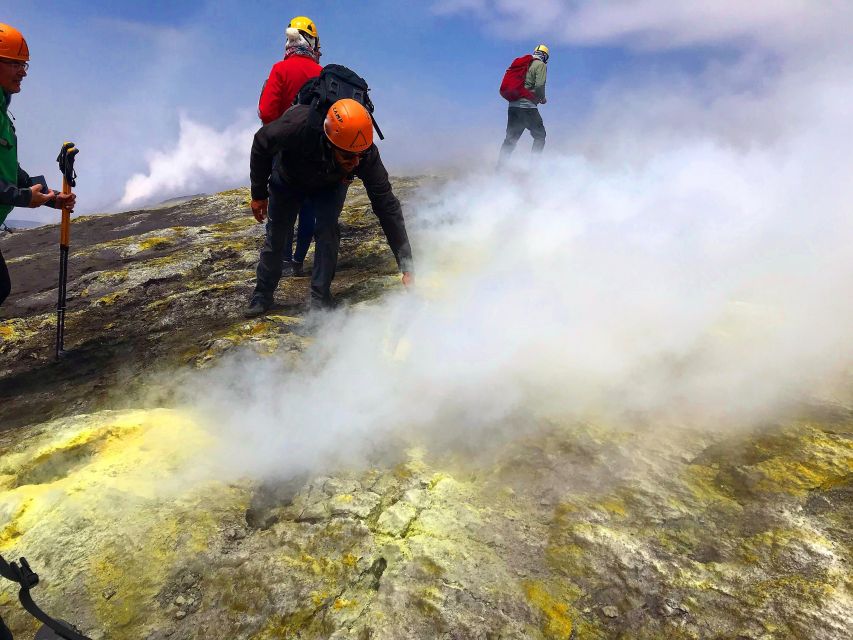
After time at the summit, the route continues toward Piano delle Concazze. This section offers a chance to slow down, take photographs, and hear more about the volcanic features around the northeast side.
The stop is listed at about two hours, although exact timing depends on the pace of the group, weather, volcanic conditions, and how much time is safe near the summit area. The guide may point out gas activity, old lava flows, crater shapes, and the ways erosion has cut through the volcanic material.
The views here are valuable because they show Etna as a working volcano rather than a single mountain peak. You see layers of ash and lava, broad channels, and changing textures underfoot. The setting can look almost lunar, but the guide helps connect the stark scenery to real geological processes.
Bring your own food and water. Lunch is not included, and there is no promise of a meal stop with a shop or café along the route. A packed lunch, snacks, and plenty of water are essential, particularly because cold air can make you underestimate how much you are drinking.
The long descent through ash and sand
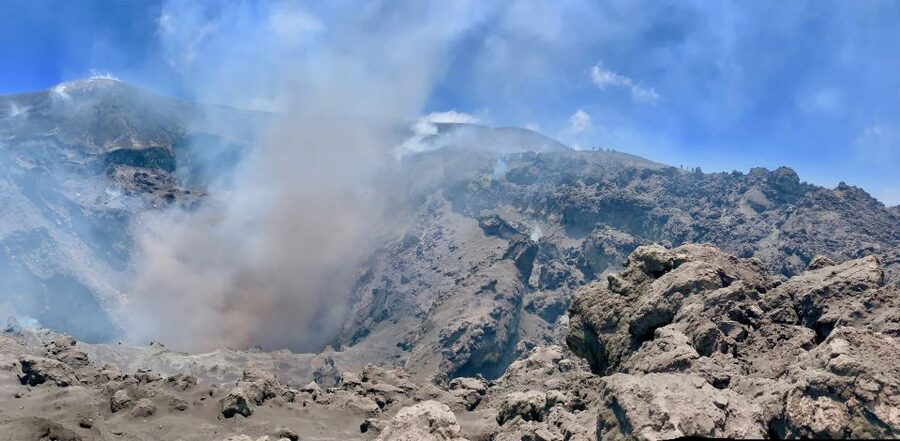
The route then drops toward the base of the Volcanological Observatory and later continues through one of the large sandy channels on Etna’s northeast side. This is the section that deserves the strongest warning.
The overall downhill difference can reach about 1,500 meters, from roughly 3,300 meters back to 1,800 meters. Loose ash and sand can make parts of the descent feel playful, with short sliding steps down the slope, but the same surface can strain your knees and ankles. Poles help with control, and shoes with a firm grip are important.
The descent may feel harder than the climb because it lasts longer and places repeated stress on your joints. Anyone with knee, back, joint, heart, respiratory, blood-pressure, or other medical problems should not book this without clear medical advice. The activity is also not suitable for people with low fitness, limited mobility, epilepsy, vertigo, fear of heights, or no hiking experience.
The sandy channels bring a change in scenery. Seasonal streams and endemic plants appear lower down, offering a welcome contrast to the bare summit. You are still walking through volcanic terrain, but the route begins to feel more like a mountain descent than a summit crossing.
Ski-lift area and return to Piano Provenzana
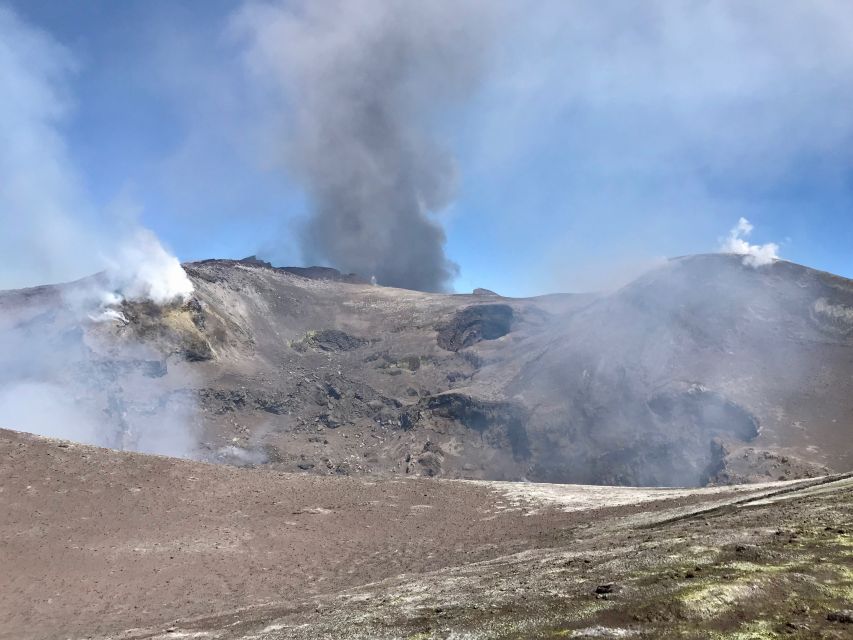
The path eventually reaches the Anfiteatro ski-lift arrival area. This stop is a useful marker because the setting shifts from remote upper slopes toward the established ski area around Piano Provenzana.
The final stretch continues to Piano Provenzana, the endpoint of the walking route. You may stop for photographs and a last look back at the upper volcano before returning to the original meeting point.
The supplied route description says the full activity ends back at Chiosco Bar Mareneve. Because the walking route finishes at Piano Provenzana, confirm with the guide how the final connection is handled on your date. The information also describes an optional off-road vehicle descent for those who prefer not to walk all the way down. Tell the guide early if you want that option.
The complete trekking portion is described as five to six hours, with about 12 kilometers total. The route figures can vary with volcanic restrictions, weather, group pace, and the exact path used.
What is included, and what you still need
The guide service is the heart of the outing. You receive a licensed volcanological guide, guided hiking, trekking poles, a protective helmet, warm jackets, a backpack, and trekking shoes with extra socks.
You still need to bring:
- Windproof and weather-appropriate layers
- Gloves, a hat, and sunglasses
- Water and snacks
- A packed lunch
- Long trousers
- Rain gear
- Suitable hiking or waterproof shoes
Do not bring a large suitcase or oversized bag. Sandals, flip-flops, slippers, high heels, short skirts, sleeveless shirts, and umbrellas are not allowed. These rules are practical on loose volcanic ground and in strong wind.
The route is offered in English, Italian, and French. A small group can make explanations easier to follow and lets the guide respond to different walking speeds. The strongest guides, including Edo, Vincenzo, and Daniele, have been praised for explaining Etna with real enthusiasm while keeping the group safe and together.
Is $130.28 a fair price?
The base price is reasonable for a five-hour guided summit trek with specialist equipment and a volcanological guide. The small group cap is another advantage, especially on a route where safety checks and pacing matter.
But the headline price does not cover everything. You need to add the 4×4 transfer, parking, lunch, and water. The published transport details list €50 for the uphill vehicle and €20 for the optional downhill transfer, though the return charge should be confirmed locally because another price description gives a higher figure.
That makes this a better value for someone who specifically wants the summit and crater experience. If you only want a short volcano walk and a view, you can find simpler Etna outings with less physical strain and fewer extra charges. Here, the value comes from the high route, the guide’s explanations, the small group, and access to terrain most casual visitors do not reach on foot.
The free cancellation policy allows a full refund up to 24 hours before departure. You can also reserve now and pay later, which helps if your Sicily plans depend on weather. Since Etna conditions can change quickly, that flexibility is useful.
Who should book this Etna hike?
You should book this if you regularly hike in the mountains, can manage a 12-kilometer route, and are comfortable with loose surfaces, cold wind, high altitude, and a long descent. You should also be willing to carry food and water and accept that the final route may change for safety reasons.
You should skip it if your main goal is an easy sightseeing stop. The activity is not suitable for pregnant women or people with mobility limitations, significant medical conditions, respiratory problems, back or joint issues, high or low blood pressure, or little hiking experience.
The summit views can be exceptional, and the black volcanic terrain is unlike a normal mountain trail. But the price of that access is physical effort, uncertain weather, and a route that requires respect for an active volcano.
Should you book it?
Book this Mount Etna hike if reaching the summit crater matters more to you than comfort. You get a serious north-side route, a small group, proper equipment, and a guide who can explain what you are seeing rather than simply lead you uphill.
Do not book it just because the five-hour duration sounds short. The high altitude and long descent make this a demanding day. If your knees are strong, your fitness is solid, and you prepare for cold, wind, food, and extra transport costs, this is one of the more substantial ways to experience Etna.
FAQ
Where does the Mount Etna hike start?
It starts at Chiosco Bar Mareneve di Ferraro Giuseppa, near the winter chairlift. It is the second house among four buildings in the parking area. Do not go to Chiosco Bar Etna Nord.
How long is the activity?
The trekking route takes about five to six hours. The total distance is approximately 12 kilometers, with about 5 kilometers uphill and 7 kilometers downhill.
What is the highest point reached?
The route reaches the edge of Etna’s Central Crater at approximately 3,315 meters, subject to weather, volcanic activity, and current safety restrictions.
Is the 4×4 transfer included?
No. The one-way off-road transfer to about 2,825 meters is paid separately on site. The supplied details list €50 per person for the uphill transport and €20 per person for the optional downhill transfer. Confirm the return cost with the guide.
Is lunch included?
No. You must bring your own packed lunch, snacks, and water.
What languages are available?
The live guide service is available in English, Italian, and French.
Is the hike suitable for beginners?
No. It is intended for trained or experienced hikers who are comfortable walking in the mountains. The high altitude, loose volcanic ground, and long descent can cause significant fatigue.
Can the route change?
Yes. The excursion may change or be cancelled because of weather, environmental conditions, volcanic activity, gas emissions, or the minimum group requirement.
More Volcano Hikes in Italy
- Etna: summit craters trekking with volcano guide 3350mt
★ 4.7 · 1,712 reviews - Etna Sunset Tour: Volcano trek, Cave & tasting from Catania
★ 4.8 · 1,290 reviews - Catania: Mount Etna Adventurous Hiking Tour with Equipment
★ 4.7 · 784 reviews - From Catania: trek on Mount Etna, Lava Cave & tasting Tour
★ 4.8 · 563 reviews
Just added around Italy
- Private Guided Hike to Tre Cime di Lavaredo★ 5.0 · 16 reviews
- Hike the Dolomites One Day Private Excursion from Cortina★ 5.0 · 18 reviews
- BarCa Winery Cinqueterre Trekking & Wine Tasting & Pesto Class★ 5.0 · 48 reviews
- From Catania: Private mt. Etna trekking and pic-nic★ 5.0 · 37 reviews
- Mount Etna Advanced Trekking: Private Full-Day Tour from Catania★ 5.0 · 21 reviews
- Nature Reserve ,Trekking Eco Tour in Iblei National Park★ 5.0 · 27 reviews
- Etna trekking and wine tasting★ 5.0 · 28 reviews
- Ferriere waterfalls hike – Amalfi and Ravello Coast★ 5.0 · 14 reviews
Volcano Hikes, side by side.
Sunrise Mount Batur Guided Hike with Breakfast
Read our review →
Mount Batur Sunrise Guided Hike and Natural Hot Spring
Read our review →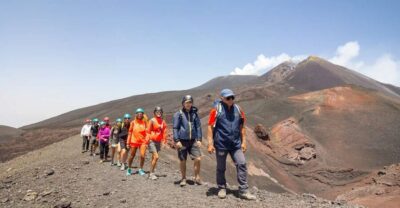
Mount Etna: Summit Guided Hiking Tour up to 3,400 m
Read our review →
Mount Etna: Trek to 3000m with cable car and 4×4
Read our review →
Mount Batur Sunrise Trek With Guide and Breakfast
Read our review →
Mount Batur Sunrise Hike and Natural Hot Spring Option
Read our review →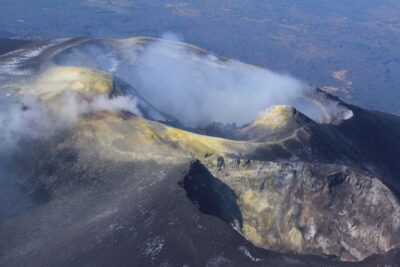
Mount Etna: Summit Crater Trek with Cable Car
Read our review →