
REVIEW · ITALY
Catania: Mount Etna Trekking Tour Beyond the Tourist Trails
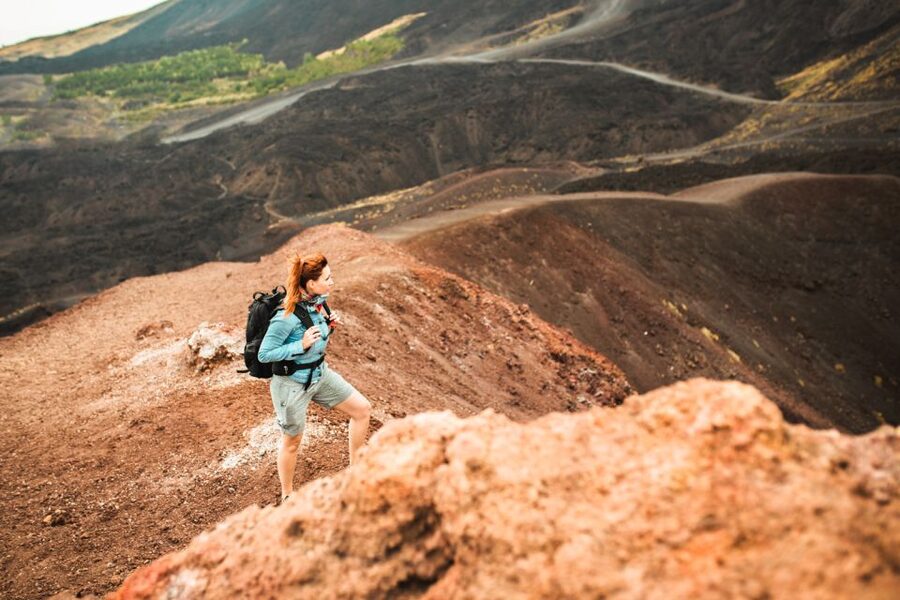
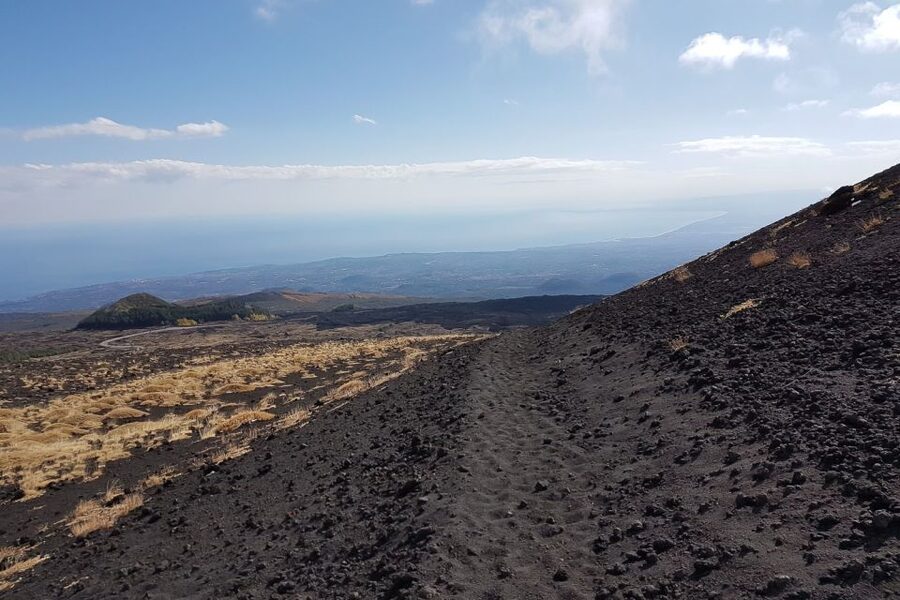
Mount Etna is best understood on foot, away from the cable cars and crowded viewpoints. This seven-hour trip takes you from Catania to quiet volcanic paths, past the Silvestri Craters and a recent lava flow, then up toward Valle del Bove, where black slopes drop toward the Ionian coast.
I like two things here: the small-group format, limited to eight people, and the practical gear supplied by the team. Guides such as Antonio and Renato explain Etna’s geology in plain language, while jackets, gloves, walking poles, and hiking shoes help when the mountain turns cold, windy, or dusty.
The main catch is that this is a real uphill trek, not a sightseeing drive. You climb about 550 meters to roughly 2,400 meters, and weather can change the route. If you have low fitness, breathing or heart problems, mobility limits, or trouble with altitude, choose another Etna outing.
Why this Etna trek is worth your day
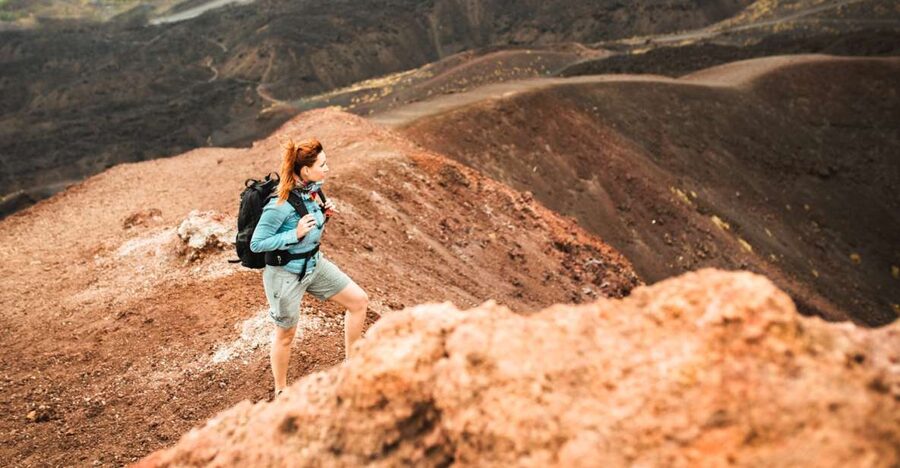
- A quiet route above the tourist paths: You walk beyond the usual crowds near Silvestri Craters and toward the upper slopes.
- A 550-meter climb: The route gives you a proper mountain outing without claiming to reach Etna’s summit.
- Valle del Bove from above: Lunch and photo stops come with broad views of the volcanic amphitheater and Ionian coast.
- A playful ash descent: The soft volcanic sand lets you slide downhill, though it can fill your shoes and clothes.
- Equipment for changing conditions: Extra jackets, rain shells, shoes, gloves, poles, and sometimes a small backpack are available.
- Guides who add local color: Antonio, Renato, Maria, and other guides bring geology, Sicilian life, restaurant tips, and plenty of patience.
From Catania to the slopes of Etna
Your day begins in central Catania at the McDonald’s meeting point. The location is simple to find, and the first van ride takes about 30 minutes. This is not a long transfer, but it gives the guide time to point out parts of the area and explain what lies ahead.
The first stop is Trecastagni, a small town on Etna’s lower slopes. You have about 20 minutes here for coffee, breakfast, water, and a sandwich for lunch. Food and drinks are not included in the $81 price, but the stop is useful and feels more local than buying everything at a large visitor center.
I would buy your sandwich here rather than wait. You will eat later at around 2,400 meters, with no mountain restaurant waiting at the lunch stop. A sandwich, water, and a small snack are sensible choices. Bring a hat and sunscreen too, since volcanic ground reflects light and offers little shade.
The guides use this stop for a safety briefing and equipment check. If your shoes are too light, your jacket too thin, or your clothing is not suited to the conditions, this is when the team can help.
More Mountain and Summit Hikes in Italy
- Mount Etna: Summit Guided Hiking Tour up to 3,400 m
★ 4.8 · 4,792 reviews - Mount Etna: Trek to 3000m with cable car and 4×4
★ 4.6 · 3,823 reviews - Mount Etna: Summit Crater Trek with Cable Car
★ 4.8 · 1,875 reviews
Silvestri Craters and the 2001 lava flow
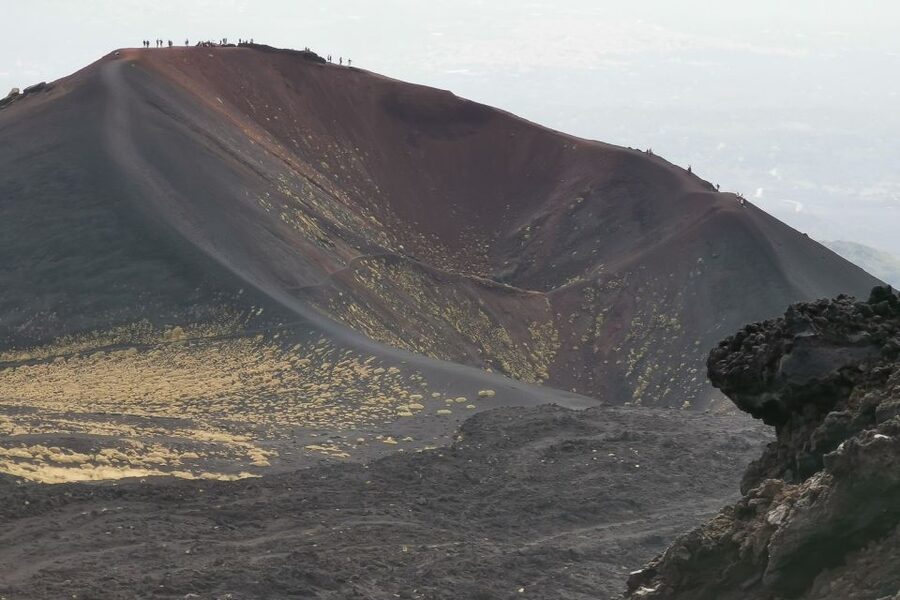
After another 30-minute drive, the hike begins around 1,850 meters. The first main stop is the Silvestri Craters, volcanic cones created by earlier eruptions. They are easy to reach compared with the upper route, but this tour uses them as a starting point rather than the final attraction.
The terrain quickly shifts from ordinary mountain walking to black volcanic ground. You may walk across rough lava, loose ash, and uneven slopes, so sturdy footwear matters. The supplied trekking shoes are useful if you did not pack proper boots. Several people have also appreciated borrowing poles, which help on loose ground and during the descent.
The route passes the impressive 2001 lava flow. This is a good point to see how quickly Etna can reshape its slopes. The hardened rock is not a smooth black sheet. It is broken, jagged, and uneven, with textures that make the mountain feel active even when no lava is visible.
Your guide will stop often enough for photos and explanations. Antonio and Renato are especially good names to know if they lead your departure, but the wider team includes other guides such as Maria and Marco. Their role is more than keeping the group on the path. They explain the volcano, local culture, eruption history, and the way lava and ash create different surfaces under your feet.
The climb to 2,400 meters
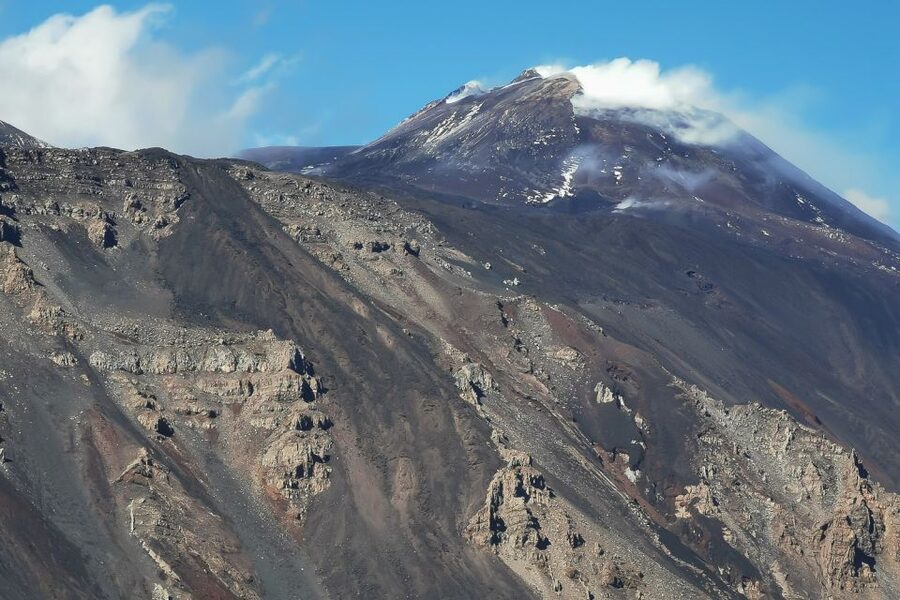
The uphill section is the physical heart of the outing. From about 1,850 meters, you work upward toward 2,400 meters, with the active altitude difference listed at approximately 550 meters. That is enough to make your legs work, especially on loose ash where one step can slide backward.
Several people have described the hike as manageable but demanding. That is the right expectation. You do not need to be an athlete, but you should be comfortable walking uphill for several hours. The pace includes pauses for water, photos, and short explanations, and guides adjust the speed when someone needs more time.
The surface can make the climb feel harder than the distance suggests. Volcanic ash shifts underfoot, while wind and cold can sap your energy. In winter, snow may cover the route, and the group may follow a different path. In autumn and winter, temperatures at the top can be much lower than in Catania, even on a sunny morning.
This is also where the small group helps. A guide can watch the pace, answer questions, and keep the outing from becoming a race. One route option may allow a tired participant to continue along a more level track rather than take every steep section. Ask your guide about the day’s choices rather than pushing beyond your comfort level.
Valle del Bove, Etna’s great amphitheater
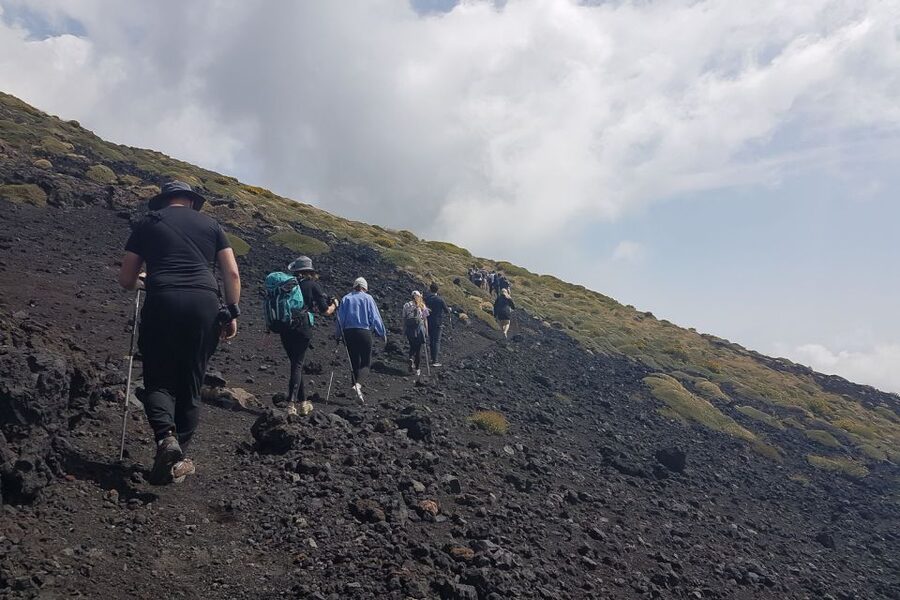
The route leads toward Valle del Bove, a huge natural amphitheater formed by a major collapse of the volcano. From the edges, you see broad black volcanic slopes and the scale of Etna’s southeastern side. The valley is less about a single postcard viewpoint and more about understanding the size and force of the mountain.
The main walking section around Valle del Bove lasts about three hours, including movement, stops, and explanations. This is where the outing feels different from a quick crater visit. You have time to examine the terrain, look across old and recent lava, and watch the Ionian coast spread below when visibility is good.
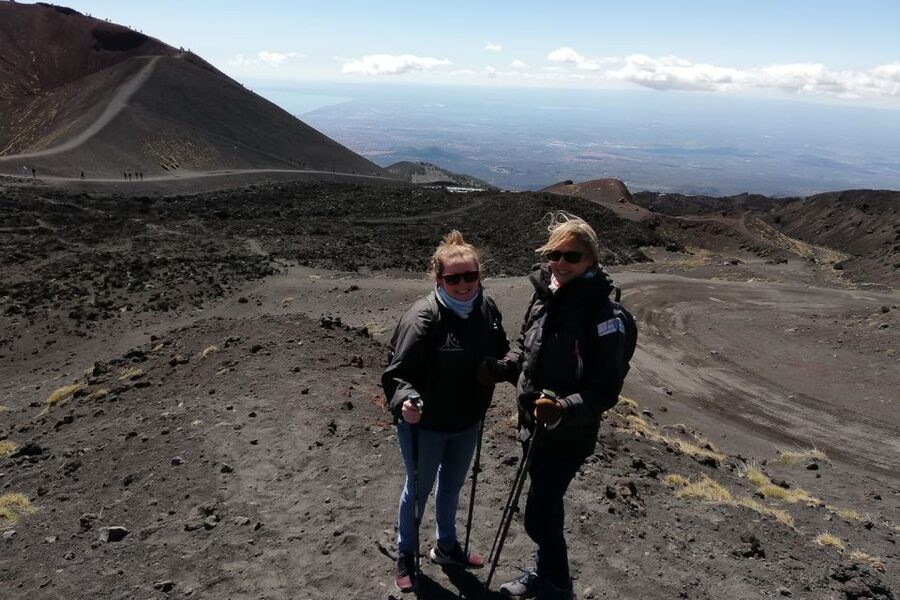
The sea views are a major reward. On a clear day, the contrast is striking: dark volcanic ground under your boots, the active southeastern crater above, and a bright stretch of coast in the distance. Clouds and wind can block part of the view, though. Do not judge the trip only by the forecast in Catania. Etna has its own weather.
The guides also make this section worthwhile when visibility is poor. Rain, mist, and wind have sometimes forced a route change, but the team can still choose a safe path and explain what you are seeing close at hand. You might not get every distant view, yet the rough texture of the volcano remains impressive.
More Volcano Hikes in Italy
- Etna: summit craters trekking with volcano guide 3350mt
★ 4.7 · 1,712 reviews - Mount Etna: Guided Trek 3,000 Meters to the Summit
★ 4.8 · 1,407 reviews - Etna Sunset Tour: Volcano trek, Cave & tasting from Catania
★ 4.8 · 1,290 reviews - Catania: Mount Etna Adventurous Hiking Tour with Equipment
★ 4.7 · 784 reviews
Lunch above the valley
The group pauses for about 20 minutes around 2,400 meters. This is a picnic stop, not a served mountain meal. You eat the sandwich purchased in Trecastagni while looking toward Valle del Bove, the southeastern crater, and the Ionian coastline.
Twenty minutes passes quickly, so keep lunch simple. A sandwich, water, and perhaps fruit or a snack are easier than anything messy. The break also gives you a chance to add a layer, check your socks, and take photos before the downhill section.
The setting gives this basic lunch real value. You are not sitting in a café with a view printed on a menu. You are eating on volcanic ground, with the mountain’s wide amphitheater in front of you. That is one of the most authentic parts of the day, even if the lunch itself is modest.
The soft volcanic ash descent
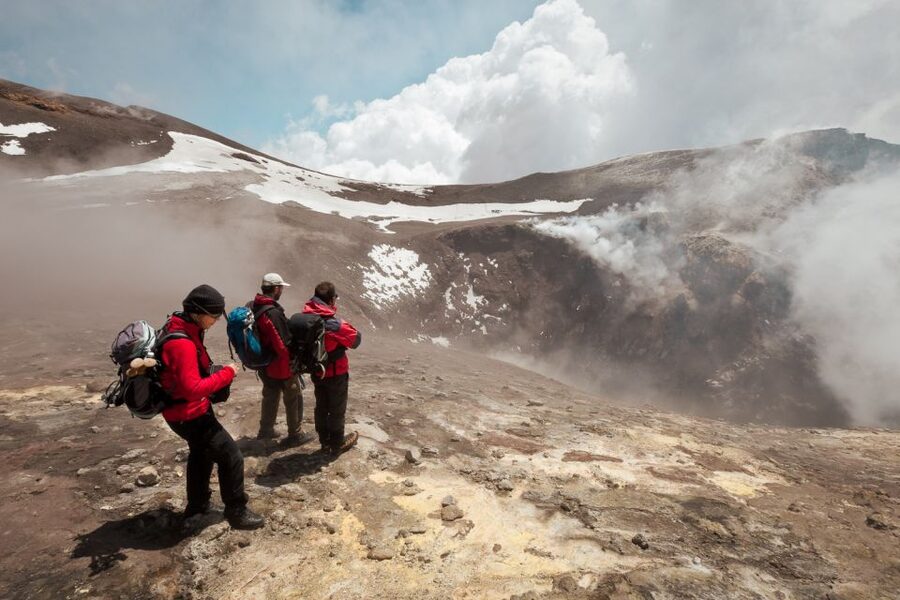
The return includes one of the tour’s most memorable features: a steep descent through soft volcanic sand. The ash gives way under your feet, so you can make a controlled slide down the slope. It is fun, but it is not elegant. Expect dust in your socks, shoes, and clothing.
Use the poles if you want extra balance, and follow the guide’s instructions. The descent can feel easier than the climb, but loose ash still requires care. Good ankle support helps, and the supplied shoes can save your own footwear from a thick coating of black grit.
This section is also a reason not to bring a large bag. Luggage and large bags are not allowed, and that makes sense on a loose volcanic slope. Carry only what you need for water, sunscreen, a hat, spare socks, and your lunch.
Inside a lava flow cave
The day may include a lava cave formed when the outside of a molten flow cooled while hot rock continued moving beneath it. The result is a hollow passage in the basalt, a small underground world created by an eruption.
This is a fascinating contrast to the open upper slopes. Above ground, Etna feels wide and exposed. Inside the cave, the focus shifts to rough walls, darkness, and the shape of the cooled lava. The guide’s explanation helps you understand how such a passage formed rather than treating it as just a quick photo stop.
The cave is not guaranteed. High tremors or eruptions can make it unsafe to enter, even after an eruption has ended. In that case, the route changes for safety. This is a volcano tour, so flexibility is part of the deal.
Rifugio Sapienza and the ride back
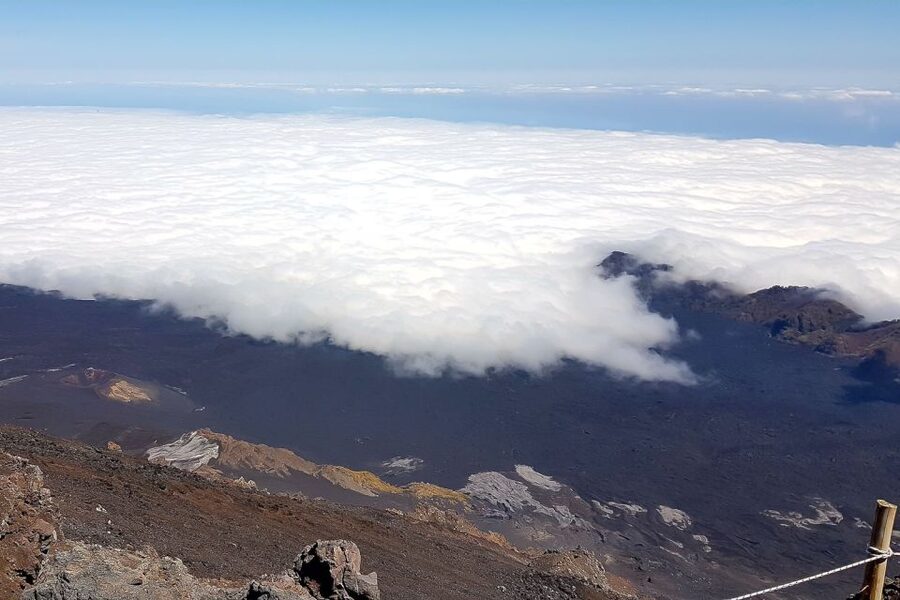
After the main trek, the group reaches Rifugio Sapienza for about 30 minutes. This is a useful recovery stop, with time for coffee, local snacks, and shopping. It also gives you a chance to warm up, clean off some ash, and compare the quiet route you have just walked with the more developed visitor area.
The final van ride to Catania takes about an hour. Pickup and drop-off in central Catania are included, while hotel pickup is not. If you are staying outside the city center, you need to reach the meeting point yourself.
You can also arrive by your own car and join only the hike. The transport portion is then unnecessary, but the tour information says participants choosing this option take part in the hiking section only.
What the $81 price really covers
At $81 per person, this is a good-value Etna outing if you want a proper walk rather than a short stop at the lower craters. The price includes central Catania transport, the naturalist guide, the hike, trekking poles, shoes, an extra warm jacket, and a rain jacket.
That equipment matters. Etna can be cold and windy at altitude, and several departures have needed extra layers, gloves, or sturdier footwear. One participant even received a small backpack for water and snacks. You should still bring comfortable clothing and socks, but you do not need to own a full mountain kit.
Food and drinks cost extra. Plan for the sandwich, water, coffee, and any snack at Rifugio Sapienza. The Trecastagni stop makes this easy, but remember that the lunch break is only around 20 minutes.
The value also comes from the guide’s attention. Antonio, Renato, and Maria are often praised for explaining geology clearly, checking on slower walkers, and offering practical Catania and Sicily recommendations. One guide even made an effort to learn a few words of Chinese for a participant. That kind of care matters more than a fancy vehicle on a demanding mountain day.
Weather, clothing, and effort
Pack light, but pack smart. You should bring:
- Comfortable shoes if you plan to use your own
- Warm layers and a jacket
- A hat and sunscreen
- Spare socks
- Water and a small snack
The company supplies extra jackets, rain shells, shoes, and poles, but your own basic layers still matter. In winter, snow can alter the route. In autumn, strong wind and rain may be more important than the temperature in Catania. A clear morning in town does not promise calm conditions up high.
This trip is not suitable for children under 10, pregnant women, people with heart or respiratory problems, people prone to altitude sickness, people with low fitness, or people with mobility impairments. Take that list seriously. The route is not extreme mountaineering, but the loose volcanic surface, height, weather, and uphill gain create real demands.
The activity is offered in Italian and English. Groups are limited to eight participants, which allows the guides to keep an eye on everyone. Some departures may use two guides when needed, and the team has a strong record for transport and group care.
Should you book this Mount Etna tour?
Book it if you want to walk on Etna, learn how the volcano works, and get beyond the quick Silvestri Crater stop. The quiet route, Valle del Bove views, lava cave, supplied equipment, and ash slide give you more variety than a simple drive up the mountain.
Skip it if you want a relaxed sightseeing day, a summit visit, or guaranteed clear views. You do not reach Etna’s peak, the cave can close because of volcanic activity, and poor weather can reshape the route.
For most reasonably fit visitors who want a hands-on Etna experience from Catania, I would choose this outing. Buy your sandwich in Trecastagni, bring spare socks, keep your bag small, and accept that the mountain sets the terms. That is exactly why the day feels like more than a standard volcano excursion.
FAQ
How long does the Mount Etna trekking tour last?
The experience lasts about seven hours, including transport, the hike, stops, and the return to central Catania.
Where does the tour begin and end?
Pickup and drop-off take place in central Catania at the McDonald’s meeting point. Hotel pickup is not included.
How high does the hike go?
The hike starts around 1,850 meters and climbs to approximately 2,400 meters, with an active altitude difference of about 550 meters.
Is food included?
No. You can buy water, coffee, breakfast items, and a locally prepared sandwich in Trecastagni before the hike.
What equipment is provided?
The activity includes trekking shoes, walking sticks, an extra warm jacket, and a rain jacket. Gloves and other extra layers may also be available when conditions require them.
Is the lava cave guaranteed?
No. High tremors or eruptions can make the cave visit impossible, even after an eruption has finished.
Can the route change in winter?
Yes. Snow may require a different hiking route during the winter season.
Is this tour suitable for children?
The tour is not suitable for children under 10 years old.
Is the hike difficult?
The hike is a genuine uphill trek and can be demanding because of the 550-meter climb, loose volcanic ash, altitude, wind, and cold. It is not suitable for people with a low fitness level.
What languages are available?
The tour is available in Italian and English, with a live guide.
Just added around Italy
- Catania: Mount Etna Sunset Trekking with Wine Tasting★ 5.0 · 140 reviews
- Path of the Gods Hiking Day Tour from Sorrento★ 5.0 · 110 reviews
- Half or full day trekking on Etna with private guide★ 5.0 · 53 reviews
- Private Cinque Terre Trek & Tour★ 5.0 · 122 reviews
- Path of the Gods Private Hiking Tour from Agerola★ 5.0 · 89 reviews
- Path of the Gods Private Guided Hiking Experience★ 5.0 · 49 reviews
- Lake Como: Easy Mountain Trek with Funicular & Boat Ride★ 4.7 · 24 reviews
- From Milan/Como/Varenna: Panoramic Hiking Tours near Lake Como★ 5.0 · 35 reviews
Volcano Hikes, side by side.
Sunrise Mount Batur Guided Hike with Breakfast
Read our review →
Mount Batur Sunrise Guided Hike and Natural Hot Spring
Read our review →
Mount Etna: Summit Guided Hiking Tour up to 3,400 m
Read our review →
Mount Etna: Trek to 3000m with cable car and 4×4
Read our review →
Mount Batur Sunrise Trek With Guide and Breakfast
Read our review →
Mount Batur Sunrise Hike and Natural Hot Spring Option
Read our review →
Mount Etna: Summit Crater Trek with Cable Car
Read our review →