
REVIEW · ITALY
Mount Etna: Trek to the Craters of The 2002 Eruption
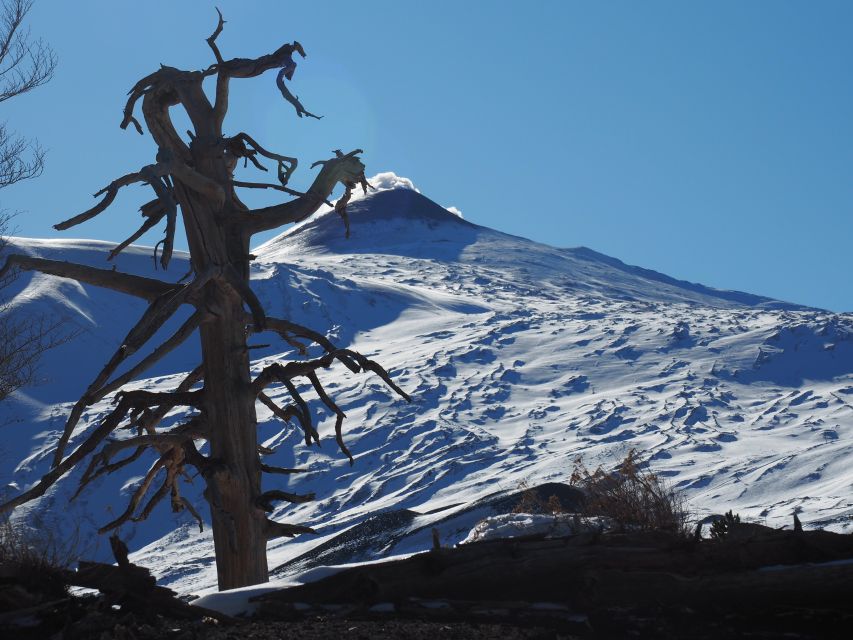
Mount Etna’s 2002 eruption left a trail of black craters and hardened lava on the volcano’s northern flank. This walk takes you right along that eruptive fault, where the ground tells the story better than a museum display ever could. You’ll see lateral cones made by explosions of gas and rock, then look out toward the Bay of Naxos and the Calabrian coast.
I like two things here: the clear geology lesson folded into a walk, and the easy pace that makes this a sensible family outing. The guide service has been praised as top notch, which matters when volcanic features need explaining rather than simply pointing at. The main consideration is the mountain itself: bring a jacket and rain gear, and expect the outing to take longer or shorter depending on the group.
Key points
- Walk the 2002 eruptive fault: Follow the line opened by Etna’s major October eruption and cross hardened lava.
- See gas-built lateral cones: Small volcanic cones and open craters show how explosive activity shaped the slope.
- Start at Piano Provenzana: Meet at the first parking area, by the wooden house marked Gruppo Guide Etna Nord.
- Enjoy a gentle guided outing: The difficulty is rated easy, though uneven volcanic ground still calls for proper shoes.
- Hear Etna’s wider story: The guide covers volcanic geology, Greek mythology, local agriculture, and the mountain’s role in Sicilian life.
- Pay $39.86 for the guided walk: Food, drinks, and any transport to Piano Provenzana are not included.
Following Etna’s 2002 eruption line
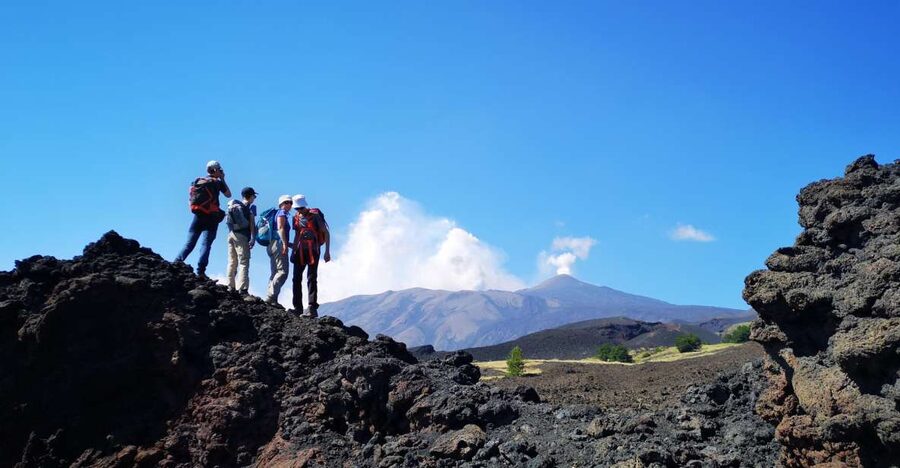
The best part of this Mount Etna tour is its focus. You are not simply driven to a high viewpoint, shown a crater, and sent on your way. You walk beside the eruptive fault created during the 2002 activity and see the marks left by a real volcanic event.
The eruption began at dawn on October 27, 2002, and is remembered as the perfect eruption. That phrase does not mean a small or harmless event. It refers to the way the eruption displayed the classic elements of volcanic activity: a fracture in the mountain, powerful gas explosions, falling rock fragments, lava flows, and new cones built along the break.
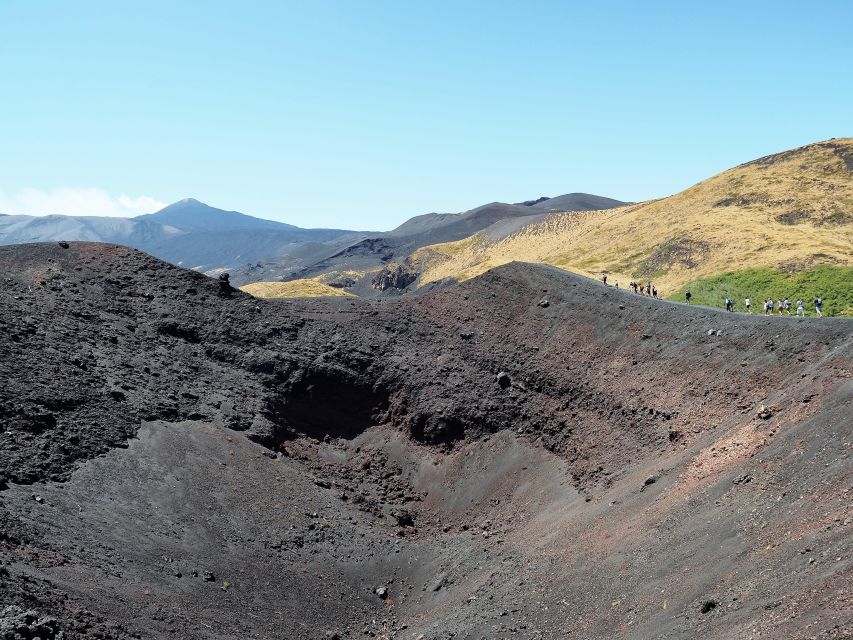
I find this setting useful because it gives scale to the science. Lava is not just a red river in a documentary. Here, it cooled into rough black rock under your feet. Gas and broken rock blasted upward and gathered into lateral cones. Craters opened along the fault, each one showing a different part of the eruption’s force.
The outing is based at Piano Provenzana on Etna’s northern side. You meet at the first parking area, beside the wooden house with the sign Gruppo Guide Etna Nord. This is an important detail: the tour begins at the meeting point, so you should plan how you will reach Piano Provenzana yourself. No food, drinks, or transfer service is included.
More Mountain and Summit Hikes in Italy
- Mount Etna: Summit Guided Hiking Tour up to 3,400 m
★ 4.8 · 4,792 reviews - Catania: Mount Etna Trekking Tour Beyond the Tourist Trails
★ 4.9 · 1,596 reviews - Mount Etna: Summit Trekking Tour
★ 4.9 · 347 reviews
What you see on the walk
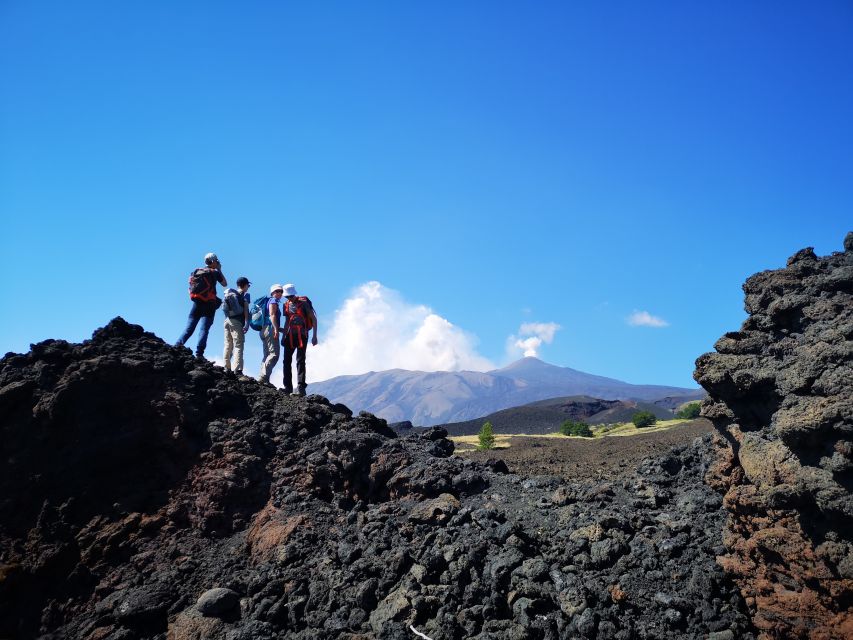
The route follows the eruptive fault rather than aiming at Etna’s summit. That distinction matters. This is a close look at a recent flank eruption, not a summit climb or a full-day high-altitude expedition.
Your guide leads you along the trail and explains the geology as the features appear. You can expect to walk on hardened lava, inspect the lateral cones, and peer into impressive craters. The formations are the main attraction, but the guide helps connect them: gas pressure created explosions, rock fragments piled up around openings, and lava flowed from breaks in the mountain.
The walk is rated easy, but that does not mean you should wear flimsy footwear. Volcanic ground can be rough, loose, or uneven. Comfortable shoes are required, and sandals or flip flops are not allowed. Bring water, sunglasses, and a sun hat. A jacket and rain gear belong in your bag even if the weather looks fine at your starting point.
Etna’s conditions can change with altitude and exposure. The supplied information does not promise a certain temperature or weather pattern, so I would dress in layers and keep your gear simple. You do not need an expedition kit, but you do need to be ready for sun, wind, or rain.
The view toward Naxos and Calabria
The volcanic features keep your attention close to the trail, but the views widen as you look outward. From the upper parts of the route, you can take in the Bay of Naxos and the Calabrian coast.
That view adds a useful sense of place. Etna is not an isolated volcano sitting in an empty wilderness. It rises above a settled part of Sicily, close to communities, farms, roads, and the sea. The mountain has shaped local life for centuries, both through eruptions and through the fertile soils that support agriculture.
I like this combination of drama and ordinary life. You see fresh volcanic scars, then look toward a coastline and cultivated land. Etna can be destructive, but its ash and weathered lava also help create productive soil. The guide discusses this ongoing relationship between the volcano and the region.
Bring sunglasses for the views and the glare from pale rock or open ground. A sun hat is also useful. The information provided does not promise perfect visibility, so treat the coastal view as a welcome bonus rather than the sole reason to book.
A short walk with a useful story
The advertised duration is about 2.5 hours, with starting times shown according to availability. The walking section is also described as lasting about three hours, so allow a little flexibility rather than planning a tight connection afterward.
The pace depends on the group. That can work well for families and people who want time to listen, take photos, and look into the craters. It may feel slow if you are hoping for a brisk athletic hike, but this is a guided interpretation walk, not a race across the volcano.
The guide speaks Italian, French, and English. That language range is valuable here because the geology is easier to understand when you can ask questions in a language you are comfortable using. A strong guide can also point out details you might otherwise walk past, such as the shape of a cone or the difference between an explosion crater and a lava-flow feature.
The best published response to the outing calls it a great family activity and praises the guide as top notch. That fits the design of the tour: an easy route, a short time commitment, and a subject that can hold the attention of both adults and older children. Still, children need proper shoes and enough water, and the group pace may not suit every family equally.
More Volcano Hikes in Italy
- Etna: summit craters trekking with volcano guide 3350mt
★ 4.7 · 1,712 reviews - Mount Etna: scenic Summit Trek with a volcano Guide and Gear
★ 4.5 · 284 reviews - Mount Etna: Half-Day Guided Tour and Hike
★ 4.4 · 264 reviews - Mount Etna: Craters of the 2002 Eruption Trekking Experience
★ 4.8 · 237 reviews
Why the 2002 date matters
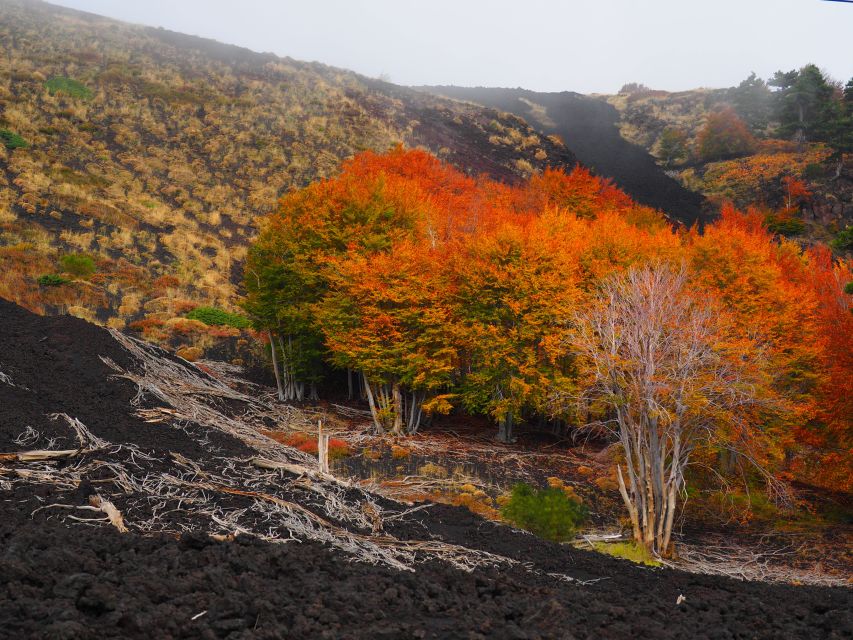
Etna has a long record of eruptions, but the 2002 event is recent enough to feel concrete. You are not only hearing about ancient lava. You are seeing formations made within living memory, along a fault that changed the northern flank of the mountain.
The date also helps you understand the volcano as an active force. Etna is one of Europe’s tallest and most active volcanoes, and its activity is part of the region’s identity. Greek mythology treated the mountain as a place of gods and underground power. Modern Sicily approaches it through geology, farming, tourism, and careful monitoring. The mountain remains both a natural wonder and a working part of local life.
The tour does not promise access to an active lava flow, nor does it take you to the summit. That is a benefit for many people. You get a safer, more manageable look at volcanic activity without signing up for a demanding ascent. If your goal is a technical climb or a close view of current molten lava, this is not the right product.
Is $39.86 a fair price?
At $39.86 per person, the cost is reasonable for a guided 2.5-hour outing in a major natural attraction. You are paying for an official guide, interpretation in English, French, or Italian, and a route focused on one of Etna’s most interesting recent eruptions.
The value is strongest if you would otherwise walk past the cones and craters without understanding them. Hardened lava can look like a field of dark rock at first. The guide turns it into a record of pressure, gas, broken stone, and flowing magma. That added context is what separates this from a self-guided stroll.
The price does not cover food or drinks. It also does not list transport to Piano Provenzana, so factor in your own arrangements when comparing the total cost with other Etna outings. The tour begins and ends at the same meeting point, which keeps the plan simple once you arrive.
Free cancellation up to 24 hours before the activity reduces the risk of booking around uncertain weather. You can also reserve and pay later, which helps if your Sicily plans are still shifting. These policies do not change what happens on the mountain, but they make a short scheduled activity easier to fit into a trip.
Who should book this Etna outing?
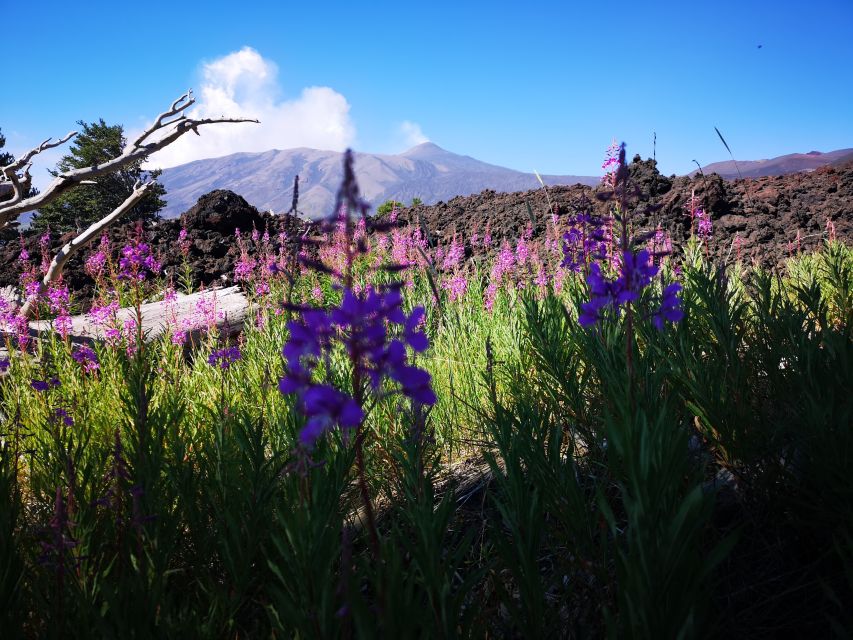
I would choose this walk if you want a direct introduction to Etna without committing a full day. It suits people who enjoy nature, geology, photography, and local stories. It is also a good match for families who can manage an easy walk on uneven ground.
You should be comfortable walking outdoors for the full outing. The activity is not suitable for pregnant women, people with mobility impairments, or people with vertigo. Those restrictions are important here because the route includes volcanic craters and open, exposed ground.
You also need to accept that the mountain controls the rhythm. The walk lasts approximately 2.5 hours, but the timing depends on the group. If you have a ferry, flight, or fixed restaurant booking immediately afterward, leave plenty of room.
The tour is less suitable if you want luxury transport, a meal, or a private, fast-paced hike. None of those is included. This is a focused guided walk from Piano Provenzana, with the volcano itself providing the main spectacle.
What to bring to Piano Provenzana
Pack lightly, but pack the right things. Your basic kit should include:
- Comfortable closed shoes
- Water
- Sunglasses
- A sun hat
- A jacket
- Rain gear
Do not bring sandals or flip flops. The volcanic route calls for footwear that protects your feet and gives you a steadier step.
I would also keep your phone or camera easy to reach, since the lava cones, craters, Bay of Naxos, and Calabrian coast provide several worthwhile photo stops. The tour information does not state that food is available along the route, so eat beforehand or make your own plan. Food and drinks are not included.
The simple start and finish
The meeting point is easy to identify once you are in the first parking area at Piano Provenzana. Look for the wooden house marked Gruppo Guide Etna Nord. The activity ends back at this same meeting point.
That return-to-start arrangement is convenient if you have left belongings or a vehicle there. It also means you do not need to arrange a separate pickup from another part of Etna. Since no transfer is included, confirm your route to Piano Provenzana before booking and allow time to find the correct parking area.
The guide leads the walk in Italian, French, or English. Check the available starting times when you reserve, since the schedule is not fixed in the information provided.
Should you book the Mount Etna 2002 eruption trek?
Book it if you want an affordable, short, guide-led introduction to Etna’s volcanic geology. The strongest reasons are the close look at the 2002 eruptive fault, the unusual lateral cones and craters, the views toward Naxos and Calabria, and the family-friendly format.
Skip it if you need step-free access, dislike exposed volcanic ground, have vertigo, or want a summit expedition. Also skip it if you expect meals or transport to be part of the price.
For most able walkers who are already visiting northern Etna, $39.86 buys a useful slice of the mountain rather than a rushed photo stop. Bring proper shoes, water, layers, and an open mind. Etna does the dramatic work. Your guide helps you understand what you are seeing.
FAQ
Where does the Mount Etna trek start?
It starts at Piano Provenzana, at the first parking area by the wooden house with the Gruppo Guide Etna Nord sign.
Where does the activity end?
The walk ends back at the same meeting point at Piano Provenzana.
How long does the Mount Etna trek last?
The activity lasts approximately 2.5 hours. The walking portion is also described as about three hours, and the exact pace depends on the group.
What languages does the guide speak?
The live guide speaks Italian, French, and English.
What will I see during the walk?
You will follow the 2002 eruptive fault, walk on hardened lava, see lateral cones formed by gas and rock explosions, look into craters, and view the Bay of Naxos and the Calabrian coast.
Is the walk difficult?
The activity is rated easy. You still need comfortable shoes because the route crosses volcanic ground. Sandals and flip flops are not allowed.
What should I bring?
Bring comfortable shoes, sunglasses, a sun hat, water, a jacket, and rain gear.
Is the activity suitable for everyone?
It is not suitable for pregnant women, people with mobility impairments, or people with vertigo.
More Mountain and Summit Hikes in Mount Etna
- Mount Etna: Private Half-Day Guided Family-Friendly Hike
★ 5.0 · 11 reviews - From Taormina or Catania: Private Full-Day Mount Etna Hike
★ 4.5 · 8 reviews - Berber villages : Atlas Mountains Day Hike from Marrakech
★ 5.0 · 14,007 reviews - Bali: Sunrise Mount Batur Guided Hike with Breakfast
★ 4.8 · 9,660 reviews
More Volcano Hikes in Mount Etna
- Mount Etna: Hike to The Highest Point With a Guide
★ 4.8 · 147 reviews - Piano Provenzana: Mount Etna Hiking Trip to 3,380 Meters
★ 4.8 · 54 reviews - Etna South: High Altitude Winter Trek with an Alpine Guide
★ 4.8 · 27 reviews - Taormina and Catania: Private guided Etna hike by cable car
★ 5.0 · 17 reviews
Just added around Mount Etna
- Taormina and Catania: Private guided Etna hike by cable car★ 5.0 · 17 reviews
- Piano Provenzana: Mount Etna Hiking Trip to 3,380 Meters★ 4.8 · 54 reviews
- Mount Etna: Hike to The Highest Point With a Guide★ 4.8 · 147 reviews
- Etna South: High Altitude Winter Trek with an Alpine Guide★ 4.8 · 27 reviews
- From Taormina or Catania: Private Full-Day Mount Etna Hike★ 4.5 · 8 reviews
- Mount Etna: Private Half-Day Guided Family-Friendly Hike★ 5.0 · 11 reviews
- Mount Etna: Craters of the 2002 Eruption Trekking Experience★ 4.8 · 237 reviews
- Mount Etna: Half-Day Guided Tour and Hike★ 4.4 · 264 reviews
Volcano Hikes, side by side.
Sunrise Mount Batur Guided Hike with Breakfast
Read our review →
Mount Batur Sunrise Guided Hike and Natural Hot Spring
Read our review →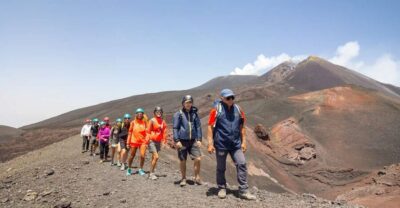
Mount Etna: Summit Guided Hiking Tour up to 3,400 m
Read our review →
Mount Etna: Trek to 3000m with cable car and 4×4
Read our review →
Mount Batur Sunrise Trek With Guide and Breakfast
Read our review →
Mount Batur Sunrise Hike and Natural Hot Spring Option
Read our review →
Mount Etna: Summit Crater Trek with Cable Car
Read our review →