
REVIEW · ITALY
Rome: Mini hike to the ancient Parco degli Acquedotti
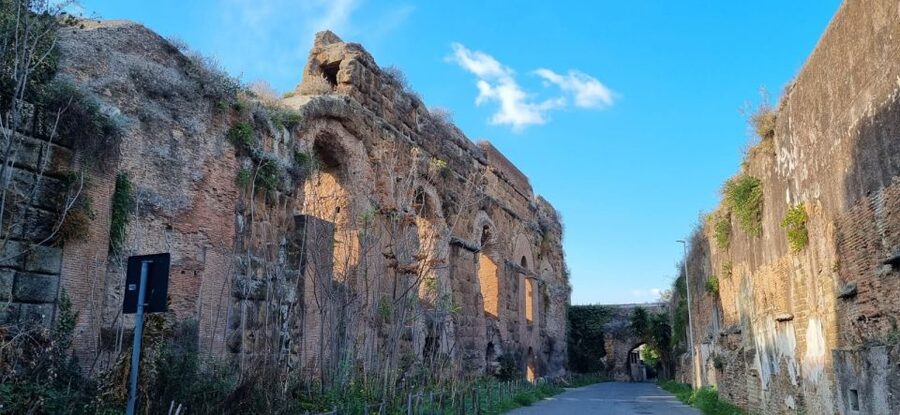
Rome’s ancient aqueducts are at their most striking when you reach them on foot. This three-hour walk begins in the Pigneto neighborhood, follows old water routes through Mandrione and Porta Furba, then opens into the huge Parco degli Acquedotti, where stone arches stretch across fields beneath the hills.
I like two things right away: the route connects everyday Rome with its ancient past, and it ends in open countryside without requiring a long trip out of town. Guide Sal also brings history, engineering, plants, and local life into the walk. The main catch is physical: 9 kilometers of uneven ground is moderate rather than easy, and hot weather can make the afternoon demanding.
Key points to know
- A one-way walk across Rome: Start at Pigneto metro station and finish near Giulio Agricola on Line A.
- Ancient aqueducts in several settings: See them beside neighborhood streets, in Torre Fiscale Park, and across Parco degli Acquedotti.
- Small groups: The group is limited to 10 people, giving you a better chance to ask Sal questions.
- A real urban hike: Expect about 9 kilometers, uneven terrain, and changing conditions.
- A strong nature and history mix: The walk covers Roman engineering, postwar local life, flora, fauna, and open views.
- Bring proper gear: Wear hiking shoes, carry 1.5 liters of water, and skip sandals or flip-flops.
Why this walk shows you a different Rome
Many Rome tours keep you inside the historic center, moving from one famous monument to the next. This walk takes another route. You begin in Pigneto, a modern neighborhood with its own local character, then trace an older Rome that is still part of the city’s daily fabric.
The change happens gradually. Streets give way to paths. Buildings thin out. Aqueducts appear beside greenery, and the city begins to feel surprisingly far away. I like this slow transition because it gives the ruins a setting, not just a photo stop.
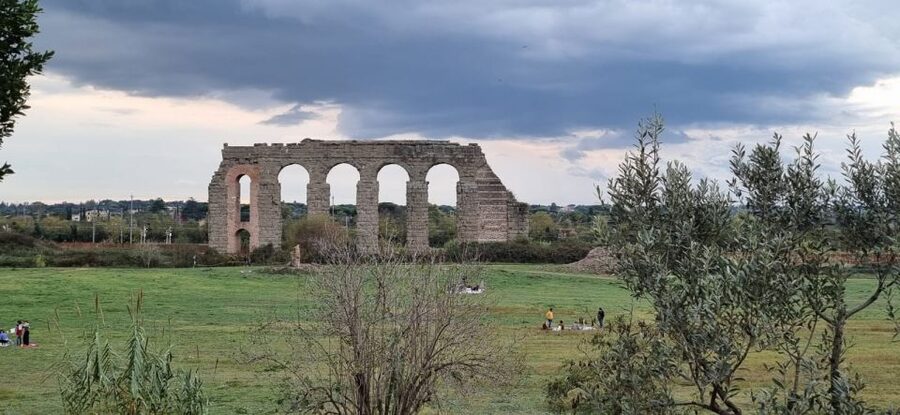
The final destination, Parco degli Acquedotti, is the reward. Several ancient aqueducts cross the park, and in good weather you may see mountains beyond them. The mix can feel almost unreal: Roman masonry, grass, trees, city infrastructure, and broad skies all sharing the same view.
This is not a formal archaeological tour with gates, display cases, and a fixed sequence of monuments. It is a guided walk through living urban space. That makes it more informal and less predictable, but also more revealing.
More hikes and treks around Italy:
- Cinque Terre Day Trip with Optional Hiking or Pisa
★ 5.0 · 8,486 reviews - Florence: Cinque Terre Day Trip with Optional Hiking or Pisa
★ 4.9 · 4,848 reviews - Mount Etna: Summit Guided Hiking Tour up to 3,400 m
★ 4.8 · 4,792 reviews
Starting in Pigneto and following Via del Pigneto
Meet 15 minutes before departure outside Pigneto subway station on Line C. There are two station exits. The meeting point is on the side facing the bridge, rather than the side beside the Conad grocery store.
Pigneto provides a useful opening because the walk begins in a neighborhood, not at a major monument. Sal can introduce the area through both its past and present life before leading you along Via del Pigneto. This first part helps you understand that Rome is not only its ancient center.
The guide is Sal, the professional nature guide behind Hike with Nature of Sal. The activity is offered in English, German, or Italian, although English and German are the languages specifically listed in the activity details. His approach combines Roman history with nature, engineering, and local observations.
The small group size matters here. With no more than 10 people, you can hear explanations without fighting a crowd. You can also ask practical questions as the surroundings change.
Mandrione and the old aqueduct route
From Pigneto, the walk reaches Parchetto Condiviso del Mandrione and then continues along Via del Mandrione. This section is valuable because the aqueduct is not presented as an isolated ancient object. You see how old structures sit beside roads, homes, and ordinary city life.
The route also brings in the human story of the area. Along the way, Sal explains the building materials used for the aqueduct and how people made new lives around it after World War II. That detail gives the ruins a more recent layer. You are not only looking back 2,000 years. You are also seeing how later generations used, adapted to, and lived beside the remains.
Expect conversation rather than a nonstop lecture. The walk is built around what you see, so the topics can move from Roman water systems to plants, animals, and modern neighborhoods. If you enjoy connecting history with the natural world, this is one of the strongest parts of the experience.
The route is not polished like a paved city promenade. Uneven ground is part of the experience, and conditions can change after rain. Hiking shoes are required, and sandals or flip-flops are not suitable.
Porta Furba and the café pause
The next major stop is Porta Furba, also called the Arco di Sisto V. This gives the walk another view of Rome’s old water network and its later urban setting.
Porta Furba is not treated as the final attraction. Instead, it helps break up the walk and shows how the aqueduct route passes through different parts of the city. The contrast between an old arch and the surrounding streets is part of the appeal.
There is also a break at a local café. This is a useful pause during a 9-kilometer walk, especially if the day is warm. The supplied details do not state that a drink or snack is included, so plan your personal spending accordingly.
I would use the café stop to refill, cool down, and check your pace. The route continues into parks, but you still need enough water for the rest of the afternoon. The recommended amount is 1.5 liters.
Same trailheads, a different kind of day:
- Mount Etna: Trek to 3000m with cable car and 4×4
★ 4.6 · 3,823 reviews - Mount Etna: Summit Crater Trek with Cable Car
★ 4.8 · 1,875 reviews - Etna: summit craters trekking with volcano guide 3350mt
★ 4.7 · 1,712 reviews - Catania: Mount Etna Trekking Tour Beyond the Tourist Trails
★ 4.9 · 1,596 reviews
Torre Fiscale Park and the growing sense of space
After Porta Furba, the walk reaches Torre Fiscale Park. This section helps prepare you for the larger views of Parco degli Acquedotti.
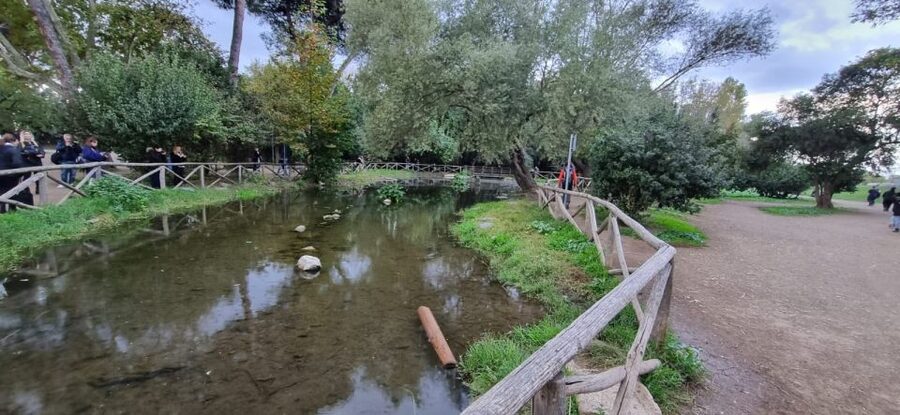
Torre Fiscale is another place where ancient structures and nature meet. The route does not simply rush from one famous arch to the next. Instead, it uses parks and open areas to show how much of Rome’s old water corridor remains outside the usual sightseeing circuit.
The park portion can also make the physical effort more noticeable. You are covering real distance, not taking a short stroll between monuments. Bring a comfortable backpack, sun protection, a hat, and clothing suited to an urban hike.
Weather matters a great deal. The activity runs rain or shine, but the guide may shorten, extend, or change the route for safety. A fallen tree, wet ground, or another unexpected obstacle can alter the plan. A raincoat is a sensible addition, particularly outside the driest part of summer.
The big payoff at Parco degli Acquedotti
Parco degli Acquedotti is where the walk reaches its visual high point. The park contains several ancient aqueducts, and the long lines of masonry make the scale of Roman engineering easy to grasp.
This is also where the nature side of the tour becomes most apparent. You are not viewing the aqueducts against a tight city backdrop. They cross open space, with grass and vegetation around them. On a clear day, mountains provide an extra layer behind the arches.
The setting is excellent for photography. You can work from close details of stone and construction to wide views that show the aqueduct running into the distance. The route offers the kind of changing perspective that a short taxi ride to the park cannot provide.
Sal’s explanations add meaning to the view. You learn how the aqueducts worked, what materials went into them, and why these water systems mattered to Roman civilization. The value is not only in seeing old arches. It is in understanding the practical problem they solved and the scale of the system behind the remains.
Allow yourself to enjoy the quiet here. The park is the end of the walk, not a quick stop before another transfer. The official finish is on Via Lemonia, near Giulio Agricola station on Line A.
What the 9-kilometer distance feels like
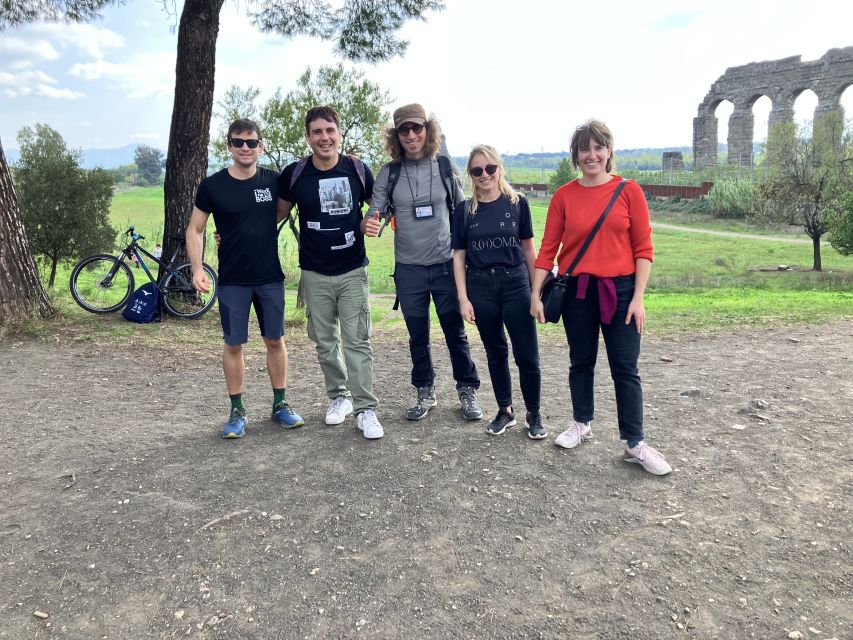
The activity lasts about three hours, but the final duration can change with weather, obstacles, and the guide’s safety decisions. A moderate rating is fair. You do not need to be an experienced hiker, yet you should be comfortable walking for several hours on uneven ground.
This is not a good choice if you need smooth, step-free paths. It is not suitable for wheelchair users, people with heart problems, or people with respiratory issues. The activity also lists a maximum age guideline of 95.
The age information needs a little care. The experience is described as suitable for families, with children aged 14 and older accompanied by adults. Another section says it is not suitable for children under 12. Since those statements leave a gap for ages 12 and 13, I would ask the provider before booking for a child in that range.
On hot days, the physical challenge increases. Erin’s experience with the tour points to a useful strength: Sal watched for shade, took water breaks, and helped refill bottles. That sort of attention matters more than a memorized speech when you are walking in summer heat.
Still, do not depend entirely on the guide for your comfort. Start with water, sunscreen, a hat, and suitable clothing. Trail snacks and electrolytes are recommended, and sunglasses can help in the open park.
Is the $53 price good value?
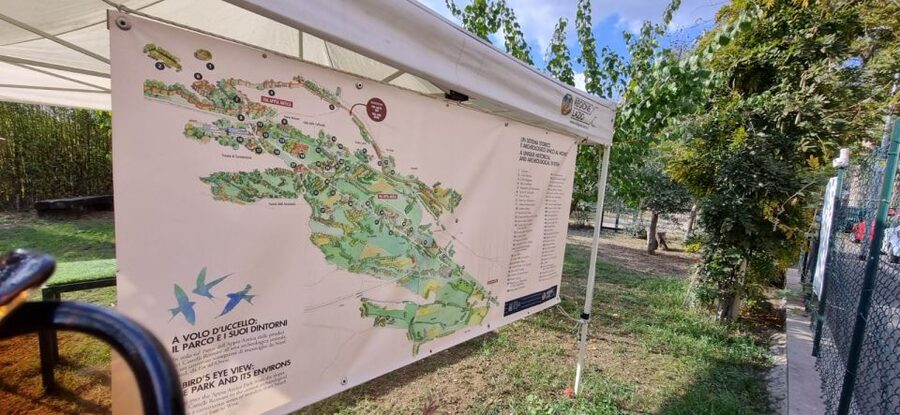
At $53 per person, this is not the cheapest way to see aqueducts. You could reach Parco degli Acquedotti independently by public transport and walk around without a guide.
The comparison changes once you consider what the fee covers. You are paying for a professional guide, a structured 9-kilometer route, historical interpretation, nature observations, and a one-way connection between several areas that many visitors would not link on their own. The group limit of 10 also keeps it more personal than a large coach outing.
I see the best value for visitors who want context and company. If you only need a quick look at the aqueducts, save your money and visit independently. If you want to understand the engineering, see several different settings, and walk through less familiar parts of Rome, the price is reasonable.
The route also saves you from planning a complicated self-guided outing. You begin at Pigneto and finish near Giulio Agricola, rather than returning to your starting point. That one-way design is useful, but remember to plan your onward transport from the finish.
The guide’s style and the small-group advantage
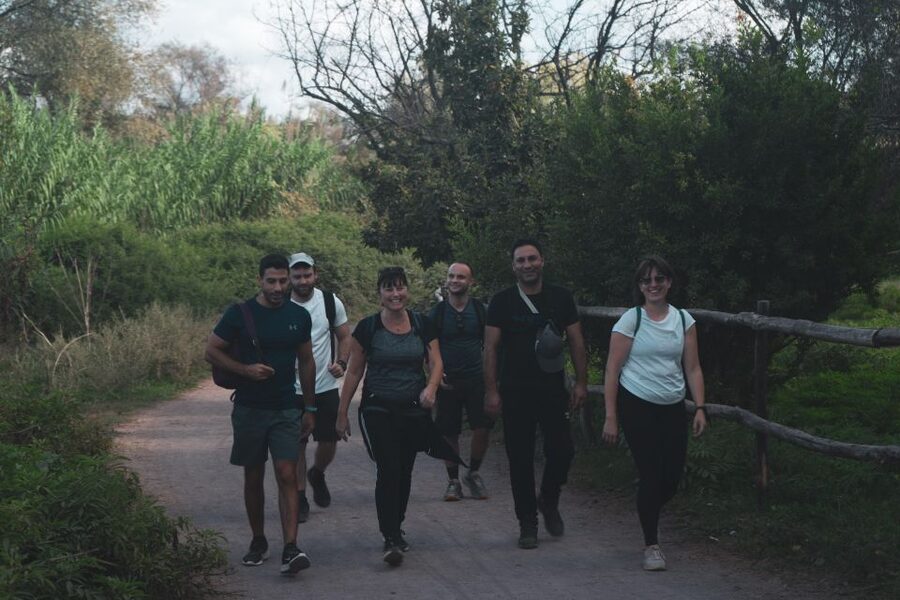
Sal is the key part of the experience. His background as a professional guide enrolled with the Italian Association of Interpretive Nature Guides supports the tour’s mix of cultural and natural subjects.
The most appealing aspect of his style is its range. He can move from aqueduct construction and Roman water systems to flora, fauna, neighborhood history, and postwar life. He is also described as easy to talk with and attentive to the needs of the group.
That does not mean every moment will be a formal lesson. The experience is better suited to you if you enjoy asking questions and observing as you walk. People looking for a tightly scripted, monument-by-monument tour may find it looser than expected.
The group limit of 10 is a real advantage. It allows the pace and explanations to adjust to the people present. It also makes practical help possible, such as finding shade, taking water breaks, or helping with the subway after the walk if needed.
What to pack and how to prepare
Wear hiking shoes, especially if rain is possible or the ground has been wet. Comfortable walking shoes may work in dry conditions, but hiking footwear gives you better support on uneven terrain.
Bring:
- 1.5 liters of water
- A comfortable backpack
- A raincoat
- Sunscreen
- A hat for sun and rain
- Trail snacks
- Sunglasses
- Optional hiking poles and electrolytes
Do not bring sandals or flip-flops as your main footwear. The route includes uneven terrain, and the activity specifically rules them out.
Because the tour takes place rain or shine, check the forecast before leaving. The guide can change the route for safety, but you should still dress for the conditions. The best experience comes when you can focus on the aqueducts rather than wet feet, sunburn, or an empty water bottle.
Who should book this walk?
I would recommend it to repeat visitors who have already seen the Colosseum, Pantheon, and Trevi Fountain and want a different side of Rome. It is also a strong choice for photographers, history fans, families with older children, and anyone who likes combining a city walk with open countryside.
You should book if you enjoy:
- Walking several hours at a moderate pace
- Ancient engineering and Roman history
- Local neighborhoods rather than only major monuments
- Plants, wildlife, and open-air settings
- Small groups and informal conversation
- One-way routes that finish in another part of the city
I would skip it if you want a short, easy outing, if you dislike uneven ground, or if hot weather makes long walks uncomfortable. This is an active afternoon, not a simple sightseeing transfer.
Should you book the Parco degli Acquedotti hike?
Book it if the idea of reaching Rome’s aqueduct park on foot appeals to you. The route gives you more than a photo of ancient arches. It connects Pigneto, Mandrione, Porta Furba, Torre Fiscale, and the final park into one readable story about water, engineering, neighborhoods, and nature.
The strongest reason to choose it is Sal’s broad approach and the chance to ask questions in a small group. The strongest reason to hesitate is the distance, especially in heat or rain.
For a fit visitor with good shoes, enough water, and three free hours, this is a thoughtful way to see a side of Rome that many standard tours leave out. At $53, it offers solid value when you want interpretation and a carefully planned walk, not just access to the park.
FAQ
Where does the hike begin?
It begins outside Pigneto subway station on Rome’s C Line, on the side facing a bridge. The other exit faces the Conad grocery store.
Where does the hike finish?
It finishes on Via Lemonia near Giulio Agricola station on Rome’s A Line.
How long is the walk?
The route covers about 9 kilometers, or 5.5 miles, and usually lasts around three hours. The guide may change the timing or route for weather and safety reasons.
What difficulty level is the hike?
It is rated moderate and includes uneven terrain. Comfortable walking shoes are required, with hiking shoes especially recommended after rain.
What languages are available?
The experience is offered in English, German, or Italian. The activity details specifically list English and German for the live guide.
Is the hike suitable for families?
It is described as suitable for families. Children aged 14 and older must be accompanied by adults, while the activity is not suitable for children under 12. Ask the provider about children aged 12 or 13 because the age guidance does not clearly cover them.
What should I bring?
Bring hiking shoes, 1.5 liters of water, suitable clothing, a comfortable backpack, sunscreen, a hat, and a raincoat. Trail snacks, electrolytes, sunglasses, and hiking poles are optional.
Does the hike operate in bad weather?
Yes. It takes place rain or shine, but the professional guide may change, shorten, or extend the route if weather or another safety issue requires it.
How large is the group?
The group is limited to 10 participants.
Just added around Italy
- Private Guided Hike to Tre Cime di Lavaredo★ 5.0 · 16 reviews
- Hike the Dolomites One Day Private Excursion from Cortina★ 5.0 · 18 reviews
- BarCa Winery Cinqueterre Trekking & Wine Tasting & Pesto Class★ 5.0 · 48 reviews
- From Catania: Private mt. Etna trekking and pic-nic★ 5.0 · 37 reviews
- Mount Etna Advanced Trekking: Private Full-Day Tour from Catania★ 5.0 · 21 reviews
- Nature Reserve ,Trekking Eco Tour in Iblei National Park★ 5.0 · 27 reviews
- Etna trekking and wine tasting★ 5.0 · 28 reviews
- Ferriere waterfalls hike – Amalfi and Ravello Coast★ 5.0 · 14 reviews
Italy Hiking Tours, side by side.
Cinque Terre Day Trip with Optional Hiking or Pisa
Read our review →
Cinque Terre Day Trip with Optional Hiking or Pisa
Read our review →
Mount Etna: Summit Guided Hiking Tour up to 3,400 m
Read our review →
Mount Etna: Trek to 3000m with cable car and 4×4
Read our review →
Mount Etna: Summit Crater Trek with Cable Car
Read our review →
Etna: summit craters trekking with volcano guide 3350mt
Read our review →
Mount Etna Trekking Tour Beyond the Tourist Trails
Read our review →Mount Etna: Guided Trek 3,000 Meters to the Summit
Read our review →This walk also sits in