
REVIEW · ICELAND
Skaftafell: Glacier XTreme – Hike & Ice Climbing Adventure
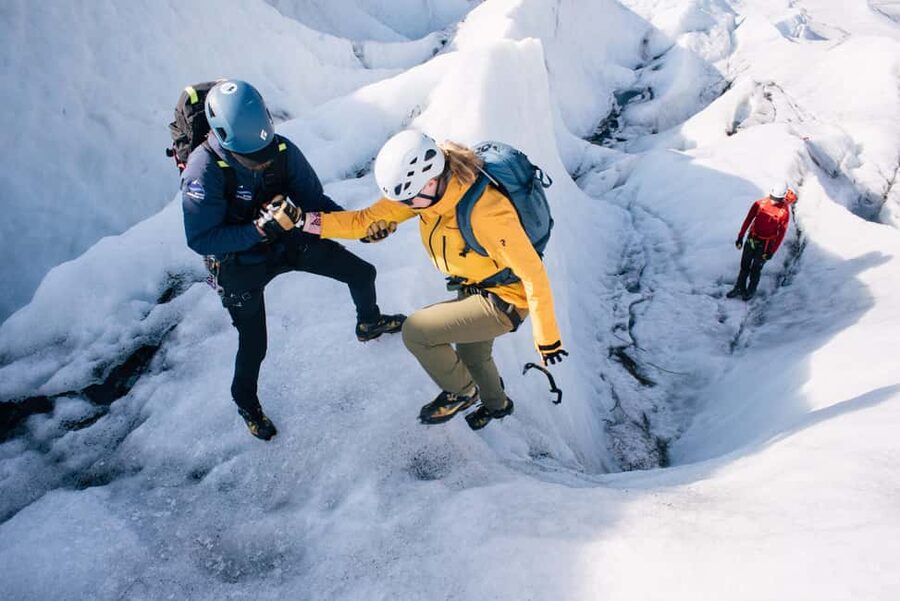
The real appeal here is that you do not simply walk across a glacier and take a few photos. You hike high onto Falljökull, work your way through crevasses and broken ice, then use crampons and two ice axes to climb changing vertical walls. I especially like the six-person limit per guide and the fact that you get proper ice-climbing boots, not just borrowed spikes strapped to hiking shoes.
I also like how the guides adjust the challenge. Martin, Dara, Eric, Mike, and others have been praised for patient instruction and steady safety checks. The catch is simple: this is a long, hard outing. If a five-hour hike with repeated climbs sounds tiring rather than exciting, choose an easier glacier walk.
Key things to know before you book
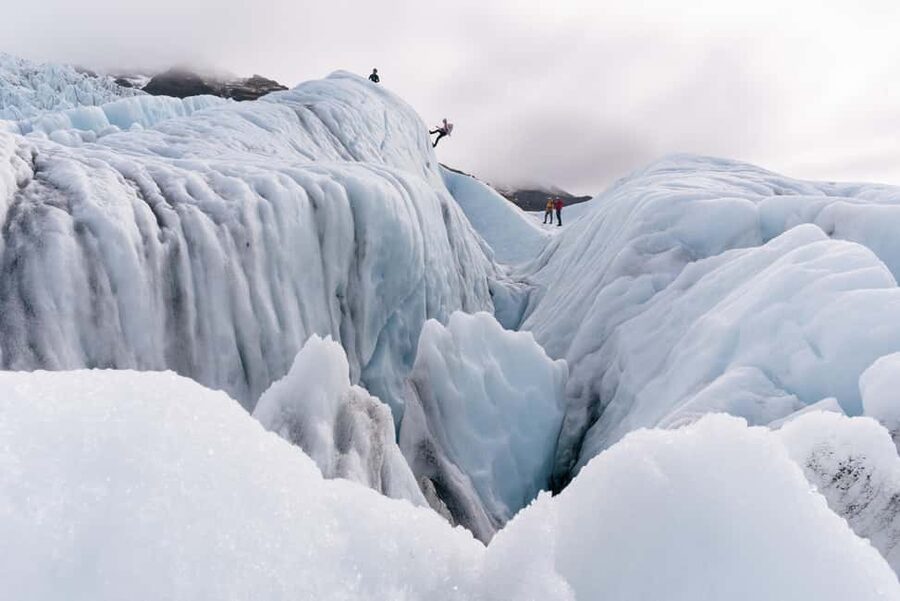
- Three or more ice climbs may be possible: The guide chooses walls based on the day’s ice, your group’s ability, and available time.
- You go higher than on a standard glacier walk: The route leaves the easy paths behind and reaches more remote ice formations.
- Small groups make a real difference: With no more than six people per guide, you get more coaching and less waiting.
- All technical equipment is supplied: Boots, crampons, helmet, harness, and ice axe are included.
- Pack food and water: Meals and drinks are not provided, and the day can run long.
- You need reasonable fitness: Children under 14 and people with mobility impairments cannot take part.
Why this is more than a glacier walk
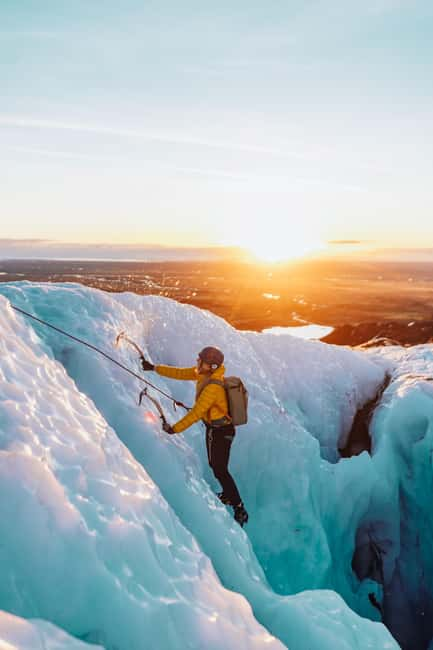
Skaftafell offers several ways to see ice, but Glacier XTreme is aimed at people who want to use their hands and legs, not just admire the view. Falljökull, meaning Falling Glacier, is an outlet of Vatnajökull, Europe’s largest glacier. Its surface changes constantly, with ridges, cracks, blue walls, and ice corridors shaped by meltwater and movement.
That changing surface explains why the route is not fixed in the way a city tour is. Your guide checks the ice conditions and chooses suitable climbing walls on the day. One group climbed three walls that became harder in sequence. Another group found a small ice cave. You cannot count on a particular cave or number of climbs, but you can expect the guide to make the most of the conditions.
I like this format because it gives you a real sense of discovery. You may begin on a clear route, then move into rougher ice where the scenery feels less managed. The reward is a closer look at folds, tunnels, crevasses, and blue ice that a basic walk may not reach.
The cost is $247 per person. That is not a casual add-on, but the price includes the guide, transport from Skaftafell, specialist boots, crampons, helmet, harness, and ice axe. You are also paying for a certified guide who evaluates the ice and sets up the climbs. Compared with booking a separate hike and climbing session, the combined format offers solid value for active visitors who want both.
More Glacier Hikes in Iceland
- Skaftafell: Ice Cave Tour and Glacier Hike
★ 4.5 · 1,746 reviews - Skaftafell: Falljokull Glacier Easy Group Hike
★ 4.7 · 1,508 reviews - Reykjavik: Glacier Hike, Waterfalls and Black Sand Beach
★ 4.8 · 1,285 reviews
Starting at the Skaftafell hut
You meet by the Skaftafell booking center, at the wooden hut with the Arctic Adventures logo. This is where you receive your gear and meet your English-speaking guide.
The equipment list matters. You get ice-climbing boots in European sizes 36 to 50, crampons, an ice axe, helmet, and harness. You do not need to bring special shoes, and you should not assume ordinary hiking boots will be enough for this trip. The supplied boots are designed to work with the crampons and to give you a stable platform on the ice.
Bring warm outdoor clothing, a waterproof jacket and trousers, hat, gloves, water bottle, and snacks. Waterproof outerwear can be rented, but warm clothing is not included. Food and drinks are also your responsibility. Pack more water and snacks than you might for a short walk, especially if you expect to attempt several climbs.
The guide gives you an introduction to the equipment and explains how to move with crampons. This early instruction is important. Walking on ice is not just ordinary hiking with metal points under your boots. You need to lift your feet clearly, place the crampons properly, and keep your balance on uneven ground.
The 4×4 ride to Falljökull
After gearing up, you ride in a 4×4 bus from Skaftafell to the foot of the glacier. It saves your legs for the part that matters and gets you closer to the ice than a regular road vehicle could.
This transfer is brief compared with the full outing, but it helps explain the structure of the day. You are not walking from the booking hut all the way to the glacier. The vehicle handles the approach, then you continue on foot into rougher ground.
Tour times vary with the season and conditions. The advertised duration is five and a half hours, but allow flexibility. One outing began at 9:30 in the morning and returned around 6:00 in the evening. That is a useful warning: the posted duration is a guide, not a promise that every group will finish at the exact same time.
Hiking higher onto the glacier
Once you leave the vehicle, the outing becomes physical. You hike across uneven ice and snow, passing around crevasses and jagged formations. The goal is not simply to reach a viewpoint, but to move farther and higher onto the glacier than a standard walk usually allows.
The route may include steep sections and rough footing. Your guide controls the pace and selects safe passages, but you still need to work. Several hours in crampons can tire your calves and ankles, even before the climbing begins.
The payoff is access to a frozen world that feels different from the broad views seen near the glacier edge. You can inspect blue ice up close, look into openings and cracks, and see how the glacier is shaped by pressure and meltwater. The ice is not a single smooth sheet. It is broken, layered, and constantly changing.
You may also get wide views across Vatnajökull and the surrounding mountains. Weather can affect how much you see. Rain and cloud do not necessarily cancel the outing, but they can reduce the views. One wet, cloudy day still offered plenty of glacier scenery, which suggests the ice itself remains the main attraction even when the sky is less cooperative.
Same trailheads, a different kind of day:
- Sólheimajökull: Blue Ice Glacier Hike near Vík (Easy)
★ 4.7 · 1,260 reviews - Skaftafell National Park: Falljokull Glacier Advanced Hike
★ 4.8 · 1,083 reviews - Reykjavík: Volcano Eruption Site and Reykjanes Hiking Tour
★ 4.6 · 1,066 reviews - Skaftafell: Blue Ice Glacier Hike on Vatnajökull
★ 4.7 · 1,045 reviews
Learning to climb blue ice
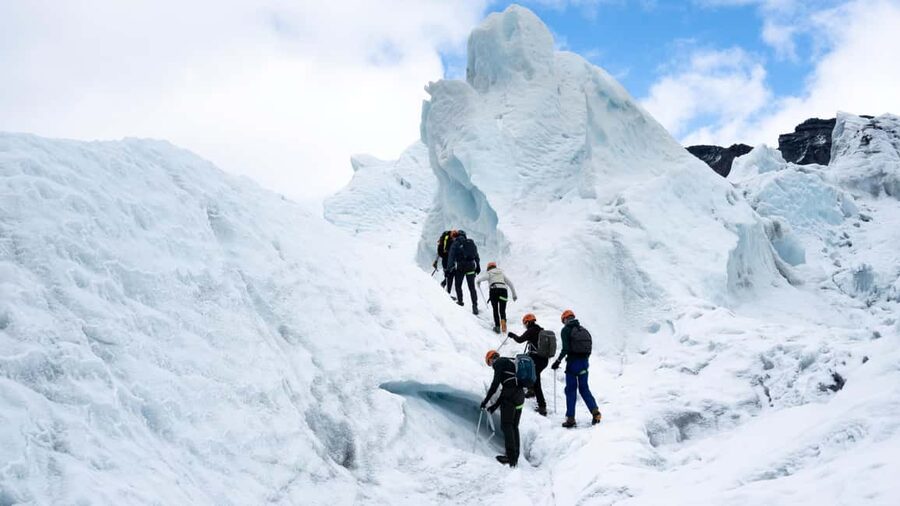
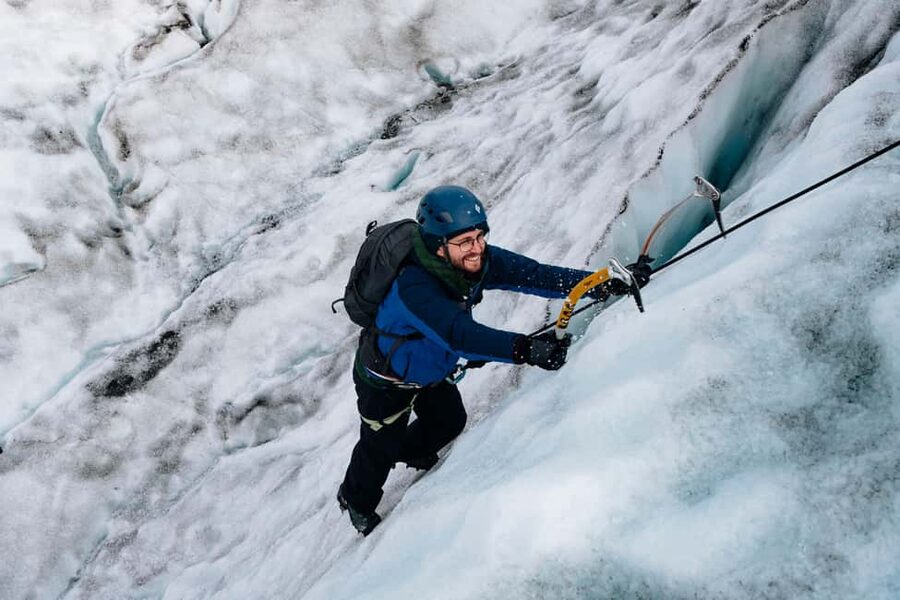
The climbing session is the feature that separates this experience from a standard glacier hike. Your guide shows you how to use the crampons and ice axes, then sets up a suitable wall.
You climb with the front points of your crampons pressed into the ice and your axes placed above you. The technique takes focus. It is less about brute strength than keeping your body positioned correctly, placing each foot carefully, and moving in a steady rhythm.
The guides tailor the challenge. A first-time climber may receive a simple wall and close coaching, while someone with prior experience may be offered a steeper section. Groups have climbed walls in ascending difficulty, and guides have added more climbs when the group had the energy and time.
You should not expect every member of the group to complete every wall. One climber stopped after the second because the effort had become too much. That is perfectly reasonable. The point is to test yourself safely, not to prove something at the cost of an exhausted return hike.
The small group size is especially valuable here. With no more than six people per guide, you get a better chance to ask questions, receive corrections, and climb without a long queue. If seven people book, the operator may split the group between guides, as happened on one outing that became a private three-person group.
What the guides add
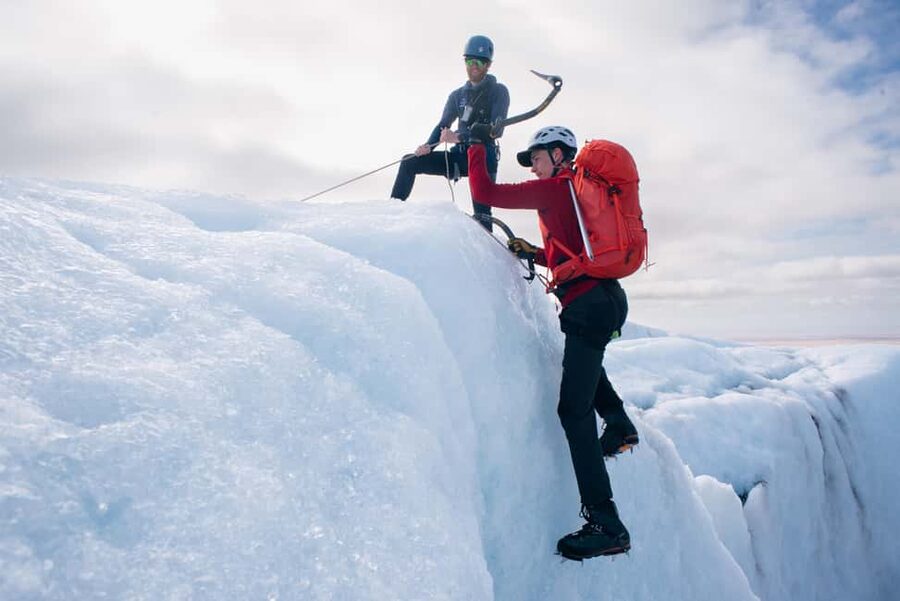
The quality of the guide can shape the whole day. This experience uses certified glacier guides who explain the ice, demonstrate technique, choose the walls, and monitor conditions.
Names that appear repeatedly in the experience details include Eric, Martin, Dara, Yaya, Kristian, Mikhail, Maya, Rob, and Rab. The most important pattern is not a particular personality. It is the combination of technical instruction, patience, and encouragement.
Dara helped a tired climber decide how far to push. Mike explained the process, answered questions, and kept the mood light. Martin was praised for teaching climbing clearly and maintaining a strong sense of safety. Eric offered tips on crampon technique and explained the glacier. Yaya checked in with everyone during the long outing.
That kind of attention matters because the day can feel intimidating at first. You are wearing unfamiliar equipment and looking up at a wall of ice. A guide who explains one movement at a time can turn that nervousness into concentration.
How demanding is the five-and-a-half-hour outing?
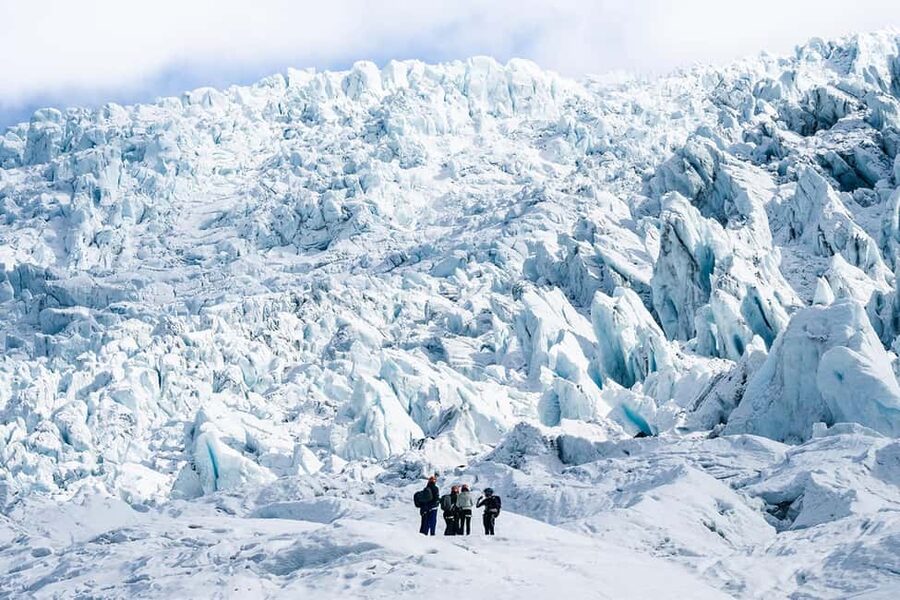
You should be reasonably fit before booking. The tour is not suitable for children under 14 or people with mobility impairments, and the physical demands go beyond those of a normal sightseeing walk.
Expect several miles of hiking on at least some outings, followed by repeated climbing attempts. Your legs, arms, and grip all get used. The cold adds another layer of effort, even when the weather looks manageable at the hut.
The best approach is to pace yourself. Drink regularly, eat during breaks, and do not feel pressured to climb every wall. A group can still have a strong day if one person chooses to watch a climb or stop after an earlier attempt.
I would also treat the duration as a full half-day commitment, with room for it to run longer. This is not an activity to squeeze between two tightly scheduled attractions.
Clothing, food, and comfort
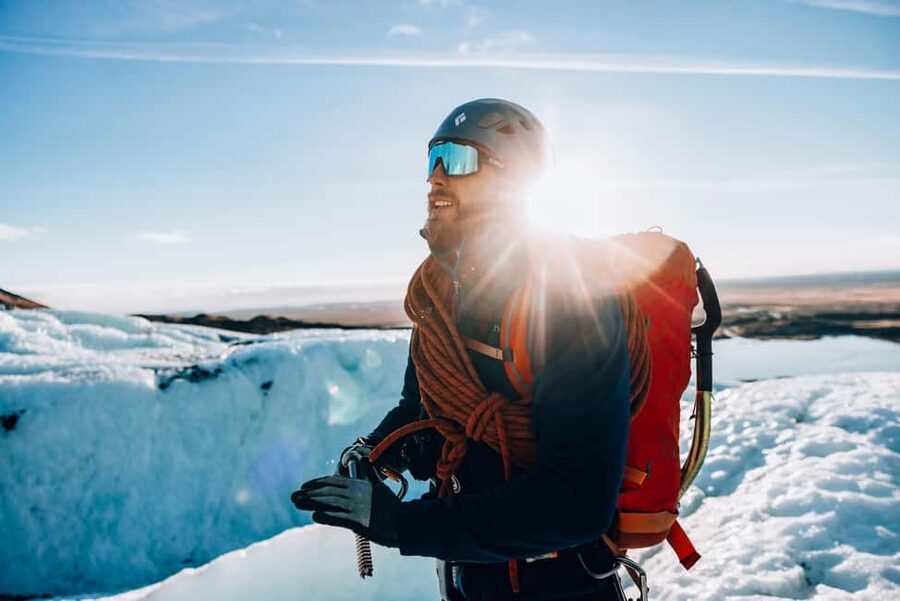
The supplied gear protects your feet and head, but it does not replace proper clothing. Wear warm layers that let you move freely. Add a waterproof jacket and waterproof trousers, hat, and gloves. Waterproof outerwear is available to rent if you do not have suitable gear.
Bring snacks with useful energy and enough water for a long active period. There is no food or drink included. Meltwater may be available on the glacier, but you should begin with your own bottle and not depend on finding a refill.
The weather can change during the outing. Even on a good day, wind, cloud, rain, and cold may affect comfort. Gloves are especially important because your hands work with the axes and need protection during breaks.
Safety and changing ice
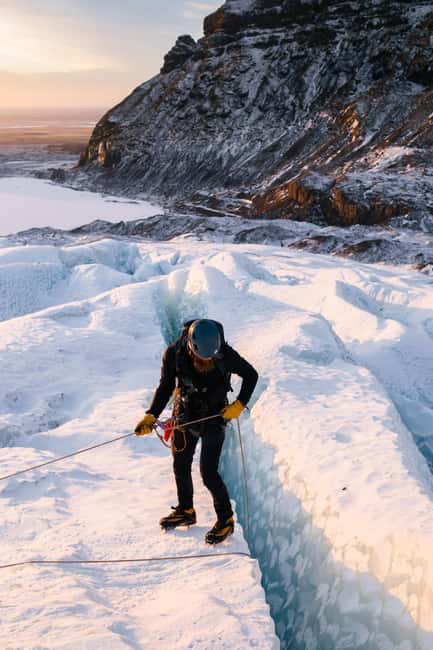
Glacier travel always depends on current conditions. Falljökull changes, so the walls and route selected by the guide may not be the same from one day to the next. That is a strength of the trip, not a flaw, provided you accept that the exact itinerary cannot be guaranteed.
Your guide checks the ice each day and selects climbing areas suitable for the conditions. You receive a helmet and harness, and the guide teaches you how to use the crampons and axes. Still, safety equipment does not make the activity easy or risk-free. You need to follow instructions, stay with the group, and respect your own limits.
The most sensible safety decision may be choosing not to attempt a particular wall. Guides can adjust the challenge, and you can participate fully without completing every climb.
Is $247 a fair price?
For a simple walk, $247 would feel high. For five and a half hours of guided glacier travel, specialist equipment, a 4×4 transfer, and several chances to climb, the price makes more sense.
You are also paying for a small group. Six people per guide is a useful limit when the guide must fit boots, check crampons, demonstrate climbing, and monitor everyone on changing ice. Larger groups can mean more waiting and less individual coaching.
The value is strongest if you want both hiking and climbing. If your main goal is a short look at glacier ice, a less demanding tour may suit you better and cost less. If you want to learn a new skill in a serious setting and spend much of the day on the glacier, this package gives you a lot of activity for the price.
Free cancellation up to 24 hours before departure and reserve-now, pay-later booking add practical flexibility. They do not change the physical demands, but they help if your Iceland route depends on weather and road conditions.
Who should book Glacier XTreme?
I would choose this tour if you are active, curious about ice climbing, and happy with a long day outdoors. It is especially good for first-time climbers because the guide teaches the basics and adjusts the walls to the group.
It also works for experienced climbers who want a glacier setting rather than an indoor wall. You may not get a fixed number of climbs, but the guide can offer harder sections when conditions and ability allow.
I would skip it if you want a relaxed stroll, dislike cold and wet weather, or need a predictable finish time. The route is physically intense, and the effort continues after the first climb. Mobility limitations also make this unsuitable.
Should you book it?
Book Glacier XTreme if you want to do more than photograph Vatnajökull from a distance. The strongest reasons are the small groups, proper climbing equipment, flexible route, and patient coaching from guides such as Eric, Martin, Dara, and Mike.
Pack seriously, leave room in your schedule, and expect tired legs. If you do, you get a rare chance to walk high onto Falljökull, learn real ice-climbing technique, and return with more than a scenic memory. You will have worked for those blue-ice views.
FAQ
Where does the tour meet?
Meet at the wooden hut with the Arctic Adventures logo, beside the Skaftafell booking center.
How long does the experience last?
The stated duration is five and a half hours. Start times and the exact timing can vary by season and conditions.
What glacier will I visit?
The tour takes place on Falljökull, known as Falling Glacier, which is an outlet of Vatnajökull.
Is transport included?
Yes. A 4×4 bus transports you from Skaftafell to the foot of the glacier.
What equipment is provided?
Crampons, an ice axe, helmet, harness, and ice-climbing boots are included. The boots fit European sizes 36 to 50.
What should I bring?
Bring warm outdoor clothing, a waterproof jacket and trousers, headwear, gloves, a water bottle, and snacks. Waterproof jackets and trousers are available to rent.
Is the tour suitable for beginners?
Yes. The guide teaches basic ice-climbing techniques and adjusts the challenge to the group. You still need reasonable fitness for the long hike and climbs.
Can children take part?
Children under 14 cannot join this experience. It is also not suitable for people with mobility impairments.
Just added around Iceland
- Glacier Hiking In Skaftafell★ 5.0 · 41 reviews
- Hiking with Husky in Akureyri★ 5.0 · 41 reviews
- Sólheimajökull Glacier Hike★ 4.6 · 89 reviews
- Sólheimajökull: Guided Glacier Hike★ 4.7 · 108 reviews
- Sólheimajökull: Glacier Hike and Ice Cave Tour★ 4.7 · 21 reviews
- Sólheimajökull Ice Climb and Glacier Hike★ 4.9 · 67 reviews
- Sólheimajökull: Glacier Hike and Blue Ice Cave Tour★ 5.0 · 15 reviews
- Sólheimajökull Glacier: Guided Hike with Equipment★ 4.8 · 13 reviews
Glacier Hikes, side by side.
Glacier Hike, Waterfalls and Black Sand Beach
Read our review →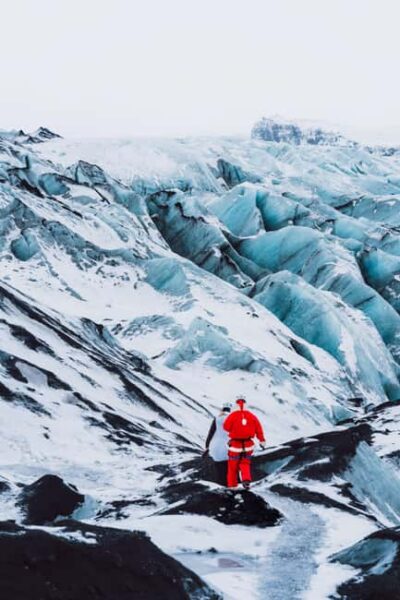
Sólheimajökull: Blue Ice Glacier Hike near Vík (Easy)
Read our review →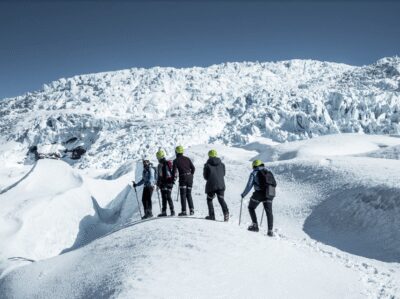
Skaftafell National Park: Falljokull Glacier Advanced Hike
Read our review →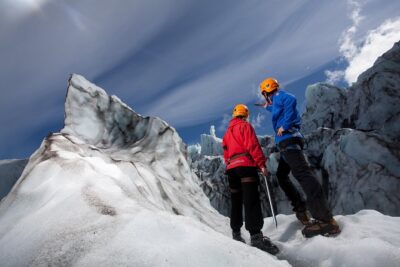
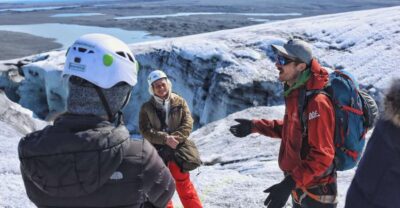
Jökulsárlón: Vatnajökull Glacier Guided Hiking Tour
Read our review →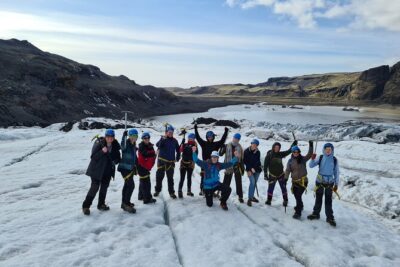
This walk also sits in