
REVIEW · IRELAND
Trek the Tombs and Trails in the Dublin Mountains
The most unusual part of this Dublin outing is its mix of ancient tombs and open mountain paths. You leave the city by local bus, reach a remote village, then walk through the Dublin Mountains to burial sites dating back thousands of years. This is not a quick photo stop. The tombs are part of a full day outdoors, with time for views, wild berries, and a country meal.
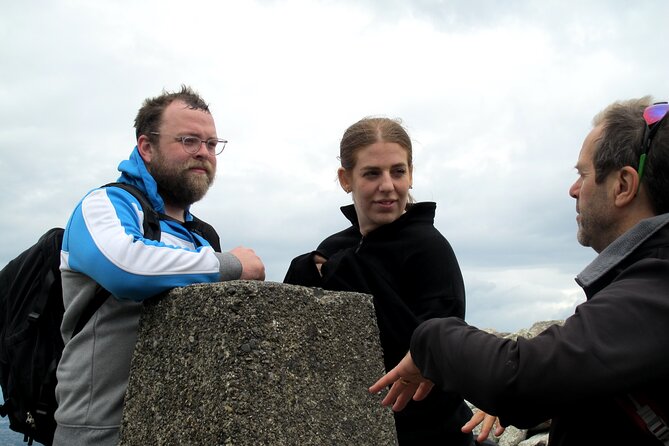
I like two things in particular. First, guide Ben brings Irish history into the walk in a way that makes the stones easier to understand. Second, the group is capped at eight people, so you get more room to ask questions and keep a natural walking pace. The views over Dublin Bay are another strong reason to go.
The main consideration is the moderate fitness level required. Seven hours on mountain paths, ridges, forest tracks, and rural roads is a full outing. Weather also matters, since poor conditions can lead to a new date or a full refund.
Key points before you book
- Two very different ancient burial sites: Visit a wedge tomb from the second millennium B.C., then a stone circle and burial place tied to the name of the mountain.
- A real mountain day near Dublin: The route follows the Dublin Mountains Way and includes ridge walking, forest paths, and rural back roads.
- A small group of no more than eight: You get closer contact with the guide and less waiting around.
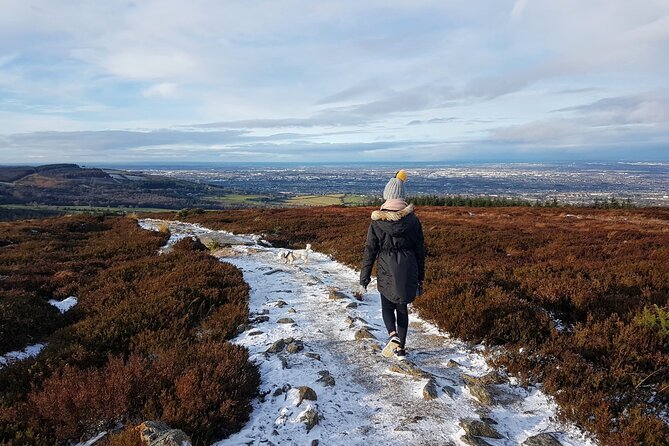
- Views in two directions: From the high points, look north toward Dublin and the bay, then south toward Wicklow.
- Local food at the finish: The Hazel House offers the option of a lunch made with local produce, while a country pub offers a more relaxed pint.
- Public transport is part of the experience: The included bus pass covers the ride to the trailhead and the return journey by a different route.
Why these Dublin Mountains trails are worth your day
Dublin is easy to enjoy from its streets, museums, and pubs, but the mountains south of the city show you another side of Ireland. This walk takes you into the foothills without requiring a car or a complicated transport plan.
The day begins outside the Luas station in Dundrum. From there, you take a local bus through the backroads toward a remote mountain village. That transfer matters. You are not simply being dropped at a standard trailhead. The bus ride helps move you from urban Dublin into a quieter rural setting, and the included bus pass keeps the transport simple.
The experience lasts about seven hours. That gives the walk a slower rhythm than a short sightseeing tour. You have time to stop at the tombs, take in the views, listen to the guide, and finish with food or a drink.
The price is $180.44 per person, which is not a small amount for a walking day. Its value depends on what you want. You are paying for a full-day experience, a small group, a guide, transport to and from the route, and access to places you would find difficult to connect on your own by public transport.
Lunch and alcohol are not included, so allow extra money for the end of the day. If you would rather carry your own food, the walk still works, but the meal stop adds a pleasant finish.
More Mountain and Summit Hikes in Ireland:
- Berber villages : Atlas Mountains Day Hike from Marrakech
★ 5.0 · 14,007 reviews - Bali: Sunrise Mount Batur Guided Hike with Breakfast
★ 4.8 · 9,660 reviews - Bali: Mount Batur Sunrise Guided Hike and Natural Hot Spring
★ 4.8 · 9,284 reviews
Glencullen and the first ancient tomb
The first named stop is Glencullen, a mountain village that provides the starting point for the walking section. From here, the route follows a meandering path through the foothills.
The first major sight is an ancient wedge tomb dating from the second millennium B.C. Wedge tombs are built from large stones and have a distinctive narrowing form, which gives them their name. This one offers a direct connection with people who lived and buried their dead in Ireland long before written records.
What I like here is the scale of the stop. The tomb is not treated as a museum exhibit separated from its setting. You reach it along a mountain path, with the surrounding hills helping you understand why ancient sites were placed in high, open areas.
Guide Ben is a useful part of this visit. He explains the history of the tomb and gives the stones a human context. A guide is especially helpful at a site like this because the remains can look simple at first glance. The story is in the construction, age, setting, and burial customs.
Do not expect a polished visitor center or a long list of displays. The appeal is the outdoor setting and the chance to stand beside an old monument with very little fuss. If you prefer large archaeological sites with signs and formal access, this will feel spare.
The Dublin Mountains Way and the high viewpoint
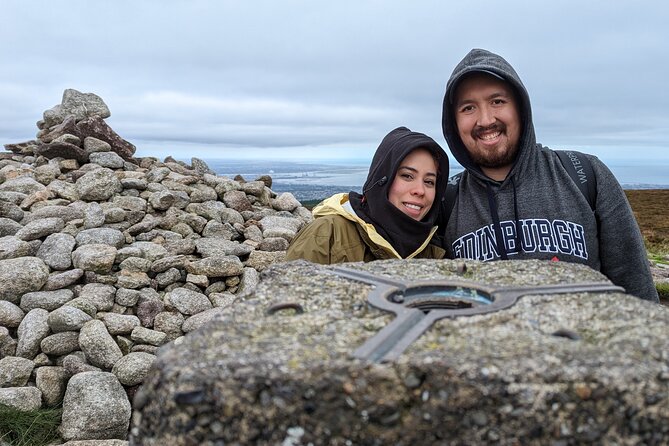
From the first tomb, you continue along the Dublin Mountains Way. The path leads toward a popular viewpoint on a mountain-top rock, where the city and bay spread out below.
This is one of the best parts of the day for anyone who wants a break from city streets. You can see Dublin to the north and Wicklow to the south, giving the walk a broad sense of place. The view changes the way you understand Dublin. From the city, the mountains can seem like a distant edge. From the ridge, the city becomes part of a much larger setting.
At the high point, you also see a cairn tomb that has never been excavated, along with a triangulation pillar. The cairn adds another layer to the route. The wedge tomb showed one type of ancient burial structure. Here, the cairn provides a second old monument, still holding its secrets.
The triangulation pillar is a more modern landmark, used for surveying. Its presence beside the prehistoric cairn creates a neat contrast between old ways of marking high ground and modern mapmaking.
This section is also where weather can have the biggest effect on your enjoyment. Clear conditions give you the wide Dublin Bay views promised by the route. Cloud, rain, or strong wind may limit the outlook and make the exposed parts feel harder. The operator requires good weather, so a cancellation for poor conditions can result in a different date or a full refund.
Wild berries and the changing seasons
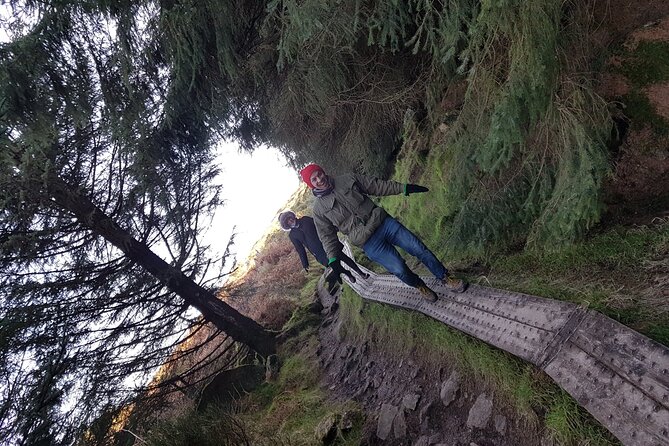
Depending on the time of year, the walk may include a pause to pick wild berries. You can eat them as they are or save them for jam or a tart later.
This is a small detail, but it gives the outing a more local and seasonal feel. The route is not only about looking at old stones and taking pictures. You also get a chance to notice what grows along the path.
The berry stop is not guaranteed, and you should not plan the day around it. It depends on the season and what is available. Still, it is a welcome touch for anyone who enjoys food, plants, and the simple pleasure of stopping for something fresh outdoors.
Do keep your expectations sensible. This is a walking tour with an optional berry-picking moment, not a foraging course. The main attractions remain the tombs, the mountain route, and the views.
More hikes and treks around Ireland:
- From Dublin: Game of Thrones Winterfell Locations Trek
★ 5.0 · 814 reviews - Dublin Coastal Hike, Pints & Puppies Adventure
★ 5.0 · 647 reviews - Cliffs Of Moher Hiking Tour from Doolin – Small Group
★ 5.0 · 324 reviews - Dublin Coastal Hike with Howth Adventures
★ 5.0 · 289 reviews
The second tomb on the ridge
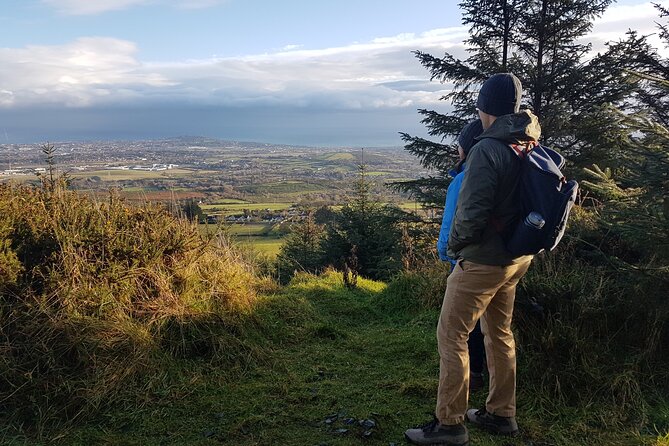
After the viewpoint, the path continues along a ridge. Dublin remains to the north, while Wicklow lies to the south. This section gives the day its strongest sense of open space.
The second burial site is an ancient stone circle and burial place. It is connected with the man for whom the mountain top is named. The site differs from the earlier wedge tomb, so the two visits do not feel repetitive.
You can compare their shapes, settings, and apparent purpose as you walk. One is a wedge-shaped burial structure from the second millennium B.C. The other is a stone circle and burial place on a mountain top. The guide’s explanations help link the physical remains with the names and stories attached to the area.
This is a good route for people who enjoy archaeology without wanting a formal lecture. You are learning while moving, with the next view or path always ahead. Ben’s role is important here because the value of the stop comes from understanding what you are seeing, not just reaching it.
The ridge section may be the most demanding part of the day. The tour asks for moderate fitness, and the full route includes uneven mountain paths. You should be comfortable walking for several hours and handling changes in surface and elevation.
Down through the evergreen forest
After the ridge, the route turns downhill along a winding path through an evergreen forest. This changes the mood of the walk.
The high ground gives you open views and a sense of distance. The forest brings shade, shelter, and a quieter finish to the walking portion. You then continue along a rural back road before reaching The Hazel House.
The route is varied without being packed with separate attractions. You move from village roads to mountain paths, from open ridges to trees, and then into a rural food stop. That variety helps a seven-hour day feel less repetitive.
The drawback is that the route is not designed for a quick or effortless outing. You need to be ready for a full day on foot, and the return to the meeting point still involves transport after the walk. If you want a gentle city excursion, this is the wrong choice.
The Hazel House, local food, and a country pint
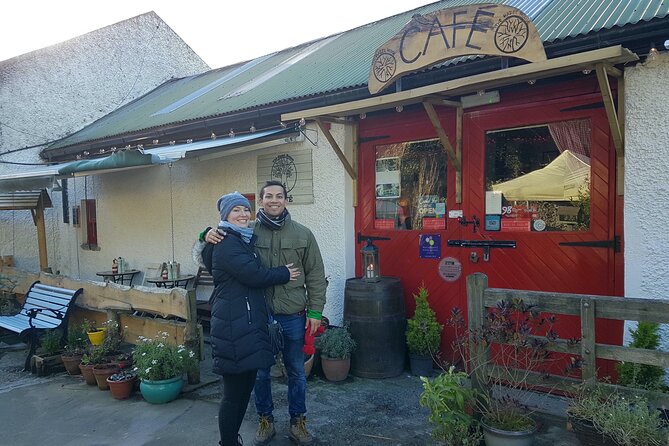
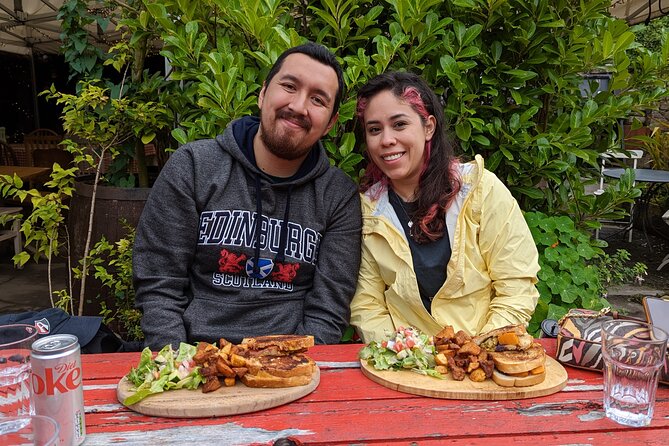
The walk ends at The Hazel House, a quaint cafe and restaurant where you can choose to have lunch made with local produce and cuisine. This meal is optional and costs extra.
I like the fact that the tour leaves room for a proper finish instead of sending you straight back to Dublin. After several hours outside, a sit-down meal can make the day feel complete. It also gives you a chance to try local food in a rural setting rather than returning immediately to the city.
You can choose a country pub instead and enjoy a well-earned pint. Alcohol is not included, so budget separately for drinks. The choice suits different travel styles: The cafe offers a meal, while the pub provides a classic Irish end to a day in the hills.
The return bus follows a different route from the outward journey. That keeps the transport from feeling like a simple repeat and gives you another look at the area. The included bus pass covers transport to the start of the hike and the return after the walk.
Group size, guide, and the walking pace
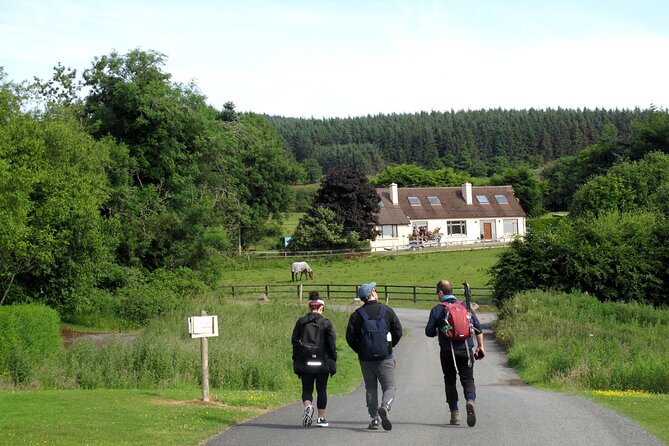
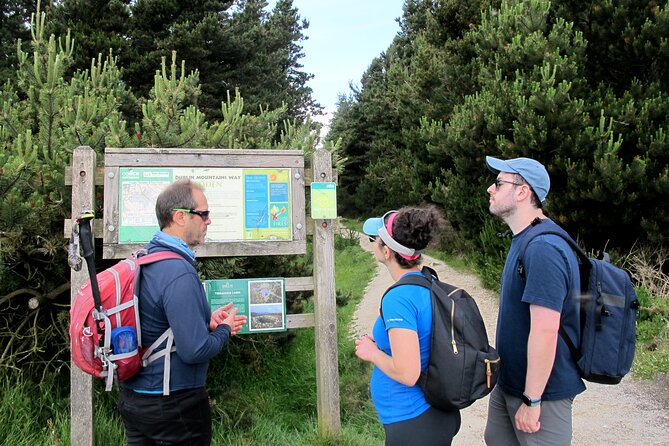
With a maximum of eight people, this is a genuinely small outing. That matters on a route with several history stops because you can hear the guide without standing in a large crowd.
A small group also makes it easier to ask about the tombs, the mountain names, the views, or the local area. If you enjoy conversation and want more attention from the guide, this format is a strong point.
Ben is named as one of the guides, and his explanations of Irish history are a key part of the experience. The walk is not only about reaching scenic points. It is built around understanding the places you pass.
The pace is described as leisurely in the forest and at the food stop, but the day still requires moderate fitness. Those are not contradictory. You may not be rushed, but you will be walking for much of the day.
The tour is offered in English. Service animals are allowed, and the meeting point is near public transportation. The start and finish are both outside the Dundrum Luas station, which makes the day easier to connect with the wider Dublin transport network.
Who should book this mountain walk?
I would choose this experience if you want a full day beyond central Dublin and like the idea of combining archaeology with walking. It suits you especially well if ancient sites interest you but you do not want to spend the whole day inside a museum.
It also works for people who value local details: a village bus ride, mountain berries in season, a rural cafe, and a pub at the finish. The route offers more than a standard viewpoint stop.
You should think twice if you dislike uncertain weather, long walks, or uneven mountain paths. The route is not ideal for anyone seeking a short, low-effort activity. Lunch is extra, and the price is high compared with a simple self-guided walk, though the guide, small group, and included transport add real value.
The strongest reasons to book are the two tombs, the broad views, and the chance to learn from Ben in a small group. The strongest reasons to skip it are the cost, the seven-hour commitment, and the need for good weather.
FAQ
How long does the experience last?
The experience lasts approximately seven hours.
Where does the tour start?
It starts outside the Luas station in Dundrum, Dublin.
Where does the tour finish?
The tour finishes back at the meeting point in Dundrum.
What is included in the price?
A bus pass for transport to the start of the hike and for the return journey is included.
Is lunch included?
No. You have the option to buy lunch at The Hazel House, but it is not included in the tour price.
Are alcoholic drinks included?
No. You can visit a country pub for a pint at the end, but alcoholic drinks cost extra.
How many people can join the group?
The group has a maximum of eight people.
What level of fitness is needed?
You should have a moderate level of physical fitness for the mountain paths, ridge walking, forest trail, and rural roads.
Is the tour offered in English?
Yes. The experience is offered in English.
What happens if bad weather cancels the walk?
If poor weather causes a cancellation, you will be offered a different date or a full refund. You can also cancel for a full refund if you do so at least 24 hours before the start time.
Should you book Trek the Tombs and Trails?
Book it if you want to see a quieter side of Dublin and are happy to trade easy sightseeing for a full day on foot. The combination of a prehistoric wedge tomb, an unexcavated cairn, a stone circle, mountain views, and a local food stop gives the day a clear sense of place.
The best match is an active visitor who enjoys history, open views, and small-group guiding. If that sounds like you, the price can make sense, especially since transport is included and the group stays small. If you prefer short walks, guaranteed sunshine, or a set lunch included in the fee, choose another Dublin activity.
Just added around Ireland
- Howth Hiking Trail from Dublin: Mythology and Legend★ 5.0 · 77 reviews
- Glendalough Night Hike and History Tour★ 5.0 · 55 reviews
- Bog Safari Hike★ 5.0 · 27 reviews
- Toe Head Clifftop Hike in West Cork★ 5.0 · 48 reviews
- Dublin: Howth Safari Hiking Tour★ 5.0 · 70 reviews
- Dublin: Dublin Coastal Hike and Pints & Puppies★ 5.0 · 70 reviews
- Dublin: Howth Coastal Hiking Tour★ 4.9 · 116 reviews
- Howth Safari Hiking Tour★ 5.0 · 279 reviews
Mountain & Summit Hikes, side by side.
Berber villages : Atlas Mountains Day Hike from Marrakech
Read our review →
Sunrise Mount Batur Guided Hike with Breakfast
Read our review →
Mount Batur Sunrise Guided Hike and Natural Hot Spring
Read our review →

Mount Etna: Summit Guided Hiking Tour up to 3,400 m
Read our review →
Bovilla Lake & Gamti Mountain Hiking Day Trip
Read our review →
Mount Etna: Trek to 3000m with cable car and 4×4
Read our review →
Mount Batur Sunrise Trek With Guide and Breakfast
Read our review →This walk also sits in