
REVIEW · PERU
Ausangate Trek 5 Days
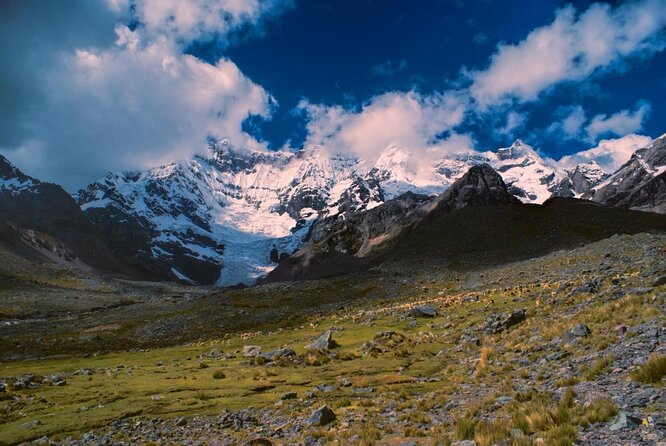
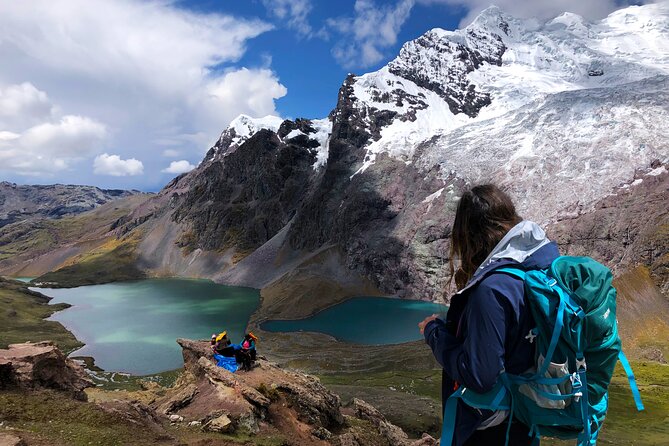
The big draw here is the remote high-country scenery. Over five days, you circle Ausangate, Peru’s sacred mountain, crossing stark passes, passing turquoise glacial lakes, and ending with hot springs and a visit to a local family. This is not a gentle walk near Cusco. You sleep as high as 4,630 meters and reach 5,200 meters on day three.
I like the small-group format, capped at 10 people, and the way the trip brings a cook, horse driver, and guide into the mountains with you. I also like the cultural layer: an Apu Ausangate ceremony, coca tea, local food, and a weaving demonstration make this more than a pretty hike.
The main caution is altitude. The route is physically demanding, cold at night, and remote. You need a moderate fitness level, proper acclimatization, and warm mountain clothing. The listed price of $660 is strong value for five days of meals, camp support, transport, and guiding, but a sleeping bag and the 20-sol entrance fee cost extra.
Key points to know before booking
- Five days at serious altitude: The route reaches 5,200 meters and camps as high as 4,630 meters.
- Hot springs at both ends: Soak at Upis on the first night and finish near Pacchanta’s springs.
- Small groups matter here: The maximum is 10, with guides such as Guillermo and Urbano praised for personal attention.
- Excellent camp support: A cook prepares the meals, while horses carry equipment and help the crew move camp.
- A quieter alternative to famous Cusco hikes: The route feels remote, with few other groups in sight.
- Cultural encounters are built in: Expect an Apu ceremony, local food, family traditions, and weaving techniques.
Why Ausangate feels different from Cusco’s famous hikes
Many people come to Cusco for Machu Picchu or the Inca Trail. Ausangate offers a different kind of Peru. Here, the focus is the mountain itself, along with glacial lakes, alpacas, high passes, and communities that still live close to the land.
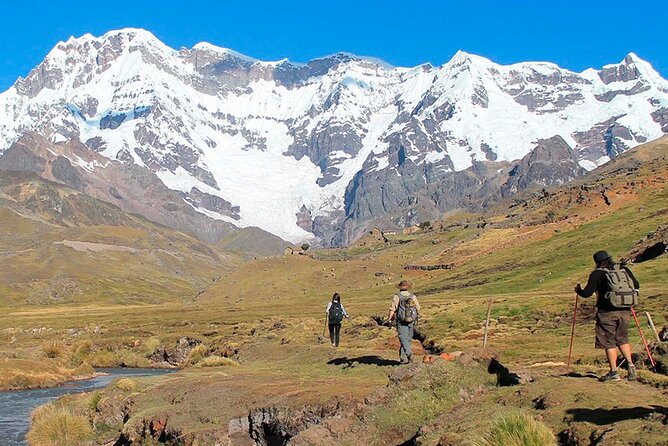
The route is not built around ruins or a single grand arrival. Its rewards come hour by hour. One bend reveals a green lake. Another gives you a new view of Ausangate. A steep climb brings a pass where the air is thin and the mountains seem almost unreal.
I like that the route is less crowded than Peru’s best-known trekking corridors. The quiet is part of the appeal. You are not walking from one packed campsite to another, and the scenery has room to feel wild.
That quiet comes with a tradeoff. Facilities are basic, camping is high, and the weather can turn cold quickly. This is a mountain trip first and a sightseeing tour second.
More Five-Day Trips around Cusco:
- Machu Picchu: 5-Day Salkantay Trek with Panoramic Train
★ 5.0 · 79 reviews - Classic Choquequirao Trek – 5 Days / 4 Nights
★ 5.0 · 52 reviews - Ultimate Lares Trek & Inca Trail 5 days
★ 5.0 · 47 reviews
Leaving Cusco at 5:00 a.m. for Rondoca and Upis
Your day begins early. The guide meets you in Cusco at 5:00 a.m. and takes you by private transport toward Tinke. This early departure gives the group time to reach the trailhead and allows a final stop for breakfast and last-minute supplies.
Tinke is useful rather than scenic. It is your final chance to buy small necessities and eat before the long days ahead. Take that stop seriously. Once the group continues to Rondoca, the route becomes far more remote.
At Rondoca, you meet the cook and horse driver who support the trek. The first walking section lasts about three to four hours and covers roughly 8 kilometers. You hike toward Upis, with views of Apu Ausangate appearing along the way.
The first camp sits at about 4,200 meters. That is already higher than many visitors expect, so the short first day is helpful. You are not thrown straight into a full day of climbing.
Upis is a fine introduction to the rhythm of the trip. After arriving, you can soak in the hot springs, drink coca tea, and let tired muscles loosen before dinner. The springs are not just a pleasant extra. At this altitude, a warm soak can make the first night feel much more manageable.
Still, do not mistake the shorter day for an easy start. You are sleeping high, and the thin air may affect you more at night than on the trail. Move slowly, drink water, and tell your guide if you feel unwell.
Day two brings two high passes and the first blue lakes
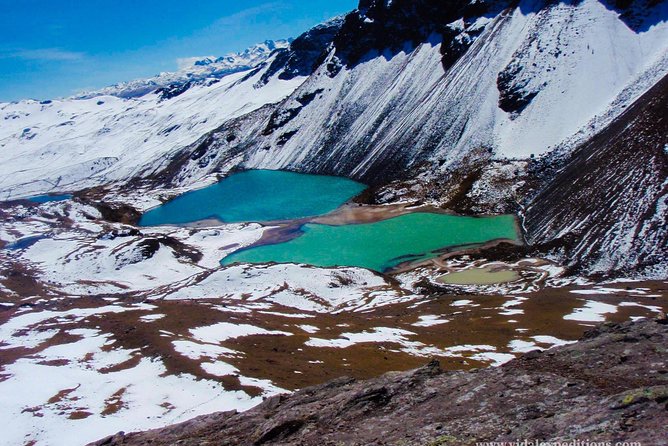
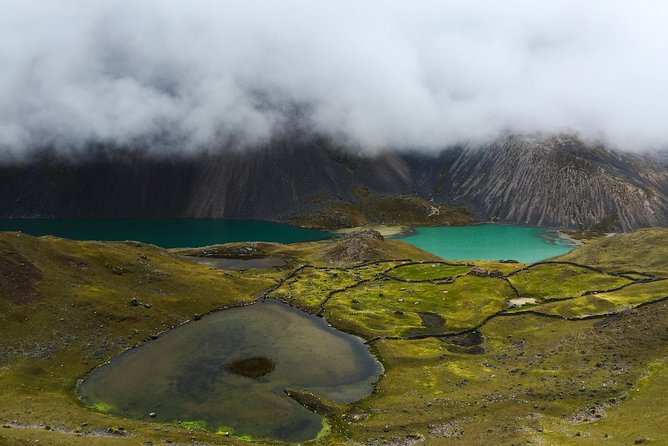
Day two is the first serious test. After a hot cup of coca tea and breakfast, you climb toward Arapa Pass at 4,850 meters. The route then drops for about two and a half hours through the valley, passing Puqa Q’ocha, a green lake, before reaching turquoise Jatun Puqa Q’ocha.
This contrast in lake colors is one of the day’s pleasures. The scenery changes as you walk, rather than presenting one fixed viewpoint. Jatun Puqa Q’ocha also makes a memorable lunch setting, with Ausangate visible beyond the water.
After lunch, you climb again to Apacheta Pass at about 4,980 meters. From here, you look down toward a turquoise lagoon fed by snowmelt from Ausangate. The route then descends for about an hour to Ausangate Qocha, where you camp.
The numbers explain why this day requires real fitness: around 12 kilometers, about seven hours of walking, and major altitude changes between roughly 4,200 and 4,930 meters. Even a strong walker may find the pace demanding at this height.
This is where the horse support matters. The animals carry equipment, so you are not hauling the full camp on your back. You still need to carry your personal essentials, but the arrangement keeps the trek within reach for people who are fit and properly acclimatized.
Palomani Pass at 5,200 meters is the trek’s high point
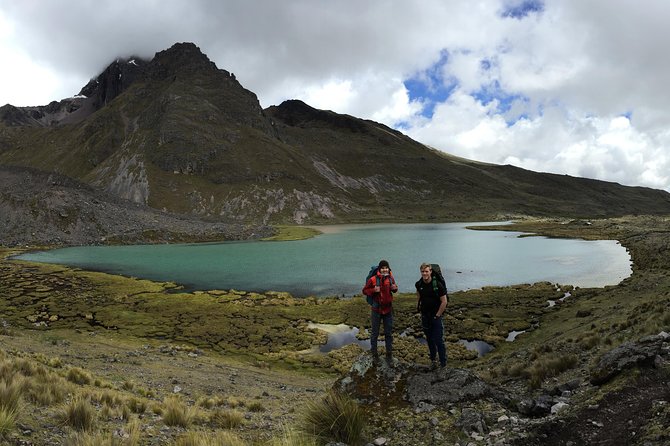
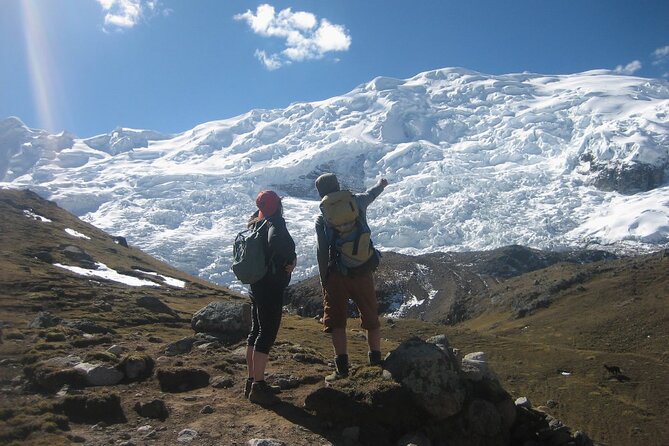
Day three takes you to Palomani Pass, the highest point of the route at 5,200 meters, or about 17,060 feet. The climb takes around two hours from camp, though your pace will depend on altitude and conditions.
At the pass, the guide leads a ceremony for Apu Ausangate. In Andean tradition, an Apu is a sacred mountain spirit. This moment gives the mountain cultural meaning rather than treating it as a backdrop for photographs.
I especially like this part of the route because it connects the physical effort with local belief. You are not simply ticking off the highest elevation. You are being shown why this mountain matters to the people who live near it.
After the pass, you descend for about an hour to Uchuy Phinaya for lunch. The afternoon continues with several more hours of hiking to the next camp. The day covers about 13 kilometers, with six to seven hours on foot, and ends at about 4,500 meters.
This may be the hardest day mentally. You have already crossed high passes, and the mountain air gives you little margin for rushing. Keep your stride short and steady. The guide’s job is especially important here, and the company uses guides including Guillermo and Urbano, also known as Chino, who are praised for explaining local culture, wildlife, and the route while keeping the group encouraged.
More hikes and treks around Cusco:
- From Cusco: 7 Lakes Ausangate Trek with Breakfast and Lunch
★ 4.8 · 360 reviews - Cusco: Rainbow Mountain Tour and Red Valley Hike (Optional)
★ 4.7 · 149 reviews - Cusco: Full-Day Rainbow Mountain & Red Valley Trekking Tour
★ 4.5 · 121 reviews - Salkantay Trek Challenge – 3 Days / 2 Nights
★ 5.0 · 101 reviews
Deep-blue lagoons and Pacchanta hot springs on day four
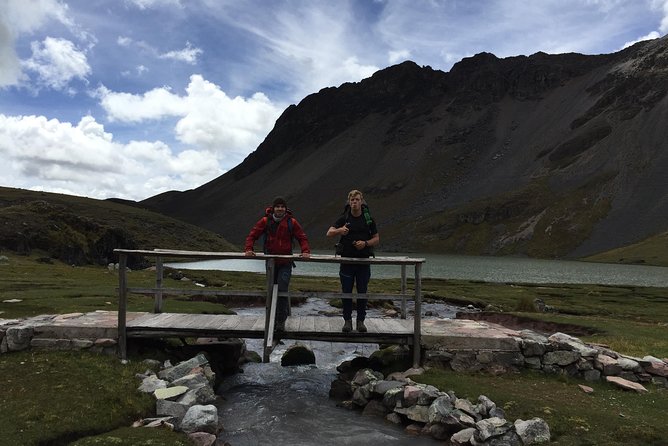
Day four is still a mountain day, but it brings a welcome change in mood. There is only one pass to cross, leaving more time to enjoy the lakes and views of Ausangate from another angle.
The route passes deep-blue lagoons and alpine lakes colored by glacial minerals. The itinerary allows time to stop and take in the water, and those who want to cool off can even jump in. That suggestion comes with common sense attached: at this altitude, cold water is no joke, and you should decide based on conditions and how you feel.
Ausangate remains in view, while the route also opens toward Pacchanta Valley. The final goal is Pacchanta’s hot springs, where you can soak with the mountain above you.
After three nights of cold camps and high passes, Pacchanta gives the trek a satisfying change of pace. The day covers about 15 kilometers, with the camp elevation descending to roughly 4,300 meters. It is not a short stroll, but the route is generally easier to appreciate after the biggest climb is behind you.
The hot springs also show why itinerary design matters. A long trek feels better when hard days are balanced by places where you can rest. Here, the reward is not a hotel or a paved road. It is warm water in a high valley.
A local family adds meaning to the final morning
The last morning begins after breakfast with a ceremony hosted by a local family. You learn about local food, traditions, and weaving techniques before taking a bus back to Cusco.
This final meeting gives the route a human ending. During the first four days, the mountain dominates your attention. On day five, you see more clearly how people live in this region and how practical skills such as weaving remain part of local culture.
The final activity lasts about three hours, including the cultural visit and return transport. It is a gentler close than another long hike, though the bus ride back means the day is still part of the overall travel schedule.
I would not book this trek only for the cultural demonstration, but I would value it as part of the whole. Without this visit, the trip could feel like a demanding scenic circuit. With it, you get a clearer connection to the communities around Ausangate.
What the $660 price includes
At $660 per person, the trip offers solid value for a five-day high-altitude trek, especially if you want support rather than a self-guided route.
Included are camping equipment, horses to carry equipment, five lunches, four dinners, and four breakfasts. The camp crew handles much of the work involved in moving equipment and preparing meals, letting you focus on walking and resting.
Food is one of the strongest parts of the service. The cook named Benigno receives particularly warm praise for producing varied, hot meals from a camp kitchen. Euden is also mentioned as an assistant cook, and the crew includes horse drivers such as Angel and José.
That matters more than it may sound. At altitude, a good meal is practical fuel, not just a comfort. You will want something warm after a cold day, and dependable meals reduce the amount of planning you must do.
You still need to budget for the 20-sol entrance fee and a sleeping bag. The sleeping bag is an important omission to notice before you book. Nights can be very cold, and one experienced mountain visitor specifically advises bringing the warmest gear you can manage.
Group size, guides, and the human side of the trek
The group limit is 10 people, though the trip can sometimes operate with only two. That small scale suits this route. A guide can pay closer attention to pace, altitude symptoms, and individual needs than on a large departure.
The guiding team varies, but names associated with the trip include Guillermo, Urbano, also called Chino, and other Vidal Expeditions staff. Their strengths are not limited to route-finding. They explain Andean traditions, local wildlife, and the meaning of Ausangate, while also helping create a friendly camp atmosphere.
The support crew is part of the value. The horse driver carries equipment and helps with tents and camp chores. The cook prepares meals three times a day. You are still responsible for your own walking, but you are not managing every logistical task.
I would ask who your guide will be when booking, especially if cultural interpretation matters to you. The strongest part of this trip is the connection between the scenery and the people who know it well.
Fitness, altitude, and what to pack
You need a moderate level of physical fitness, but the more important issue is altitude. The trek begins around 3,800 meters, camps above 4,000 meters, and reaches 5,200 meters. Those figures are serious even for people who exercise often at home.
You should be comfortable walking six to eight hours on several days, with steep climbs and descents. The itinerary includes 12 to 15 kilometer days and large elevation changes. There is no need to race, but you do need patience and steady effort.
Pack for cold conditions. Bring warm layers, gloves, a hat, sturdy hiking clothing, and a sleeping bag suitable for high mountain nights. The supplied details do not specify the exact camping equipment, so ask what is provided and what you must bring yourself.
The route also requires good weather. If poor weather cancels the trip, you are offered another date or a full refund. You can cancel for a full refund up to 24 hours before the start time, but changes or cancellations inside that window are not accepted.
Who should book the Ausangate Trek?
I would choose this trek if you want dramatic mountain scenery, a smaller group, local cultural contact, and a route that feels far from the main Cusco circuit.
It suits you if you are comfortable camping, can handle long days at altitude, and prefer glacial lakes and sacred mountains to archaeological sites. It also works well if you want an organized trip with meals, horses, transport, and a camp crew included.
I would hesitate if you have not had time to acclimatize, dislike cold nights, or want a relaxed holiday. The hot springs are pleasant, but they do not turn this into an easy tour.
FAQ
How long is the Ausangate Trek?
The trek lasts approximately five days, including transport from Cusco and the return bus on the final day.
Where does the trek begin?
Your guide meets you in Cusco at 5:00 a.m. and takes you by private transport to Tinke, then onward to Rondoca, where the walking route begins.
How high does the trek go?
The highest point is Palomani Pass at 5,200 meters, or about 17,060 feet.
How high are the camps?
The first camp at Upis is about 4,200 meters. The second camp is listed at about 4,630 meters, and the third is about 4,500 meters. The final camp elevation is around 4,300 meters.
How many people can join the tour?
The group has a maximum of 10 travelers.
Are meals included?
Yes. The package includes five lunches, four dinners, and four breakfasts.
Is a sleeping bag included?
No. A sleeping bag is not included, so you need to bring or arrange one separately.
Is the entrance fee included?
No. The entrance fee is listed separately at 20 soles.
What happens if bad weather cancels the trek?
You are offered a different date or a full refund if poor weather causes the experience to be canceled.
Just added around Cusco
- Small Group: 4-Day Inca Trail Trek to Machu Picchu★ 5.0 · 33 reviews
- 5-Day: Salkantay Trek to Machupicchu and Humantay Lake★ 5.0 · 42 reviews
- Salkantay Trek Standard 5D/4N★ 5.0 · 48 reviews
- Classic Choquequirao Trek – 5 Days / 4 Nights★ 5.0 · 52 reviews
- Salkantay Trek To Machu Picchu 5 Days And 4 Nights★ 5.0 · 44 reviews
- 5 Day – Salkantay trek to Machu Picchu – Group Service★ 4.5 · 27 reviews
- Salkantay 5-Day Trek To Machu Picchu★ 5.0 · 39 reviews
- Salkantay Trek: 5 Days to Machu Picchu★ 5.0 · 33 reviews
5-Day Experiences, side by side.
Machu Picchu: 5-Day Salkantay Trek with Panoramic Train
Read our review →
Kathmandu/Pokhara: 5-Day Annapurna Base Camp (ABC) Trek
Read our review →
5-Day Pearl of Africa Chimps and Gorilla Trekking Safari
Read our review →
5 Day Annapurna Base Camp Trek & Natural Hot Spring
Read our review →
Salkantay Trek To Machu Picchu 5 Days And 4 Nights
Read our review →This walk also sits in