
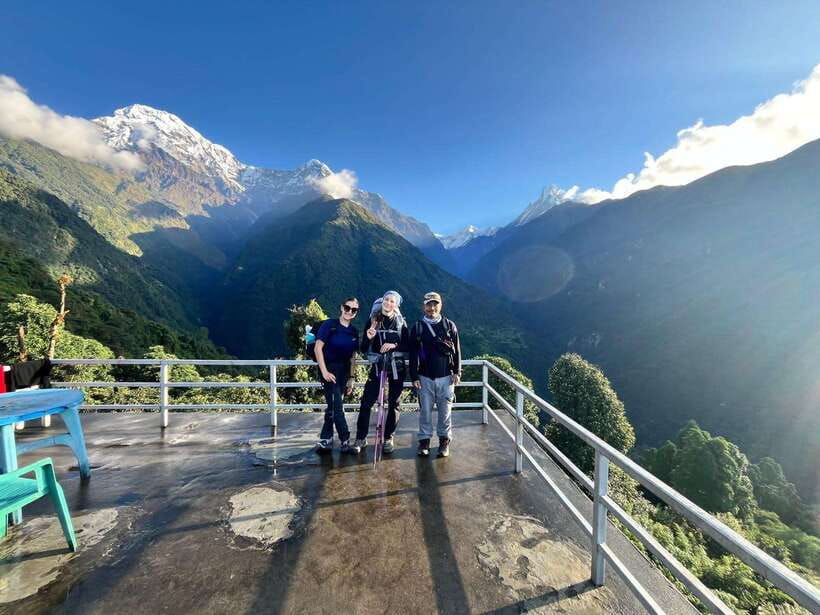
REVIEW · NEPAL
Kathmandu/Pokhara: 5-Day Annapurna Base Camp (ABC) Trek
Annapurna Base Camp is the prize here: a high mountain bowl at 4,130 meters, surrounded by huge Himalayan peaks. The route reaches it quickly, in five days, while still giving you forests, waterfalls, Gurung villages, icy ridges, and a sunrise worth the early alarm.
I like the excellent guide support, especially for solo hikers and first-time trekkers. Guides such as Raju, Pratip, Smile, Anil, and Oham Raj Tamang have helped hikers manage changing weather, slow days, sickness, and transport problems. I also like the hot springs at Jhinu Danda, a fine reward for tired legs.
The main catch is the pace. This is a serious mountain walk, not a gentle sightseeing tour. You cover up to 14 kilometers in a day, sleep in basic guesthouses, and reach high altitude fast. The $96 starting price is attractive, but meals, porters, flights, and other extras depend on the option you choose.
Key points to know before booking
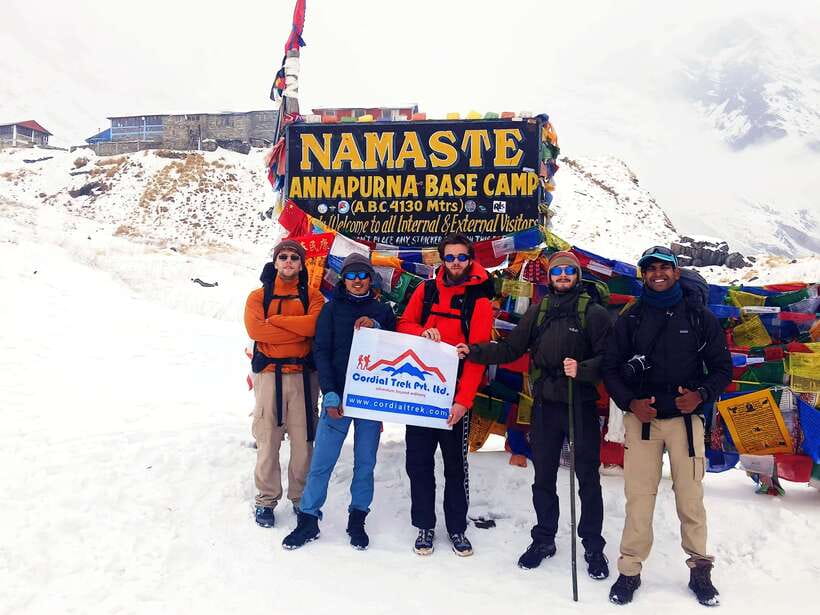
- ABC at 4,130 meters: You reach the base camp on the third day, then rise early for mountain views before walking back down.
- Five days, big daily distances: The route includes 5 to 8 hours of walking each day, with steep steps and a fast ascent.
- Guides make a real difference: Raju, Pratip, Smile, Anil, Oham, and other guides are praised for pacing, safety checks, local information, and practical help.
- Jhinu Danda hot springs: The final trekking day includes a stop at the natural hot springs, though bad weather or timing can sometimes prevent the visit.
- Flexible package choices: Transport, flights, meals, porter service, and gear are included differently in the budget and all-inclusive options.
- Basic mountain comfort: Guesthouses provide a bed and meals when included, but hot showers, Wi-Fi, charging, and drinks cost extra.
Why this five-day ABC route is worth your time
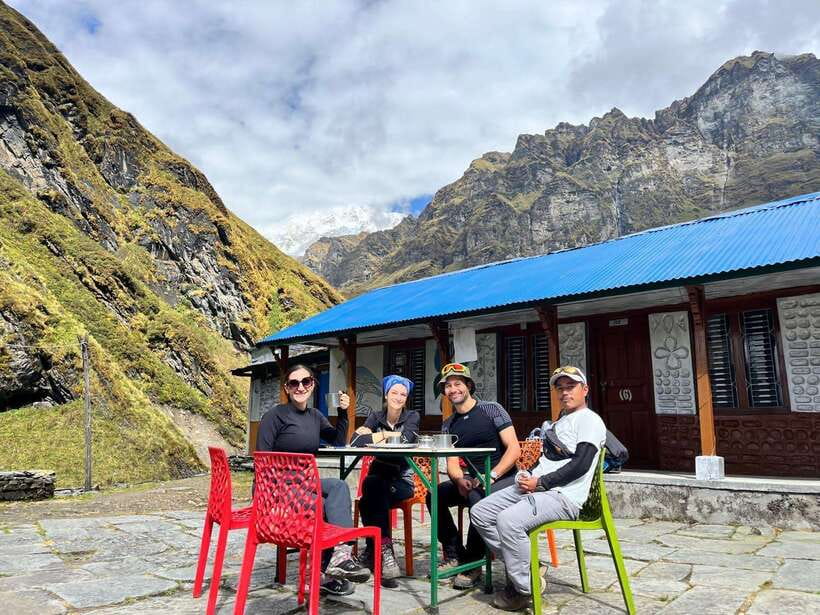
The Annapurna Base Camp trek gives you a great deal of scenery in a short period. You start among subtropical forests and terraced fields, then move through bamboo valleys, waterfalls, cold high-altitude slopes, and snow-covered ridges.
The route enters the Annapurna Sanctuary, a natural mountain amphitheater containing Annapurna I, which rises to 8,091 meters. Reaching base camp does not put you on the mountain itself, of course, but it places you close enough to feel its scale. The mountains seem to rise from every side, and the change from green forest to stark high country happens quickly.
I like this trek for people who have limited time in Nepal. You do not need to commit to a two-week expedition, and you still see village life, forest trails, mountain lodges, and a major Himalayan viewpoint. You also return to Pokhara on the fifth day, usually no later than 5 p.m.
That efficiency comes with a cost: there is little spare time. If you struggle with altitude, heavy rain, or a sore knee, the schedule has less room for recovery than a slower ABC itinerary. Your guide can adjust the pace, and some hikers have shortened or changed the plan, but you should arrive ready to walk.
More Annapurna Treks in Pokhara:
- Trekking in Annapurna/Langtang/Everest/Upper Mustang regions
★ 5.0 · 161 reviews - Pokhara: Annapurna Foothills Day Hike with Transfers
★ 5.0 · 100 reviews - Pokhara: 4-Day Mardi Himal Trek
★ 4.9 · 59 reviews
Day 1: Simrung to Sinuwa through forest and villages
If you start in Pokhara, hotel pickup is followed by a shared Jeep drive of about two to three hours to Simrung via Nayapul. If you start in Kathmandu, the package uses a roughly 30-minute flight to Pokhara before the road transfer.
The trek from Simrung to Sinuwa covers about 10 to 11 kilometers and takes five to six hours. The path passes through forest, rivers, traditional settlements, and terraced farmland. This is a good introduction to the Annapurna region because the day gives you both village scenes and the first sense of how much climbing the trek requires.
Sinuwa sits at about 2,340 meters. Your overnight stay is in a mountain guesthouse, often called a tea house in Nepal. Expect a practical room rather than hotel comfort. Some hikers have received private rooms, while solo hikers may sometimes share, depending on availability.
The road transfer is useful but not luxurious. Shared Jeeps keep the price down, yet mountain roads can be slow and tiring. If you are prone to motion sickness, keep water and any usual medication close at hand rather than buried in your duffel.
Day 2: Sinuwa to Deurali beside waterfalls
The second day runs from Sinuwa to Deurali, again about 10 to 11 kilometers and five to six hours on foot. You pass through Himalaya, a small settlement with tea houses, and continue through dense forest.
This is one of the prettiest parts of the trek. Waterfalls appear along the route, and the sound of running water follows you through the trees. The forest also gives welcome shade, though wet ground and stone steps can become slippery during the monsoon.
Deurali is at about 3,230 meters. By now, the air feels colder and thinner, and the walking begins to demand more from your lungs. Take the pace seriously. Several hikers who finished successfully still described the trek as physically and mentally tough, especially on the long uphill stretches.
Your guide matters most here. Guides such as Pratip and Bikash have helped slow walkers stay with the schedule, while others such as Raju and Anil have checked gear, food, and comfort along the way. Do not treat a guide as someone who merely points out the path. Use that person to discuss headaches, nausea, tiredness, and the next day’s effort.
Day 3: Deurali to Machhapuchhre Base Camp and ABC
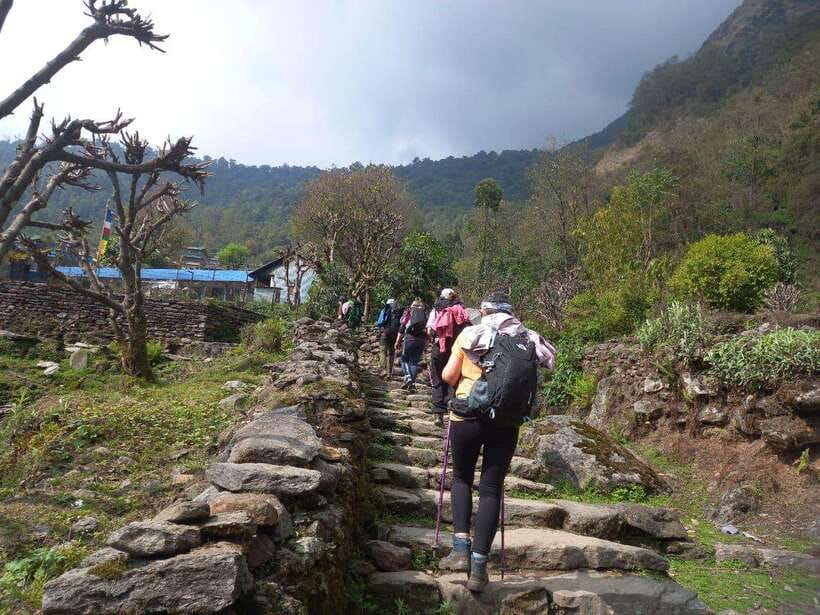
Day three is the key day. You walk from Deurali to Annapurna Base Camp through Machhapuchhre Base Camp, usually called MBC. The distance is listed at 10 to 11 kilometers, with five to six hours of walking, though snow, weather, trail conditions, and your pace can change the timing.
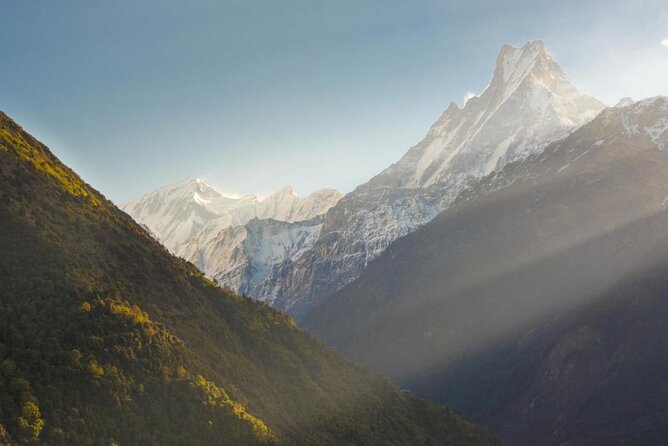
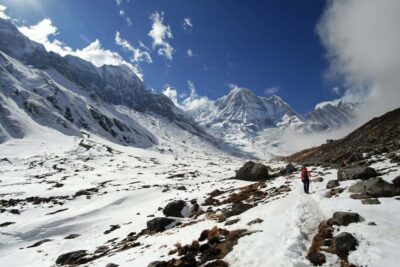
The setting changes sharply. Trees thin out, the valley opens, and the trail reaches colder ground surrounded by high ridges. Machhapuchhre, known as Fishtail, is one of the major peaks in this section. From MBC, the route continues into the Annapurna Sanctuary toward ABC.
You arrive at Annapurna Base Camp at 4,130 meters and sleep in a tea house there. This is the highest and most demanding night of the trip. Rooms and dining areas are basic, and hot showers, Wi-Fi, charging, and drinks are not included.
Altitude is the serious issue. The schedule takes you from 2,340 meters at Sinuwa to 4,130 meters in two days. That can be manageable for a fit hiker, but there is no way to guarantee how your body will respond. Your guide should monitor how you feel, and you should speak up early rather than trying to prove toughness.
The reward is immediate. The sanctuary surrounds you with mountain walls, and the scale of Annapurna I becomes much easier to understand from this high basin. Photos are good here, but they do not fully show the size of the peaks or the silence of the upper valley.
More Five-Day Trips around Pokhara:
- Pokhara: 5 Day Annapurna Base Camp Trek & Natural Hot Spring
★ 4.9 · 44 reviews - From Pokhara: 5-Day Annapurna Basecamp Trek with Hot Springs
★ 4.9 · 26 reviews - From Pokhara: 5-Day Mardi Himal Base Camp Trek
★ 5.0 · 10 reviews - Annapurna base camp trek 5 Days
★ 5.0 · 252 reviews
Day 4: Sunrise at ABC and the long return
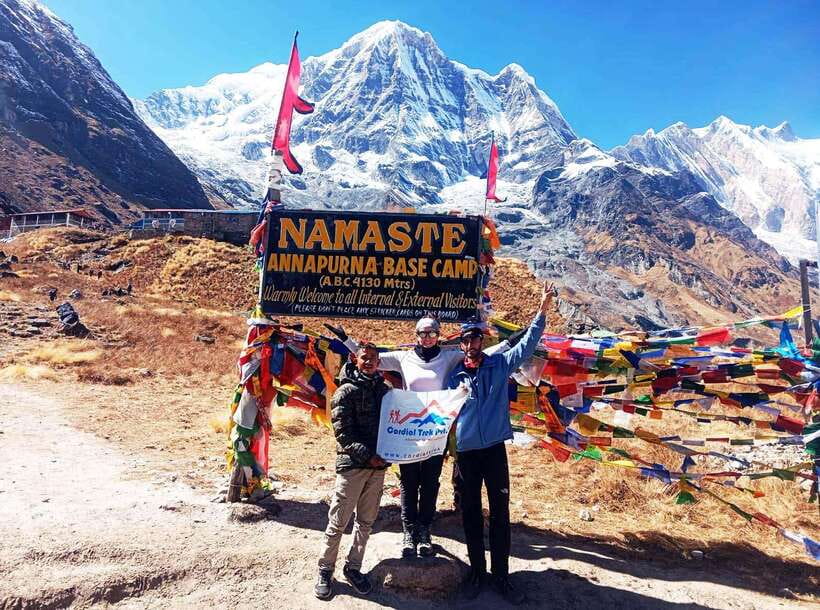
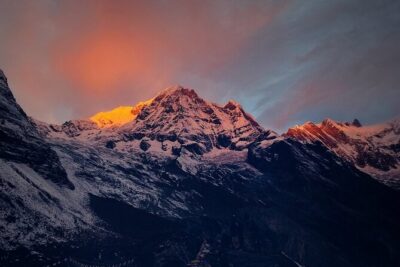
The fourth morning starts early so you can watch sunrise from ABC. This is the moment many people consider the highlight of the trek. Light reaches the peaks, the air is often sharp and cold, and the mountains can change color within minutes.
Bring your down jacket, gloves, beanie, and a warm base layer for this morning. Winter temperatures can fall as low as minus 10 degrees Celsius, and even in spring or autumn the pre-sunrise cold at 4,130 meters can be severe.
After sunrise, you retrace the route through Deurali, Himalaya, and Dobhan. You walk 12 to 14 kilometers over seven to eight hours, ending at Bamboo or Sinuwa. This is a demanding descent, not an easy stroll after reaching the goal.
Downhill steps can be hard on knees and ankles. Trekking poles are available to borrow at no extra cost, and I would use them. Good high-ankle waterproof boots are also worth bringing, especially during the rainy season.
The return day can feel long because your body is tired, but it also gives you a new view of the route. The forest, waterfalls, and river crossings feel different after the exposed upper valley. Plan to eat, drink, and rest whenever your guide suggests it.
Day 5: Jhinu Danda and the ride back to Pokhara
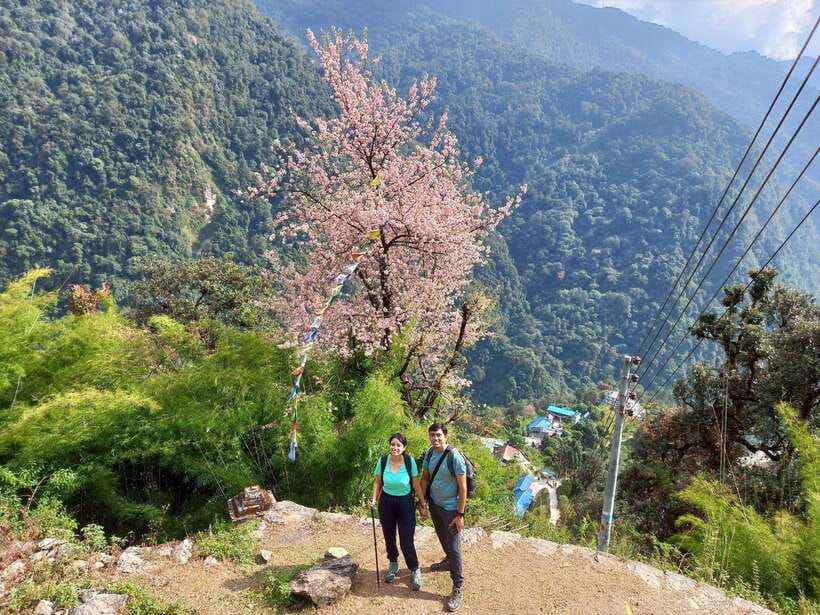
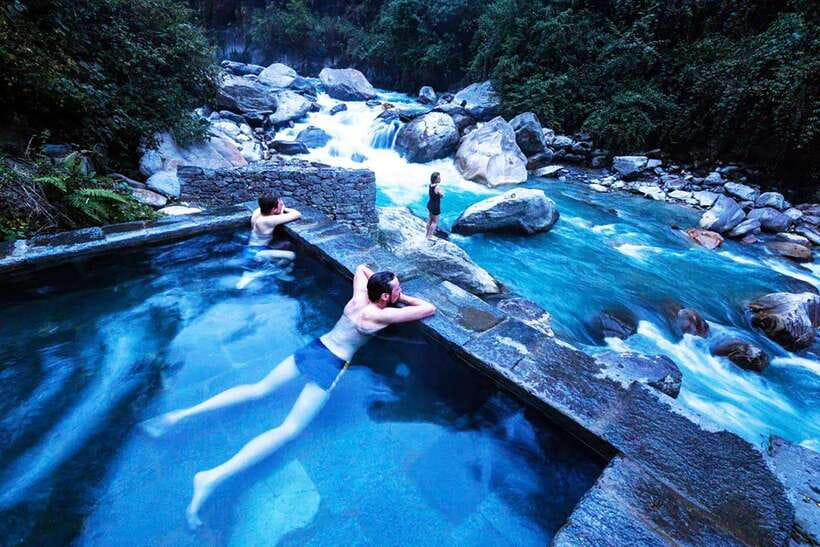
The final trekking day covers about 7 to 8 kilometers in four to five hours. You walk toward Simrung via Jhinu Danda, where natural hot springs offer a chance to soak tired legs.
Jhinu is one of the most appealing details in this itinerary. It changes the mood of the final day from pure transport and fatigue to something more pleasant. Still, do not assume the hot springs are guaranteed. One hiker missed them because of timing, and weather or route changes can also affect the stop.
From Simrung, the shared Jeep takes about two to three hours to Pokhara. Drop-off is scheduled by 5 p.m. If you have a flight, you can be taken to Pokhara Airport. With the Kathmandu return-flight option, arrival in Kathmandu is scheduled by about 7:30 p.m.
Allow some patience for the road. Mountain traffic, weather, or landslides can delay a return, as one solo hiker discovered on a post-trek route to Kathmandu. The company continued helping with the problem, but you should avoid planning an important international connection too tightly.
Guides, porters, and the human side of the trek
The strongest part of this experience is the guide service. The names appearing repeatedly in successful trips include Raju, Pratip, Smile, Anil Sherpa, Oham Raj Tamang, Om, Bikash, Terence Tamang, and Laxman.
Their value is practical. A good guide checks your pace, helps arrange rooms, explains local plants and culture, points out photo stops, and handles sudden changes. Some have helped with food poisoning, poor equipment, emergency airport transfers, and difficult weather.
The guiding style is also part of the pleasure. Om is known for singing and keeping the mood light. Smile has used local stories and card games to make hard days more fun. Oham has shared information about the area and even helped with finding Himalayan fruit along the trail.
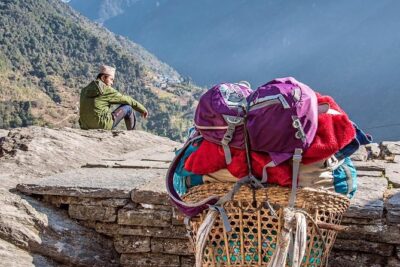
Porter service is available with the all-inclusive option and as an add-on to some budget choices. Porters carry your larger duffel, leaving you with a daypack. You can borrow a duffel, sleeping bag, down jacket, and trekking poles, depending on the package terms.
If you use a porter, pack thoughtfully and keep valuables, documents, medication, warm layers, and water in your own daypack. A porter makes the route easier, but it does not remove the need for fitness.
Food, rooms, and the real cost of the $96 price
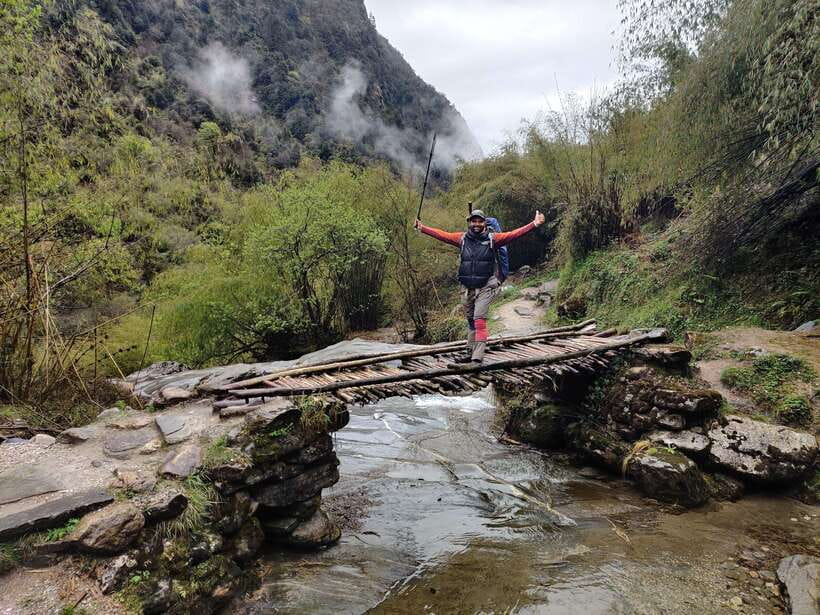
The starting price of $96 per person is strong value for a guided Himalayan trek, but you must check which version you are booking. The basic price may not include meals, porter service, or all flights.
The all-inclusive option includes four breakfasts, five lunches, four dinners, a porter, and the relevant transport and flight arrangements. Some budget options require you to pay for meals and porter service separately. The listing also identifies meals as an available add-on.
Accommodation consists of four nights in mountain guesthouses. You should expect clean, functional shelter, but not city-hotel facilities. A private room may be available, though a solo hiker could share a room, as happened on one trip.
Food is available at the tea houses, and hikers have enjoyed plentiful meals and tea. Prices increase in the mountains, and hot drinks, cold drinks, alcohol, snacks, hot showers, Wi-Fi, and battery charging are extra.
That is normal for this kind of trek. Carry cash, since personal costs accumulate quickly when every shower, charging session, snack, or drink has a separate price. The package includes water purification tablets as needed, but bring a refillable bottle or CamelBak.
Weather, clothing, and how hard this really is
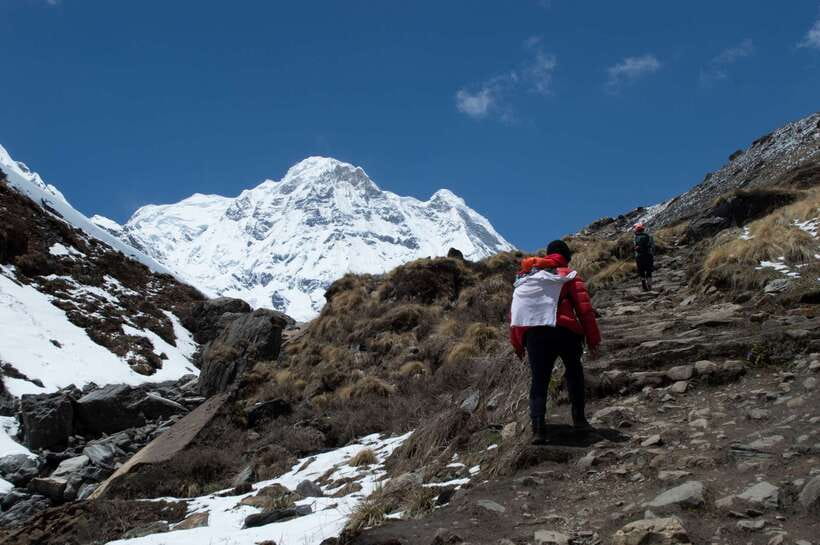
Spring and autumn, from March to May and September to November, offer temperatures from about minus 3 to 20 degrees Celsius. These are the most practical months for many hikers, though conditions can still change quickly.
The monsoon months, June through August, bring rain, mud, wet feet, and clouds. They also bring fewer people on the trail and occasional clear views. If you go then, pack extra clothes because damp gear may not dry overnight.
Winter, from December through February, can bring temperatures from minus 10 to 15 degrees Celsius. Snow and icy sections are possible, so crampons may be useful if conditions require them.
Your packing list should include:
- A down or puffer jacket
- Thermal base layers
- Trekking pants and warm socks
- Waterproof, high-ankle hiking boots
- Gloves, beanie, and neck gaiter
- Sunglasses and sunscreen
- Trekking poles and a sleeping bag
- A daypack, water bottle, towel, and toiletries
- Cash, passport copy, and passport-sized photo
The company requires a passport copy and recent passport photo at least one day before the trek so permits can be processed. Travel insurance is strongly recommended.
Who should book this ABC trek?
Book it if you want a short, guided route to a major Himalayan base camp and you are ready for long days on foot. It suits solo hikers, couples, and first-time trekkers who want a guide handling permits, lodging, transport, and route decisions.
You do not need years of trekking experience. One person who had never hiked before completed the route with help from a guide and porter. Still, that same type of success requires honest preparation. You need to accept steep steps, cold nights, basic rooms, and the possibility of altitude symptoms.
This is not suitable for people with mobility impairments, and it is not intended for people over 95. If you have a medical condition, seek professional advice before booking.
The free cancellation policy allows cancellation up to 24 hours before departure for a full refund, and reserve-now-pay-later booking can help if your schedule is uncertain. Check the exact package carefully before paying, especially for flights, meals, and porter service.
Should you book it?
I would book this trek if ABC is high on your Nepal list and five days is all you have. The scenery changes quickly, the guide support is a real benefit, and the sunrise at 4,130 meters gives you a clear goal each day.
I would not book it expecting a relaxed holiday. The route is short because it is demanding. Choose a porter if you dislike carrying a full pack, use the loaner gear when needed, budget for mountain extras, and leave room around your return transport.
For the best balance, choose a guide with strong communication, take trekking poles, carry warm layers in your daypack, and treat every early warning from your body seriously. Done with that mindset, this is a compact and memorable way to meet the Annapurna Sanctuary.
FAQ
How long is the Annapurna Base Camp trek?
The activity lasts five days, including transport from Pokhara or Kathmandu, four nights in mountain guesthouses, and the return to Pokhara or Kathmandu when the flight option is selected.
How high is Annapurna Base Camp?
Annapurna Base Camp is at 4,130 meters. The itinerary reaches this height on the third day after walking from Deurali through Machhapuchhre Base Camp.
Does the trek begin in Kathmandu or Pokhara?
You can begin from either city. People starting in Kathmandu use a flight to Pokhara, while the trekking route and road transfer begin from Pokhara.
Are meals included?
Meals are included with the all-inclusive option or when the meal add-on is selected. The package provides four breakfasts, five lunches, and four dinners under those options.
Is porter service included?
Porter service is included with the all-inclusive option. It can be added to the budget or one-way-flight options, and a duffel bag is available for porter use.
Can I borrow trekking equipment?
You can borrow a down jacket, sleeping bag, and trekking poles at no additional cost. Crampons are suggested for snowy conditions, but availability and need depend on the conditions.
Where do I sleep during the trek?
You spend four nights in mountain guesthouses, also known as tea houses. Rooms may be private when available, but shared rooms are possible.
Are hot showers and Wi-Fi included?
No. Hot showers, Wi-Fi, battery charging, hot and cold drinks, alcoholic drinks, and extra snacks are not included.
Does the trek visit natural hot springs?
Yes. The fifth day passes through Jhinu Danda, where you can visit natural hot springs. Timing and conditions can affect whether you get to use them.
What languages does the guide speak?
Guides are available in English and Hindi. The activity includes a licensed and experienced trekking guide.
Just added around Pokhara
- Pokhara: 7-Day Annapurna Base Camp Trek & Natural Hot Spring★ 5.0 · 11 reviews
- Pokhara: Annapurna Foothills Day Hike with Transfers★ 5.0 · 100 reviews
- Pokhara: 5 Day Annapurna Base Camp Trek & Natural Hot Spring★ 4.9 · 44 reviews
- Pokhara: Annapurna Day Hike with Panoramic Views★ 4.3 · 7 reviews
- Pokhara: 4-Day Private Trek Tour★ 4.9 · 43 reviews
- Pokhara: 4-Day Poon Hill and Ghandruk Guided Trek★ 5.0 · 14 reviews
- Pokhara: 4-Day Beautiful Ghorepani Poon Hill & Ghandruk Trek★ 4.8 · 21 reviews
- Pokhara: 4-Day Mardi Himal Trek★ 4.9 · 59 reviews
Annapurna Treks, side by side.
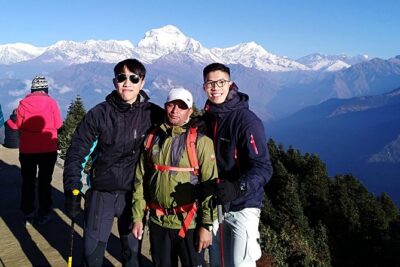
Trekking in Annapurna/Langtang/Everest/Upper Mustang regions
Read our review →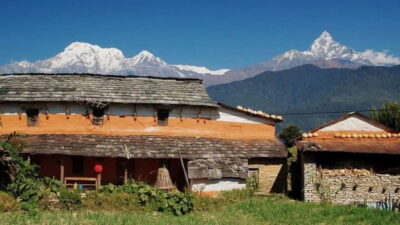
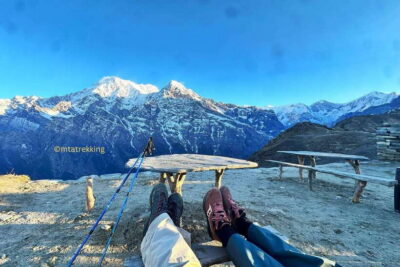
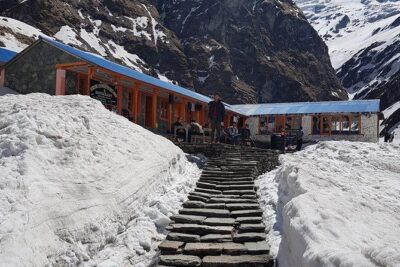
5 Day Annapurna Base Camp Trek & Natural Hot Spring
Read our review →This walk also sits in