REVIEW · PERU
Cusco: 4-Day Salkantay Trek to Machu Picchu, Panoramic Train
The best part of this four-day Salkantay route is its sharp change of scenery. You begin among high Andean peaks, cross the 4,630-meter Salkantay Pass, then walk down through cloud forest, coffee country, and finally to Machu Picchu. I like the contrast, and I like that you sleep in glamping tents and Andean huts rather than carrying a full camping setup. The Pachamanca meal and coffee-making stop also give the trek a local flavor beyond scenery and exertion.
I also like the care built into the trip: daily meals, snacks, water, a 7-kilogram duffle allowance, an oxygen tank, and a small group capped at 16 people. The main caution is the second night. The Collpapampa huts and shared facilities may feel basic, and a hot shower can cost extra. You’ll also need to confirm exactly which Machu Picchu entry ticket is assigned before paying, since the booking information says Circuit 2 is standard but also advises booking Machu Picchu tickets ahead.
Key points at a glance
- Reach 4,630 meters at Salkantay Pass: The second day is the physical test, with a two-hour climb followed by a long descent.
- Sleep high in the Andes: A glamping camp, Andean huts, and a 3-star hotel make this less rough than a standard tent trek.
- Taste Peru beyond the trail: The Pachamanca barbecue and coffee activity in Lucmabamba are the trip’s most distinctive cultural stops.
- Use a small-group format: Up to 16 people allows guides to keep an eye on slower walkers and explain the route.
- Return by panoramic train: The Vistadome or 360° service gives you a comfortable finish after several demanding days.
- Pack for changing climates: You need warm clothing for the pass, rain gear for the forest, and insect repellent for lower elevations.
Why this Salkantay route earns its place beside the Inca Trail
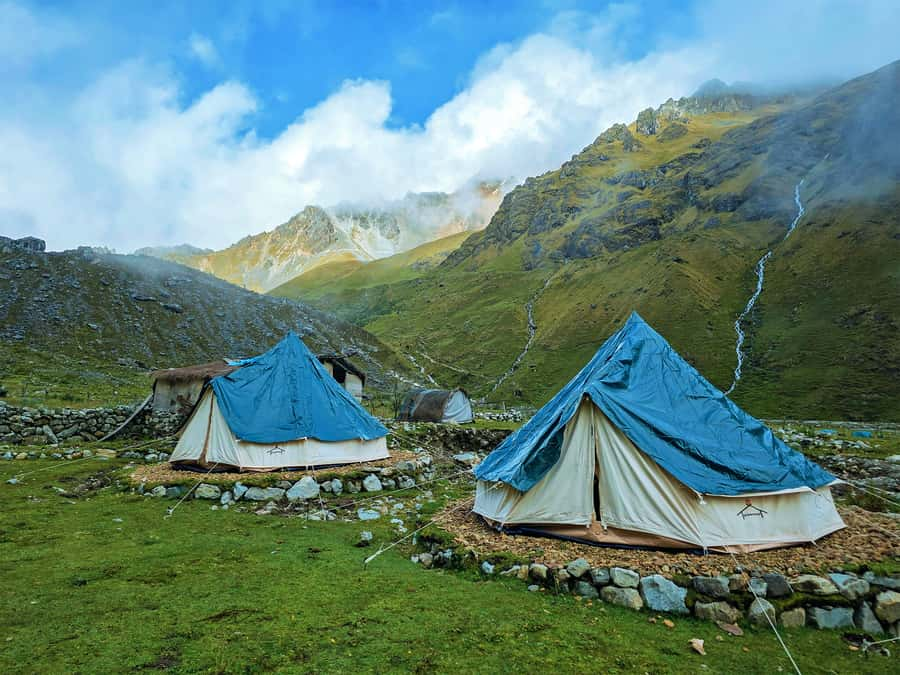
Salkantay is a good choice if you want a serious mountain trek without spending every night in a conventional tent. The route links several very different environments in a short time: cold high-altitude country, rocky mountain slopes, thick cloud forest, tropical farmland, and the Machu Picchu area.
At $552 per person, the price is not just paying for a guide and a train ticket. It includes four days of transport, three nights of lodging, trail meals, a duffle bag service, entrance arrangements, a professional guide, and the panoramic return train. Sleeping equipment such as a sleeping bag, air mattress, and trekking poles costs extra, but you can rent those items.
The package is rated 4.3 out of 5 from 17 ratings, and the strongest praise centers on the guides, cooks, organization, and food. That matters on a route with an early start, a high pass, and several long walking days. Guides such as Alex, José, Filio, Roger, and William have been singled out for clear communication, historical explanations, patience, and support for slower walkers. The actual guide assigned to your departure may be different.
More Machu Picchu and Inca Trail Treks in Cusco:
- Salkantay Trek Challenge – 3 Days / 2 Nights
★ 5.0 · 101 reviews - Choquequirao Trek 4 days and 3 nights
★ 5.0 · 81 reviews - Machu Picchu: 5-Day Salkantay Trek with Panoramic Train
★ 5.0 · 79 reviews
Day 1: Humantay Lake and a night at SalkaGlamp
Your first morning starts early, with a 4:30 a.m. pickup from a hotel in Cusco’s historic center. Be ready in the lobby ten minutes before departure. If you are staying outside the Cusco district, you’ll meet the group near the main square instead.
The drive heads through Andean valleys to Mollepata, where you stop for breakfast. From there, the vehicle continues to Challacancha, the starting point for the walk toward Humantay Lake. This is not a gentle warm-up. The altitude makes the climb feel harder than the distance suggests, so take your time and follow the guide’s pace.
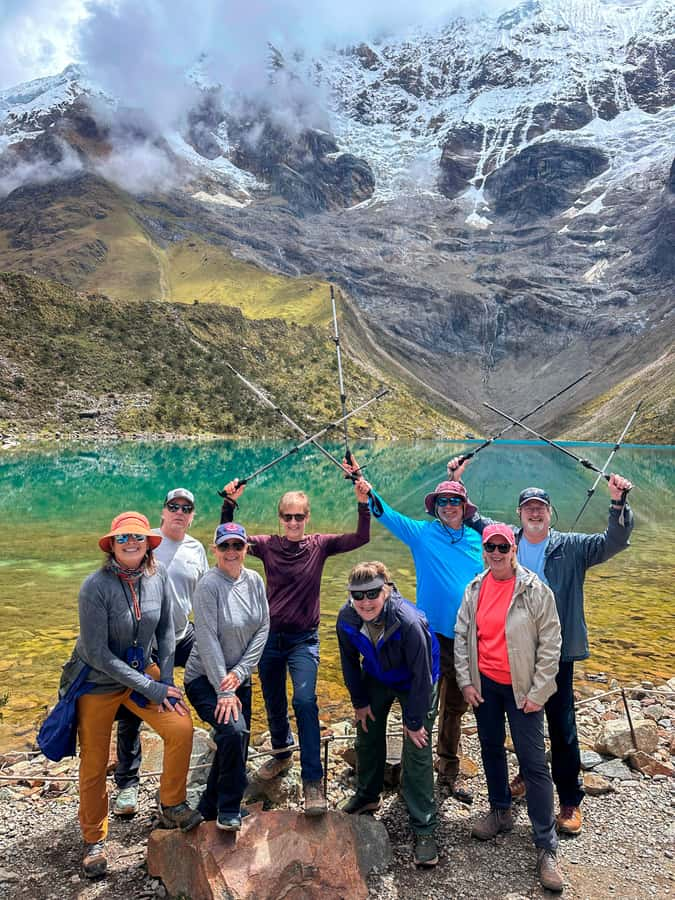
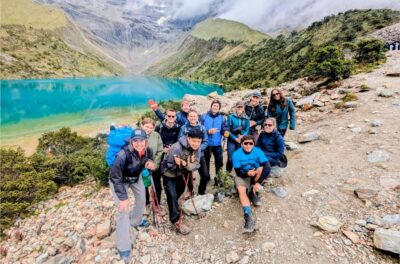
Humantay Lake is the day’s visual prize. Its clear turquoise water sits beneath steep mountain slopes, and the surrounding views give you an early taste of the high country ahead. You then descend to Soraypampa for lunch. That downhill section is welcome, though loose or uneven ground can still make it tiring on the knees.
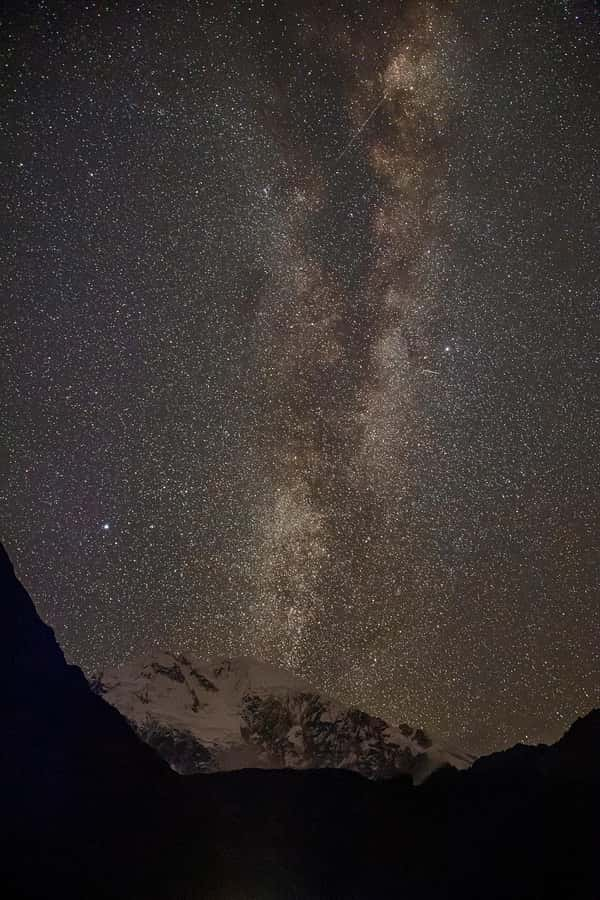
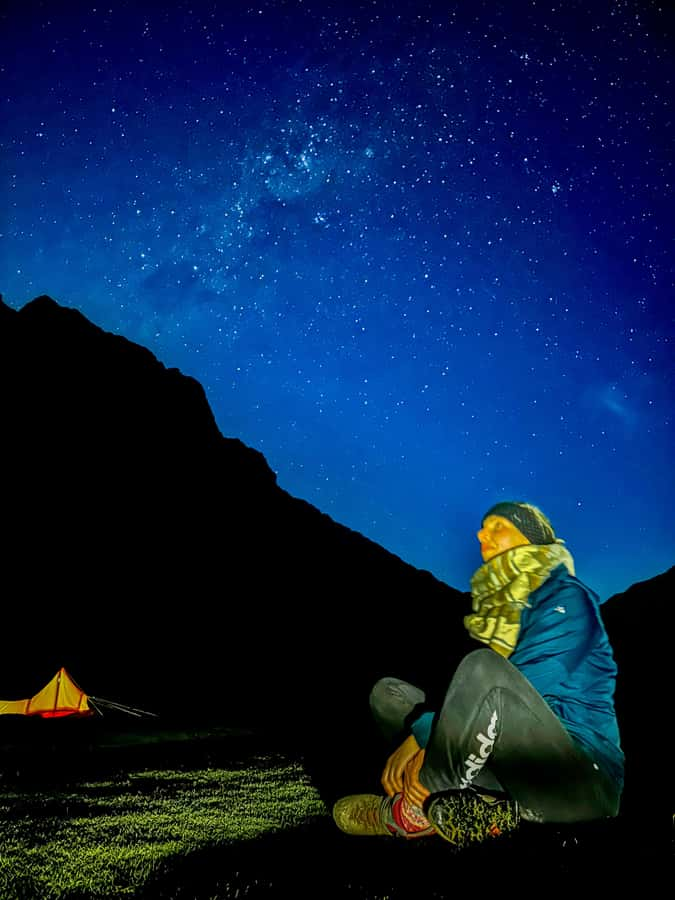
After lunch, you continue to the Salkantaypampa glamping camp. The tents offer a warmer and more comfortable night than ordinary backpacking camps, with a sleeping pad and pillow provided. Dinner is included, and the remote setting gives you a chance to look up at the stars instead of checking your phone.
This first day combines an early road transfer, a high-altitude walk, and a night above the valleys. You should arrive already acclimatized to Cusco’s elevation. The operator does not describe this as a suitable outing for people with heart problems, back problems, mobility impairments, or for pregnant people, and that warning deserves attention.
Day 2: The 4,630-meter Salkantay Pass
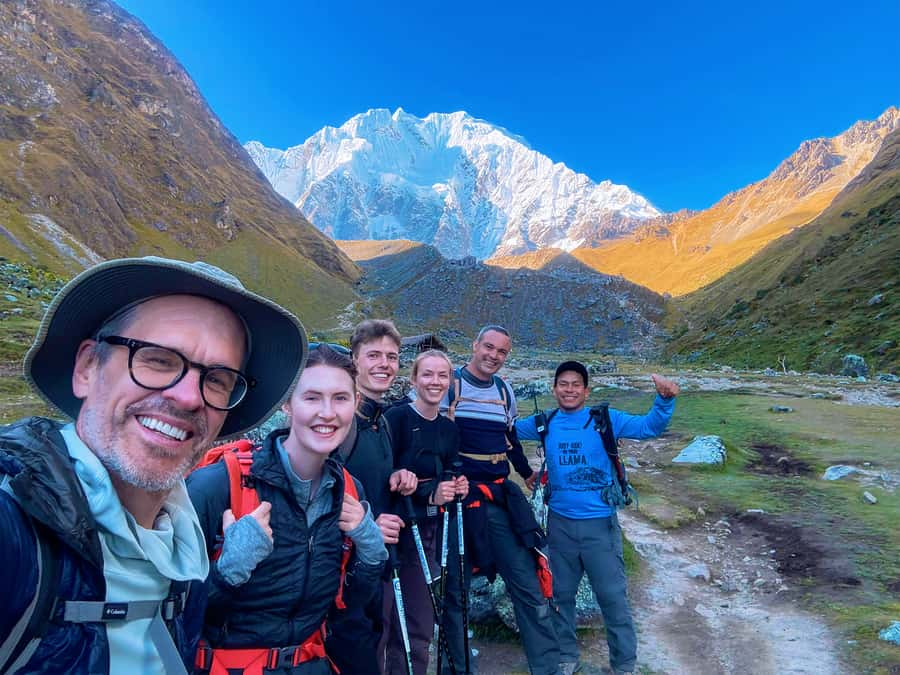
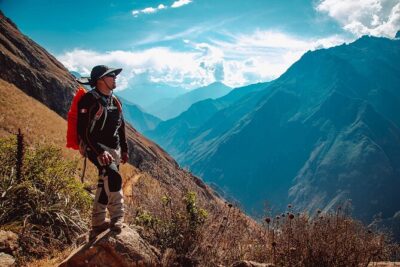
Day two is the hardest and most important day of the trek. Coffee or coca tea arrives at your tent in the morning, followed by breakfast. Then you begin a roughly two-hour climb to Salkantay Pass, at 4,630 meters, or 15,190 feet.
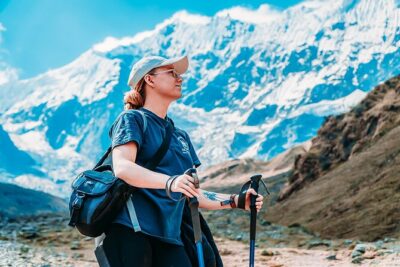
At the pass, you get wide views of snow-covered peaks and the lake below Salkantay Mountain. The air can feel thin, and the weather can change quickly, so keep your rain gear and warm layers close. The pass is not a place to rush. A slow, steady pace is more useful than trying to keep up with the fastest person in the group.
From the high point, you descend for about three hours to Wayracmachay, where lunch is served. This is a long day even though the route is mostly downhill after the pass. Trekking poles are worth renting if your knees are sensitive, as they are not included in the base price.
The afternoon brings one of the route’s best changes. The bare, cold high country gives way to cloud forest, with flowers, orchids, and hummingbirds along the trail. The scenery becomes greener and more enclosed, and the air should feel warmer as you lose elevation.
Another three-hour walk takes you to Collpapampa, where you spend the night in Andean huts. The food and guide support receive strong praise, but this is the least polished lodging of the trip. The huts and bathrooms are operated by an outside provider, and you may find the facilities worn or basic. A warm shower may also require an extra payment, so carry some cash and adjust your expectations.
Day 3: Pachamanca, coffee, and the road to Aguas Calientes
The third day shifts the focus from mountain endurance to Andean food and farming. After breakfast, you walk for about three hours to Lucmabamba. This section passes through lower, warmer country and feels very different from the high pass of the previous day.
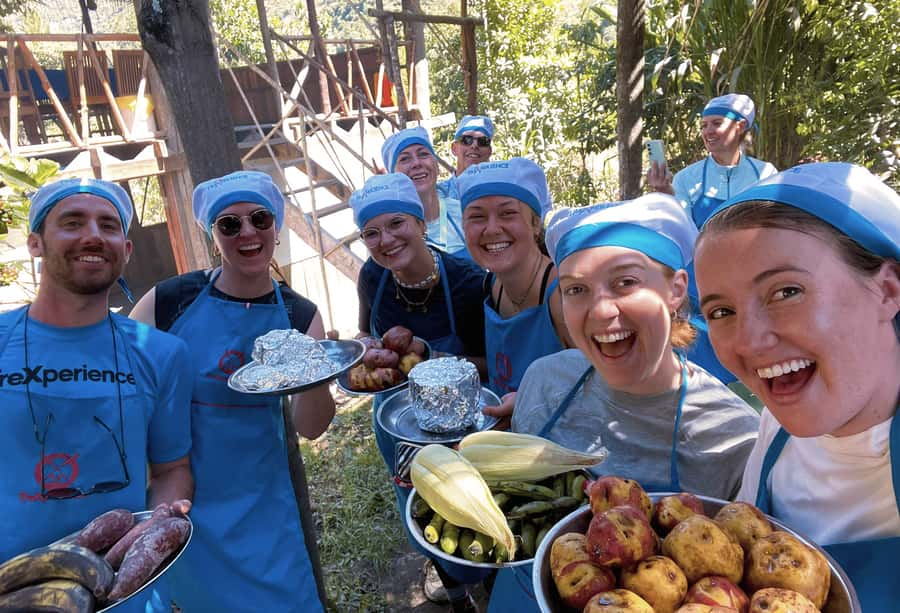
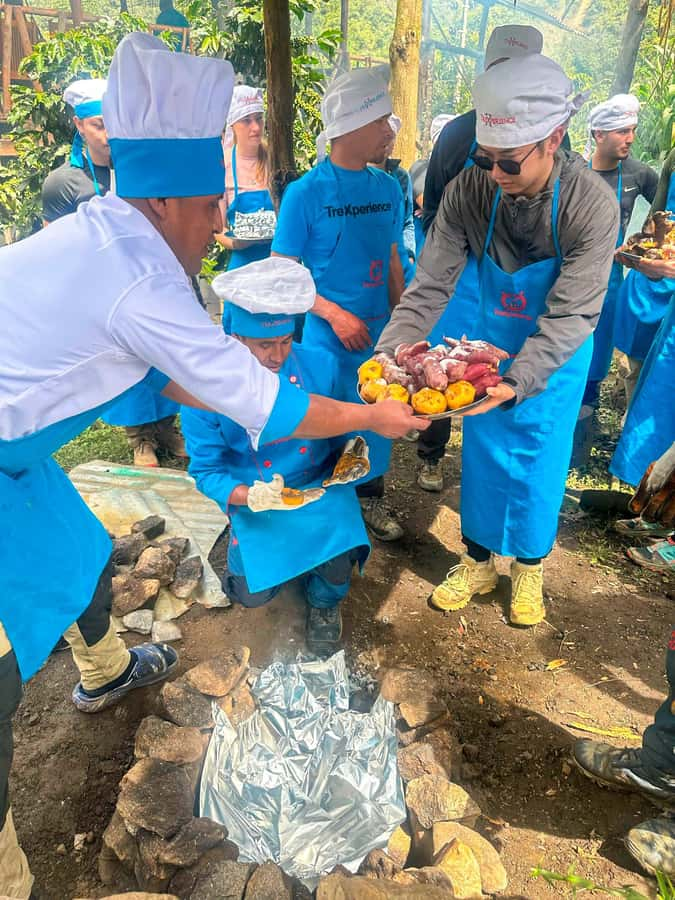
At Lucmabamba, you take part in a Pachamanca barbecue. Vegetables, fruit, and meats are cooked underground with heated stones. This is more than a meal stop. It shows how cooking can be tied to the soil, the heat of the earth, and the produce of the region. The activity includes a cooking class, so you are not simply handed lunch and sent on your way.
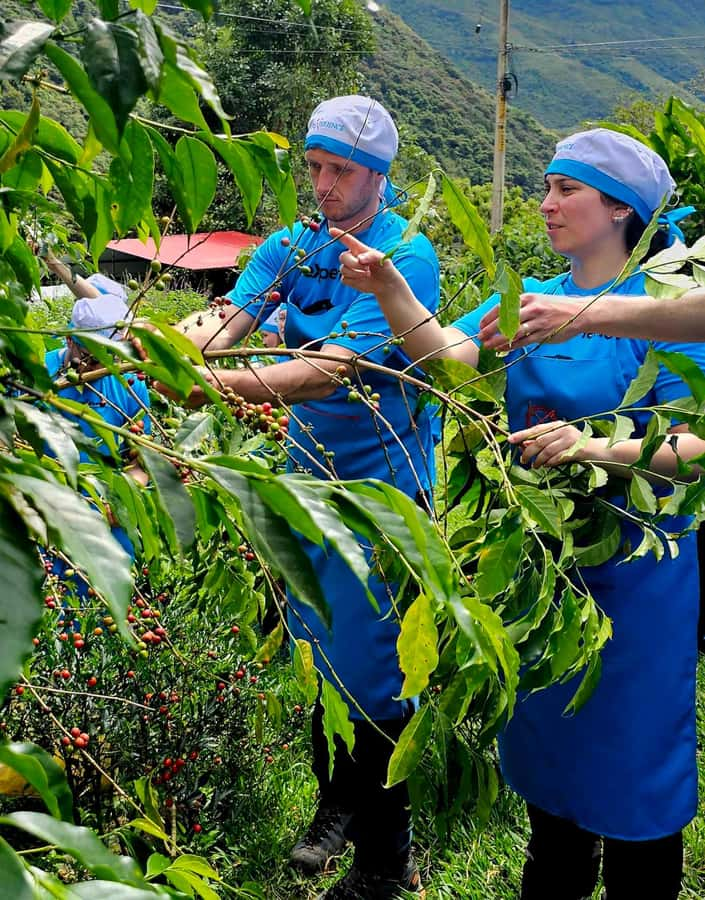
The coffee stop adds another useful local detail. You visit a coffee farm, learn how beans are processed, and prepare your own espresso. For many people, this is a welcome break after two demanding days of walking. It also gives you a better sense of the crops grown in the lower valleys.
After the food and coffee activities, a vehicle takes you to Hidroeléctrica. From there, you walk for around three hours to Aguas Calientes, the town below Machu Picchu. The route is long enough to require patience, especially after the previous day’s pass and descent.
In Aguas Calientes, you check into a 3-star hotel, enjoy dinner at a local restaurant, and get a proper bed before the early start. Breakfast at the hotel is included. This night is a real comfort upgrade after the huts, though you should not expect a leisurely evening. The next morning begins early.
More Train Rides around Cusco:
- Cusco: 4-Day Lares Trek to Machu Picchu with Panoramic Train
★ 4.9 · 20 reviews - Sapa: 3-Day, 3-Night Trek and Hotel with Overnight Train
★ 4.2 · 64 reviews - Saint Kitts Train Trek
★ 4.0 · 60 reviews - Mountain Train Experience: Hike & Mystic Forest (From Nice)
★ 4.2 · 12 reviews
Day 4: Machu Picchu before the crowds build
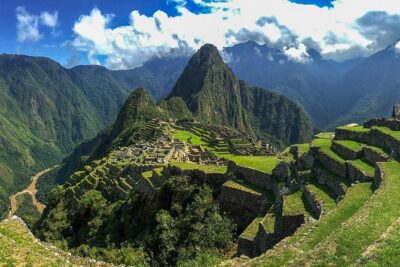
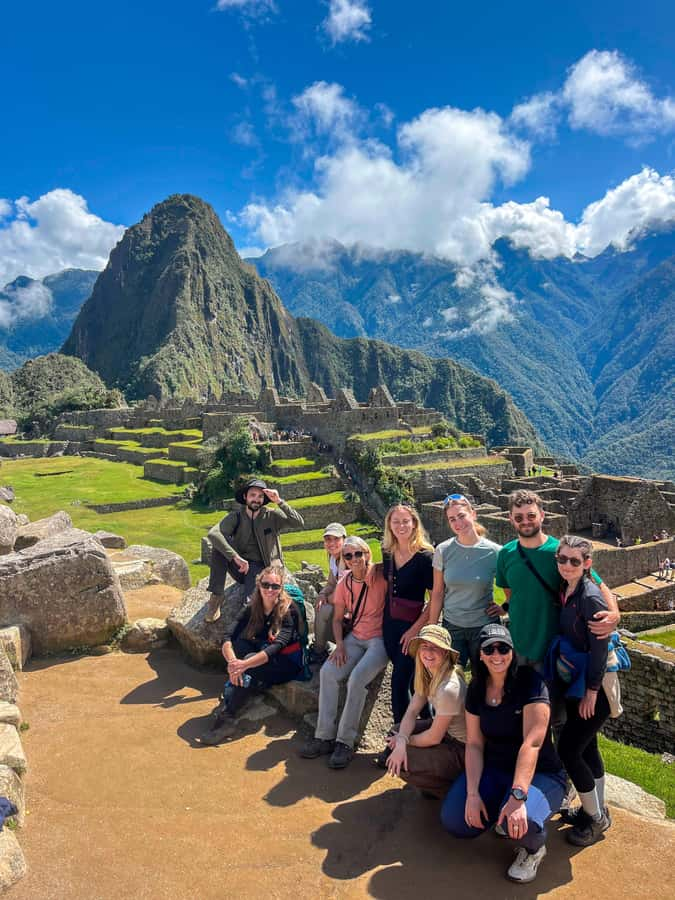
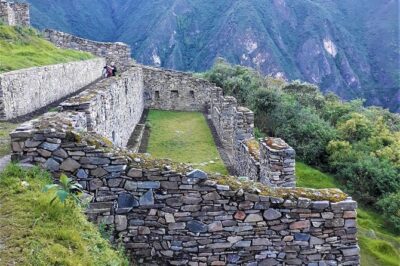
You rise early and take one of the first buses up to Machu Picchu. The early departure is worthwhile because you can see the mountains around the citadel in the morning light before the site becomes busier.
A guided visit lasts about two to three hours. The guide explains the main areas, the Inca civilization, and the questions surrounding the site. Guides such as Roger and Alex have been praised for adding historical stories rather than simply pointing out walls and viewpoints. Your assigned guide may differ, but a professional guide is included.
Circuit 2 is listed as the standard route. If it is sold out, Circuit 1 or Circuit 3 may be assigned. The route does not automatically include Huayna Picchu or Machu Picchu Mountain. Those require advance booking and separate tickets.
There is an important ticket detail to settle before you book. The package information says entrance tickets for the trek and Machu Picchu are included, but it also says Machu Picchu tickets must be booked ahead. Ask the provider to confirm the exact citadel ticket, circuit, and date attached to your reservation. Do not assume that a preferred mountain hike is part of the $552 price.
After the visit, you return to Aguas Calientes for lunch, which is not included. Then you board either the Vistadome or 360° panoramic train for the journey back. The train is a smart finish: after four days of walking, you can sit back and watch the scenery pass by rather than face another long road transfer.
The tour team meets you after the train and transfers you to your Cusco hotel. The return plan is comfortable, but the full day remains long. Save enough energy for the train connection and final transfer.
Food, lodging, and the level of comfort
Food is one of the strongest parts of this trip. You receive three breakfasts, three lunches, three dinners, water, and daily snacks on the trail. The cooking team prepares fresh local meals with enough variety to keep a demanding trek from becoming a routine of bread and rice.
Chefs including Zenobio, Ismael, Dionissios, and Félix have received especially warm praise for hearty portions, local ingredients, and attention to dietary needs. You must report special dietary requirements when booking. Do not wait until the first breakfast to mention an allergy or restriction.
The sleeping arrangements follow a clear progression:
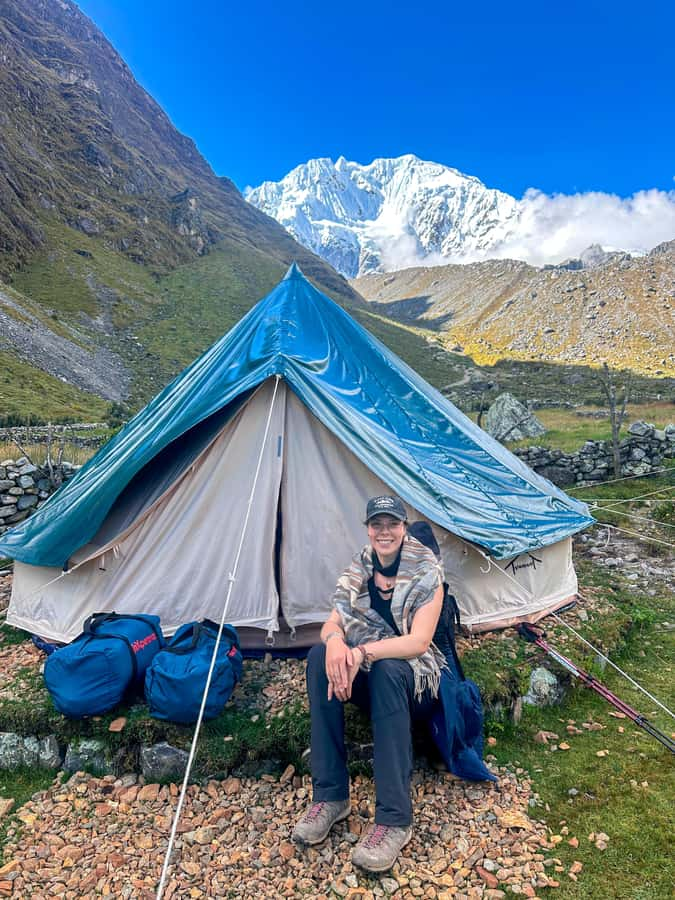
- Night one is in glamping tents at Salkantay Camp.
- Night two is in Andean huts at Collpapampa.
- Night three is in a 3-star hotel in Aguas Calientes.
The first and third nights are the comfortable bookends. The second night is the compromise. You gain a more local, rustic setting, but the huts and sanitation facilities may be below the standard suggested by the glamping label. Bring toiletries, hand sanitizer or tissues, and cash for possible shower charges.
A duffle bag service allows up to 7 kilograms, or about 11 pounds, of personal belongings. That is useful because you do not need to carry all your clothes and supplies on the trail. Your daypack still needs room for water, rain gear, sun protection, documents, medication, and a camera.
What to pack for four changing climates
The temperatures and conditions shift quickly from the pass to the cloud forest. Pack layers instead of one bulky coat. You need warm clothing for the early mornings and high point, then lighter hiking clothes for the lower valleys.
Your core packing list should include:
- Hiking shoes with good support
- A second change of clothes
- Rain gear and a poncho
- Sunscreen, sunglasses, and a sun hat
- Insect repellent
- Hiking pants and comfortable clothes
- Toiletries and hand sanitizer or tissues
- A flashlight
- Cash and your passport
- A student card if you are using a student discount or identification
- Weather-appropriate layers
Sleeping bags, air mattresses, and trekking poles are available to rent, but they are not included. Ask about rental arrangements before departure. Weapons, sharp objects, smoking, alcohol, drugs, littering, fires, feeding animals, and unaccompanied minors are not permitted.
Who will enjoy this trek most
I would choose this route if you want Machu Picchu as part of a real mountain journey rather than as a stand-alone day trip. It suits active visitors who can handle several hours of walking each day, a high pass, and changing weather.
The small group, limited to 16 people, is useful if you want personal guidance without paying for a private trek. The guide team can help slower walkers, and William has been praised for staying near the back and encouraging people who needed more time. That does not make the route easy, but it makes the pace feel less competitive.
You should think twice if you dislike early starts, basic bathrooms, long descents, or altitude. The route is not suitable for wheelchair users or people with significant mobility, back, or heart problems. Children must be accompanied by a responsible adult, and the activity is not suitable for pregnant people.
The cancellation policy is non-refundable, so check your dates, health, insurance, and Machu Picchu ticket details carefully before paying. Pickup is included from accommodations in Cusco’s historic center, but outside locations require a meeting point near the main square.
Is the $552 price good value?
For a four-day trek with meals, accommodation, entrance arrangements, a guide, transfers, a duffle allowance, and a panoramic train, $552 is a solid package price. It removes many of the decisions that can make a high-altitude trek stressful.
The value is strongest if you will use the included meals, duffle service, and train upgrade. It is less attractive if you already own camping gear, want a private guide, or prefer to arrange each section yourself. Add the cost of rentals, the final lunch, and any extra Machu Picchu or mountain tickets when calculating your total.
The food experiences also help justify the price. Pachamanca and coffee preparation are not just filler activities. They break up the walking and connect the route to local farming and cooking traditions.
Should you book the Salkantay Trek?
Book it if you want a varied, active route to Machu Picchu with better sleeping arrangements than standard camping and a comfortable train ride at the end. The strongest reasons are the high pass, Humantay Lake, the rapid shift into cloud forest, the good trail food, and the attentive guide and kitchen teams.
Skip it if you want a relaxed Machu Picchu visit, private facilities every night, or a route with little altitude gain. Before paying, confirm your Machu Picchu circuit, the availability of any mountain ticket, rental prices, and the shower arrangements at Collpapampa.
For an active visitor who values scenery, local food, and practical support, this is a well-rounded Salkantay option. Just treat the second night as rustic, and treat the pass with respect.
FAQ
What is included in the $552 Salkantay Trek?
The price includes the safety briefing, trek and Machu Picchu entrance arrangements, a professional guide, transport, hotel pickup and drop-off, the Vistadome or 360° train, three nights of accommodation, trail meals, water, snacks, a 7-kilogram duffle allowance, a Pachamanca barbecue, cooking and coffee activities, and safety equipment.
How high is the Salkantay Pass?
The pass reaches 4,630 meters, or 15,190 feet. The ascent takes about two hours from camp, followed by a roughly three-hour descent to Wayracmachay for lunch.
Where do I sleep during the trek?
You spend the first night in a glamping tent at Salkantay Camp, the second night in Andean huts at Collpapampa, and the third night in a 3-star hotel in Aguas Calientes.
Are Huayna Picchu and Machu Picchu Mountain included?
No. Optional hikes to Huayna Picchu or Machu Picchu Mountain require advance booking and separate tickets.
Is lunch in Aguas Calientes included on the final day?
No. Lunch in Aguas Calientes on the final day is not included.
What language does the guide speak, and how large is the group?
Guides speak English or Spanish, and the group is limited to 16 participants.
More Four-Day Trips around Cusco
- Ancascocha Trek To Machu Picchu 4 Days And 3 Nights
★ 5.0 · 77 reviews - 4 Day Inca Trail Trek to Machu Picchu Multi day tour
★ 5.0 · 70 reviews - Salkantay Trek 4 Days to Machu Picchu by Glamping Sky Lodge Dome
★ 5.0 · 68 reviews - Salkantay Trek to Machu Picchu in 4 days
★ 4.5 · 50 reviews
Just added around Cusco
- Small Group: 4-Day Inca Trail Trek to Machu Picchu★ 5.0 · 33 reviews
- 5-Day: Salkantay Trek to Machupicchu and Humantay Lake★ 5.0 · 42 reviews
- Salkantay Trek Standard 5D/4N★ 5.0 · 48 reviews
- Classic Choquequirao Trek – 5 Days / 4 Nights★ 5.0 · 52 reviews
- Salkantay Trek To Machu Picchu 5 Days And 4 Nights★ 5.0 · 44 reviews
- 5 Day – Salkantay trek to Machu Picchu – Group Service★ 4.5 · 27 reviews
- Salkantay 5-Day Trek To Machu Picchu★ 5.0 · 39 reviews
- Salkantay Trek: 5 Days to Machu Picchu★ 5.0 · 33 reviews
Machu Picchu & Inca Trail Treks, side by side.
Machu Picchu: 5-Day Salkantay Trek with Panoramic Train
Read our review →
Ancascocha Trek To Machu Picchu 4 Days And 3 Nights
Read our review →
4 Day Inca Trail Trek to Machu Picchu Multi day tour
Read our review →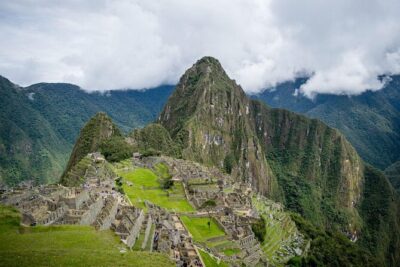
Salkantay Trek 4 Days to Machu Picchu by Glamping Sky Lodge Dome
Read our review →