

REVIEW · AUSTRALIA
Kata Tjuta: Valley of the Winds Circuit Hike
Kata Tjuta’s Valley of the Winds is a serious walk through giant red domes, not a quick lookout stop. You move between the formations, with the rock walls rising around you and a guide explaining the geology, plants, Aboriginal cultural importance, and European history of the area.
I like the small-group format, which gives you room to ask questions, and I like that morning tea, water, fruit, and light refreshments are part of the day. The main caution is simple: this is a challenging three-hour hike, and it is not suitable for anyone with low fitness, mobility problems, respiratory issues, back problems, or other pre-existing medical conditions.
Key points at a glance
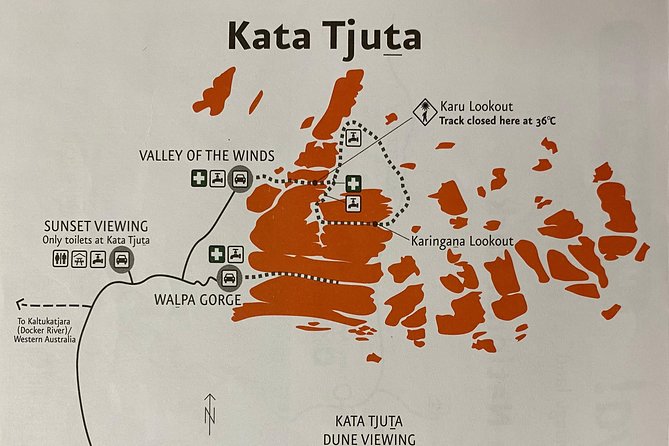
- Three hours on foot among the domes: This is a proper circuit walk, with challenging sections rather than a gentle stroll.
- Guides who add real context: Jackie and Ali have received particular praise for answering questions and explaining geology and local plants.
- Hotel transfers included: Pickup and return are available from four Ayers Rock Resort locations.
- Morning tea on the trail: Water, food, fruit, and light refreshments help make the long walk more manageable.
- Sacred cultural setting: Your guide explains the significance of this men’s area, so respectful behavior matters.
- Good value for active visitors: At $176 per person, the price includes transport, guiding, refreshments, and a focused five-and-a-half-hour outing.
Why the Valley of the Winds is worth your time
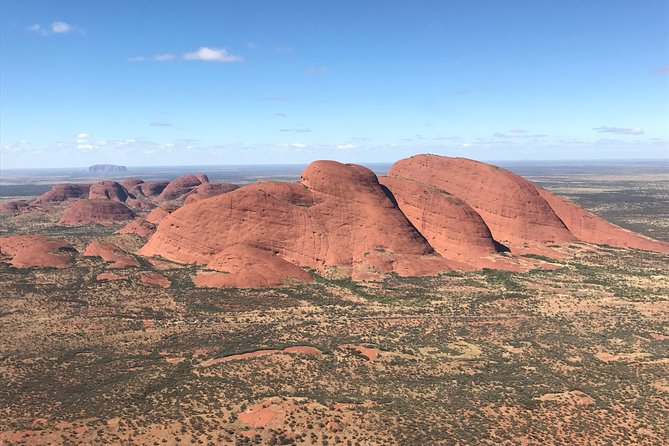
Kata Tjuta means many heads, a fitting name for the cluster of huge rounded domes that rise from the red center. The Valley of the Winds circuit brings you into the formations rather than leaving you to admire them from one distant viewpoint.
That difference matters. From inside the valley, the rock walls feel close and imposing. The route changes as you walk, giving you views between the domes, across open red earth, and toward vegetation growing in places that can look surprisingly sheltered and alive.
I would choose this hike if you want to understand Kata Tjuta as a place, not simply photograph it. Your guide connects the scenery to its natural and cultural meaning, then adds the European story of the region. You get a fuller picture than you would from a short stop at a viewing area.
The setting is also spiritually important. The walk passes through a sacred men’s area, and your guide will explain that context. Listen carefully, stay on the route, and treat the site with the same care you would show any place of cultural significance.
More hikes and treks around the world:
- From Marrakech: Ouzoud Waterfalls Guided Hike and Boat Trip
★ 4.7 · 33,630 reviews - Berber villages : Atlas Mountains Day Hike from Marrakech
★ 5.0 · 14,007 reviews - Bali: Sunrise Mount Batur Guided Hike with Breakfast
★ 4.8 · 9,660 reviews
The morning pickup from Ayers Rock Resort
The tour offers pickup from Sails in the Desert, Outback Pioneer Hotel & Lodge, Desert Gardens Hotel, and Ayers Rock Campground. The return uses the same general group of locations, which is useful if you are staying within Ayers Rock Resort and do not have your own vehicle.
The included transfer takes about an hour in the van. That adds useful convenience in a remote part of Australia, where a guided outing can save you from arranging transport and timing your park visit alone.
It also makes the tour easier to fit into an Uluru and Kata Tjuta itinerary. Check the starting time when you book, since the exact departure time depends on availability. Allow the full 330 minutes, or five and a half hours, rather than treating the three-hour walk as the total length of the outing.
The park entry ticket is not included. You need to arrange that separately, so add it to the $176 tour price when working out your day’s total cost.
Three hours between Kata Tjuta’s red domes
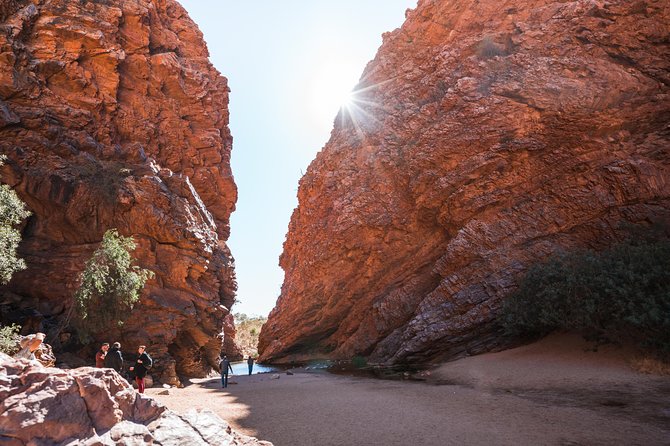
The hike itself lasts about three hours. That is enough time to feel that you have entered the valley, rather than simply stepped off a bus for a few minutes.
You should expect a challenging walk over uneven ground. The tour information specifically warns that it is not suitable for people with mobility impairments or a low fitness level. Comfortable walking shoes are essential, and you should carry water, wear a sun hat, and use sunscreen.
The reward is close contact with the formations. Kata Tjuta is not just one smooth rock. The route takes you between massive geological structures, where changing angles reveal different faces of the domes. The scale becomes more obvious as you walk beside them.
The exact amount of time spent at each scenic point may depend on the group and the guide. One guest specifically wanted more stops to enjoy the views, which is useful advice if scenery and photography are your main goals. If you want a slow, photo-heavy walk, tell your guide early. The pace needs to work for a group, and the route is physically demanding.
What the guide adds to the walk
The guide is the main reason to choose this tour instead of walking independently. You get more than directions around a marked route. The commentary covers the geology of the domes, the natural history of the area, local plants, Aboriginal cultural meaning, and the European story of the region.
Geology is especially useful here because the formations can look simple from a distance. A guide helps you notice how unusual these giant domes are and gives you a better sense of how the area came to look as it does.
The plant information also adds another layer. The route passes through a range of flora, and your guide points out what you might otherwise walk past. In a dry region, small changes in plant life can tell you something about water, shelter, and the ground beneath your feet.
The strongest guide feedback centers on Jackie and Ali. Jackie has been praised for making the geology and local plants easy to understand. Ali has been singled out for patiently answering a long list of questions. That matters on a walk like this, where curiosity can turn a beautiful hike into a much more memorable one.
Guiding styles naturally vary. Some people want a steady flow of explanation, while others want long quiet stretches for photographs. Do not be shy about asking questions or requesting a short pause when the setting deserves more time.
Same trailheads, a different kind of day:
- Bali: Mount Batur Sunrise Guided Hike and Natural Hot Spring
★ 4.8 · 9,284 reviews - Cinque Terre Day Trip with Optional Hiking or Pisa
★ 5.0 · 8,486 reviews - From Marrakech: Atlas Mountains Full-Day Hiking Trip w Lunch
★ 4.8 · 7,417 reviews - Marrakech: Ourika Valley Trip with Waterfall Hike
★ 4.6 · 6,792 reviews
Morning tea, water, fruit, and a practical break
Morning tea and light refreshments are included. Specific feedback also notes water, food, and fruit being provided, a welcome touch after walking in the heat and sun.
This is not a catered meal, so think of it as a useful trail break rather than lunch. It gives you a chance to rest, drink, and take in the surroundings without rushing back to the van.
You should still bring your own water. The official advice says to bring water and sunscreen, and that advice deserves attention. Heat, sun exposure, and a three-hour hike can make the route feel harder than the distance suggests.
Wear shoes that are comfortable for uneven ground. A sun hat is also essential. Smoking is not allowed during the activity, and children under five cannot join.
Small group benefits and one pacing concern
A small group is a good match for the Valley of the Winds. You get more direct contact with the guide, and the format makes it easier to ask about plants, geology, or cultural details without speaking over a large crowd.
It also helps with practical matters. A guide can keep an eye on the group and explain what is coming next, which is useful on a demanding route. The group setting still means you will not control every stop or set your own pace.
That is the main limitation. One piece of feedback called for more pauses to enjoy the scenery. If you are a fast walker, you may find the pace comfortable. If you want to linger at every viewpoint, you may need to make your priorities clear.
The best approach is to tell the guide what you hope to get from the walk. If you want plant information, ask for it. If you want photographs, mention that you would appreciate a little time at good viewpoints. Guides Jackie and Ali have been praised for their interaction, so using that access is part of the value.
Is $176 a fair price?
At $176 per person, this is not the cheapest way to see Kata Tjuta. You also pay the national park entry fee separately, which raises the overall cost.
Still, the price includes hotel transfers, an English-speaking guide, about three hours of guided hiking, morning tea, and light refreshments. If you are staying at Ayers Rock Resort and do not want to arrange transport, that package has practical value.
You are also paying for interpretation. A self-guided walk can show you the domes, but it will not automatically explain the cultural setting, geological story, local plants, or European history. For first-time visitors, those details can make the difference between seeing a striking place and understanding it.
I think the tour offers fair value for active visitors who want a focused half-day outing and personal attention. It is less compelling for someone who already has transport, prefers to walk alone, or wants only a quick viewpoint visit.
The small-group format helps justify the price, especially if your guide is as attentive as Jackie or Ali. Just remember to budget for the park entry ticket and bring the items the tour requires.
Who should book this Kata Tjuta hike?
This tour suits you if you enjoy walking and want a closer look at the red center beyond the usual roadside viewing stops. It is particularly useful if you are based at one of the listed Ayers Rock Resort hotels or the campground and want transport handled for you.
You should have a reasonable fitness level and be comfortable walking for about three hours over challenging ground. The tour is not suitable for people with mobility impairments, low fitness, respiratory issues, back problems, or other pre-existing medical conditions.
Families should note the minimum age of five. The hike is also not wheelchair accessible.
I would choose this outing for a visitor who wants three things at once: exercise, scenery, and explanation. You see the formations up close, learn why the place matters, and avoid the hassle of organizing a separate transfer.
I would skip it if your main goal is a relaxed sightseeing drive, a short walk, or a flexible day with no fixed group pace. Kata Tjuta deserves time, but this route asks you to work for the views.
Practical tips for a better walk
Pack light, but do not leave out the basics. Your daypack should include water, sunscreen, a sun hat, and comfortable walking shoes. The red ground and open sun can make poor footwear or a lack of water especially unpleasant.
Wear clothes suited to walking and sun exposure. The tour description does not promise a particular temperature or weather arrangement, so check conditions before you leave and prepare for the day you are actually facing.
Keep your questions ready. Ask about the domes, local plants, cultural meaning, or European history. The guides have been praised for answering questions, and the small group gives you a better chance to have a real exchange.
Respect the cultural setting. You are walking through a sacred men’s area, not simply a scenic park. Follow the guide’s instructions and avoid treating the place as a backdrop without meaning.
Finally, leave room in your schedule after the listed return time. Pickup and drop-off involve several resort locations, and the full activity lasts about 330 minutes.
Should you book the Valley of the Winds Circuit Hike?
Book it if you want an active, guided introduction to Kata Tjuta and value the convenience of hotel transfers. The combination of giant domes, cultural interpretation, plant and geological information, refreshments, and a small group makes this a well-rounded half-day outing.
Think twice if you have any medical or mobility concern, dislike long walks, or prefer to set your own pace. The route is challenging, the park ticket costs extra, and one person wanted more time at scenic stops.
For a fit visitor who wants to get close to Kata Tjuta rather than simply look at it from afar, I would consider this $176 tour a sensible choice. Choose it for the walk and the context, not just for a few photographs.
FAQ
How long does the Valley of the Winds Circuit Hike take?
The full activity lasts 330 minutes, or about five and a half hours. The itinerary includes about one hour in the van and three hours of hiking, with pickup, drop-off, and refreshment time also included.
How much does the tour cost?
The price is $176 per person. The Uluru Kata Tjuta National Park entry ticket is not included.
Where can I be picked up?
Pickup is available from Sails in the Desert, Outback Pioneer Hotel & Lodge, Desert Gardens Hotel, and Ayers Rock Campground.
Where will I be dropped off?
Drop-off is available at Sails in the Desert, Desert Gardens Hotel, Outback Pioneer Hotel & Lodge, and Ayers Rock Campground.
Is a guide included?
Yes. An English-speaking live tour guide leads the activity. Audio guides may be available in other languages if requested.
What refreshments are provided?
Morning tea and light refreshments are included. Information for the activity also refers to water, food, and fruit being provided.
What should I bring?
Bring comfortable walking shoes, a sun hat, sunscreen, and water.
Is the hike suitable for people with low fitness or mobility problems?
No. The hike is not suitable for people with mobility impairments or a low fitness level. It is also not wheelchair accessible.
Can I cancel the booking?
You can cancel up to 24 hours in advance for a full refund. A reserve-now-and-pay-later option is also available.
Just added around the world
- Private Grand Canyon Full Day Hike★ 5.0 · 53 reviews
- Lycian Way Trekking Tour (7 Days)★ 5.0 · 17 reviews
- Private Grand Canyon Hike and Sightseeing Tour★ 5.0 · 132 reviews
- Explore El Yunque: Hiking, Swings & Waterslide (Small Group)★ 5.0 · 144 reviews
- 6 Days Bale Mountains Trekking★ 5.0 · 10 reviews
- El Yunque Hike Adventure to Las Tinajas Waterfall from Fajardo★ 5.0 · 52 reviews
- Angel Rocks Hike and Chena Hot-Springs Soak Guided Tour★ 4.5 · 13 reviews
- Cape Range National Park Full-Day Trekking Adventure★ 5.0 · 39 reviews
Australia Hiking Tours, side by side.
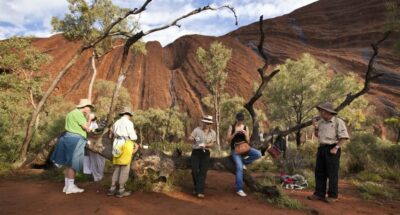
Uluru: Guided Trek of Uluru’s Base in a Small Group
Read our review →
Blue Mountains Hiking Glow worms Cave Wildlife Spotlighting Night Adventure
Read our review →
Small-Group Grampians Great Wildlife Escape Day Trip with Hiking
Read our review →
4 Day Wild Tasmania Tour / Wildlife, Nature, Hiking / Inc. Accom
Read our review →
Sydney: Port Stephens Day Trip with Dolphin Cruise or Hike
Read our review →
Hobart: Bruny Island Adventure: Hike, Highlights & Tastes
Read our review →
Mackay: Finch Hatton Gorge Hike, Swim & Platypus Adventure
Read our review →
Cape Range National Park Full-Day Trekking Adventure
Read our review →This walk also sits in