
REVIEW · SPAIN
Lanzarote: Volcano Hike
Volcanoes Natural Park gives you Lanzarote at its most stripped-back: black lava, red cones, hollow tunnels, and craters left by eruptions from 1730 to 1736 and 1824. This is not a stroll past one viewpoint. You spend about 8 kilometers walking across the volcanic field, with a guide explaining how the island was built.
I like the clear geological focus and the way the walk turns odd-looking rocks into a readable story. I also like the practical touches, including optional hotel pickup and a small snack break with fruit and a cereal bar. The main consideration is the loose surface and exposure to sun and wind. Trainers can work, but proper walking shoes make the route easier.
Key points at a glance
- Walk across young lava fields: See the remains of Lanzarote’s historic eruptions underfoot rather than only from a roadside lookout.
- Reach volcanic cones and craters: The route includes ascents to volcanic formations and the chance to look into a crater.
- Learn how life returns: Your guide explains the slow appearance of plants and other life on lava in Lanzarote’s dry climate.
- Expect roughly 8 kilometers: The route is mostly flat and manageable, though loose stones can make it slower than the distance suggests.
- Choose pickup or self-drive: Hotel transfers may be available, while independent arrivals meet near Montaña Testeina on Camino Testeina.
- Guides add real value: Famara and Marcelo are among the guides praised for clear explanations, friendly service, and fluency in several languages.
Why this volcanic walk is worth your morning
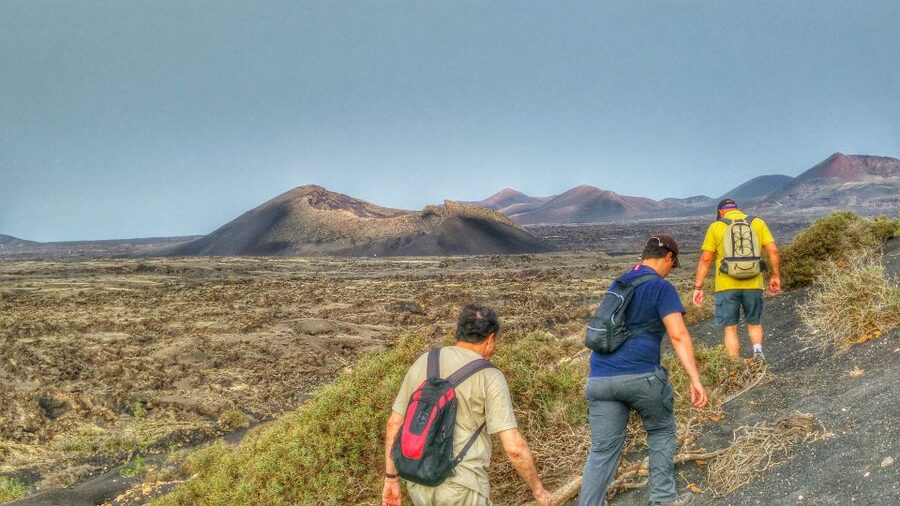
Lanzarote’s central and southern volcanic country can look almost empty at first. That is the point. With little vegetation to cover the rock, the cones, lava flows, and openings remain unusually easy to read. You can see the rough path of a flow, the shape of a crater, and the dark remains of lava tunnels without much visual clutter.
I like this tour because it gives you time to understand what you are seeing. A guide does not simply point at a black slope and call it volcanic. You learn how eruptions changed the island, why the rock still looks so fresh, and how life slowly returns to a place that seems unable to support it.
The walk is also a good middle ground. You get more than a quick stop at a scenic viewpoint, but you do not need the fitness or commitment of a full-day mountain hike. The advertised duration is three hours, while some outings have taken about three and a half to four hours. The distance has been described as roughly 7 to 10 kilometers, with 8 kilometers the best working estimate.
More Volcano Hikes in Spain
- La Palma: Tajogaite Volcano Guided Trek
★ 4.8 · 1,810 reviews - The Volcano Heart Tour: Hiking, Tasting and Sunset Experience
★ 5.0 · 1,120 reviews - Lanzarote: Guided Volcano Hike with Transfers
★ 4.9 · 861 reviews
Starting near Montaña Testeina
If you arrange your own transport, the meeting point is on Camino Testeina, a dirt road beside Montaña Testeina and just off the main LZ 30 road. There is room to park a few meters along the track. Use the supplied coordinates, 28°59’12.0″N 13°40’35.1″W, rather than relying only on the road name.
Hotel pickup is an optional extra rather than an automatic part of every booking. Pickup areas are specified when you book, and the exact time and place are sent afterward. The stated pickup window can fall between 9:00 and 9:40 in the morning, depending on your location, so check your email and spam folder before setting out.
The transfer option is useful if you are staying in one of the covered areas and do not want to work out the rural meeting point. It also means you can finish the walk without worrying about driving after a warm, sunny morning. If you arrive independently, allow time to find the dirt road and park before the start.
One practical wrinkle is the first few minutes. One account describes some confusion while people were sorted into language groups and assigned to vans. It was resolved, and the rest of the outing ran smoothly, but do not expect the opening transfer arrangements to feel perfectly polished.
Across the lava fields
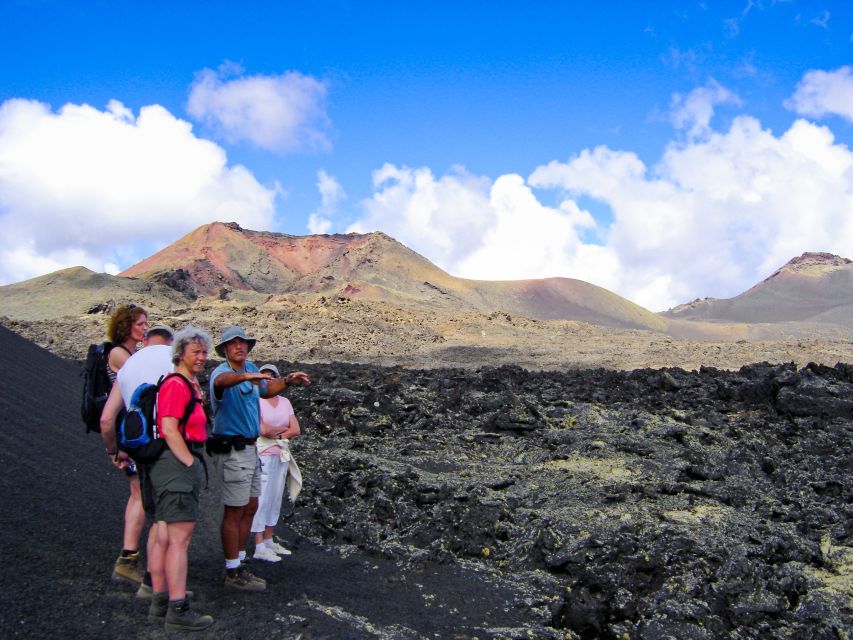
Once the walk begins, you move into a broad volcanic area shaped by eruptions in 1730 to 1736 and again in 1824. Those dates matter because this is relatively recent volcanic activity in human terms. Lanzarote’s dry climate has slowed the spread of plants, leaving much of the rock open and exposed.
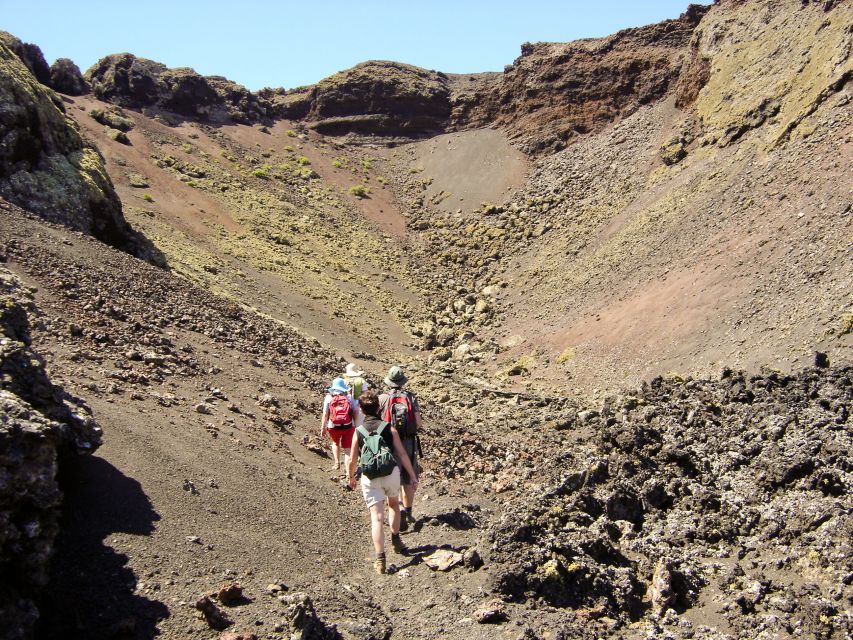
The surface changes as you go. Some sections are broad and fairly easy, while others are covered in loose stones. The route is generally described as mostly flat, but that does not mean it is smooth. You may find yourself shortening your stride and watching each foot placement, especially on broken lava.
The best shoes are closed-toe walking shoes with firm soles. Walking boots are the safest choice. Trainers can be sufficient, but loose stones may work their way inside, which can become irritating over several kilometers. A pair of lightweight trousers may also be more comfortable than shorts if you dislike brushing against rough volcanic edges, though the supplied advice specifically stresses footwear, sun protection, water, and a windbreaker.
The setting can feel almost like a film set, but the guide keeps it grounded in real geology. You learn how lava moved, cooled, cracked, and left behind different forms. The black and rust-colored rock is not just scenery. It is the record of pressure and heat beneath the island.
Craters, cones, and lava tunnels
The route includes volcanic cones and craters, with an ascent to higher ground for wider views. Reaching the top is part of the reward, but this is not a summit challenge. The route is designed as an informative walk, and the pace is generally steady rather than athletic.
A particularly appealing part is the chance to walk into or around a volcanic crater. Looking down into one gives you a much better sense of the scale and shape of an eruption than viewing a cone from a bus window. You can see how the rim rises around the hollow and how the surrounding lava field relates to it.
The area also contains lava tunnels and formations linked to lava lakes. Do not expect a cave tour with a long underground section based on the information provided. The exact access to each formation can depend on the route and conditions. Think of these features as parts of an open-air geology lesson, with the guide showing you where molten rock once moved or pooled.
The scenery changes slowly, so this is best for someone who enjoys looking closely. You will not find a new attraction every ten minutes. Instead, the interest comes from comparing one cone, flow, or surface texture with the next and understanding why each looks different.
Same trailheads, a different kind of day:
- From Valencia: Montanejos Guided Hike with Natural Pools
★ 4.5 · 1,741 reviews - From Seville: Caminito del Rey Hike Day Trip
★ 4.5 · 1,240 reviews - Lanzarote: Hike Across Timanfaya’s Volcanic Landscapes
★ 4.8 · 1,234 reviews - From Barcelona: Montserrat Monastery, Easy Hike, Cable Car
★ 4.9 · 1,021 reviews
Guides who make the rock readable
The guide is central to the experience. Famara Espino is specifically praised for being well informed, polite, friendly, and able to explain the geography in an approachable way. Marcelo is also singled out for making the walk enjoyable in rainy conditions and for explaining the volcanic setting clearly.
The guides speak English, French, and Spanish. Groups are divided by language, which helps keep the explanations useful rather than forcing everyone to follow a talk in a language they do not understand. One guide has been described as fluent in three languages, a helpful feature for mixed-language groups.
You should expect plenty of explanation about Lanzarote and the island’s volcanic past, not a silent trek with occasional directions. That makes this a good choice if you want context and not just photographs. It also gives the walk a human touch. The best moments are likely to come when the guide stops at a simple-looking feature and explains what happened there.
The tone appears friendly and relaxed, but the walk still keeps a robust pace. You are not wandering at random. Bring enough water, pay attention to the route, and be ready to walk continuously for several hours.
Sun, wind, rain, and the open sky
Volcanoes Natural Park has little shelter. Sun can be strong even when the air feels cool, and wind is a regular concern. Pack sunscreen, sunglasses, a sun hat, water, and a windbreaker. The windbreaker is especially useful on exposed cones and open stretches of lava.
Do not judge conditions only by the forecast in your resort. The volcanic field can feel different from a sheltered town. A cloudy morning may still expose you to bright reflected light from the rock, while a breezy day can feel chilly when you stop.
Rain does not automatically ruin the outing. Marcelo was praised for keeping the experience enjoyable in wet conditions, but rain can make loose volcanic surfaces less pleasant underfoot. Wear shoes with good grip and accept that the route may feel slower.
A small snack is provided during the break, with fruit such as a banana and a cereal bar mentioned specifically. This is not a meal, so eat breakfast first and carry your own water. The snack is a useful pause rather than a reason to book the activity on its own.
How hard is the 8-kilometer route?
I would call this a moderate walking outing, not a strenuous mountain hike. The route is mostly flat, and the pace suits a general sightseeing day for people who are comfortable walking several kilometers. The difficulty comes from the ground rather than steep climbs.
Loose stones can tire your feet and ankles. Proper walking boots help, especially if you are not used to uneven volcanic rock. If you wear trainers, choose a pair with a solid sole and expect to stop occasionally to clear stones.
The activity is not suitable for children under seven, people with mobility impairments, or wheelchair users. That restriction makes sense given the dirt tracks, uneven lava, and crater sections. If you have a minor injury or balance concern, consider how you normally cope with loose ground before booking.
The stated distance is not perfectly fixed in practice. Most descriptions place it around 8 kilometers, but some outings have been closer to 9 or perhaps 10 kilometers and lasted four hours. I would plan for the longer end so you are not caught short on water, energy, or time.
What the $48 price buys you
At $48 per person, this is good value if you want a guided explanation of Lanzarote’s volcanic country rather than a simple self-guided walk. The fee includes the guided hike. Transportation and hotel pickup are included only when you choose that option, so check the exact price before paying.
The value comes mainly from the guide. You could walk through volcanic terrain on your own, but it is easy to miss the meaning of the cones, lava tunnels, and surfaces. A good explanation helps you see the park as a sequence of eruptions and slow recovery, not simply a field of black rock.
The transfer option adds convenience, particularly for visitors without a car. It may also save you the hassle of locating Camino Testeina. If you have your own vehicle and feel comfortable finding the meeting point, self-driving may keep the total cost lower.
The outing has a strong satisfaction record, with a 4.7 rating from 266 reviews. The repeated praise centers on organization after the initial sorting, clear guiding, dramatic views, and the pleasant route. The small snack and hotel return are useful extras, but I would choose it for the geology and access to the volcanic formations first.
Who should book it?
This walk suits you if you want to understand Lanzarote’s volcanic past while getting active. It is a good fit for couples, older children over seven who can manage a long uneven walk, and adults who prefer a guided half-day outing to a full-day excursion.
It also works well early in a Lanzarote visit. After three hours among cones and lava flows, the island’s other volcanic sights make more sense. You will recognize the difference between a crater, a lava flow, and a cone instead of treating every dark hill as the same.
You may want something else if your priority is a very short walk, a fully smooth path, or a cave visit with extensive time underground. The route is exposed, the surface can be rough, and the exact duration may stretch beyond three hours.
Book with comfortable shoes already packed, not as an afterthought. Bring water, sun protection, a windbreaker, and a camera. If you want pickup, provide your hotel name and watch for the supplier’s follow-up message with the exact time and place.
Should you book the Volcano Hike?
I would book this if you want a practical introduction to Lanzarote’s volcanic core and you are happy walking 8 kilometers over loose ground. The guides, especially Famara and Marcelo, add the detail that turns a scenic walk into a useful lesson, while the crater views and lava formations give you plenty to look at along the way.
Skip it if uneven surfaces bother you or if you want a relaxed sightseeing ride with little walking. For everyone else, $48 is a fair price for a three-hour guided outing, with optional transport, a snack break, and a close look at one of the island’s most distinctive natural areas.
FAQ
How long is the Volcano Hike?
The advertised duration is three hours. Some outings have lasted about three and a half to four hours, and the walking distance is generally around 8 kilometers, with individual routes reported at roughly 7 to 10 kilometers.
Where does the hike meet?
The meeting point is Camino Testeina, a dirt road beside Montaña Testeina near the LZ 30 main road. The coordinates are 28°59’12.0″N 13°40’35.1″W, and there is space to park a few meters along the track.
Is hotel pickup available?
Yes, pickup is available if you select that option and provide your hotel name in one of the covered areas. The supplier sends the exact pickup place and time after booking. The stated morning pickup window can be between 9:00 and 9:40.
What languages are offered?
The live guide service is available in English, French, and Spanish. Groups are divided according to language at the start.
What should I bring?
Bring closed-toe comfortable shoes, preferably walking boots, along with water, sunscreen, sunglasses, a sun hat, a windbreaker, and a camera.
Is the route suitable for children and wheelchair users?
The activity is not suitable for children under seven, people with mobility impairments, or wheelchair users. The route includes uneven and loose volcanic ground.
Can I cancel the booking?
You can cancel up to 24 hours in advance for a full refund. A reserve-now-and-pay-later option is also available, allowing you to hold a place without paying immediately.
Just added around Spain
- From Valencia: Montanejos Tour with Guided Hike★ 4.1 · 86 reviews
- Montanejos Hiking Tour & Thermal Pools from Valencia★ 4.5 · 111 reviews
- From Valencia: Cala del Moraig Hiking & Beach Trip★ 4.8 · 107 reviews
- Trekking in the Volcanoes Natural Park in a small group★ 5.0 · 97 reviews
- Montserrat very early : Hiking, Abbey, very small group★ 5.0 · 127 reviews
- PRIVATE TOUR Teide National Park: Hiking and Stargazing★ 5.0 · 38 reviews
- Semi-Private Montserrat Monastery & Hiking Experience★ 5.0 · 132 reviews
- Private Pre-Pyrenees Medieval Village Hike from Barcelona★ 5.0 · 39 reviews
Volcano Hikes, side by side.
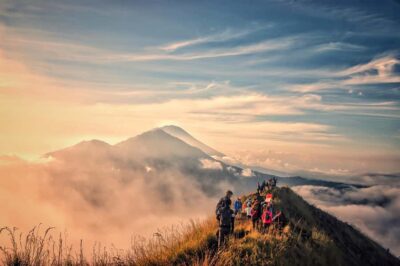
Sunrise Mount Batur Guided Hike with Breakfast
Read our review →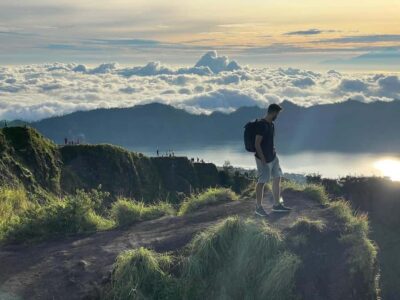
Mount Batur Sunrise Guided Hike and Natural Hot Spring
Read our review →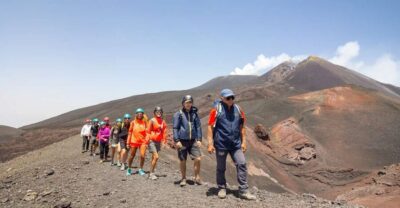
Mount Etna: Summit Guided Hiking Tour up to 3,400 m
Read our review →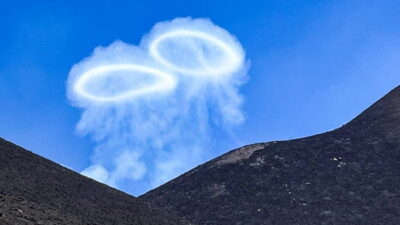
Mount Etna: Trek to 3000m with cable car and 4×4
Read our review →
Mount Batur Sunrise Trek With Guide and Breakfast
Read our review →
Mount Batur Sunrise Hike and Natural Hot Spring Option
Read our review →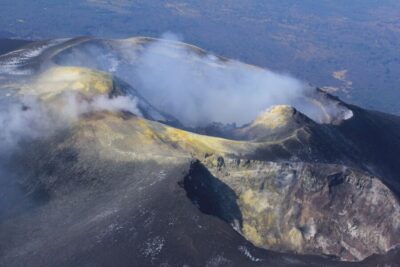
Mount Etna: Summit Crater Trek with Cable Car
Read our review →This walk also sits in