
REVIEW · ITALY
Linguaglossa: Mt Etna Summit Crater Hike with Optional 4×4
Etna’s north side gives you the volcano in its roughest form: black sand, sharp lava, sulfur fumes, and a high route with views from the Aeolian Islands to Taormina. I especially like the small-group format and the way the hike moves beyond a single crater viewpoint, taking you through several types of volcanic ground.
I also like that the guides, including Vincenzo, Massimo, and Marco, adapt their pace and explain Etna’s geology as you go. The main catch is cost: the advertised $70 does not include the €50 4×4 ride, and the steep descent over gravel, ice, and loose ash is harder than the uphill distance suggests.
Key points before you book
- A true high-altitude Etna route: Start at 1,800 meters and climb to about 2,800 meters before walking toward the summit area.
- Several craters in one hike: See the Central Crater, Bocca Nuova, South-East Crater, and North-East Crater from safe viewpoints.
- The downhill is the real test: A 1,500-meter descent includes steep volcanic sand gullies and unstable footing.
- Bring protection from the elements: Gloves, a hat, windproof layers, long trousers, and a neck warmer are useful against cold, ash, and gases.
- The 4×4 costs extra: Budget another €50 per person for the round-trip mountain transfer.
- Best for fit adults: The route is not suitable for children under eight, people with vertigo, heart problems, altitude sickness, recent surgery, or low fitness.
Why Etna’s north side feels different
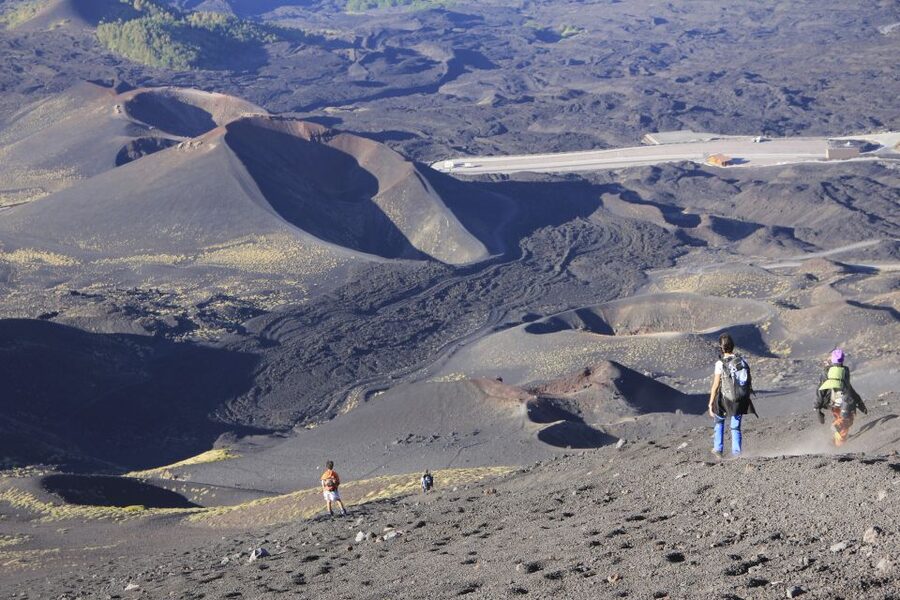
Most visitors meet Mount Etna from a busy access point on the south side. This trip takes you to Piano Provenzana on the northern slope, where the setting feels more open and rugged. You begin near the Chiosco Bar Mareneve at roughly 1,800 meters, surrounded by volcanic terrain rather than a polished attraction.
That matters because this is not a short walk to a viewing platform. You are spending several hours moving through a high volcanic zone, with the scenery changing from black lava and ash to gullies, plant life, and broad views across eastern Sicily.
The route reaches about 2,800 meters before the main walk toward the summit craters. At that height, weather can shift quickly, and the air may feel cold even in summer. Etna is an active volcano, so the route can change because of bad weather or increased volcanic activity. That is part of the deal, not a flaw in the planning.
The group is intended to be small, with the activity details listing up to eight participants. Another part of the published information gives a maximum of ten, so I would confirm the exact group limit when booking. Either way, a small party is valuable here. The guide can watch footing, adjust the pace, and explain what you are seeing without shouting over a large crowd.
More Mountain and Summit Hikes in Italy
- Mount Etna: Summit Guided Hiking Tour up to 3,400 m
★ 4.8 · 4,792 reviews - Mount Etna: Trek to 3000m with cable car and 4×4
★ 4.6 · 3,823 reviews - Mount Etna: Summit Crater Trek with Cable Car
★ 4.8 · 1,875 reviews
The 4×4 ride from Piano Provenzana
The tour begins at the meeting point in front of Chiosco Bar Mareneve in Piano Provenzana. Parking costs €3, and hotel pickup is not included, so you need to reach the northern base yourself.
The planned transfer to the upper trailhead takes about 30 minutes by 4×4. The round-trip ride costs €50 per person and is paid separately. This extra charge is the biggest value question on the tour. You are paying for access to high ground that would otherwise make the route much longer, but the transfer is not a small add-on relative to the $70 tour price.
The vehicle ride itself can be rough. One practical point from the experience is that the transfer may feel cramped, and the return can be uncomfortable when the vehicle is full. Another description calls it an adventure that may not suit anyone with a weak stomach. If you are sensitive to bumpy mountain roads, take that seriously.
Still, the transfer changes the trip. It puts you near the high volcanic zone quickly, leaving the bulk of the five hours for the hike rather than a long approach from the base.
Walking toward Bocca Nuova and the summit area
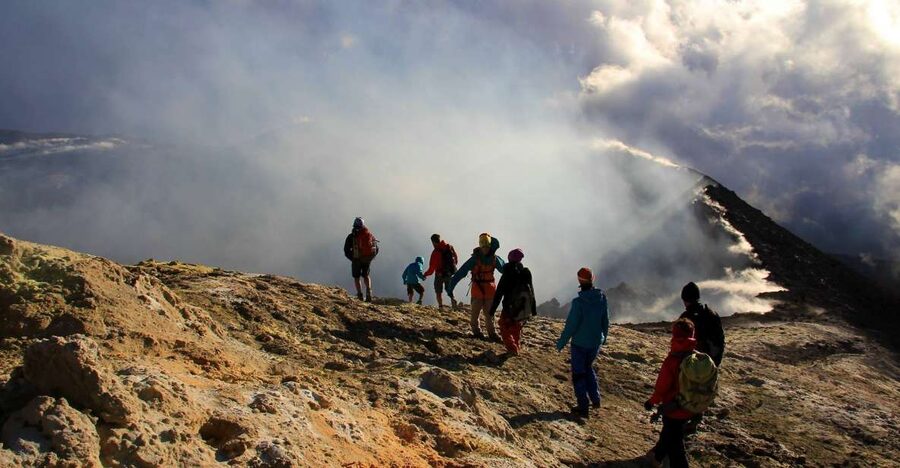
From Piano delle Concazza at about 2,800 meters, you begin the main trek. The first substantial section takes around an hour and a half through what feels like a volcanic desert. The ground is dark, bare, and exposed, with little shelter from wind or sun.
The reward is the view. On a clear day, you can look toward the Aeolian Islands and across to the Gulf of Taormina. These wide views help you understand Etna as a huge mountain rising above Sicily, not simply a crater with smoke coming out of it.
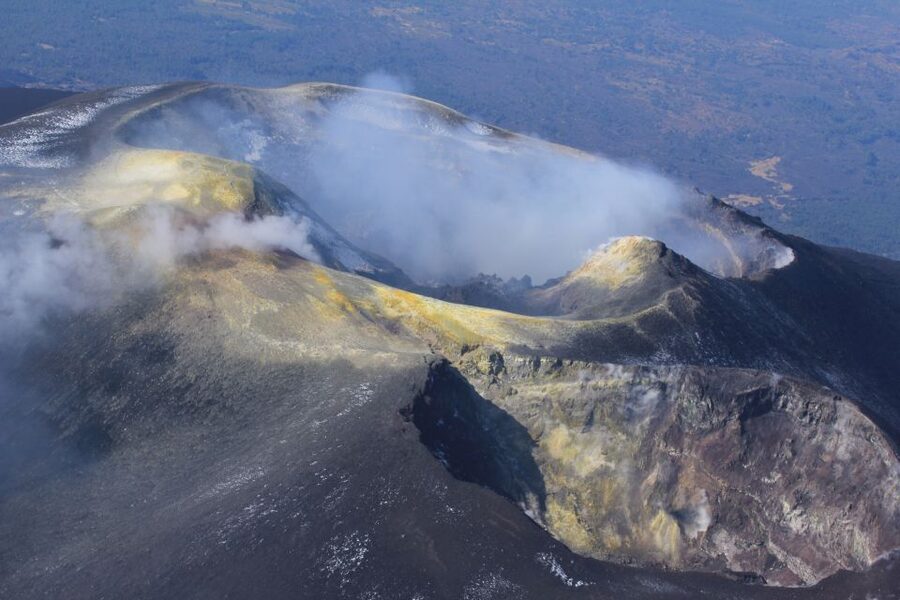
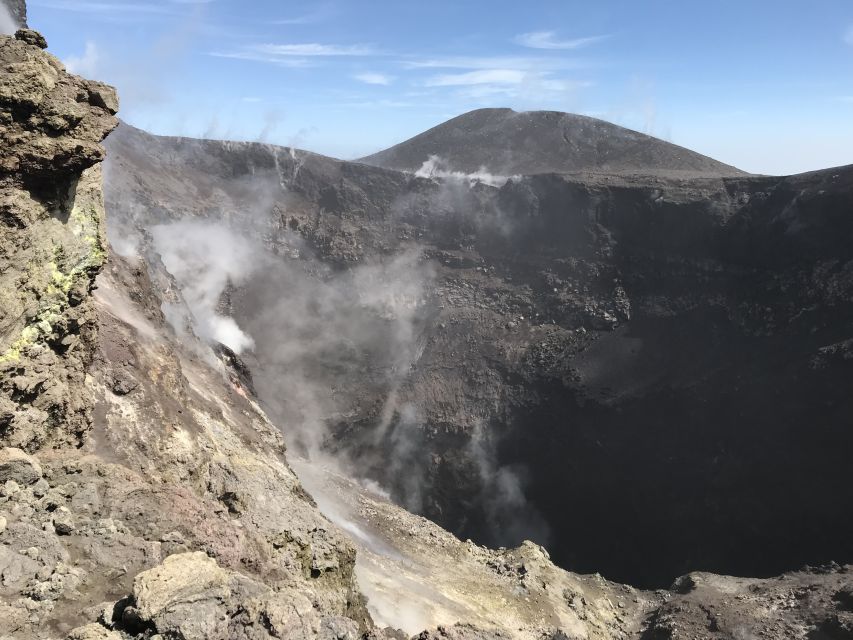
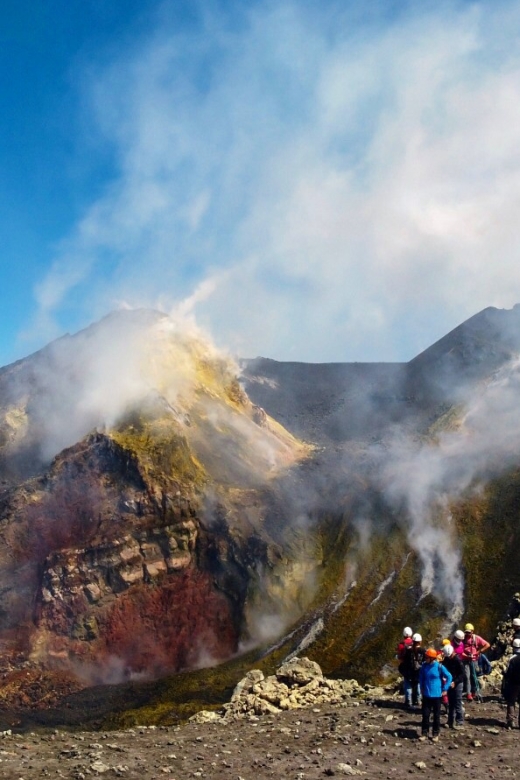
The trail brings you to the rim of the Central Crater. You can feel heat and volcanic gases in the area, and sulfur deposits add yellow and green tones to the otherwise black and gray rock. The crater depression is large and serious, with an active volcano atmosphere that a roadside viewpoint cannot match.
You do not walk into unsafe areas. The guide keeps the group at a safe distance from the summit craters, including Bocca Nuova, the South-East Crater, and the North-East Crater. The exact route and viewing distance may change with conditions, which is sensible on an active volcano.
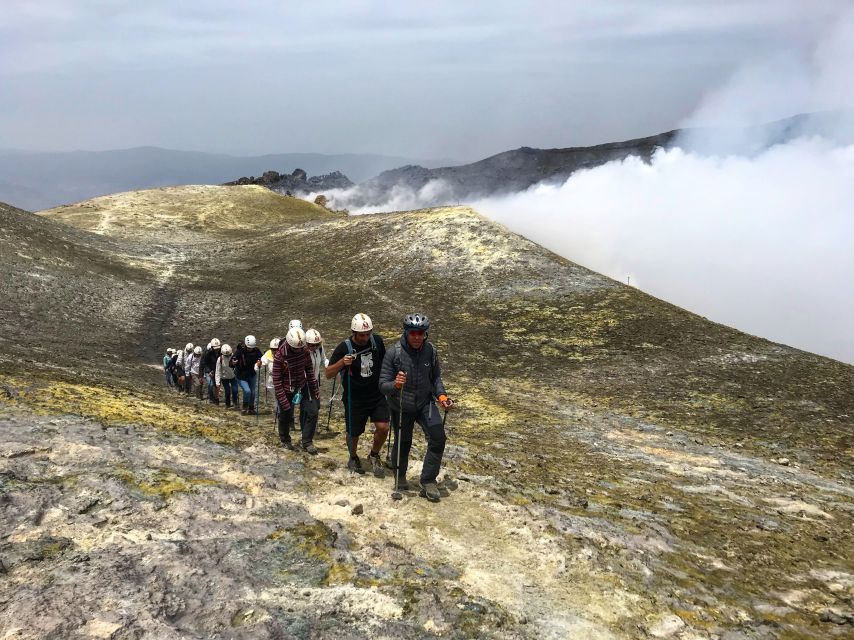
This section is not technically mountaineering, but it is not an easy stroll. The difficulty is rated medium-high, and the combination of altitude, wind, loose rock, and uneven ground matters. Trekking poles are included, and you should use them. They are especially helpful when the surface shifts under your boots.
What the summit craters offer
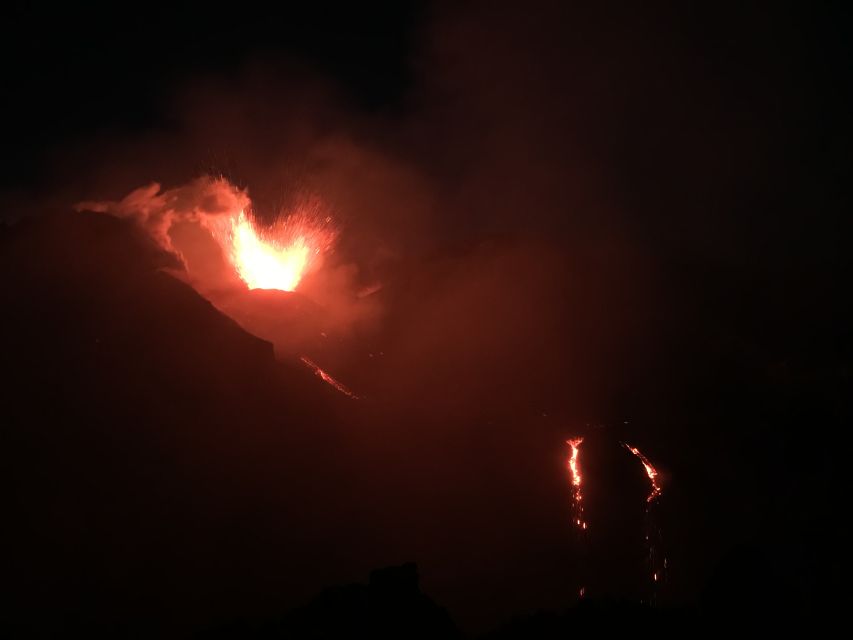
The summit area is the main reason to choose this excursion. You are not simply looking at an old volcanic cone from far below. You are close enough to see the crater forms, sulfur sublimates, steam, and the fractured texture of the upper mountain.
The Central Crater gives you the most direct sense of scale. Bocca Nuova adds another major volcanic feature, while the South-East and North-East craters show how Etna’s summit area has several distinct openings and cones rather than one simple hole.
Your guide provides the geological context as you walk. This is important because the black terrain can look repetitive at first. With explanation, you begin to notice different lava textures, eruptive layers, ash, fractures, and the signs of changing volcanic activity.
Guides work in English, French, and Italian. Vincenzo has been particularly attentive to pacing on mixed-ability groups, while Massimo is a high-mountain guide who combines explanation with close attention to safety. Marco has also led groups on the northern route. You should not assume a particular guide, but the language range makes this workable for many international visitors.
More Volcano Hikes in Italy
- Etna: summit craters trekking with volcano guide 3350mt
★ 4.7 · 1,712 reviews - Catania: Mount Etna Trekking Tour Beyond the Tourist Trails
★ 4.9 · 1,596 reviews - Mount Etna: Guided Trek 3,000 Meters to the Summit
★ 4.8 · 1,407 reviews - Etna Sunset Tour: Volcano trek, Cave & tasting from Catania
★ 4.8 · 1,290 reviews
The descent through volcanic sand gullies
Here is where you need to judge your fitness honestly. The route descends through steep, loose volcanic sand gullies toward Pizzi Deneri. Going downhill over ash can feel like skiing without skis. Your feet slide, poles sink, and every step requires control.
The total elevation change is listed as about 600 meters gained and 1,500 meters lost, with a total distance of roughly 12 kilometers. That large descent explains why the tour can feel tiring even after the high point is reached.
Sharp volcanic rock is another concern. Gloves are not just for warmth. They can protect your hands if you steady yourself on the ground or grab a rock during a steep section. Long trousers help against abrasive ash, and sturdy trekking shoes are essential.
The tour includes trekking shoes, a wind jacket, a pull or warm layer, helmet, trekking poles, and insurance. I would still bring your own gloves, hat, and neck warmer. The neck warmer is useful for volcanic sand and gases, while layered clothing lets you respond to changing temperatures.
At Pizzi Deneri, you get one of the trip’s finest views: the Valle del Bove volcanic amphitheater. It is described as about eight kilometers long and four kilometers wide, a huge caldera carved into Etna’s eastern side. From this high position, the scale of the valley becomes much easier to grasp.
Returning through Etna’s plant life
After a lunch break, the route continues downhill through the Quarantore gullies. The ground gradually changes, and you pass near the 2002 eruptive fracture. This section brings a useful contrast to the summit zone.
Etna is not only ash and lava. As you lose altitude, plant species endemic to the mountain appear along the route. The change is gradual, so it is easier to notice how altitude and volcanic ground shape what can grow.
The return finishes at Piano Provenzana, with another 30-minute 4×4 segment included in the stated itinerary. Since the exact transport arrangement can depend on conditions and group timing, allow some flexibility around the five-hour duration.
The route’s variety is one of its best features. In a single outing, you see high crater terrain, sulfur deposits, steep ash gullies, the Valle del Bove, an eruptive fracture, and volcanic plant life. That gives you a fuller picture of Etna than a brief crater stop.
Price, equipment, and what to pack
The base price is $70 per person. Add €50 for the round-trip 4×4, plus your food and drink. Parking at the meeting point costs €3, and hotel pickup is excluded.
That makes the tour a better value for someone who wants a guided summit-area hike than for someone seeking a cheap Etna introduction. The guide, safety equipment, insurance, and provided clothing reduce the amount of gear you need to rent or carry. But the transfer fee should be part of your mental price from the beginning, not a surprise at the meeting point.
Bring at least 1.5 liters of water per person and a packed lunch. There is a lunch break, but food is not included. Wear trekking shoes, long trousers, a sweatshirt or warm layer, and a windproof jacket. Add gloves, a hat, and a neck warmer.
The included helmet and poles are useful, not decorative extras. You are walking around loose volcanic material, and the poles help with both the climb and the long descent. The route is exposed, so sun protection is also sensible, although the supplied information places greater emphasis on wind and cold protection.
Who should choose this Etna hike
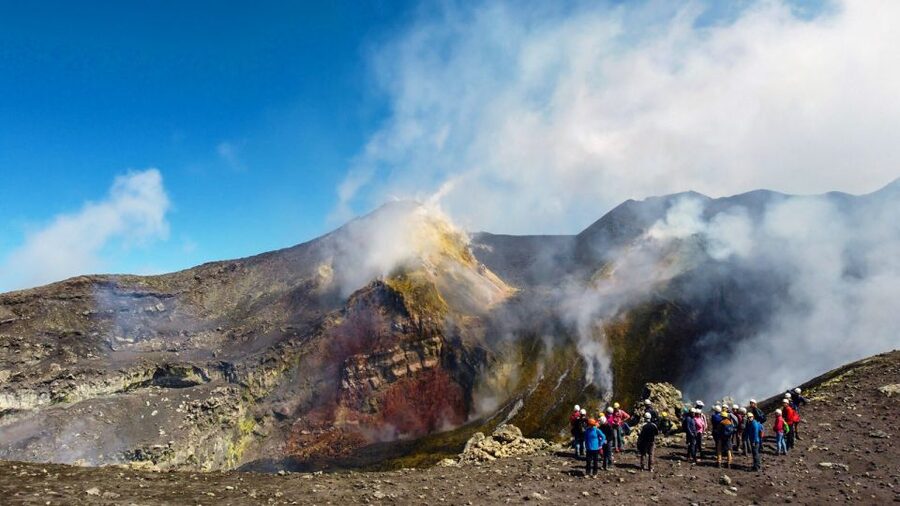
I would choose this trip if you want to get close to Etna’s summit craters and are comfortable with a demanding mountain walk. It suits fit adults who like geology, dramatic views, and changing terrain more than people who want a relaxed sightseeing outing.
The route is not recommended for anyone with heart problems, vertigo, altitude sickness, recent surgery, or a low level of fitness. It is also not suitable for children under eight, people over 80, or anyone over 100 kilograms according to the stated restrictions.
One participant aged 69 and weighing 100 kilograms managed the route with careful pacing and help from the guide, but that should not be treated as a promise that the walk will feel easy. The downhill gravel and icy sections were challenging, especially for a mixed group.
You should also be comfortable with uncertainty. Bad weather or volcanic activity can alter the route. The guide’s job is to keep the experience safe, not to force the advertised path at any cost.
Should you book the north-side summit hike?
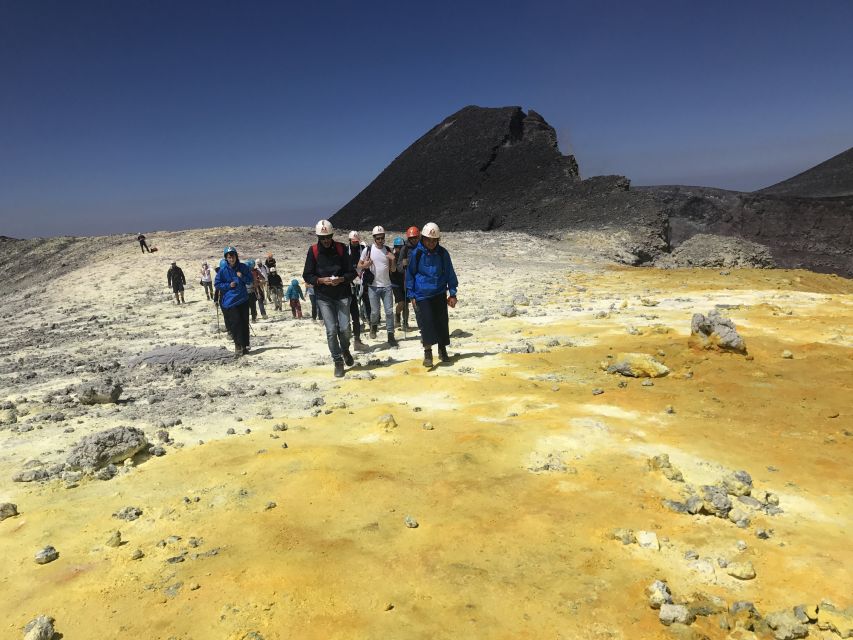
Book it if the words volcanic desert, sulfur vents, summit craters, and steep ash gullies sound appealing. The guides add real value, and the north side offers a wilder setting with fewer interruptions than the most developed access areas.
Think twice if you dislike bumpy transport, loose downhill ground, or extra charges. The €50 4×4 fee is substantial, and the descent can be tougher than expected. For the right person, though, this is a memorable five-hour way to see Etna as a living mountain rather than a scenic backdrop.
FAQ
Where does the Etna summit hike meet?
The meeting point is in Piano Provenzana, in front of Chiosco Bar Mareneve. Look for the Aitne Volcano Guide logo and the guide waiting there. Parking costs €3.
How long does the experience last?
The stated duration is five hours. The itinerary includes about 30 minutes by 4×4, around two hours in the Bocca Nuova and summit area, about 1.5 hours around Pizzi Deneri, and another 30-minute vehicle segment.
Is the 4×4 ride included in the price?
No. The round-trip 4×4 costs €50 per person and is paid separately. Hotel pickup is also excluded.
What languages are available?
The live guide service is available in English, French, and Italian.
What should I bring?
Bring a packed lunch, at least 1.5 liters of water, trekking shoes, a windproof jacket, a warm sweatshirt, long trousers, gloves, a hat, and a neck warmer to protect against volcanic gases and sand.
Is the hike suitable for children?
Children under eight are not permitted. The hike is also not suitable for people with heart problems, vertigo, altitude sickness, recent surgery, low fitness, or a fear of heights.
Can the route change after booking?
Yes. Bad weather or increased volcanic activity can cause changes to the route.
Just added around Italy
- Private Guided Hike to Tre Cime di Lavaredo★ 5.0 · 16 reviews
- Hike the Dolomites One Day Private Excursion from Cortina★ 5.0 · 18 reviews
- BarCa Winery Cinqueterre Trekking & Wine Tasting & Pesto Class★ 5.0 · 48 reviews
- From Catania: Private mt. Etna trekking and pic-nic★ 5.0 · 37 reviews
- Mount Etna Advanced Trekking: Private Full-Day Tour from Catania★ 5.0 · 21 reviews
- Nature Reserve ,Trekking Eco Tour in Iblei National Park★ 5.0 · 27 reviews
- Etna trekking and wine tasting★ 5.0 · 28 reviews
- Ferriere waterfalls hike – Amalfi and Ravello Coast★ 5.0 · 14 reviews
Volcano Hikes, side by side.
Sunrise Mount Batur Guided Hike with Breakfast
Read our review →
Mount Batur Sunrise Guided Hike and Natural Hot Spring
Read our review →
Mount Etna: Summit Guided Hiking Tour up to 3,400 m
Read our review →
Mount Etna: Trek to 3000m with cable car and 4×4
Read our review →
Mount Batur Sunrise Trek With Guide and Breakfast
Read our review →
Mount Batur Sunrise Hike and Natural Hot Spring Option
Read our review →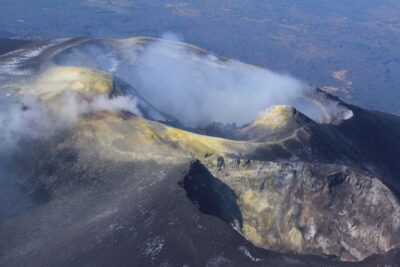
Mount Etna: Summit Crater Trek with Cable Car
Read our review →This walk also sits in