
REVIEW · CAPE VERDE
Santo Antão: Hiking Cova Volcano Crater to Ribeira Paúl
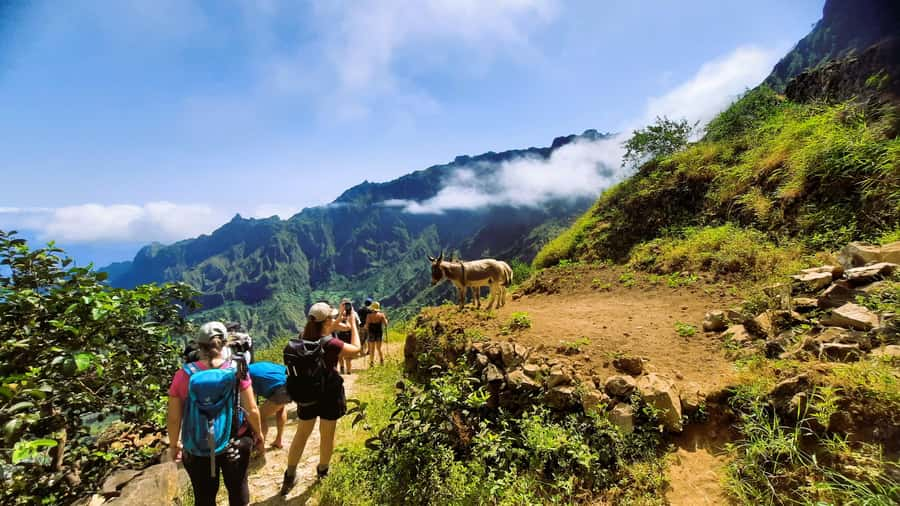
Santo Antão’s best-known hike begins inside an extinct volcano and ends among sugarcane, bananas, mangoes, and other crops in Paul Valley. The big reward is the sudden view from the crater rim, where the green valley drops toward the ocean far below. The scenery changes constantly, from high mountain air to thick tropical growth.
I like the way this trip joins a serious mountain walk with local stories and farm life, rather than treating the trail as a simple viewpoint stop. I also like the Grogue distillery visit, which gives you a taste of a Cape Verdean tradition. The main concern is weather: strong wind, rain, cloud, or rockfall can make parts of the route unsafe, and one poor-weather outing was cut short.
Key points to know before you book
- Cova Crater begins at about 1,100 meters: You start high, with wide views and a striking look into the old volcanic bowl.
- The trail descends through major climate changes: Expect open mountain scenery first, followed by thick vegetation and working plantations.
- The route is steep and exposed in places: You need hiking shoes, a steady step, and a reasonable comfort with heights.
- Your guide adds the meaning: Guides including Maira, Lea, Riva, Ravi, and Edy have explained plants, local life, legends, and farming along the way.
- Grogue is part of the experience: A traditional distillery visit and tasting are included, though severe weather can prevent this stop.
- Five hours is a useful half-day length: The tour includes hotel pickup, transport, a guide, and liability insurance for $100 per person.
Starting high inside Cova Natural Park
The outing begins with pickup at your hotel, usually starting about 10 minutes before the scheduled time. Transport is included, so you do not need to arrange a separate ride to Cova Natural Park. That matters on Santo Antão, where reaching the trailhead is part of the day’s practical challenge.
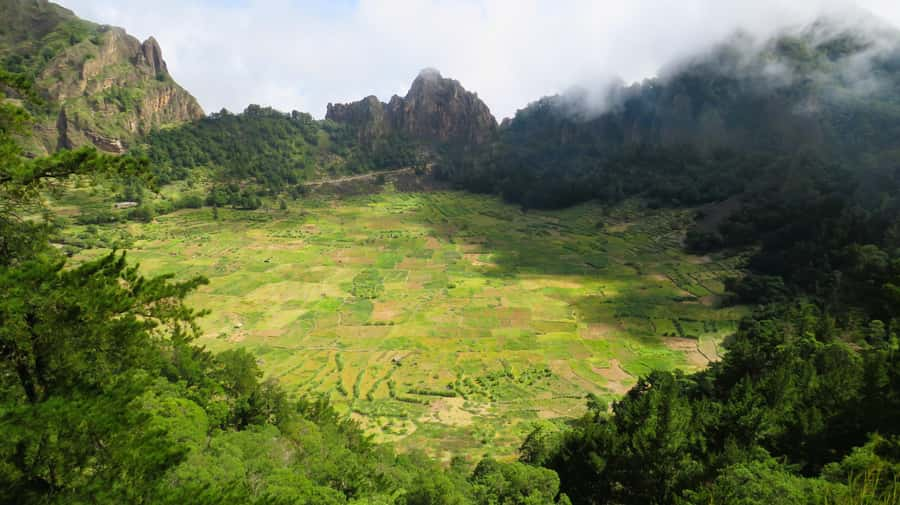
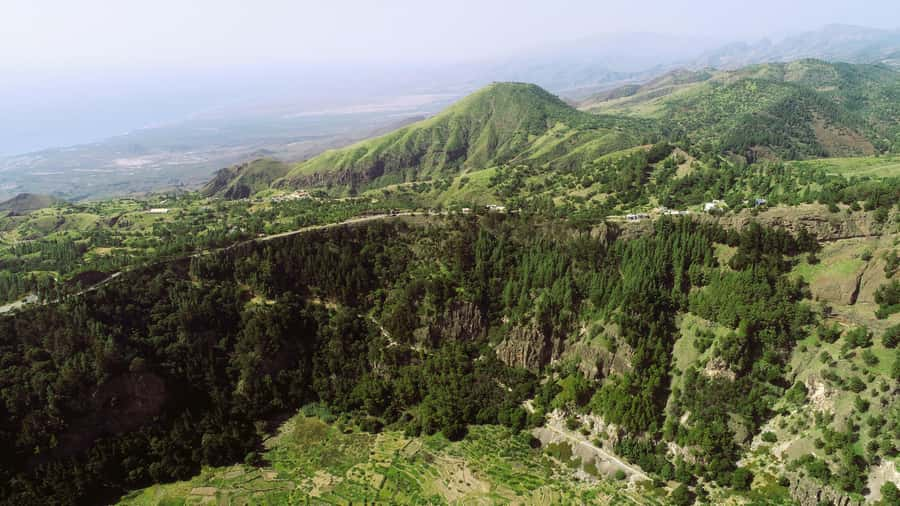
Cova sits high in the mountains, at roughly 1,100 meters above sea level. You begin in an extinct volcanic crater whose interior supports an unexpectedly broad range of plant life. The contrast is the first surprise: this is not a bare volcanic bowl, but a cultivated and living mountain environment.
Your guide sets the pace and explains what you are seeing before the descent begins. Guides speak English, French, or Portuguese. Specific guides praised for their care and explanations include Maira, Lea, Riva, Ravi, and Edy, though the guide assigned to you depends on the date and group.
At this height, conditions can shift fast. Mist, wind, rain, and cloud may limit the views or affect the route. I would ask about the forecast before setting out, and I would take any local warning seriously. A storm can turn a scenic descent into a risky one, with poor visibility and a greater chance of loose rock.
More Volcano Hikes in Cape Verde:
- Fogo Island: Pico do Fogo Volcano Summit Hike
★ 4.6 · 92 reviews - Bali: Sunrise Mount Batur Guided Hike with Breakfast
★ 4.8 · 9,660 reviews - Bali: Mount Batur Sunrise Guided Hike and Natural Hot Spring
★ 4.8 · 9,284 reviews
The crater rim delivers the day’s big view
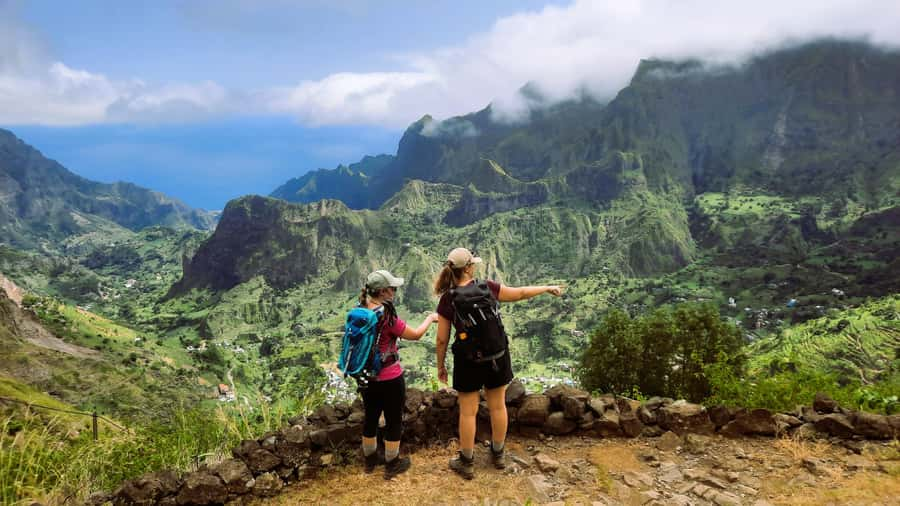
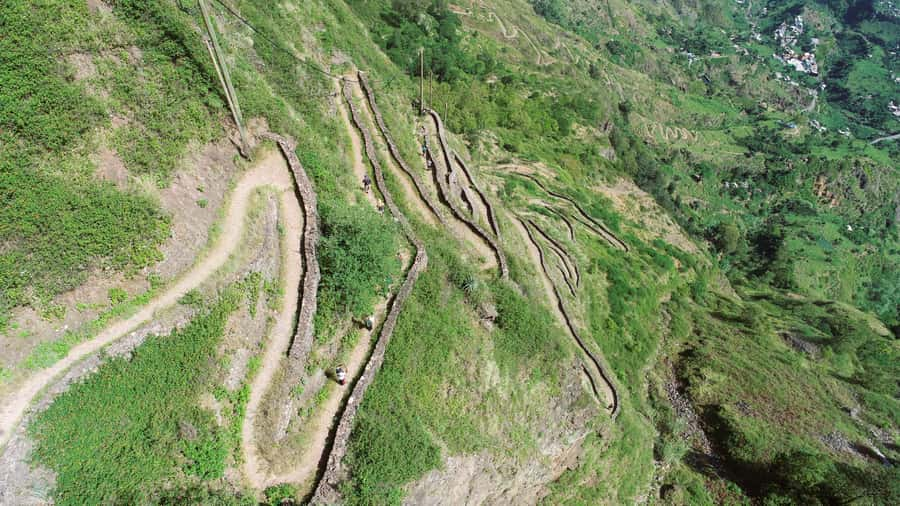
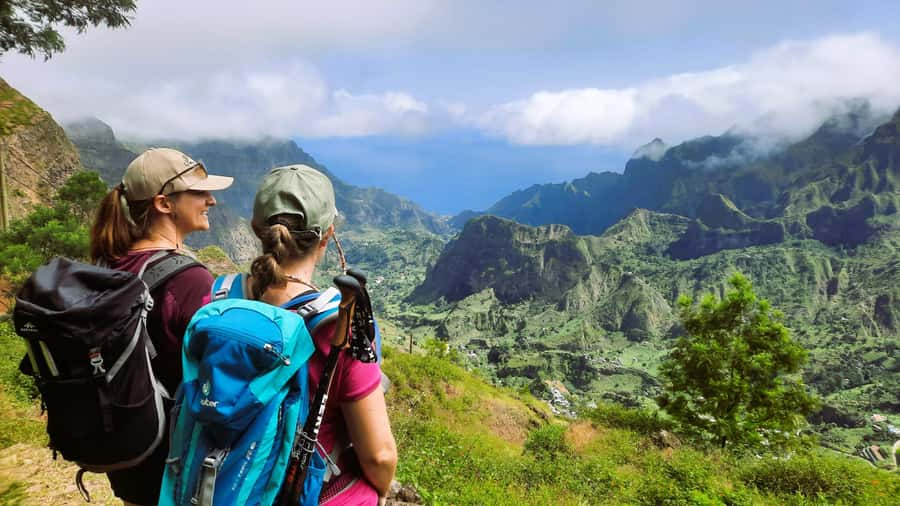
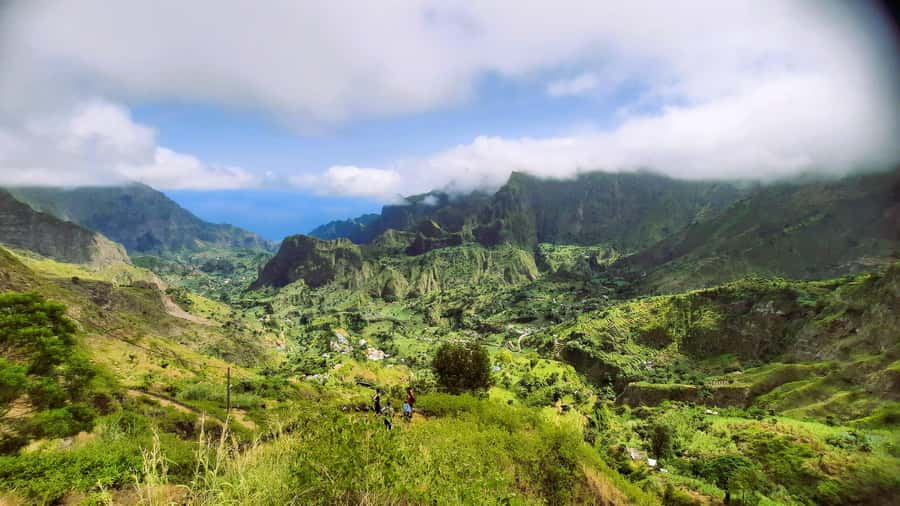
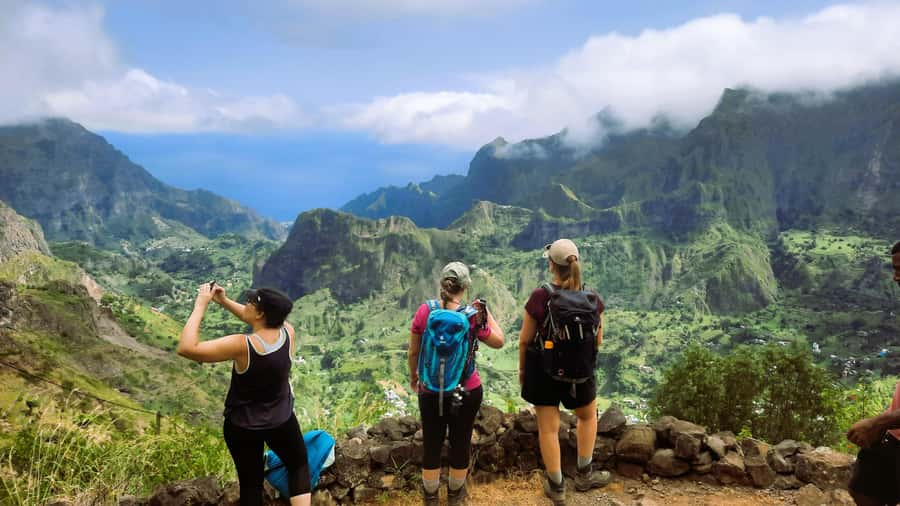
One of the strongest moments comes when you reach the edge and look across Paul Valley. The valley stretches toward the ocean, said to be about 10 kilometers away, while the trail drops in a long series of zigzags below you.
This is the point where the hike’s physical effort pays off. You get a high view of the valley’s folds, farms, and dense plant growth, with the Atlantic beyond. The height also explains why people who dislike exposed paths may feel uneasy here. The tour is specifically not recommended for people afraid of heights.
Take your time at the viewpoint. You will want photos, but the guide’s explanation adds useful context. The view is not only pretty. It shows how quickly Santo Antão changes from high, cool mountain terrain to a warm growing valley.
Cloud can block much of this scene. That is not a failure of the trail, but it is a reason to keep expectations flexible. On a clear day, the crater and valley views are the tour’s main prize. In thick cloud, the guide’s stories and plant knowledge become even more important.
A long zigzag descent through Paul Valley
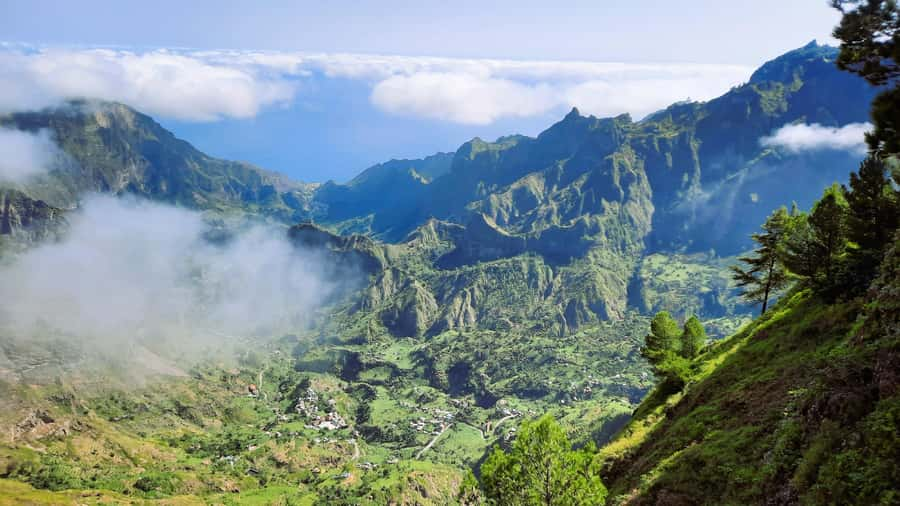
After the high section, the route turns into a sustained downhill walk. The trail zigzags repeatedly as it drops from the crater toward Ribeira Paul. This is the part where you need proper hiking shoes, controlled steps, and patience.
The descent may look easy on paper because you are going downhill, but downhill walking can be hard on your knees and feet. The route also includes exposed views, uneven ground, and changing weather. Bring a hat and sunscreen, even if the morning starts cool and cloudy.
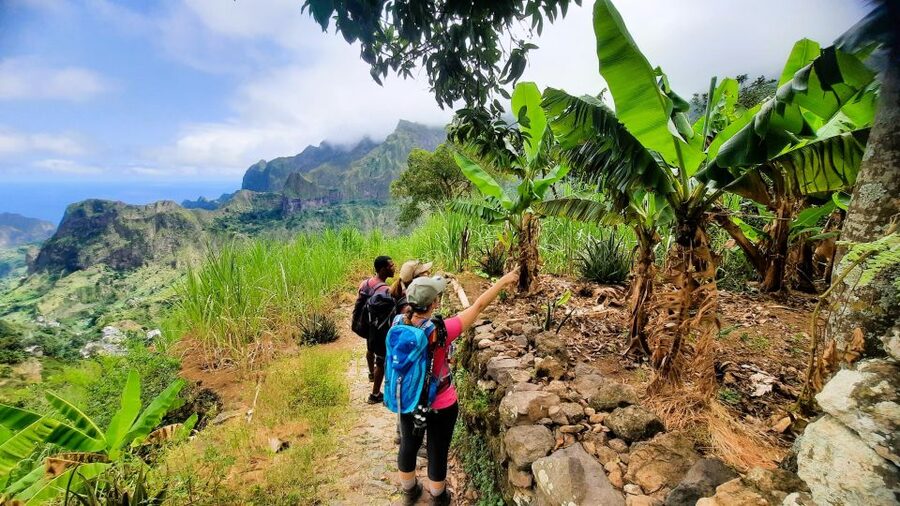
The reward is the steady change in vegetation. You move from the open upper slopes into thicker growth, then toward cultivated areas. The guide can point out sugarcane, banana, mango, avocado, coconut, coffee, papaya, and other plants. In a place where farming shapes daily life, these are not just attractive details. They show how people use different parts of the valley.
One of the best features of the tour is the chance to hear about mountain life while walking through actual plantations. Guide Maira, for example, has explained how people live high in the mountains and identified plants along the way. You might even be offered small pieces of local produce to taste, depending on the guide and conditions.
The scenery here feels more personal than the wide crater view. Instead of simply looking at the valley, you are moving through the crops that support it. I find that shift valuable because it turns a viewpoint hike into a closer look at Santo Antão’s rural character.
The distillery visit and a taste of Grogue
The traditional distillery stop adds a cultural reason to the route. Grogue is a local rum made from sugarcane, and seeing its production connects the crop in the valley with a familiar Cape Verdean drink.
You should think of this as a brief working stop, not a polished museum visit. The appeal is its local setting and practical connection to farming. You can see how sugarcane becomes part of a long-standing island tradition, then taste the finished spirit.
The tasting is included in the planned experience, but it is not guaranteed in every circumstance. During one outing with strong wind, rain, cloud, and dangerous conditions, the hike was shortened and the distillery visit could not take place. If the weather is poor, safety comes first, and you should not expect the full route or every stop.
Because Grogue is strong, take the tasting slowly, especially after a mountain walk. Food and drinks beyond the tasting are not included, so bring what you need for the five-hour activity. The tour information does not specify a meal stop, and I would not count on buying lunch during the route.
More hikes and treks around Cape Verde:
- Santo Antão: Day Trip by Car or Trek
★ 5.0 · 72 reviews - Serra Malagueta: Principal Valley Hike & Lunch with Locals
★ 4.7 · 64 reviews - Santiago Island: Serra Malagueta & Tarrafal Beach Trek Tour
★ 4.8 · 61 reviews - Praia: Baobab Mysterious Tree, Green Valley & Old City Hike
★ 4.8 · 53 reviews
What the guide adds to the walk
The guide is not simply there to lead you downhill. The best version of this outing includes explanations of native vegetation, local legends, facts about the region, and stories about life in the mountains.
That human element matters on a trail where the views can otherwise blur into one long series of green slopes. A guide can help you notice the difference between a plantation crop and native growth, explain why the valley is so productive, and give the places you pass a local meaning.
Several guides have received especially strong praise for being friendly, careful, and informative. Edy was described as highly prepared and kind throughout the day. Riva was noted for explaining the island while keeping the walk accessible. Maira was praised for identifying many plants and talking about mountain life. Lea and her fellow guide Maira also worked hard to help guests during a pickup problem, although that problem came from the tour office rather than the guides.
Language should be manageable for many visitors, with tours offered in English, French, and Portuguese. If language is important to you, confirm your preferred option when booking. Private and small-group formats are available, which can make it easier to ask questions and adjust the pace.
The $100 price and what it covers
At $100 per person, this is not the cheapest way to see Santo Antão, but it covers several useful pieces. You get hotel pickup and drop-off, transportation, a guide, liability insurance, the hike, and the planned distillery visit.
I see the value in the transport and guide most of all. You are not only paying for a marked route. You are paying to reach a high trailhead, walk a one-way mountain route, and finish in another part of the island without arranging the connections yourself.
The value depends heavily on conditions and group size. On a clear day with the full crater-to-valley route, the combination of views, plants, stories, and Grogue makes the price easier to justify. If weather forces an early return and removes the distillery stop, the experience offers less for the same price.
Private or small-group options may suit you if you want a slower pace or more time with the guide. A larger group can still work, but the trail’s steep sections and changing conditions make personal attention useful. Ask about the group format and weather plan before you commit.
Free cancellation up to 24 hours before the start and reserve-now, pay-later terms make the booking less rigid. Still, flexible payment does not solve the key issue: the weather can decide how much of the hike you actually complete.
Safety, fitness, and what to pack
This is an active mountain walk for people over 12, not a casual stroll. You should be comfortable with a long downhill route, uneven trail sections, zigzag paths, and open viewpoints.
The basic packing list is short but important:
- Hiking shoes with a firm grip
- A hat
- Sunscreen
- Water and any food you need, since food and drinks are not included
I would also bring a light rain layer if the forecast looks uncertain, though only the official essentials listed above are required. The starting altitude may feel cool, while the lower valley can feel warmer and more humid.
Heights are the clearest suitability issue. If you are uncomfortable near steep edges or exposed views, this may not be the right half-day outing. You can still enjoy Santo Antão through other activities, but this route makes the height part of the experience.
Weather deserves equal attention. Strong wind, heavy rain, cloud, and possible rockfall have made the route unsafe at times. Before leaving, ask the operator whether the full descent and distillery stop are expected to run. If conditions deteriorate, accept a shortened route rather than pushing on for the sake of completing the advertised plan.
The pickup problem to avoid
The tour includes hotel pickup, but communication about the meeting point needs care. One booking went badly after an updated pickup location was confirmed but not passed from the office to the guides. The guest and guides spent about two hours trying to find each other through WhatsApp, while the guides had other customers to handle.
The practical lesson is simple: confirm the exact pickup location again on the day before and make sure the guide has it, not only the office. Keep your phone charged, have the guide’s contact details available, and avoid changing the meeting point at the last minute if possible.
This problem does not reflect the hiking ability of the guides involved. Lea and Maira tried to help, but once the transport schedule was split between different groups, they could not easily fix the office error. Good planning on your side can reduce the chance of losing the first part of your day.
Who should book this Santo Antão hike
I would recommend it to you if you want Santo Antão’s signature trail in a compact five-hour outing, especially if you value scenery and local explanation more than a completely independent walk.
It suits active visitors over 12 who can handle a steep descent and do not fear heights. It also works well if you want transport included and prefer to have someone explain the plants, farming, legends, and local rum tradition as you go.
I would hesitate if you need a guaranteed itinerary, dislike exposed paths, or are visiting during unsettled weather and cannot change plans. I would also think twice if the distillery stop is your main reason for booking, since dangerous conditions can cancel that part.
The overall rating is 4.5 from 31 ratings, which fits the mixed picture: strong praise for the scenery, guides, easy-to-follow route, and cultural details, balanced by serious concerns about weather judgment and one pickup failure. The best experiences came with guides who were friendly, careful, and generous with local information.
Should you book it?
Book this tour if you want the classic Cova-to-Paul route with transport, a guide, plantation views, and a chance to taste Grogue. The scenery is the main reason to go, but the guide’s explanations about plants and mountain life make the walk more than a photo stop.
Before paying, confirm the pickup point, language, group size, and weather plan. If the forecast shows heavy rain or strong wind, ask about postponing. On a clear day, this is one of the most efficient ways to experience Santo Antão’s remarkable change from high volcanic crater to tropical valley.
FAQ
How long does the Cova to Paul Valley hike take?
The activity lasts about five hours, including transportation, the guided hike, and the planned distillery visit.
What is included in the $100 price?
The price includes hotel pickup and drop-off, transportation, liability insurance, and a tour guide. The planned Grogue distillery visit is part of the experience.
Is food included?
No. Food and drinks are not included, so you should plan accordingly for the five-hour outing.
Which languages are available?
Guides are available in English, French, and Portuguese.
Is the tour suitable for children?
The activity is for people over 12 years old. Children under 12 are not suitable for this tour.
Is the trail suitable for people afraid of heights?
No. The route includes high viewpoints and exposed sections, and the activity is not recommended for people who are afraid of heights.
What should I bring?
Bring a hat, hiking shoes, and sunscreen. Because weather can change and food and drinks are not included, you should also plan carefully for the conditions and duration.
Just added around Cape Verde
- Santo Antão: Ponta do Sol & Fontainhas Guided Trip with Hike★ 4.8 · 9 reviews
- Santiago: Trek from Serra Malagueta to Rabelados Community★ 5.0 · 16 reviews
- Santiago: Longueira, Pico de Antónia & Monte Tchota Trek★ 4.8 · 10 reviews
- Santa Maria: Guided Coastal Hike & Monte Leão Sunset★ 4.5 · 37 reviews
- Private Hike through mountains and distant rural villages★ 5.0 · 8 reviews
- Hike to the highest point of Monte verde★ 4.8 · 14 reviews
- Hike Monte Verde★ 4.9 · 8 reviews
- From Tarrafal: Serra to Principal Hike & Lunch with locals★ 4.7 · 41 reviews
Volcano Hikes, side by side.
Sunrise Mount Batur Guided Hike with Breakfast
Read our review →
Mount Batur Sunrise Guided Hike and Natural Hot Spring
Read our review →
Mount Etna: Summit Guided Hiking Tour up to 3,400 m
Read our review →
Mount Etna: Trek to 3000m with cable car and 4×4
Read our review →
Mount Batur Sunrise Trek With Guide and Breakfast
Read our review →
Mount Batur Sunrise Hike and Natural Hot Spring Option
Read our review →
Mount Etna: Summit Crater Trek with Cable Car
Read our review →This walk also sits in