REVIEW · TANZANIA
7-Day Private Kilimanjaro Hiking Tour via Machame from Arusha
Kilimanjaro’s Machame Route earns its nickname, the Whiskey Route, with a real mountain rhythm: damp forest on day one, open high country by day two, a steep scramble up the Barranco Wall, then a midnight push to Uhuru Peak. This seven-day private climb gives you time to adjust to altitude rather than rushing straight upward.
I like the changing scenery and the thoughtful up-and-down route through Lava Tower country before Barranco Camp. I also like the small-group setup, with your own guides, porters, and cooks rather than being folded into a large tour party. The tradeoff is that Machame is the busiest camping route, and summit day is long, cold, steep, and physically demanding.
Key points to know before booking
- A varied route from 1,800 meters to 5,895 meters: You move from coffee farms and cloud forest to high-altitude desert and glacial views.
- The Shira to Barranco section aids acclimatization: You climb high during the day, then sleep lower at Barranco Camp.
- Barranco Wall is a hands-on scramble: Expect about 90 minutes of steep, rocky climbing after breakfast on day four.
- Summit night begins around midnight: The route to Stella Point takes roughly six hours, followed by the final climb to Uhuru Peak.
- Private means your group sets the pace: Only your party participates, supported by guides, porters, and cooks.
- The $2,699 price buys a serious support operation: The company highlights route planning, high-end equipment, and nearly two decades of Kilimanjaro and Meru experience.
Why the Machame Route is worth seven days
Machame is a good choice if you want Kilimanjaro’s classic scenery without taking the shortest possible route. The trail approaches from the west, crosses several climate zones, and gives you a proper acclimatization day before the hardest stages.
The route begins near Machame Gate and ends at Mweka Gate. That means you do not simply walk up and back along the same trail. You see cloud forest, heather, moorland, volcanic rock, high-altitude plants, glaciers, and broad views toward Kibo and Mawenzi.
The seven-day schedule matters. Altitude is the main challenge on Kilimanjaro, not just the number of miles. Day three takes you up to about 4,530 meters before dropping you to Barranco Camp, where the overnight elevation is lower. That high-day, lower-sleep pattern gives your body a useful chance to adjust.
You should still treat this as a demanding climb. The booking information calls for strong physical fitness, and that is fair. The summit day alone includes the hardest ascent, a gradual walk along the crater rim, and a long descent to Mweka Camp.
More Private Hiking Tours in Tanzania
- Private Full Day Hiking Experience to Marangu Route
★ 5.0 · 61 reviews - Private Day Tour Kilimanjaro Hike
★ 5.0 · 13 reviews - Kilimanjaro Private 2 Days Hiking Tour
★ 5.0 · 10 reviews
Day 1: Arusha to Machame Gate and the cloud forest
Pickup begins at 9 a.m. in Arusha. The drive to Machame Gate takes about 90 minutes and passes coffee farms and villages, giving you a quick look at the inhabited slopes before the forest closes in.
At the gate, registration takes time. Your guide team meets the porters and cooks, and everyone finishes the final preparations before walking. This is not wasted time, but you should not expect to step out of the vehicle and begin hiking immediately.
The first trail leads through moss-covered trees in Kilimanjaro’s cloud forest. It is a striking start, with damp air, twisted trunks, and thick growth. As you climb, the forest thins into heather, tall grasses, and wildflowers.
The walk to Machame Camp takes about one hour according to the schedule provided, though actual timing can depend on trail conditions and the pace of your group. If clouds lift, you may catch your first clear view of Kibo, the main summit cone.
Your porters and cooks go ahead to prepare camp. That support is one of the practical advantages of booking a private, fully organized climb. You carry what you need for the day while the camp operation moves forward.
Day 2: Shira Plateau views and changing vegetation
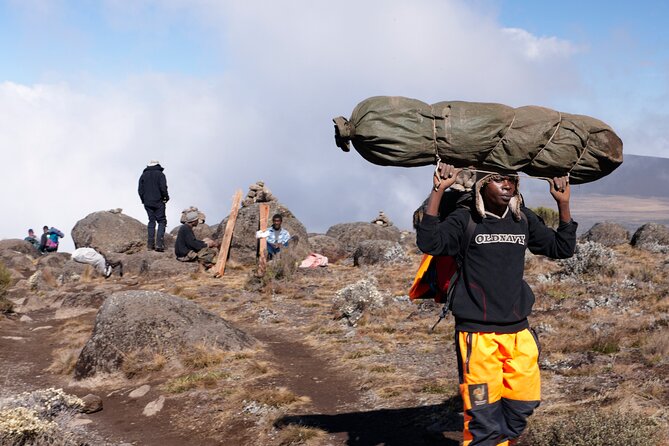
Day two takes about six hours and includes several uphill stretches. Carry plenty of drinking water, especially if the sky is clear and the air is warm at lower elevations.
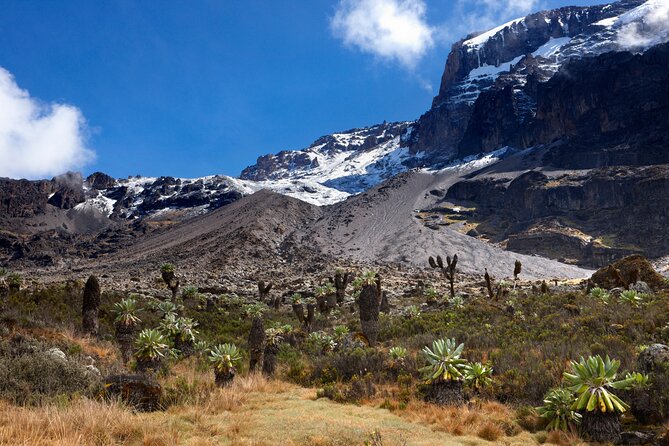
The reward is a steady change in plant life. Trees shrink away, and Kilimanjaro’s unusual high-altitude plants begin to appear, including Senecio kilimanjari and Lobelia deckenii. You also gain wider views of the plains below and the twin peaks of Kibo and Mawenzi.
After lunch, you climb onto the Shira Plateau. This broad volcanic area formed when lava from Kibo filled the Shira crater. The setting feels open and exposed compared with the forest below.
Shira Camp gives you views in two directions. Kibo lies to the west, while Mount Meru rises to the east. That makes this a fine evening for taking stock of the route ahead, though you should keep your expectations practical. Weather on the mountain can change quickly, and clear views are never guaranteed.
Day 3: High altitude at Lava Tower, then down to Barranco
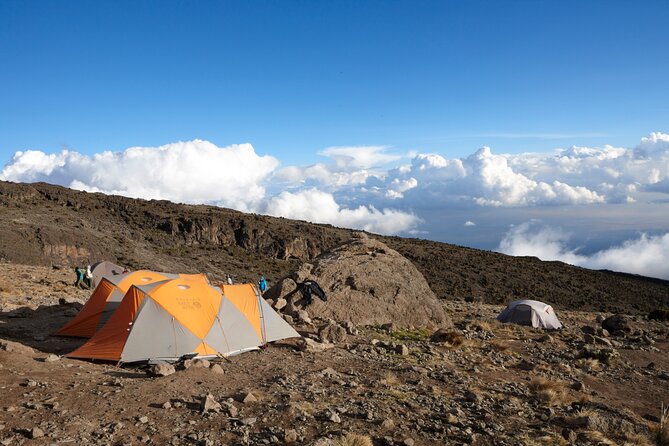
This is one of the smartest days in the plan. You gain only about 110 meters overall, but you climb roughly 690 meters during the day and reach a high point of about 4,530 meters before descending to Barranco Camp.
That up-and-down pattern is important. You spend part of the day at a higher elevation, then sleep lower. It adds time and effort, but it is more useful for altitude adjustment than simply marching upward each day.
The trail heads east across the Shira Plateau and passes the junction with the Shira and Lemosho routes. The surroundings become barren, with less vegetation and more volcanic rock. After lunch, you reach the day’s high point before making the quick descent to Barranco.
Faster hikers may take a detour toward Lava Tower, a roughly 300-foot volcanic formation. The detour is an option, not a promise that every group will take it. Your guide will need to balance pace, weather, and how you are responding to altitude.
Barranco Camp is widely regarded by the company’s mountain staff as a favorite campsite. Its appeal comes from the setting beneath the wall and the sense that you are now well above the forest. It is also a busy stop on the route, so solitude is not the main attraction here.
More Private Hiking Tours in Arusha:
- Fushimi Inari Hidden Hiking Tour (Private Option Available)
★ 5.0 · 1,750 reviews - Mount Batur Sunrise Trekking Private All Inclusive
★ 5.0 · 906 reviews - Mount Batur Sunrise Trekking Private Tour with Breakfast and Hotel Transfer
★ 5.0 · 885 reviews - Private Yellowstone Tour: ICONIC Sites, Wildlife, Family Friendly Hikes + lunch
★ 5.0 · 739 reviews
Day 4: Scrambling up the Barranco Wall
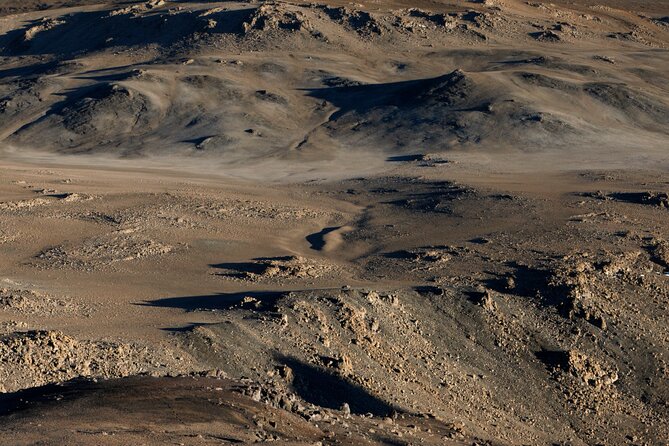
The walk to Karanga Valley takes about five hours, but the first section is the day’s main test. After breakfast, you tackle the Barranco Wall in a scramble that takes around an hour and a half.
This is not technical climbing, but you may use your hands in places. You should expect steep rock, uneven footing, and a slower pace as the guide helps the group choose a safe line. If you dislike heights or awkward scrambling, this is the part of the route to consider carefully.
Once over the wall, the trail becomes more level for a while. The day ends with a short but steep descent into the green Karanga River Valley. After the exposed rock and dry slopes, the greenery is a welcome change.
The schedule is relatively short compared with summit day. Use the remaining time to eat, drink, organize your layers, and rest. On a private trip, you can discuss how you are feeling with the guide team instead of trying to keep up with a fixed public group.
Day 5: Alpine desert and Barafu Camp
Day five takes about five hours and leads to Barafu Camp. The route passes through alpine desert, where vegetation is sparse and the mountain feels harsher and more exposed.
Along the way, you can see several of Kibo’s glaciers. The trail also passes the junction where the Mweka descent route meets the Machame route. This is a useful mental marker, since you will return through that area after reaching the summit.
The route passes the Heim, Kersten, and Decken Glaciers. Glacier views on Kilimanjaro are part of the mountain’s character, though you should not assume their appearance will be identical in every season or weather condition.
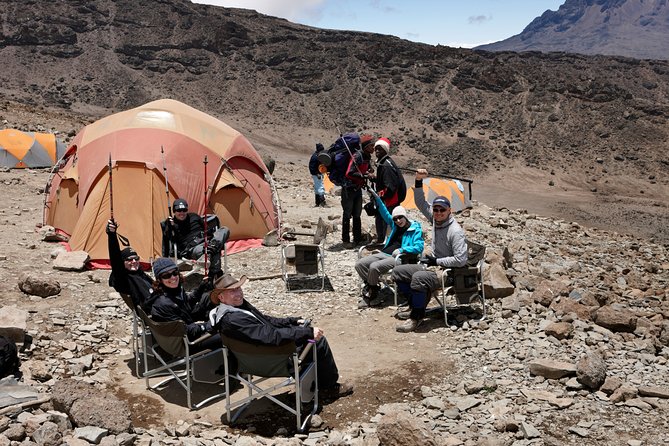
Barafu Camp has views toward both Kibo and Mawenzi. The camp itself is mainly a staging point for the summit, not a place for a leisurely evening. Dinner comes early, and the plan is to sleep before waking around midnight.
That early bedtime can be difficult. You may be excited, anxious, or simply uncomfortable at altitude. Pack your summit clothing where you can reach it easily, and do not leave the morning’s sorting until the last minute.
Day 6: Midnight start, Stella Point, and Uhuru Peak
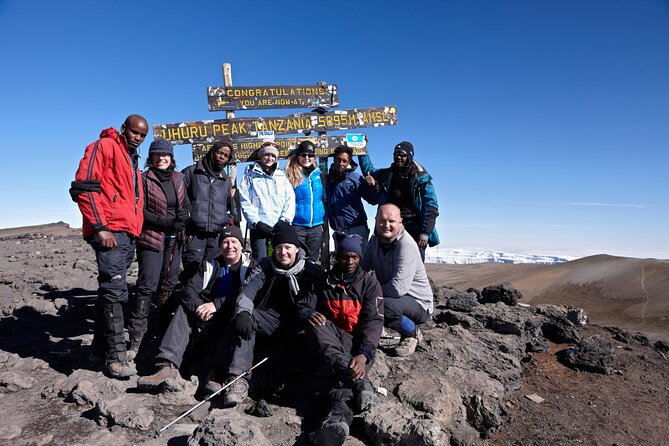
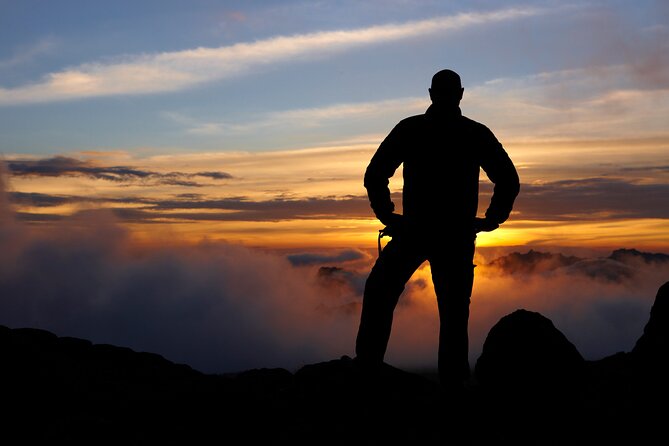
Summit day is the heart of the climb and the reason to take the physical preparation seriously. You begin around midnight, using a headlamp for the ascent toward the crater rim.
The climb to Stella Point takes about six hours and is the steepest, hardest part of the trek. The pace is deliberately slow. Cold, darkness, thin air, and fatigue all add to the challenge.
At Stella Point, the trail to Uhuru Peak becomes more gradual. The walking is less steep, but altitude still makes every step tiring. The crater rim section takes about an hour, and the final destination is Uhuru Peak at 5,895 meters, or 19,341 feet.
At the summit, you have time for photographs with your guide and group. The views may include the crater, clouds, glaciers, and the mountain’s broad upper slopes, depending on conditions.
The descent begins after the summit visit. You return toward Barafu and then continue to Mweka Camp. The descent is not an easy victory lap. Your legs have already worked hard, and loose volcanic ground can make the downhill section tiring.
The schedule data lists one hour for this day, but the detailed description makes clear that the summit push itself takes roughly six hours, followed by the crater-rim walk and descent. Treat day six as a full, demanding day rather than relying on the short summary duration.
Day 7: The forest descent to Mweka Gate
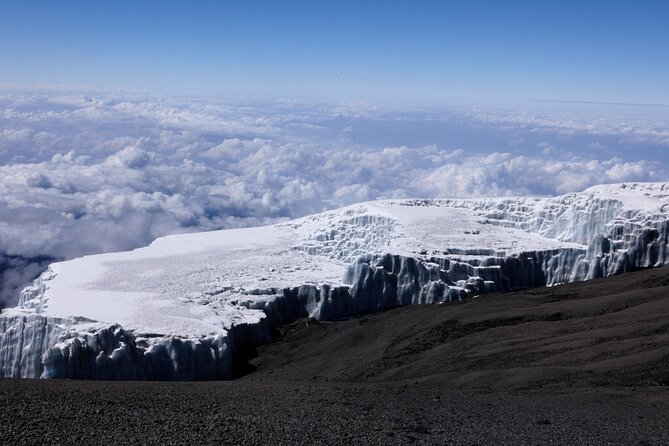
The final hike takes about two hours after breakfast and leads through forest to Mweka Gate. If rain has fallen, the trail may be slippery, so trekking poles or careful footing can be useful if they are part of your personal kit.
At the lower station of Mweka Gate, vehicles meet you for the return to Arusha. The change is striking: after the bare upper mountain, forest feels warm, thick, and low again.
This final morning is shorter, but it still requires attention. You are descending after a major physical effort, and tired feet can make a simple trail feel longer than expected.
What the private setup really adds
This is a private tour, so only your group takes part. That does not mean you have the mountain to yourself. Machame is the most popular camping route overall, and you should expect many other climbing groups near the trail and camps.
The private format gives you control over your own group rather than removing other people from the route. You can move at a pace suited to your party, ask questions freely, and discuss rest or altitude concerns with your guide team.
The operation includes porters, guides, and cooks for the mountain section. The company also emphasizes route planning and high-end equipment. Those details matter because a Kilimanjaro climb is a moving camp, not just a series of walks. Food, tents, equipment, camp setup, and timing all need to work together.
The business has been leading climbs on Kilimanjaro and Mount Meru for almost 20 years. That experience is useful, but you should still ask exactly what the $2,699 price includes before paying. The supplied details do not spell out every inclusion, such as accommodation before or after the trek, meals, gear rental, park fees, or tips.
The people behind the climb
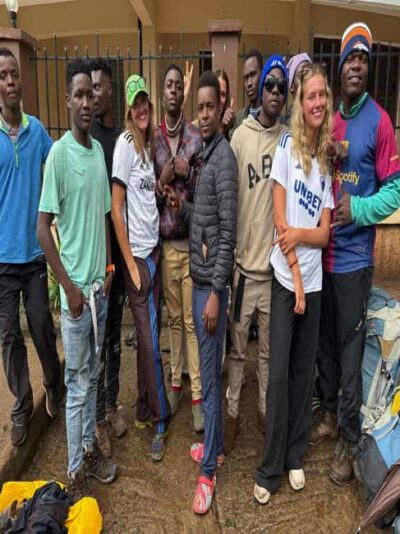
The strongest praise connected with this company focuses on the guides and support staff. Names associated with successful climbs include Colman, Ernest, Ema, and Shaban, though the available information does not assign each of them to this specific departure.
That distinction matters. Ask who will lead your group, how many people will support it, and what equipment is supplied. You can also ask how the company handles pacing and altitude concerns.
The company has also been recognized for its relationship with the Kilimanjaro Porters Assistance Project. That is a useful point to investigate when comparing operators. Ask whether porters are properly equipped, paid, and treated according to recognized mountain welfare standards.
Is $2,699 good value?
At $2,699 per person, this is not a budget walk. It is a substantial price for a seven-day private mountain operation, but the value depends on what is included.
You are paying for more than a trail guide. The service is built around transport from Arusha, registration at the gate, a guide team, porters, cooks, camp support, route planning, and equipment. A private departure can also be worthwhile if your group has mixed hiking speeds or wants more direct attention.
Before booking, request a written list of inclusions and exclusions. Confirm airport or hotel pickup details, accommodation arrangements, meals, equipment, park charges, transfers, and gratuities. The tour offers pickup and a mobile ticket, but those two features alone do not explain the full cost.
The company’s long operating history and emphasis on mountain support make the price easier to understand. Still, a high price does not remove the need to prepare. You remain responsible for arriving fit, properly dressed, and ready for altitude.
Who should book this climb?
I would choose this route if you want varied scenery, a private group, and a schedule that includes a real acclimatization day. It suits hikers who can manage long days, steep uphill sections, a rocky scramble, and a midnight summit start.
It is also a good fit for a group that values organization and support. Families have used the company for Kilimanjaro trips, including a group with teenagers and a 10-year-old, but the stated fitness requirement remains important. A family should assess each person’s ability rather than assume a private guide makes the climb easy.
I would think twice if you want quiet trails, a relaxed camping experience, or a simple sightseeing excursion. Machame is busy, the mountain is physically serious, and the summit day can be exhausting even when everything goes well.
You can cancel for a full refund if you do so at least three full days before the local start time. Cancellations or changes made later are not refunded or accepted, and a minimum group requirement applies to the departure.
Should you book the Machame Route?
Book it if your priority is a well-supported, private climb with five climate zones, changing scenery, and a route designed to give you useful altitude exposure before summit day.
The best reasons to choose it are the Shira Plateau, the Barranco Wall, the high-day and low-sleep acclimatization pattern, and the support of guides, porters, and cooks. The main cautions are the busy trail, the strong fitness requirement, and the need to confirm exactly what the $2,699 price covers.
If you prepare seriously and prefer a structured climb over a bare-bones hiking trip, this is a strong Kilimanjaro option from Arusha.
FAQ
Where does the climb begin?
The experience begins with pickup in Arusha at 9 a.m. You then drive about 1.5 hours to Machame Gate.
How long does the experience last?
The climb lasts approximately seven days. The route goes from Machame Gate to Mweka Gate, followed by transport back to Arusha.
Is this a private tour?
Yes. Only your group participates in the private tour or activity.
How physically fit do I need to be?
The tour states that participants should have a strong physical fitness level. The route includes steep uphill sections, the Barranco Wall scramble, a midnight summit ascent, and a long descent.
How high is Uhuru Peak?
Uhuru Peak reaches 5,895 meters, or 19,341 feet, above sea level.
Is pickup offered?
Yes. Pickup is offered, with the stated meeting time in Arusha at 9 a.m.
What is the cancellation policy?
You can receive a full refund if you cancel at least three full days before the experience start time. Later cancellations and changes are not accepted, and a minimum number of participants is required for the experience to operate.
More Week-Long Trips around Arusha
- 7 Days Kilimanjaro trek via Machame route
★ 5.0 · 13 reviews - 7 Days Machame Route Trek Mount Kilimanjaro
★ 5.0 · 12 reviews - 7 Days Machame Route Kilimanjaro Trekking
★ 5.0 · 9 reviews - Private Kilimanjaro Hike 7 Day Lemosho Route
★ 5.0 · 60 reviews
More Kilimanjaro Hikes in Arusha
- 8-Day Small-group Lemosho Kilimanjaro Summit Trekking
★ 5.0 · 186 reviews - Mountain Kilimanjaro Day Hike
★ 5.0 · 102 reviews - 4 days Best experience Kilimanjaro Hike, Serengeti &Ngorongoro
★ 5.0 · 54 reviews - From Arusha/Moshi: Kilimanjaro Hike Marangu Route Day Trip
★ 4.5 · 54 reviews
Just added around Arusha
- 5 days safari, hiking & culture (Serengeti & kilimanjaro)★ 5.0 · 27 reviews
- 7 Days Machame Route Trek Mount Kilimanjaro★ 5.0 · 12 reviews
- 7 Days Machame Route Kilimanjaro Trekking★ 5.0 · 9 reviews
- Private Day Tour Kilimanjaro Hike★ 5.0 · 13 reviews
- Mount Kilimanjaro day trip trekking★ 5.0 · 12 reviews
- 4 days Best experience Kilimanjaro Hike, Serengeti &Ngorongoro★ 5.0 · 54 reviews
- 7 Days Kilimanjaro trek via Machame route★ 5.0 · 13 reviews
- 6 Days Serengeti Safari(hiking waterfalls &coffee tour)★ 5.0 · 48 reviews
Kilimanjaro Hikes, side by side.
8-Day Small-group Lemosho Kilimanjaro Summit Trekking
Read our review →
Private Full Day Hiking Experience to Marangu Route
Read our review →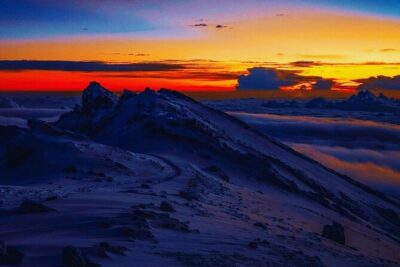
From Arusha/Moshi: Kilimanjaro Hike Marangu Route Day Trip
Read our review →
4 days Best experience Kilimanjaro Hike, Serengeti &Ngorongoro
Read our review →
Best Kilimanjaro hiking day trip tour with Kilinge Adventures
Read our review →