
REVIEW · TANZANIA
7 Days Kilimanjaro trek via Machame route
Kilimanjaro’s Machame Route gives you a fine sampler of the mountain: mossy forest, open moorland, the broad Shira Plateau, the scrambly Barranco Wall, and a sunrise push toward Uhuru Peak. I like the route’s changing scenery and its climb-high, sleep-lower pattern, which gives your body a useful acclimatization day before the summit attempt.
I also like the practical setup: private waterproof tents, a dining tent with tables and chairs, purified water, meals, airport transfers, and an experienced support team led by guides such as Gasto James. The main drawback is that Machame is Kilimanjaro’s most popular camping route, so you should expect plenty of other climbing groups on the trail and at camp.
Key points before you book
- Six nights on the mountain: The seven-day schedule moves from Machame Gate through Shira, Barranco, Karanga, and Barafu before the summit and descent to Mweka Gate.
- A serious summit day: You begin around midnight, hike roughly six hours to Stella Point and Uhuru Peak, then descend to Mweka Camp.
- Strong acclimatization design: Day three climbs to about 4,530 meters before dropping to Barranco Camp.
- Private camping comfort: Waterproof sleeping tents and a separate mess tent with chairs and a table make camp life easier.
- Guide-led encouragement: Gasto James is repeatedly singled out for pacing groups pole pole, singing on the hard ascent, and helping climbers continue safely.
- Good package value: At $2,800 per person, park fees, rescue fees, meals, water, camping, and transfers are bundled in, while visas, personal gear, and tips remain your responsibility.
Why the Machame Route works so well
Machame is often called the Whiskey Route, a nickname that hints at its tougher walking compared with the easier-paced Marangu approach. You will not be climbing technical rock, but this is a demanding high-altitude trek with long days, steep sections, cold nights, and a summit push that begins while most people are asleep.
The route’s great strength is variety. You start beneath tall forest, pass through heather and high-altitude plants, cross broad open ground, and finish among rock, ice, and volcanic sand. The views keep changing, which matters on a seven-day hike. A long day feels easier when the scenery gives you something new to notice.
The route also uses a smart acclimatization rhythm. On day three, you climb well above your camp elevation, then descend to Barranco. That climb high, sleep lower pattern gives you a better chance to adjust than a route that simply goes upward every day.
There is a catch. Machame is popular. You may share the trail, campsites, viewpoints, and summit path with many other climbing groups. If solitude is your top priority, this is not the quietest way up Kilimanjaro. If you value a well-used route, established camps, and a lively mountain atmosphere, the crowds may feel less bothersome.
More Kilimanjaro Hikes in Arusha:
- 8-Day Small-group Lemosho Kilimanjaro Summit Trekking
★ 5.0 · 186 reviews - Mountain Kilimanjaro Day Hike
★ 5.0 · 102 reviews - Private Full Day Hiking Experience to Marangu Route
★ 5.0 · 61 reviews
Day one: from Arusha to Machame Camp
The day begins with a drive of about an hour and a half from Arusha to Machame Gate. You pass coffee farms and villages on the way, then wait while the climb is registered and the porters, guides, and cooks make final preparations.
That gate wait is part of the Kilimanjaro routine. It can feel slow after an early start, but it gives the crew time to organize supplies and lets you make sure your personal items are ready before walking into the park.
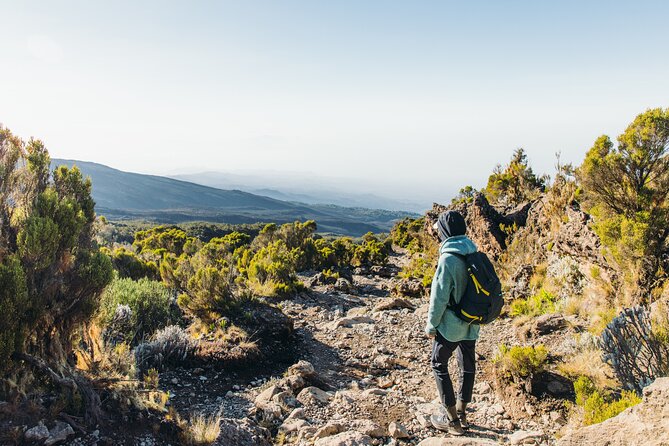
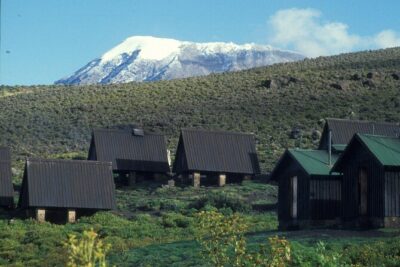
The first hike takes about six hours. The trail rises through Kilimanjaro’s cloud forest, where moss-covered trees give the woods a slightly mysterious feel. As the forest thins, heathers, tall grasses, and wildflowers appear. On a clear day, you may get your first strong view of Kibo, the volcanic summit you are working toward.
You sleep at Machame Camp. The porters and cooks go ahead to set up camp, so you arrive at an organized base rather than having to arrange your own shelter after a long walk. The camping system is one of the package’s practical strengths, especially if you have never handled a multi-day mountain trek before.
Day two: climbing onto the Shira Plateau
Day two continues uphill for about six hours. Carry plenty of water in your day pack, since the trail can feel hot when the sky is clear. The route offers views down toward the plains and forest, with Kibo and Mawenzi appearing above you.
The plant life changes as you gain height. Trees become smaller, then give way to high-altitude plants such as giant senecio and lobelia. These unusual plants are among the details that make Kilimanjaro more than a simple uphill walk. You are moving through several ecological zones in only a few days.
After lunch, you climb onto the Shira Plateau. This broad area formed when lava from Kibo filled the Shira crater. From Shira Camp, Kibo lies to the west and Mount Meru to the east. The open views are a welcome contrast to the enclosed forest of day one.
You finish early enough to rest. Do not treat that as wasted time. Your legs are still adapting to repeated uphill walking, and the next day is important for acclimatization. Eat, drink, organize your sleeping bag and layers, and give yourself a quiet evening.
Day three: the useful climb to 4,530 meters
Day three is one of the most important days on the route. You hike east across the Shira Plateau, pass the junction with the Shira and Lemosho routes, and continue through increasingly bare ground.
Although the final elevation gain for the day is only about 110 meters, you climb roughly 690 meters before descending to Barranco. The high point reaches about 4,530 meters. That up-and-down pattern is designed to help your body adjust to altitude.
You stop for lunch before reaching the day’s highest point. Afterward, the trail drops quickly to Barranco Camp. The descent can feel like a gift after the climb, but do not rush it. Loose, uneven ground and tired legs are a poor combination.
A possible detour takes faster walkers toward Lava Tower, a roughly 300-foot lava formation. This option is not for everyone, and the supplied schedule does not promise it for every group. Ask your guide whether it fits your pace and condition. The main route already gives you the acclimatization benefit.
Barranco Camp is a favorite stop for the mountain staff, and it is easy to understand why. The camp places you below the dramatic Barranco Wall, setting up the next morning’s challenge.
More Week-Long Trips around Arusha:
- 7 Days Machame Route Trek Mount Kilimanjaro
★ 5.0 · 12 reviews - 7-Day Private Kilimanjaro Hiking Tour via Machame from Arusha
★ 5.0 · 11 reviews - 7 Days Machame Route Kilimanjaro Trekking
★ 5.0 · 9 reviews - Private Kilimanjaro Hike 7 Day Lemosho Route
★ 5.0 · 60 reviews
Day four: scrambling over the Barranco Wall
After breakfast, you head toward Karanga Valley. The day begins with about an hour and a half on the Barranco Wall, the most demanding section of the day.
This is not described as a technical climbing pitch, but it is a hands-on scramble. In places, you may use your hands for balance and support. A guide-led pace is especially useful here. You do not need to race. You need to watch your footing, listen to instructions, and move steadily.
Once over the wall, the trail becomes more level for a time. You then make a short but steep descent into the green Karanga River Valley. The day lasts about seven hours, so the route is not simply a quick obstacle followed by camp.
Karanga is a useful staging point before Barafu. You gain ground without spending another night at extreme summit altitude. Keep your water and warm layers close, since conditions can shift quickly as you move between exposed ridges and sheltered valleys.
Day five: the stark approach to Barafu Camp
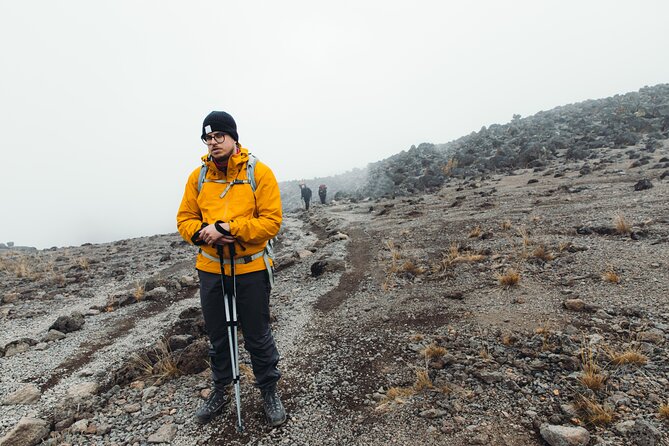
The hike to Barafu takes about seven hours. The trail passes through alpine desert with little vegetation, a sharp change from the forest and heather lower down. You can also see several of Kibo’s glaciers and the junction where the Mweka descent route meets the Machame trail.
The names of the glaciers, Heim, Kersten, and Decken, give this section a sense of Kilimanjaro’s colder upper world. The mountain is not just a broad cone in the distance now. You are walking among its upper ridges and seeing the ice directly.
Barafu Camp offers views toward both Kibo and Mawenzi. It is also the point where the schedule becomes very demanding. You eat dinner, try to sleep, and wake before midnight for the summit hike. Many people find it difficult to sleep at this hour, especially with nerves and altitude in play, so rest whenever you can.
Use the afternoon to prepare rather than socialize. Put your summit clothes in order, charge or check your headlamp, refill water, and keep only what you need close at hand. Your guide will help with the final plan, but an organized pack saves energy when you are leaving in the dark.
Day six: Stella Point, Uhuru Peak, and Mweka Camp
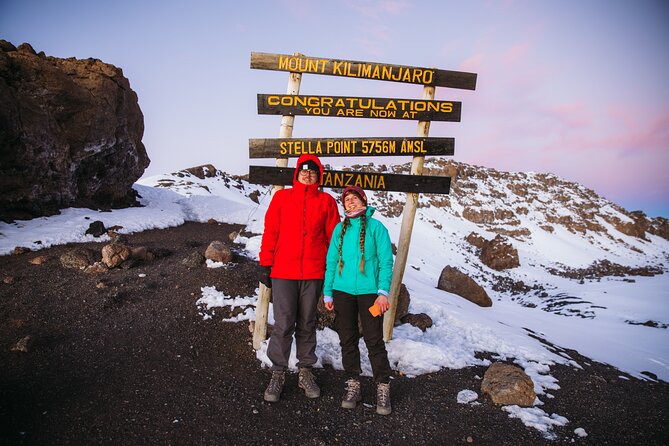
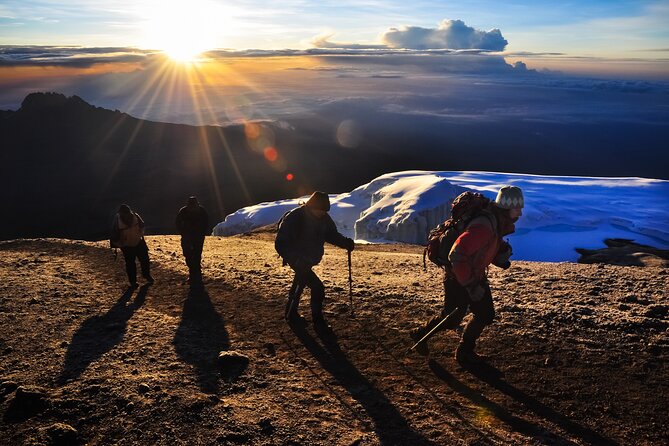
Summit day begins around midnight. You hike by headlamp for about six hours toward the crater rim. The steep route to Stella Point is the hardest section of the entire trek, and altitude makes every step feel slower.
The group’s pace matters here. The guide team is expected to keep you moving pole pole, slowly and steadily. Gasto James is praised for encouragement, singing, and calm support during this early-morning push. That human energy can matter when the air is thin and the trail seems endless.
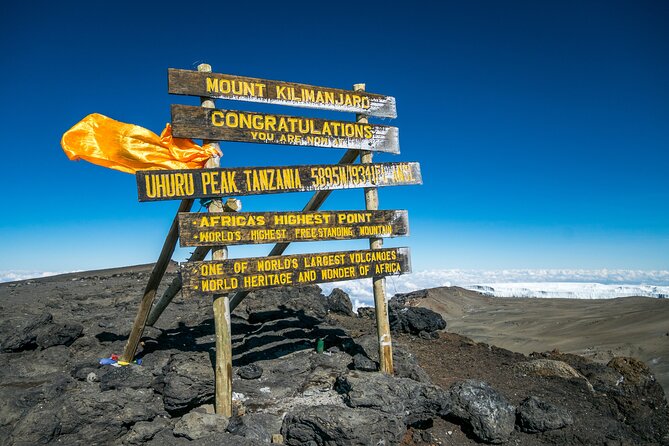
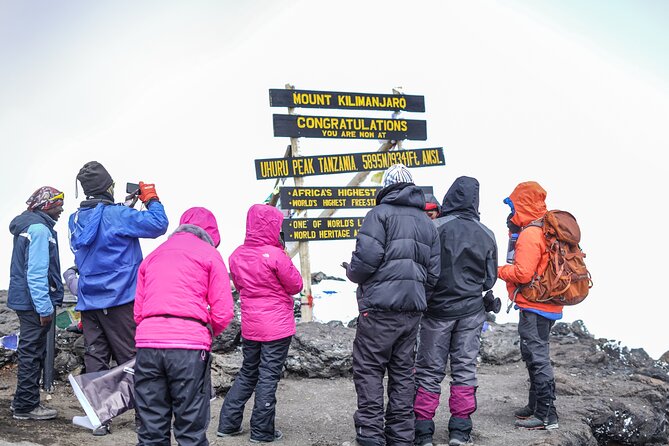
At Stella Point, the trail to Uhuru Peak becomes more gradual. The walking is technically easier, but altitude still makes it tiring. The crater-rim section takes about an hour. At Uhuru Peak, you have time for photographs with your guide and group before starting the descent.
The views on the way down include the crater, clouds, mountain slopes, and glaciers. Take them in, but remember that the day is far from over. You descend to Barafu, rest briefly, and continue toward Mweka Camp. The supplied schedule lists about six hours for the day, but the summit morning and descent make this the trip’s toughest physical test.
This is also the day when a strong support crew has its greatest value. The guides can watch your condition, adjust the pace, and help people who are struggling continue safely or change plans when needed. Reaching the summit matters, but returning in good condition matters just as much.
Day seven: down through the forest to Mweka Gate
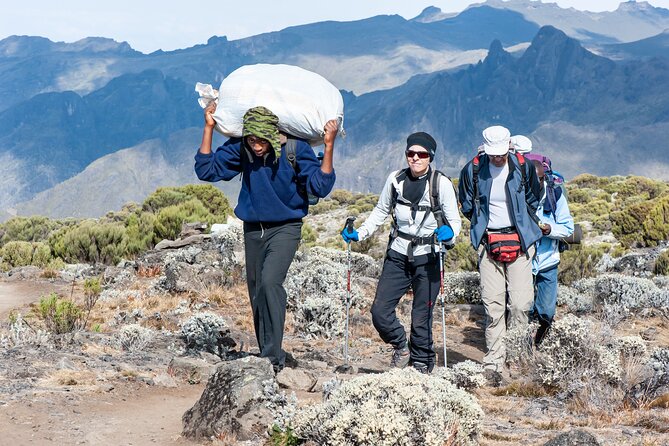
After breakfast, the final hike leads through the forest to Mweka Gate. The descent takes about six hours, and the trail may be slippery after rain. Trekking poles and careful foot placement would be sensible, though personal climbing gear is not included in the package.
At the lower station of Mweka Gate, vehicles meet the group for the return to Arusha. The final day is not glamorous, but it closes the route properly. You move from the high mountain back into forest, then from the national park to roads, vehicles, and a normal bed.
What the $2,800 price really covers
At $2,800 per person, this is not a budget walk, but the package includes the costly essentials of a guided Kilimanjaro climb. You receive private waterproof sleeping tents, a mess tent with tables and chairs, professional mountain guides, park fees, rescue fees, meals, purified drinking water, and airport transfers.
Those inclusions add up. Park and rescue fees alone are not minor extras, and carrying your own food, shelter, and water system would require substantial planning. The dining tent is also more important than it may sound. After a cold, tiring day, having a place to sit and eat can make camp life far more manageable.
Breakfast, lunch, and dinner are included while you are on the mountain. The package lists seven breakfasts, seven lunches, and six dinners, while the main description says all meals are provided during the climb. I would confirm the exact meal count and any arrival or departure-day arrangements before paying.
You must budget separately for your visa, personal climbing gear, and tips. The phrase person climbing gear appears in the package details, so ask exactly what the operator considers personal equipment. You should also ask about the pickup timing, since the schedule gives a 9 a.m. departure for day one while the meeting information lists a 7:30 p.m. start time. That looks like a detail worth clearing up in writing.
Who should choose this seven-day trek
This trip suits you if you have moderate physical fitness and want a classic Kilimanjaro route with a strong support structure. You need to be ready for six to seven hours of walking on most days, a steep scramble over Barranco Wall, and a midnight summit start.
It is a good fit if you value scenery and a carefully arranged camp routine more than solitude. It also suits first-time high-altitude trekkers who want experienced guides, cooks, porters, tents, meals, and transfers handled by one company.
It may not suit you if you want a quiet trail, dislike camping, or prefer short walking days. The seven-day schedule is purposeful, but it does not leave much spare time. You should also be comfortable with the possibility that altitude, weather, or your physical condition could change the plan.
The strongest praise centers on the guide team. Gasto James is repeatedly associated with encouragement, singing, cultural stories about Tanzania and the Maasai, careful pacing, and help during difficult moments. The food, friendly atmosphere, and sense of safety also receive strong approval. A five-star score and 100 percent recommendation rate from 13 ratings support the view that the operator has made a strong impression.
Should you book the Machame Route?
Book this trek if you want Kilimanjaro’s varied scenery, a well-supported camping setup, and a route that gives acclimatization serious attention. The price is reasonable for the number of permits, meals, staff, equipment, water, and transfers included, though tips and personal gear will raise your final cost.
I would book it after confirming three things: what personal climbing equipment is available for hire, how the 7:30 p.m. meeting time fits with the 9 a.m. day-one departure, and the exact meal schedule. If those details are clear, Mountain Warriors Tours and Safaris offers a strong choice for a demanding but well-organized climb to Uhuru Peak.
Cancellation is free up to 24 hours before the local start time. Inside 24 hours, the payment is not refunded, and changes are not accepted.
FAQ
How long is the Kilimanjaro Machame Route experience?
The trek lasts approximately seven days. The itinerary runs from day one at Machame Gate through day seven at Mweka Gate and the return to Arusha.
What is included in the price?
The price includes private waterproof mountain sleeping tents, professional mountain guides, park fees, rescue fees, meals on the mountain, a mess tent with a table and chairs, purified drinking water, and airport transfers.
Are meals included?
Yes. The package includes breakfast, lunch, and dinner while you are on the mountain. The listed details specify seven breakfasts, seven lunches, and six dinners.
Is personal climbing gear included?
No. Personal climbing gear is not included. You should confirm what equipment is available separately and what you must bring yourself.
What fitness level is required?
A moderate level of physical fitness is required. The itinerary includes six to seven-hour hiking days, steep uphill sections, the Barranco Wall scramble, and a midnight summit ascent.
When does the summit hike begin?
The final ascent toward Uhuru Peak begins around midnight from Barafu Camp. The hike to the crater rim takes about six hours, followed by the gradual climb from Stella Point to Uhuru Peak.
Is this a private tour?
Yes. Only your group participates in the private tour or activity, although Machame is a popular route and you may encounter other climbing groups on the mountain.
What is the cancellation policy?
You can cancel at least 24 hours before the experience start time for a full refund. Cancellations or changes made less than 24 hours before the local start time are not refunded or accepted.
Just added around Arusha
- 7 Days Machame Route Trek Mount Kilimanjaro★ 5.0 · 12 reviews
- 7 Days Machame Route Kilimanjaro Trekking★ 5.0 · 9 reviews
- 5 days safari, hiking & culture (Serengeti & kilimanjaro)★ 5.0 · 27 reviews
- 7-Day Private Kilimanjaro Hiking Tour via Machame from Arusha★ 5.0 · 11 reviews
- Private Day Tour Kilimanjaro Hike★ 5.0 · 13 reviews
- Mount Kilimanjaro day trip trekking★ 5.0 · 12 reviews
- 4 days Best experience Kilimanjaro Hike, Serengeti &Ngorongoro★ 5.0 · 54 reviews
- 6 Days Serengeti Safari(hiking waterfalls &coffee tour)★ 5.0 · 48 reviews
Kilimanjaro Hikes, side by side.
8-Day Small-group Lemosho Kilimanjaro Summit Trekking
Read our review →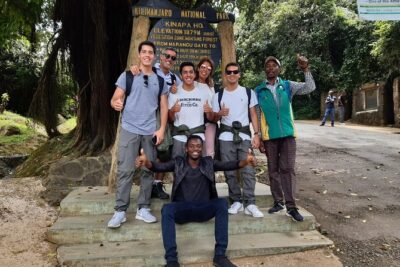
Private Full Day Hiking Experience to Marangu Route
Read our review →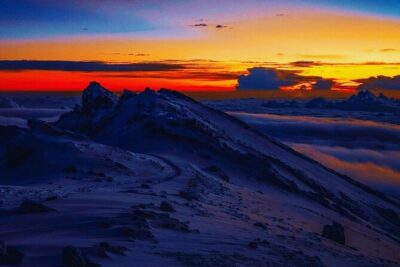
From Arusha/Moshi: Kilimanjaro Hike Marangu Route Day Trip
Read our review →
4 days Best experience Kilimanjaro Hike, Serengeti &Ngorongoro
Read our review →
Best Kilimanjaro hiking day trip tour with Kilinge Adventures
Read our review →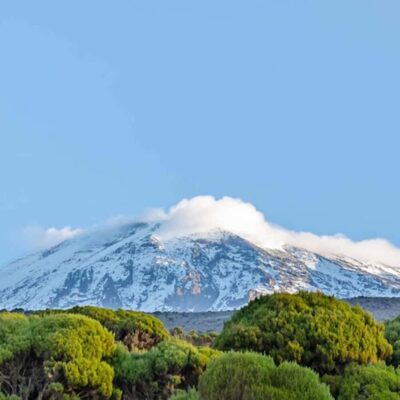
#1. Best Kilimanjaro Day hike Tour-Machame Route-ISMANI
Read our review →This walk also sits in