
REVIEW · LAOS
Luang Prabang: 3-Day Cultural Remote Trek With Homestay
Remote Laos begins with a boat crossing, not a museum ticket. This three-day trek carries you from the Mekong and Nam Xeuang rivers into jungle paths, rice fields, and Hmong and Khmu villages where daily life remains simple. I like the small-group format and the chance to eat with village families rather than just photograph a village from a road.
I also like the route’s clear sense of progression: a moderate first day, a quieter valley walk on day two, then a demanding 6 to 7-hour mountain hike. The tradeoff is real: homestays are basic, toilets and washing facilities are simple, and there is no regular electricity for charging batteries.
Key points at a glance
- A true village-to-village route: Walk trails used by local people between remote Hmong and Khmu communities.
- Two distinct homestay nights: Sleep in basic but comfortable village accommodation, with daily life happening around you.
- A local meal at the center of the trip: Your guide and a Hmong family prepare dinner together.
- The hardest day comes last: Allow for 6 to 7 hours on mountain trails, including steep sections and exposed rice fields.
- Very little tourist traffic: One visit coincided with the first tourists the village had seen in two months.
- A $360 all-in price: Transport, boats, meals, guide, permits, village fees, and homestays are included.
From Luang Prabang to the first jungle trail
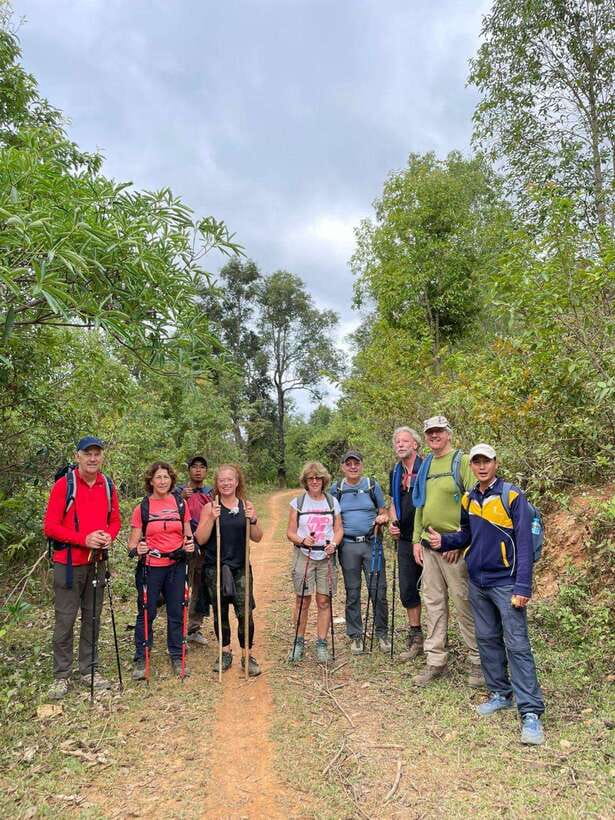
Your morning begins at the Tiger Trail Travel office on the same street as Villa Maly hotel. Meet at 8:20 a.m. for an 8:45 departure. Hotel pickup and return are available, which is useful if you have a full pack or prefer not to find the office before breakfast.
You will store luggage before leaving and carry only what you need for three days. That is not a minor suggestion. The route includes 4 to 5 hours of walking on the first day, followed by longer hikes, so a light pack makes every uphill section easier.
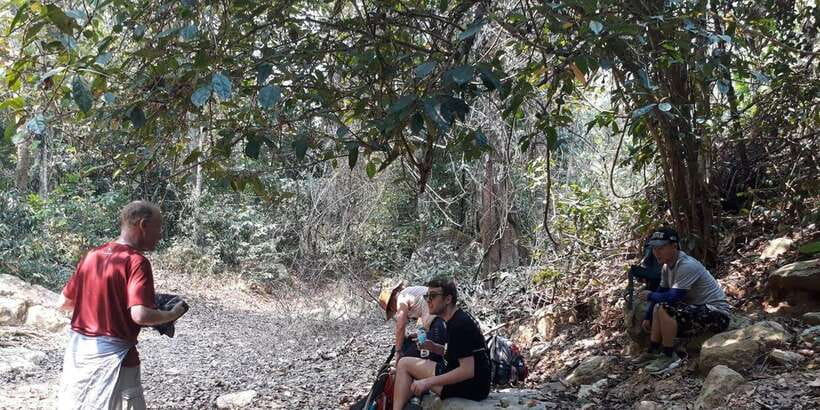
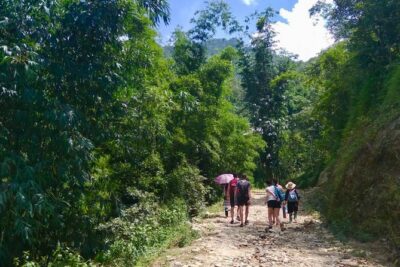
The drive heads north along the Mekong River and then follows the Nam Xeuang River for about 1.5 hours. A local boat takes you across the river to the trailhead. That crossing marks a clean break from the town routine. From there, you are on foot, using jungle tracks that local people use to move between villages.
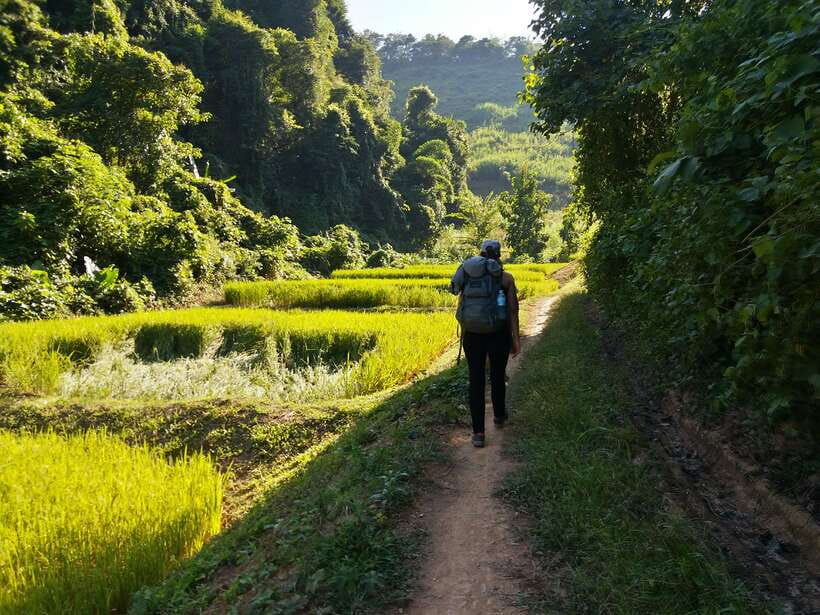
The first walk is rated medium grade. Expect a mix of jungle, rice paddies, and village paths rather than a smooth marked trail. Conditions can change with the weather. In the rainy season, the route takes longer and becomes more demanding, so you should be comfortable walking on wet ground and carrying your own belongings.
More Homestay and Village Treks in the world:
- From Hanoi: 2-Day Sapa Trekking Trip with Homestay & Meals
★ 4.8 · 704 reviews - Number one top rated ethical cultural trekking and homestay by ETHOS
★ 5.0 · 456 reviews - 2-Day Sa Pa Ethnic Homestay Tour & Trek with Limousine Bus
★ 4.8 · 440 reviews
Night one in a Hmong village
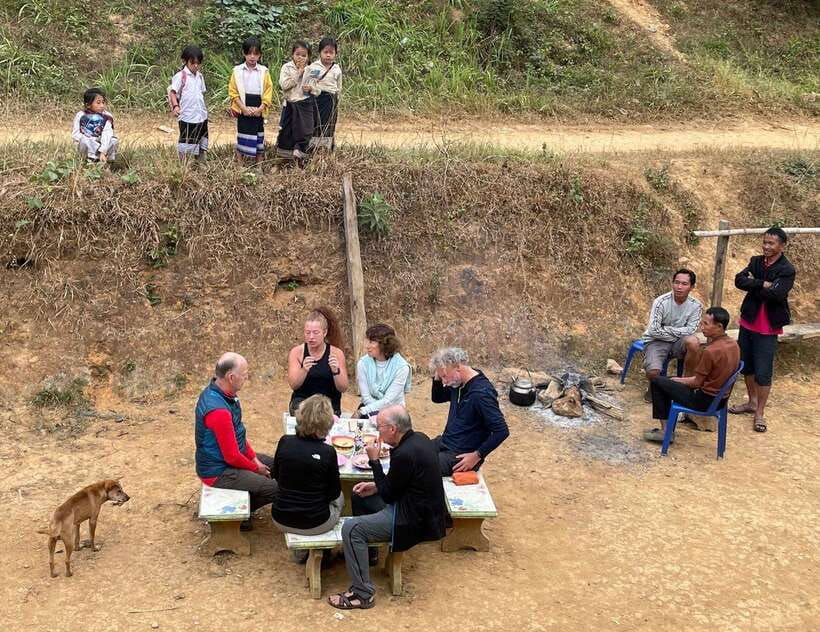
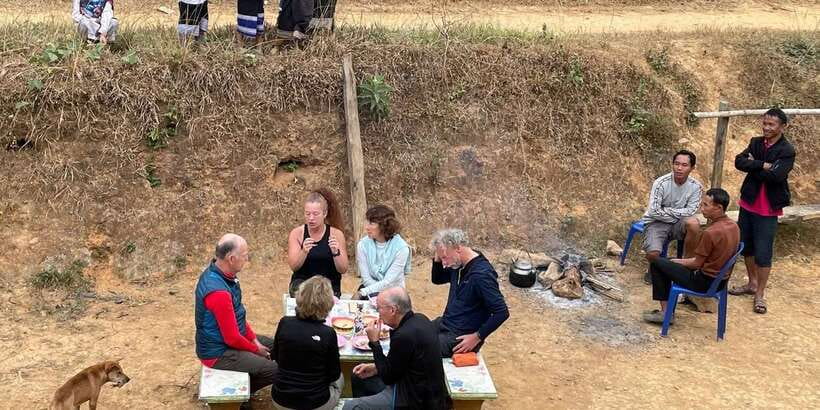
The first village stay gives you the clearest introduction to the trip’s main idea: daily life, not staged entertainment. You stay in a Hmong village in basic, comfortable conditions and have time to meet local people, look around homes, and see how the community is arranged.
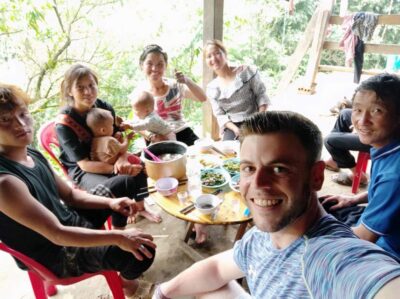
Dinner is prepared by your guide and a Hmong family. That shared meal is one of the strongest parts of the experience because food creates a natural way to sit together, ask questions, and watch village life unfold without a formal performance.
Do not expect hotel comforts. Washing facilities and toilets are simple, and remote villages do not offer the usual conveniences of Luang Prabang. The accommodation is best understood as a place to sleep safely and take part in village life, not as a private room with modern services.
The absence of electricity matters too. You cannot count on charging a phone or camera during the trek. Bring a power bank if photographs are important to you, and keep your camera protected from rain and humidity.
Day two, streams and a larger mixed village
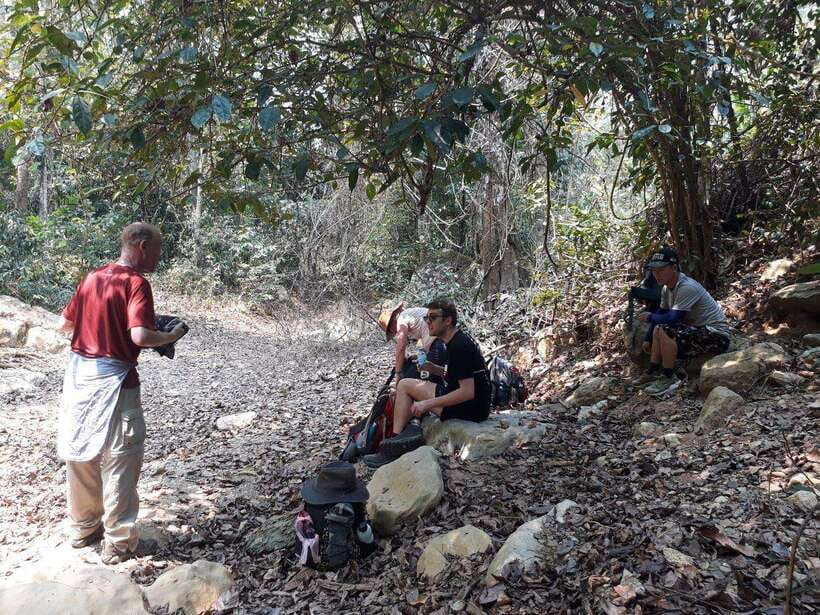
Day two starts with village sounds and a breakfast prepared by your guide. The hike lasts about four hours, making it the shortest walking day. The route follows valley streams toward a large village inhabited by both Hmong and Khmu people.
This section gives you time to notice the change in terrain. Instead of spending the whole day climbing, you follow the valley through a more enclosed setting, with high mountains around the settlement. You arrive in the middle of the afternoon, leaving time to explore the village, visit its schools, and learn about local routines with help from your guide.
This is also a good day for questions. Guides who have led this route, including Aroun and Chan, have explained Hmong and Khmu customs, rituals, plants, animals, and village organization. Guide quality matters here because the scenery alone cannot explain why the villages are arranged as they are or how mountain farming shapes everyday work.
The village is described as very remote, and one visit took place when the only visitors had been two tourists in two months. That level of isolation can make the welcome feel personal, but it also means you should behave carefully. Ask before taking photographs, follow your guide’s lead, and remember that people are sharing their homes and routines with you.
You spend the night here before the mountain walk. It is a useful pause. The final day is the most strenuous, so use the afternoon to rest rather than treating the village visit as a second full hiking day.
Day three, mountain tops and steep rice fields
The final hike lasts 6 to 7 hours and reaches mountain tops with broad views over villages and the remote Lao countryside. It is the physical centerpiece of the tour, but the route is not only about reaching a viewpoint.
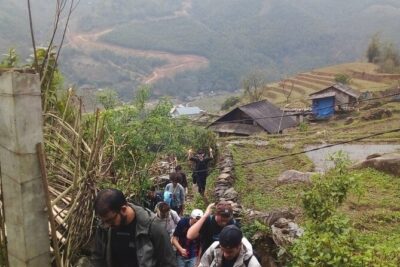
You walk trails used by local people tending steep, mountain-top rice fields and visiting a Hmong mountain village. That detail gives the walk a practical purpose. These are working paths connected to food, homes, and family life, not trails built only for visitors.
The day can be tough, especially in hot weather. One account of the route described some sections as challenging at 37 degrees Celsius. Pace yourself, drink steadily, and wear shoes with a secure grip. Comfortable shoes are listed as essential, and water shoes are useful for wet crossings or the river at the end.
The walk finishes at the Nam Xeuang River. If conditions allow, you can take a well-earned swim before the return trip. The drive back to Luang Prabang takes about 1.5 hours. You should arrive tired, dusty, and carrying a much clearer sense of how far village life sits from the city.
More Three-Day Trips around the world:
- Sapa 3 Days 2 Nights Trekking Tour (1 Night In Ta Van Village, 1 Night In Hotel)
★ 5.0 · 699 reviews - 3-Day Trekking Adventure of Sapa from Hanoi – Stay Ta Van Village
★ 5.0 · 611 reviews - From Marrakech: 3-Day Mount Toubkal Climbing Trek
★ 4.7 · 597 reviews - 3-Day Ethical Orangutan Jungle Trek | Bukit Lawang, Sumatra
★ 5.0 · 401 reviews
What the homestay really means
A homestay here is not a polished cultural show with a village backdrop. It means basic lodging, simple toilets, limited washing facilities, and little or no access to charging power. Solar panels may provide some electricity in a village, but you should not plan around them.
That simplicity is the point, but it can still surprise you. If you need a hot shower, private bathroom, soft bedding, or reliable power each night, this trip will feel uncomfortable. If you want to understand rural life through its ordinary conditions, the same features make the trip worthwhile.
Bring a change of clothes because humidity, rain, river crossings, and sweat can make your walking clothes unpleasant by evening. Pack insect repellent and weather-appropriate clothing. A small waterproof bag for electronics is a sensible addition, especially during the rainy season.
Specialty drinks are not included. The listed price covers meals described in the schedule, but you should budget separately for drinks beyond those meals.
How much value is in the $360 price?
At $360 per person, this is not a cheap day trip, but it covers three days of transport, boat crossings, meals, an English-speaking guide, taxes, village fees, permits, and homestay accommodation. The price also pays for access to a route that would be difficult to organize independently.
The value is strongest if you want a small-group or private experience with local logistics handled for you. A guide arranges the boat crossings, leads the village paths, explains local customs, and helps you communicate in places where language and distance can create barriers.
You are also paying for time. Two nights in the villages allow the trip to move at a slower pace than a quick stop at a roadside community. You have time to arrive, settle in, eat, explore, and sleep before continuing.
The price is less attractive if you mainly want mountain scenery. Luang Prabang offers shorter hikes and easier outings. This tour makes sense when the homestays, village contact, and demanding route matter as much as the views.
Who should choose this trek?
I would choose this trip if you want rural Laos without a resort layer between you and the community. It suits people who enjoy walking, accept basic accommodation, and want an English-speaking guide to explain Hmong and Khmu life.
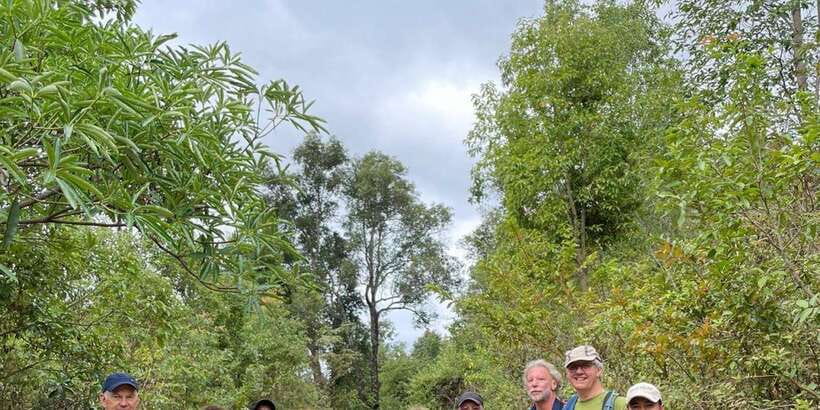
It is also a good fit for visitors who prefer private or small groups. A smaller group makes the narrow trails easier and reduces the pressure placed on village homes and meals.
You should think twice if you have limited mobility or are pregnant. The activity is not suitable for people with mobility impairments or pregnant women. The 6 to 7-hour final hike also makes this a poor match for anyone looking for a gentle cultural excursion.
Fitness does not need to mean athletic training, but you should be ready for several consecutive walking days, heat, uneven trails, and a long climb. Rain can make the route harder and slower.
Practical planning before you leave Luang Prabang
Keep your main luggage at the office and pack lightly. Your small bag should include comfortable walking shoes, a change of clothes, insect repellent, water shoes, and clothing suited to the forecast.
Carry water, even though meals are included. Food is provided as described in the schedule, but the remote setting means you should not expect shops along the trails.
Protect your phone and camera from rain. There is no electricity for charging camera batteries during the trek, so start with full batteries and bring a power bank if you have one.
The tour runs in rain or shine. That is important in Laos, where a wet forecast is not a reason for the operator to cancel automatically. Rain changes the pace and the footing, not the basic plan.
Free cancellation is available up to 24 hours before departure, and you can reserve now and pay later. Those policies help if your Luang Prabang plans are still shifting, but the bigger decision is your comfort with the physical and cultural conditions.
My verdict: book it for the access, not the comfort
Book this trek if your ideal Luang Prabang experience includes jungle paths, village meals, simple homestays, and long stretches away from other tourists. The strongest features are the direct contact with Hmong and Khmu communities, the guide-led cultural context, and the final mountain views.
Do not book it expecting luxury, easy walking, or dependable charging. You will trade comfort for access, and the trade is worthwhile only if that is the kind of trip you want. For an active visitor who values real village contact over polished sightseeing, the $360 price is fair and the three-day length gives the experience room to breathe.
FAQ
Where does the trek start?
Meet at the Tiger Trail Travel office on the same street as Villa Maly hotel. Meeting time is 8:20 a.m. for an 8:45 a.m. departure.
Is hotel pickup available?
Yes. Optional pickup from your hotel and return to your hotel on day three are available.
How long is the tour?
The experience lasts three days.
How long is the first day of trekking?
The first day includes about 4 to 5 hours of medium-grade walking through jungle and rice paddies.
How long is the second day of walking?
The second day includes about four hours of hiking along valley streams to a mixed Hmong and Khmu village.
How long is the final hike?
The third day includes a 6 to 7-hour hike to mountain tops and down to the Nam Xeuang River.
What kind of accommodation is provided?
You stay in homestay-type accommodation in remote villages. Conditions are basic but comfortable, with simple toilets and washing facilities.
Are meals included?
Yes. All meals described in the itinerary are included. Specialty drinks are not included.
Is the tour suitable during the rainy season?
The tour operates rain or shine. Rainy-season conditions can make the treks more difficult and may require more time.
Is electricity available for charging devices?
There is no electricity for charging camera batteries for the duration of the trek. Bring fully charged devices and a power bank if needed.
Just added around the world
- Private Grand Canyon Full Day Hike★ 5.0 · 53 reviews
- Lycian Way Trekking Tour (7 Days)★ 5.0 · 17 reviews
- Private Grand Canyon Hike and Sightseeing Tour★ 5.0 · 132 reviews
- Explore El Yunque: Hiking, Swings & Waterslide (Small Group)★ 5.0 · 144 reviews
- 6 Days Bale Mountains Trekking★ 5.0 · 10 reviews
- El Yunque Hike Adventure to Las Tinajas Waterfall from Fajardo★ 5.0 · 52 reviews
- 4 days semien mountain national park trekking,★ 5.0 · 11 reviews
- Angel Rocks Hike and Chena Hot-Springs Soak Guided Tour★ 4.5 · 13 reviews
Homestay & Village Treks, side by side.
Number one top rated ethical cultural trekking and homestay by ETHOS
Read our review →
2-Day Sa Pa Ethnic Homestay Tour & Trek with Limousine Bus
Read our review →
Sapa 3 Day 2 Night Trekking With Hotel & Homestay
Read our review →
Sapa 2 Days 1 Night Overnight At Local Homestay
Read our review →
Sa Pa: 2-Day Trekking Trip with Ethnic Minority Homestay
Read our review →
This walk also sits in