
REVIEW · INDONESIA
Yogyakarta: Selogriyo Temple Tour & Java Rice Terrace Trek
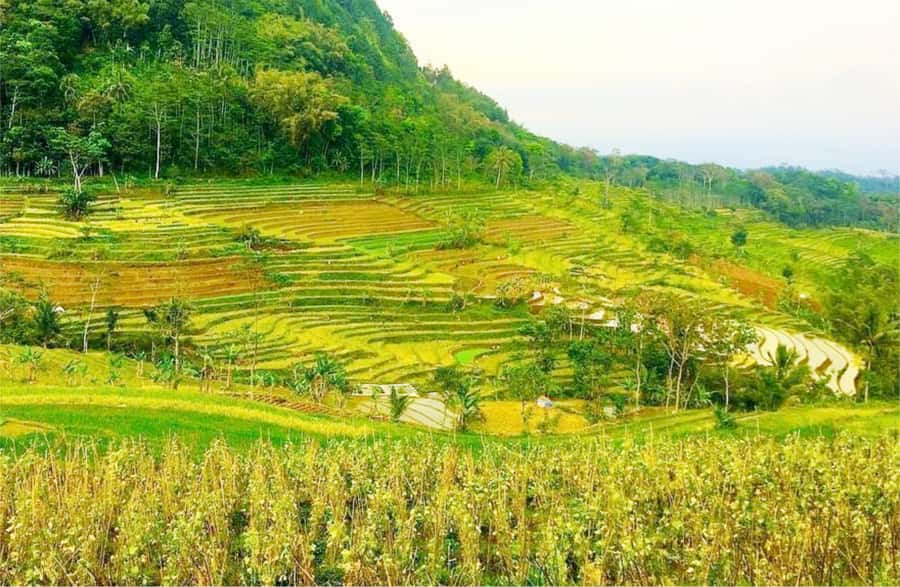
The best part of this trip happens before you reach Selogriyo Temple. You walk through quiet terraces where farmers grow rice, corn, beans, tobacco, ginger, papayas, and other crops. The path climbs into Java’s hills, with green views and very little tourist traffic. The countryside is the main event, while the small Hindu temple gives the walk a clear destination.
I like two things especially: the guide turns an ordinary walk into a lesson about farming and village life, and roundtrip pickup removes the bother of reaching a remote trailhead. Guides such as Yuni, Haidar, Atok, and Arief are often praised for their English, good humor, plant knowledge, and care with solo visitors. The one thing to consider is the moderate amount of walking. The route is manageable for many people, but wet paths can be muddy, and the two-hour drive from Yogyakarta takes up a fair part of the six-hour outing.
Key points at a glance
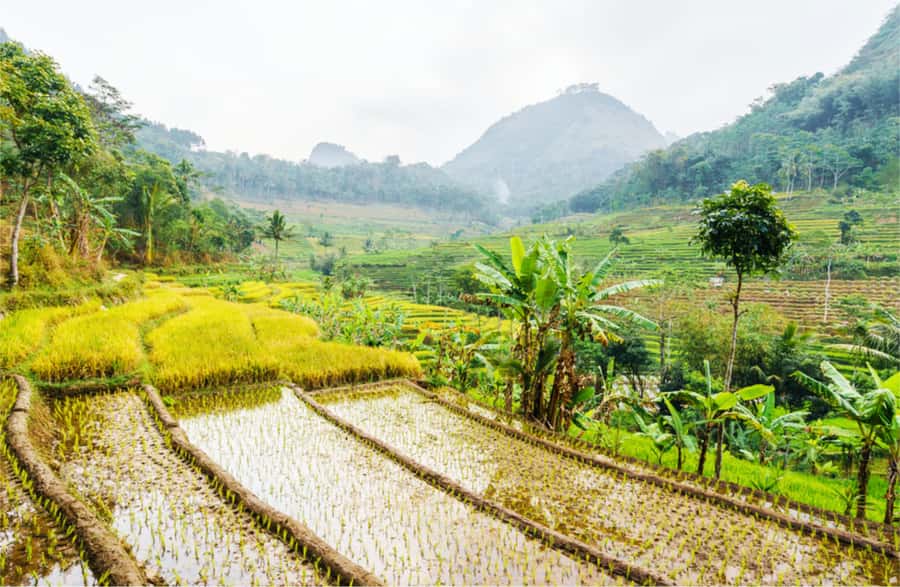
- A quiet approach to Selogriyo: Walk uphill through working rice terraces instead of arriving at a busy monument by car.
- A guide-led look at farming: Learn how rice moves from seedling to harvest, and see seasonal crops such as corn, beans, tobacco, ginger, and coffee.
- A small Hindu temple in the hills: Selogriyo is modest in size, with distinctive Hindu sculptures and gardens in a peaceful setting.
- A real escape from Yogyakarta: The drive takes about two hours from Yogyakarta city, or about one hour from the Borobudur area.
- Small groups and flexible company: Groups are limited to 15, and low-demand dates may operate as private trips.
- Good practical value: The $55 price includes transport, entrance, guide, parking, and donation fees.
Why Selogriyo is worth the long ride from Yogyakarta
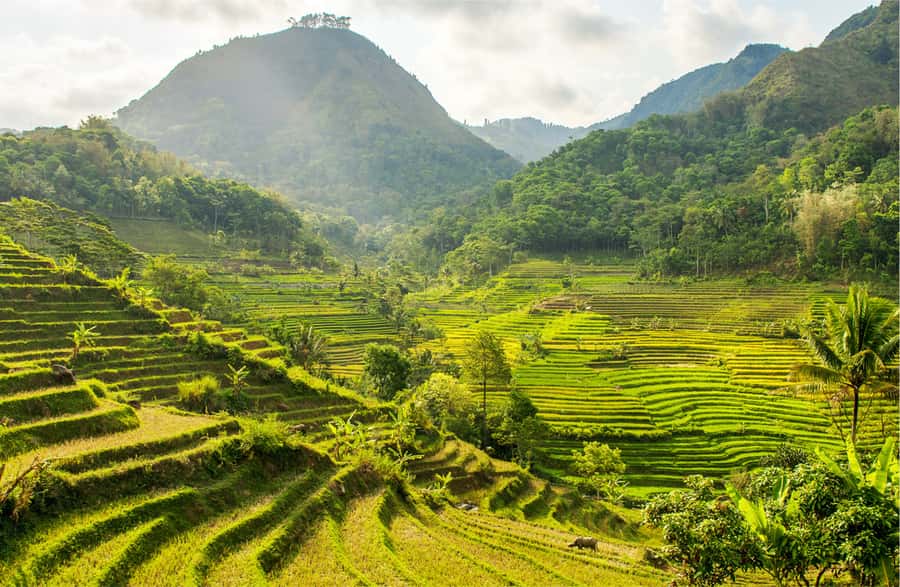
Yogyakarta gives you grand temples, palace sights, cafés, and plenty of traffic. Selogriyo gives you the opposite. It is a quiet hilltop site reached by a walk through farmland, where the sound of village life matters more than a long list of monuments.
The journey takes roughly two hours each way from central Yogyakarta. That is a serious time commitment for a six-hour activity, but it also explains why the area feels so removed. From Borobudur, the drive is shorter at about one hour, so this trip makes particular sense if you are staying near Borobudur or combining it with a broader visit to Central Java.
I would not book this mainly for the temple. Selogriyo is small compared with Borobudur or Prambanan. I would book it for the approach: the terraces, the hillsides, the farmers, the plants, and the chance to see a part of Java that is not arranged around a major tourist site.
More Rice Terrace Hikes in Indonesia:
- Selogriyo Temple and Trekking Java Rice Terraces, hidden waterfall -Nature Java
★ 5.0 · 179 reviews - Sa Pa: Muong Hoa Valley Trek and Local Ethnic Villages
★ 4.6 · 864 reviews - Sa Pa: 6-Hours Muong Hoa Valley Trek with Local Ethnic guide
★ 4.5 · 178 reviews
The drive sets the tone for the day
Pickup is provided from your accommodation in Yogyakarta, with pickup also available from the Borobudur area. You ride in a private vehicle with your driver and guide, rather than having to arrange a taxi to a remote village and then find the correct path.
The road journey is not just dead time. Guides often use it to explain Javanese life, local agriculture, history, and current issues. Yuni is frequently praised for his easy conversation and stories from growing up in the area. Haidar is known for adjusting the conversation to your interests, from farming to Indonesian politics and history. Atok and Arief are also noted for careful driving and friendly service.
The vehicle and exact pickup time depend on the day, so check the available start time when booking. If you are prone to motion sickness, bring what you normally use for winding drives. The trip is rural and remote, which is exactly its appeal, but it also means you should not expect a quick outing with a short transfer.
Walking through Java’s working rice terraces
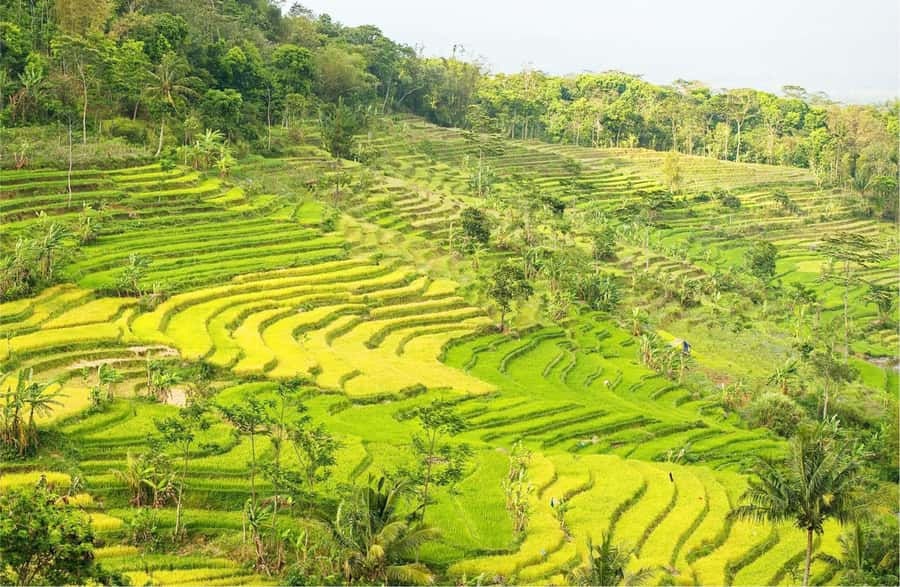
The walk is the heart of the experience. You leave the vehicle near the rural approach and continue on foot toward Selogriyo, following paths through terraces and cultivated hillsides.
The fields are not a decorative garden. They are working farmland. Depending on the season, you may see rice at different stages, along with beans, corn, tobacco, ginger, coffee, papayas, coconut trees, and other plants. A good guide helps you notice the difference between a pretty green field and a food system that supports nearby families.
Yuni is especially praised for identifying plants and explaining how crops are grown. Haidar has explained the rice planting process and the daily life of farming communities. Atok has pointed out herbs, animals, and unusual plants along the route. That kind of detail gives the walk purpose. You are not simply taking photographs of green hills. You are learning why the terraces look as they do.
The route can be adapted to some degree. One guide offered a choice between the usual easier path and a more adventurous route through the fields. Other trips included a less-used trail or an additional nearby rice area. Do not assume every booking includes the same variation, but tell your guide what kind of walk you want and how much time you have.
The effort is moderate. One person described it as very easy, while another found it quite a hike. That difference makes sense: fitness, weather, route choice, and the condition of the paths will affect the experience. In the rainy season, mud is a real possibility. Wear shoes with a decent grip, clothes you can move in, and sunscreen. Bring cash for drinks, snacks, or small purchases.
Reaching the small hilltop temple
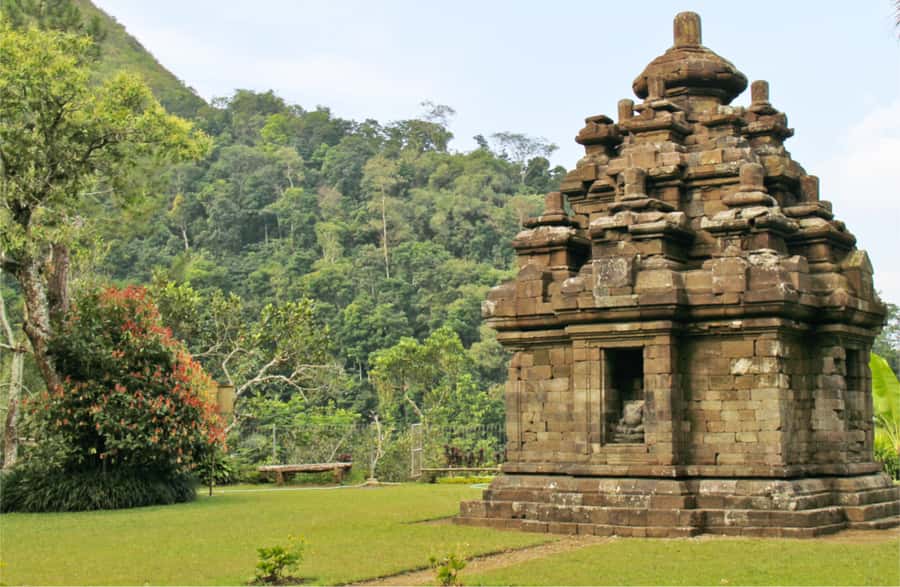
Selogriyo Temple, also called Candi Selogriyo, is a compact Hindu site in a secluded hill setting. Its size is part of its charm. You do not spend hours moving through a large complex. Instead, you reach a quiet temple surrounded by gardens and greenery, then have time to look closely at its structure and sculptures.
Your English-speaking guide explains the temple’s Hindu features and historical setting. The carvings and figures are worth examining, but the setting may be what stays with you. The temple sits above the terraces, giving you a sense of how the religious site relates to the surrounding hills and villages.
This is not the place to expect a grand monument on the scale of Borobudur. If you want a huge architectural spectacle, choose one of Java’s major temple complexes. If you want a small sacred site reached by a rural walk, Selogriyo makes a fine counterpoint.
The quiet is another reason to come. On some outings, the temple has been almost empty. That allows you to take photographs without crowds and to enjoy the setting at a slower pace. Views depend on weather. During the rainy season, clouds or rain may hide the mountain scenery, though the walk can still be beautiful in misty conditions.
More hikes and treks around Indonesia:
- Bali: Sunrise Mount Batur Guided Hike with Breakfast
★ 4.8 · 9,660 reviews - Bali: Mount Batur Sunrise Guided Hike and Natural Hot Spring
★ 4.8 · 9,284 reviews - Bali: Mount Batur Sunrise Trek With Guide and Breakfast
★ 4.8 · 3,461 reviews - Mount Batur Sunrise Hike and Natural Hot Spring Option
★ 5.0 · 1,927 reviews
Local people, plants, and the value of a good guide
The guide makes a large difference here because the attraction has no huge museum, formal show, or long set of signs. The human explanation brings the place into focus.
Yuni is repeatedly praised for his warmth, plant knowledge, photography, and strong English. Haidar is appreciated for explaining agriculture, religious details, village life, and local customs while keeping the pace comfortable. Atok is known for humor, patience, and willingness to answer questions. Aulion has been praised for his English, stories, and ability to make the day feel personal. Arief has helped solo visitors feel safe, taken photographs, and explained both the temple and local traditions.
Guide availability changes, so you cannot count on requesting a particular person. Still, these names give you an idea of the service style to expect: part walking guide, part cultural interpreter, and part careful driver.
You may meet local farmers or villagers along the route. The interaction is simple and informal, not a staged cultural performance. A greeting, a smile, or a short conversation can be one of the most memorable parts of the morning. Be polite around people working in the fields, and ask before photographing anyone at close range.
Tea, coffee, and the pleasant stop after the walk
Several outings include a stop for local drinks or snacks after the temple walk. A small café near the route has served redwood, lemongrass, and blue pea tea with fried cassava. Other trips included local coffee, ginger tea, or a coffee tasting.
These stops are not listed as a guaranteed part of the core package, so treat them as possible additions rather than promised inclusions. If you are interested in coffee, ask your guide what is available that day. Some guides have taken visitors to a local coffee or civet coffee shop, while others have stopped at a favorite café.
The drinks are useful after the walk, but the real value is the setting and conversation. You get a chance to sit, cool down, and ask about the crops or villages you have just passed. One guide even arranged for a visitor to learn how to pour coffee. Small moments like that can make the day feel less like a checklist.
Bring cash because refreshments and optional purchases are not covered by the listed price. You may also want a small snack, especially if your pickup is early or you are used to eating lunch before midday.
What $55 includes, and where the value lies
At $55 per person, this is not the cheapest way to see rural Java. The price makes more sense when you add up what is included: hotel pickup and drop-off, the long roundtrip drive, parking, entrance fee, donation fee, and an English-speaking guide.
The transport is a major part of the value. Selogriyo is not an easy independent stop from Yogyakarta. Arranging a car, locating the approach, paying separate fees, and finding someone to explain the temple could easily turn a quiet outing into a tiring logistics project.
The small-group limit of 15 also helps. On a lightly booked date, you may end up with a private or nearly private outing, as some visitors have. That can allow more questions, more photo stops, and a choice between an easier route and a more adventurous one. Do not assume a private tour is guaranteed, but the group size is still modest compared with a large coach excursion.
I would call the price fair for a traveler who values comfort, local explanation, and access to a remote site. It is less compelling if you only want to see a temple quickly or if you already have private transport and a local guide arranged.
How demanding is the six-hour outing?
The walking is moderate rather than extreme. You do not need technical hiking equipment, but comfortable shoes are important. The route includes an uphill approach, uneven paths, and possible mud. Allow yourself time to stop, since rushing would defeat the point of the trip.
The weather matters. Clear conditions bring wider views across the hills. Rain can make the track slippery and obscure distant mountains, but it can also make the fields intensely green. The tour still operates as a countryside walk, not as a guaranteed panorama.
This outing suits people who enjoy being outside and do not mind a little dirt on their shoes. It is less suitable if you want a fully paved route, minimal walking, or a tightly timed sequence of major monuments. If you have mobility concerns, ask the provider for current route details before booking, since the information supplied only describes the walk as moderate.
Who should book this experience?
I would choose this trip if you have already seen, or plan to see, Borobudur and Prambanan and want a quieter side of Java. It is also a strong choice for solo visitors, couples, and small families who like asking questions and moving at a relaxed pace.
Plant lovers will get more from it than people who only want temple photographs. So will anyone interested in rice cultivation, village life, local food, and the everyday work behind Java’s famous scenery.
The tour is especially convenient from Borobudur because the drive is shorter. From Yogyakarta, I would reserve it for a day when you are happy to spend several hours in the car for a rural setting. You can sometimes add a coffee stop, local food, a nearby waterfall, or another attraction, but those extras depend on time and the guide. Discuss them before setting off.
Simple preparation for a better day
Wear shoes that can handle mud and uneven ground. Add sunscreen, comfortable clothing, and a hat if you use one.
Carry cash for tea, coffee, snacks, or optional local stops. A small day bag is enough. Keep your phone or camera protected from rain, and leave some room in your schedule for photo stops and conversations.
The tour includes roundtrip transport, so you do not need to solve the remote access problem yourself. Cancellation is free up to 24 hours before departure, and you can reserve now and pay later, which helps if your Java schedule is still changing.
Should you book the Selogriyo Temple and rice terrace tour?
Book it if you want a calm, rural day with a good guide and a real walk through working farmland. The temple is small, but the approach is beautiful, the setting is quiet, and the farming explanation gives the outing substance.
Skip it if you have little time in Yogyakarta, dislike long drives, or want a major monument with grand scale. For everyone else, the $55 fee buys more than entrance to a minor temple. It buys access to a remote corner of Java, reliable transport, and a guide who can help you notice what you would otherwise walk past.
FAQ
How long does the Selogriyo Temple tour take?
The activity lasts six hours, including transport, the walk, time at Selogriyo Temple, and the return to your accommodation.
How long is the drive from Yogyakarta?
The journey takes about two hours from Yogyakarta city. From the Borobudur area, the drive takes about one hour.
Is hotel pickup included?
Yes. Pickup and drop-off from your accommodation in Yogyakarta are included. Pickup is also available from the Borobudur area.
How much walking is involved?
The trip includes a moderate amount of walking through rice terraces and uphill paths toward the temple. Comfortable shoes are recommended.
Is this a private tour?
It is listed as a small-group activity limited to 15 participants. On some dates, low demand may result in a private outing, but that is not guaranteed.
What crops might I see?
The terraces may contain rice, beans, corn, tobacco, ginger, coffee, papayas, coconut trees, and other plants. The exact crops depend on the season.
Is coffee or tea included?
Coffee, tea, and local snacks may be available at a café or local stop, but they are not listed among the included costs. Bring cash if you want refreshments.
What is included in the $55 price?
The price includes hotel pickup and drop-off, entrance fee, parking fee, donation fee, and an English-speaking guide.
Just added around Indonesia
- Mount Batur Sunrise Trekking – All Inclusive★ 5.0 · 153 reviews
- Private Mount Batur Sunrise Trekking★ 5.0 · 132 reviews
- Mount Batur Sunrise Trekking★ 5.0 · 947 reviews
- 2 Days 1 Night Ethical Jungle Trekking★ 5.0 · 153 reviews
- Rinjani Trekking 3D2N Summit★ 4.5 · 85 reviews
- 3D/2N Rinjani trekking summit,lake and hot springs.★ 5.0 · 85 reviews
- Rinjani trekking 2D 1N RIM★ 5.0 · 94 reviews
- Mount Batur Volcano – Sunrise Trekking with White Water Rafting★ 5.0 · 52 reviews
Indonesia Hiking Tours, side by side.
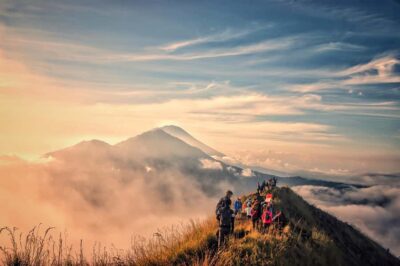
Sunrise Mount Batur Guided Hike with Breakfast
Read our review →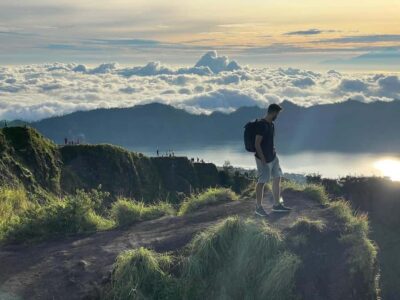
Mount Batur Sunrise Guided Hike and Natural Hot Spring
Read our review →
Mount Batur Sunrise Trek With Guide and Breakfast
Read our review →
Mount Batur Sunrise Hike and Natural Hot Spring Option
Read our review →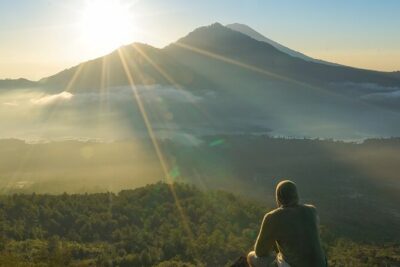
Mount Batur Sunrise Trekking Private All Inclusive
Read our review →This walk also sits in