
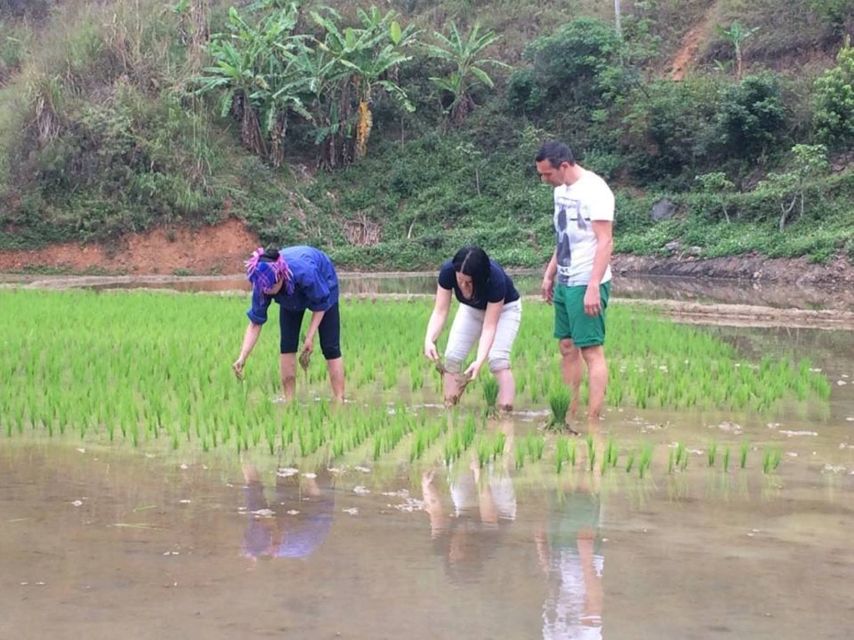
REVIEW · VIETNAM
Sa Pa: 6-Hours Muong Hoa Valley Trek with Local Ethnic guide
Muong Hoa Valley is best seen on foot, where the route drops from Sa Pa through Black Hmong villages, bamboo forest, and huge rice terraces. You are not just stopping for a viewpoint. You walk from Y Linh Ho to Lao Chai and Ta Van, meeting local people and seeing how farming and craft work fit into daily life.
I like the small group of up to 11 and the local guides, whose English and personal stories make the villages easier to understand. I also like the low $18 price, which includes transport, entry fees, a guide, and water. The catch is simple: this is a real 10-kilometer trek, not a gentle village stroll, and wet paths can become slippery and steep.
Key points to know before booking
- A one-way 10-kilometer route: You walk downhill through three valley villages, then return to Sa Pa by bus.
- The strongest scenery: Lao Chai brings wide views across Muong Hoa Valley’s terraced rice fields.
- Local cultural contact: Expect explanations of Black Hmong and Dzay customs, homes, weaving, batik, indigo dyeing, hemp, and rice cultivation.
- Fitness matters: Mud, heat, steep slopes, rough tracks, and slippery descents can make the walk demanding.
- Lunch costs extra: You stop at a local restaurant, but food and soft drinks are not included.
- Respect goes both ways: Ask before photographing children, do not touch their heads, and handle craft selling politely but firmly.
Why Muong Hoa Valley works best as a walking tour
Sa Pa is surrounded by mountains, but a road trip only gives you quick looks at the valley. This walk slows things down. You follow footpaths and village roads, pass rice terraces, and have time to notice the small details of rural life.
The route covers about 10 kilometers in six hours. Much of it trends downhill, though that does not make it easy. A descent over dirt, stone, mud, and uneven paths can be harder on your knees and balance than a steady walk on level ground. In wet weather, the challenge rises quickly.
I like the way this experience joins scenery with culture. You see the terraces, but you also learn who farms them. You hear about weaving, hemp, batik, and indigo rather than treating the villages as a photo stop. The guide helps explain the difference between Black Hmong and Dzay traditions, clothing, and homes.
The group is limited to 11 people. That is small enough for the guide to keep an eye on the pace and help people over awkward sections. It also makes it easier to ask questions without turning the day into a private tour.
More Rice Terrace Hikes in Sa Pa:
- Sa Pa: Muong Hoa Valley Trek and Local Ethnic Villages
★ 4.6 · 864 reviews - Selogriyo Temple and Trekking Java Rice Terraces, hidden waterfall -Nature Java
★ 5.0 · 179 reviews - Yogyakarta: Selogriyo Temple Tour & Java Rice Terrace Trek
★ 5.0 · 175 reviews
The first 20 minutes to Y Linh Ho
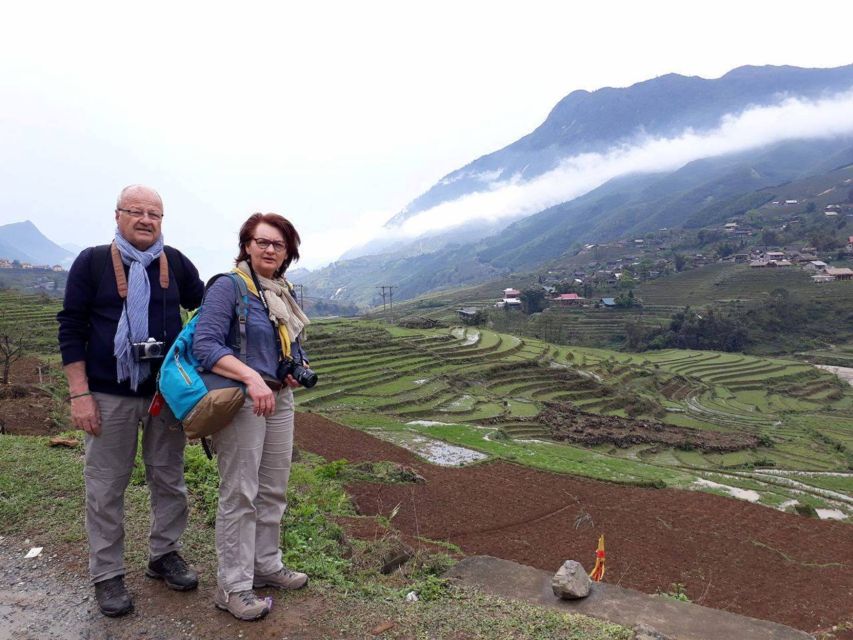
The walk begins with a scenic 20-minute stretch from Sa Pa toward Y Linh Ho village. This opening section gives you time to settle into the pace and meet your guide before the rougher sections begin.
Y Linh Ho is associated with the Black Hmong community. The village center offers a look at ordinary local activity, and your guide can explain parts of daily life that are easy to miss if you only pass through by car.
The route is not a formal museum visit. That is part of its value, but it also means you should behave carefully. People live and work here. Keep your voice down around homes, ask permission before taking photographs, and do not photograph children without a parent’s consent. Touching children’s heads is considered disrespectful.
Guides named Sang, Sai, Su, Bao, and Dong have led this route at different times. The guide assigned to you may be someone else, but the key benefit is having a local person explain customs in English and adjust the walk when needed.
Lao Chai and the broadest rice terrace views
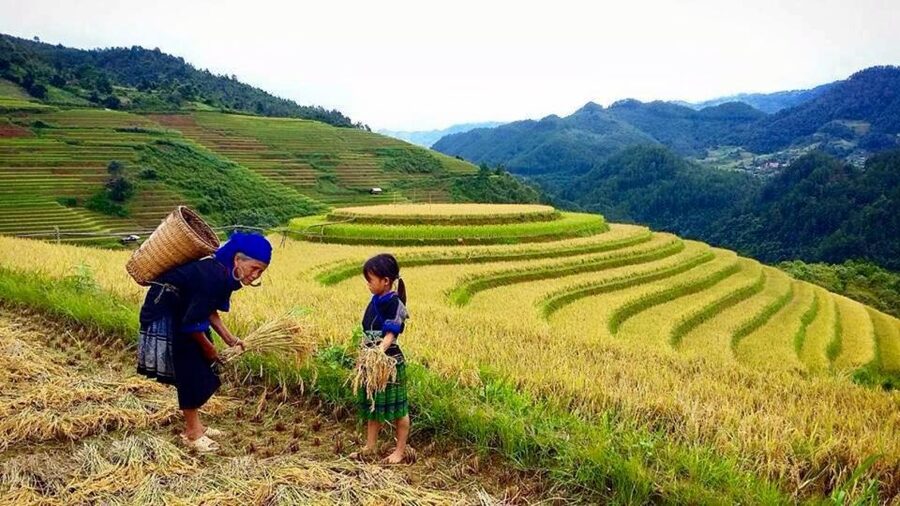
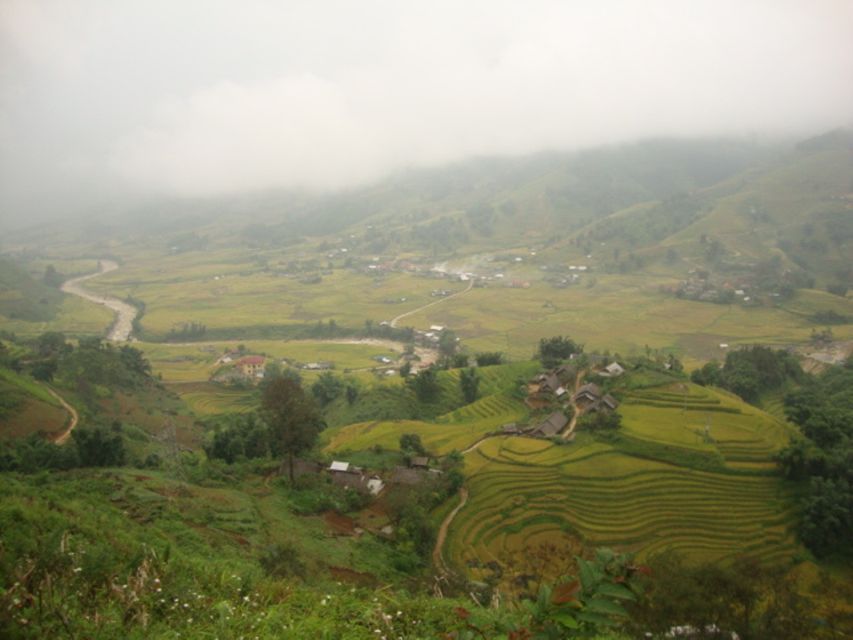
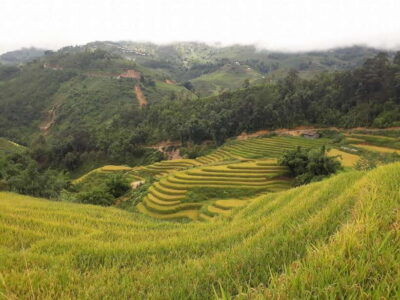
Lao Chai is the visual center of the outing. From here, the valley opens into broad views of terraced rice fields cut into the mountain slopes. The exact appearance changes with the season, weather, and farming cycle, but the terraces remain the main reason to bring a camera.
Do not expect a single platform with a quick photo and a rush onward. The walk lets you see the terraces from changing angles as you continue through the valley. You may get clear mountain views, morning mist, or cloud and fog, especially in winter. Fog can hide some scenery, but it also changes the mood of the valley.
This part of the route also brings the clearest introduction to Hmong crafts. The program includes indigo dyeing, batik making, and hemp weaving. These are not random souvenir topics. They show how clothing and household materials are made, and they help explain the differences you see in local dress.
Some local women may walk alongside the group, especially on difficult sections. They know the paths well and can offer a steady hand on muddy slopes or uneven ground. Their help can be genuinely useful, not merely a sales tactic.
At the same time, you should know how the arrangement can feel. Some women may later offer handmade items for sale, often around lunch or near the end of the walk. Buying is not required, and you should not feel forced into it. If you want to support local makers, agree on a price and buy something you truly want. If not, thank the seller clearly and politely.
The terrain: beautiful, muddy, and sometimes awkward
The walk’s difficulty deserves plain treatment. The route includes dirt paths, concrete or stone sections, uneven roads, bamboo forest, rice-field edges, bridges, and steep parts. Some walkers found it manageable, while others needed substantial help on slippery descents.
Your footwear matters more than your camera. Bring proper trekking shoes with grip, not smooth-soled trainers or casual sandals. Mud can cover your shoes, so an extra pair is useful if you have room. Sunglasses, sun cream, insect repellent, and a bottle of water are sensible additions.
Weather changes the character of the trek. On dry days, parts of the route are fairly straightforward. After rain, mud and slick slopes can slow the group and make a short descent feel serious. Heat adds another burden, especially on exposed paths.
The operator describes the trek as unsuitable for people with mobility impairments, wheelchair users, pregnant women, and children under six. Older people are advised not to take it because the 10-kilometer route can be dangerous in wet weather. That warning is worth taking seriously.
You do not need to be an athlete, but you should be comfortable walking for several hours over uneven ground. If you have weak knees, poor balance, or little experience on muddy paths, this is not the day to test your limits.
More Guided Tours in Sa Pa:
- From Sapa: 1-Day Guided Trek to Lao Chai & Ta Van with Lunch
★ 4.9 · 416 reviews - From Marrakech: Ouzoud Waterfalls Guided Hike and Boat Trip
★ 4.7 · 33,630 reviews - Bali: Sunrise Mount Batur Guided Hike with Breakfast
★ 4.8 · 9,660 reviews - Bali: Mount Batur Sunrise Guided Hike and Natural Hot Spring
★ 4.8 · 9,284 reviews
Lunch near the villages
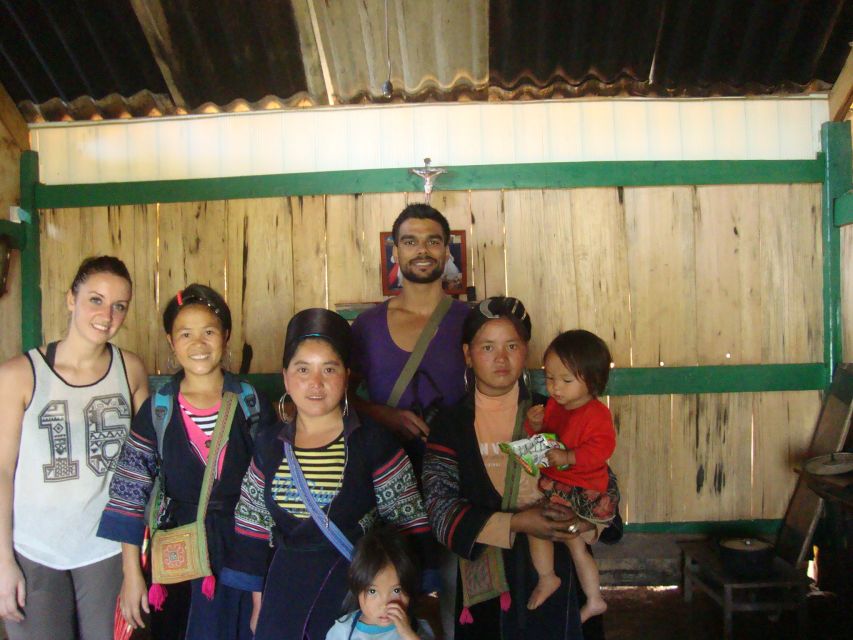
The itinerary includes a stop at a local restaurant after the Lao Chai section. Lunch is not included in the $18 price, and soft drinks are also extra.
The meal has been described as generous and varied, though one account found it bland. That is a useful reminder not to book this activity for food alone. Lunch is mainly a practical break during a long walk, with the added benefit of trying local produce and dishes.
The restaurant may also be a place where local sellers approach you with crafts. Some people appreciate the chance to buy directly from village makers. Others find sales pressure uncomfortable, particularly when sellers refer to the help they provided on the trail.
You can handle this without making the situation awkward. Decide before lunch if you plan to buy something, set a rough budget, and say no kindly if you do not. A purchase should be a choice, not an entrance fee for receiving help.
Ta Van and the Dzay side of the valley
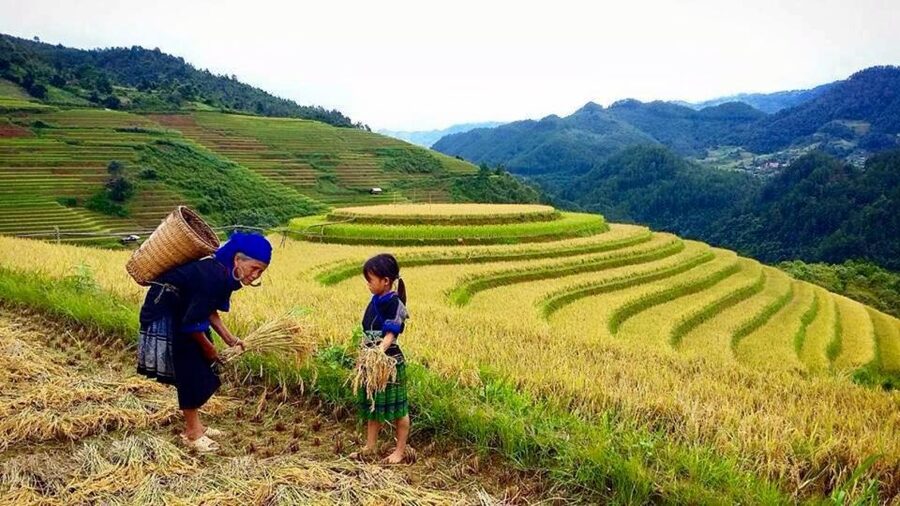
After lunch, the route continues to Ta Van village. This section shifts the focus from broad rice-field views to village homes and local customs.
Ta Van is associated with the Dzay people, and the visit helps you compare Dzay and Black Hmong ways of life. Clothing, house styles, craft traditions, and farming practices may look different. The guide gives these contrasts meaning, so you are less likely to lump every mountain community into one category.
The visit can include traditional homes and explanations of weaving and rice cultivation. You get a closer look at how farming shapes the year and how craft skills remain part of local identity.
I find this part especially useful for anyone who wants more than pretty scenery. The terraces are impressive, but the human work behind them is the real story. Irrigation, planting, harvesting, and maintaining steep fields all require local knowledge that a quick viewpoint cannot show you.
Again, remember that Ta Van is a living village. Avoid wandering into private spaces, ask before photographing people, and follow your guide’s advice about where to walk.
Returning to Sa Pa by bus
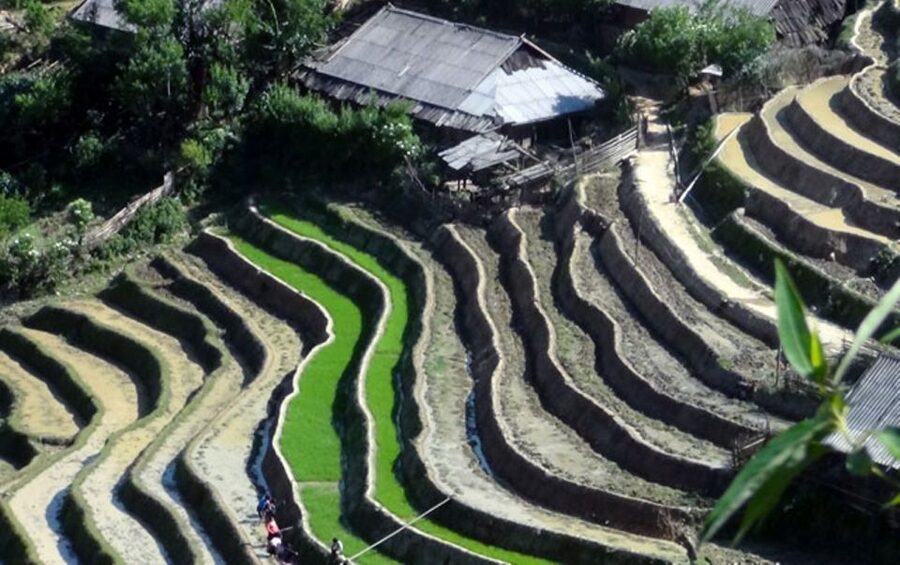
This is a one-way trek, not a loop. At the end, a bus takes you back to Sa Pa and drops you at the local office in the town center.
That return transfer is welcome. After 10 kilometers of uneven walking, you will probably be happy to trade your boots for a seat. It also makes the route more useful if you have only one free day in Sa Pa, since you do not spend the final hours retracing your steps.
Hotel pickup is available from hotels in Sa Pa town only. You need to provide the hotel name and address so the operator can confirm pickup or tell you to meet at a central point. This detail matters because an unexpected walk to the meeting point can make an already active morning more rushed.
One transport failure has been reported, involving a missed hotel pickup and a late transfer by motorbike. That appears to have been an exception rather than the normal plan, but I would still confirm your pickup details the day before. If you are not comfortable riding a motorbike, say so clearly.
What the $18 price really covers
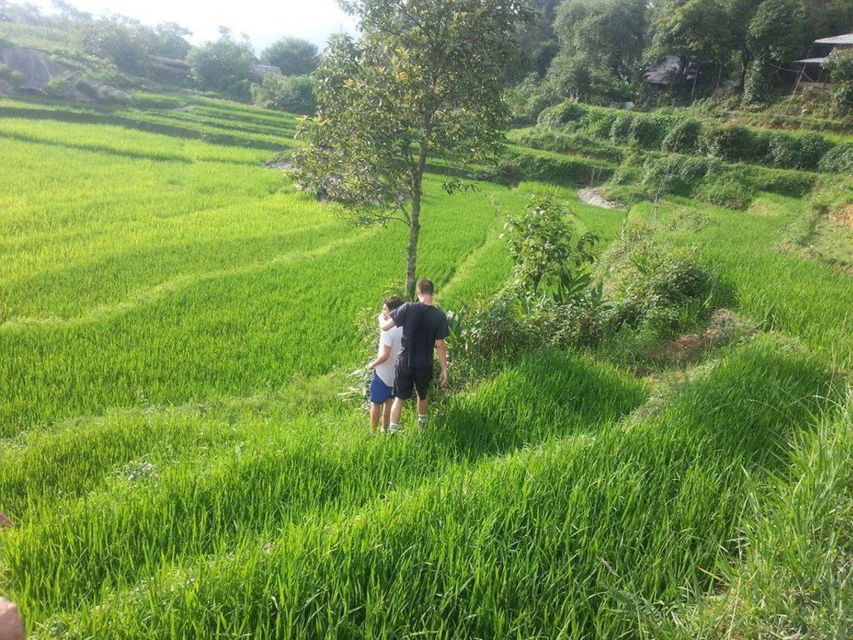
At $18 per person, this is a strong-value outing if you want a guided introduction to Muong Hoa Valley without paying for a private day. The price includes an English-speaking guide, bus transport, entrance tickets to the indicated sites, and one 500-milliliter bottle of water.
You pay separately for lunch, drinks, personal purchases, travel insurance, and VAT. Those extras are not likely to transform the cost, but you should carry cash for food and crafts.
The price also does not include a French-speaking guide. That requires a $20 per-person surcharge paid on the trip. A Lunar New Year surcharge may also apply, with the supplied information listing different dates and amounts for different years. Confirm the current holiday surcharge when booking instead of relying on an old figure.
The main value is not simply the number of sights. It is the local guide, the one-way route, and the chance to combine views with village life in half a day. If you hired transport and tried to arrange the route yourself, you might save little and lose the explanations that make the walk worthwhile.
Best seasons, clothing, and preparation
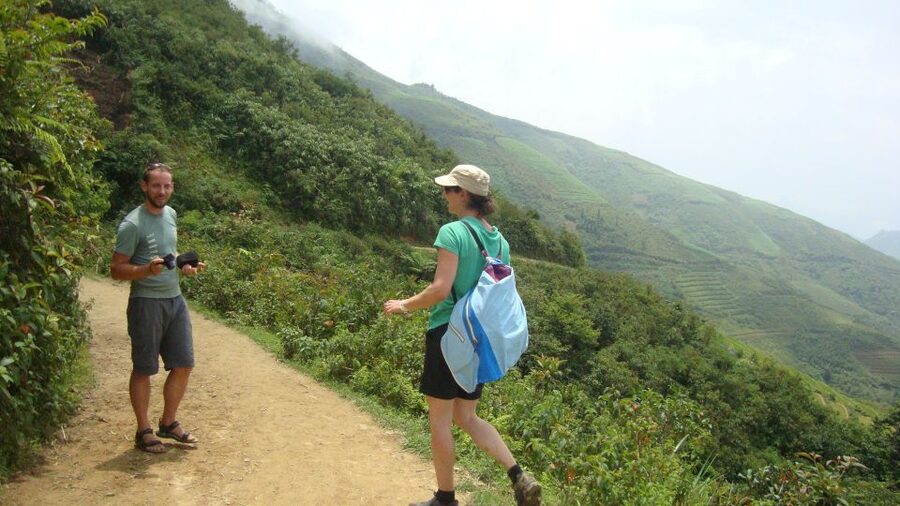
Between October and March, bring warm clothes. Sa Pa can feel cool, and fog is possible in winter. In warmer months, sun cream, sunglasses, insect repellent, and light clothing are useful, but you still need sturdy footwear.
Rain changes the route more than the calendar does. A wet day can produce the most difficult conditions, with muddy terraces and slippery forest paths. It can also reduce visibility, so do not assume that a rainy-season booking guarantees the famous wide views.
Pack light. You need both hands free for balance, especially on steep sections. A small bag with water, rain protection, sun protection, and a spare layer is more practical than a heavy daypack.
The operator supplies only one 500-milliliter bottle per person. If you normally drink a lot while walking, arrange extra water before setting out.
Who should book this Sa Pa trek?
I would choose this trip if you have a limited stay in Sa Pa and want scenery, village visits, and cultural explanation in one organized outing. It suits people who enjoy active days and do not mind getting dusty or muddy.
It also works well for families with older children who are used to walking, though children under six are not suitable. A family group with teenagers can find the cultural side just as interesting as the views.
People in their 50s have completed the walk, but age alone is not the deciding factor. Fitness, balance, footwear, and weather matter more. If you are unsure, ask the operator about current trail conditions before paying.
I would skip it if you need a flat route, dislike unsolicited sales approaches, or want a relaxed sightseeing day. This is also a poor choice for anyone who cannot comfortably manage steep, uneven ground.
Should you book the Muong Hoa Valley walk?
Book it if you want an affordable, active route through Y Linh Ho, Lao Chai, and Ta Van, with a local English-speaking guide and a small group. The strongest parts are the terraced rice fields, the cultural explanations, and the practical help available on difficult paths.
Go in with realistic expectations. It is a 10-kilometer trek, lunch costs extra, mud is possible, and local craft selling may be part of the social setting. Bring shoes with grip, respect village customs, and confirm your pickup details.
For a fit visitor with one free day in Sa Pa, this is a sensible buy at $18. For anyone seeking easy walking or guaranteed clear mountain views, choose a gentler outing instead.
FAQ
How long is the Muong Hoa Valley trek?
The trek lasts six hours and covers about 10 kilometers. It is a one-way route through the valley, followed by a bus transfer back to Sa Pa.
Which villages does the route visit?
The route goes through Y Linh Ho, Lao Chai, and Ta Van. Y Linh Ho and Lao Chai are connected with the Black Hmong community, while Ta Van includes an introduction to Dzay culture.
Is lunch included in the price?
No. You stop at a local restaurant, but food and soft drinks are paid for separately.
Is hotel pickup available?
Pickup is available from hotels in Sa Pa town only. You need to provide your hotel name and address so the operator can confirm pickup or direct you to a meeting point.
What should I bring?
Bring trekking shoes, sunglasses, sun cream, insect repellent, and suitable clothing. Warm clothes are recommended from October through March. An extra pair of shoes can be useful if the trail is muddy.
Is the trek suitable for children and older people?
Children under six are not suitable for this trek. Older people are advised not to take the 10-kilometer route because it can be challenging and dangerous in wet weather. The trek is also not suitable for pregnant women, wheelchair users, or people with mobility impairments.
Can I cancel the booking?
You can cancel up to 24 hours in advance for a full refund. The activity also allows you to reserve now and pay later.
Just added around Sa Pa
- Sapa: Private The Most Beautiful Terraced Fields Trekking★ 4.8 · 42 reviews
- In Sapa: 1 Day Mountain Trek, Visit beautiful villages★ 5.0 · 50 reviews
- Mountain views and villages trek – 1 Day★ 5.0 · 99 reviews
- Mountain views & Rice Terraced Fields Hiking – 2D 1N★ 5.0 · 99 reviews
- Sapa The Hidden Trail Trek 1 Day – Mountain & Rice Valley★ 5.0 · 133 reviews
- Trekking Through Rice Terraced Fields – 1Day★ 5.0 · 173 reviews
- 1 day Fansipan Trekking★ 5.0 · 180 reviews
- EXPLORE SAPA: 2D1N TREKKING & HMONG CULTURE WITH DINH★ 4.9 · 191 reviews
Sapa Hiking Tours, side by side.
Sa Pa: Muong Hoa Valley Trek and Local Ethnic Villages
Read our review →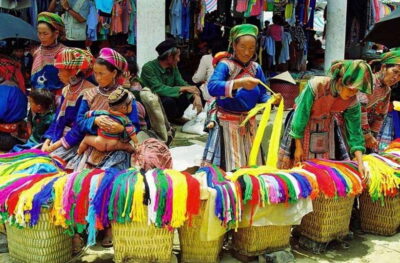
Eco Adventure Terrace Fields and Local Villages Trek
Read our review →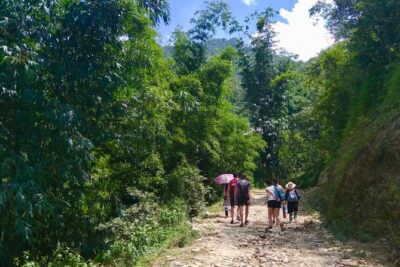
Number one top rated ethical cultural trekking and homestay by ETHOS
Read our review →
1-Day Guided Trek to Lao Chai & Ta Van with Lunch
Read our review →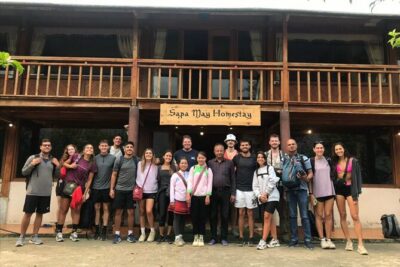
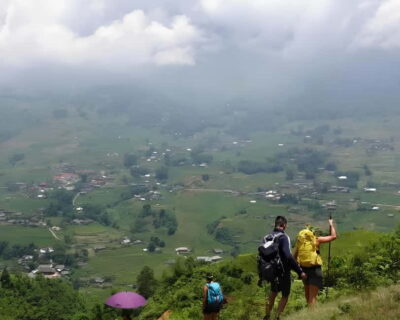
Sapa 1 Day Long Trek: Trek to Hau Thao and Sa Seng Villages
Read our review →
EXPLORE SAPA: 2D1N TREKKING & HMONG CULTURE WITH DINH
Read our review →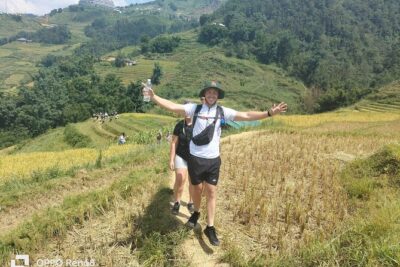
This walk also sits in