
REVIEW · NEPAL
Kathmandu: 10-Day Annapurna Circuit Trek via Thorong La Pass
Thorong La Pass is the big prize here: at 5,416 meters, it gives you a serious Himalayan challenge without requiring technical climbing. The route also moves through a remarkable sweep of Nepal, from forested valleys and apple orchards to dry high-altitude country and old Tibetan-style villages.
I like two things right away. First, the schedule includes a full acclimatization day in Manang, which is essential rather than decorative. Second, the price of $447 includes permits, tea-house lodging, meals, guide service, ground transport, and one night at Hotel Orchid in Pokhara. The main caution is simple: this is a hard high-altitude trek, not a long weekend walk. You need proper gear, insurance with helicopter evacuation cover, and patience when your body slows down.
Key points to know before you book
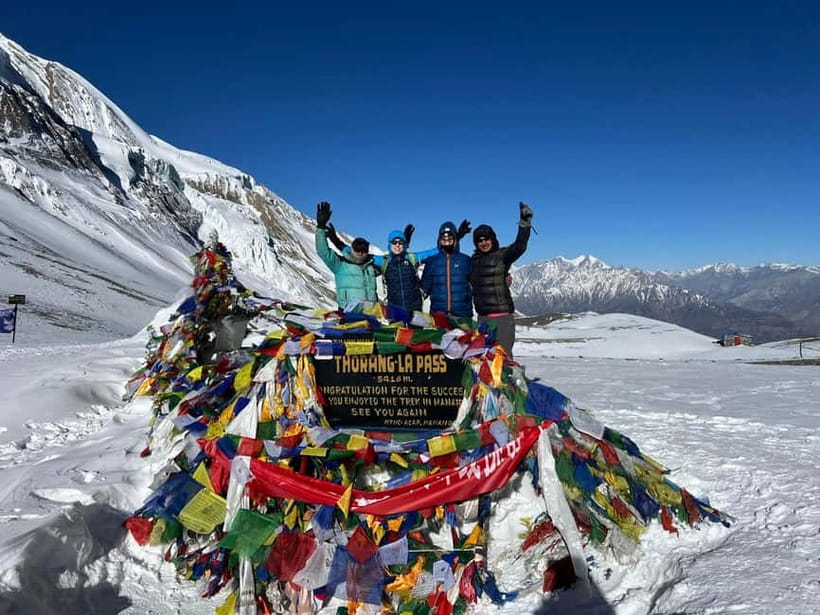
- Thorong La reaches 5,416 meters: The pass day is the physical and emotional high point, followed by a long descent to Muktinath.
- Manang provides a needed rest day: You can explore the village, hike to a stupa, visit Gangapurna Glacier Lake, or take another short outing.
- The scenery changes every day: Expect oak and pine forest, grassy valleys, apple orchards, high mountain villages, and dry Mustang terrain.
- Local guides are central to the experience: Guides named in past trips include Ganesh, Prakash, Chakra, and Ghanshyam, with strong attention to food, hydration, rest, and altitude.
- Most costs are bundled: Meals, tea-house accommodation, permits, transport, and a Pokhara hotel night are included, but insurance, drinks, gear, water, and personal expenses are not.
- You finish by public bus: The ride from Jomsom to Pokhara takes about eight hours, so the final day is a long transport day rather than another trek.
What the $447 price really covers
At $447 per person, this trek offers strong value if you need a guided package rather than arranging each part yourself. You receive pickup and drop-off within the listed areas, transport from Kathmandu to Besisahar and onward to Dharapani, a government-registered local guide, permits, a TIMS card, tea-house and lodge accommodation, and all breakfasts, lunches, and dinners during the trek.
The package also includes one night at Hotel Orchid in Pokhara and a farewell dinner. That matters because the trek does not simply leave you at the end of the trail. You get a final night to recover, wash up, and enjoy Pokhara before moving on.
The price does not cover trekking equipment, bottled or boiled water, showers, phone calls, laundry, battery charging, alcoholic or soft drinks, extra porters, international flights, visa fees, or travel insurance. You should budget for these before deciding the price is all-inclusive.
The biggest financial point is insurance. The operator specifically advises medical and helicopter evacuation cover up to 5,400 meters. Do not treat this as an optional extra. At this altitude, a rescue can be expensive and weather can change quickly.
More Annapurna Treks in Pokhara:
- Trekking in Annapurna/Langtang/Everest/Upper Mustang regions
★ 5.0 · 161 reviews - Pokhara: Annapurna Foothills Day Hike with Transfers
★ 5.0 · 100 reviews - Kathmandu/Pokhara: 5-Day Annapurna Base Camp (ABC) Trek
★ 4.9 · 72 reviews
Kathmandu to Dharapani: a long road into the mountains
Your first day starts with a seven to eight-hour bus ride from Kathmandu to Besisahar, followed by a shared jeep to Dharapani. This is not a gentle sightseeing transfer. Roads in the hills can make the journey tiring, but the reward is a quick change from city streets to forests, hills, farms, and rural Nepal.
Dharapani sits at about 1,850 meters, giving you a reasonable starting altitude for the walking days ahead. The shared jeep is practical, though you should expect less comfort and less privacy than in a private vehicle.
This first day is also a reminder that the Annapurna Circuit is not just a mountain trail. Transport, local villages, tea houses, road conditions, and mountain weather all shape the trip.
Dharapani to Chame: forests, temples, and Lamjung views
The walk from Dharapani to Chame takes about six hours and reaches 2,670 meters. You pass grassy fields with views toward Annapurna II, then move through Bagarchhap, a Bhote village with a Buddhist temple.
The trail continues through oak and pine forest toward Timang, located below Lamjung Himal. These lower sections are among the most varied parts of the route because the scenery feels green, wooded, and settled before the terrain becomes harsher.
Chame is a useful overnight stop and a natural place to settle into the rhythm of tea-house trekking. You will sleep in a simple lodge or tea house rather than a full-service hotel. That is part of the appeal, but you should be ready for basic rooms and limited comforts.
Chame to Upper Pisang: apple orchards and a higher valley
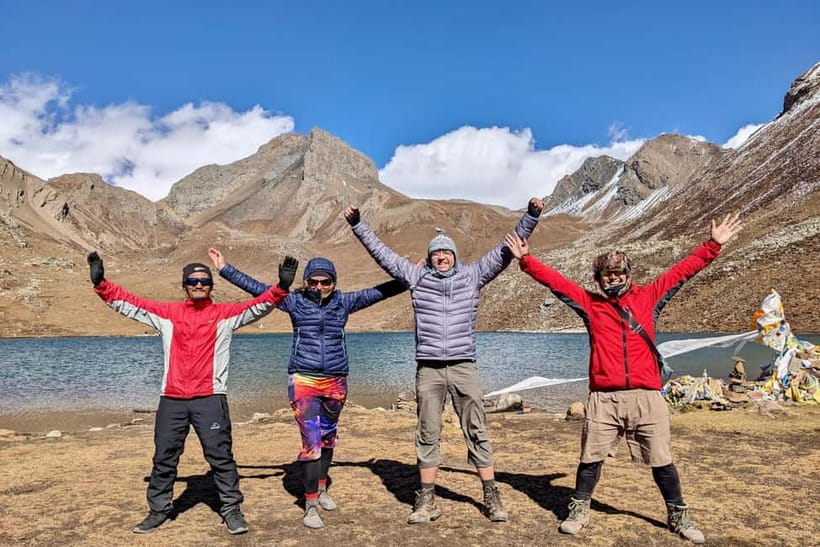
The next walk takes five to six hours and reaches about 3,200 meters. You pass an apple orchard and climb toward Bhratang Valley, with Lamjung Himal appearing along the way.
The route then descends toward Pisang or Upper Pisang. Upper Pisang is the better choice for mountain atmosphere, but the higher route also means your body has less air to work with. Walk slowly and resist the urge to race ahead simply because the distance looks manageable.
This day gives you a clear sense of how quickly the Annapurna Circuit changes. Forest gives way to broader mountain views, rougher ground, and villages shaped by cold, altitude, and trade across the Himalaya.
More hikes and treks around Pokhara:
- Poon hill Trek 3 days
★ 5.0 · 176 reviews - Pokhara: 4-Day Ghorepani, Poonhill & Ghandruk Mountain Trek
★ 5.0 · 132 reviews - Ghorepani – Poon Hill Trek 3N-4D
★ 5.0 · 125 reviews - From Pokhara: 3-Day Ghorepani Poon Hill Trek with Guide
★ 4.9 · 68 reviews
Upper Pisang to Manang: the most scenic approach
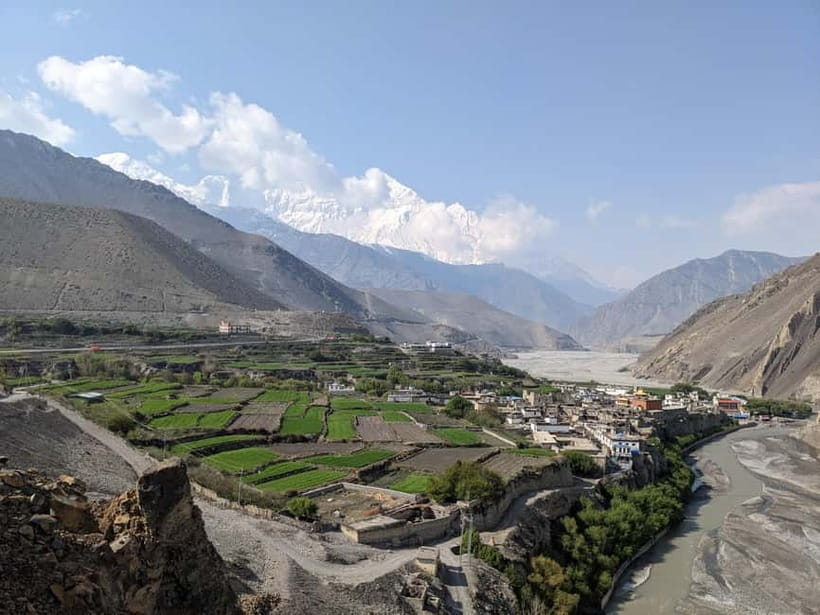
The five to six-hour walk to Manang reaches about 3,540 meters. It is one of the finest days on the route, with views toward the Manang Valley, Tilicho Peak, Annapurna III, and Annapurna IV.
You cross the Marsyangdi River on a wooden bridge and pass through Mungji and Braga. Braga is especially memorable for its mountain setting and Buddhist character, while Manang gives you a larger village base before the route heads into much thinner air.
The altitude now matters. Even if you are fit, you may find yourself walking more slowly, drinking more often, and needing longer pauses. That is normal. A good guide will watch your pace rather than push you to maintain a low-altitude walking speed.
Manang acclimatization: the day that protects the pass attempt
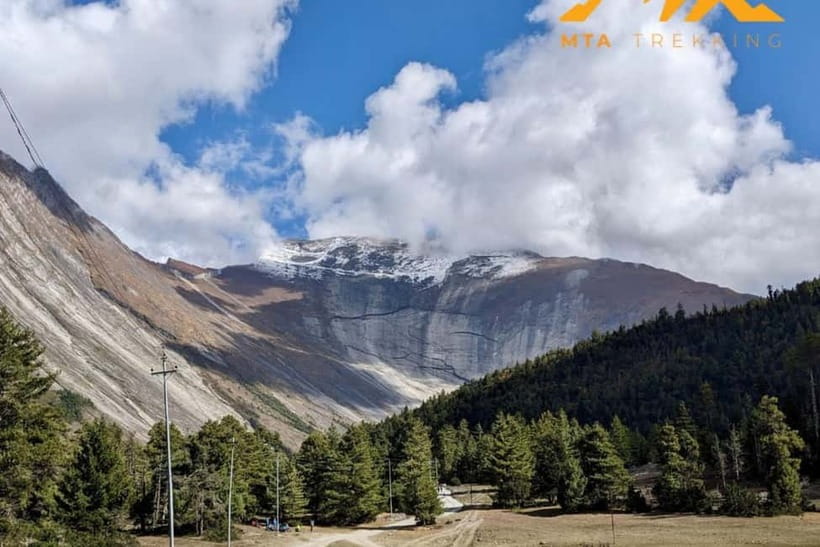
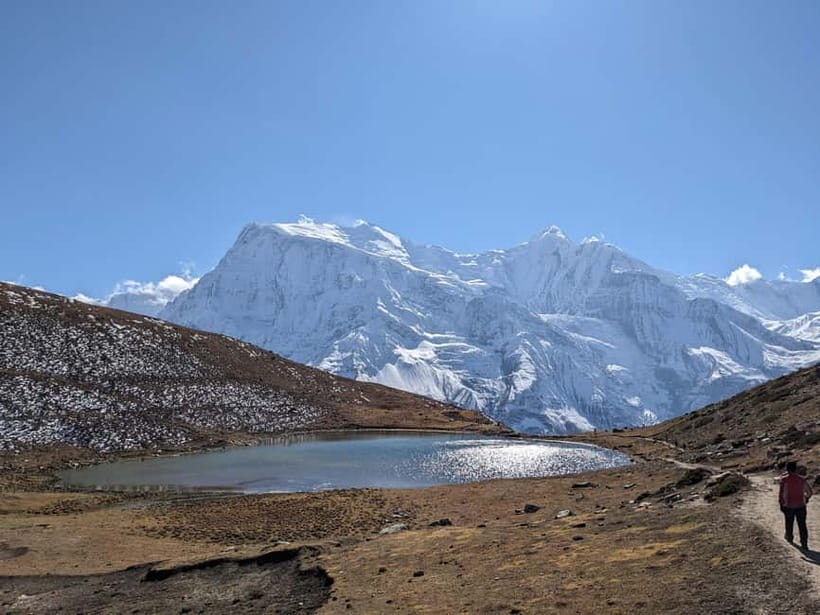
The fifth day is reserved for acclimatization, with a maximum outing height of about 4,050 meters. You can explore Manang, hike to a stupa, cross a river toward an icefall, or visit Gangapurna Glacier Lake.
This is the day I value most in the schedule. A rushed itinerary might treat Manang as another overnight stop. Here, you have time to let your body adjust before the trail climbs toward 4,000 meters and beyond.
Use the day wisely. You do not need to turn it into a major hike. A short outing, steady hydration, food, and rest can serve you better than chasing every viewpoint. The guide should help decide how much walking is sensible for your condition.
Manang to Yak Kharka: short distance, serious altitude
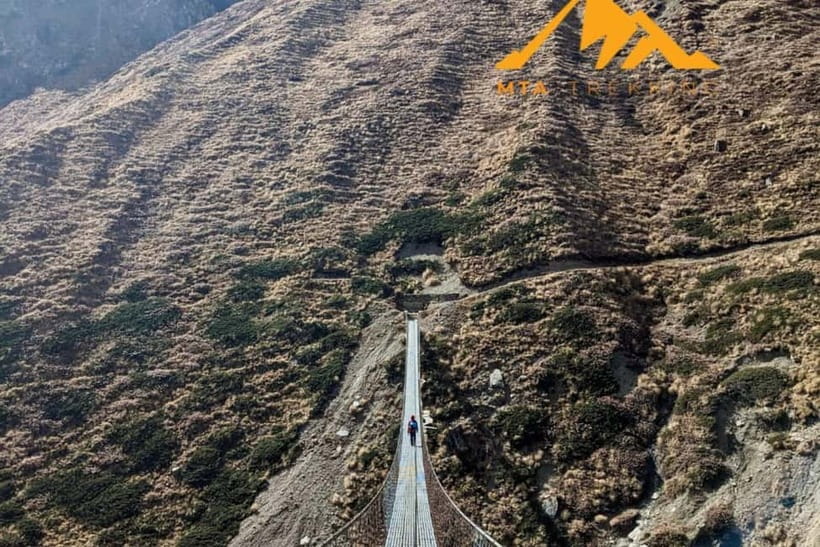
The walk to Yak Kharka takes about four hours and reaches around 4,050 meters. On paper, this is a short day. In practice, the altitude can make breathing hard and every uphill section feel larger than expected.
The route gives you wide mountain views, but this is where the trek becomes less forgiving. You should walk slowly, keep your layers ready, and tell your guide if you develop a headache, nausea, dizziness, unusual fatigue, or breathing trouble.
One useful pattern comes through in the guide service: guides such as Ganesh and Chakra have focused on steady pacing, regular rest, hydration, and sensible food choices. One past guide also advised avoiding junk food and meat at higher altitude. Follow the advice of your guide, but remember that no guide can remove the risk of altitude sickness.
Yak Kharka to Thorong Phedi: preparing for the pass
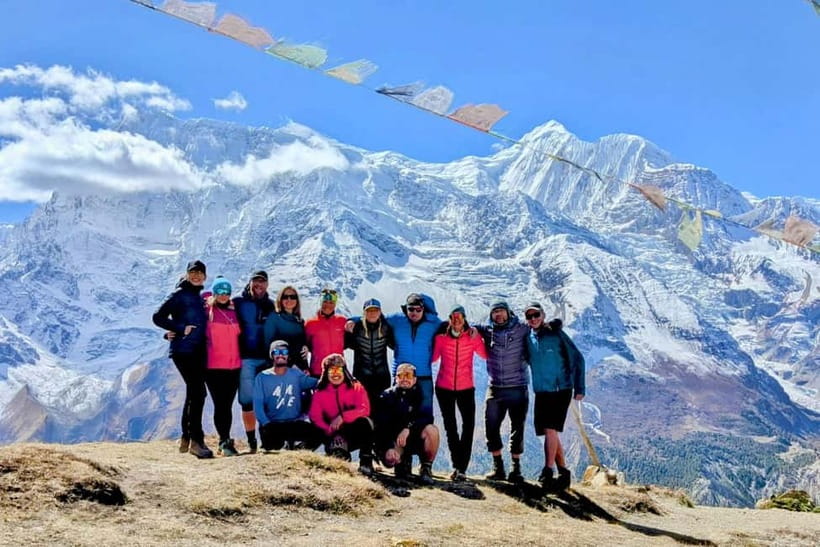
The four to five-hour walk to Thorong Phedi takes you to about 4,450 meters. You gradually climb to a hilltop, descend toward the Marsyangdi River headwaters, cross a small wooden bridge, and then climb along the mountain path.
Thorong Phedi is not a glamorous resort. It is a functional high-altitude stopping point before the pass. The air is thin, the night can be cold, and comfort is limited. Your goal here is to eat, organize your clothing and water, and sleep as well as possible before the early start.
This is also a good place to be honest with yourself. If you feel seriously unwell, crossing the pass may not be safe. A private group helps because your guide can discuss your condition and pace directly, but the mountain still sets the rules.
Thorong La to Muktinath: the hardest and best day
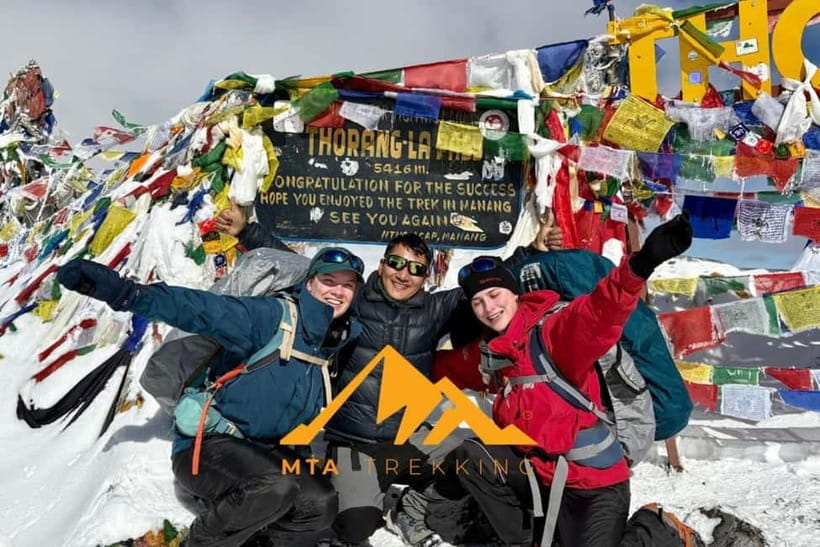
The pass crossing takes seven to eight hours from Thorong Phedi to Muktinath. You rise to 5,416 meters, cross Thorong La, and then descend toward Mustang Valley with views of Dhaulagiri.
The ascent can feel slow and demanding, especially with an early start and cold conditions. Do not measure success by speed. Short steps, frequent pauses, warm clothing, sunglasses, and careful hydration are more useful than stubbornness.
Reaching the pass is a major achievement, but the day is not finished there. The descent to Muktinath is long and can be tough on tired knees. The change in scenery is striking, with the drier Mustang side replacing the greener valleys from earlier in the trek.
Muktinath also has strong religious importance for both Hindu and Buddhist communities. The combination of mountain setting and sacred places gives this stop a different feel from Manang and the villages farther east.
Muktinath to Jomsom through Kagbeni
The ninth day takes seven to eight hours and includes Kagbeni. This is a scenic walking day after the pass, but it is not an easy recovery stroll.
Kagbeni is one of the most distinctive settlements on the route, with a traditional Himalayan character and a location shaped by the dry valley environment. It is a good place to slow down, look around, and notice how different the villages feel from those in the forested parts of the circuit.
Your legs may still be tired from Thorong La, so the long distance matters. Comfortable walking shoes and trekking poles, if you use them, can make this section easier. Trekking poles are not included, so bring or rent any gear you need before departure.
Jomsom to Pokhara: a bus ride, then a soft landing
The final day uses public transport from Jomsom to Pokhara and takes about eight hours. It is a full travel day, not a final hiking day.
The bus is less polished than private transport, but it keeps the package price low and gives you a more local form of travel. After days in high mountain villages, arriving in Pokhara provides a welcome shift toward rest and comfort.
Your included night at Hotel Orchid and farewell dinner are useful additions. You can recover before leaving Nepal or continuing your trip, instead of finishing the trek and immediately handling another long transfer.
Guides, meals, and tea-house life
The guide can make or break a high-altitude trek. The strongest feedback centers on personal care from guides named Ganesh, Prakash, Chakra, and Ghanshyam. Their described strengths include checking that hikers eat, drink, rest, stay warm, and adjust the pace when the altitude bites.
Prakash was especially praised for choosing scenic routes, explaining local life, and even using some Polish with Polish-speaking hikers. Ghanshyam was described as an experienced guide who helped with acclimatization and practical needs, including water-purifying tablets on one trip.
Your guide speaks English or Hindi, and the group is private. That gives you more room to discuss your pace and comfort than a large fixed group would.
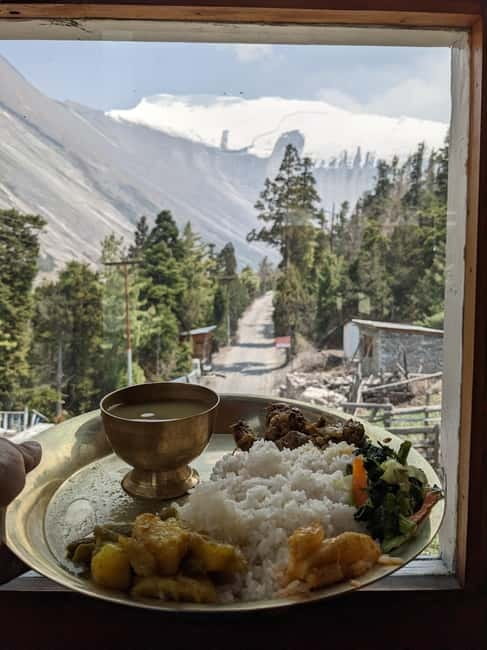
Meals are included throughout the trek, but you should not expect a restaurant menu or city-hotel variety. Tea-house food is meant to provide warmth and energy in difficult conditions. Drinks, bottled or boiled water, snacks, and personal treats cost extra.
Who should book this Annapurna Circuit trek?
This package suits you if you want the major Annapurna Circuit highlights in ten days and prefer a guide to handle permits, transport, lodging, and route support. It is particularly useful for first-time high-altitude trekkers who want a planned itinerary and a private group.
You should be reasonably fit and comfortable walking for four to eight hours on mountain trails. You must also accept that the itinerary is physically demanding, especially from Manang onward.
The trek is not suitable for children under 15, people with altitude sickness, people over 70, people with respiratory problems, or pregnant women. These restrictions are sensible given the pass height and the limited medical support along the route.
Should you book it?
Book this trek if crossing Thorong La is your main goal and you value practical support more than luxury. The $447 price is persuasive because it covers the expensive basics: guide, permits, meals, lodging, transport, and a Pokhara hotel night.
Do not book it casually. You need warm clothes, hiking shoes, waterproof storage, sunscreen, sunglasses, trekking gear, and insurance that covers high-altitude medical care and helicopter evacuation. If you prepare properly and accept the long road transfers and basic tea houses, this is a well-structured way to experience one of Nepal’s great mountain routes.
FAQ
How high is Thorong La Pass?
Thorong La Pass reaches 5,416 meters above sea level.
How long does the trek last?
The full itinerary lasts 10 days, starting in Kathmandu and finishing with transport from Jomsom to Pokhara.
Is acclimatization included?
Yes. Day five is an acclimatization day in Manang, with optional short outings including a stupa, an icefall area, and Gangapurna Glacier Lake.
What languages does the guide speak?
The activity provides a live guide in English or Hindi.
What accommodation is included?
You stay in tea houses and lodges during the trek, followed by one night at Hotel Orchid in Pokhara.
Are meals included?
Yes. Breakfast, lunch, and dinner are included during the trek. Soft drinks, alcoholic drinks, bottled or boiled water, and personal snacks are not included.
Is transport included?
Yes. Transport includes the bus from Kathmandu to Besisahar, a shared jeep from Besisahar to Dharapani, and public bus transport from Jomsom to Pokhara.
What insurance do I need?
You should purchase comprehensive travel insurance with medical coverage and helicopter evacuation cover up to 5,400 meters.
Just added around Pokhara
- Pokhara: 7-Day Annapurna Base Camp Trek & Natural Hot Spring★ 5.0 · 11 reviews
- Pokhara: Annapurna Foothills Day Hike with Transfers★ 5.0 · 100 reviews
- Pokhara: 5 Day Annapurna Base Camp Trek & Natural Hot Spring★ 4.9 · 44 reviews
- Pokhara: Annapurna Day Hike with Panoramic Views★ 4.3 · 7 reviews
- Pokhara: 4-Day Private Trek Tour★ 4.9 · 43 reviews
- Pokhara: 4-Day Poon Hill and Ghandruk Guided Trek★ 5.0 · 14 reviews
- Pokhara: 4-Day Mardi Himal Trek★ 4.9 · 59 reviews
- Pokhara: 4-Day Beautiful Ghorepani Poon Hill & Ghandruk Trek★ 4.8 · 21 reviews
Annapurna Treks, side by side.
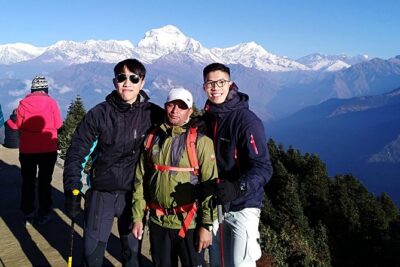
Trekking in Annapurna/Langtang/Everest/Upper Mustang regions
Read our review →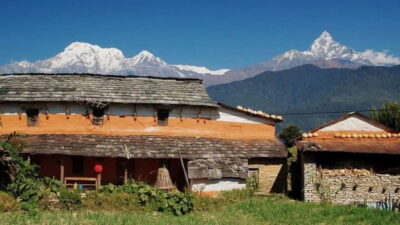
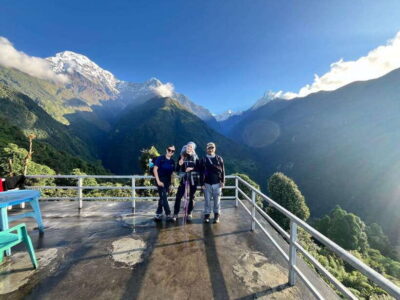
Kathmandu/Pokhara: 5-Day Annapurna Base Camp (ABC) Trek
Read our review →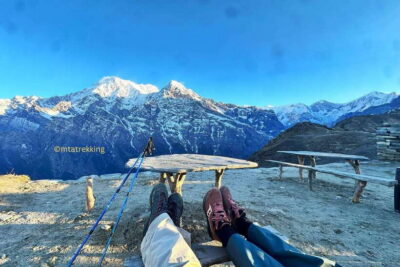
This walk also sits in