
REVIEW · TANZANIA
7 Days Machame Route Kilimanjaro Trekking
The Machame Route gives you Kilimanjaro in changing chapters: wet rainforest, open moorland, bare volcanic rock, ice, and a sunrise summit. You spend seven days moving slowly toward Uhuru Peak, with a crucial climb high to Lava Tower followed by a lower night at Barranco to help your body adjust.
I like the route’s variety and its useful acclimatization pattern. I also like the practical package: tents, meals, porters, rescue fees, park taxes, and pickup are included in the $2,200.11 price. The tradeoff is a demanding summit night, long walking days, cold exposed camps, and a non-refundable booking.
Key points to know before you book
- Lava Tower makes Day 3 important: You climb to 4,630 meters, then sleep lower at Barranco Camp.
- The summit day is a serious test: Expect a midnight wake-up, about six hours to Stella Point, then roughly two more hours to Uhuru Peak.
- You cross five distinct habitats: Rainforest, moorland, semi-desert, alpine desert, and the icy summit zone.
- The package covers much of the mountain budget: Camping gear, meals, porters, rescue fees, park fees, taxes, and accommodation are included.
- The support team is a major part of the experience: Guides named in guest accounts include Oliver, Godlove, Ombeni, and Safaeli.
- You need to bring or rent key personal gear: Sleeping bags and climbing gear are not included, and the booking cannot be refunded or amended.
Why the Machame Route remains a smart seven-day choice
Machame is popular for a good reason. It offers strong scenery without the higher price often linked with longer routes, and its seven-day plan gives you more time to adjust than a rushed itinerary.
The route begins at about 1,490 meters and eventually reaches Uhuru Peak at 5,895 meters. That huge change is not just a matter of fitness. Altitude, cold, sleep, weather, and the mental strain of summit night all matter. The gradual rise, plus the high-to-low pattern on Day 3, gives you a better chance to adapt.
This is a private tour, so only your own group takes part. That can make the pace and daily routine easier to manage than a large shared climb, though the exact group size is not stated. Pickup begins in Arusha at 4:00 am, an early start that lets you reach the gate and begin the first hike with plenty of daylight.
The price is $2,200.11 per person. For a seven-day climb, that is a substantial but useful bundle because it includes camping equipment, a mattress, cooking equipment, meals, porters, a professional guide, rescue fees, parking fees, accommodation during the climb, and taxes. You still need to budget for flights, park or tax increases, a sleeping bag, rental climbing gear if needed, insurance, visa fees, personal items, tips, and lodging before or after the trek.
More Kilimanjaro Hikes in Arusha:
- 8-Day Small-group Lemosho Kilimanjaro Summit Trekking
★ 5.0 · 186 reviews - Mountain Kilimanjaro Day Hike
★ 5.0 · 102 reviews - Private Full Day Hiking Experience to Marangu Route
★ 5.0 · 61 reviews
Day 1: Rainforest, mud, and the first seven hours
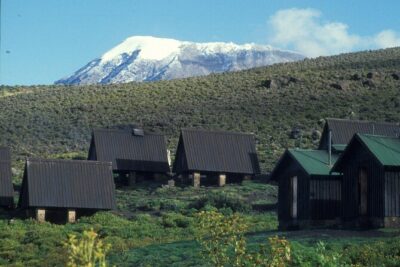
Your morning begins with pickup from Arusha, at about 1,400 meters, followed by the drive to Machame Village. You can buy mineral water there and collect a packed lunch. Depending on road conditions, the vehicle continues about three kilometers toward Machame Gate, or you walk that section.
At the gate, your guide registers with Tanzania National Parks while porters sort and pack the equipment. This is not glamorous, but it is important. It is the point where your daypack, tent, food, and personal kit become part of a moving mountain camp.
The hike takes about seven hours and covers roughly 18 kilometers through montane forest. Expect rain, mud, and fog. The forest is a fine opening act, but the damp footing can make the first day feel longer than the distance suggests.
You should carry water, a rain layer, and anything you need during the day. Your tent will be prepared at camp, and the crew handles cooking and camp arrangements. Lunch is included, as are dinner and breakfast for the relevant climbing days.
Day 2: Leaving the trees for Shira Plateau
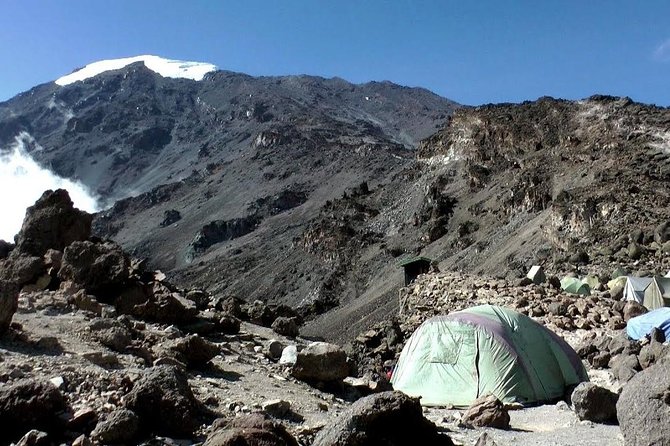
Day 2 takes about six hours over roughly nine kilometers. The forest gives way to heath and moorland, with streams and a rocky ridge leading to Shira Camp at about 3,840 meters.
This is where Kilimanjaro begins to feel wide and exposed. From camp, you can see toward the Western Breach and its glaciers to the east. The view is one of the route’s early rewards, but the high camp also brings a practical warning: temperatures can fall below freezing.
Water for drinking and washing is prepared by the porters, and the tents are set up before you arrive. Evening snacks and a cooked dinner are included. Still, do not expect a warm lodge or a long, comfortable night. You are camping in an exposed place, and cold-weather clothing becomes much more important here.
Day 3: Lava Tower and the high-to-low acclimatization day
Day 3 is one of the most useful days on the route. You walk about 15 kilometers in roughly seven hours, leaving moorland behind for semi-desert and rocky ground.
After about five hours, you reach Lava Tower at 4,630 meters. Packed lunch is served there, and you may climb the tower if conditions allow. This is also the point where altitude can become obvious. Headaches and shortness of breath are common signs that your body is working hard at the higher elevation.
The key is what happens next. You descend to Barranco Camp at about 3,950 meters, a drop of roughly 680 meters. You climb high during the day, then sleep lower. That pattern is valuable for acclimatization and is one reason the seven-day version is more appealing than a very short Kilimanjaro schedule.
Do not treat Lava Tower as a side trip you must force. The stated plan allows the climb only when weather permits, and your guide’s judgment matters. The day’s rocky terrain and altitude make it a demanding one even without adding extra effort.
More Week-Long Trips around Arusha:
- 7 Days Kilimanjaro trek via Machame route
★ 5.0 · 13 reviews - 7 Days Machame Route Trek Mount Kilimanjaro
★ 5.0 · 12 reviews - 7-Day Private Kilimanjaro Hiking Tour via Machame from Arusha
★ 5.0 · 11 reviews - Private Kilimanjaro Hike 7 Day Lemosho Route
★ 5.0 · 60 reviews
Day 4: The Barranco Wall and Karanga Valley
Day 4 is shorter, at about four to five hours and roughly five kilometers. It is not an easy stroll, but the reduced distance gives you time to recover after Lava Tower.
The main feature is the Great Barranco Wall. It looks intimidating from below, but it is described as a Class 2 scramble and is generally easier than its appearance suggests. You need to use your hands in places, pay attention to your footing, and follow the guide’s line rather than rushing.
At the top, you get views toward Heim Glacier and a position above the clouds. The trail then moves up and down through Karanga Valley before reaching camp. This up-and-down work is useful for acclimatization, though it can feel frustrating after several long days.
Karanga Camp sits at about 3,959 meters. The surrounding alpine desert is stark, windy, and free of the forest cover you had on Day 1. I like this day because it breaks the climb into a manageable section while still giving you a memorable mountain feature.
Day 5: Barafu Camp and the final rest before the summit
The walk from Karanga to Barafu takes about two to three hours and covers roughly four kilometers. The trail meets the Mweka Route, which you use for the final descent.
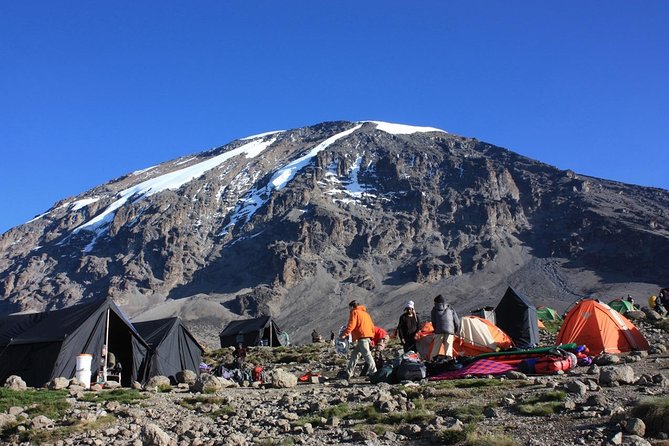
After about an hour, you reach Barafu Hut. This is the last water stop for the porters because there is no accessible water at Barafu Camp. Barafu means ice in Swahili, and the camp sits on a rocky, exposed ridge at about 4,550 meters.
The camp’s position matters. Wind and rocks can make the tents uncomfortable, and you should learn where your tent, dining tent, and trail are before dark. An early dinner is served, followed by rest before the summit attempt.
This is a short walking day, but do not mistake short for easy. You are already high, and sleep may be poor. Organize your summit clothing, headlamp, water, snacks, and gloves before lying down. The less you need to search for at midnight, the better.
Day 6: Stella Point, Uhuru Peak, and the long descent
Summit day begins around 11:30 pm with tea and biscuits. You start in darkness, walking northwest over stone scree. The ascent to Stella Point at 5,685 meters takes about six hours.
This is usually the hardest part of the climb. The pace is slow, the air is thin, and the terrain can feel repetitive. You may find the mental side as difficult as the physical effort. The goal is to keep moving carefully and steadily, not to race.
At Stella Point, you reach the crater rim and can watch the sunrise. From there, the trail continues for about two hours over a snow-covered section to Uhuru Peak, at 5,895 meters. The summit is the highest point in Africa, but it is only one part of a very long day.
The stated walking time is about eight hours to reach Uhuru Peak, followed by seven to eight hours descending to Mweka. The distance is approximately seven kilometers uphill and 23 kilometers downhill. That descent is easy to underestimate. Your legs have already done their hardest work, and loose scree can make going down tiring and awkward.
After the summit, you return through the upper mountain zone toward Mweka Camp. This is a day for patience, layers, water, and careful footwork. If you reach Stella Point but not Uhuru Peak, you receive a green certificate. Reaching Uhuru Peak earns a gold certificate.
Day 7: Forest descent, certificates, and the return to Arusha
The final hiking day takes about three hours over roughly 15 kilometers through forest. After breakfast, the mountain crew holds a celebration with singing and dancing. This is also when tips are presented to the guide, assistant guides, chef or chefs, and porters.
Tip money is not included, so prepare for it as part of the true cost of the climb. The information provided does not set an amount, and you should ask the operator before departure if you want current guidance.
You then descend to Mweka Gate. Every hiker signs their name to receive a completion certificate. From the gate, the route continues to Mweka Village for about an hour and three kilometers before returning to the meeting point in Arusha.
The final descent is much easier than summit day, but it is still worth keeping your walking poles and boots ready. You are not finished the instant you leave the summit zone.
The crew, food, and camping setup
The strongest personal praise connected with this trip centers on the staff. Names that appear in the accounts include guides Oliver, Godlove, Ombeni, and Safaeli, with Erastus handling pickup and coordination in several accounts. You should confirm your assigned guide team before departure, since the exact crew can vary.
The package includes a mess tent, mattress, cooking equipment, and camping accommodation. Porters carry equipment and help establish camp, while the chef prepares breakfast, lunch, and dinner. A private toilet was also specifically described in one account, but you should confirm whether that arrangement applies to your booking.
Meals are included for seven lunches, six dinners, and six breakfasts. The schedule makes sense: breakfast begins each hiking day, packed lunch supports the longer routes, and dinner is served at camp. Bring personal snacks if you rely on particular foods, since no detailed menu is provided.
A bath towel is not included. Neither is a sleeping bag, though one is available for rent. Climbing gear can also be rented, so ask for current rental prices and equipment lists before arriving.
Who should choose this climb?
This trip suits you if you want a classic Kilimanjaro route with changing habitats, strong mountain views, and a seven-day schedule rather than a rushed ascent. It is especially appealing if you value a private group and want major practical costs bundled into one price.
You should be comfortable with seven-hour hiking days, steep and rocky ground, cold nights, and a summit day that can run for 15 hours of walking. The route is not presented as technical mountaineering, but the Barranco Wall requires a Class 2 scramble and the summit involves scree, snow, altitude, and darkness.
Most travelers can participate according to the supplied details, but that should not be read as a promise that the climb will feel easy. Fitness, altitude response, and preparation vary widely. If you have medical concerns, arrange professional advice before booking.
Pickup is offered, and the start point is Arusha. Confirmation is provided at booking, and the activity ends back at the meeting point. Since the experience is non-refundable and cannot be amended, make sure your dates, insurance, equipment needs, and visa arrangements are settled first.
Should you book the seven-day Machame Route?
I would choose this trip if you want the scenery and structure of Machame, and if the included porters, meals, rescue fees, camping kit, taxes, and guide support make the price workable for you. The Lava Tower to Barranco pattern is a real strength, and the route gives you a satisfying progression from tropical forest to icy summit.
I would pause if you dislike camping, struggle with cold, or want a flexible cancellation policy. The summit day is long, and the booking terms leave little room for changed plans.
For a first Kilimanjaro attempt, the seven-day format offers a sensible balance of cost, scenery, and time at altitude. Confirm the guide names, sleeping bag and gear rental rates, tipping guidance, private toilet arrangements, and any current park fee increases before paying. If those details suit you, this is a strong, focused way to take on Africa’s highest mountain.
FAQ
Where does the trek start?
The trek starts with pickup in Arusha, Tanzania. The stated start time is 4:00 am.
How long is the Machame Route experience?
The experience lasts approximately seven days.
What is the highest point reached?
The highest point is Uhuru Peak at 5,895 meters.
Is pickup included?
Yes. Pickup is offered, and the activity ends back at the meeting point.
Are meals included?
Yes. The package includes seven lunches, six dinners, and six breakfasts.
Is camping equipment provided?
Yes. Camping equipment includes a mess tent, mattress, and cooking equipment. A sleeping bag is not included but is available for rent.
Are porters and rescue fees included?
Yes. Porterage and rescue fees are included in the package.
Can I cancel or change the booking?
No. The experience is non-refundable and cannot be changed for any reason.
Just added around Arusha
- 7 Days Machame Route Trek Mount Kilimanjaro★ 5.0 · 12 reviews
- 5 days safari, hiking & culture (Serengeti & kilimanjaro)★ 5.0 · 27 reviews
- 7-Day Private Kilimanjaro Hiking Tour via Machame from Arusha★ 5.0 · 11 reviews
- Private Day Tour Kilimanjaro Hike★ 5.0 · 13 reviews
- Mount Kilimanjaro day trip trekking★ 5.0 · 12 reviews
- 7 Days Kilimanjaro trek via Machame route★ 5.0 · 13 reviews
- 6 Days Serengeti Safari(hiking waterfalls &coffee tour)★ 5.0 · 48 reviews
- 4 days Best experience Kilimanjaro Hike, Serengeti &Ngorongoro★ 5.0 · 54 reviews
Kilimanjaro Hikes, side by side.
8-Day Small-group Lemosho Kilimanjaro Summit Trekking
Read our review →
Private Full Day Hiking Experience to Marangu Route
Read our review →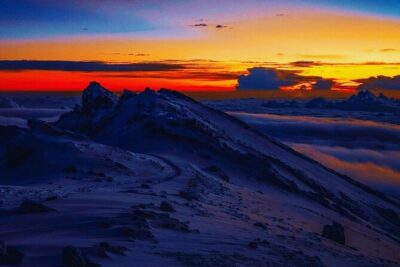
From Arusha/Moshi: Kilimanjaro Hike Marangu Route Day Trip
Read our review →
4 days Best experience Kilimanjaro Hike, Serengeti &Ngorongoro
Read our review →
Best Kilimanjaro hiking day trip tour with Kilinge Adventures
Read our review →
#1. Best Kilimanjaro Day hike Tour-Machame Route-ISMANI
Read our review →This walk also sits in