
REVIEW · JAPAN
Hiroshima Local guided Hiking Tour&Open-air Tea Ceremony
The best part of this Hiroshima tour is that it takes you from the station into quiet mountain woods in minutes. You’ll follow a shrine path through the Futaba Mountains, stop at Hiroshima Toshogu and Kinko Inari, then reach the Futabayama Peace Pagoda for wide views over the city and Miyajima. At the top, your guide prepares Nodate, a traditional tea ceremony held outdoors.
I like the small group of no more than six people, which gives Nana, Michi, or Naomi room to explain Shinto customs and adjust the pace. I also like the morning start: finish around 10:30, and you still have the rest of the day for Peace Memorial Park, the castle, or Miyajima. The main drawback is physical. You must climb about 500 steps, and the path can feel steep and uneven, especially in hot weather.
Key points to know before booking
- A mountain walk begins at Hiroshima Station: You need no long transfer to reach the trail.
- About 500 steps lead toward Kinko Inari Shrine: The hike is manageable for many people, but it is not a flat city stroll.
- Three kinds of place come together: You visit Shinto shrines, a Buddhist peace pagoda, and a forest setting in one morning.
- Nodate tea is served outdoors: The ceremony takes place near the mountaintop shrine, with views across Hiroshima.
- The group stays very small: A maximum of six people makes it easier to ask questions and follow shrine customs.
- Five percent supports mountain conservation: Part of your fee goes toward caring for Futaba Mountain.
A quiet mountain route beside Hiroshima Station
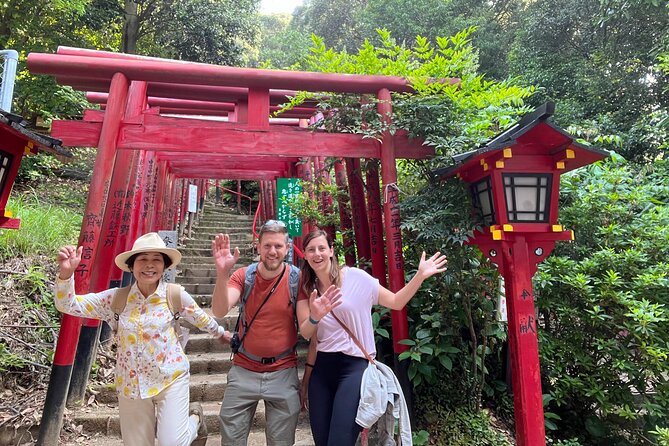
Hiroshima is often planned around the Peace Memorial Park, A-Bomb Dome, and Miyajima. Those places matter, but this walk gives you a different way to understand the city. You are not only looking at Hiroshima’s past in museums and memorials. You are walking through a living religious setting where local people have prayed, made offerings, and followed mountain paths for generations.
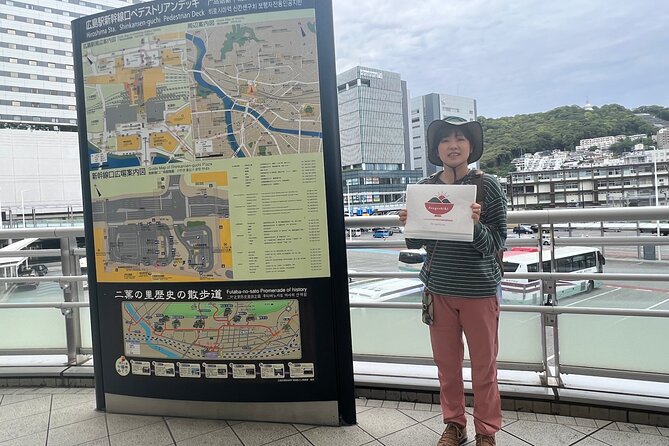
The meeting point is at the Shinkansen side of Hiroshima Station. The early departures are scheduled for 7:30, 10:00, and 13:00, with the morning option ending at about 10:30. If you choose the first departure, you get a calm start before the day’s main sightseeing begins.
The group is capped at six people. That matters here. A guide needs to explain when to bow, where to make an offering, and what different shrine features mean. In a large group, these details can get lost. With Nana, Michi, or Naomi leading, you can ask questions without holding up a busload of people.
The route is guided rather than marked out as a simple public walk. Your guide explains where to go, when to pause, and how the different religious sites connect. The pace includes regular stops, so the outing feels more like a cultural walk with exercise than a hard mountain trek.
More Guided Day Hikes in the world:
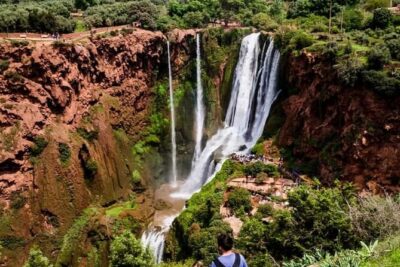
- From Marrakech: Ouzoud Waterfalls Guided Hike and Boat Trip
★ 4.7 · 33,630 reviews - Berber villages : Atlas Mountains Day Hike from Marrakech
★ 5.0 · 14,007 reviews - Bali: Sunrise Mount Batur Guided Hike with Breakfast
★ 4.8 · 9,660 reviews
Hiroshima Toshogu introduces the sacred side of the city
The first major stop is Hiroshima Toshogu, a Shinto shrine dedicated to Tokugawa Ieyasu. The visit gives you a chance to learn basic shrine customs before the trail becomes steeper. Your guide can show you how the site is approached and explain the meaning behind common Shinto practices.
This early explanation helps later at Kinko Inari Shrine. Instead of simply seeing gates, statues, and offering areas, you have some context for what you are looking at. You may also have time to make an offering or write a wish, as one family did for a student’s exam results.
Hiroshima Toshogu is also a useful contrast to the better-known memorial sites in central Hiroshima. The city is closely tied to the atomic bombing and its aftermath, but its story did not begin in 1945. The shrine route points you toward older religious traditions and the city’s long connection with Japan’s imperial and local history.
You should expect a cultural explanation, not a formal religious service. The guide helps you understand the place respectfully, but you are not required to take part in anything beyond your comfort level.
Kinko Inari and the 500-step climb
From Hiroshima Toshogu, the route continues toward Kinko Inari Shrine and into the Futaba Mountain forest. This is where the physical part becomes clear. The hike includes about 500 steps, and some sections of the path are steep or uneven.
For many people, the route will feel easy to moderate rather than extreme. The frequent pauses make a difference. Your guide stops to explain shrine features, local customs, and the area’s past, giving you time to catch your breath without making the break feel like a fitness stop.
Still, you should not book this expecting a gentle park walk. The steps require steady effort, and the heat can make the climb much harder. One outing took place in conditions reaching 36 degrees Celsius, with a reported real-feel temperature near 40 degrees. On a hot day, bring water, wear shoes with a firm sole, and choose light clothing.
Kinko Inari is especially interesting because the shrine path links spiritual practice with the mountain itself. You move from built religious spaces into trees and hillside trails. That change is part of the experience. You are not rushing from one attraction to the next by vehicle.
Futabayama Peace Pagoda and Hiroshima’s wide view
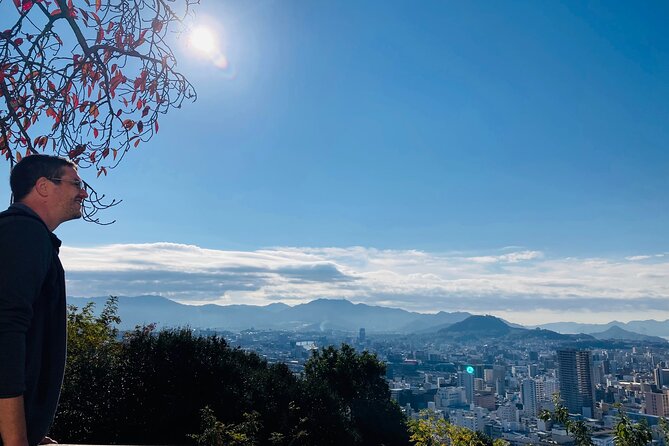
At the top, the Futabayama Peace Pagoda opens up a broad view of Hiroshima City, the Seto Inland Sea, and Miyajima. On a clear day, this is the visual reward for the climb.
The view also gives the guide a natural place to discuss Hiroshima’s recovery. From above, the city appears as a functioning urban center surrounded by water and hills. That perspective adds a human scale to the history you may have encountered at the Peace Memorial Park.
The pagoda brings Buddhist symbolism into a tour that began at Shinto shrines. You see how different religious traditions share the same mountain area. That combination is one of the tour’s strongest features. It is not just a scenic hike, and it is not just a shrine visit.
Give yourself time to look carefully. The city view is the kind of sight you can rush past if you are focused only on reaching the next stop. Your guide points out parts of Hiroshima and the surrounding area, helping you connect what you see with the city’s story.
The weather matters here. Clouds or haze can soften the view, and poor weather may lead to a cancellation or a changed date. The tour requires good conditions, so your best panorama depends partly on the day you choose.
More Guided Tours in the world:
- Bali: Mount Batur Sunrise Guided Hike and Natural Hot Spring
★ 4.8 · 9,284 reviews - Mount Etna: Summit Guided Hiking Tour up to 3,400 m
★ 4.8 · 4,792 reviews - Marrakech: ourika valley lunch & guided hike to waterfalls
★ 4.9 · 3,737 reviews - Bali: Mount Batur Sunrise Trek With Guide and Breakfast
★ 4.8 · 3,461 reviews
Forest bathing brings a slower pause
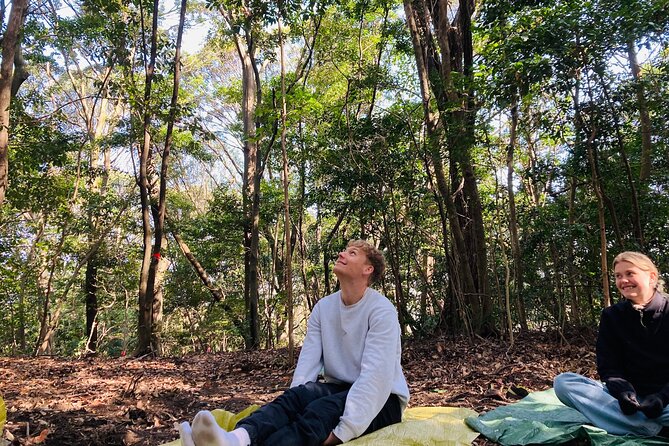
After the main climb, the group spends time in the forest for Shinrinyoku, often translated as forest bathing. This is not a bath in water. It is a guided pause that asks you to pay attention to the trees, air, sounds, and other senses around you.
The idea works well after the steps. You have spent the first part of the outing moving upward and listening to explanations. The forest session changes the rhythm. You sit or pause in a clearing and focus on the natural setting rather than trying to cover ground.
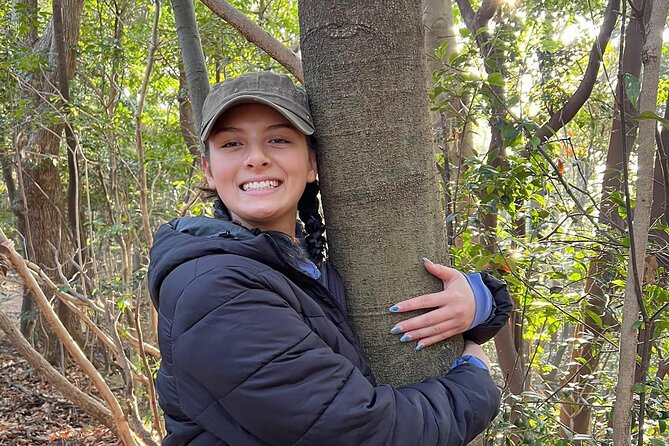
For me, this is a valuable part of the tour because it gives the mountain time to be more than a route to a viewpoint. You are encouraged to notice the forest itself. That can feel especially welcome if the rest of your Hiroshima schedule is built around busy streets, museums, and major landmarks.
Do not expect a long meditation retreat. The forest-bathing portion is part of a three-hour guided outing, and the exact feel may depend on the pace and weather. It is best understood as a short, intentional rest in nature.
Nodate tea with a view of Miyajima
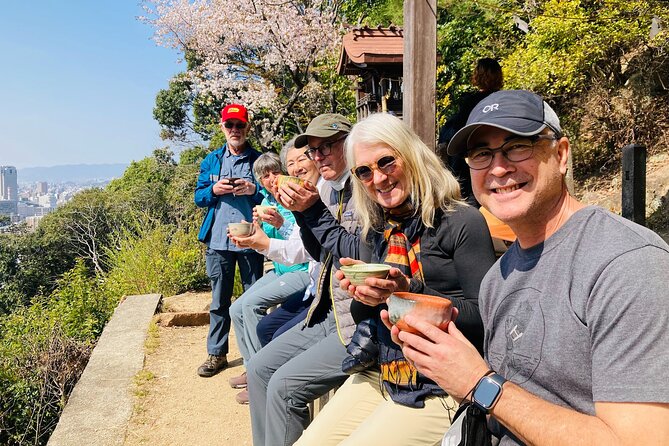
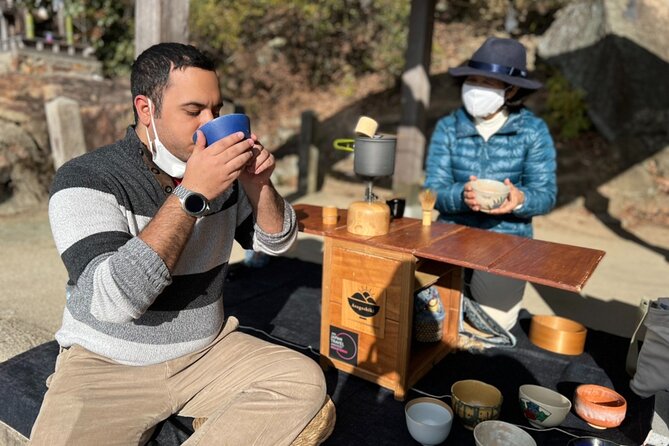
The final special element is the Nodate tea ceremony. Nodate is tea prepared outdoors, and here the guide serves it near the Okumiya shrine area with the mountain view nearby.
This is different from a formal tea ceremony inside a dedicated tea house. The setting is less polished and more connected to the walk. You have climbed a sacred route, reached the mountaintop, paused among the trees, and then sit down for tea with Hiroshima below.
The tea is prepared by your guide, who also explains what is happening. Depending on the conditions, you may receive matcha or green tea. One particularly hot outing included cold green tea, which was a welcome choice after the climb. The point is not simply the drink. It is the pause, the outdoor setting, and the chance to take part in a Japanese custom without a stiff or overly formal atmosphere.
You should also keep your expectations realistic. This is not a full-length tea-school demonstration with elaborate equipment and a long series of movements. It is a compact, personal introduction woven into the hike. That makes it accessible, especially if you have never attended a tea ceremony.
The tea stop lasts about an hour in the stated schedule, though the full timing can vary with the pace of the group. The view, the shrine setting, and the guide’s explanations make it feel like more than a refreshment break.
What the guide adds to the experience
The guide is central to the tour’s value. Nana is described as warm, upbeat, and clear when explaining shrine customs. Michi is praised for a thoughtful approach and for sharing local history in a way that feels personal. Naomi is noted for making people feel welcome and for adding care to the tea and meditation portions.
The important point is not choosing one particular name when booking, since the guide may vary. It is that this experience depends on a guide who can connect several subjects: Shinto ritual, Buddhism, Hiroshima’s past, forest awareness, and tea.
You will have chances to ask why people purify themselves, how offerings work, and what the shrine structures represent. That is much more useful than simply being told the name of each building.
The small group also allows the guide to watch the pace. In hot conditions, the guide can remind you to drink, slow the climb, and add pauses. That does not remove the physical demand, but it makes the outing more manageable.
Is $109.43 a fair price?
At $109.43 per person, this is not the cheapest way to walk in the hills around Hiroshima. You could visit some shrines independently and hike without paying a guide. The price makes sense if you want the cultural explanation, the planned route, the tea ceremony, and a small group rather than a self-guided walk.
You are paying for about three hours with a guide, access to a route that may be unfamiliar, shrine interpretation, forest bathing, and outdoor tea. The five percent contribution to Futaba Mountain conservation adds a modest environmental benefit.
The value is strongest for first-time visitors who want something beyond the standard Hiroshima checklist. It is also a good choice if you have already planned the Peace Memorial Park and want a quieter morning that still connects to the city’s history.
The value is weaker if you dislike hills, want a formal tea ceremony in a traditional interior, or prefer to explore alone. You may also find the price high if your main goal is only the view. In that case, a self-guided outing could cost less, though you would miss the explanations and guided tea.
Timing, meeting point, and practical planning
All departures begin and end at the Hiroshima Station Shinkansen Exit area, at 1-2-37 Matsubaracho in Minami Ward. Returning to the same point makes this easy to fit around train travel, though you should arrive early.
A late arrival creates a real problem. If you are more than 10 minutes late without contacting the operator, the booking may be canceled and the full fee charged. Hiroshima Station can be busy, so allow time to find the correct exit and meeting area.
The listed schedule includes departures at 7:30, 10:00, and 13:00. The morning departure is the best match for most sightseeing plans. The later departures end around 13:30 or 16:30, so check your plans before choosing an afternoon start.
The activity is mobile-ticket based, and confirmation is provided when you book. Free cancellation is available up to 24 hours before the start time. Changes or cancellations within 24 hours are not accepted for a refund. If bad weather cancels the tour, you are offered another date or a full refund.
Children aged 0 to 5 can join free. Most people can participate, but the steps and uneven sections mean you should judge your own fitness honestly. This is not described as wheelchair accessible, and the route’s stairs make it unsuitable for anyone unable to climb them.
Who should book this Futaba Mountain walk?
I would recommend it to you if you want:
- A small-group experience close to Hiroshima Station
- A quieter alternative to a standard city sightseeing tour
- Clear explanations of Shinto practices and local religious sites
- A moderate hike with frequent stops
- A view of Hiroshima, the Seto Inland Sea, and Miyajima
- An outdoor tea ceremony rather than a formal indoor performance
- A morning activity that leaves most of the day free
I would hesitate if you have knee problems, dislike stairs, or are visiting during very hot weather without being prepared. The guide can manage the pace, but no guide can remove 500 steps from the route.
Should you book it?
Book this tour if you want Hiroshima to feel like more than a list of memorials and major attractions. The combination of shrine paths, mountain forest, Buddhist symbolism, city views, and Nodate tea gives you a fuller sense of the place.
Choose the early departure if possible. Bring water, wear supportive shoes, and leave room in your schedule for the climb rather than treating it as a quick walk. At $109.43, the tour is best value for people who want interpretation and a personal cultural encounter, not simply transportation to a viewpoint.
If that sounds like your kind of morning, this is a thoughtful choice. You get exercise, quiet, history, and tea in one compact outing, with the rest of Hiroshima still waiting when you return.
FAQ
Where does the tour start and finish?
The tour starts at the Hiroshima Station Shinkansen Exit area, at 1-2-37 Matsubaracho in Hiroshima’s Minami Ward. It ends back at the same meeting point.
How long does the experience last?
The tour lasts approximately three hours. The scheduled morning departure at 7:30 ends around 10:30.
How many steps are involved?
The hike includes about 500 steps. The route also includes some steep and uneven sections.
What places do you visit?
The route includes Hiroshima Toshogu Shrine, Kinko Inari Shrine, the Futabayama Peace Pagoda, and the Futaba Mountain forest. You also stop for forest bathing and an outdoor Nodate tea ceremony.
What views can you see?
From the mountain, you can see Hiroshima City, the Seto Inland Sea, and Miyajima.
Can young children join?
Children aged 0 to 5 can participate free of charge. Everyone joining should still be able to manage the steps and hiking route.
What happens if the weather is poor?
The experience requires good weather. If it is canceled because of poor conditions, you will be offered a different date or a full refund.
Just added around the world
- Rovaniemi: Korouoma Frozen Waterfalls Hike & Hot BBQ Lunch★ 4.9 · 90 reviews
- Hidden Waterfalls Hiking Adventure★ 5.0 · 148 reviews
- Hike to Frozen Waterfalls of Korouoma Including BBQ Lunch from Rovaniemi★ 5.0 · 84 reviews
- Private Family Hike in Yosemite★ 5.0 · 37 reviews
- Private Guided Hiking Tour in Yosemite★ 5.0 · 94 reviews
- Guided Yosemite Hiking Excursion★ 5.0 · 80 reviews
- Yosemite Valley Private Hiking Tour★ 5.0 · 83 reviews
- Chiang Mai Untouched Elephant: Nature Walk & Waterfall Trek★ 4.7 · 77 reviews
Guided Day Hikes, side by side.
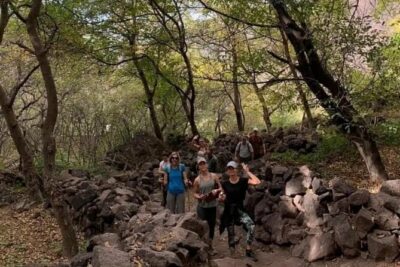
Berber villages : Atlas Mountains Day Hike from Marrakech
Read our review →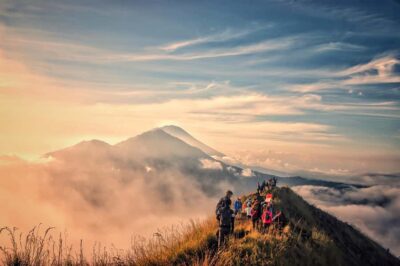
Sunrise Mount Batur Guided Hike with Breakfast
Read our review →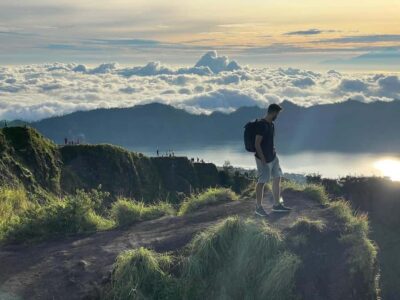
Mount Batur Sunrise Guided Hike and Natural Hot Spring
Read our review →
Mount Etna: Summit Guided Hiking Tour up to 3,400 m
Read our review →
ourika valley lunch & guided hike to waterfalls
Read our review →
Multnomah Falls and Columbia River Gorge Half-Day Hiking Tour
Read our review →This walk also sits in