
REVIEW · JAPAN
Kyoto: Hike and Hot Springs in Kurama
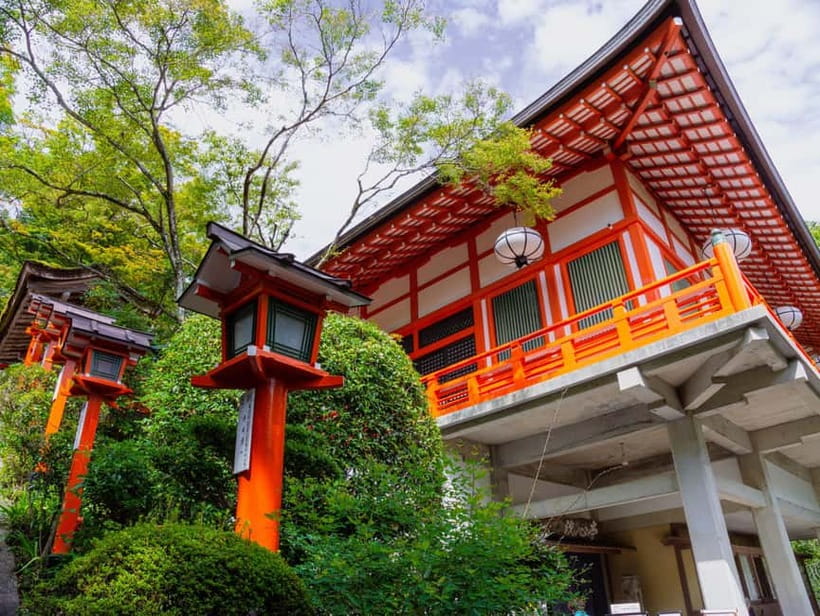
The best part of this half-day outing is the shift from Kyoto streets to a cedar forest, where old shrines, mountain legends, and crisp air replace traffic and tour buses. You ride the Eizan railway into the hills, visit Kibune Shrine, then climb toward Kurama Temple, a place locals regard as a power spot.
I like the mix of spiritual sites and real exercise. I also like the freedom at the end: you can eat in Kurama, catch the train back, or pay extra for a hot spring bath with mountain views. The catch is simple: this is not a gentle stroll. The steps can be hard, especially in summer, and the tour is not suited to children under 11, people with mobility limits, or hikers without experience.
Key points to know before you book
- The climb takes about 30 to 40 minutes: Expect many steps and a moderate fitness challenge rather than a flat woodland walk.
- The Eizan train adds real character: The ride from Demachiyanagi takes you from Kyoto toward a quiet mountain valley.
- The guides add the context: Philippe, Chris, Kevin, Salome, and others have explained local deities, legends, Reiki connections, and Japanese customs.
- The tour ends in Kurama, not back in central Kyoto: Your return transport, lunch, and hot spring entry are extra.
- The onsen is worth planning for: A bath after the climb can turn a sweaty hike into a wonderfully relaxed afternoon.
- Dress for the forest: Comfortable shoes, water, and long trousers are sensible, especially if you want to reduce insect bites.
From Demachiyanagi Station into Kyoto’s northern hills
You meet at exit 7 of Demachiyanagi Station, in front of the Eizan Railway. That starting point matters. You do not waste time crossing central Kyoto by bus, and the railway gives the outing a pleasant beginning before the walking starts.
The train carries you away from the city and toward the mountain villages. The ride itself is part of the pleasure, with the urban grid giving way to wooded slopes and a quieter valley. It is a useful contrast to Kyoto’s better-known temples, which can feel crowded and highly organized around sightseeing.
Your guide handles the transport and sets the pace for the group. English and French tours are available, and private or small-group arrangements can give the walk a more personal feel. The guides named in the feedback include Philippe, sometimes written as Phillipe, along with Chris, Kevin, Salome, and Eric.
Guide quality appears to be one of the tour’s strongest features. Philippe is especially good at adding cultural and historical detail while watching the group on the climb. Chris has been praised for finding less obvious places, while Kevin has offered useful background on the area. A private group may also allow the route and stops to shift around your interests, though the exact guide depends on the date.
More Hikes with Hot Springs in Japan:
- Full Day Hiking Tour at Mt.Takao including Hot Spring
★ 5.0 · 52 reviews - Bali: Mount Batur Sunrise Guided Hike and Natural Hot Spring
★ 4.8 · 9,284 reviews - Mount Batur Sunrise Hike and Natural Hot Spring Option
★ 5.0 · 1,927 reviews
Kibune Shrine and the meaning of the route
The walk begins near a sacred shrine in the Kibune area. Kibune is linked with a river valley, mountain air, and tall cedar trees. The shrine visit gives the hike a purpose beyond exercise, especially if you want to make a prayer for good relationships.
This is a good place to slow down before the climb. Your guide can explain the customs and stories connected with the shrine, rather than leaving you to guess what each gate, building, or ritual means. You should still treat the visit as a religious site, not simply a photo stop.
The route also has an appeal for people interested in Japanese spiritual traditions. Mount Kurama is associated with Reiki, and one participant with a Reiki background found the connection especially meaningful. You do not need any particular belief to enjoy the setting, but the mountain has a strong sense of place that makes it feel different from a standard temple visit.
The exact balance between Kibune and Kurama can depend on the day, group pace, and guide. The advertised experience focuses on both areas, but the main physical effort comes on the climb toward Kurama Temple.
Climbing Kurama Mountain through the cedar forest
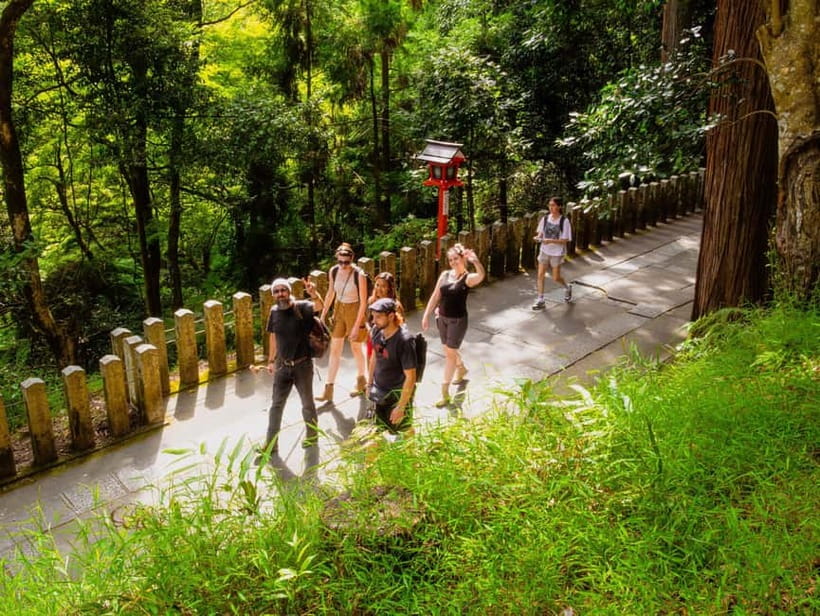
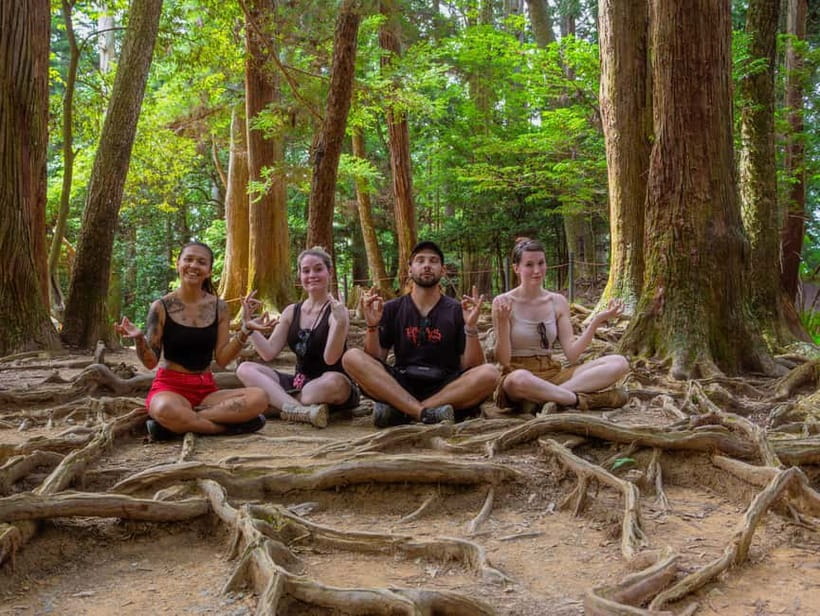
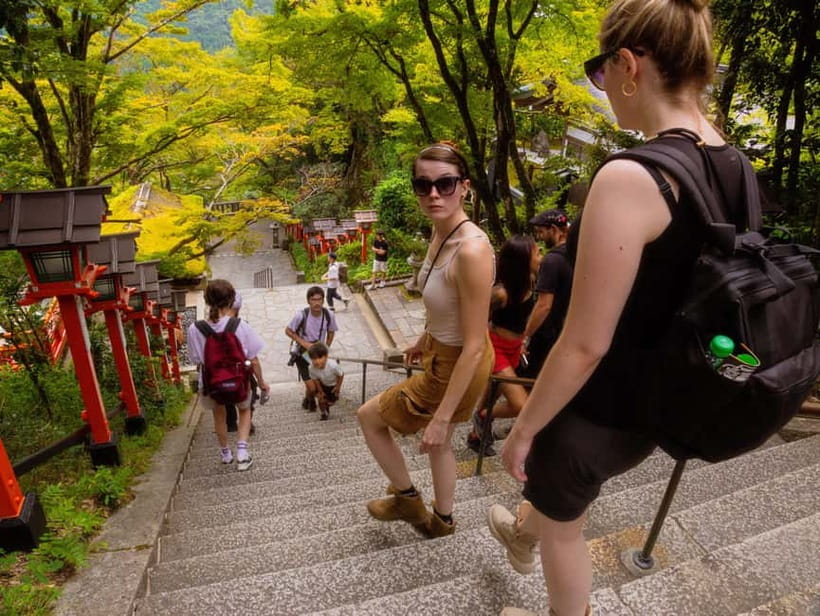
The path rises by steps through an ancient forest. The climb to the top takes around 30 to 40 minutes, but that number can understate the effort if you are not used to hills. You will stop for scenery, stories, and temple features, yet your legs still need to do the work.
I would rate this as a moderate hike, not a beginner-friendly walk. One summer outing felt much harder because of the heat, and another participant described the climb as demanding. You need a decent level of fitness and some hiking experience. Comfortable shoes are essential, and water is not optional.
Long trousers are a smart choice if you want to limit bug bites. The trail is shaded by trees, but shade does not remove the heat or the effort. In cooler months, the walk can feel much more comfortable. In winter, you might find snow or icy conditions, as one January outing included light snow on a sunny day.
The forest is the reason to take this route rather than simply riding to a temple. You get fresh mountain air, quiet stretches, and a gradual change in mood. Guides have also pointed out less familiar spots along the way. Sightings of deer or monkeys are possible, but they are lucky additions, not part of the promised program.
Keep your own pace. A good guide will pause when needed, and Philippe has been singled out for patience during the ascent. The tour works best when you see the climb as part of the experience, not an obstacle standing between you and the temple.
Kurama Temple and the mountain’s power spot
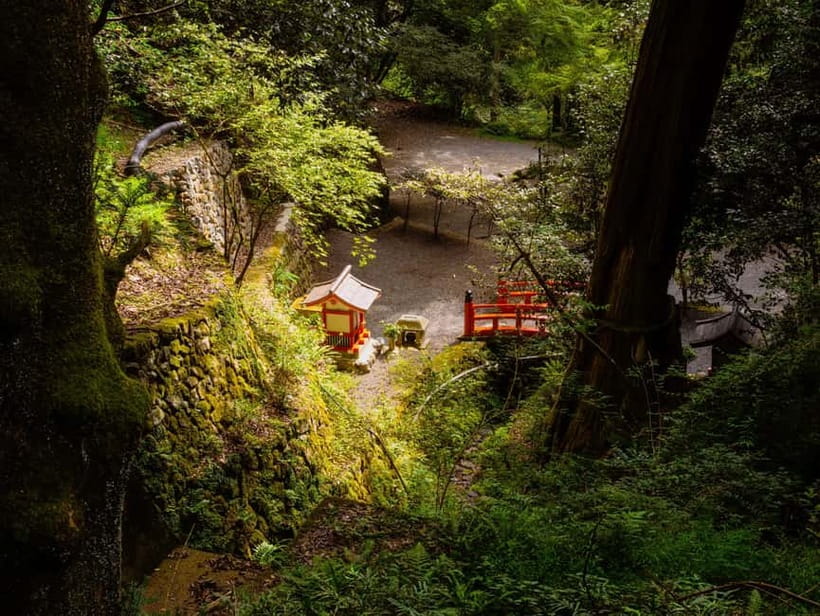
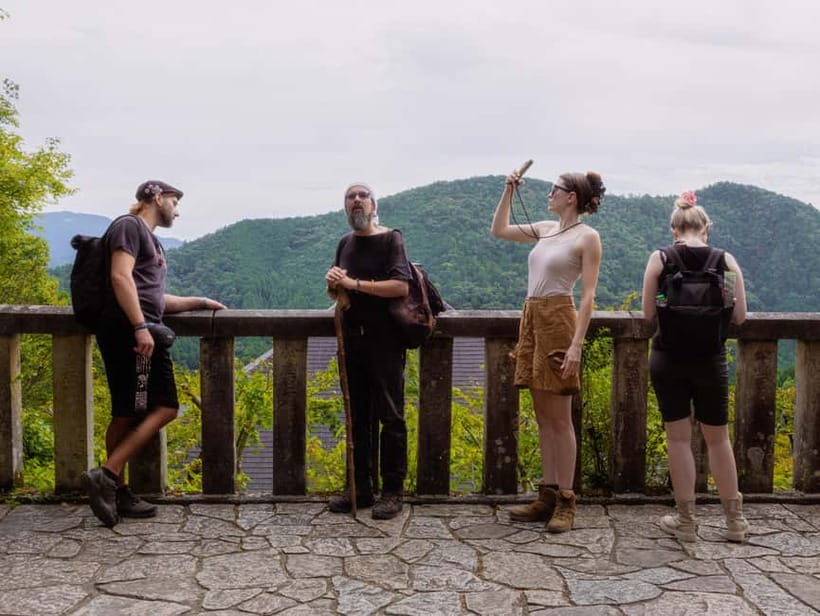
At the summit area, you visit Kurama Temple and have time to recover from the climb. The temple is considered a power spot by local people, and the setting gives the visit more weight than a quick stop beside a city road.
The views down toward the valley are a major reward. You can take in the mountain air, rest your legs, and listen to the guide explain the temple’s deities, stories, and place in local culture. Several guides have been praised for making these details easy to follow without turning the walk into a lecture.
The condition of the temple can change the visit. During one outing, scaffolding covered much of the main temple because of maintenance work. The interior was still accessible, and the large bell above the temple remained a memorable stop, but the building was not as photogenic as expected. Construction is temporary, yet it is worth keeping your expectations flexible.
Access to special areas also depends on the guide and conditions. One private outing included a crypt and maze beneath the temple. Do not assume those spaces are guaranteed, but a good guide may know unusual corners that a quick independent visit would miss.
This is where the tour earns much of its price. The admission fee is included, but the larger value comes from having someone explain why the site matters and how the legends connect with the mountain. Without that context, you could still enjoy the forest and views, but you would miss much of what makes Kurama distinctive.
More hikes and treks around Japan:
- Fushimi Inari Hidden Hiking Tour (Private Option Available)
★ 5.0 · 1,750 reviews - Kyoto: 3-Hour Fushimi Inari Shrine Hidden Hiking Tour
★ 4.9 · 270 reviews - Hiroshima Local guided Hiking Tour&Open-air Tea Ceremony
★ 5.0 · 213 reviews - Hiking the Historic Nakasendo Trail [1 Day Tour from Nagoya]
★ 5.0 · 104 reviews
Descending to the village of Kurama
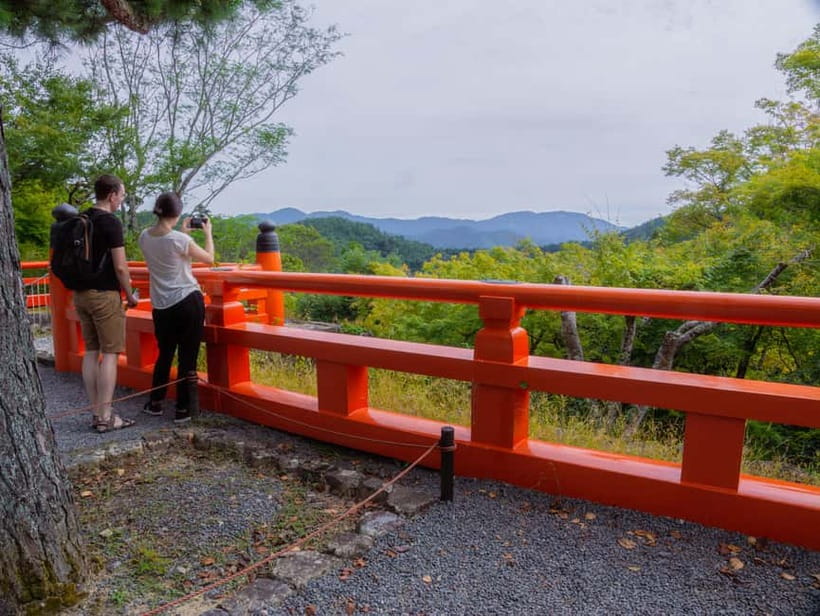
After the temple visit, you walk down toward Kurama village. Downhill steps are easier on your lungs but can still be tough on knees, especially after the ascent. Take care on wet or uneven sections and do not rush simply because the route is going down.
The village gives you a welcome change of pace. You can stroll, look for lunch, or sit beside the valley and recover. Restaurants in and around the village offer a chance to make the outing feel like a full mountain day rather than a four-hour appointment.
Lunch is not included, so bring money and allow for your own choice of timing. The tour ends with guidance on the available options, rather than escorting you through a fixed meal or returning you to the original meeting point.
That arrangement is both useful and important to understand. You get more freedom at the end, but the four-hour price does not cover everything after the hike. Transportation back to the meeting point is also not included. You can return by train from Kurama at your own expense, or continue your plans from the village.
The Kurama hot spring after the climb
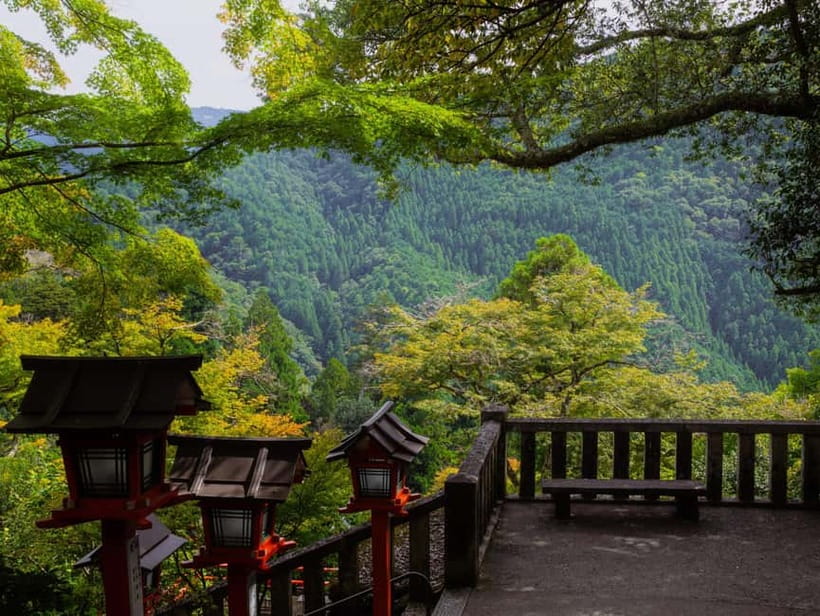
The hot spring is the natural finale. Entry costs extra, but the bath is known for an outdoor setting with mountain views. After a warm-weather climb, soaking tired legs can feel like exactly the right decision.
I would plan for the onsen before you arrive, especially if this is one of your main reasons for booking. The tour can offer a discounted bath ticket, but you should confirm the current arrangement when booking. Bring what you need for the bath, and remember that this is a separate expense from the tour price.
One important detail: the hot spring is an option after the guided portion, not a guaranteed part of the four-hour schedule. Your guide gives you the choices in Kurama, and you decide how long to stay. This means you can skip the bath if you are tired, short on time, or already have evening plans.
For many people, though, the onsen is what makes this outing feel complete. You walk through a mountain forest, visit a temple, and then sit outdoors with a view of the hills. It is hard to ask for a better reset from Kyoto sightseeing.
What the $80 price really covers
At $80 per person, the price includes the guide, temple admission, and transportation for the tour. Lunch, the hot spring, and your journey back are separate. The value depends on how much explanation and support you want during the hike.
If you are comfortable navigating Kyoto’s trains and reading shrine information on your own, an independent trip will cost less. The guide fee pays for more than directions, though. You get help with the route, an organized visit to two important religious sites, local stories, and a pace that can adjust to the group.
A private or small-group booking is likely the better choice if you care about questions, photography stops, or a slower climb. The tour has also worked well when the group was unexpectedly tiny, allowing the guide to adjust the visit and spend extra time around Kurama.
The price is harder to justify if you want only a short nature walk or if you dislike structured outings. The hike is the main event, and you should not book it expecting a simple temple transfer.
Free cancellation up to 24 hours before the start and reserve-now, pay-later booking reduce the financial risk. Starting times vary, so check availability before planning the rest of your day.
Who will enjoy this half-day escape
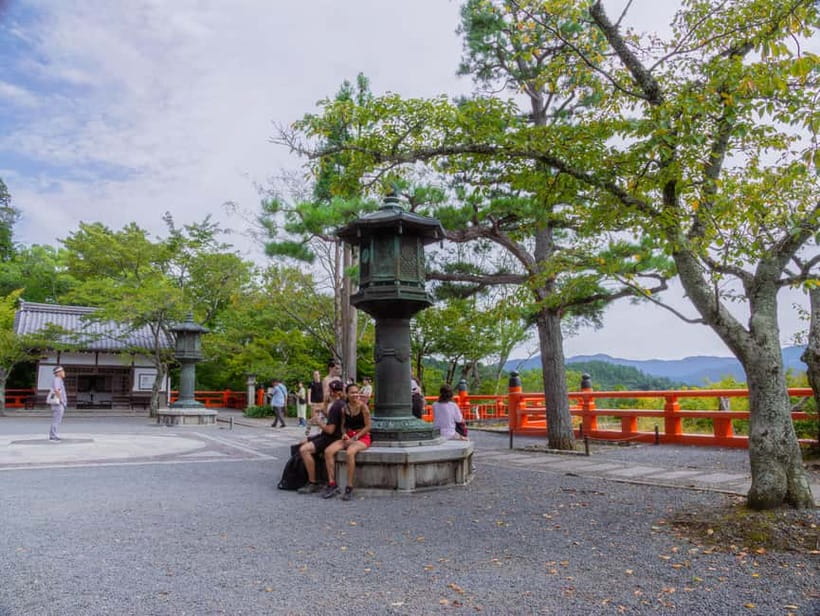
I would recommend this experience to you if you want a real change from central Kyoto and enjoy combining walking with culture. It suits active adults, people interested in Shinto and Buddhist sites, and anyone who prefers a forest trail to another crowded city attraction.
It is also a good choice if you want local explanation rather than a guidebook glance. Philippe’s background in the Kyoto mountains, Chris’s eye for lesser-known places, and the cultural detail provided by guides such as Kevin and Salome can add a lot to the day.
I would think twice if you have knee, balance, or mobility problems. The tour is not suitable for wheelchair users or people with mobility impairments. It is also not intended for children under 11, and the operator asks that participants have hiking experience.
Smoking or guide behavior can affect any small-group outing. One participant had a disappointing experience with a guide smoking on the trail and drinking beer before the tour ended. That does not match the otherwise strong pattern of attentive guiding, but it is a reminder that guide assignment matters. A private booking gives you more control over the feel of the day, though not necessarily over the individual guide.
Should you book the Kurama hike?
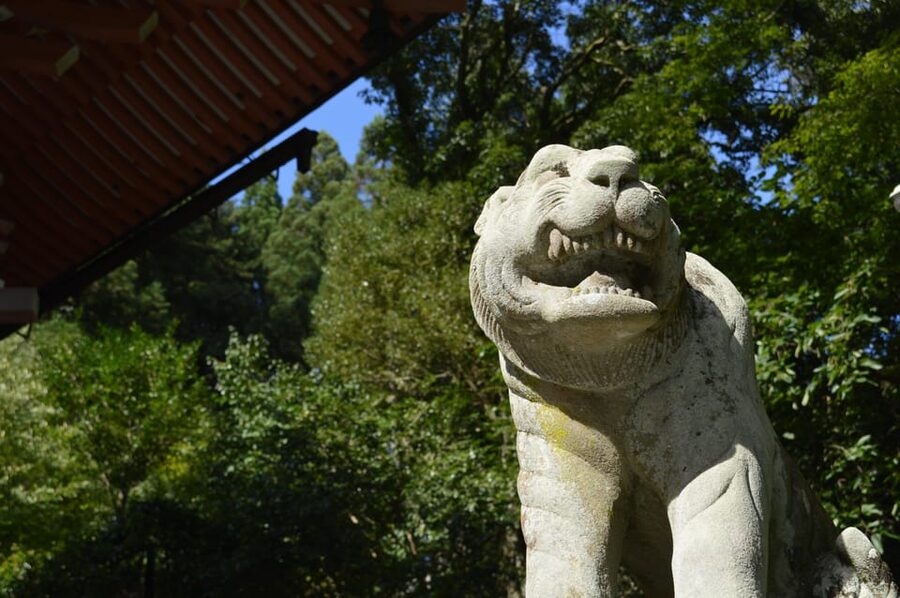
Book it if you want Kyoto’s mountains, not just Kyoto’s famous streets. The train ride, cedar forest, Kibune Shrine, Kurama Temple, and optional hot spring create a satisfying four-hour outing with a strong sense of place.
Book with realistic expectations about the climb. Wear proper shoes, carry water, choose long trousers, and leave room in your schedule for the onsen or lunch. If you are fit enough for a moderate hill walk and value thoughtful cultural explanation, the $80 cost is fair.
Skip it if you need an easy stroll, a fully inclusive day, or a return to the starting station with no extra planning. For the right visitor, this is one of the better ways to feel the mountains north of Kyoto without giving up a full day.
FAQ
Where does the tour meet?
The meeting point is exit 7 of Demachiyanagi Station in Kyoto, in front of the Eizan Railway.
How long does the experience last?
The guided experience lasts four hours.
How difficult is the hike?
The hike is moderate and includes steps up Kurama Mountain. Reaching the peak takes about 30 to 40 minutes, and you should have a decent level of fitness and some hiking experience.
Is transportation included?
Transportation during the tour is included. Transportation back to the original meeting point is not included.
Is lunch included?
No. Lunch is not included, but you can eat in Kurama after the guided hike.
Is the hot spring included?
No. The hot spring fee is separate. A discounted bath ticket may be available through the tour.
What languages are available?
The tour is offered with live guides in English or French.
Who should not book this activity?
The tour is not suitable for children under 11, wheelchair users, people with mobility impairments, or people without hiking experience.
Just added around Japan
- Oiso: Adventure Hike to See Mt. Fuji & Historic Coastal Walk★ 5.0 · 10 reviews
- Kamakura: Daibutsu Hiking Trail Tour with Local Guide★ 5.0 · 10 reviews
- Hiroshima: Morning Hiking Tour with Open-air Tea Ceremony★ 4.8 · 58 reviews
- Hike Hakone Hachiri Japan Heritage Area★ 5.0 · 10 reviews
- Hakone Hachiri: Old Tokaido Highway Hiking Tour★ 4.9 · 22 reviews
- 1-Day Tour from Nagoya: Hiking the Historic Nakasendo Trail★ 4.9 · 34 reviews
- From Matsumoto/Nagano: Nakasendo Trail Walking Tour★ 4.9 · 33 reviews
- Explore Kiso Valley : Magome – Tsumago Mountain Trail Walk★ 5.0 · 33 reviews
Hikes with Hot Springs, side by side.
Mount Batur Sunrise Guided Hike and Natural Hot Spring
Read our review →
Mount Batur Sunrise Hike and Natural Hot Spring Option
Read our review →
Private Tour Mount Batur Sunrise Trekking and Natural Hot Spring
Read our review →
Mount Batur Sunrise Hike, Breakfast & Hot Spring
Read our review →
Mount Batur Sunrise Hike with Breakfast & Hot Spring
Read our review →
Landmannalaugar Hike and Hot Springs from Reykjavik & Hella
Read our review →
3D/2N Rinjani trekking summit,lake and hot springs.
Read our review →
Full-day Rila Mountains, Seven Lakes Hike, and Hot Springs Tour from Sofia
Read our review →This walk also sits in