
REVIEW · JAPAN
Magome & Tsumago Nakasendo Trail Day Hike with Government-Licensed Guide
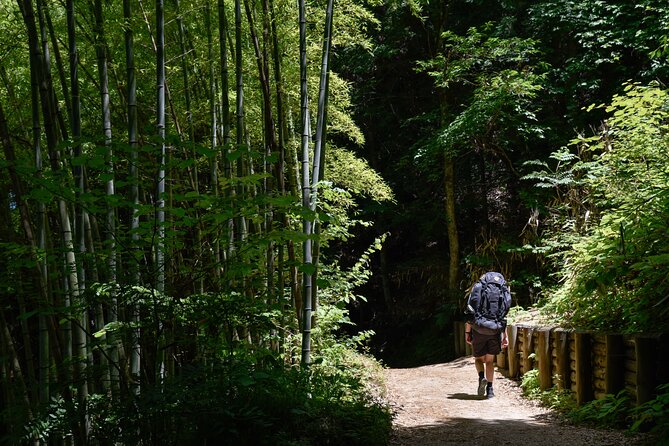
The best part of this experience is simple: you walk an old highway through rural Japan, not a modern sightseeing circuit. The roughly 8-kilometer trail links Magome and Tsumago, two restored post towns where merchants, officials, and samurai once stopped on the road between Edo and Kyoto. Your guide adds the stories and handles the route, so you can pay attention to the stone path, forests, waterfalls, and old houses.
I like the private format, which lets you pause for photos, ask questions, or spend more time at a museum. I also like the mix of exercise and culture: this is an easy hike, but the preserved villages, old inns, notice board, and Buddhist temple give the walk real substance. The main consideration is logistics. Public transport and entrance fees cost extra, pickup is on foot, and the hike is not offered from December through February because of icy conditions.
Key points to know before you book
- A manageable 5-mile walk: The route is suited to people who want a proper hike without giving up a full day.
- Two historic post towns: Magome is built on a slope with valley views, while Tsumago is flatter and quieter.
- A private licensed guide: Guides such as Hiroshi, Matt, Yumi, and Elvis have helped visitors understand the route and adjust the pace.
- Cash for local transport: Buses and other public transport are not included, so keep yen handy.
- A seasonal outing: The walking tour is unavailable from December through February due to icy conditions.
- Strong overall ratings: The experience has a 4.8 rating from 38 reviews, with 97 percent recommending it.
Walking the old road between Magome and Tsumago
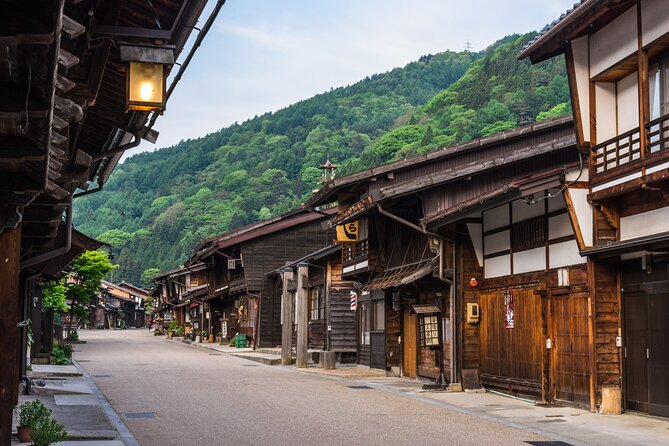
The Nakasendo was one of Japan’s major inland routes during the Edo period. It connected Edo, now Tokyo, with Kyoto and carried officials, merchants, and members of the imperial court across central Japan. Today, the Magome to Tsumago section offers one of the most approachable ways to experience that old road.
The walk itself is about five miles, or eight kilometers, and is described as easy. That does not mean it is a paved stroll. You should expect a traditional route with stone sections, some uneven footing, and a countryside setting. Most active people should find it manageable, but comfortable shoes remain essential.
The advertised hike takes about two hours, with the full experience lasting roughly six hours. The extra time allows for village visits, explanations, rest stops, food, and public transport connections. Your exact pace will depend on your group, the weather, and how much time you spend looking around.
I like this balance. You get enough exercise to feel that you have crossed part of the old route on foot, but you are not committing to a demanding mountain trek. If you want a serious alpine hike, this is too gentle. If you want a meaningful rural walk between historic villages, it fits well.
More Guided Day Hikes in Japan:
- Hiroshima Local guided Hiking Tour&Open-air Tea Ceremony
★ 5.0 · 213 reviews - Full Day Hiking Tour at Mt.Takao including Hot Spring
★ 5.0 · 52 reviews - From Marrakech: Ouzoud Waterfalls Guided Hike and Boat Trip
★ 4.7 · 33,630 reviews
Magome’s sloping streets and valley views
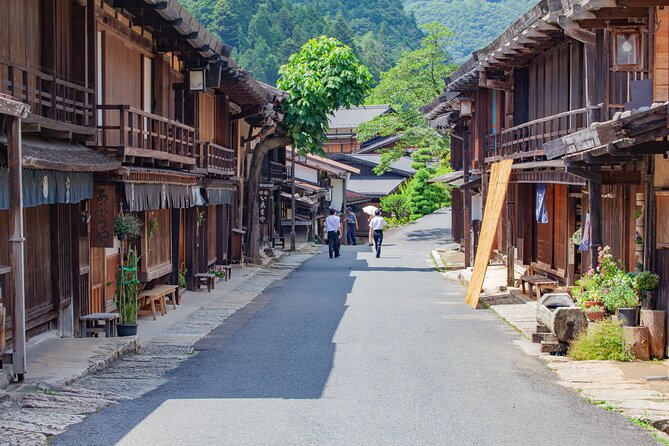
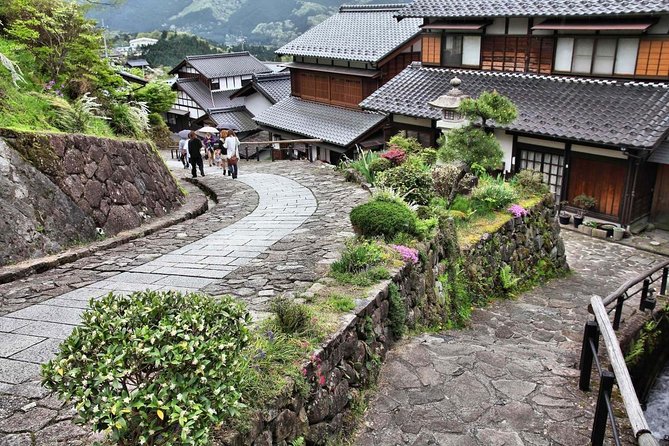
Magome is the more visibly dramatic of the two villages because it climbs a slope. Its broad stone walkway is lined with trees, traditional houses, craft shops, restaurants, and small museums. The incline gives you views across the surrounding valley, and it also means that the village has a stronger sense of movement than flatter Tsumago.
Your guide can explain how Magome served as a post town and point out details that are easy to miss when you walk alone. The local museums cover the town’s past, the artists who lived there, and everyday life in the area. Admission to the village itself is free, but specific museums or sights may charge an entrance fee.
Food and drink are easy to work into your visit. A useful plan is to stop at the upper part of the village for something to eat or drink while enjoying the view. The lower section offers a different feel, with chances to see local life and spend time around the older streets.
Magome is also a practical place to begin because its slope gives the opening section a clear physical character. You know at once that this is an old route through a lived-in mountain region, not a theme park built only for photographs.
The drawback is that the slope may be more tiring than the word easy suggests, especially if you are carrying a daypack or walking in warm weather. Tell your guide if you need pauses. One advantage of a private outing is that the pace can be adjusted more easily than on a fixed group departure.
The forest path, stone road, and countryside
Between the villages, the Nakasendo passes through wooded countryside and quiet rural areas. The route gives you a close look at central Japan away from the big cities. You may see traditional buildings, streams, old road features, and changing views as the path moves through the Kiso Valley area.
The route includes a waterfall viewing point, though the quality of the view can vary. Trees may block much of the sight, so you should not book this walk solely for one waterfall. The value is the whole route: the sound of the woods, old paving, small roadside features, and the feeling of moving through a historic corridor under your own power.
Several guides have used the walk to add small cultural details. Matt has arranged bento lunches and a stop at an old public tea house. Another outing included soba and a visit to a waki-honjin museum. These additions are not guaranteed, and lunch is not included, but they show how the private format can make room for local food and heritage sites when timing allows.
A guide also helps with the practical parts of the route. You do not have to keep checking directions or worry about missing a turn. That matters most if you want to focus on the surroundings or if you are not comfortable navigating rural Japan.
Tsumago’s preserved Edo-era character
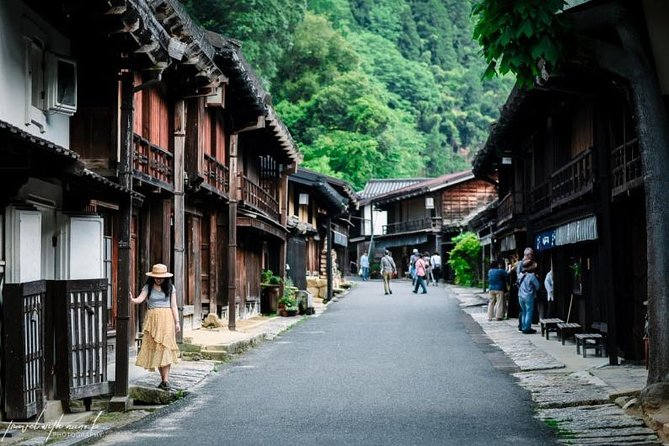
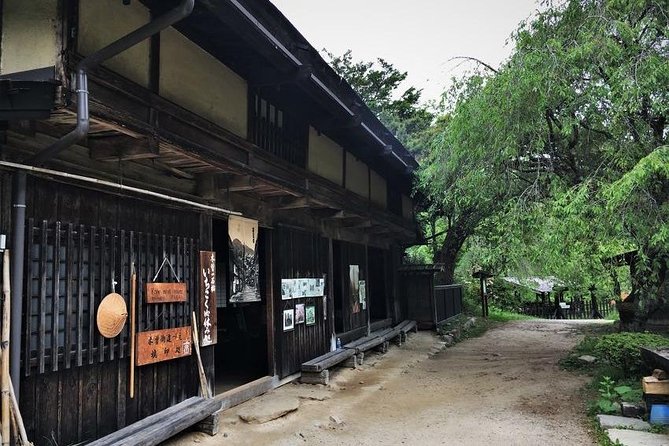
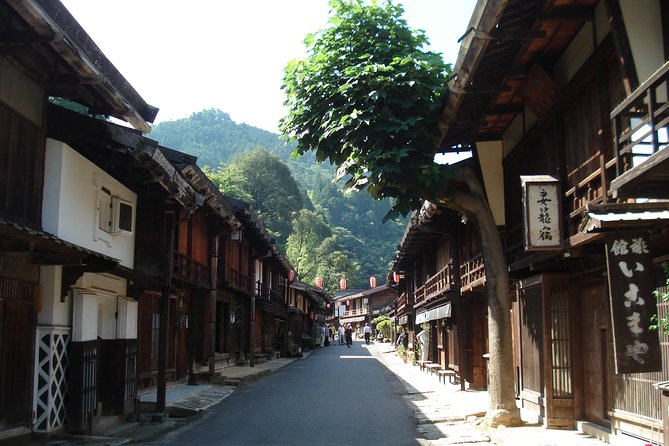
Tsumago is flatter than Magome and has a more hushed feel. Its streets are unpaved, utility cables are concealed, and many traditional houses remain in place. The village was among Japan’s early historic preservation projects, and the result is a careful recreation of an old post town without the visual clutter common in modern settlements.
Important buildings include the Honjin, the main inn used by high-ranking visitors, and the Wakihonjin, the secondary inn used by other official parties and merchants. You can also see an old notice board where decrees from the shogun were posted, along with a Buddhist temple dating to the sixteenth century.
This is where a guide earns the cost of the experience. A row of old buildings is pleasant to photograph, but the purpose of each building makes the village much easier to understand. You learn how the post-town system worked and why inns, official notices, and religious buildings were placed where they were.
Tsumago is especially atmospheric later in the day, when lanterns are lit and the streets become quiet. The experience does not promise an evening visit, so you should treat this as a possibility rather than a planned feature. Still, if your timing allows it, the subdued atmosphere can be one of the most memorable parts of the outing.
The village is also smaller and less demanding than a major city attraction. Do not expect a long list of large museums or elaborate entertainment. Tsumago’s appeal comes from its scale, preserved streets, and quiet details.
More Guided Tours in Japan:
- Hike Japan Heritage Hakone Hachiri with certified mountain guide
★ 5.0 · 46 reviews - Kamakura: Daibutsu Hiking Trail Tour with Local Guide
★ 5.0 · 10 reviews - Bali: Sunrise Mount Batur Guided Hike with Breakfast
★ 4.8 · 9,660 reviews - Bali: Mount Batur Sunrise Guided Hike and Natural Hot Spring
★ 4.8 · 9,284 reviews
What a private licensed guide adds
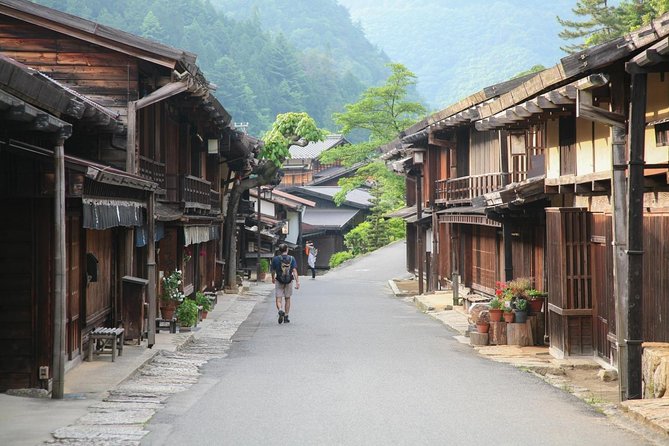
The guide is the heart of this experience. You receive a government-licensed local English-speaking guide, and only your own group participates. That arrangement gives you room to ask about Japanese history, local customs, architecture, food, or the route itself.
The guides named in the feedback include Hiroshi, Elvis, Matt, Yumi, and Kazue. Experiences naturally vary by guide, but the strongest pattern is clear: visitors valued clear historical explanations, friendly conversation, route help, and flexibility. Hiroshi began one walk with background on the Nakasendo so the group understood the road before setting off. Matt was responsive before arrival and arranged food and historic stops during the day.
This is not a lecture with a crowd trailing behind. You can ask for more detail at a temple, less detail when your feet need a break, or extra time for photos. A private guide can also help if one person in your group walks more slowly.
There is one important point to discuss openly. One Japanese-language review asked the guide to stay with the slowest person and make sure explanations were not finished before everyone arrived. That is useful advice for any walking tour. If your group includes people with different speeds, say so at the start and ask the guide to regroup before explanations.
The guide also cannot remove every uncertainty. The tour is not a private-vehicle excursion, and meeting takes place on foot at a designated point. You will still need to manage the public transport connections yourself with the guide’s assistance, and fares are extra.
Price, inclusions, and the real value
The listed price is $155.22 per person. For a private six-hour outing with a licensed guide, that is a reasonable price if you care about context and personal attention. You are not just paying for a marked walking route. You are paying for someone to explain the post towns, help with navigation, adjust the day to your interests, and make rural transport less confusing.
The price does not include transport, lunch, entrance fees, or personal expenses. There is no private vehicle. Keep cash available for buses and other public transport, since those costs are separate. Specific guide entry fees are covered only for sights listed as included, so ask about any museum or historic building you especially want to enter.
The value is strongest for couples, families, and small groups who would otherwise book several separate activities. Group discounts may be available, but multiple tour groups cannot be combined. If you are traveling alone, the per-person cost may feel high compared with walking the route independently.
You can certainly walk the Nakasendo without a guide. The villages are accessible, and many people do follow the trail on their own. I would choose the guided version if you want the history explained as you go, if rural transport feels stressful, or if you want to adjust the day around food, museums, and photography.
Who should book this hike
This outing suits you if you want an active day but do not have time for a longer trek. The route is easy by hiking standards, and the two villages provide plenty of interest even for people who do not normally seek out long walks.
It is also a good choice for history enthusiasts. The old inns, notice board, temple, preservation work, and Nakasendo route give the day a strong historical thread. You will get more from the experience if you ask questions and take time to look at the buildings rather than rushing from one village to the next.
Families and mixed-ability groups may appreciate the private setup, provided everyone can manage an easy eight-kilometer walk. Most people can participate, and service animals are allowed. Still, this is a walking activity rather than a vehicle tour, so anyone with difficulty on uneven or sloping paths should consider that carefully.
The best seasons are outside the winter closure. The walk is unavailable from December through February because of icy conditions. Spring can bring cherry blossoms, while autumn may offer colorful foliage and displays of dried persimmons around the villages, but seasonal sights depend on timing and weather.
Practical planning for the six-hour outing
Wear shoes with good grip and bring water. The route is easy, but stone and unpaved sections are less forgiving than a city sidewalk. A light daypack is easier to carry, especially if you plan to buy food or small crafts in Magome.
Plan on paying for transportation, lunch, and any extra admissions. The guide can help shape the day, but the basic package does not cover those costs. If you want soba, a bento lunch, or a museum visit, ask about the plan before the walking begins.
Allow more than the bare hiking time. The walk may take about two hours, but the full experience is around six hours because Magome, Tsumago, transport, and cultural stops need time. The day works best when you do not try to squeeze another major attraction into the same afternoon.
Booking confirmation is provided at the time of booking. Free cancellation is available up to 24 hours before the start time. Changes or cancellations inside that window are not accepted for a refund.
Should you book the Magome and Tsumago hike?
Book this experience if you want to walk through rural Japan with history attached to every stop. The private format, licensed guide, manageable distance, and two very different post towns make it a strong choice for a short visit to the Kiso Valley.
Skip it if you want a strenuous mountain hike, a private car, or an all-inclusive price. You will need to pay for transport and food, meet on foot, and accept that the waterfall viewpoint may be limited by trees.
For most people seeking an active half-day with genuine village character, I think the guide is worth the added cost. Ask for a pace that suits your group, carry cash, and leave room for a bowl of soba, a historic inn, or a quiet pause beneath the trees.
FAQ
How long does the Magome and Tsumago tour take?
The experience lasts approximately six hours. The hike itself is around eight kilometers, or five miles, and is described as an easy walk of about two hours, with additional time for village visits, transport, and stops.
How difficult is the Nakasendo Trail walk?
It is considered an easy hike, but the route includes stone and unpaved sections, and Magome is built on a slope. Comfortable walking shoes are recommended.
Is the tour private?
Yes. This is a private activity, so only your group participates. Multiple tour groups cannot be combined.
Is transportation included?
No. Transportation fees are not included, and there is no private vehicle. Bring cash for public transport, which is used to connect with the walking route and villages.
Is lunch included?
No. Lunch and other personal expenses are separate. Depending on timing and your guide, you may be able to stop for soba, a bento meal, or food in Magome.
Are entrance fees included?
Entrance fees are not generally included. Guide entry fees are covered only for sights specifically listed as included, so additional museum and building admissions may cost extra.
Is the hike available in winter?
The walking tour is not available from December through February because of icy conditions. A separate full-day trip using buses is suggested for visits during that period.
Who will guide the tour?
You receive a licensed local English-speaking guide. Guides who have led this experience include Hiroshi, Elvis, Matt, Yumi, and Kazue, though the assigned guide can vary.
Can most people participate?
Most people can participate, and service animals are allowed. This is a walking tour with an eight-kilometer route, so you should be comfortable with an easy hike, uneven sections, and some sloping streets.
Just added around Japan
- Hike Japan Heritage Hakone Hachiri (Half Day)★ 5.0 · 18 reviews
- Hike Hakone Hachiri★ 5.0 · 48 reviews
- Traverse Outer Rim of Hakone Caldera and Enjoy Onsen Hiking Tour★ 5.0 · 30 reviews
- Frozen fall trekking★ 5.0 · 21 reviews
- Private Local Hiking to enjoy the nature and culture of Mt.Fuji★ 5.0 · 22 reviews
- Private Hiking Tour to View Mt. Fuji★ 5.0 · 10 reviews
- Walk the Ancient Pilgrim Paths of Mt. Fuji – Private Tour★ 5.0 · 10 reviews
- Oiso: Adventure Hike to See Mt. Fuji & Historic Coastal Walk★ 5.0 · 10 reviews
Guided Day Hikes, side by side.
Berber villages : Atlas Mountains Day Hike from Marrakech
Read our review →
Sunrise Mount Batur Guided Hike with Breakfast
Read our review →
Mount Batur Sunrise Guided Hike and Natural Hot Spring
Read our review →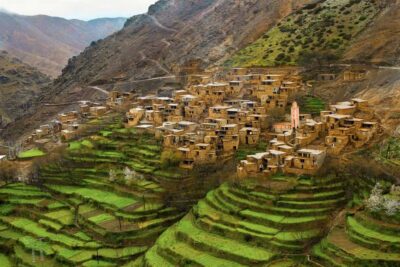
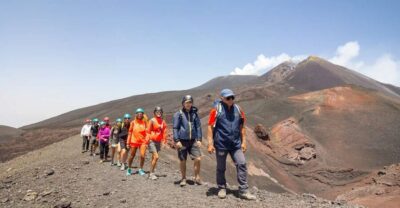
Mount Etna: Summit Guided Hiking Tour up to 3,400 m
Read our review →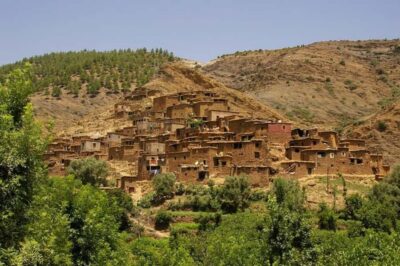
ourika valley lunch & guided hike to waterfalls
Read our review →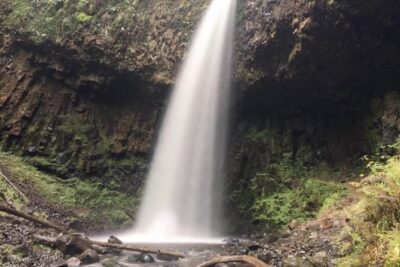
Multnomah Falls and Columbia River Gorge Half-Day Hiking Tour
Read our review →This walk also sits in