
REVIEW · VIETNAM
Sapa: Eco Adventure Terrace Fields and Local Villages Trek
Sapa’s best day walks are not about ticking off a viewpoint. They are about following narrow paths through the Muong Hoa Valley, crossing a small river, and watching daily life unfold among the rice terraces. I like this trek for two clear reasons: the route links several villages instead of stopping at one, and the local guides, especially Chai and Vu, bring personal stories about Hmong and Zay life.
The main catch is the trail itself. This is a real 10 to 12 kilometer hike, with steep, muddy, and slippery sections, particularly after rain. The views can also disappear into fog, so you need flexible expectations and shoes or boots that can get dirty.
Key Points
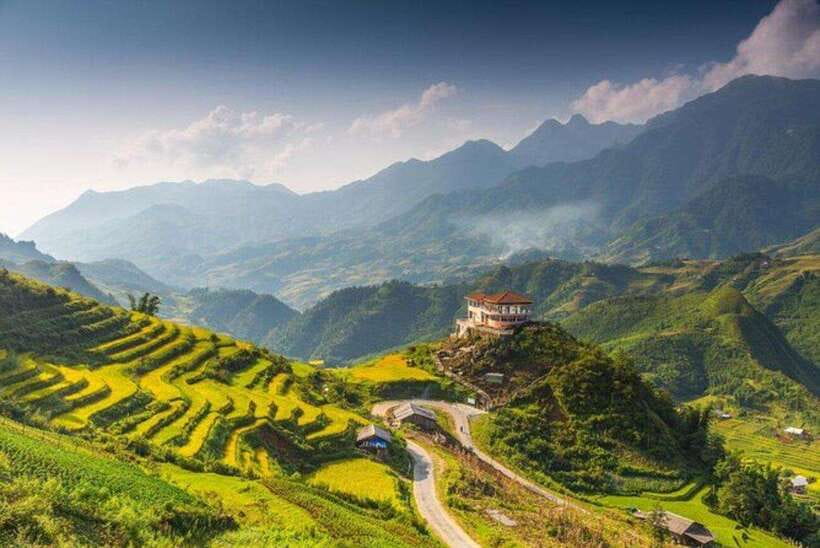
- Terrace-to-village route: Walk from a Sapa viewpoint into Muong Hoa Valley, then continue through Y Linh Ho, Lao Chai Sang, Lao Chai, and Ta Van.
- Strong local guiding: Guides such as Chai, Vu, Wu, and Rou explain customs, farming, clothing, village history, and daily life in clear English.
- A proper hike: Expect 10 to 12 kilometers on uneven ground, with some demanding downhill and muddy sections.
- Lunch with local flavor: Stop around 12:30 PM for a traditional meal in Lao Chai Sang, with vegetarian and vegan choices available according to the experience details.
- Small-group setting: Groups are limited to 10 people, which makes it easier to ask questions and keep a steady pace.
- Good value: At $27 per person, the price covers the guide, entrance tickets, and lunch, but not drinks or transfers from your hotel.
Why This Sapa Trek Feels Different
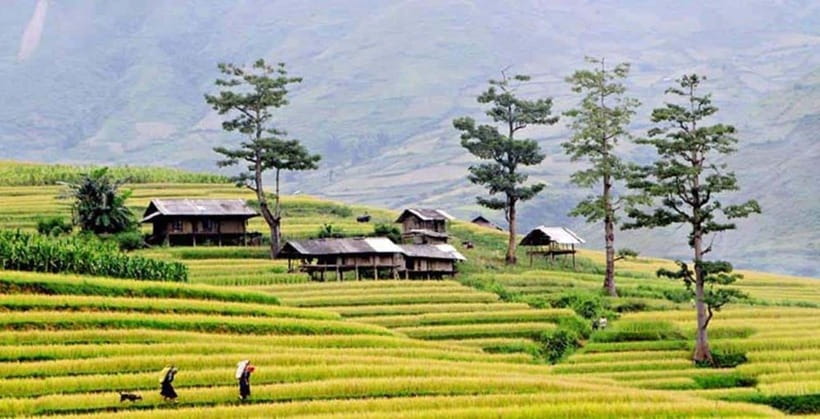
Sapa has plenty of scenic walks, but this one earns its appeal by combining mountain scenery with ordinary village life. You are not simply driven to a photo stop, handed a few facts, and returned to town. The route gradually carries you away from Sapa’s center and into working farmland.
You will see traditional wooden houses, streams, livestock, and farmers tending the fields, depending on the season. Planting and harvest periods give the villages a stronger sense of activity, while other times of year offer a quieter look at the terraces and mountain setting.
The cultural side also matters. Your guide is from the local area and can explain details that are easy to miss on your own, including Hmong customs, traditional clothing, women’s work, and the pressures of village life. Chai receives especially frequent praise for her warm manner, clear English, humor, and ability to make the group feel comfortable. Vu, Wu, Rou, and other local guides are also described as attentive and good at adjusting to the group.
That personal connection is the main reason to choose this walk over a simple sightseeing trip. The views are excellent, but the explanations give them meaning.
More hikes and treks around Sa Pa:
- Sa Pa: Muong Hoa Valley Trek and Local Ethnic Villages
★ 4.6 · 864 reviews - Number one top rated ethical cultural trekking and homestay by ETHOS
★ 5.0 · 456 reviews - From Sapa: 1-Day Guided Trek to Lao Chai & Ta Van with Lunch
★ 4.9 · 416 reviews
Starting Above Muong Hoa Valley at 9:00 AM
The meeting point is in front of Sapa Church, right in the center of town. Your guide meets you there at 9:00 AM, so arrive with your hiking shoes already on and your daypack ready.
The first stop is a small hill viewpoint with wide views toward Fansipan Peak. On a clear day, this gives you an immediate sense of the scale of the mountains around Sapa. In poor weather, the view may be reduced to mist. That is not unusual here, especially in the cooler months, and several sections of the walk may begin under cloud before clearing later.
This early viewpoint is useful, but it is not the heart of the experience. Do not judge the whole day by the first panorama. The route becomes more interesting as it drops toward Muong Hoa Valley and the terraces.
Walking Through Muong Hoa’s Rice Terraces
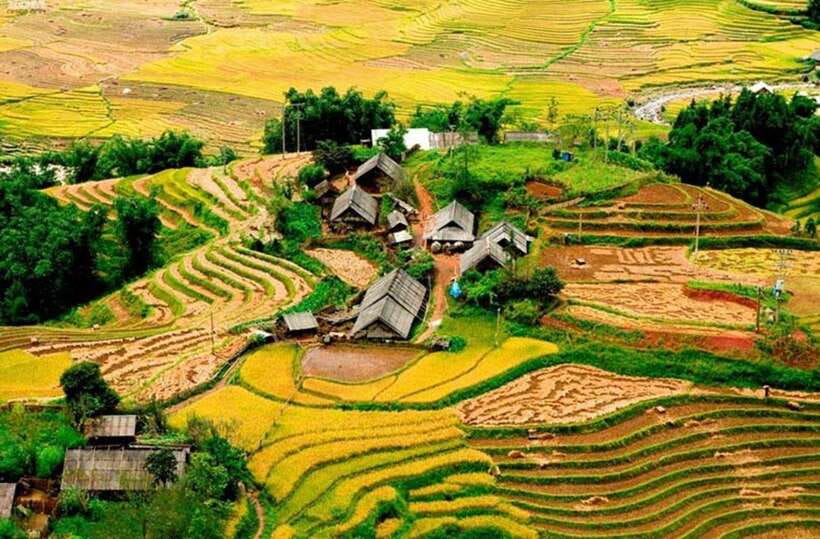
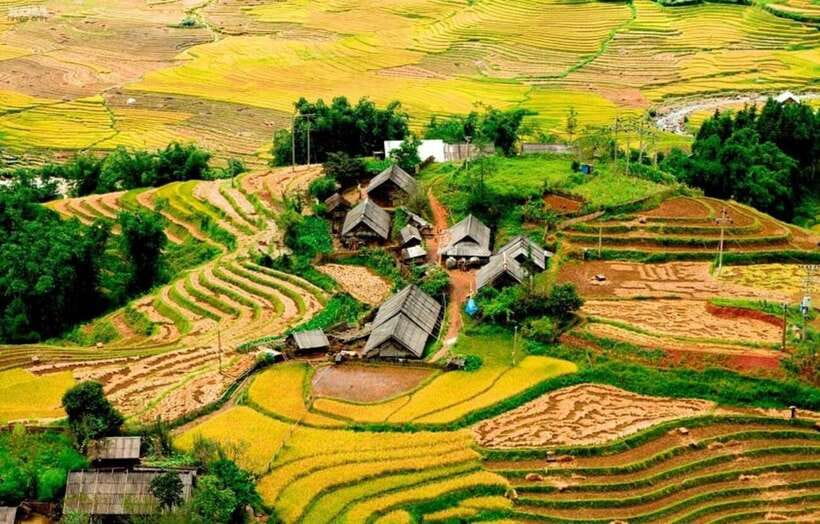
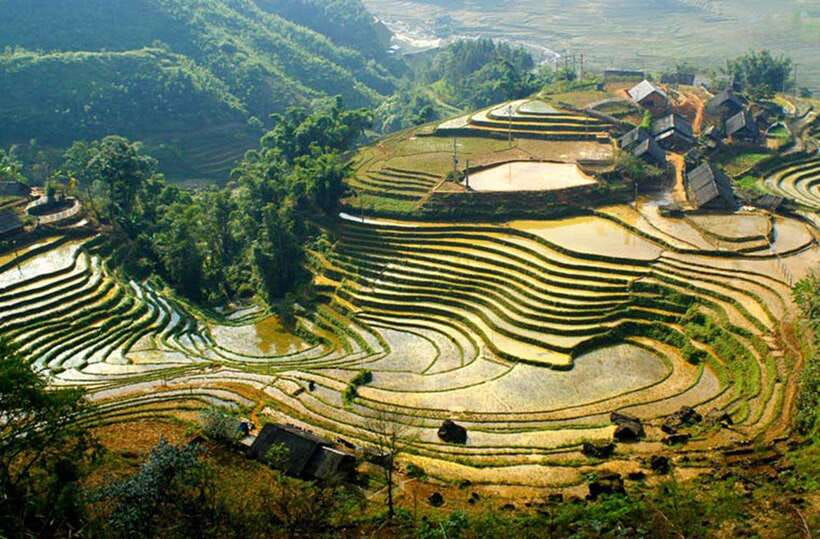
Muong Hoa Valley is the visual center of the trek. Its rice terraces curve across the hillsides in broad layers, creating one of northern Vietnam’s most memorable rural scenes.
The exact appearance changes with the season. Freshly planted fields can look bright and reflective, while harvest time brings a warmer, more golden color. At other times, you will see green growth, water buffalo, domestic animals, and farmers at work. The tour does not promise a particular crop stage, so come for the valley and village setting rather than one guaranteed photograph.
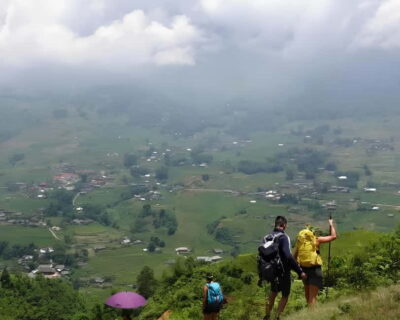
The trail passes streams and traditional homes, with the mountains rising around you. It is a more grounded experience than viewing the valley from a roadside lookout. You notice the steepness of the fields, the narrow paths between them, and how much work is needed to farm on these slopes.
The first part can be the toughest. After rain, the path becomes slick and muddy, and several people have found the opening section challenging even in otherwise good weather. Local women from nearby villages sometimes walk alongside the group and help on difficult stretches. Some carry handmade bags and clothing for sale, so you may want to bring cash if you would like to support them. You are not required to buy anything, but a small purchase can be a direct way to support village households.
Some participants choose an easier road section instead of the muddier trail. That option may be less demanding, but it also gives you less of the adventurous walking that makes this route memorable. If you have healthy knees and feel steady on uneven ground, the more difficult path is usually the better choice.
Y Linh Ho and the River Crossing
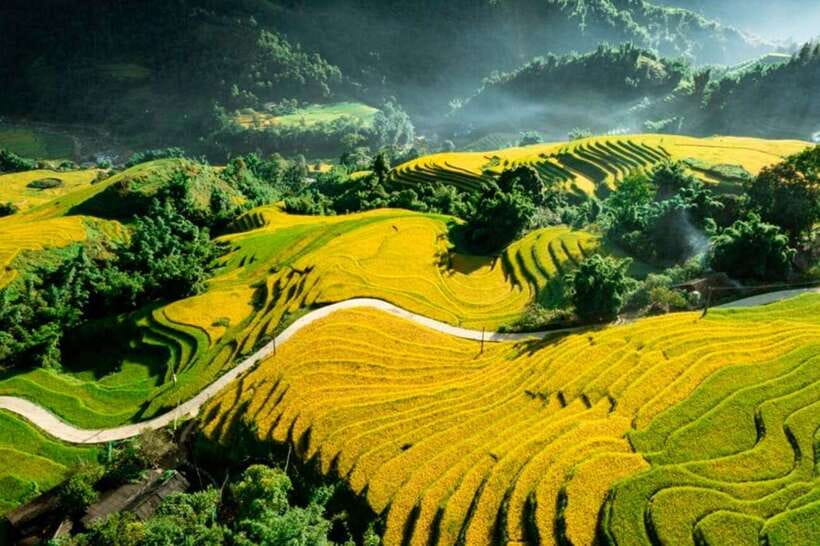
At about 11:00 AM, you reach Y Linh Ho Village, associated with the Hmong people. The route crosses a small bridge over a scenic river before continuing toward Lao Chai Sang.
This section brings a pleasant change of rhythm. Instead of staying high on a viewpoint, you move through the valley itself, with water, terraces, homes, and mountain slopes close around you. The bridge is a simple crossing, not a major attraction, but it helps connect the natural setting with the villages ahead.
Your guide can explain how the Hmong communities live and work in this area. The strongest cultural discussions tend to come from questions, so ask about clothing, family life, farming, or the way villages have changed. Guides including Chai and Vu are particularly praised for sharing personal experiences rather than delivering a stiff speech.
The path toward Lao Chai Sang continues beside fields and mountain scenery. It is worth keeping your pace moderate here. You have several kilometers ahead, and rushing the early stages can make the afternoon harder.
Same trailheads, a different kind of day:
- Sa Pa Full Day Trekking Tour
★ 5.0 · 414 reviews - Sapa 1 Day Long Trek: Trek to Hau Thao and Sa Seng Villages
★ 4.6 · 344 reviews - EXPLORE SAPA: 2D1N TREKKING & HMONG CULTURE WITH DINH
★ 4.9 · 191 reviews - 1-day Authentik trek & Panorama valley views
★ 5.0 · 189 reviews
Lunch in Lao Chai Sang Around 12:30 PM
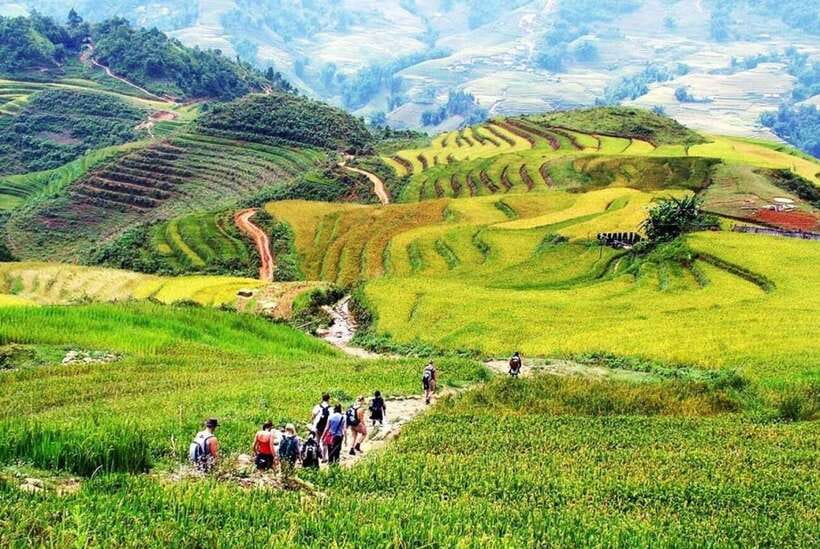
Lunch is served around 12:30 PM in Lao Chai Sang. Depending on the arrangement that day, this may be in a local home or a small village restaurant with a view.
The meal is included, and the food is described as traditional local cooking. Vegetarian and vegan options are available, which is useful if you mention your needs clearly to the guide. Drinks are not included, so carry money for water, tea, or other beverages.
This is more than a practical stop for refueling. It gives you time to sit down, talk with the guide, and look back at the route you have covered. A warm meal also makes a noticeable difference after a muddy morning on the trail.
Do not expect a long restaurant break with a large menu. The point is a straightforward local meal, not fine dining. For the price of the tour, including lunch along with the guide and entrance fees, the arrangement offers solid value.
Lao Chai Village and Hmong Daily Life
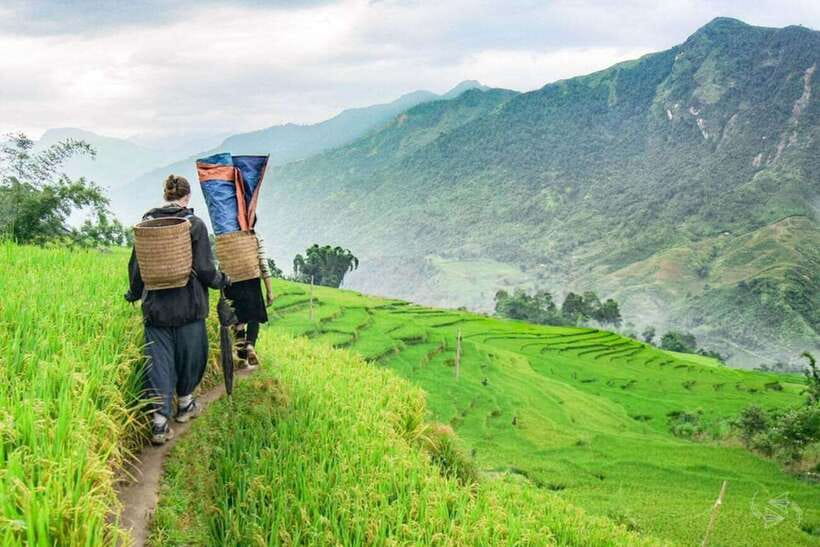
After lunch, the route continues to Lao Chai Village. This is another chance to see village life as it happens, rather than in a recreated cultural display.
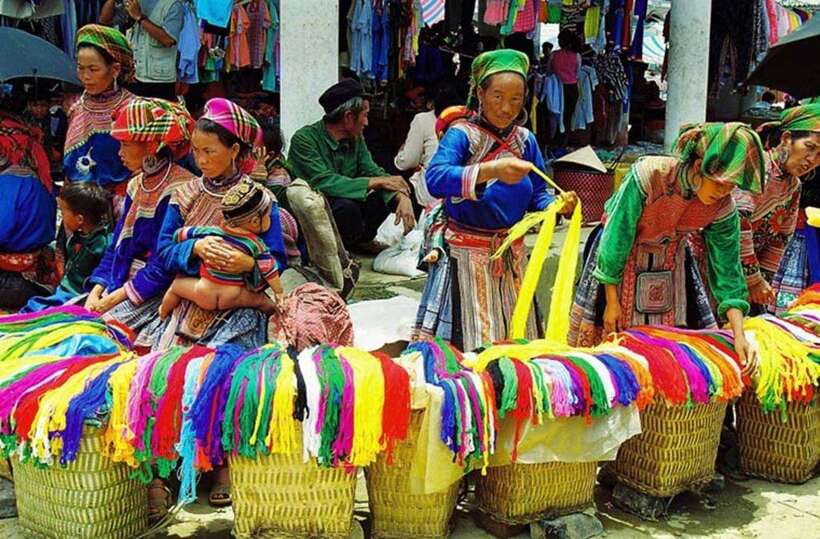
Depending on the season, you may see people planting or harvesting rice. You might also pass animals, houses, and family work areas along the route. The experience details include a closer look at Hmong daily life and traditional clothing-making, which adds useful context to the textiles and garments you may see being sold.
The clothing is not just decorative. It reflects local skill, time, identity, and household income. Your guide can help explain how traditional clothing is made and why it matters within the community.
Keep your expectations respectful. You are walking through homes and working areas, not a museum. Ask before taking close photographs, and listen when your guide explains what is appropriate. The best part of this stop is the chance to understand a little about people’s routines without turning the village into a stage show.
The Final Walk to Ta Van
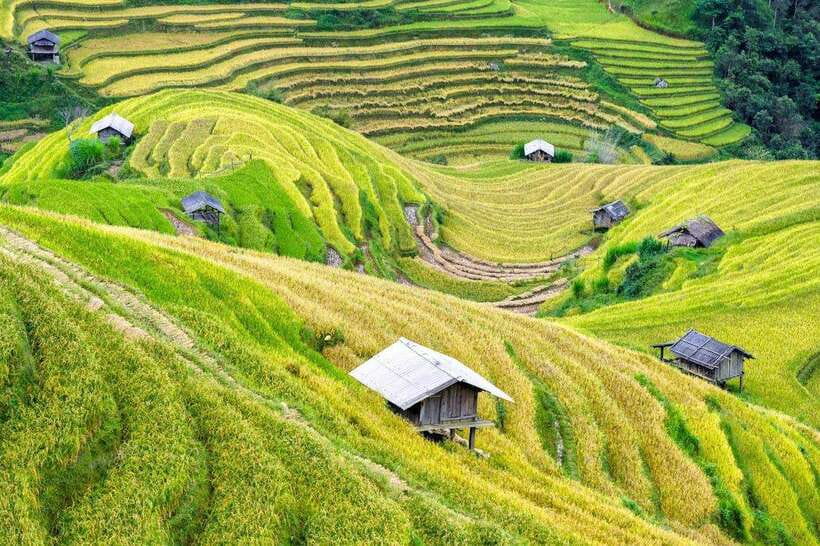
The route continues to Ta Van Village, home to the Zay, also spelled Dzay, minority. By this point, the walking usually feels less like a single mountain challenge and more like a journey through connected communities.
Some sections may be paved or easier than the opening trail, but the total distance still matters. The trek is not a casual stroll, and the day can run longer than the stated return time depending on weather, group pace, and trail conditions.
Ta Van provides a useful contrast to the Hmong villages earlier in the day. You get another perspective on the cultures that share the Sapa region, and your guide can help explain differences without reducing either group to a few simple labels.
The tour normally returns to Sapa at about 3:30 PM. Some departures finish closer to 4:00 PM, particularly when the trail is muddy or the group takes its time. A vehicle transfer may bring you back to town at the end, but there is no vehicle support during the main trek. Plan the rest of your day loosely.
What the Weather Does to the Experience
Weather is the biggest variable. Fog and mist can hide the terraces and Fansipan Peak in the morning, then lift later in the day. Rain can turn the early path into a slippery track, while dry conditions make the walk far easier.
That means you should pack for conditions rather than photographs. Wear warm layers, hiking shoes, and insect repellent. Quick-drying trousers and clothes that can get muddy are sensible choices.
Several people have found rented gumboots useful, particularly after rain. The activity information specifically recommends hiking shoes, but local boot rental may be available before the walk. If you choose boots, make sure they fit securely. Loose footwear is a nuisance on downhill mud.
The scenery can still be worthwhile in mist. Fog changes the mood of the valley and can make the walk feel quieter, but you should not pay for this experience expecting clear mountain views every time. If the forecast is poor, ask about conditions before setting out and keep your schedule flexible.
Is $27 a Fair Price?
At $27 per person, this is good value for an active full-day outing. The price includes an English-speaking local guide, entrance tickets, and lunch. You also get a small group of no more than 10 people, which is a meaningful advantage on narrow paths.
You still need to pay for drinks and any personal purchases. Hotel transfers are not included, so you must make your own way to Sapa Church in the morning. That is easy enough if you are staying in central Sapa, but less convenient if your accommodation is outside town.
The guide is where much of the value lies. A generic walk through the valley would give you scenery, but not the same insight into Hmong and Zay customs, village history, clothing, and daily work. Guides such as Chai and Vu are repeatedly singled out for their humor, patience, clear English, and care on difficult sections.
The price is especially attractive if you want one experience that combines nature, food, and culture. It is less suitable if you want transport between viewpoints or a short, easy outing.
Who Should Book This Walk?
I would choose this trek if you enjoy being active and want more than a quick visit to Cat Cat Village. It suits people who are comfortable walking for several hours and do not mind mud, uneven ground, and a little uncertainty in the weather.
Families with teenagers can enjoy it, and one family reported that the route worked well for them. However, it is not suitable for children under five, pregnant women, wheelchair users, people with mobility impairments, or anyone over 75 according to the stated restrictions.
You should also think about your knees and balance. The trail includes slippery downhill sections, and some people have found the first third especially demanding. If you prefer an easier route, ask your guide about walking on the road in difficult areas, but understand that this reduces the rough-trail experience.
The tour works best for curious walkers who ask questions. If you want to learn how local people live, what the clothing means, and how farming shapes the valley, you will get much more from the day than someone focused only on taking pictures.
Should You Book the Muong Hoa Trek?
Book it if you want a scenic and cultural day on foot, especially with a local guide such as Chai or Vu. The route offers a good mix of terraces, streams, homes, villages, local food, and conversation for a modest price.
Skip it if you need a gentle walk, guaranteed clear views, or transport throughout the day. Rain can make the trail very muddy, and mist can hide the best mountain panoramas.
For most reasonably fit visitors, this is one of the better ways to see the Sapa countryside. Bring sturdy footwear, warm layers, cash for drinks or handmade goods, and a willingness to get dirty. The mud is part of the deal, but so are the terraces, the village welcome, and the chance to see Sapa at walking pace.
FAQ
Where does the Sapa trekking tour begin?
The meeting point is in front of Sapa Church in the center of Sapa. The guide meets the group at 9:00 AM.
How far do you walk?
The trek covers approximately 10 to 12 kilometers of walking and hiking.
Which villages does the route visit?
The route includes Y Linh Ho, Lao Chai Sang, Lao Chai, and Ta Van. It also passes through the Muong Hoa Valley.
Is lunch included?
Yes. A local lunch is included and is served around 12:30 PM in Lao Chai Sang. Vegetarian and vegan choices are available according to the experience details.
What should you bring?
Bring warm clothing, hiking shoes, and insect repellent. Clothes that can get muddy are also a practical choice, especially after rain.
Is hotel pickup included?
No. Hotel transfer service is not included. You need to meet the guide at Sapa Church, and drinks and other personal expenses are also separate.
Just added around Sa Pa
- Sapa: Private The Most Beautiful Terraced Fields Trekking★ 4.8 · 42 reviews
- Mountain views and villages trek – 1 Day★ 5.0 · 99 reviews
- Mountain views & Rice Terraced Fields Hiking – 2D 1N★ 5.0 · 99 reviews
- Sapa The Hidden Trail Trek 1 Day – Mountain & Rice Valley★ 5.0 · 133 reviews
- In Sapa: 1 Day Mountain Trek, Visit beautiful villages★ 5.0 · 50 reviews
- Trekking Through Rice Terraced Fields – 1Day★ 5.0 · 173 reviews
- 1 day Fansipan Trekking★ 5.0 · 180 reviews
- Sa Pa: 6-Hours Muong Hoa Valley Trek with Local Ethnic guide★ 4.5 · 178 reviews
Sapa Hiking Tours, side by side.
Sa Pa: Muong Hoa Valley Trek and Local Ethnic Villages
Read our review →
Number one top rated ethical cultural trekking and homestay by ETHOS
Read our review →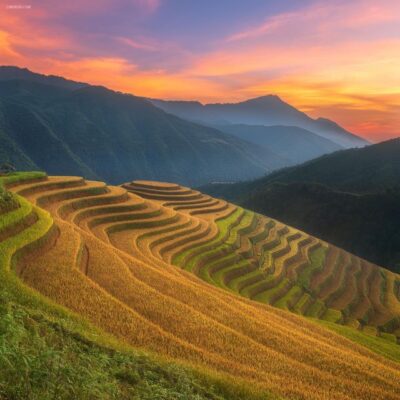
1-Day Guided Trek to Lao Chai & Ta Van with Lunch
Read our review →
Sapa 1 Day Long Trek: Trek to Hau Thao and Sa Seng Villages
Read our review →
EXPLORE SAPA: 2D1N TREKKING & HMONG CULTURE WITH DINH
Read our review →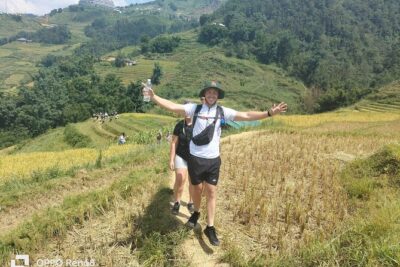

This walk also sits in