
REVIEW · TANZANIA
6 Days: Hiking Kilimanjaro via Machame Route
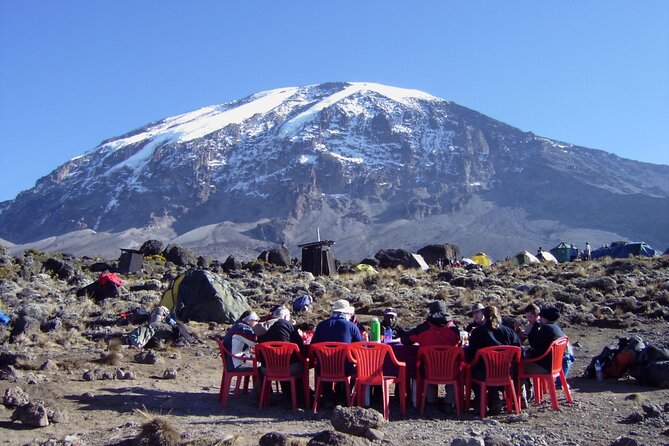
Kilimanjaro is not a casual hike with a big view at the end. This six-day Machame Route takes you from monkey-filled rainforest to the cold, thin air of Uhuru Peak at 5,895 meters. The route is scenic, but its steep sections and short acclimatization schedule make it a serious physical and mental test.
I like the changing scenery, especially the passage from rainforest to alpine desert, and I like the strong personal role played by guides such as Gasto. The price also covers park and rescue fees, tents, meals, purified water, and airport transfers. The main caution is simple: six days is demanding, and summit night begins around midnight after several days of uphill walking.
Key points to know before booking
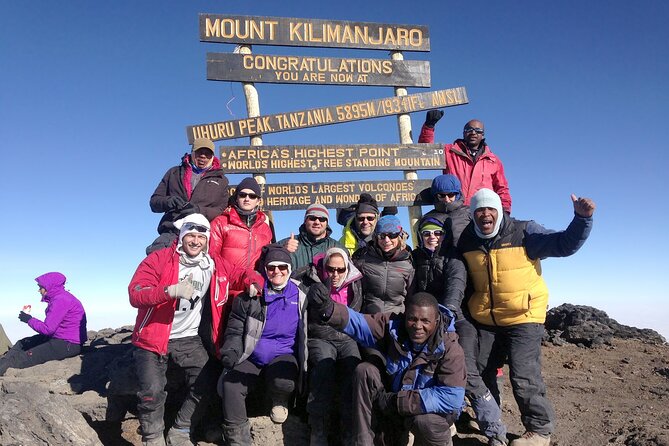
- A full mountain crossing in six days: You move from the Kilimanjaro National Park gate through Machame, Shira, Barranco, Karanga, Barafu, and Mweka.
- A dramatic change in scenery: Expect rainforest, heath, moorland, the Shira Plateau, alpine desert, giant senecio plants, and views toward Kibo.
- The Barranco Wall is hands-on: Guides assist on the steep rock section, but you still need balance, stamina, and confidence.
- Summit night is the hardest test: You start around midnight, reach Stella Point, continue to Uhuru Peak, then descend to Mweka Camp.
- The crew receives repeated praise: Gasto is singled out for encouragement, mountain experience, cultural stories, and calm support.
- Much is included in the $1,950 price: Park and rescue fees, guides, meals, tents, drinking water, mess facilities, and airport transfers are part of the package.
What the six-day Machame Route really demands
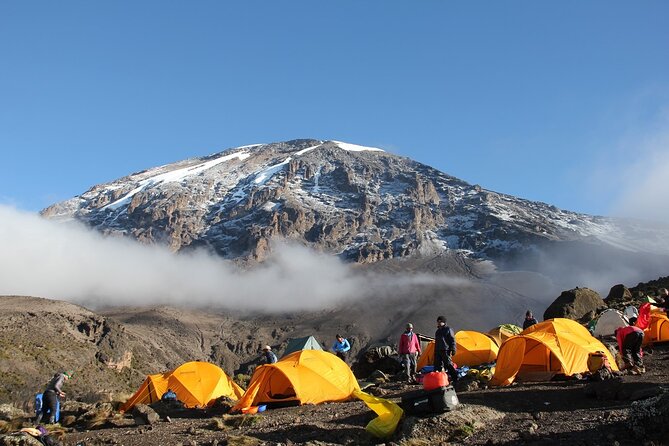
The Machame Route is often chosen for its scenery and variety. Here, you do not simply climb one steady slope. You pass through several climate zones, each with its own plants, weather, and walking conditions.
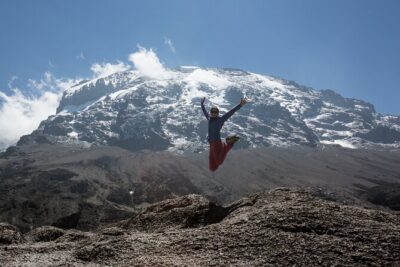
The route begins in thick rainforest, where black-and-white colobus monkeys may watch from the trees. It then climbs through heather and moorland before reaching the open Shira Plateau. Higher up, trees disappear and the ground becomes rocky and dry. Near the summit, the setting turns stark and cold.
That variety is the great reward. It also means you must adapt quickly. A moderate fitness level is required, but the phrase should not make this sound easy. You will walk for roughly five to seven hours on most days, and summit day combines a midnight start, a climb to the top, a descent to Barafu, and a further walk to Mweka Camp.
This is a private activity, so only your own group participates. That gives the guide more room to watch your pace and respond to your condition. The experience is still physically demanding, but it is not a large public group moving to someone else’s schedule.
More Kilimanjaro Hikes in Arusha:
- 8-Day Small-group Lemosho Kilimanjaro Summit Trekking
★ 5.0 · 186 reviews - Mountain Kilimanjaro Day Hike
★ 5.0 · 102 reviews - Private Full Day Hiking Experience to Marangu Route
★ 5.0 · 61 reviews
Day 1: From the park gate to Machame Camp
The day begins with pickup at about 7:30 in the morning and a drive of roughly one hour to Kilimanjaro National Park. Once the park formalities are complete, you begin walking through the rainforest.
The first day gives you a gentle introduction to the mountain, though the path still rises steadily. The forest is one of the most pleasant parts of the lower route. It is leafy, damp, and full of bird calls and possible monkey sightings. The black-and-white colobus monkeys are a special detail here, since they can appear above the trail and watch the walking party pass below.
After about five to six hours, you reach Machame Camp at 3,010 meters. The supplied schedule also refers to Shira Cathedral, but the overnight location listed for this first day is Machame Camp. It is worth confirming the exact camp sequence with the operator before departure, since mountain itineraries can use slightly different descriptions.
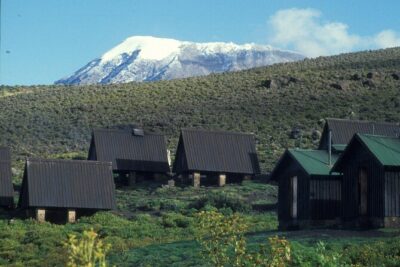
Your sleeping arrangement is in a private, waterproof mountain tent, with meals served in a separate mess tent equipped with tables and chairs. That setup matters after a wet day in the forest. You have a place to eat, organize your belongings, and prepare for the next morning rather than handling every meal inside your sleeping tent.
Day 2: Heath, rocky ridges, and Shira Camp
After breakfast, you leave the forest behind. The route climbs into heather and moorland, with more open views and less shelter from wind or sun.
The trail crosses a small valley and follows a steep, rocky ridge. You then turn west toward a river gorge at around 3,658 meters before continuing to Shira Hut campsite at 3,845 meters. The walking time is listed as five to seven hours, depending on pace and conditions.
This day is important because the altitude begins to affect how quickly you move. You may feel fit at the lower elevation, then notice that a steep section requires more pauses. The sensible approach is to walk slowly, drink regularly, and let the guide know how you are feeling rather than trying to match another person’s pace.
Shira is a striking change from Day 1. The forest has fallen away, and the surroundings feel broad and exposed. Views toward Mount Meru and Shira Ridge may appear when weather permits. You should not treat those views as guaranteed, but the open ground itself gives the day a different character.
Day 3: Lava Tower and the Barranco Valley
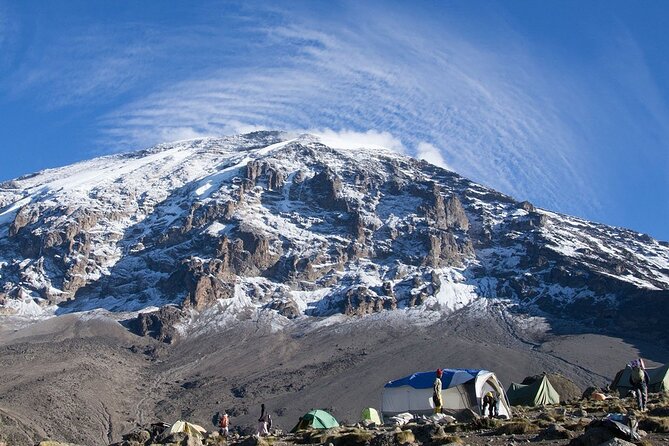
Day 3 is one of the most useful days for understanding the route. You climb above the Shira Plateau toward Lava Tower at 4,640 meters, then descend toward Barranco Camp.
The vegetation becomes sparse, and the setting turns into alpine desert. It is a dry, rocky world with little shade and a more severe feel. Reaching a high point and then sleeping lower at Barranco gives the route a useful pattern of gaining altitude during the day before dropping for the night.
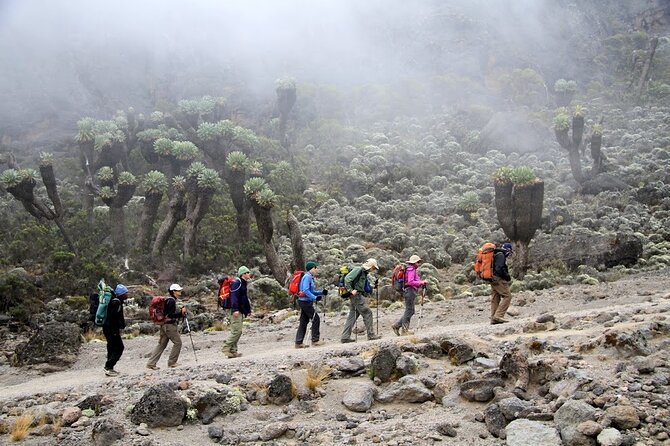
The walk takes about six to seven hours. Giant lobelia and senecio plants appear around the sweeping Barranco Valley, adding odd, almost prehistoric shapes to the high-altitude setting. Barranco is often considered the most attractive camp on this route because of the valley, the plants, and the mountain walls around it.
This is also a day when you may discover that fitness alone is not enough. The steady pace, limited oxygen, and long hours require patience. I would treat the walk as a rhythm exercise: short steps, regular water, and no racing ahead early in the day.
More Six-Day Trips around Arusha:
- 6 Days Serengeti Safari(hiking waterfalls &coffee tour)
★ 5.0 · 48 reviews - Singalila Ridge Trek from Darjeeling – 6 Days
★ 5.0 · 56 reviews - 6 day Rainbow Mountain x Ausangate Trek – FlashpackerConnect
★ 5.0 · 30 reviews - Kathmandu: 6-Day Limitless Langtang Trek
★ 5.0 · 21 reviews
Day 4: The Barranco Wall and Barafu Camp
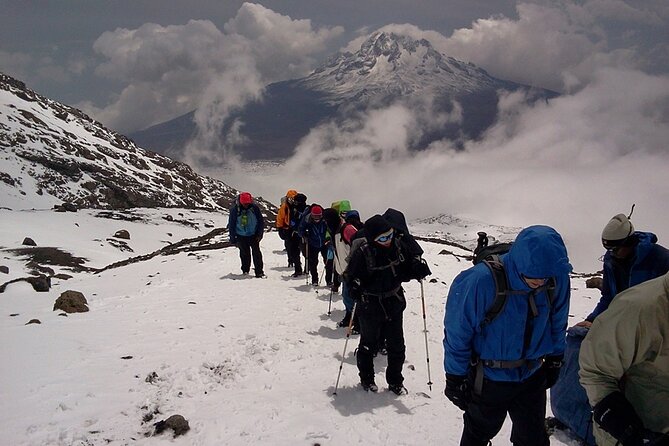
Day 4 begins with the Barranco Wall, the most hands-on section of the trek. You need a steady grip and careful foot placement. The guide and crew assist when needed, but this is not a simple staircase. You should be comfortable using your hands and moving over uneven rock.
The wall is followed by strong views from above Barranco. You then descend into the Karanga Valley, stop for lunch, and climb again for two to three hours toward Barafu Camp at 4,640 meters.
The repeated rise and fall can be tiring. You gain height, lose some of it, then climb again. That is the price of reaching Barafu, the launch point for the summit attempt.
At Barafu, the plan is to eat an evening meal and turn in early. This is easier said than done. You may be tired, excited, cold, or simply unable to sleep much before the midnight start. Use the available rest time well, organize warm layers and headlamp access, and keep your summit clothing close at hand.
Day 5: Uhuru Peak and the long descent
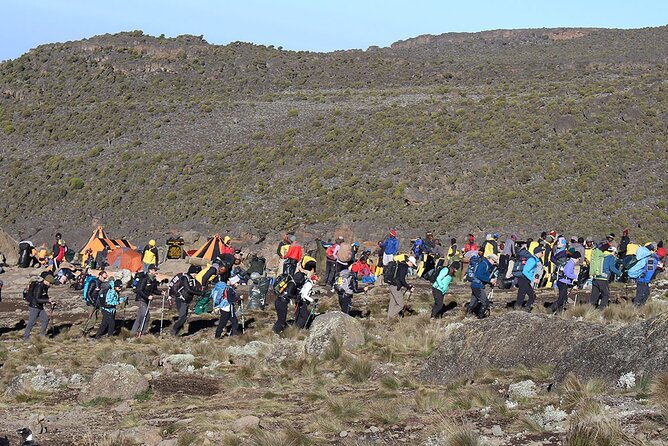
Summit day is the heart of the experience and the part you should take most seriously. Around midnight, you receive hot tea and light snacks, then begin climbing in darkness with a headlamp.
The route rises over Kibo’s scree toward Stella Point, which takes about five to seven hours. Scree is loose volcanic material, so progress can feel slow. The cold, darkness, steepness, and altitude combine to make this much harder than an ordinary early-morning hike.
From Stella Point, you follow the crater ridge toward Uhuru Peak at 5,895 meters. The final section may be physically and mentally difficult, but the reward is a 360-degree view from the highest point in Africa when the weather allows it. The top is not a place to linger for a long time. Cold and altitude make warmth, hydration, and a controlled descent important.
You return by the same route to Barafu for a warm meal and a short rest. Then you continue to Mweka Hut campsite at 3,080 meters. The schedule describes this further journey as about five hours, but the entire summit day is much longer than the simple six-hour label shown in the daily outline. You should plan for a very long day that begins before dawn and includes both the summit climb and the descent to Mweka.
This is where the crew’s encouragement matters most. Gasto is repeatedly singled out for keeping people positive, helping them maintain focus, and supporting climbers in bitter cold. That kind of steady attention is not a minor comfort on summit night. It can help you keep moving when the mountain feels endless.
Day 6: Descending through rainforest to Mweka Gate
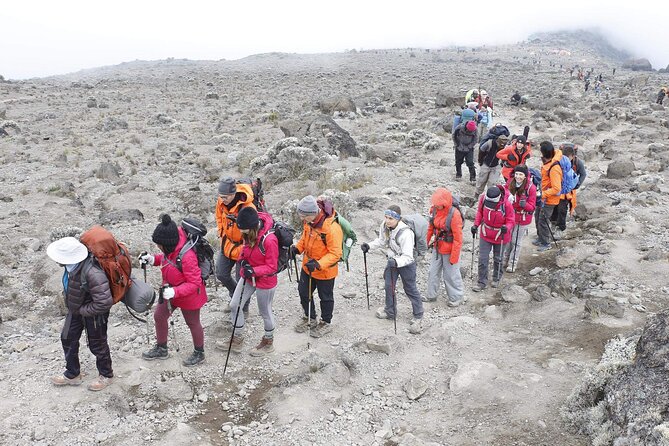
The final day is a steady descent through rainforest to Mweka Gate. Your legs may feel more damaged by the downhill walking than expected, so trekking poles can be useful if you bring them. The route back into the forest feels warmer and more sheltered than the upper mountain.
At Mweka Gate, the group gathers to congratulate finishers. You receive a certificate and have the chance to share your opinion in the guest book. A driver then takes you back to your hotel.
This final day is less dramatic than the summit, but it gives the trip a proper ending. You leave the cold upper slopes, return to thicker vegetation, and shift from mountain routine back to ordinary transport and accommodation.
What the $1,950 price covers
At $1,950 per person, the value depends on how much mountain support you would otherwise need to arrange yourself. This package includes quality waterproof sleeping tents, professional mountain guides, park fees, rescue fees, all meals on the mountain, a mess tent with tables and chairs, purified drinking water, and airport transfers.
It also lists six breakfasts, six lunches, and five dinners. The included meals remove one major planning burden. You do not need to carry six days of food or arrange cooking equipment, and clean drinking water is supplied.
Park and rescue fees are particularly important cost items. They are not small extras that appear only at the end of a budget calculation. Having them included makes the published price easier to compare with cheaper-looking options that may leave major charges outside the headline figure.
You still need to budget for a Tanzania visa, tips, and personal climbing gear. The package does not include the gear you wear or carry yourself, so ask for a precise equipment list before booking. The supplied information confirms that gear is excluded, but it does not specify rental availability or the exact clothing list.
Airport transfers are included, while pickup is offered for the activity. Confirm the pickup point and hotel details in advance. The meeting time is 7:30 in the morning, and the experience begins near public transportation, but the first day also includes a park drive before walking starts.
The guide team and the human side of the climb
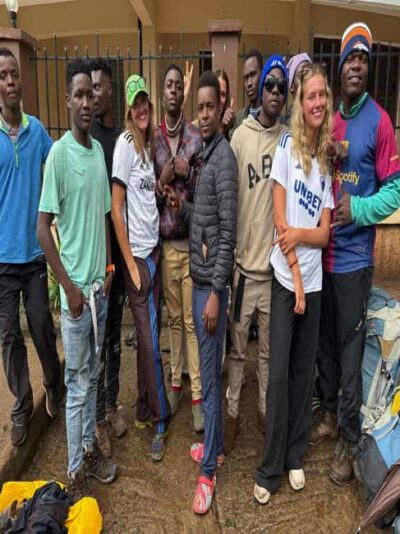
The strongest theme in the feedback is the crew. Gasto is named again and again as a friendly, encouraging guide who shares information about Kilimanjaro, Tanzanian culture, and the Maasai. Other comments describe the team as professional, supportive, and good at creating a sense of shared purpose.
That personal contact is valuable here. Kilimanjaro is not only a route-finding problem. It is a test of pacing, morale, cold tolerance, and decision-making at altitude. A guide who checks on you, explains the surroundings, and keeps spirits up can change how you handle a difficult hour.
The praise also includes good food and help with dietary requirements. If you have special dietary needs, tell the operator before departure and confirm what can be provided. The available information shows that such needs have been handled, but you should still make arrangements clearly in advance.
The crew should not be treated as a guarantee of reaching the summit. No guide can remove altitude sickness, bad weather, or exhaustion. The value is in having experienced support and a team that helps you respond sensibly when conditions become difficult.
Who should book this Kilimanjaro trek
This trip suits you if you want a private mountain experience with strong logistical support and a fast, challenging route to the summit. It is a good fit for someone who enjoys long walking days, changing scenery, and the satisfaction of handling a serious physical test.
You should have a moderate level of fitness at minimum. More important than speed is your ability to walk uphill for several hours, recover at camp, and continue the next day. You also need to accept that summit night will be cold, dark, and far harder than the lower route.
This may not suit you if you want a relaxed introduction to high-altitude walking or if you need a generous acclimatization schedule. The six-day format keeps the trip compact, but it leaves less spare time for the body to adjust than a longer itinerary might.
The route is private, which suits couples, families, and friends who want to share the challenge with their own group. The available information does not give a maximum group size, so ask the operator how many people will be in your party and how guide support is arranged.
Practical preparation before you leave
Bring personal climbing gear suited to cold, wet, and changing conditions. The operator provides tents and mountain support, but your own clothing and equipment are not included in the price.
Prepare for the route’s four main demands:
- Long walking days of roughly five to seven hours.
- Cold and darkness on summit night.
- Steep rocky ground, especially at the Barranco Wall.
- A rapid change from rainforest to high alpine terrain.
Keep your expectations realistic. The scenery is exceptional, but this is not a sightseeing tour with a little walking added. You will spend much of the week managing your pace, hydration, clothing, sleep, and energy.
Free cancellation is available if you cancel at least 24 hours before the experience start time. Changes or cancellations made inside that period are not accepted for a refund. The cutoff follows local time.
Should you book it?
I would recommend this trek to a fit, determined climber who wants the Machame Route in a private format and values strong guide support. The combination of included park costs, meals, tents, water, and transfers makes the $1,950 price reasonable, especially when you add the repeated praise for Gasto and the wider crew.
I would hesitate only if you are underestimating the six-day schedule. The summit attempt is an all-night effort followed by a major descent, and the route includes steep passages before you even reach Barafu. If you want more time for altitude adjustment, ask about a longer itinerary.
For the right person, this is a direct, demanding way to reach Africa’s highest peak, with rainforest wildlife, the Barranco Wall, alpine desert, and a hard-earned sunrise near Uhuru Peak.
FAQ
How long is the Kilimanjaro Machame Route experience?
The experience lasts six days, with walking times generally listed at about five to seven hours per day. Summit day begins around midnight and includes the climb to Uhuru Peak, the descent to Barafu, and the walk onward to Mweka Camp.
What time does the tour start?
The stated start time is 7:30 in the morning. Pickup is offered, and airport transfers are included.
Is this a private tour?
Yes. Only your own group participates in this private activity.
What is included in the price?
The package includes waterproof mountain sleeping tents, professional guides, park fees, rescue fees, meals on the mountain, a mess tent with tables and chairs, purified drinking water, and airport transfers.
Are personal climbing clothes and equipment included?
No. Personal climbing gear is not included. You also need to arrange your Tanzania visa and tips separately.
What is the highest point reached?
The summit is Uhuru Peak at 5,895 meters. The route reaches Stella Point before following the crater ridge to Uhuru Peak.
Can I cancel for a full refund?
Yes, if you cancel at least 24 hours before the experience start time. Cancellations or changes made less than 24 hours before the start are not accepted for a refund.
Just added around Arusha
- 7 Days Machame Route Trek Mount Kilimanjaro★ 5.0 · 12 reviews
- 7 Days Machame Route Kilimanjaro Trekking★ 5.0 · 9 reviews
- 5 days safari, hiking & culture (Serengeti & kilimanjaro)★ 5.0 · 27 reviews
- Mount Kilimanjaro day trip trekking★ 5.0 · 12 reviews
- 7-Day Private Kilimanjaro Hiking Tour via Machame from Arusha★ 5.0 · 11 reviews
- Private Day Tour Kilimanjaro Hike★ 5.0 · 13 reviews
- 4 days Best experience Kilimanjaro Hike, Serengeti &Ngorongoro★ 5.0 · 54 reviews
- 7 Days Kilimanjaro trek via Machame route★ 5.0 · 13 reviews
Kilimanjaro Hikes, side by side.
8-Day Small-group Lemosho Kilimanjaro Summit Trekking
Read our review →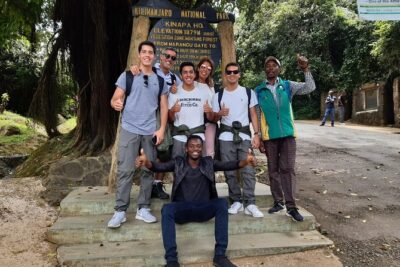
Private Full Day Hiking Experience to Marangu Route
Read our review →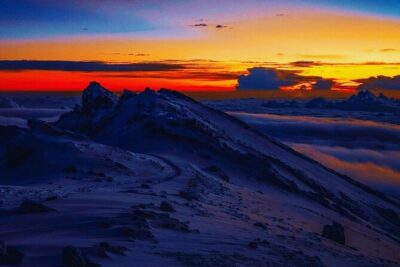
From Arusha/Moshi: Kilimanjaro Hike Marangu Route Day Trip
Read our review →
4 days Best experience Kilimanjaro Hike, Serengeti &Ngorongoro
Read our review →
Best Kilimanjaro hiking day trip tour with Kilinge Adventures
Read our review →
#1. Best Kilimanjaro Day hike Tour-Machame Route-ISMANI
Read our review →This walk also sits in