REVIEW · TANZANIA
6 Days Serengeti Safari(hiking waterfalls &coffee tour)
The best part of this six-day Tanzania trip is its range. You get elephant country in Tarangire, two days around the Serengeti, the Ngorongoro Crater, Lake Manyara, and a final day of hiking and coffee near Kilimanjaro. It is a lot of Tanzania for $1,250 per person.
I like the small group size, capped at six clients in a safari jeep with a pop-up roof. I also like the useful mix of wildlife and local life: game drives are balanced by a Chagga village visit, a waterfall walk, and coffee making at Materuni. The main catch is the pace. Long drives, early starts, camping, and several park changes make this better for active people than for anyone seeking a soft, slow holiday.
At a glance: six days from elephants to coffee
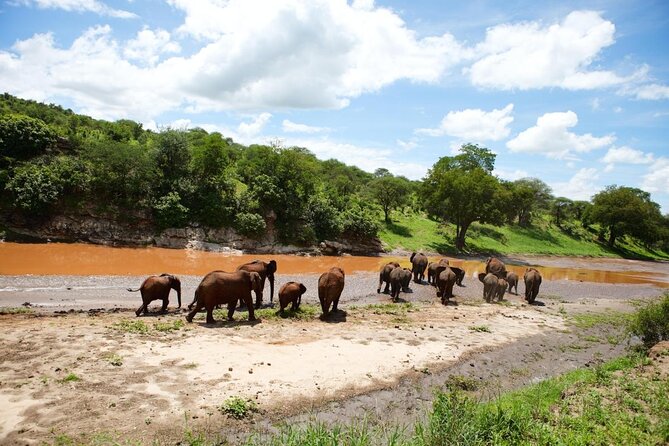
- Tarangire comes first, with giant baobabs, big elephant herds, and a first night in a tent.
- Two days in the Serengeti give you more than a quick pass through one of Africa’s great wildlife areas.
- Ngorongoro Crater is the wildlife anchor, with a 6:15 a.m. descent and strong chances of seeing many species in a compact setting.
- Lake Manyara adds variety, including flamingoes, hippos, birds, monkeys, and the possibility of tree-climbing lions.
- Materuni Waterfalls finishes the trip well, with a 40-minute village walk, Chagga culture, swimming, and coffee.
- The price includes the big-ticket basics, including park fees, safari transport, camping gear, meals, and a guide and cook.
What this safari is really like
This is a camping safari for a maximum of six clients, although the booking information also gives a maximum of seven travelers. I would ask for the exact vehicle capacity before paying, especially if you are booking with a larger party or care about having a window seat.
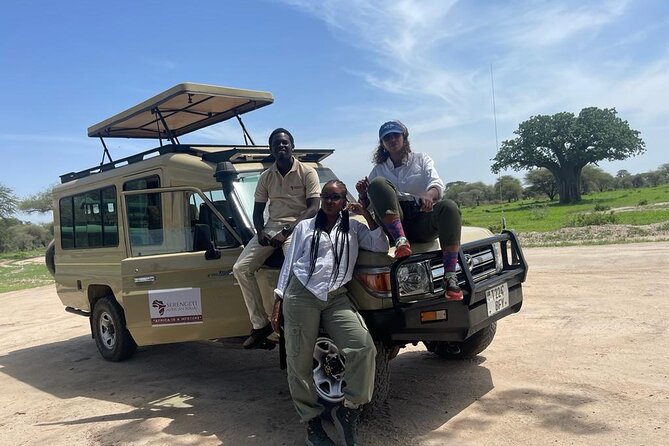
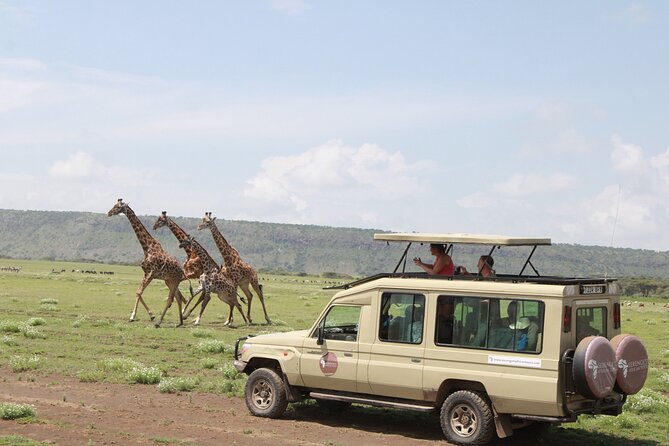
You ride in a custom safari jeep with a pop-up roof. That roof matters. It gives you a better view of animals and birds than a closed minibus, and it lets you stand for photographs during game drives. Your guide drives and handles wildlife spotting, while the chef prepares the included meals.
The route is ambitious. It covers Tarangire, the Serengeti, Ngorongoro Conservation Area, Lake Manyara, and Materuni near Moshi. Expect several hours in the vehicle on transfer days. The listed drives are around six hours, including stops, so bring water, sun protection, and patience.
The tour is advertised at $1,250 per person. For a six-day trip that includes park fees, a safari jeep, camping equipment, four dinners, five breakfasts, six lunches, and a cook, that is a competitive package. You are not paying only for a ride through the parks. You are also covering permits, camp setup, food, and the staff needed to make a camping circuit work.
More Waterfall Hikes in Arusha:
- Arusha: Napuru Waterfalls Guided Hike
★ 4.8 · 39 reviews - From Marrakech: Ouzoud Waterfalls Guided Hike and Boat Trip
★ 4.7 · 33,630 reviews - Marrakech: Ourika Valley Trip with Waterfall Hike
★ 4.6 · 6,792 reviews
Day 1: Tarangire’s elephants and baobabs
The safari begins with a morning drive to Tarangire National Park. At roughly 2,600 square kilometers, it is large enough to feel open and wild, but it is often easier to settle into than the vast Serengeti.
Tarangire is famous for elephants, and that reputation is well earned. Herds can reach around 300 animals. You may see them near seasonal swamps or moving across the dry savannah, often with the park’s giant baobab trees behind them. The setting gives you some of the trip’s most memorable photographs without needing to wait for a rare sighting.
The park also supports giraffes, buffaloes, hartebeest, eland, fringe-eared oryx, gerenuk, and more than 550 bird species. The gerenuk is especially interesting because of its long neck and habit of standing upright to feed.
After the game drive, you spend the night at a Tarangire campsite in a tent. Camping keeps the price down and places you close to the parks, but it also means you should be comfortable with basic conditions. The supplied equipment includes a tent, sleeping bag, and sleeping mattress.
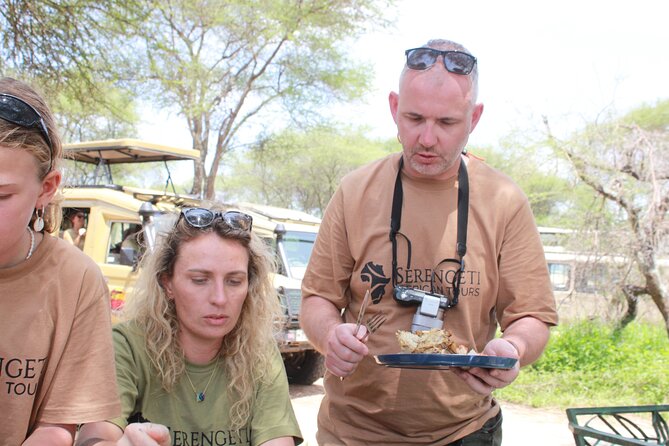
Lunch and dinner are included on this first day. A cook traveling with the group is a major advantage on a route with long road days. Past guide and chef teams have included people such as Simon with cook Matthew, and Godfrey with chef Matthew, but your own team may be different.
Day 2: The long road to the Serengeti
After breakfast, you drive from the Mto wa Mbu area toward the Serengeti. The transfer is listed at about six hours, including stops, and passes through the Ngorongoro area.
The route includes a brief stop at the crater viewpoint. This is a worthwhile pause, even though it is not the full crater visit yet. From above, you get a sense of the crater’s enormous bowl and the way its floor holds grassland, water, and wildlife in one compact space.
An optional Maasai village visit can also be arranged. It lasts about 20 to 45 minutes and is not included in the tour price. You can use it to learn about Maasai life and traditions, including how older customs have changed. Since the stop costs extra, ask for the price and exact activities before agreeing.
You then continue into the Serengeti. The park is the trip’s main wildlife destination, especially if you visit during the wildebeest migration. More than one million wildebeest move through the wider ecosystem, alongside large numbers of zebra. Timing and location matter, so no guide can promise a migration sighting, but two days give you a better chance than a single rushed drive-through.
You spend the night in or near the Serengeti, depending on the camp arrangement. The first Serengeti day is mainly a transfer day, so do not expect hours of game driving from sunrise to sunset. The reward is arriving inside the main wildlife region instead of treating it as a distant stop.
Day 3: A full Serengeti morning
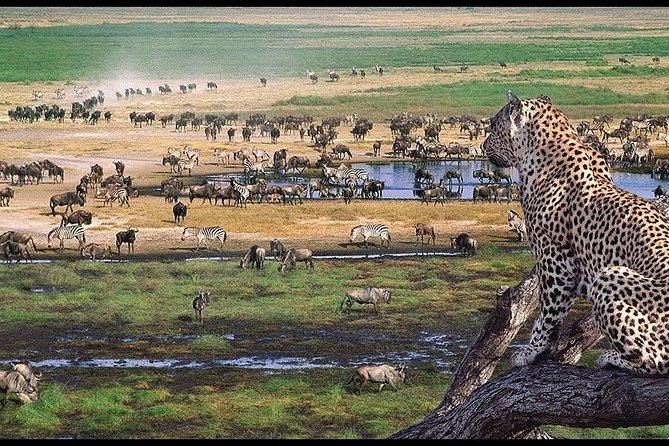
Day three starts early, which is exactly what you want in the Serengeti. Animals are often more active in the cooler morning hours, and an early departure gives your guide time to search before the heat builds.
The route focuses on the Seronera area. This central Serengeti zone is known for broad open plains and a strong mix of wildlife. You may see large herbivores, predators, birds, and smaller animals, though sightings remain part of the wild experience rather than a guarantee.
The plan calls for a morning game drive until the afternoon, followed by lunch, packing, and a final drive as you leave the Serengeti. The journey to Simba Campsite near the Ngorongoro rim takes about two hours. Keep your camera ready during the exit drive. Animals can appear close to campsites and along the road.
This is a full day, and the packing schedule means you will spend less time relaxing than on a lodge-based safari. Still, I like the structure because it gives you a meaningful second Serengeti session rather than a short look from the roadside.
Breakfast, lunch, and dinner are included. You overnight at Simba Campsite, a practical base for the crater descent the next morning.
More Coffee Tastings around Arusha:
- Full Day Materuni Water Falls, Hiking and Coffee Making Tour in Moshi
★ 5.0 · 12 reviews - Cape Town: Lion’s Head Sunrise with coffee or Sunset Hike
★ 4.9 · 160 reviews - Off the Map Chiang Mai Jungle Coffee Trek Roast and Brew
★ 5.0 · 107 reviews - Chiang Mai Coffee Full Day Tour: Trek, Brew & Roast Journey.
★ 5.0 · 38 reviews
Day 4: Down into Ngorongoro Crater
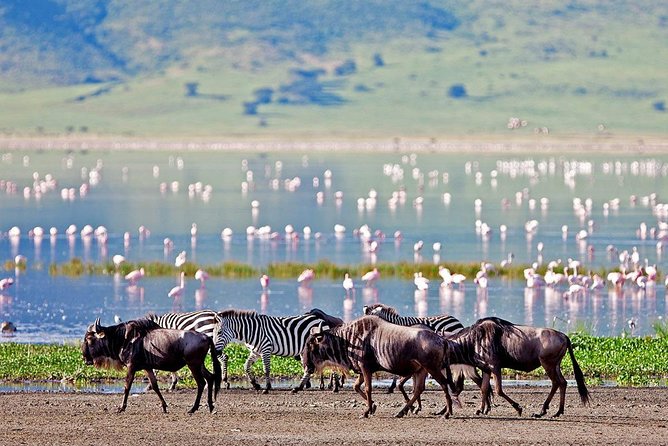
The Ngorongoro Crater is the trip’s most concentrated wildlife stop. You descend at about 6:15 a.m., when the light is soft and the day is still cool.
The crater floor makes animal viewing easier in one important way: the surrounding walls keep much of the wildlife in a defined area. You may see large herds, buffalo, wildebeest, zebra, and other species without covering the huge distances required in the Serengeti.
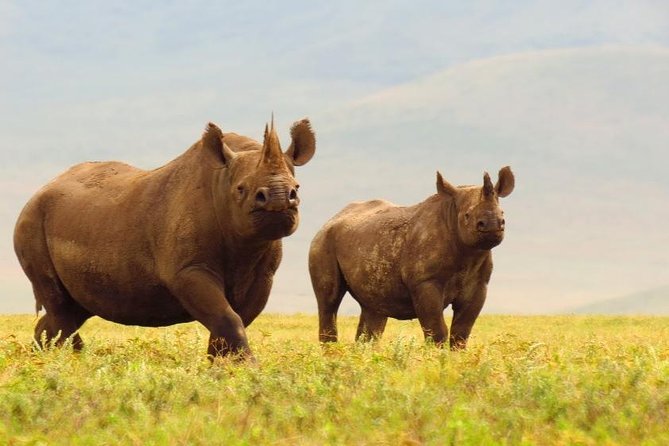
The black rhino is the special target. Rhinos are difficult to spot, so your guide’s experience and patience matter. Even with a strong guide, you may see only a distant shape or miss one entirely. That uncertainty is part of the appeal, but keep your expectations realistic.
After lunch, you continue the game drive before ascending to the rim. The vehicle then heads toward Fig Lodge and Campsite near Lake Manyara National Park.
This is another long and active day. You will have an early start, a crater descent and ascent, a game drive, packing, and a transfer. It is not a day for sleeping late. The advantage is that the route links two major parks without adding another full day to the itinerary.
Day 5: Lake Manyara’s birds and tree-climbing lions
Lake Manyara offers a different feel from Tarangire, Serengeti, and Ngorongoro. The park is known for birdlife, including flamingoes around the lake, and for tree-climbing lions.
The lions are rarely seen, so treat them as a possibility rather than the purpose of the day. You might also spot buffaloes, wildebeest, warthogs, vultures, eagles, and monkeys during the game drive.
The hippo pool provides a closer look at hippos, while the hot spring adds another stop to the route. The mix is useful after several days focused on large open plains. Lake Manyara is not simply a final box to tick. It gives you water, forest, birds, and a different set of animal-viewing conditions.
Breakfast and lunch are included. The itinerary does not clearly state the final overnight arrangement after Lake Manyara, so confirm where you will finish the safari and how you will connect with day six.
Day 6: Materuni Waterfalls, Chagga culture, and coffee
The final day changes the rhythm completely. Instead of sitting in a jeep for most of the day, you visit Materuni Village near Moshi, home of the Chagga people.
The waterfall is about a 40-minute walk from the village. Your guide explains local life, Chagga culture, plants, and the surrounding area as you go. The waterfall is more than 80 meters high, and you can enjoy a refreshing swim if conditions allow.
The hike is not described as a technical climb, but you should still wear shoes with a good grip. The path can feel tiring after five days of early starts and road travel. The views may include Kilimanjaro’s summit when the weather is clear, though that sight is never guaranteed.
The coffee tour gives this final day more substance. You see how coffee is prepared in a local setting rather than simply stopping for a cup at a hotel. For me, this is a smart addition because it connects the scenery to daily life and gives you something active to do after the safari portion.
The Materuni outing lasts about four hours and includes admission. It is a good fit for you if you want the trip to finish with people and place, not just another drive to an airport.
Guides, cooks, and the group experience
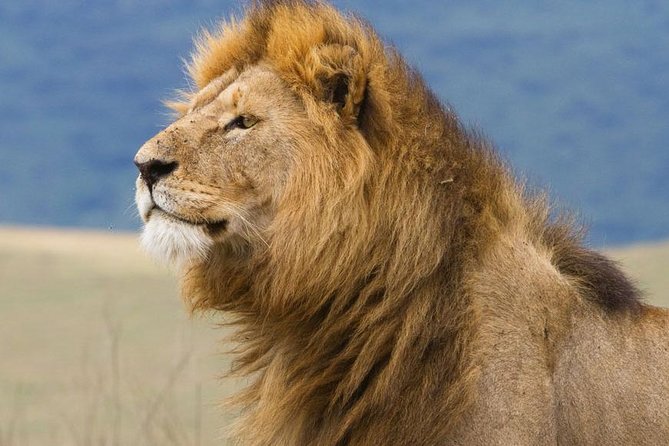
Your guide can shape the entire safari. The guide must read animal behavior, choose sensible routes, explain what you are seeing, and keep the vehicle moving safely over rough roads. Names connected with past trips include David, Godfrey, Simon, Lewis, Hachiem, Malisa, Abu, Calvin, and Mandarin.
Do not assume you will receive a particular guide unless the company confirms it in writing. The useful question is not only who drives, but also who cooks and how the roles are divided. Several past trips had strong guide and chef pairings, with cooks such as Matthew or Matthieu praised for varied meals.
The small group limit is one of the strongest features. Six people can share sightings without the vehicle feeling crowded, and a smaller group usually makes it easier to agree on how long to stay at a sighting. On the other hand, group departures can still mean sharing with people you have not met, particularly in quieter seasons.
One caution is worth noting: one past booking raised concerns about the difference between a private trip and a shared arrangement. If privacy matters, ask whether the jeep, guide, and chef are reserved only for your party.
Camping, meals, and what the price covers
Camping is basic but practical. The package includes a sleeping bag, mattress, tent, safari jeep, park fees, and meals during the safari. That removes several large costs that can quickly push a northern Tanzania trip higher.
Food is prepared by the traveling chef, not bought separately at every stop. The food received strong praise on several trips, though one assessment described it as good rather than exceptional. I would expect filling camp meals, not restaurant dining.
Bottled water has been provided on past trips, but confirm this before departure so you know how much water to carry each day. Visas, tips, and flights are not included.
The price offers good value if you want wildlife first and do not need lodges. It is less appealing if you dislike tents, long drives, or a fixed group schedule. A lodge safari would cost more, but it might give you quieter evenings and more comfort.
Timing, pickup, and practical cautions
Pickup is offered, but the start time is shown as 12:00 a.m., which is not clear enough for planning. Confirm the actual pickup time, place, and whether airport pickup is included for your booking.
Most people can take part, and the activity is near public transportation. The Materuni portion requires a walk of about 40 minutes to the falls, so it is sensible to ask the operator about current trail conditions if walking is difficult for you.
The cancellation policy allows a full refund if you cancel at least 24 hours before the experience start time. Cancellations or changes made inside 24 hours are not refunded or accepted. Cutoff times use local Tanzanian time.
Who should book this six-day route?
I would choose this trip if you want the main northern circuit parks in one package and you are happy to camp. It suits first-time safari visitors, couples watching their budget, solo visitors open to a group, and active people who like adding a hike and cultural stop.
It is especially useful for someone with only six days in the area. You see elephants, the Serengeti, Ngorongoro, Lake Manyara, and Materuni without arranging separate transfers.
I would think twice if you want a private, slow-paced trip, a guaranteed migration crossing, luxury lodging, or long rest periods. The route is packed. The transfer days are real work, and wildlife sightings cannot be promised.
Should you book it?
Book it if your priority is maximum variety for the price. The combination of two Serengeti days, Ngorongoro Crater, Tarangire elephants, Lake Manyara, and Materuni gives you a strong first look at northern Tanzania.
Before booking, confirm four points: the exact group size, your assigned guide and chef, the overnight plan after Lake Manyara, and the pickup time shown as midnight. If those details are clear and you are comfortable with camping, this is a well-priced, active safari with a satisfying local finish.
FAQ
How long is the experience?
The experience lasts approximately six days.
How many people can join the tour?
The tour is designed for a maximum of six clients, although the additional information also lists a maximum of seven travelers. Confirm the final group size before booking.
Which national parks and areas are included?
The route includes Tarangire National Park, Serengeti National Park, Ngorongoro Conservation Area and Crater, Lake Manyara National Park, and Materuni Village near Moshi.
Is the safari conducted in a special vehicle?
Yes. The safari uses a custom jeep with a pop-up roof.
Are meals included?
Yes. The package lists six lunches, five breakfasts, and four dinners, along with meals during the safari. Confirm the exact meal schedule for your dates.
Is camping equipment provided?
Yes. The included equipment consists of a tent, sleeping bag, and sleeping mattress.
Is a Maasai village visit included?
No. The Maasai village visit is optional and is not included in the price. It lasts about 20 to 45 minutes.
Can I swim at Materuni Waterfalls?
The Materuni visit includes a refreshing dip at the waterfall, subject to local conditions.
How long is the walk to Materuni Waterfalls?
The walk from Materuni Village to the waterfall takes about 40 minutes.
What is included in the $1,250 price?
The price includes park fees, the safari jeep, camping equipment, safari meals, the Materuni admission fee, and the listed breakfasts, lunches, and dinners. Visas, tips, and flights are not included.
More Six-Day Trips around Arusha
- 6 Days: Hiking Kilimanjaro via Machame Route
★ 5.0 · 24 reviews - Singalila Ridge Trek from Darjeeling – 6 Days
★ 5.0 · 56 reviews - 6 day Rainbow Mountain x Ausangate Trek – FlashpackerConnect
★ 5.0 · 30 reviews - Kathmandu: 6-Day Limitless Langtang Trek
★ 5.0 · 21 reviews
Just added around Arusha
- 7 Days Machame Route Trek Mount Kilimanjaro★ 5.0 · 12 reviews
- 7 Days Machame Route Kilimanjaro Trekking★ 5.0 · 9 reviews
- 5 days safari, hiking & culture (Serengeti & kilimanjaro)★ 5.0 · 27 reviews
- Mount Kilimanjaro day trip trekking★ 5.0 · 12 reviews
- 7-Day Private Kilimanjaro Hiking Tour via Machame from Arusha★ 5.0 · 11 reviews
- Private Day Tour Kilimanjaro Hike★ 5.0 · 13 reviews
- 4 days Best experience Kilimanjaro Hike, Serengeti &Ngorongoro★ 5.0 · 54 reviews
- 7 Days Kilimanjaro trek via Machame route★ 5.0 · 13 reviews
Waterfall Hikes, side by side.
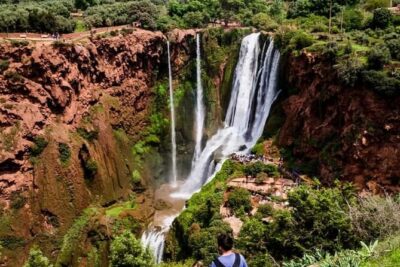
Ourika Valley Trip with Waterfall Hike & Lunch
Read our review →ourika valley lunch & guided hike to waterfalls
Read our review →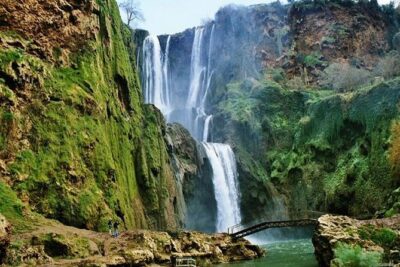
Ouzoud Waterfalls Guided Hike and Boat Trip from Marrakech
Read our review →Ouzoud Waterfalls Trip with Hike & Boat Option
Read our review →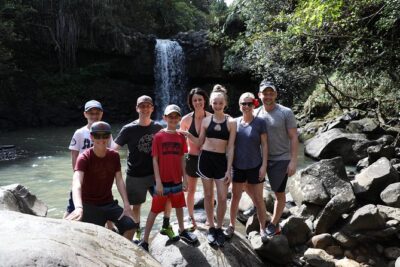
Small Group Waterfall and Rainforest Hiking Adventure on Maui
Read our review →