
REVIEW · TANZANIA
8-Day Small-group Lemosho Kilimanjaro Summit Trekking
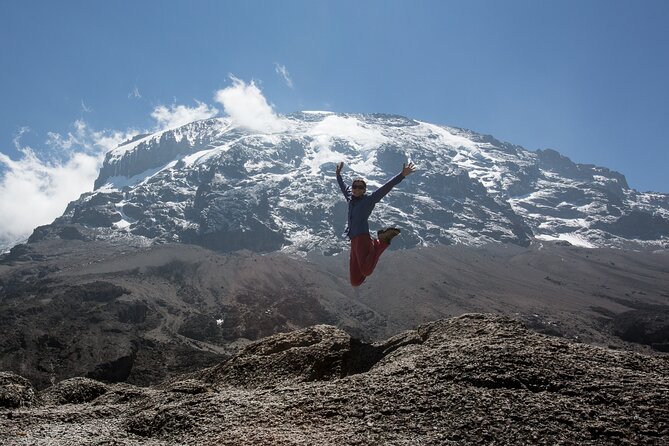
Kilimanjaro gives you a remarkable mountain day after day, not just one dramatic summit. This 8-day Lemosho route moves from rainforest to high desert, past the Barranco Wall, and finally up through loose scree to Uhuru Peak at 19,340 feet.
I like the extra acclimatization time and the small-group format, with no more than 15 people. I also like that the price covers camping gear, park fees, meals, and hotel transfers, so you can focus on walking rather than arranging mountain logistics.
The catch is simple: this is a serious high-altitude climb, not a casual holiday hike. The summit day begins around midnight, and the long ascent, cold, thin air, and steep scree can test even fit hikers.
Key points to know before booking
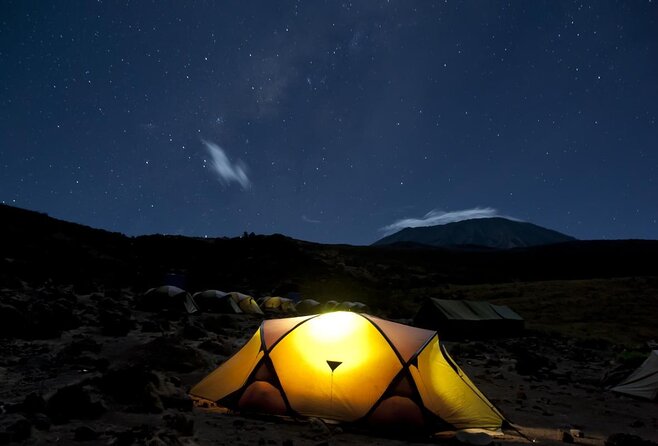
- Eight days gives your body more time to adjust: The route includes several high camps and a Lava Tower acclimatization day before the summit attempt.
- Lemosho offers changing scenery: You walk through rainforest, heather, volcanic rock, high desert, senecio forest, and the arctic zone.
- Summit night is the real test: Expect a midnight departure, 6 to 7 hours up to Stella Point, another hour to Uhuru Peak, then a long descent.
- Small groups matter on a mountain: The maximum group size is 15, allowing guides to watch your pace, energy, and comfort more closely.
- The package is close to all-inclusive: Camping equipment, park fees, meals, and round-trip hotel transfers are included.
- The route is suitable for beginners with preparation: You do not need technical climbing skills, but you do need strong fitness and patience at altitude.
Why the Lemosho route is worth eight days
Lemosho is a good choice if you want a fuller Kilimanjaro experience instead of racing uphill. The route begins on the western side of the mountain and gradually works toward the southern circuit before the summit. That long approach gives you several days to settle into the rhythm of walking, eating, resting, and sleeping at altitude.
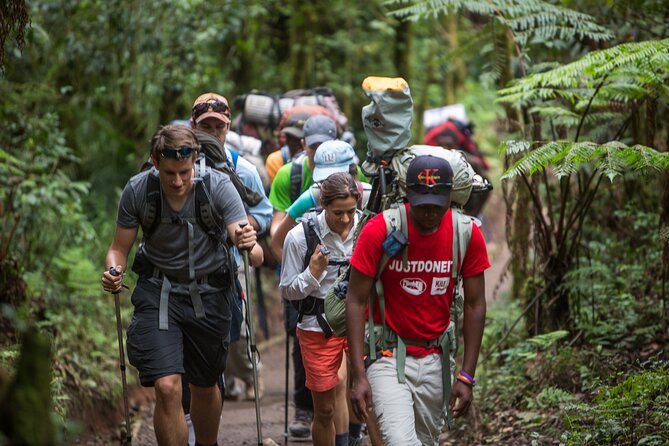
The mountain changes character as you rise. At the start, you are in thick rainforest. Higher up, trees give way to open heather and volcanic rock. Near the summit, almost nothing grows. This steady change is one of the best reasons to choose Lemosho.
The eight-day schedule also spreads out the altitude gain better than a short itinerary. No schedule can guarantee that you will avoid altitude sickness, but extra time at height gives your body a better chance to adjust. You still need to walk slowly, drink as directed by your guides, and tell them promptly if you feel unwell.
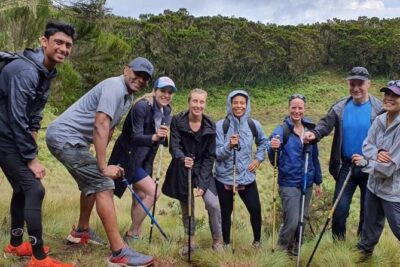
Climb Kili limits the group to 15 people. That is not the same as having a private climb, but it is small enough to keep the group manageable. You might join a group of four or five, or find yourself in a larger party with several guides and porters. Either way, the format allows more personal attention than a large expedition.
More Small-Group Hikes in Tanzania:
- Small Group Waterfall and Rainforest Hiking Adventure on Maui
★ 5.0 · 1,417 reviews - Glacier Hike and South Coast Small-Group Tour from Reykjavik
★ 5.0 · 827 reviews - Sólheimajökull Glacier Hike – Adventure in a Small Group
★ 5.0 · 799 reviews
Day 1: Rainforest walking to Mti Mkubwa Camp
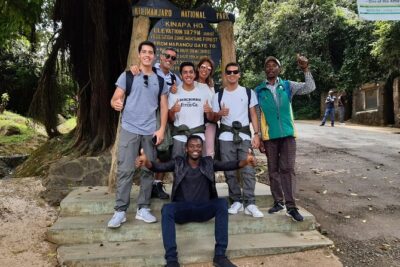
After a night at your hotel, the group drives to the Londorossi Gate on the western side of Kilimanjaro. Park entry formalities take place there, then you begin walking through montane forest toward Mti Mkubwa Camp.
The first day covers about 3 miles and takes roughly 3 to 4 hours. The elevation rises to about 7,742 feet, or 2,360 meters. The trail is a gentle introduction, but the forest can feel damp and muddy depending on conditions.
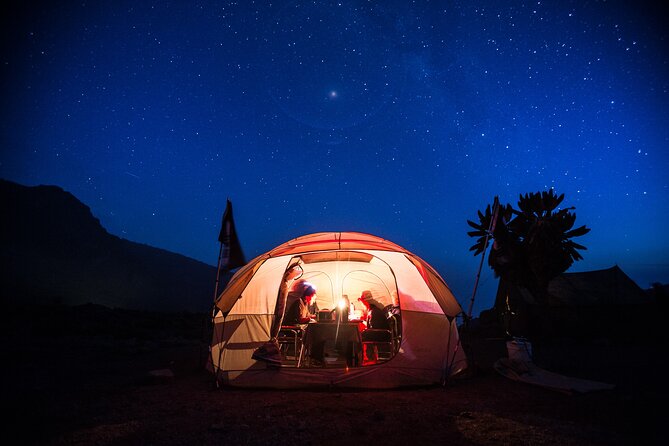
Mti Mkubwa means Big Tree in Swahili. Camp sits among the rainforest, and the setting feels very different from the open slopes you will see later. Your tents are set up for you, with personal belongings placed inside. That small service matters after a day of walking, especially if you are carrying only a daypack.
Do not judge the entire climb by this first day. The distance is short, but your body is beginning to adjust to the routine and the altitude.
Day 2: Leaving the trees for the Shira Plateau
The second day takes you out of the forest and into a broad zone of tall grasses, heather, volcanic rock, and lichen. The route climbs to about 11,500 feet, or 3,505 meters, over roughly 4.9 miles.
This is when Kilimanjaro begins to feel like a high mountain rather than a forest hike. The trees thin out, the air becomes cooler, and the views open toward Kibo, the main summit cone. You will also begin to notice the practical demands of altitude. Keep your pace slow, even if you feel strong.
The day is listed at about 5 to 6 hours of hiking. Once you reach the Shira Plateau, the surroundings become broad and exposed. It is an excellent contrast to the first night in the forest, but the openness may also make wind and cold more noticeable.
Day 3: A full day across the Shira Plateau
Day three is a high-altitude exploration day, with about 8.7 miles of walking and an elevation around 13,800 feet, or 4,206 meters. You move east toward Kibo and may have the option of visiting the ancient collapsed Shira Cone, the oldest of Kilimanjaro’s three volcanoes.
The route ends at Moir Camp, positioned in a large gorge at the end of a dormant lava flow. This is a strong acclimatization day because you spend substantial time high on the mountain without attempting the summit.
The distance is longer than on the first two days, and the elevation can affect your appetite, sleep, and energy. This is a good point to stop trying to prove anything. Walk at the group pace, eat what you can, and save strength for the harder days ahead.
More Kilimanjaro Hikes in Tanzania:
- Mountain Kilimanjaro Day Hike
★ 5.0 · 102 reviews - Private Full Day Hiking Experience to Marangu Route
★ 5.0 · 61 reviews - Private Kilimanjaro Hike 7 Day Lemosho Route
★ 5.0 · 60 reviews - Best Kilimanjaro hiking day trip tour with Kilinge Adventures
★ 4.5 · 54 reviews
Day 4: Lava Tower, Senecio forest, and Barranco
Day four is one of the most useful days on the route. You climb toward Lava Tower, listed at about 15,000 feet, or 4,500 meters, for acclimatization. After resting near the tower, you descend toward Barranco Camp, which sits at about 13,000 feet, or 3,962 meters.
This climb high, sleep lower pattern is valuable for altitude adjustment. You gain height during the day, then finish at a lower camp. The route passes the junction toward Arrow Glacier before descending through a striking zone of giant senecio plants and toward a waterfall.
Barranco Camp lies beneath the Barranco Wall, with clouds often moving through the valley. It is one of the most dramatic camps on the route. You may be tired after the ascent to Lava Tower, but the descent gives the day a different rhythm and helps prepare you for the terrain ahead.
The itinerary gives about 4 to 6 hours of hiking. In practice, the effort depends on how your body reacts to the high point of the day.
Day 5: Up the Barranco Wall to Karanga
Day five covers only about 2.2 miles, but distance does not tell the full story. You begin by climbing the Barranco Wall, an adventurous section that takes you into Kilimanjaro’s arctic zone.
The wall is not presented as a technical climbing pitch, but you should expect a steep, uneven route that requires care and steady footing. Guides will set the pace, and the small group format is helpful here because people can move through the more demanding sections without a long line.
After the wall, the trail continues along the southern circuit through Karanga Valley. You finish at Karanga Camp, around 13,100 feet, or 3,992 meters. The day is listed at 4 to 5 hours.
This short mileage day is not a rest day. The climb over the wall and the altitude make it an important physical and mental step. You are now close to the summit zone, and the character of the mountain is much more austere.
Day 6: Kosovo Camp and preparation for the summit
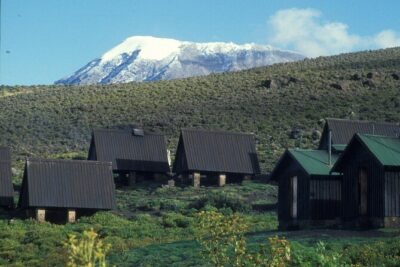
On day six, you walk slowly toward Kosovo Camp, at about 16,000 feet, or 4,876 meters. The route passes Barafu Camp, with views toward Kibo and Mawenzi, Kilimanjaro’s two major peaks.
The walking distance is about 2.6 miles, with roughly 5 to 6 hours allowed. The short distance reflects the altitude and the need to conserve energy. You are not trying to squeeze in a sightseeing day. You are getting into position for the summit.
Kosovo Camp sits on an exposed ridge. The schedule specifically calls for familiarizing yourself with the terrain before dark. That is practical advice. Once night arrives, visibility will be limited, and you want to know where you are stepping, where your equipment is, and how the camp is arranged.
The rest of the day is for eating, drinking, resting, and preparing for the midnight start. Do not spend this time wandering around camp to admire the view. Your main job is to preserve energy.
Day 7: Stella Point, Uhuru Peak, and the long descent
Summit day begins around midnight. You climb through one of the steepest sections on a nontechnical Kilimanjaro route, reaching Stella Point on the crater rim after about 6 to 7 hours.
The route is roughly 5 kilometers uphill, followed by another hour from Stella Point to Uhuru Peak. You ascend through heavy scree between the Rebmann and Ratzel glaciers, with the summit at 19,340 feet, or 5,895 meters.
This is the part of the climb where patience matters most. The air is thin, the trail is steep, and every step can feel slow. The final hour to Uhuru Peak may look short on paper, but at that altitude it can feel much longer.
The reward is the summit of Africa and sunrise from near the top. You then descend to Mweka Camp, covering about 12 kilometers downhill after the ascent. The full day is listed at roughly 11 hours, with 4 to 6 hours of descent.
That descent deserves respect. Reaching the summit does not mean the day is finished. Your legs may be tired, and loose ground can be awkward. Eat, drink, and keep enough energy for the walk to Mweka.
Day 8: Mweka Gate and a welcome shower
The final morning is a 6.4-mile walk to Mweka Gate, at about 5,400 feet, or 1,645 meters. The scheduled walking time is 3 to 4 hours.
This is a gentler finish, but you may still feel the effects of the summit day. The route out gives you time to look back on the week before the Climb Kili vehicle takes you to your hotel.
The return transfer is especially welcome after several nights in tents. A hot shower and clean clothes may feel like the real final prize.
What the $2,895 price includes
At $2,895 per person, this is a substantial purchase, but the value depends on how much support you want. The package includes round-trip transfers from your Arusha hotel, park admission fees, camping equipment, and meals. Those are the major building blocks of an organized Kilimanjaro climb.
You are also paying for a guided operation with porters, camp setup, food preparation, and a planned route through several altitude zones. Arranging each part separately would be difficult, and mistakes with transport, permits, or food would be especially inconvenient on a mountain.
The price does not make the climb easy. It buys organization and support, not a guaranteed summit. The high summit rate associated with this itinerary is encouraging, but no operator can remove the risks of altitude, weather, fatigue, or personal fitness.
Ask for the current equipment list and details of anything not covered before booking. The supplied information confirms the main inclusions, but it does not spell out every personal expense.
Guides, food, and the small-group experience
The strongest part of the operation is the human support. Guide names connected with Climb Kili include Amani, Raymond, Goodluck, John, Herment Mosha, Manny, Cinga, Veda, and Steve. Your actual guide will depend on the departure, so do not book expecting a particular person unless the company confirms it.
The guide’s role is more than pointing out the trail. You need someone who checks your pace, notices changes in your energy, keeps the group moving safely, and helps you stay calm during the summit push. On this route, communication matters most at Lava Tower, the Barranco Wall, Kosovo Camp, and the final scree climb.
Meals are included, and the mountain team handles the camp routine. That makes the trip feel close to all-inclusive. You still need to bring your personal clothing and equipment, but you are not responsible for carrying the full camp or preparing every meal.
The group limit is 15 people. A smaller group can make meals, walking breaks, and guide communication easier. It can also mean that you share the pace of people with different fitness levels. The best approach is to accept the group rhythm rather than treating every day as a race.
Who should book this climb
This route suits a fit beginner who is willing to train, walk slowly, and respect the altitude. It also suits experienced hikers who want a well-organized route without handling permits, camp logistics, and food themselves.
You should be comfortable with long days on uneven ground and with sleeping in tents for much of the trip. Strong physical fitness is required, and you should not view the short distances on days five and six as proof that the climb is easy.
The route is a poor fit if you want a relaxed safari-style holiday, dislike cold nights, or need a guaranteed schedule unaffected by your health. The summit day is demanding even for people who hike regularly.
The activity starts at 8:00 a.m. on the first day, with pickup offered from your Arusha hotel. Confirmation is sent within 48 hours of booking, subject to availability. Free cancellation is available up to 24 hours before the experience start time. Changes or cancellations inside that window are not accepted for a refund.
Should you book the 8-day Lemosho trek?
I would choose this trip if your priority is a strong chance to acclimatize, varied scenery, and a guided mountain experience with meals, camping, permits, and transfers handled for you. The extra day is useful, and the route gives you more than a quick march toward the summit.
I would also choose it if you value personal attention. A group of up to 15 is large enough to meet other climbers but small enough for guides to keep track of the group.
Before paying, confirm the gear list, your exact pickup details, and which guide team is assigned to your departure. If you are fit, patient, and ready for a midnight summit push, the 8-day Lemosho route offers a sensible and rewarding way to reach Uhuru Peak.
FAQ
Where does the Kilimanjaro trek begin?
The trek begins from the western side of Mount Kilimanjaro after check-in at Londorossi Gate. Pickup is offered from your Arusha hotel.
How long is the experience?
The trek lasts approximately eight days, with hiking each day from the rainforest approach through the summit and descent to Mweka Gate.
What is the maximum group size?
The group can include a maximum of 15 people.
What is included in the price?
The price includes camping equipment, park fees, meals, and round-trip transfers from your Arusha hotel.
What time does the first day start?
The meeting time is 8:00 a.m.
How difficult is the trek?
You should have a strong level of physical fitness. The summit day includes a midnight start, 6 to 7 hours of ascent to Stella Point, another hour to Uhuru Peak, and a long descent.
What altitude does the summit reach?
Uhuru Peak reaches 19,340 feet, or 5,895 meters.
Can I cancel for a full refund?
Yes. You can cancel at least 24 hours before the experience start time for a full refund. Cancellations or changes made less than 24 hours before the start time are not accepted.
Just added around Tanzania
- Kilimanjaro 7 Day Private Trekking Experience★ 5.0 · 40 reviews
- Full Day Private Hiking Tour to Kilimanjaro Mountain★ 5.0 · 22 reviews
- Mount Kilimanjaro Day Hike Through Marangu Route to Mandara Hut★ 5.0 · 37 reviews
- Mount Kilimanjaro Day Hike★ 4.5 · 23 reviews
- Best Kilimanjaro Adventure 7 days Machame route Trekking★ 5.0 · 42 reviews
- Private Kilimanjaro Hike 7 Day Lemosho Route★ 5.0 · 60 reviews
- Best Kilimanjaro hiking day trip tour with Kilinge Adventures★ 4.5 · 54 reviews
- #1. Best Kilimanjaro Day hike Tour-Machame Route-ISMANI★ 4.2 · 47 reviews
Kilimanjaro Hikes, side by side.
Private Full Day Hiking Experience to Marangu Route
Read our review →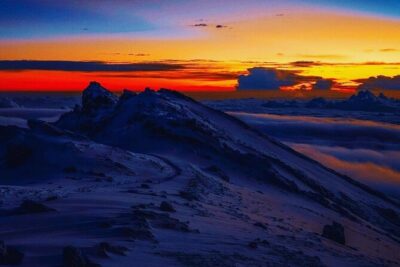
Best Kilimanjaro hiking day trip tour with Kilinge Adventures
Read our review →
#1. Best Kilimanjaro Day hike Tour-Machame Route-ISMANI
Read our review →
Best Kilimanjaro Adventure 7 days Machame route Trekking
Read our review →
Kilimanjaro 7 Day Private Trekking Experience
Read our review →
Mount Kilimanjaro Day Hike Through Marangu Route to Mandara Hut
Read our review →This walk also sits in