REVIEW · NEPAL
Classic Everest Base Camp Trek
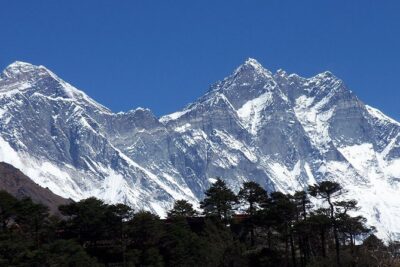
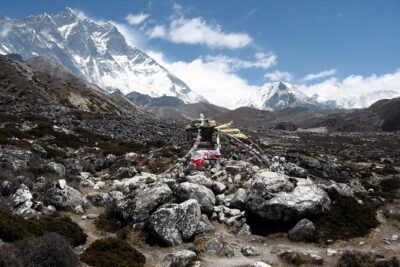
The most memorable part of this trek is not only reaching Everest Base Camp. It is the slow change from Kathmandu streets to alpine forests, glacier rivers, prayer flags, and high mountain lodges, with monasteries and local villages along the way. At roughly 24 days, the schedule gives you time to walk steadily rather than treat the Himalayas like a race.
I like the strong practical package: permits, staff insurance, porters, lodge accommodation, a down jacket, and a sleeping bag are included. I also like the attention given to safety and personal care. Guides named in past departures include Ram, Pooja, Prakash, Lok, Nirjala, and Lal Kumar Tamang, though your assigned team may differ.
The main drawback is the length and physical demand. This is not a sightseeing trip with a few walks added. You need moderate fitness, patience for repeated uphill and downhill sections, and a willingness to accept simple mountain accommodation, paid WiFi, and extra costs for drinks, snacks, and unspecified meals.
Key points to know before booking
- The trek lasts about 24 days, including time in Kathmandu and the mountain route.
- A Lukla to Kathmandu flight is included, along with airport transfers and other private ground transport.
- One porter is provided for every two people, with the porter’s food, lodging, salary, equipment, and accident insurance covered.
- Mountain lodges are included on a twin-sharing basis, with the best available lodge used at each stop.
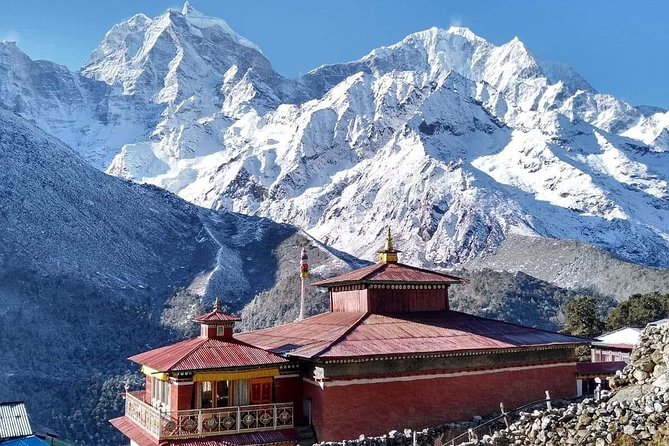
- Monasteries, prayer flags, local communities, forests, and glacier rivers give the walk cultural as well as natural interest.
- The booking has a 4.9 rating from 190 reviews and a 98 percent recommendation rate, with especially strong praise for guides, organization, safety, and warm service.
Why the 24-day schedule matters
Everest Base Camp is famous, but the route is a serious high-altitude trek. The value of this program is its broad time frame. You are not simply paying to be taken to a viewpoint and brought back. You are allowing your body and mind to adjust to long walking days, thinner air, colder conditions, and the repeated effort of climbing and descending.
The exact day-by-day route is not supplied, so you should request the current itinerary before paying. Still, the structure is clear: you begin in Kathmandu, fly toward the Everest trekking region, walk through mountain villages and forests, reach Base Camp, and return before flying back to Kathmandu.
That extra time also gives the trip a human rhythm. You can stop at monasteries, notice the prayer flags along the trail, and spend time with local people rather than seeing the Himalayas only through a camera lens. I find that valuable. The mountains are the headline, but the culture and daily life make the journey feel like Nepal rather than just a long hike.
More Everest Base Camp Treks in Kathmandu:
- Everest Base Camp Trek – 14 Days
★ 5.0 · 1,499 reviews - Everest Base Camp Trekking
★ 5.0 · 485 reviews - Everest Base Camp Trekking – 13 Day
★ 5.0 · 365 reviews
Kathmandu preparation before the trail
The package includes three nights with breakfast at the deluxe Hotel Ramada Encore Kathmandu. That is useful for more than comfort. Kathmandu is where you can recover from the journey, meet the guide team, check equipment, and make sure your bags are ready before the early start.
Airport transfers are included in a private vehicle, which removes one common travel headache. You will not need to negotiate your first taxi ride while tired and carrying trekking gear. The activity starts at 6:45 am from Kathmandu, so prepare for an early morning and confirm the exact pickup point with the operator.
Those three hotel nights also provide some breathing room if flights or arrival plans are awkward. The booking information does not promise extra hotel nights beyond the three included, so check your arrival and departure dates carefully.
The Lukla flight and the first mountain miles
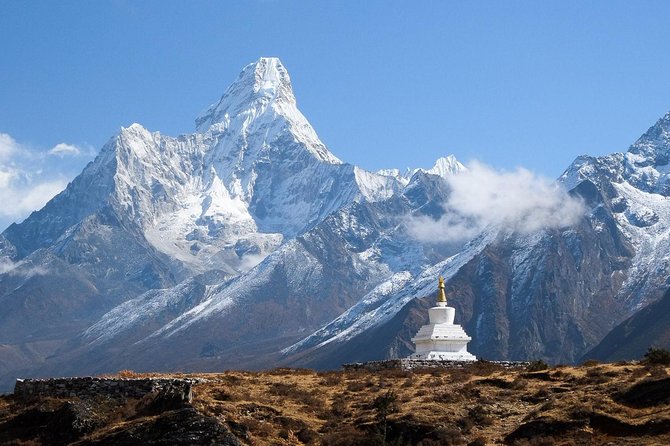
The mountain section begins with the famous flight connection toward the Everest trail. The package specifically includes the Lukla to Kathmandu flight on the return, including departure taxes. The information does not clearly state whether the outbound flight is included in the same way, so ask for a full transport breakdown before booking.
Once walking begins, expect a route of changing surfaces and steady effort. The description highlights alpine forests, glacier rivers, mountain views, prayer flags, and many ups and downs. That means the scenery changes often, but so does the strain on your legs. Downhill walking can be as tiring as climbing, especially after several days.
Your guide is important here. The strongest praise for this company centers on guides who manage pace, safety, local culture, and group concerns. Ram is described as highly experienced, while Pooja is praised for being friendly and helpful. Prakash, Lok, Nirjala, and Lal Kumar Tamang are also named as guide team members on different departures.
Do not assume you will receive a particular guide unless the company confirms it. Do ask who will lead your group, how many people will be walking together, and what happens if the weather affects the flight schedule.
Forests, rivers, monasteries, and mountain communities
The walk is not just a march toward one famous sign. Alpine forests soften the early sections, while glacier rivers add sound and movement to the route. Farther along, the setting becomes more exposed and the mountain views take over.
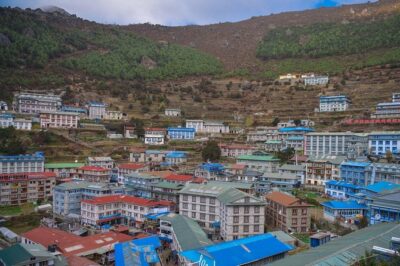
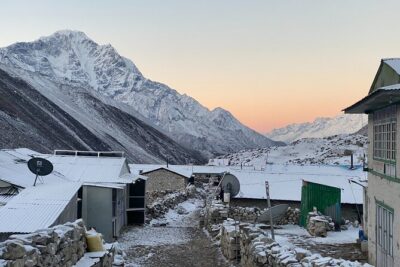
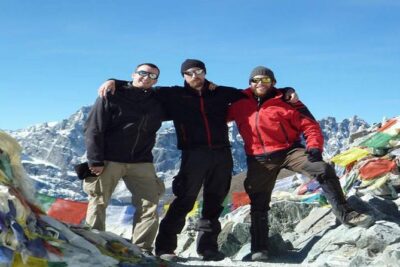
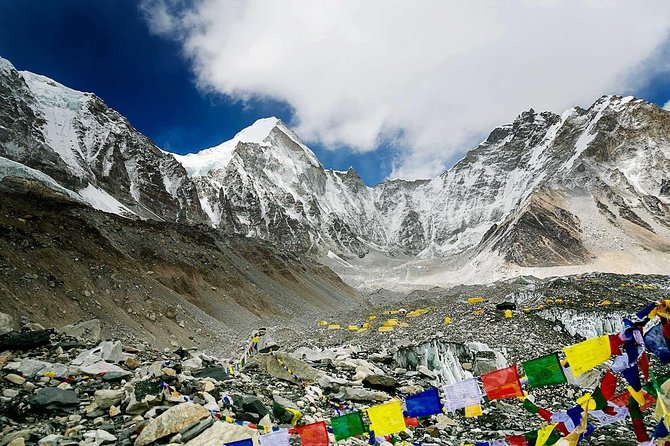
Monasteries and prayer flags provide the cultural heart of the trek. You may see people using the trail for work, trade, worship, or daily travel, not simply for recreation. The package places real emphasis on meeting local people and seeing mountain life up close. Their hospitality is part of the experience, though you should remember that village lodges are practical rather than luxurious.
I like this mix because it keeps the trek from becoming a checklist. You are not only counting distance to Base Camp. You are noticing the details around you: prayer flags moving in the wind, lodge life at the end of a walking day, and the way communities function in a difficult setting.
The tradeoff is comfort. WiFi is not included, and cold drinks, bottled water, soft drinks, and snacks cost extra. Meals are included only where the itinerary specifies them, so carry enough spending money for food and drinks along the way.
More hikes and treks around Kathmandu:
- Nagarkot Sunrise View and Day Hiking from Kathmandu
★ 5.0 · 471 reviews - Annapurna Circuit Trek with Tilicho Lake
★ 5.0 · 368 reviews - Everest Base Camp Trek
★ 5.0 · 350 reviews - Everest Base Camp Trek -14 Days
★ 5.0 · 321 reviews
Lodges, porters, and what the package covers
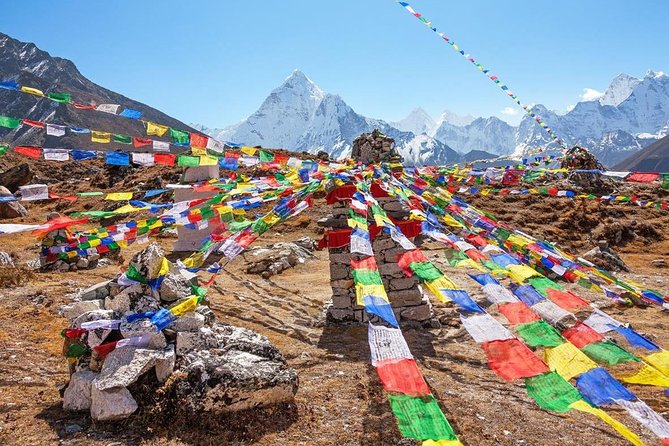
Accommodation during the trek is in the best available twin-sharing lodge, arranged from lodge to lodge. That wording is realistic. It does not promise boutique rooms or consistent standards. Mountain accommodation can vary, and availability may depend on the season and conditions.
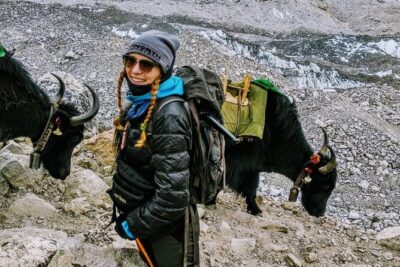
The package includes one porter for every two people. The porter’s food, accommodation, salary, equipment, and accidental insurance are covered. This is a meaningful inclusion because carrying a full load at altitude can make the trek much harder. You will still need to respect the porter’s load limits and pack sensibly.
You receive a duffle bag for the trek, plus a down jacket and sleeping bag. Those items can save you the trouble of buying or renting bulky equipment before arrival. A T-shirt, trekking map, and trip achievement certificate are also included, though the map and clothing should be treated as useful extras rather than reasons to choose the trip.
A first aid medical kit is supplied. That is reassuring, but it does not replace your own medication, travel insurance, or honest communication with your guide if you feel unwell. The listing says the trek requires moderate physical fitness, and you should take that seriously.
Safety and the value of the guiding team
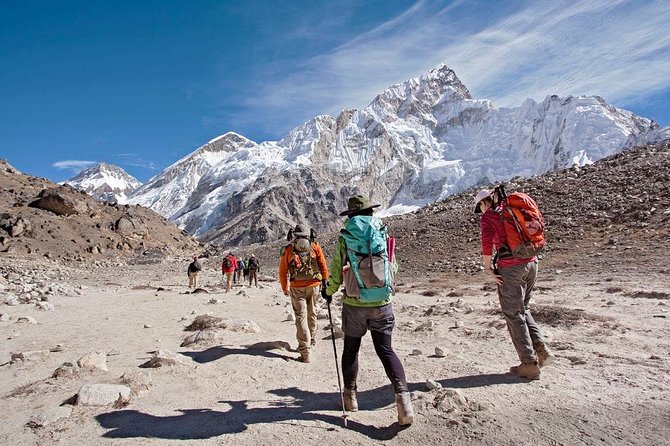
Safety is one of the clearest strengths of this experience. The guide and porter team are covered for equipment and accident insurance, and past groups have praised the staff for watching their welfare, explaining conditions, and keeping the trek organized.
That matters in the Everest region because the challenge is not only physical. Weather can affect flights. Altitude can change how you feel. A route that looks manageable on paper can feel very different after several hours of walking. A good guide helps you judge pace and recognize when a problem needs attention.
The company also appears to invest in local guides, including women. That gives you a chance to support a local team rather than treating the region as scenery delivered by an outside operator. Ask how the company handles altitude concerns, guide ratios, emergency transport, and changes caused by weather.
The private-tour format means only your group participates. That can make pacing and communication easier than joining a large public departure. It may also mean less social variety, depending on the size of your own party.
Reaching Everest Base Camp
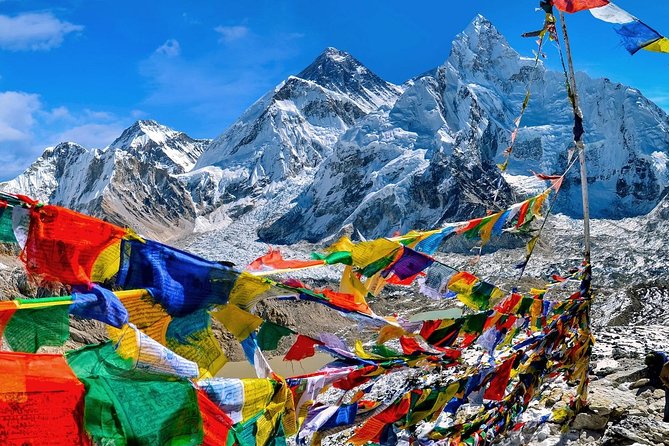
The arrival at Base Camp is the emotional high point, but it is not the only reward. You will have already crossed forests, rivers, villages, monastery areas, and demanding climbs to get there. The final destination matters because of what the journey has required from you.
The supplied information does not state whether you spend a night at Base Camp, how long you remain there, or the exact viewpoints included. Ask those questions before booking. The route may be adjusted for weather, health, or local conditions, and your guide should explain any changes clearly.
You should also keep expectations grounded. Base Camp itself is not necessarily the grandest mountain viewpoint of the trek. The approach, the surrounding peaks, the glacier environment, and the feeling of reaching a goal after many days may be more powerful than the base area alone.
Is $1,835.90 good value?
At $1,835.90 per person, the price is not a casual add-on to a Nepal holiday. It is a substantial commitment, but the package includes several expensive and useful pieces: three Kathmandu hotel nights with breakfast, private airport and ground transfers, trekking permits, the TIMS fee, a guide, porters, lodge accommodation, staff insurance, a Lukla to Kathmandu flight, a duffle bag, a sleeping bag, and a down jacket.
You still need to budget for meals not listed in the itinerary, WiFi, cold drinks, bottled water, soft drinks, snacks, and any personal purchases. Because the meal inclusions are not fully shown here, request the complete food schedule. That is the biggest point to clarify when comparing prices with other Everest treks.
The price looks strongest for someone who values organized logistics and included equipment. If you already own a sleeping bag, jacket, and trekking kit, some inclusions may matter less to you. If you are new to Himalayan trekking, the support package can make the planning much easier.
Who should book this trek?
I would consider it for a fit first-time Everest Base Camp trekker who wants a guided program rather than arranging every lodge, permit, porter, and transfer alone. It also suits families with adult children, couples, and private groups that want staff support and a clear structure.
It is less suitable if you dislike long walking days, basic lodges, uncertain flight conditions, or spending extra for simple drinks and snacks. The trek is also a poor match for anyone expecting a luxury holiday or a short mountain excursion.
Before booking, confirm the full itinerary, outbound flight arrangements, meal plan, group size, guide assignment, luggage limits, and emergency procedures. The free cancellation policy allows cancellation up to 24 hours before the start time for a full refund. Changes made inside that window are not accepted, and poor weather may lead to a new date or full refund.
Should you book the Classic Everest Base Camp Trek?
Yes, if you want a carefully supported, culture-focused trek with equipment, porters, permits, and lodge accommodation handled for you. The strongest reasons to choose it are the experienced local staff, the practical inclusions, the private format, and the time allowed for a full mountain journey.
Book with care if your plans are tight or your comfort needs are high. Confirm the missing transport and meal details first. If those answers suit you, this is a solid way to reach Everest Base Camp while giving proper attention to the forests, monasteries, rivers, communities, and people who make the route worth walking.
FAQ
How long does the Classic Everest Base Camp Trek take?
The trek lasts approximately 24 days.
Where does the experience start?
It starts in Kathmandu, Nepal, at the stated meeting point of Kathmandu 44600.
What time does the activity start?
The stated start time is 6:45 am.
Where does the experience end?
The activity ends back at the meeting point in Kathmandu.
Is airport pickup included?
Yes. All ground transport in a private vehicle, including airport transfers, is included.
Is the Lukla to Kathmandu flight included?
Yes. The return flight from Lukla to Kathmandu, including departure taxes, is included.
Is accommodation in Kathmandu included?
Yes. Three nights with breakfast at the deluxe Hotel Ramada Encore Kathmandu are included.
What accommodation is used during the trek?
The trek includes the best available twin-sharing lodge accommodation from lodge to lodge.
Are a sleeping bag and down jacket provided?
Yes. A down jacket and sleeping bag are provided during the trek.
Are meals included throughout the trip?
Only meals specified in the meal inclusions of the itinerary are included. Cold drinks, bottled water, soft drinks, and snacks are not included.
Is a guide and porter included?
Yes. One experienced guide is included, along with one porter for every two people. Staff food, lodging, salary, equipment, and accidental insurance are included.
Do I need good fitness for this trek?
Yes. The activity states that participants should have a moderate level of physical fitness.
Is this a private tour?
Yes. Only your group participates in the activity.
Are trekking permits included?
Yes. The Sagarmatha National Park permit and TIMS fee are included.
Can I cancel for a full refund?
You can cancel up to 24 hours before the experience start time for a full refund. Cancellations or changes made less than 24 hours before the start time are not accepted for a refund.
What happens if bad weather cancels the experience?
If poor weather causes cancellation, you will be offered a different date or a full refund.
Just added around Kathmandu
- 14 Days Private Tour Everest Base Camp Trek★ 5.0 · 105 reviews
- Kathmandu: Nagarkot Sunrise & Hike with Lunch -Private/Group★ 4.9 · 122 reviews
- 4 Days Poon Hill Trek★ 5.0 · 94 reviews
- Langtang Valley Trek★ 5.0 · 140 reviews
- Manaslu Circuit Trek★ 5.0 · 184 reviews
- Kathmandu: Dhulikhel to NamoBuddha Day Hike with Lunch★ 4.8 · 62 reviews
- Nagarkot Sunrise View & Day Hiking with Lunch – Private/Group★ 5.0 · 73 reviews
- Nagarkot Sunrise Trip & Day Hike with Lunch from Kathmandu★ 4.5 · 83 reviews