
REVIEW · NEPAL
Pokhara: 5-Day Annapurna Base Camp (ABC) Trek
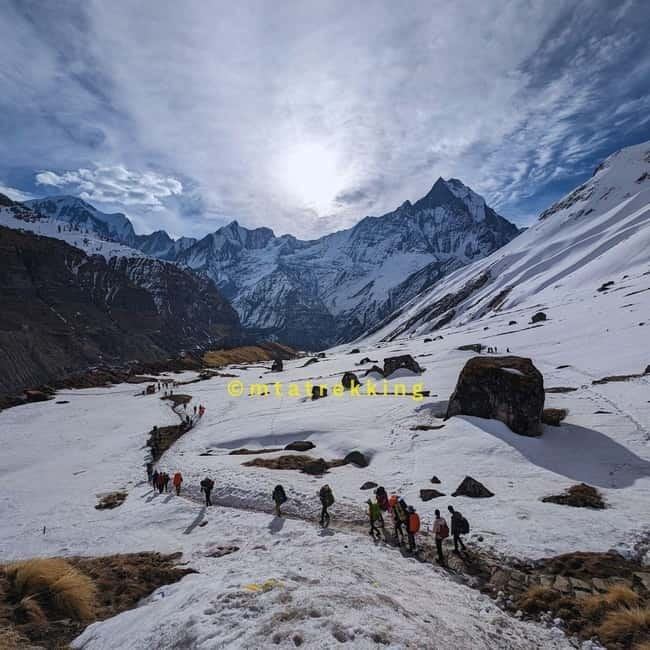
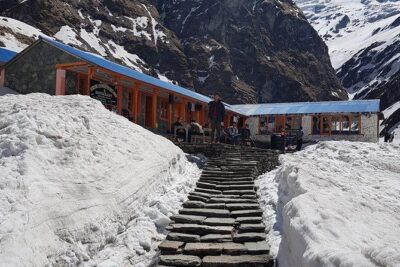
Annapurna Base Camp is the prize here: a high mountain bowl at 4,130 meters, surrounded by the Annapurna Massif and the sharp profile of Machhapuchhre, or Fishtail. In only five days, you move from Pokhara’s lakeside streets to snow-country views, with tea-house nights along the way.
I like the Gurung villages and changing scenery, which make this more than a march toward a viewpoint. I also like the private format and the practical support: hotel pickup, permits, a registered guide, first-aid kit, and luggage storage in Pokhara. The main caution is simple: this is a hard five-day trek, and the short schedule gives you little spare time if your legs, weather, or altitude need a slower pace.
Key points to know before you book
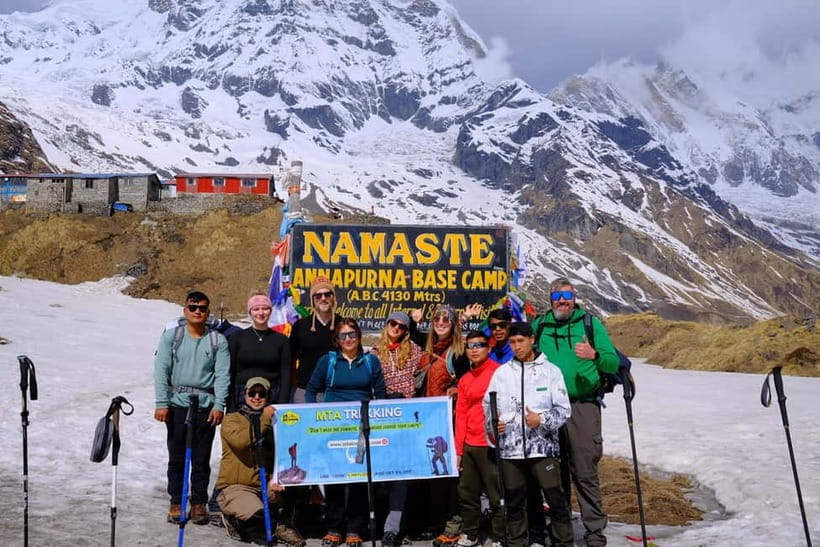
- 4,130-meter finish: Annapurna Base Camp is high enough for altitude problems, even though the trip is short.
- Five days, four nights: You spend nights at Lower Sinuwa, Deurali, Annapurna Base Camp, and Bamboo.
- Gurung culture on the trail: The route passes traditional villages and gives your guide room to explain local life.
- Private English-speaking guide: Guides named in the booking history include Santosh, Prabit, and Ramit.
- $136 starting price: The package covers transport, permits, tea-house accommodation, and guiding, but check the meal option and budget for extras.
- Jhinu hot springs: You can make an optional soak part of the return route before driving back to Pokhara.
Why this five-day ABC route works
The Annapurna Base Camp trek is one of Nepal’s classic walks because the scenery changes quickly. You begin near Pokhara, where the climate and pace feel gentle, then pass rice terraces, forest trails, stone-built villages, and high mountain terrain.
I like that the route offers more than a single dramatic arrival. Lower-elevation villages show daily life, while the upper section brings the big peaks. Your guide can connect the two, explaining the mountains, local culture, and practical details of walking at altitude.
The private-group setup matters on a demanding route. It gives your guide more scope to adjust rest times and walking speed. One Japanese customer specifically praised the way the guide helped avoid overexertion, and that is exactly the kind of support you want when the trail becomes tiring.
Still, five days is brisk. The schedule does not offer a planned spare day for illness, bad weather, or a slow walker. If you are fit and comfortable with long uphill and downhill days, it can work well. If you prefer a gentler pace, a longer ABC schedule would be easier on the body.
More Annapurna Treks in Kathmandu:
- Annapurna Circuit Trek with Tilicho Lake
★ 5.0 · 368 reviews - Annapurna base camp trek 5 Days
★ 5.0 · 252 reviews - 14-Day Private Annapurna Base Camp Trek
★ 5.0 · 180 reviews
Day 1: Pokhara to Lower Sinuwa through Jhinu
Your day begins with pickup at a hotel in Lakeside Pokhara or at Pokhara International Airport. A private jeep or SUV takes you toward Siwai, described as the last road point, in roughly three hours.
From there, you start walking. The first day is listed at about five to six hours, ending around Lower Sinuwa at approximately 2,300 meters. The route passes through Jhinu, a village known for its natural hot springs.
This is a useful first day because you get a taste of several parts of the route at once: road travel, village paths, climbing, and mountain scenery. You are not dropped straight into the highest section, but the walking begins seriously enough to show you what the next four days require.
The first day can also feel longer than the headline suggests. Road conditions, the exact walking start, and your pace all affect the timing. Wear your boots during the drive or keep them easy to reach, and carry water, a warm layer, and rain protection in your day bag.
Jhinu’s hot springs are one of the route’s appealing details, but the schedule does not promise a soak on the first day. The hot-spring stop is specifically included as an optional part of the return journey, so treat Day 1 as a pass through Jhinu rather than a guaranteed bathing stop.
Day 2: Lower Sinuwa to Deurali
Day 2 takes you from Lower Sinuwa to Deurali at about 3,200 meters. The walking time is listed at roughly six hours, with a steady climb through changing scenery.
This is where the trip begins to feel like a proper Himalayan trek rather than a village walk. Forest sections give way to more open mountain views, and the air becomes cooler as you gain height. You should expect the day to test your legs, especially if you have not recently walked uphill for several hours.
Deurali is your overnight point before the final push to base camp. That location matters because your body has less time to adjust than on a longer trek. Take the evening slowly, drink what your guide recommends, eat a full meal if available, and tell the guide early if you develop a headache, nausea, unusual fatigue, or trouble sleeping.
Altitude sickness is possible at this trip’s maximum height. The supplied guidance calls it rare, but no one should dismiss it. A registered guide can help you judge symptoms and effort, yet you remain responsible for speaking up. Toughing it out silently is not a badge of honor in the Himalayas.
Day 3: Machhapuchhre Base Camp to Annapurna Base Camp
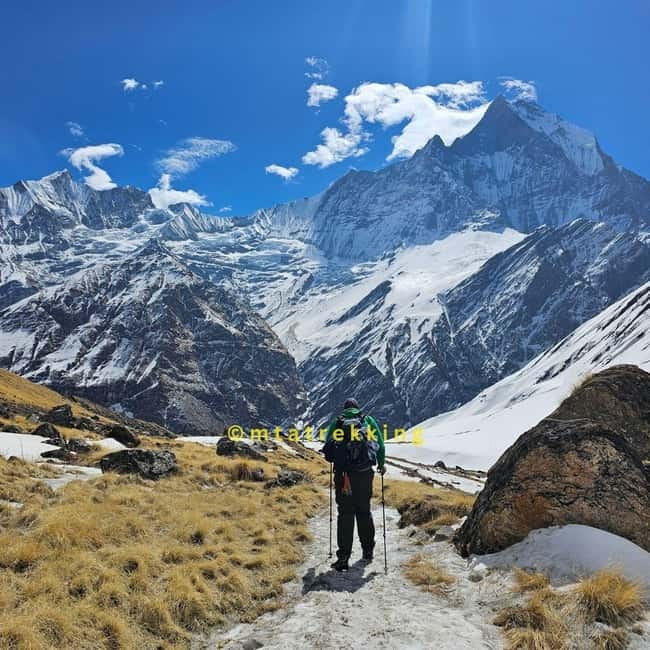
Day 3 brings the high point of the trek. From Deurali, you walk toward Machhapuchhre Base Camp and then continue to Annapurna Base Camp, reaching 4,130 meters.
The walking time is described as around four hours in the day-by-day plan, while the route schedule allows closer to six hours. That difference tells you to think in terms of a full mountain day, not a fixed stopwatch. Stops for photographs, pace, trail conditions, and altitude can all change the timing.
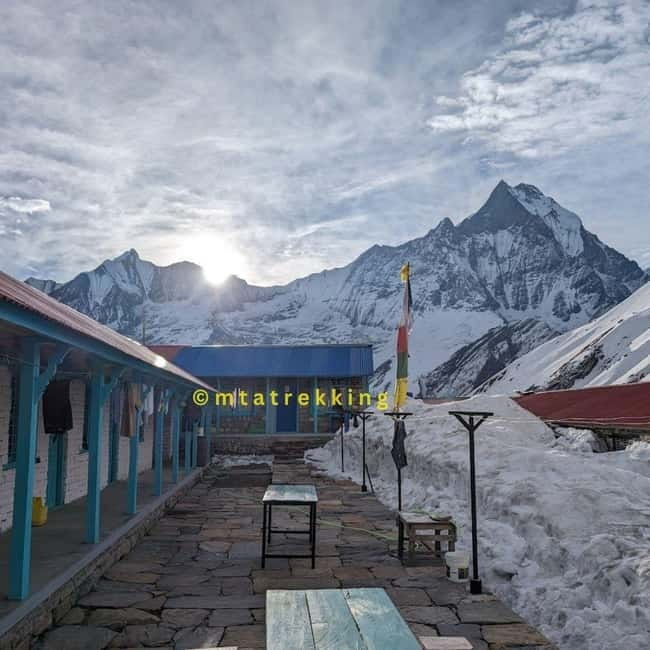
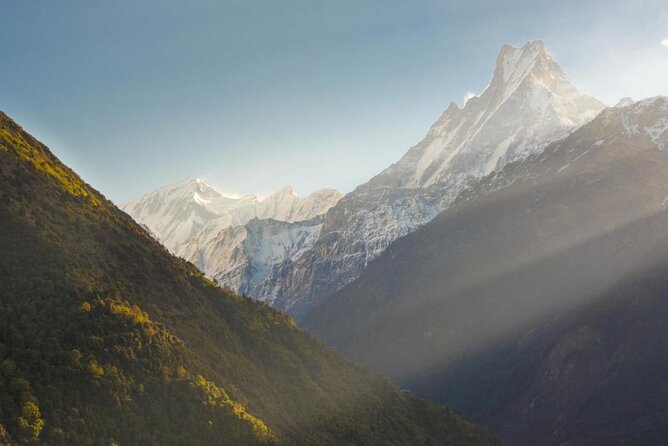
Machhapuchhre Base Camp is a major visual moment. Machhapuchhre means Fishtail, and the peak is one of the best-known shapes in the Annapurna area. From there, the route continues into the high basin around Annapurna Base Camp, where the surrounding peaks make the destination feel much larger than the walking distance alone suggests.
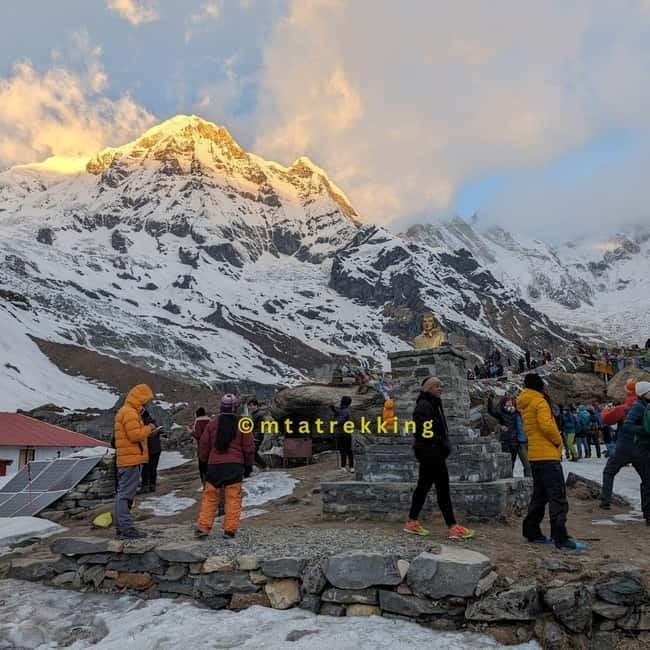
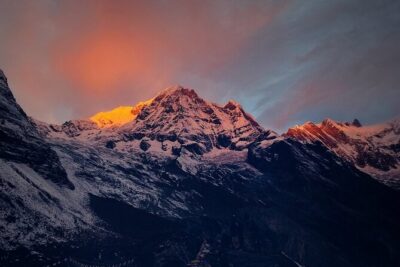
The arrival is the emotional center of the trip. You have moved through forests and villages into a high setting ringed by serious Himalayan summits. One Italian customer singled out the sunrise at base camp, facing Annapurna South, as an unforgettable part of the experience. Plan your clothing and camera the night before, because the early light can be cold and the best moment may not last long.
The night at base camp is also the least forgiving. Temperatures, simple tea-house conditions, and altitude can make sleep difficult. Your reward is not luxury. It is waking in the mountains, stepping outside, and seeing the peaks close at hand.
More Five-Day Trips around Kathmandu:
- Machu Picchu: 5-Day Salkantay Trek with Panoramic Train
★ 5.0 · 79 reviews - Ausangate Trek 5 Days
★ 5.0 · 74 reviews - Kathmandu/Pokhara: 5-Day Annapurna Base Camp (ABC) Trek
★ 4.9 · 72 reviews - Classic Choquequirao Trek – 5 Days / 4 Nights
★ 5.0 · 52 reviews
Day 4: Sunrise at base camp and the descent to Bamboo
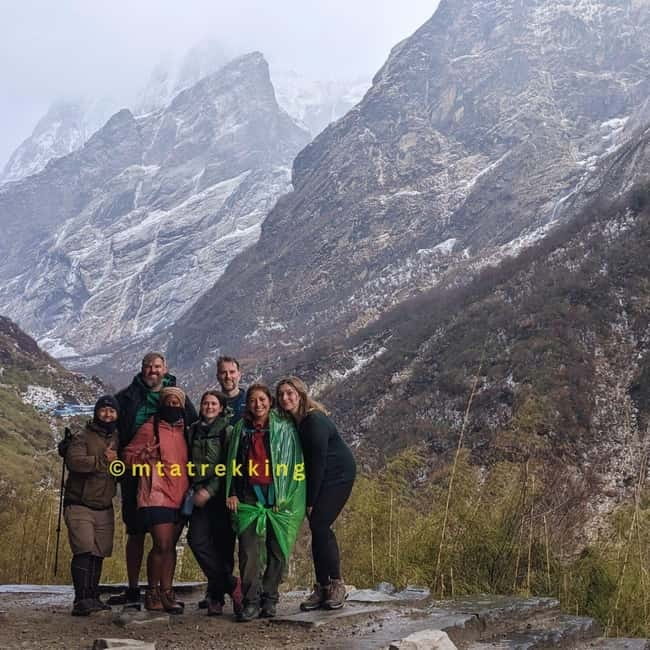
Day 4 starts with more time at Annapurna Base Camp before you descend to Bamboo, around 2,400 meters. The schedule allows about six hours of walking, though downhill travel can feel just as demanding as the climb.
I like this part of the plan because it gives you a second look at base camp rather than forcing an immediate departure after arrival. Morning light changes the peaks, and you get another chance for photos without rushing through the high point of the trip.
The descent also brings physical relief as you lose altitude. At the same time, downhill trails can punish knees and toes. Use trekking poles if you have them, keep your steps short, and do not treat the descent as an easy stroll.
Bamboo is a practical overnight stop after the high camp. You return to a lower elevation, but you have still put in a demanding day. This is a good evening for a hot meal, dry socks, and a quick check of blisters or sore joints.
Tea houses keep the trip accessible, but they are basic mountain accommodation. The package includes tea-house lodging, while personal charges such as hot showers, Wi-Fi, drinks, mineral water, laundry, and hot water are excluded. Bring cash for these extras, as advised in the trip information.
Day 5: Bamboo, Jhinu hot springs, and Pokhara
The final walking section takes you from Bamboo back toward Jhinu Danda. The route schedule allows about six hours, followed by a roughly three-hour jeep or SUV ride to Lakeside Pokhara.
The optional hot-spring stop at Jhinu is a smart way to finish. After several days of climbing and descending, soaking in natural hot water can feel like a proper closing ritual. It is not included as a guaranteed activity beyond the stated optional stop, so bring cash and confirm the timing with your guide.
The return drive is part of the experience, not just an afterthought. Road travel from the mountains to Pokhara can be tiring, but it saves you from walking an additional day on the lower route. You should reach Lakeside at the end of the transfer, with hotel or airport pickup and drop-off support included within the stated service area.
Tea houses, meals, and what the price covers
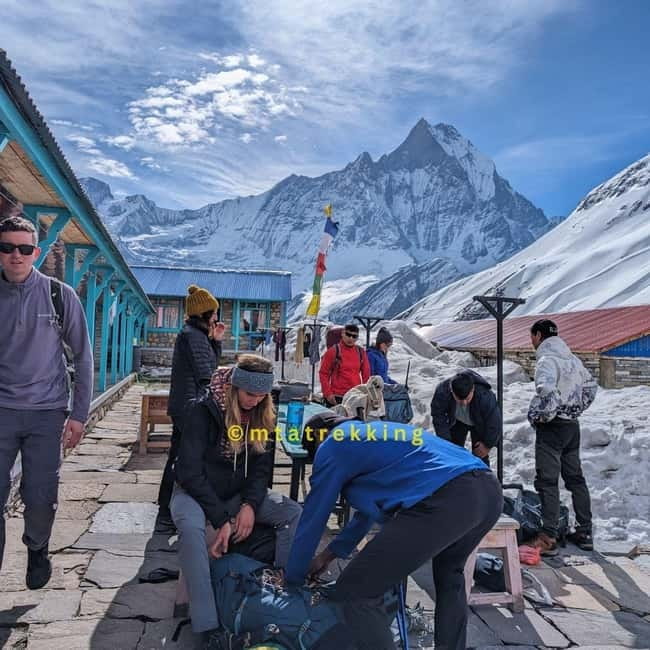
At $136 per person, this is priced attractively for a private five-day trek, but you should read the inclusions carefully. The package covers tea-house accommodation, private transport from Pokhara to Siwai and back, the Annapurna Conservation Area permit, government permits, TIMS, taxes, a registered professional guide, first-aid supplies, and luggage storage in Pokhara.
That is a useful bundle. Permits and transport can add up, and luggage storage means you do not need to carry your full Nepal trip through the mountains.
Meals need special attention. The information says meals are included when you choose the full-board option. Do not assume every $136 booking includes food until you confirm the exact option selected. If meals are not part of your booking, budget separately for food at the tea houses.
You also pay for personal expenses such as showers, Wi-Fi, drinks, mineral water, hot water, and laundry. A porter is available for an additional $20 per day, but porter service is not included. Rescue and travel insurance are also excluded, so you should arrange suitable insurance before departure.
How the guide affects the experience
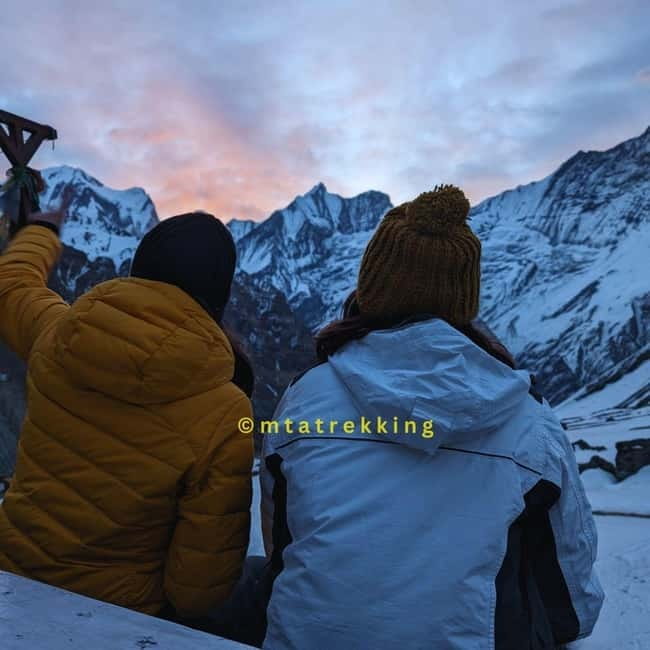
The guide is one of the strongest reasons to choose a private trek. Names associated with this route include Santosh, Prabit, and Ramit. The feedback consistently points to kind communication, careful preparation, and help with pacing.
Prabit was credited with explaining the route’s difficulty and checking that equipment and preparation were in order. Ramit was praised for managing walking and rest times, as well as explaining the natural features and local culture. Santosh was described as kind, clear, and pleasant company.
You should still confirm your assigned guide before setting off, since the named guide can vary. The tour provides an English-speaking, government-registered guide, but it does not state that you can select a particular person.
A good guide is especially valuable on Day 2 and Day 3. You need someone who takes altitude symptoms seriously, keeps the group moving without turning the walk into a race, and explains what you are seeing. The private format makes those conversations easier.
Fitness, weather, and what to pack
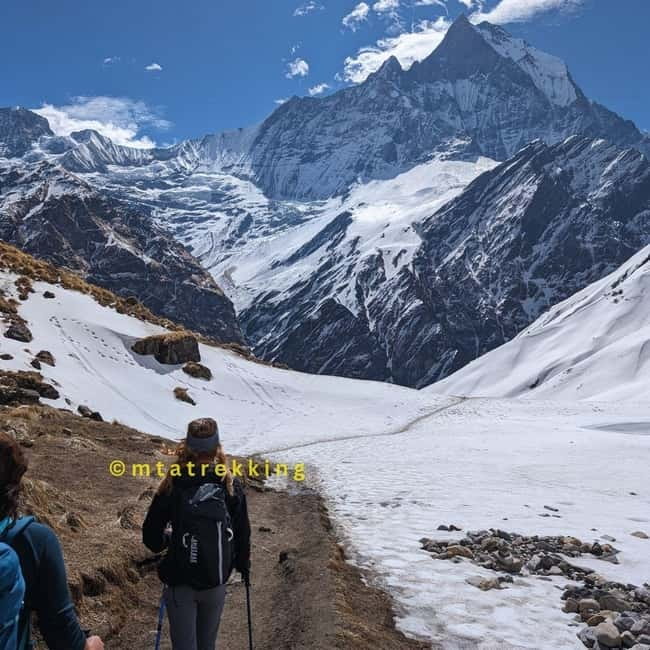
You do not need technical climbing skills for the information provided here, but you do need solid walking fitness. One five-day participant said the schedule was achievable but seriously tested their fitness. That is a useful warning: the route may be short on paper, but the days are long and the elevation gain is real.
Bring comfortable walking shoes, comfortable clothes, a change of clothes, cash, and a passport or accepted copy. Add practical mountain layers and rain protection, since the weather can change quickly and the route includes both lower, warmer sections and cold high-altitude nights.
June through August brings monsoon conditions, with possible heavy rain. Trails can be wet, and leeches may appear on lower sections. Long trousers tucked into gaiters and insect repellent can help. You should follow your guide’s advice if weather makes a section unsafe or unpleasant.
The trip is not suitable for pregnant women, wheelchair users, people with mobility or visual impairments, people already suffering from altitude sickness, or people over 70. Those limits are not a judgment on fitness. They reflect the steep, uneven, remote nature of the route and the lack of easy access once you are walking.
Who should book this ABC trek
I would recommend it to you if you want a private Himalayan experience, have five days available, and are prepared for long walking days. It suits someone who values scenery, Gurung culture, mountain villages, and a clear goal more than comfort or leisurely pacing.
It is also a good match if you are staying in Pokhara and want transport, permits, a guide, and tea-house nights arranged together. The airport pickup option is handy if you are arriving directly in Pokhara.
I would hesitate if you want a relaxed holiday, dislike basic accommodation, or have no experience with sustained uphill walking. I would also be careful if your Nepal schedule cannot tolerate delay. Five days is efficient, but efficiency leaves less room for problems.
Free cancellation up to 24 hours before departure and the reserve-now, pay-later option make planning less rigid. Still, flexible booking does not remove the need for insurance, suitable clothing, and a realistic fitness check.
Should you book it?
Book this trek if the idea of reaching Annapurna Base Camp matters more to you than having an easy week. The mountain views, Gurung villages, hot springs, and attentive guide support give the trip real value, especially at a starting price of $136 when the stated permits, transport, lodging, and guiding are included.
Before paying, confirm three things: whether your chosen price includes full-board meals, who your guide will be, and what extra cash you should carry for showers, water, Wi-Fi, and other mountain costs. If you can handle six-hour walking days and respect the altitude, this is a compact and rewarding way to reach one of Nepal’s great mountain destinations.
FAQ
How long is the Annapurna Base Camp trek?
The experience lasts five days and four nights, with walking and road transfers between Pokhara and Annapurna Base Camp.
Where does the trek start?
Pickup is available from hotels and locations within Lakeside Pokhara, as well as Pokhara International Airport.
How high is Annapurna Base Camp?
Annapurna Base Camp is at 4,130 meters, or about 13,550 feet.
Where do you sleep during the trek?
Accommodation is provided in tea houses. Overnight stops include Lower Sinuwa, Deurali, Annapurna Base Camp, and Bamboo.
Are meals included?
Meals are included when you choose the full-board option. Confirm the meal selection before booking because the base price information does not make every meal option identical.
Is transport from Pokhara included?
Yes. Private transport is provided from Pokhara to Siwai, described as the last road point, and back to Pokhara. Pickup and drop-off are available within Lakeside and at Pokhara International Airport.
Is a guide included?
Yes. The experience includes a government-registered professional trekking guide who speaks English. The group type is private.
What costs are not included?
Personal expenses such as hot showers, Wi-Fi, drinks, mineral water, hot water, and laundry are excluded. Porter service costs $20 per day, and rescue and insurance are not included.
Just added around Kathmandu
- Kathmandu: Nagarkot Sunrise and Hike Tour to Changu Narayan★ 4.7 · 151 reviews
- Pokhara: 2 Day Ghorepani & Poon Hill Private Trekking★ 4.9 · 8 reviews
- Kathmandu: Nagarkot Sunrise Tour with Day Hike★ 4.7 · 13 reviews
- Kathmandu: Shivapuri Day Hike with Lunch★ 4.9 · 25 reviews
- Kathmandu: 6-Day Limitless Langtang Trek★ 5.0 · 21 reviews
- Kathmandu: 6 Days Langtang Valley Trek with Kyanjin Ri★ 5.0 · 7 reviews
- Kathmandu: 14-Day Everest Base Camp with Kala Patthar Trek★ 4.2 · 21 reviews
- Kathmandu: 10-Day Adventurous Annapurna Circuit Trek★ 5.0 · 25 reviews
Annapurna Treks, side by side.
Trekking in Annapurna/Langtang/Everest/Upper Mustang regions
Read our review →
Kathmandu/Pokhara: 5-Day Annapurna Base Camp (ABC) Trek
Read our review →
This walk also sits in