REVIEW · NEPAL
Everest Base Camp Trekking
The best part of this 14-day Everest Base Camp trek is that the big mountain moments arrive one by one. You fly into Lukla, follow the Dudh Koshi River, rest in Namche Bazaar, pass Buddhist monasteries and yak-herding villages, then reach Everest Base Camp before sunrise at Kala Patthar. The route gives you time to adjust to altitude instead of rushing uphill.
I like the small group limit of 10, which should make it easier to keep a sensible walking pace and get help when you need it. I also like that teahouse accommodation, meals, local transportation, airport pickup, and a guide are included, so you can focus on walking rather than arranging each night and meal yourself.
The main consideration is physical effort. This is not a gentle sightseeing holiday. The tour calls for strong fitness, operates in all weather, and includes steep, rocky sections where you must move slowly and carefully. Flights to Lukla also depend on conditions, so the schedule may feel less tidy than a city tour.
Key things to know before you book
- A 10-person maximum keeps the trek personal: You should have better access to your guide than on a large walking tour.
- Namche Bazaar is used for acclimatization: The short viewpoint walk is an important pause, not wasted time.
- The route includes both Base Camp and Kala Patthar: Base Camp gives you the destination, while Kala Patthar provides the sunrise mountain view.
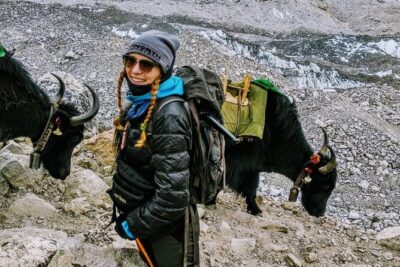
- Guides and porters are central to the experience: Names praised in the supplied feedback include Biru, Amabar, Ramesh, and Kanchar, though your assigned team may differ.
- The price covers more than the trail: At $1,350 per person, included meals, teahouses, local transport, and airport transfers add useful value.
- The trek is built for active people: You should be comfortable with long days on uneven ground and ready for cold, changing weather.
Why this Everest Base Camp route works
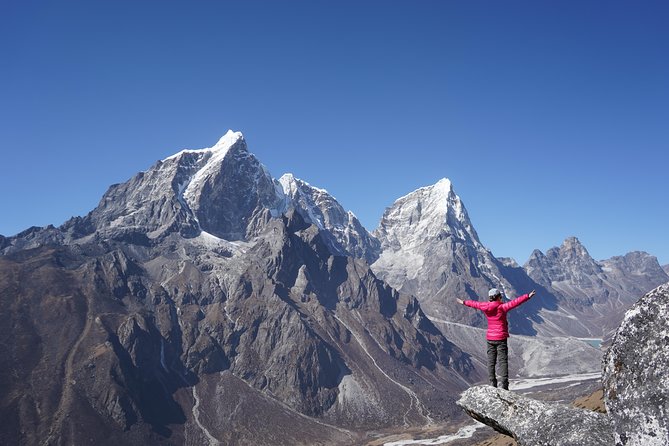
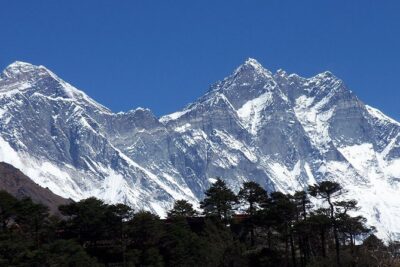
Everest Base Camp is famous, but the route is not only about reaching one famous point. The pleasure comes from the change in scenery and culture as you climb. Pine forests give way to alpine terrain. River valleys become glacier country. Villages grow smaller and the mountains feel closer.
This guided trip handles much of the practical work. You are met at Tribhuvan International Airport in Kathmandu, taken to your hotel by private tourist vehicle, and given time to rest or visit the local office for trip details. That first transfer matters after a long flight. You do not have to negotiate your way into the city while tired and carrying trekking gear.
The published cost is $1,350 per person. I see that as a useful package price for a two-week trek because it includes teahouse accommodation, meals, local transportation, airport pickup, and guiding. The value is strongest if you want a planned route and do not want to arrange each lodge, meal, flight transfer, and trail day on your own.
You should still read the final booking terms carefully for anything not specifically listed, such as personal gear or other individual expenses. The supplied details clearly include the main trail arrangements, but they do not list every possible cost.
More Everest Base Camp Treks in Kathmandu:
- Everest Base Camp Trek – 14 Days
★ 5.0 · 1,499 reviews - Everest Base Camp Trekking – 13 Day
★ 5.0 · 365 reviews - Everest Base Camp Trek
★ 5.0 · 350 reviews
Days 1 and 2: Kathmandu to Lukla
Day 1 is deliberately simple. After airport pickup, you are taken to your hotel, where you can rest or visit the company office for more information. Kathmandu is also your final city stop, so the extra time at the end of the trip is useful for shopping and walking around the valley.
Day 2 begins early. After breakfast, you transfer to the domestic airport for the flight to Lukla. The flight is part of the adventure, with sunrise views over snow-covered peaks as the plane approaches Tenzing-Hillary Airport.
Lukla is the trailhead for the trek, and landing there changes the mood at once. You are no longer preparing in a city. You are walking into the Khumbu region, with the route and weather now shaping your day.
The early flight requires a practical mindset. You should be ready for an early start and changing weather conditions. The tour operates in all weather, so proper clothing is essential. The information provided does not promise a fixed flight schedule beyond the planned transfer, and mountain flights can be the least predictable part of a carefully timed itinerary.
Day 3: Pine forests, the Dudh Koshi, and Sagarmatha National Park
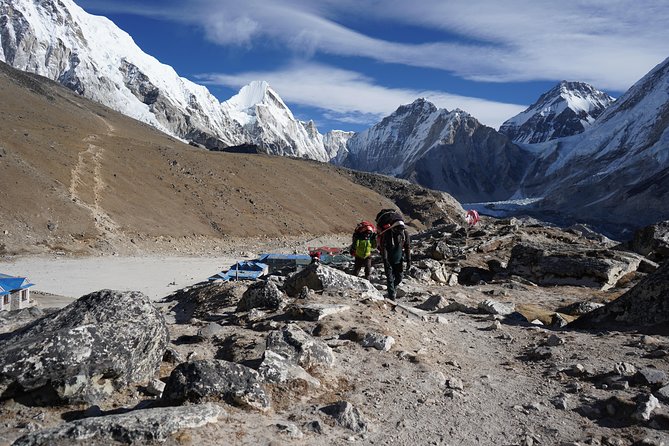
The first full walking day follows pine forest and the Dudh Koshi River. Mount Thamserku provides one of the early mountain views, while scattered settlements give you a first look at life along the trail.
You also pass the entrance checkpoint for Sagarmatha National Park. This is more than a formal stop. It marks your entry into the protected mountain region and gives the walk a clear sense of progress.
The day should suit you if you enjoy gradual changes rather than instant drama. The forest provides some visual variety and a softer start before the route becomes more exposed and demanding. At the same time, you should not mistake the first day for an easy stroll. The tour requires strong fitness from the outset.
Day 4: Namche Bazaar and the value of slowing down
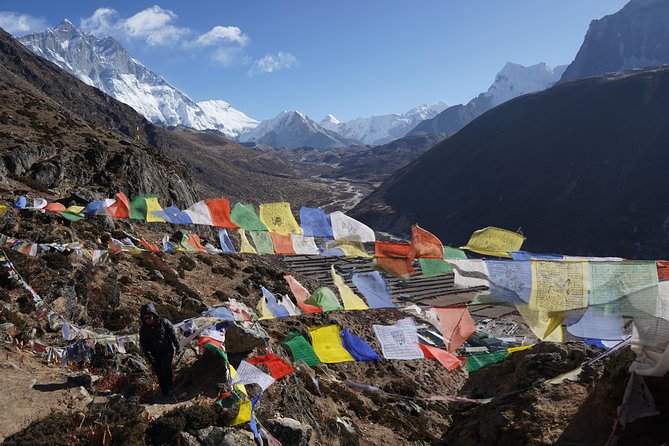
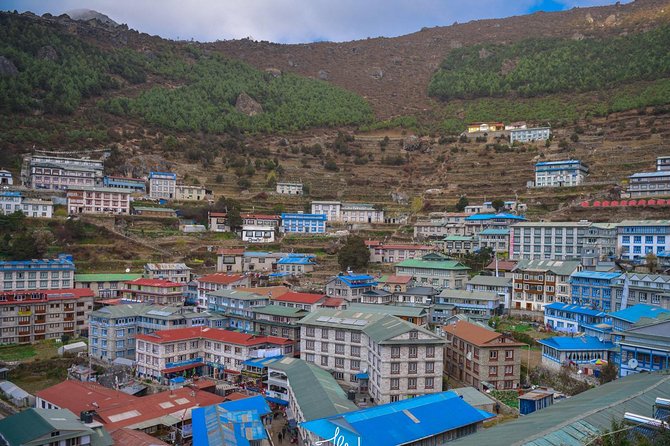
Namche Bazaar is the largest settlement in the Khumbu region and one of the most useful stops on the route. You can find ATMs, internet cafes, restaurants, bakeries, and other facilities here. That makes Namche a practical place to rest, check messages, and make sure you have what you need for the higher trail.
This is also an acclimatization day. Instead of simply sitting indoors, you take a short hike to a nearby viewpoint. The purpose is to spend time at altitude without gaining too much height too quickly.
I like this part of the plan because a rest day can feel frustrating when you are eager to continue. The viewpoint walk gives you a reason to get outside while allowing your body time to adjust. It also gives you a chance to see the surrounding peaks without the pressure of a full trekking day.
Do not judge the trek by your energy in Namche. The higher sections come later, and the route becomes more demanding after this stop. Follow your guide’s pace and use the day to eat, drink, rest, and notice how your body feels.
More hikes and treks around Kathmandu:
- Nagarkot Sunrise View and Day Hiking from Kathmandu
★ 5.0 · 471 reviews - Annapurna Circuit Trek with Tilicho Lake
★ 5.0 · 368 reviews - Everest Base Camp Trek -14 Days
★ 5.0 · 321 reviews - Manaslu Circuit Trek
★ 5.0 · 292 reviews
Day 5: The trail to Phorse and the Ama Dablam views
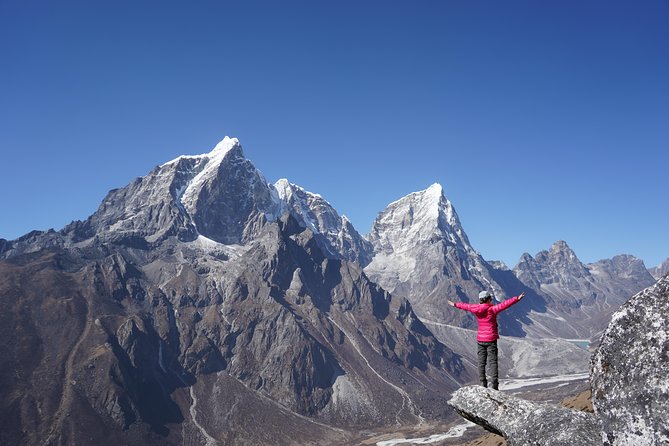
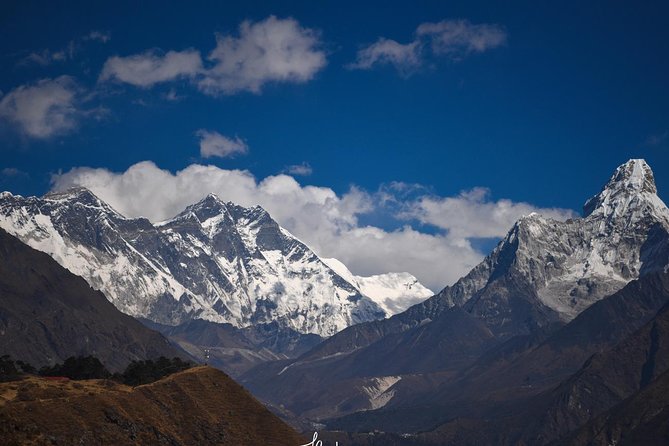
From Namche, the route heads toward Phorse. The trail reaches Mugla Pass, where you can see Mount Ama Dablam, Mount Khumbu, and Mount Thamserku. Ama Dablam is one of the most recognizable peaks in the region, and its shape gives this part of the walk a strong visual focus.
The path then descends toward the Dudh Koshi before crossing the river. This combination of a pass, descent, river, and village makes the day more varied than a simple uphill march.
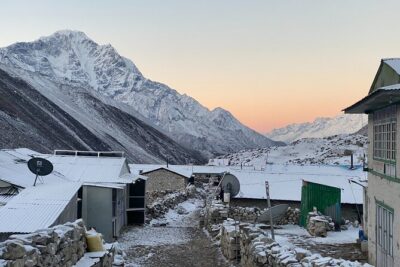
Phorse offers a quieter stop than Namche. The supplied information does not promise particular facilities there, so you should expect the trail to feel more basic as you move higher. That is part of the appeal, but it also means you should keep your personal essentials easy to reach.
Day 6: Dingboche through Pangboche and mountain villages
The walk from Phorse to Dingboche includes a visit to the largest Buddhist monastery in the area. That cultural pause adds meaning to the route. You are not simply crossing from one overnight stop to another. You are passing through places shaped by Buddhist practice and high-altitude life.
The trail continues through alpine forest to Pangboche, then onward through Shomare and other villages toward Dingboche. The vegetation begins to thin, and the sense of being above the lower river valleys becomes stronger.
Dingboche is an important point because the route is now moving into higher country. Your guide’s role becomes increasingly useful here. A guide can help you keep a steady pace, identify problems early, and handle the basic route decisions that become harder when you are tired or affected by altitude.
Days 7 and 8: Glacial valleys, memorial stones, and prayer flags
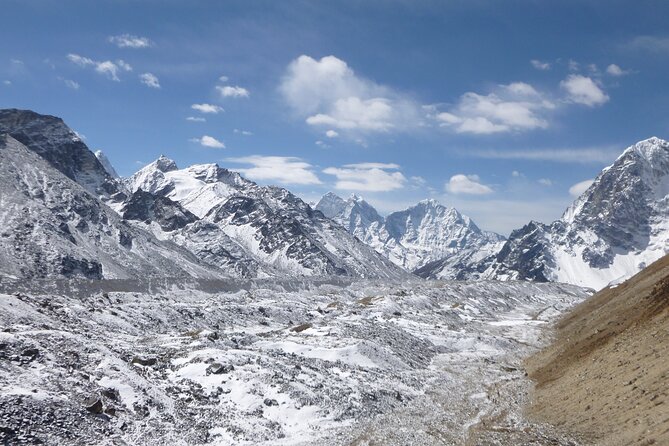
The route from Duglha follows the Khumbu Khola valley. Along the way, you pass Dusa, described as a place used by yak herders, and Phulung Karp, connected with the first successful Everest expedition in 1953. These details give the trail a human story. The mountains are not an empty backdrop. People have worked, traveled, and taken great risks here for generations.
The itinerary also refers to Chola Lake, though the exact walking sequence may depend on the final route and conditions. You should ask the operator to confirm the day-by-day trail plan if this feature matters to you.
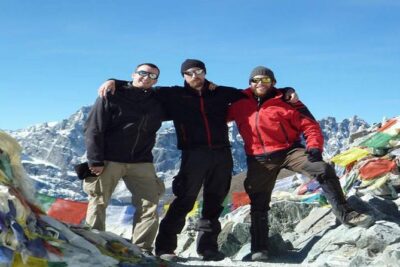
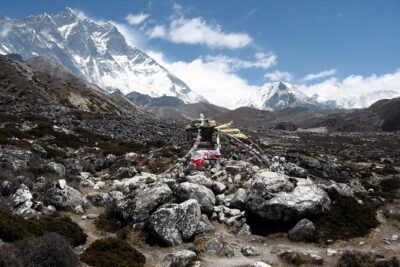
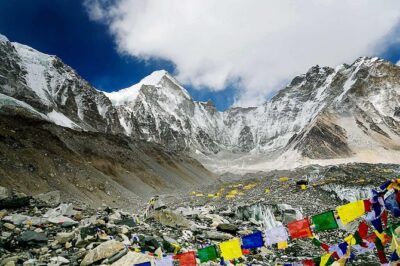
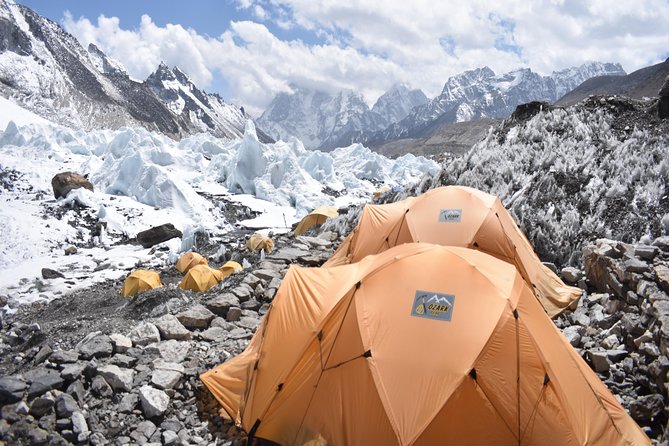
The next section climbs the terminal moraine of the Khumbu Glacier. The route reaches Chupki Lhara, where boulders and prayer-flag-covered stones create a solemn mountain setting. These memorial markers are a reminder that high-altitude climbing has real risks, even on a trekking route.
This is a section where footwear and pacing matter. The terrain is rocky, uneven, and tiring. You are advised to move with control rather than chase a fast arrival. The trek is designed around a group of no more than 10, which should make it easier for the guide to keep the group together.
Day 9: Reaching Everest Base Camp
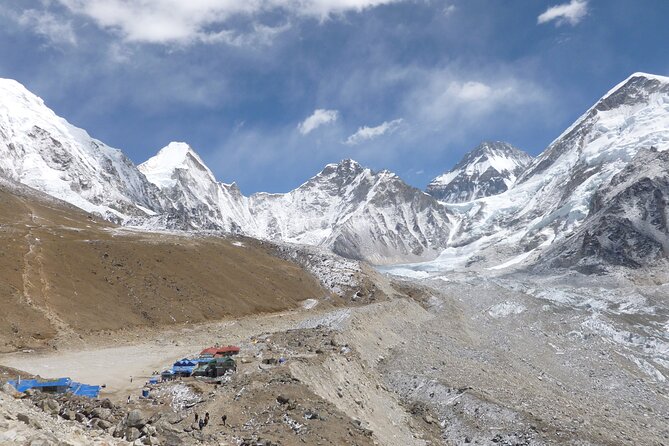
Day 9 is the main goal of the trek. The route reaches Thangma Riju, where the plan describes a 360-degree view of snow-covered mountains. Mount Everest itself is not visible from that point, which is an important detail. You should not expect every viewpoint on the route to show the summit.
The walk continues to the Everest Base Camp trekking route and then to Base Camp itself. The stop is listed as 30 minutes, with no admission charge. The achievement is not about spending hours at a visitor center. It is about reaching the point connected with expeditions on the world’s highest mountain.
Base Camp can be a powerful moment, but the route around it is glacier country, not a polished attraction. Conditions, season, and expedition activity can affect what you see. Your guide will help you stay on the proper route and move safely over difficult ground.
You should also understand the difference between Base Camp and the best Everest viewpoint. Base Camp is the destination. It is not necessarily where you get the clearest view of Mount Everest itself. That comes next morning from Kala Patthar.
Day 10: Kala Patthar at sunrise
The trek begins very early so you can reach Kala Patthar as darkness gives way to morning light. The stop is listed as a 30-minute sunrise view, and the timing is the reason for the early start.
This is often the visual high point of the route. You can expect wide mountain views as the first light reaches the peaks, with Everest among the major sights described for the morning. The experience depends on weather, so the mountain may be clear, partly hidden, or completely covered.
The early start is a real tradeoff. You may be cold, tired, and walking before daylight, but the reward is a quiet mountain viewpoint at a special hour. Bring suitable clothing and follow the guide’s instructions closely on the climb.
After Kala Patthar, the trek turns downhill. Descending is not automatically easy. Steep, rocky ground can be hard on knees and ankles, and you should keep your pace controlled.
Days 11 and 12: Returning through Pheriche and Namche
The descent follows the route back toward Duglha, passing Pheriche, Orsho, and Shomare before reaching Pangboche. You can explore the old monastery in Pangboche, adding another cultural stop to the return journey.
The trail then continues downward through the Khumbu villages and across the Dudh Koshi by suspension bridge. The itinerary specifically warns that the final steep sections require slow, balanced walking. Take that advice seriously. Fatigue can make a descent more dangerous than an ascent.
These days also give you a different view of the same route. Places that felt remote and demanding on the way up may feel more familiar on the return. You can notice details missed earlier because you were concentrating on gaining height.
The lower route brings back more forest and river scenery. That change helps you feel the distance you have covered, from high glacier country back toward Lukla.
Days 13 and 14: Lukla, Kathmandu, and time to decompress
Day 13 brings the return mountain flight from Lukla to Kathmandu. Once back in the city, you have time for shopping and walking around Kathmandu. The evening is set aside to celebrate completing the trek.
Day 14 gives you another chance to shop and see parts of Kathmandu Valley before your scheduled flight from Tribhuvan International Airport. This extra city time is useful because mountain schedules can feel tight. It also gives you room to shift from boots and teahouses back to city life.
The itinerary does not list specific Kathmandu sights, so do not book this part expecting a guided cultural tour. Think of it as free time for your own walk, shopping, and final look at the valley.
Guides, group size, and the human side of the trek
A guide matters on this route for more than navigation. The stated benefits include avoiding wrong turns, managing logistics, and learning about the Himalaya, local communities, and Nepali culture. That can make the long walking days more rewarding and less stressful.
The supplied feedback gives several guide and porter names, including Biru, Amabar, Ramesh, and Kanchar. Some accounts describe guides helping when trekkers became sick, changing plans when altitude caused trouble, and providing reassurance on difficult days. Those are exactly the qualities I would want on a trek where conditions can change quickly.
Your own guide may be different, so treat the names as examples rather than a promise. The practical advantage is the small group, with a maximum of 10 people. A smaller party usually makes communication easier and reduces the chance that the group becomes divided by different walking speeds.
Who should book this $1,350 trek
I would recommend this trip to an active person who wants a structured Everest Base Camp route without arranging every detail independently. It suits you if you value guiding, included meals, teahouses, local transport, and a clear acclimatization plan.
It is also a good fit if you are traveling alone but want company. Several supplied accounts describe solo trekkers being paired with or supported by a guide and porter. That can provide both practical help and companionship on a demanding route.
I would think twice if you dislike early starts, basic accommodation, uncertain mountain flights, cold weather, or steep uneven ground. The experience requires a strong level of fitness, and the operator states that it runs in all weather.
The current rating information is excellent, with 99 percent recommending the experience and a five-star score based on 485 reviews. That is strong evidence of broad satisfaction, especially around guides, safety, care, and organization. Still, the mountain itself controls much of the experience. Weather and altitude cannot be guaranteed away by a good itinerary.
Small practical details worth knowing
Airport pickup is offered from Tribhuvan International Airport, and confirmation is provided at booking. You need a current passport, and the booking requires each participant’s passport name, number, expiry date, and country.
The tour is near public transportation, though the main trail days are naturally spent on foot. A mobile ticket is offered, and group discounts are available. Free cancellation applies when you cancel at least 24 hours before the local start time. Cancellations or changes made inside that period are not accepted for a refund.
Dress for changing conditions. The trip operates in all weather, and the highest sections can be cold and exposed. Good preparation will not remove the effort, but it will make the walking more comfortable.
Should you book the Everest Base Camp trek?
Book it if you want the classic Base Camp route with a guide, a small group, acclimatization time, and most major logistics handled for you. The combination of Base Camp, Kala Patthar sunrise, Namche Bazaar, Buddhist monasteries, river valleys, and glacier terrain gives you a full Himalayan experience rather than a quick walk to one famous point.
The $1,350 price looks reasonable for a 14-day guided trip that includes meals, teahouses, local transport, and airport transfers. Before paying, confirm exactly what is included in your final arrangement and prepare honestly for the fitness demands.
If you are ready for long walking days, basic mountain accommodation, unpredictable weather, and a rewarding amount of effort, this is a strong choice. If you want comfort, flexible city sightseeing, or guaranteed views, choose a different kind of Nepal trip.
FAQ
How long is the Everest Base Camp trek?
The experience lasts approximately 14 days, including arrival and departure time in Kathmandu, the flight to Lukla, the trek to Base Camp, the return walk, and the flight back to Kathmandu.
Where does the trek start?
The meeting point is Tribhuvan International Airport in Kathmandu, Nepal. An airport representative meets you there and arranges transport to your hotel.
How large is the trekking group?
The maximum group size is 10 people. This small-group format is intended to provide more personal attention from the guide.
Is airport pickup included?
Yes. Airport pickup is offered on arrival at Tribhuvan International Airport, with transport to the hotel by private tourist vehicle.
What is included in the tour price?
The stated inclusions are teahouse accommodation, meals, local transportation, guiding, and the planned trek arrangements. The price is $1,350 per person.
Does the trek visit Everest Base Camp and Kala Patthar?
Yes. The itinerary reaches Everest Base Camp on Day 9 and includes a sunrise visit to Kala Patthar on Day 10.
What level of fitness is required?
The tour is best suited to active people with strong physical fitness. It includes steep, rocky terrain, long walking days, altitude, and controlled descents.
What happens if I need to cancel?
You can receive a full refund if you cancel at least 24 hours before the experience start time. Cancellations or changes made less than 24 hours before the start time are not accepted for a refund.
Just added around Kathmandu
- Kathmandu: Nagarkot Sunrise & Hike with Lunch -Private/Group★ 4.9 · 122 reviews
- 14 Days Private Tour Everest Base Camp Trek★ 5.0 · 105 reviews
- 4 Days Poon Hill Trek★ 5.0 · 94 reviews
- Langtang Valley Trek★ 5.0 · 140 reviews
- Manaslu Circuit Trek★ 5.0 · 184 reviews
- Nagarkot Sunrise View & Day Hiking with Lunch – Private/Group★ 5.0 · 73 reviews
- Nagarkot Sunrise Trip & Day Hike with Lunch from Kathmandu★ 4.5 · 83 reviews
- Kathmandu: Dhulikhel to NamoBuddha Day Hike with Lunch★ 4.8 · 62 reviews