REVIEW · NEPAL
12 Days Everest Base Camp Trek
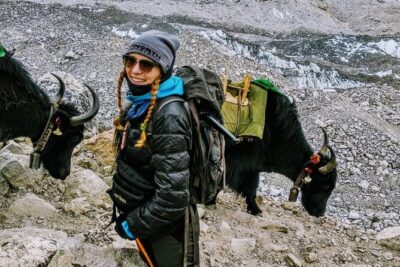
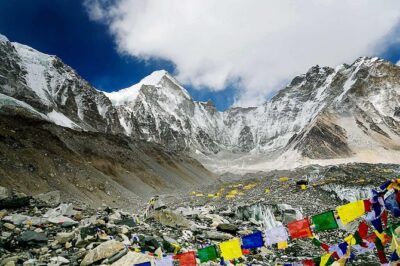
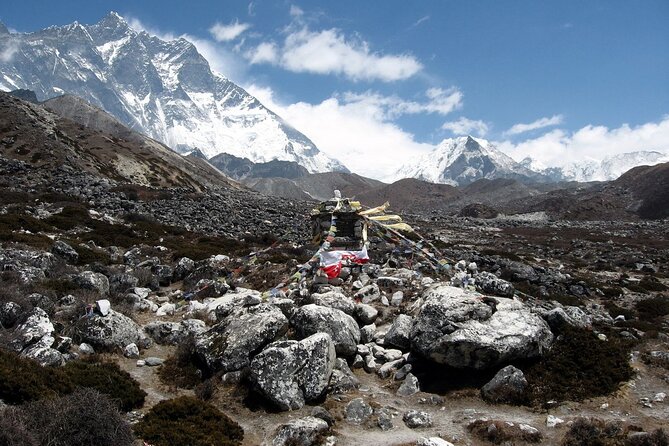
Everest Base Camp is not a sightseeing stop you simply arrive at. It is the payoff after days of suspension bridges, stone paths, thin air, and long climbs through the Khumbu. This 12-day guided trek handles the hard planning, including Lukla flights, permits, tea-house stays, porters, and transfers.
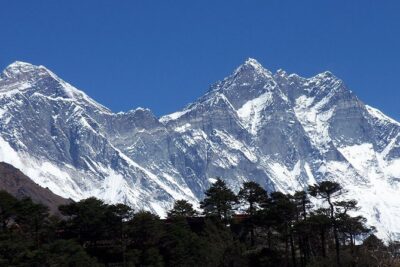
I especially like the two built-in acclimatization days, one in Namche Bazaar and one in Dingboche. I also like the early climb to Kala Patthar, where sunrise views of Everest, Pumori, Nuptse, and neighboring peaks may be more impressive than Base Camp itself.
The main caution is the schedule. Several days are listed as 12 to 15 hours, and the high-altitude lodging is basic. Also, the package details conflict about meals: one section suggests meals are included, while the inclusions specify breakfast only and the exclusions list breakfast, lunch, dinner, and drinks. Confirm this before paying.
Key points to know before booking
- Lukla flights are included: The package covers flights between Kathmandu or Ramechhap and Lukla, plus transport before and after the trek.
- Two acclimatization days matter: You spend time in Namche Bazaar and Dingboche, with optional hikes to Syangboche and Nangkartshang Peak.
- Guides are a major strength: Named guides on recent departures include Mingmar, Khilraj, Dawa Sherpa, Santosh, Sonam, and Indra.
- The group can reach 30 people: That keeps the price down, but it may feel less personal on the trail.
- Tea houses are practical, not luxurious: Expect twin-sharing rooms and simple high-altitude lodging, especially near Gorakshep.
- The price has good value, with conditions: At $1,099 per person, permits, flights, staff, and accommodation make this attractive, but food and Kathmandu lodging need clarification.
What the $1,099 price really buys you
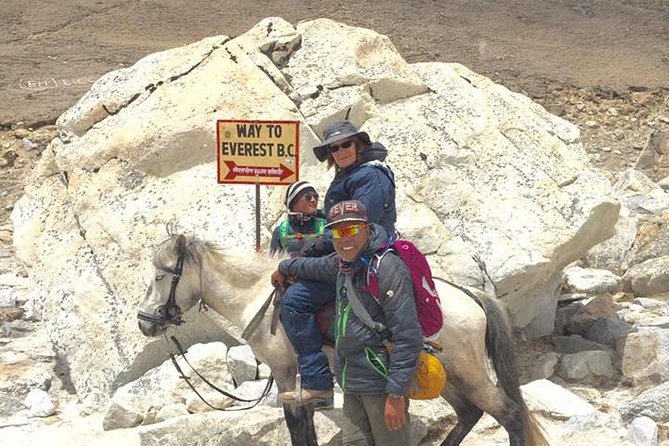
At $1,099 per person, this is priced as a practical group trek rather than a private or luxury mountain trip. The fee includes domestic flights, a licensed English-speaking guide, one porter for every two trekkers, national park fees, local taxes, a first-aid kit, duffle bags if needed, and guesthouse accommodation during the walking days.
That is a useful bundle. Organizing the Lukla flight, Sagarmatha National Park permit, local fees, porters, and tea houses yourself would be a nuisance, especially when flight schedules and mountain weather can change plans quickly. I like that airport, hotel, and trail transfers are part of the arrangement too.
The price does not cover personal clothing or equipment, travel insurance, alcoholic drinks, or Kathmandu accommodation. The food information needs special attention. The package says breakfast is provided with twin-sharing guesthouse stays, but another description says meals are included, while the exclusions list breakfast, lunch, dinner, and drinks. Ask for a written answer about exactly which meals are covered.
There is also an odd wording issue in the general description, which calls this a 16-day group tour, while the detailed plan runs for 12 days. Use the day-by-day schedule as the working plan, but confirm the number of Kathmandu nights and the exact start and finish arrangements.
More Everest Base Camp Treks in Kathmandu:
- Everest Base Camp Trek – 14 Days
★ 5.0 · 1,499 reviews - Everest Base Camp Trekking
★ 5.0 · 485 reviews - Everest Base Camp Trekking – 13 Day
★ 5.0 · 365 reviews
Days 1 and 2: Lukla, Phakding, and the first hard climb
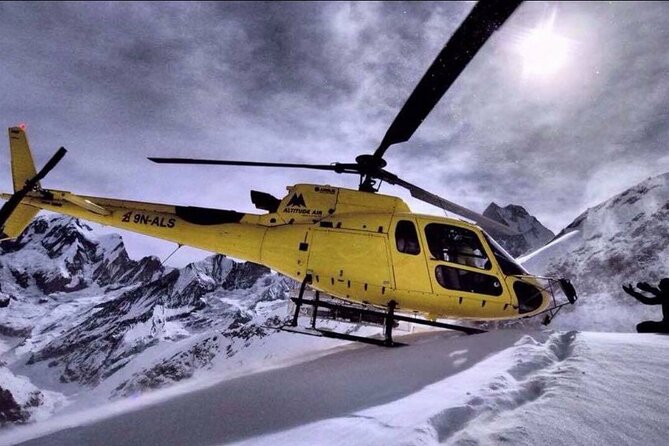
Your first mountain flight takes you from Kathmandu or Ramechhap to Lukla, the usual gateway for this route. The flight is short, about an hour, but the mountain setting makes it feel like a real beginning. From Lukla, you walk through pine forest and Sherpa villages toward Phakding.
The first day is not an easy warm-up. The schedule combines the flight with a long walking day, and the timing may depend on the flight and trail conditions. You descend in places before reaching Phakding, where you spend the night in a tea house. Use the remaining daylight for a short look around, but do not spend your energy trying to prove anything on day one.
The next day follows the Dudh Koshi River. You cross suspension bridges, pass the Monjo checkpoint, and enter Sagarmatha National Park. The trail continues through Jorsalle before the serious climb to Namche Bazaar.
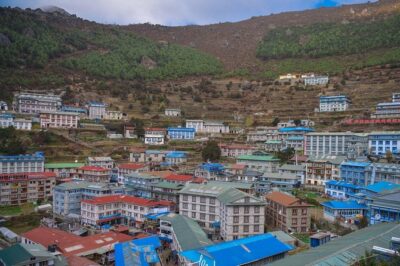
The Tenzing Hillary Suspension Bridge is one of the memorable crossings. After it, the path rises steeply. Views of Thamserku, Everest, and other peaks begin to appear, but the climb is the real feature. Namche is a useful place to arrive because it has shops, restaurants, offices, ATMs, and more services than the smaller villages ahead.
Day 3: Why Namche acclimatization is worth your time
You spend a second night in Namche to help your body adjust to altitude. This is not a wasted day. Rushing higher is one of the easiest ways to turn a great trek into a miserable one.
The planned acclimatization walk reaches Syangboche and the Hotel Everest View area. From there, you can see Everest and several surrounding peaks. The point is not to race uphill. Walk slowly, return to Namche, eat, drink, and rest.
Namche is also your last comfortable chance to buy or replace small supplies. It has shops and restaurants, and the town gives you time to settle into the rhythm of walking, eating, sleeping, and repeating the process. I would treat this day as part sightseeing and part medical common sense.
Days 4 and 5: Tengboche, Deboche, and Dingboche
From Namche, the trail heads toward Tengboche, home of the largest monastery in the Everest region. The walk takes roughly five to six hours according to the schedule, though the actual pace depends on the group and conditions.
Tengboche is a worthwhile pause. The monastery gives the day a cultural focus, not just a mountain one. You then continue toward Deboche, crossing the Imja River before staying overnight in a tea house.
The next day brings a mixture of forest and open high-country views. You pass birch, conifer, and rhododendron trees, then follow the Imja Valley and Lobuche River toward Dingboche. Along the way, keep an eye out for Everest, Lhotse, and Ama Dablam.
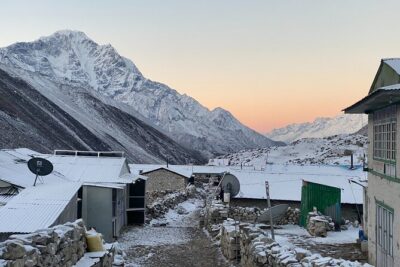
Dingboche is higher, colder, and more exposed than the villages below. This is where the trek begins to feel serious. Simple lodging and basic facilities are part of the deal, not an exception.
More hikes and treks around Kathmandu:
- Nagarkot Sunrise View and Day Hiking from Kathmandu
★ 5.0 · 471 reviews - Annapurna Circuit Trek with Tilicho Lake
★ 5.0 · 368 reviews - Everest Base Camp Trek
★ 5.0 · 350 reviews - Everest Base Camp Trek -14 Days
★ 5.0 · 321 reviews
Day 6: The second acclimatization day in Dingboche
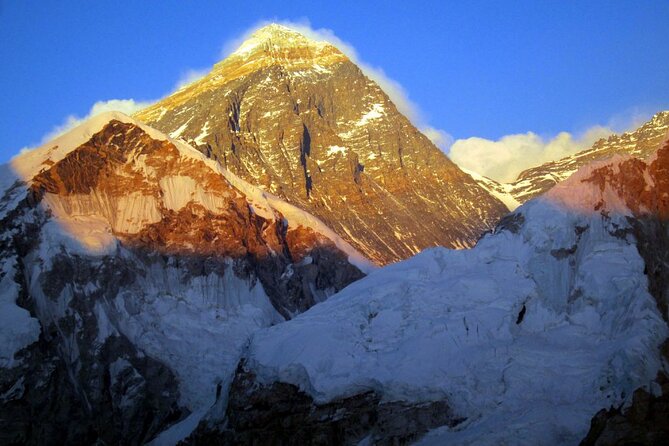
The second rest day is built around acclimatization. You can explore Dingboche or take the optional hike toward Nangkartshang Peak. The higher walk offers views toward Makalu, Lhotse, Cholatse, Tawache, and Ama Dablam.
This is a good example of why a guided schedule can be valuable. A rest day at altitude does not have to mean staying inside all day, but it should not become a race. A measured hike gives you movement and mountain views without committing to another full walking stage.
You should pay attention to how you feel here. The package requires moderate physical fitness, but that phrase understates the challenge for anyone unused to several consecutive days of walking. Your guide can help monitor the group, but you remain responsible for speaking up if symptoms worsen.
Days 7 and 8: Lobuche, Gorakshep, and Everest Base Camp
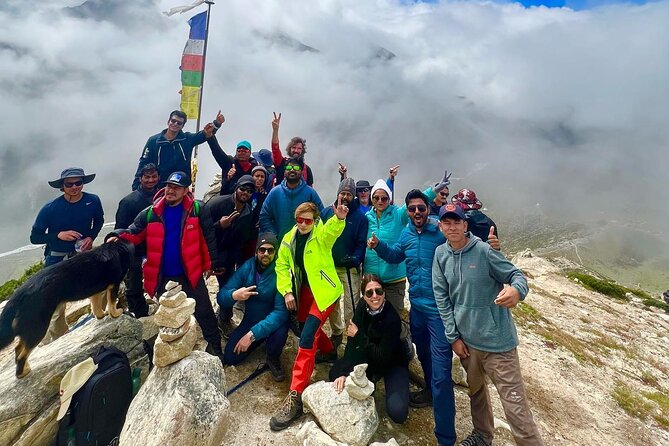
From Dingboche, the route becomes rockier and the air thinner. You climb toward Thukla Pass, with views of Pumori and Nuptse, and stop for lunch at Thukla before continuing to Lobuche.
This is not the most scenic walking in the same easy sense as the lower forests. The appeal comes from the scale of the mountains and the feeling that you are moving into a harsher zone. The route is demanding because the altitude reduces your pace and energy.
The following morning, you walk to Gorakshep, the last settlement before Base Camp. After lunch, you continue across rocky ground beside the Khumbu Glacier toward Everest Base Camp.
Reaching Base Camp is the emotional high point for many people, but keep expectations realistic. You do not climb Everest from here, and the view of the summit is not always the best from Base Camp itself. The location matters because it is the staging area for Everest expeditions and because you have earned the walk there.
You return to Gorakshep for the night. The listed timing is long, and the accommodation at this altitude is likely to be among the most basic on the route. Bring patience, warm layers, and realistic expectations about comfort.
Day 9: Kala Patthar gives you the mountain view
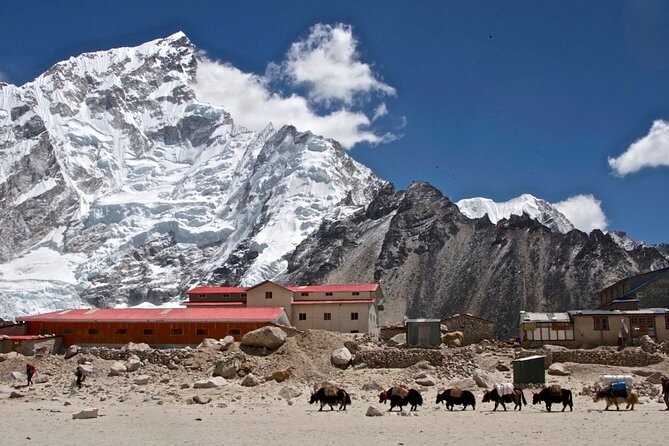
The early climb to Kala Patthar is one of the strongest parts of the trip. You set out before sunrise, climb for the view, and watch the first light reach the Himalayan peaks before descending to Gorakshep.
This is the place to see Everest, Pumori, Nuptse, and the surrounding range from a more open viewpoint. You also get time for photographs, though cold, wind, and altitude can make the summit stop brief.
After breakfast, you descend to Pheriche, stopping for lunch around Lobuche or Thukla. Going down feels easier on the lungs, but it is still a long day on tired legs. Trekking poles can be useful here, especially on steep descents.
Days 10 to 12: The long return to Kathmandu
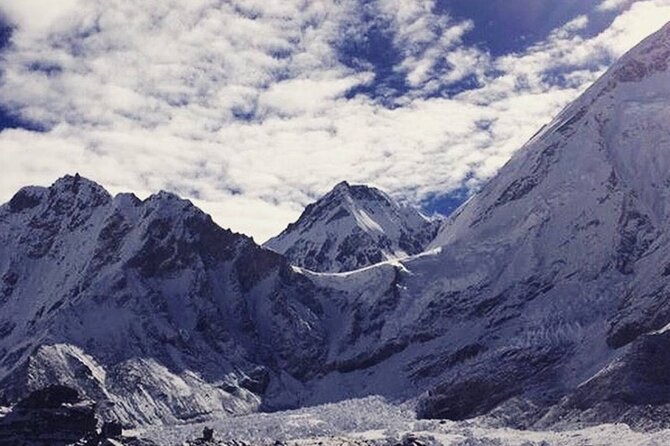
The return route passes back through familiar villages toward Namche. Lower altitude brings welcome relief, and the trail may feel friendlier after the exposed high section.
Day 11 is the final walking day. You descend from Namche to Lukla, stopping for tea and lunch in Phakding before crossing bridges and passing through forest. It is a full day, but it also gives you time to think about the route you have covered.
On day 12, you fly from Lukla back to Kathmandu and receive a transfer to your trip hotel. The package says Kathmandu accommodation is not included, so confirm where the transfer ends and who pays for the room.
Weather can disrupt mountain flights. The cancellation terms say that if the experience is canceled because of poor weather, you can choose another date or receive a full refund. That does not necessarily solve every personal cost caused by a delay, so travel insurance is essential and explicitly required.
Guides, porters, and the group experience
The package provides one porter for every two trekkers. That matters. Carrying a light daypack is far more manageable than carrying all your clothing, sleeping items, and equipment for nearly two weeks at altitude.
The named guides associated with recent departures include Mingmar, Khilraj, Dawa Sherpa, Santosh, Sonam, and Indra. Their roles have included daily route guidance, help with accommodation, advice about clothing, and support when trekkers needed extra assistance. Your assigned guide may be different, so ask for the staffing plan if that is important to you.
The maximum group size is 30. A larger group can make the price attractive and provide company, especially for a solo booking. The tradeoff is that walking speed, meal timing, and room arrangements may be less flexible than on a small private trek.
Who should book this Everest Base Camp trek?
I would recommend it to an active person who wants structure and does not want to arrange permits, flights, porters, and tea houses independently. It also suits a first-time Nepal trekker who understands that guided does not mean easy.
You should be ready for long walking days, repeated uphill and downhill sections, cold conditions, basic lodging, and limited personal comfort near the highest villages. Some trekking experience is useful, but the package asks for moderate physical fitness rather than advanced mountaineering skill.
This is not the right choice if you expect hotel-style rooms, included Kathmandu nights, a small private group, or a relaxed schedule. It is also not a good fit if you are unwilling to allow extra flexibility around Lukla flights.
What to confirm before you pay
Ask the operator to clarify the 12-day schedule against the mention of 16 days. Confirm the exact Kathmandu accommodation plan, the flight departure point, and whether meals beyond breakfast are included.
You should also check what personal equipment is available beyond the optional duffle bag, and confirm the porter arrangement for your booking. Bring your original passport and proof of travel insurance, as required.
Cancellation is generous only if you act early. Cancel at least six full days before the start for a full refund. Cancellation two to six full days ahead receives 50 percent, while cancellation less than two full days ahead is nonrefundable.
Should you book it?
Book this trek if you want a fairly priced, guided route to Everest Base Camp with two useful acclimatization days, porters, permits, and flights included. The guide support and carefully placed rest days are the strongest reasons to choose it.
Before booking, get the food and day-count contradictions resolved in writing. If you accept simple tea houses, a group of up to 30, long walking days, and weather uncertainty, the package offers a sensible way to reach Base Camp and Kala Patthar without managing every mountain detail yourself.
FAQ
How long is the Everest Base Camp trek?
The detailed schedule runs for 12 days, including the flights from Kathmandu or Ramechhap to Lukla and the return flight to Kathmandu. Another description refers to 16 days, so confirm the exact duration before booking.
What is included in the price?
The package includes domestic flights, crew airfare, airport and hotel transfers, park and local fees, a licensed English-speaking guide, porters, a first-aid kit, duffle bags if needed, government taxes, and guesthouse accommodation during the trek with breakfast on a twin-sharing basis.
Are meals included?
The information is inconsistent. One section indicates meals are included, while the listed inclusions specify breakfast and the exclusions mention breakfast, lunch, dinner, and drinks. Confirm the meal plan directly before payment.
Is Kathmandu accommodation included?
No. Accommodation in Kathmandu is listed as an exclusion, although one night at Gokarna Forest Resort is described as included elsewhere. Ask the operator to clarify exactly which Kathmandu night is covered.
What level of fitness do I need?
You need moderate physical fitness and should be comfortable with long walking days, steep climbs, descents, and high altitude. The experience is best suited to active people with some mountain trekking experience.
How large can the group be?
The maximum group size is 30 people. The package provides one porter for every two trekkers.
Do I need travel insurance?
Yes. Travel insurance is not included, and you are asked to bring proof of insurance along with your original passport.
What happens if bad weather cancels the trek?
If poor weather causes the experience to be canceled, you are offered another date or a full refund. The terms do not cover every possible personal expense caused by delays, so read your insurance coverage carefully.
Just added around Kathmandu
- 14 Days Private Tour Everest Base Camp Trek★ 5.0 · 105 reviews
- Kathmandu: Nagarkot Sunrise & Hike with Lunch -Private/Group★ 4.9 · 122 reviews
- 4 Days Poon Hill Trek★ 5.0 · 94 reviews
- Langtang Valley Trek★ 5.0 · 140 reviews
- Manaslu Circuit Trek★ 5.0 · 184 reviews
- Kathmandu: Dhulikhel to NamoBuddha Day Hike with Lunch★ 4.8 · 62 reviews
- Nagarkot Sunrise View & Day Hiking with Lunch – Private/Group★ 5.0 · 73 reviews
- Nagarkot Sunrise Trip & Day Hike with Lunch from Kathmandu★ 4.5 · 83 reviews