REVIEW · NEPAL
From Kathmandu: 12-Day Everest Base Camp Guided Trekking
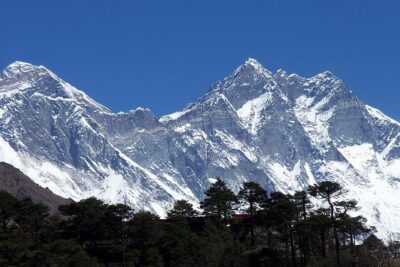
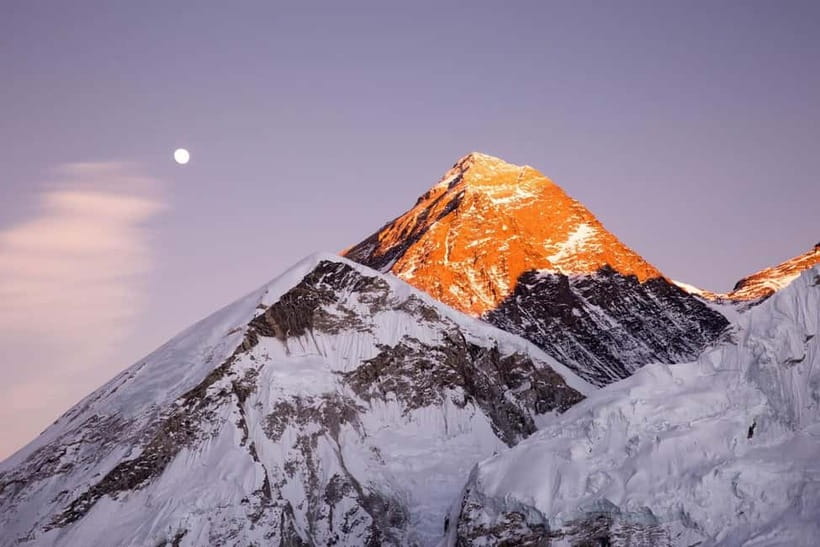
Everest Base Camp is the prize, but the real pleasure comes from the slow climb toward it: suspension bridges, rhododendron woods, high valleys, and the first sight of Ama Dablam, Lhotse, and Nuptse. You’ll reach 5,364 meters at Base Camp and 5,545 meters at Kala Patthar, so this is a serious mountain trek, not a gentle sightseeing walk.
I like the two built-in acclimatization days in Namche Bazaar and Dingboche, and I like that permits, domestic flights, tea-house lodging, and guide expenses are covered. The main drawback is the price structure: at $1,002, meals, drinks, porter service, travel insurance, hot showers, and internet are extra. You should also ask the operator to clarify Day 10, which lists both Tengboche and Namche Bazaar after Pheriche.
Key points to know before you book
- Lukla flight included: Round-trip domestic flights connect Kathmandu with the trailhead, saving you the trouble of arranging this complex part yourself.
- Two acclimatization days: You spend extra nights in Namche Bazaar at 3,440 meters and Dingboche at 4,260 meters.
- High-altitude finish: Everest Base Camp reaches 5,364 meters, followed by Kala Patthar at 5,545 meters.
- Small group format: The group is limited to 15 people, with an English-speaking guide.
- Tea-house trekking: Lodges provide the overnight stays, but standard meals are not included in the advertised price.
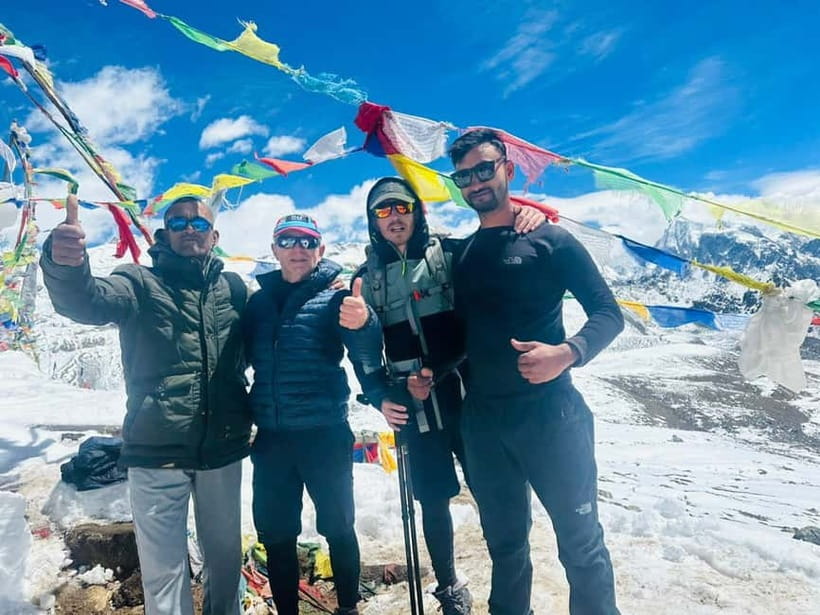
- Guide support is a major strength: Padam, Nishan, Adhish, and Rohan are among the guides praised for care, humor, organization, and mountain experience.
What the $1,002 price really covers
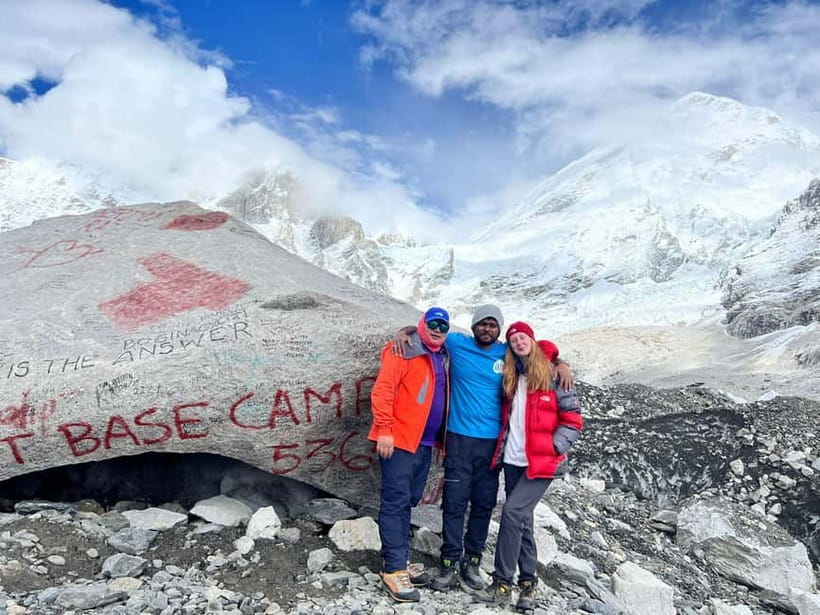
At $1,002 per person, this is not an all-inclusive trek, but it does bundle many of the expensive and awkward pieces. Airport pickup and drop-off, the Kathmandu to Lukla flights, national park entry, the TIMS card, tea-house accommodation, and guide costs are included.
The guide’s salary, food, drinks, lodging, transport, and insurance are also covered. That matters because these costs can otherwise be scattered across several payments. A jacket, sleeping bag, and duffle bag are available if you request them, which may save you from buying or carrying every item from home.
You still pay for breakfast, lunch, and dinner during the trek. Alcoholic and non-alcoholic drinks are extra, as are hot showers and internet access. A porter is not included, though one porter can carry up to 25 kilograms for two people at an added cost.
I would budget beyond the headline price for food, drinks, porter service if needed, tips, and travel insurance. Insurance is especially important here because the route reaches extreme altitude and includes domestic flights that can be affected by weather. The free cancellation window, up to 24 hours before departure, and the option to reserve now and pay later add useful flexibility.
More Everest Base Camp Treks in Kathmandu:
- Everest Base Camp Trek – 14 Days
★ 5.0 · 1,499 reviews - Everest Base Camp Trekking
★ 5.0 · 485 reviews - Everest Base Camp Trekking – 13 Day
★ 5.0 · 365 reviews
Day 1: Flying from Kathmandu to Lukla
The trip begins with hotel pickup in Kathmandu, Bhaktapur, or Lalitpur, followed by a transfer to Tribhuvan International Airport. The early flight to Lukla is short and scenic, and it puts you at the gateway to the Khumbu region without spending several days on a road approach.
At Lukla, you meet the trekking team and begin walking toward Phakding. This first day is relatively short compared with the high-altitude sections ahead, giving you time to settle into the rhythm of walking and tea-house lodging.
You sleep at a tea house in Phakding. Do not expect a hotel-style stay. The lodges are practical mountain accommodation, and comfort becomes more basic as you gain height. That is part of the appeal, but you should arrive ready for simple rooms and extra charges for conveniences such as hot showers and internet.
Day 2: The climb to Namche Bazaar
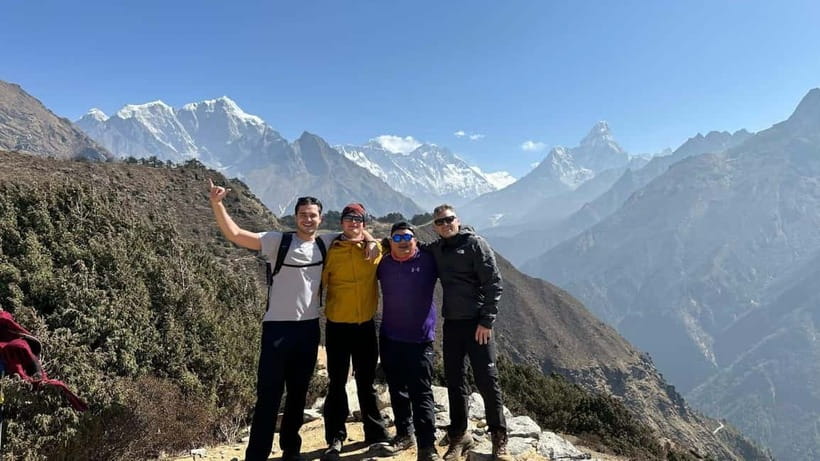
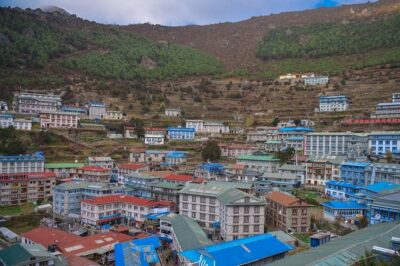
The trail from Phakding to Namche Bazaar brings your first substantial test. Namche sits at 3,440 meters, and the steady gain in height is more important than the distance alone.
Namche is the Khumbu’s main trading town and a useful place to pause before the higher route. The approach includes mountain paths and suspension bridges, with the trail becoming more demanding as you move toward the town.
You spend two nights here. That second night is not wasted time. It gives your body a chance to adjust before the route climbs toward Tengboche and Dingboche. You can use this stop to rest, organize your daypack, and get comfortable with the slower pace required at altitude.
Day 3: Why the Namche rest day matters
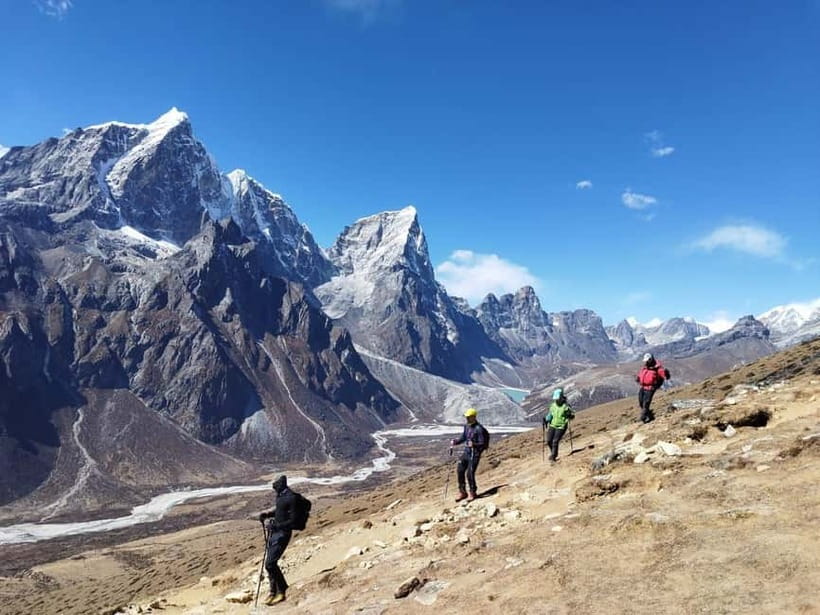
The scheduled rest day in Namche is one of the strongest parts of the plan. At 3,440 meters, you are high enough for acclimatization to matter, but still in a town with more facilities than the smaller settlements farther up the valley.
The point is not to spend the entire day lying in bed. A gentle outing can help you adjust, but the exact activity is not specified, so your guide will set the pace. I would treat this as a recovery day, drink plenty of water, and avoid trying to prove anything.
The guides receive particularly strong praise for keeping people safe and adapting the pace. Padam was described as positive, funny, and reassuring during difficult sections. Nishan was noted for adjusting the trek to individual needs. Those qualities matter more than a rehearsed speech when the altitude starts affecting your energy.
More Guided Tours in Kathmandu:
- Kathmandu: 15-Day Everest Base Camp Trek with Guide
★ 4.3 · 12 reviews - From Marrakech: Ouzoud Waterfalls Guided Hike and Boat Trip
★ 4.7 · 33,630 reviews - Bali: Sunrise Mount Batur Guided Hike with Breakfast
★ 4.8 · 9,660 reviews - Bali: Mount Batur Sunrise Guided Hike and Natural Hot Spring
★ 4.8 · 9,284 reviews
Day 4: Tengboche and its mountain setting
From Namche, you hike to Tengboche, also spelled Tyangboche, at 3,867 meters. This section gives you broad views of famous Himalayan peaks, including Ama Dablam, and takes you into a more remote part of the route.
Tengboche is a memorable overnight stop because of its high mountain setting and the approach through changing vegetation. The air is thinner, the trail feels more exposed, and the rhythm of the trek begins to shift from village walking to high-valley travel.
The distance itself is only part of the challenge. You are gaining altitude and should expect a slower day. A good guide will watch how you are walking, breathing, and recovering rather than pushing the group simply to meet the printed schedule.
Day 5: Rhododendron forest and the Imja Valley
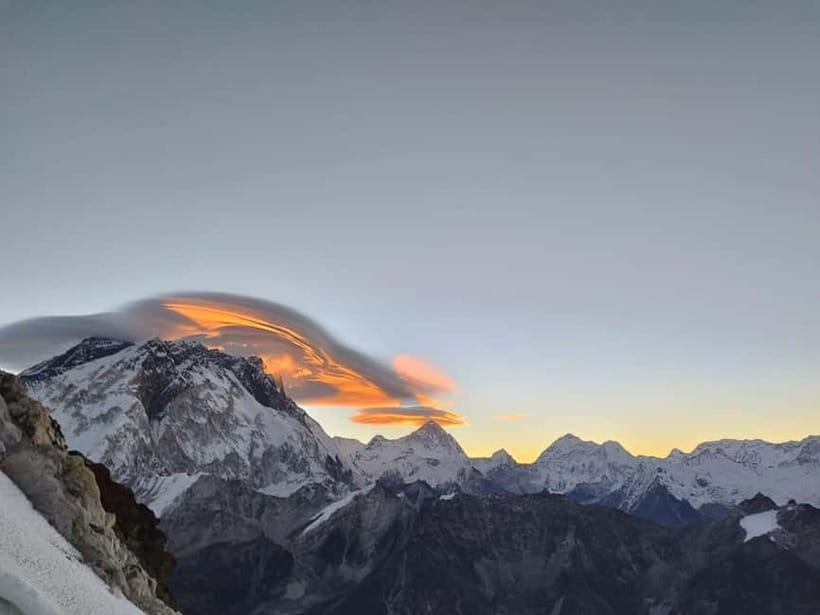
The route leaves Tengboche through rhododendron forest before crossing a suspension bridge over the Imja Khola. You then head toward Minlinggo and enter the Imja Valley, with Ama Dablam, Nuptse, and Lhotse rising around the route.
This is one of the most varied walking days. You get forest, bridge crossings, open mountain views, and a clear sense that the valley is narrowing into high country. The visual reward is substantial, but the trail is not a flat scenic stroll.
The night is spent in Dingboche at 4,260 meters. The altitude is now serious, and even simple tasks can feel slower. Keep your expectations modest. The point of the day is to arrive safely, eat, rest, and prepare for another acclimatization stop.
Day 6: A second acclimatization day in Dingboche
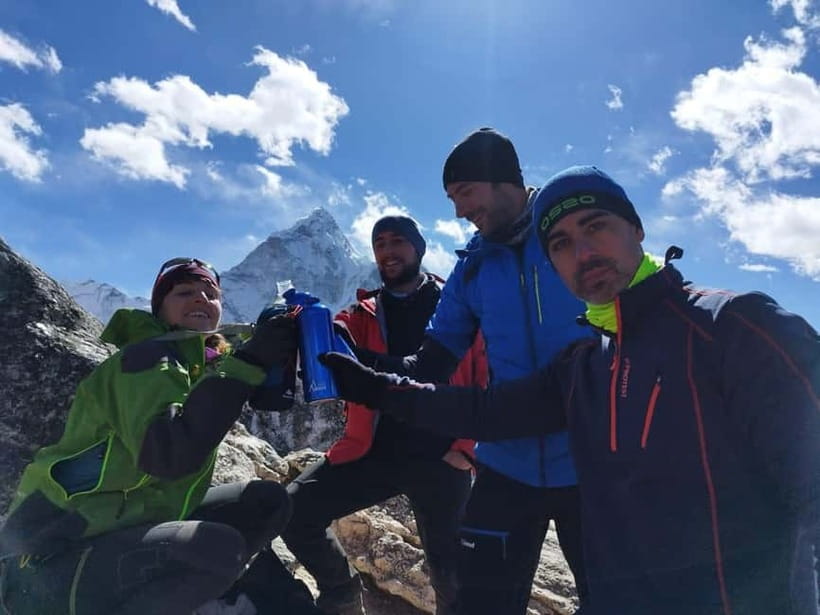
Dingboche provides the second planned rest day. This is essential because the route climbs sharply from here to Lobuche, Gorakshep, and Base Camp.
You spend the night in a tea house and have time to adjust to 4,260 meters. The itinerary does not specify a particular side walk or viewpoint, so do not book this trip expecting a named excursion on the rest day. The valuable part is the extra time at altitude.
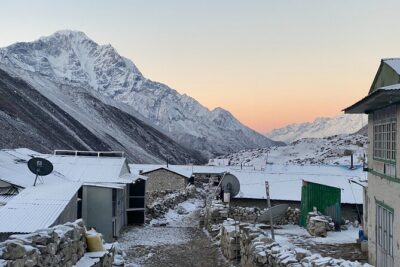
Tea-house life becomes more basic as you continue upward. You should expect shared facilities and extra charges for services that may have been included at lower elevations. Standard meals are not part of the package, so ask in advance how your guide handles meal stops and group timing.
Day 7: Dingboche to Lobuche
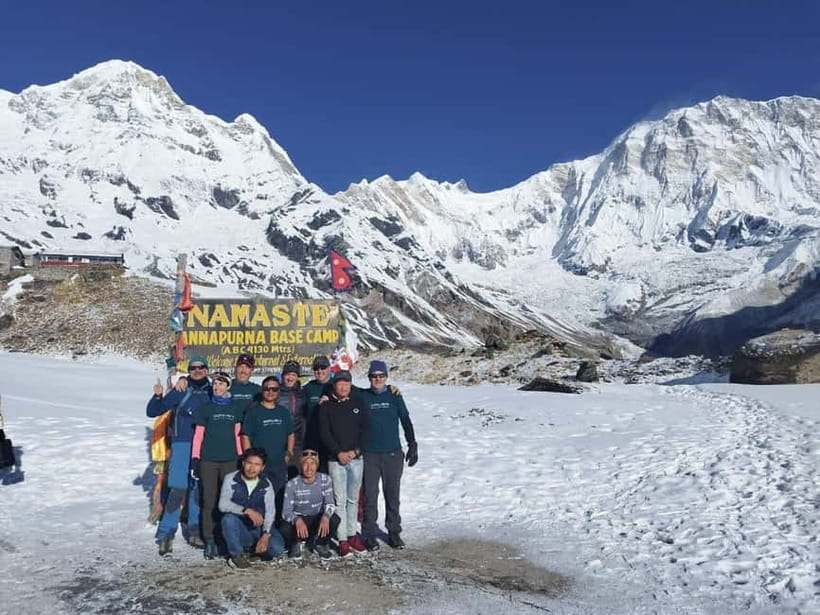
The hike from Dingboche to Lobuche takes about five and a half hours, with lunch in Dugla. Lobuche sits at 4,930 meters, so this is a demanding day even if the walking time looks manageable on paper.
The high valley feels more severe here. Vegetation thins, temperatures drop, and the air offers less help with every step. Your guide’s role becomes practical: setting a steady pace, watching for signs of altitude trouble, and helping you reach the lodge without wasting energy.
Lobuche is not a place for late-night socializing. You will want warm layers, a charged headlamp, water, and a sleeping bag if you are using the supplied one. Since the program provides a sleeping bag on request, confirm before departure that it will be ready for you.
Day 8: Gorakshep and Everest Base Camp
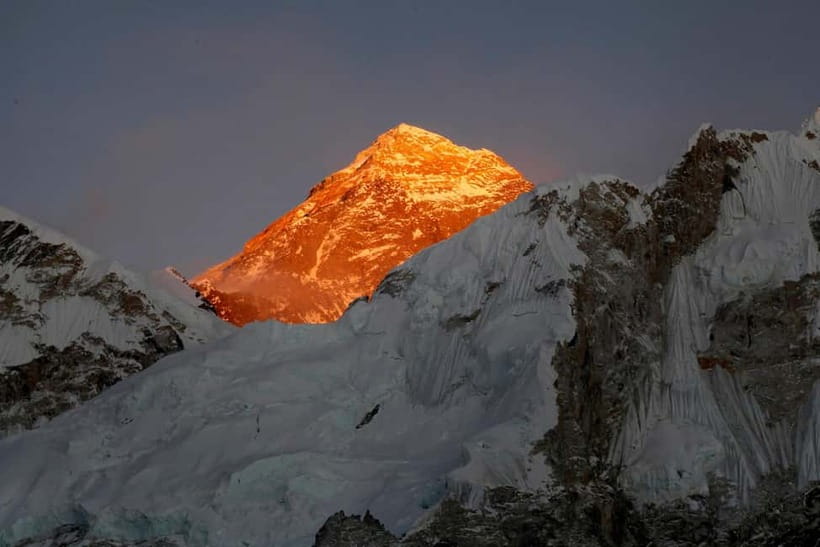
After breakfast in Lobuche, you walk toward Gorakshep and then continue to Everest Base Camp at 5,364 meters. This is the emotional high point of the trek, but it is also one of the hardest sections.
The trail follows rocky ground beside impressive views of the Khumbu Glacier. The route can feel slow and rough underfoot, especially after several days above 4,000 meters. You should focus on steady movement rather than speed.
At Base Camp, the famous names become real places around you. Khumbetse, Nuptse, Lingtren, and Lhotse are among the peaks associated with the route, and the scale of the surrounding mountains helps explain why this trek has such lasting appeal.
You return to Gorakshep for the night. That return is important to understand when planning your energy. Reaching Base Camp does not finish the day. You still need to walk back to the lodge at high altitude, so save strength for the full out-and-back.
Day 9: Kala Patthar and the long descent
The day begins with a hike to Kala Patthar at 5,545 meters, higher than Everest Base Camp itself. This is the highest point listed in the itinerary and one of the best places on the route for views of the Everest region.
After Kala Patthar, you descend to Pheriche at 4,243 meters. Going downhill may feel easier on your breathing, but the long descent can be hard on your knees and legs. Trekking poles, if you use them, can be useful here, though they are not listed among the included equipment.
This is a full day at serious altitude. Keep your breakfast simple, dress in layers, and listen closely to the guide’s timing. The schedule rewards people who pace themselves from the beginning rather than racing to the summit viewpoint.
Days 10 and 11: Returning through the Khumbu
The stated schedule has you descend from Pheriche toward Tengboche and then continue toward Namche Bazaar, with an overnight in Namche. It then sends you from Namche back to Lukla for the final night.
There is a wording problem in Day 10, which lists both Pheriche to Tengboche and Pheriche to Namche Bazaar. Those are separate route sections, and the exact overnight plan should be confirmed with Welcome Nepal Treks before you pay. The larger point is clear: you are retracing the route downhill, with the thinner air gradually giving way to more comfortable elevations.
The return to Lukla is not an afterthought. It is another long walking day, and you need to keep enough energy for it after the demanding Base Camp and Kala Patthar sections. The final night in Lukla gives you a buffer before the flight back to Kathmandu.
One particularly useful detail comes from a departure affected by weather. The operator changed the flight plan to a helicopter transfer and handled the switch professionally. A helicopter is not included as a standard feature, and you should not assume it will be provided, but this suggests the team is used to dealing with the flight complications that can occur in the Khumbu.
Day 12: Returning to Kathmandu
You take an early flight from Lukla back to Kathmandu, then receive a transfer to your hotel. The program includes the domestic flight and hotel transfer, with an overnight in Kathmandu listed at the end.
Flight schedules in the mountains can change, so keep your international departure separate from this return day if possible. The supplied details do not promise a specific arrival time in Kathmandu, and weather can affect the timetable.
Guides, group size, and the human side of the trek
The group limit is 15, which is small enough for the guide to keep track of people without creating a private-trip price. The tour is conducted in English, and the guide’s salary, accommodation, meals, transport, and insurance are included.
The strongest praise goes to the guides. Padam is described as funny, helpful, and reassuring. Nishan is praised for kindness, attention, and adapting the trek to personal needs. Adhish helped make one trip enjoyable, while Rohan was paired with a porter called Bahla and received credit for strong organization and care.
That does not guarantee a particular guide on your departure. You can ask whether Padam, Nishan, Adhish, or Rohan is available, but assignments may vary. What you should look for is an experienced guide who communicates clearly, monitors altitude symptoms, and is willing to adjust the pace.
A porter costs extra. If you are unsure about carrying your own gear at altitude, paying for one may be worthwhile. The stated limit is one porter for up to 25 kilograms shared between two people, so pack with that limit in mind.
Who should book this trek?
This trip suits you if you want a structured Everest Base Camp route with flights, permits, lodging, and a guide arranged in advance. It is also a good fit if you prefer a small group but do not need a fully private trek.
You should be comfortable walking for several hours on rocky mountain trails and sleeping in simple tea houses. The itinerary includes high-altitude nights, and the maximum elevations are not suitable for anyone with serious health concerns. The experience is not suitable for pregnant women, people with heart problems, or wheelchair users.
Bring your passport, as requested in the essential information. Large bags are not allowed, so use a suitable trekking pack and arrange porter service if you do not want to carry your own belongings.
Should you book this Everest Base Camp trek?
I would book this trip if you want the practical parts handled for you and you understand that $1,002 is only the base cost. The included Lukla flights, permits, tea-house accommodation, guide expenses, and two acclimatization days give the package solid value.
I would first confirm the Day 10 route, meal arrangements, porter cost, and what equipment is available in your size. If those details are clear, this is a well-supported route with a small group, experienced local guides, and a sensible acclimatization plan.
The best reason to choose it is the personal support. The most consistently praised qualities are safety, humor, flexibility, and calm handling of hard days. That is exactly what you want when you are tired, cold, and standing thousands of meters above sea level.
FAQ
How long is the Everest Base Camp trek?
The experience lasts 12 days, including flights from Kathmandu to Lukla and the return flight to Kathmandu.
Is transportation from my Kathmandu hotel included?
Yes. Pickup is available from hotels in Kathmandu, Bhaktapur, and Lalitpur. Airport transfers in Kathmandu and domestic airport transfers are also included.
Are flights between Kathmandu and Lukla included?
Yes. The package includes the return domestic flight between Kathmandu and Lukla.
Are meals included during the trek?
No. Breakfast, lunch, and dinner are not included. Alcoholic and non-alcoholic drinks are also extra.
Is a porter included?
No. Porter service is available for an additional cost. One porter can assist with up to 25 kilograms for two people.
What language does the guide speak?
The live guide speaks English.
Is travel insurance included?
No. You need to arrange your own travel insurance.
Just added around Kathmandu
- Kathmandu: Nagarkot Sunrise and Hike Tour to Changu Narayan★ 4.7 · 151 reviews
- Pokhara: 2 Day Ghorepani & Poon Hill Private Trekking★ 4.9 · 8 reviews
- Kathmandu: Nagarkot Sunrise Tour with Day Hike★ 4.7 · 13 reviews
- Pokhara: 5-Day Annapurna Base Camp (ABC) Trek★ 5.0 · 9 reviews
- Kathmandu: Shivapuri Day Hike with Lunch★ 4.9 · 25 reviews
- Kathmandu: 6-Day Limitless Langtang Trek★ 5.0 · 21 reviews
- Kathmandu: 6 Days Langtang Valley Trek with Kyanjin Ri★ 5.0 · 7 reviews
- Kathmandu: 14-Day Everest Base Camp with Kala Patthar Trek★ 4.2 · 21 reviews